The Singapore F1 night race: what it's actually like to be there
The Singapore Grand Prix has been running since 2008 and has, in that time, produced one of the more distinctive event experiences in motorsport — a street circuit through the Marina Bay area, run entirely at night under artificial lighting because Singapore’s daytime heat would be logistically impractical for a race of this intensity. I went expecting spectacle. What I got was spectacle plus an education in how much a city can change personality over a single weekend.
| When | Typically September, three-day weekend, race on Sunday at 8pm |
| Cost | From around SGD 248/day (Zone 4) to SGD 1,680+ (Pit Grandstand, 3-day) |
| Where | Street circuit through Marina Bay and the Civic District |
| Hotels | Book early — rates typically 2–3x normal during race weekend |
| Book ahead | Tickets, restaurants, rooftop bar reservations |
The circuit and what it means to be in Marina Bay during the race
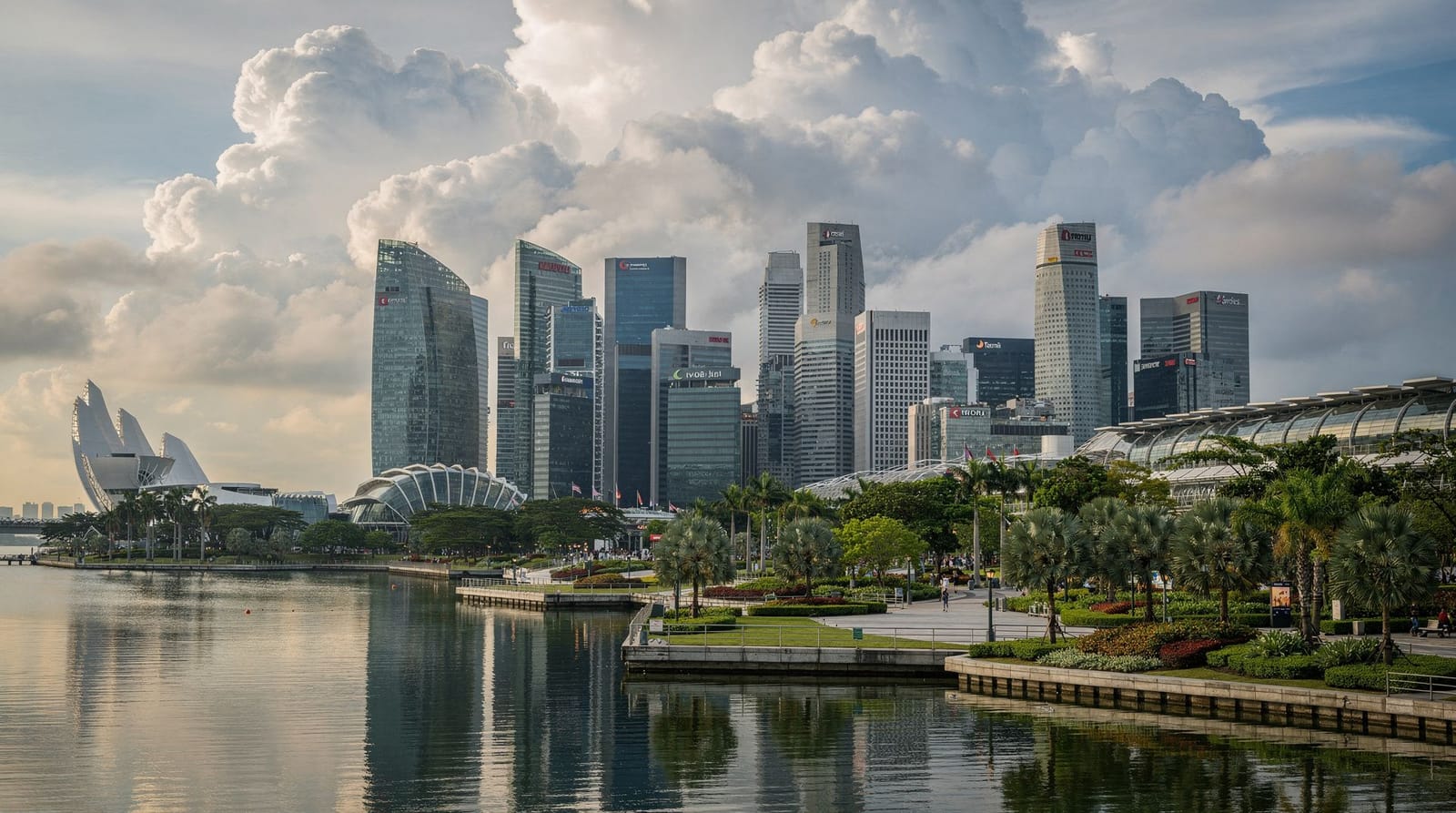
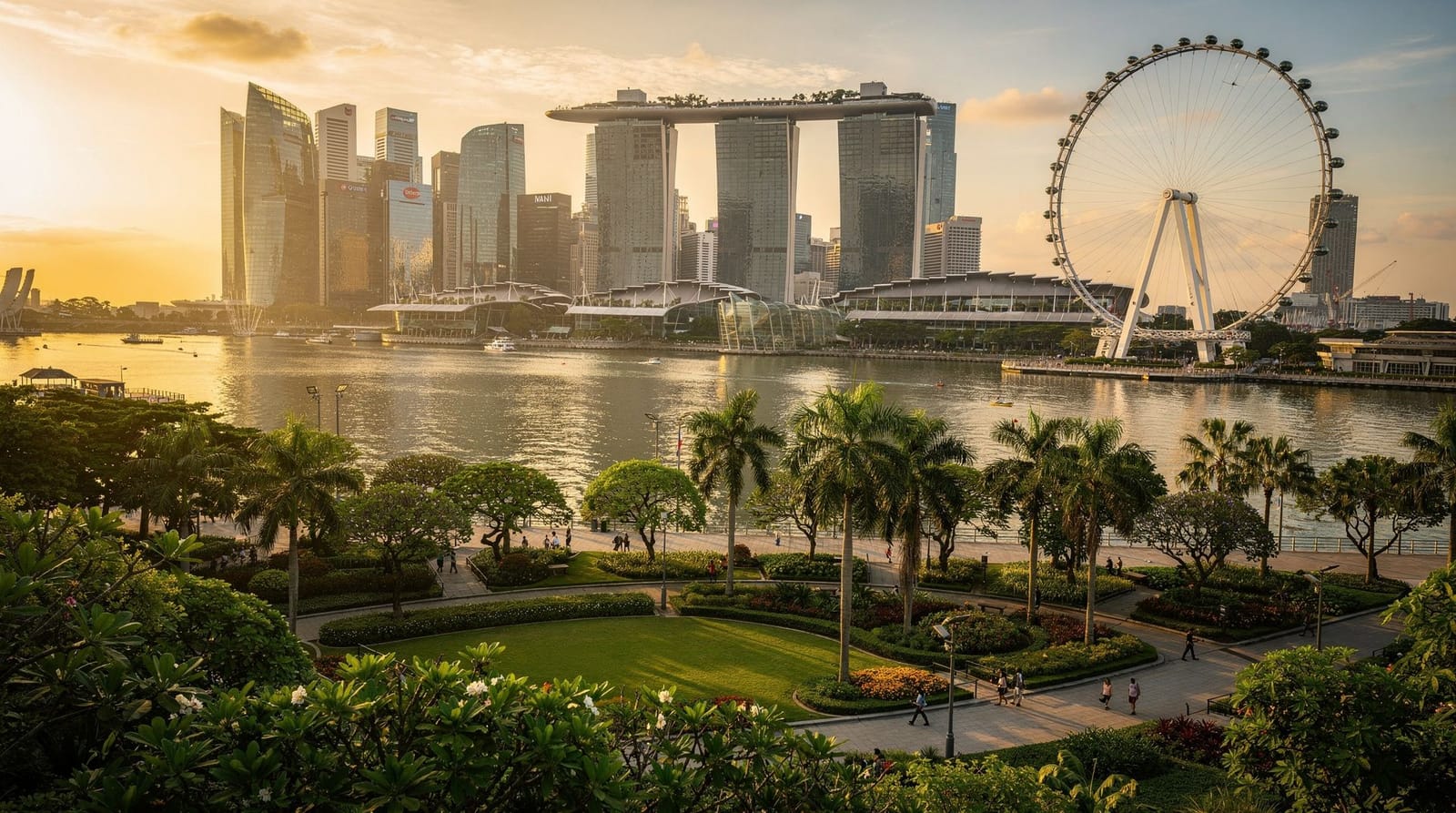
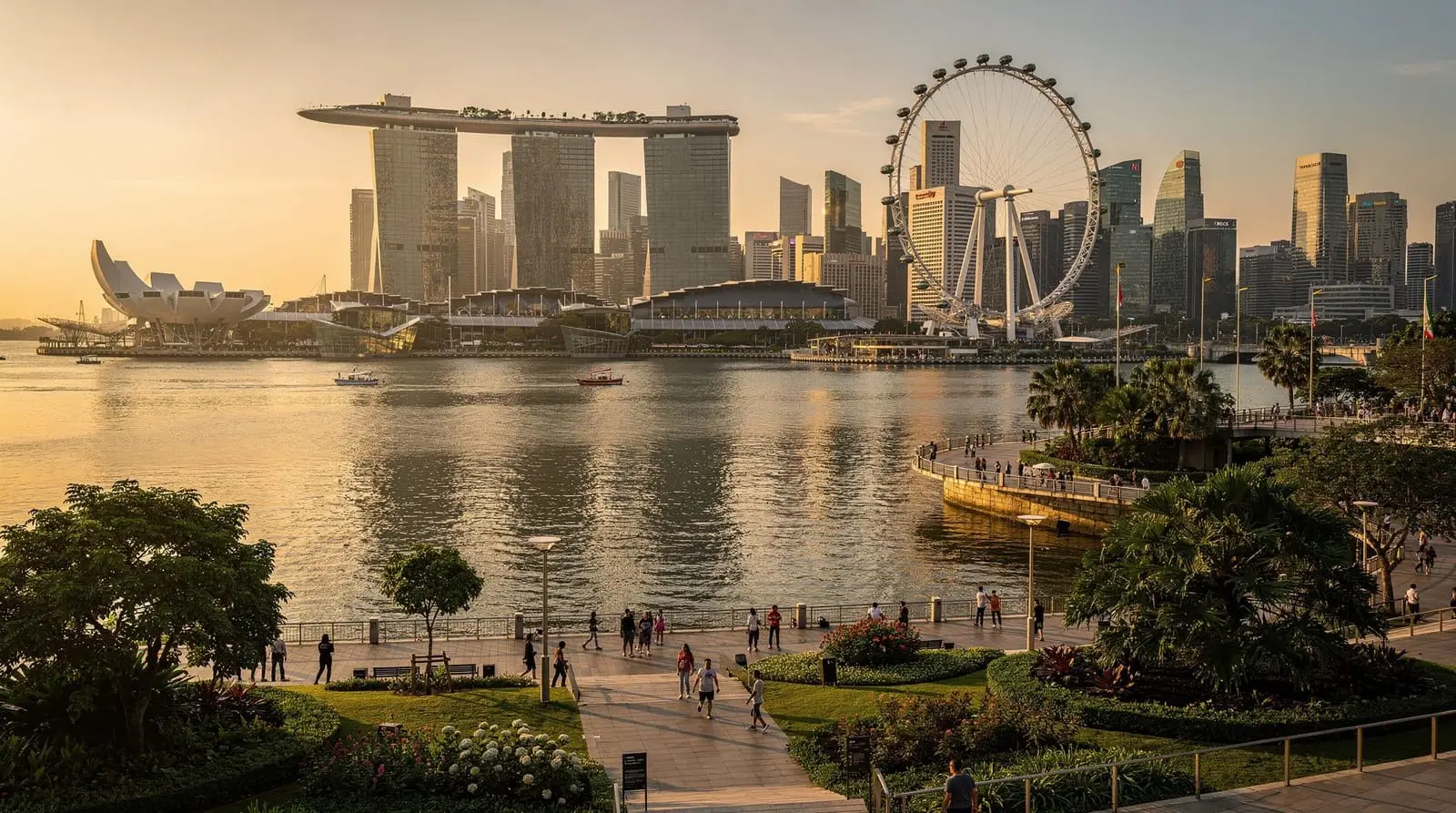
The street circuit uses existing roads through the Marina Bay area, looping around the waterfront, through the Civic District, past the Padang, and back. During race weekend, significant sections of the city centre are either closed or heavily restricted. If you’re staying in the Marina Bay or Raffles area during F1 weekend, factor this into every logistical plan. Hotel check-ins, restaurant access, and MRT exits all become complicated in ways they aren’t during the rest of the year.
The perimeter of the circuit is fenced and accessible only with event tickets. The grandstands — of which there are many, ranging in quality and price from the basic Grandstand A tickets to the premium Pit Grandstand and various hospitality configurations — are inside the fence.
What most visitors don’t fully grasp before arriving is that “attending the Singapore GP” is actually attending a three-day festival. Thursday and Friday are practice sessions, Saturday is qualifying, Sunday is the race. Most tickets are sold as single-day or three-day. The three-day pass gives you the full experience including qualifying, which is in many ways the session where the driving is most spectacular in isolation. The race itself is more strategic and more difficult to interpret from the grandstands unless you’re an experienced F1 viewer.
The costs
Let’s be direct about this. The Singapore GP is expensive. Grandstand tickets in 2024 started at approximately SGD 248 for a one-day Zone 4 pass and went to SGD 1,680 or more for the premium Pit Grandstand three-day pass. Hospitality packages, which include food, drink, and dedicated viewing areas, run from approximately SGD 1,200 per day into several thousand.
Add to this: hotels during F1 weekend typically charge 2–3x normal rates. Restaurants in the Marina Bay area during race weekend are frequently fully booked or running prix fixe menus at significant premiums. Grab and taxi surge pricing is real and sustained throughout the weekend. Budget for the full experience at roughly double your normal Singapore daily spend.
Whether this is “worth it” depends on what you’re comparing it to. Against the cost of other major global sporting events (Wimbledon final, Super Bowl, Monaco GP), the Singapore GP is competitive on value. Against the cost of a normal week in Singapore, it is significantly more expensive.
What the race experience actually feels like
The noise is the first thing. Formula 1 cars are loud on television. In person, at a street circuit with the sound bouncing off buildings and the spectator barriers, the noise is physical — you feel it in your chest. Ear protection is absolutely mandatory and available at the circuit if you forget (around SGD 5–8). Without it, you will leave with tinnitus.
The atmosphere in the grandstands starts building well before the race. The support races (often F2 or other series) run earlier in the evening. There is food and beer available inside the circuit perimeter at the expected event pricing — SGD 10–14 for a beer, SGD 15–25 for food. Bring a small bag with snacks if you want to manage this cost.
The race starts at 8pm local time on Sunday and runs for approximately 90 minutes to 2 hours depending on safety car periods and incidents. The Marina Bay Street Circuit has a reputation for drama — walls are close, safety car periods are common, and the lighting conditions create specific visibility challenges that have affected results in memorable ways.
From a neutral grandstand (zones not directly on a corner), you’ll see cars passing you for perhaps 2–3 seconds per lap. Most of the “watching” is actually watching the big screens inside the circuit perimeter. This is the honest reality of attending any F1 race — the experience is more about atmosphere and presence than the viewing of the racing itself.
A Marina Bay night walking tour, booked for the nights adjacent to the race weekend when you’re not in the circuit, shows you the same waterfront under very different conditions — quieter, more photogenic, and from the outside of what, during race weekend, is an enormous event perimeter.What to do in the wider city during race weekend
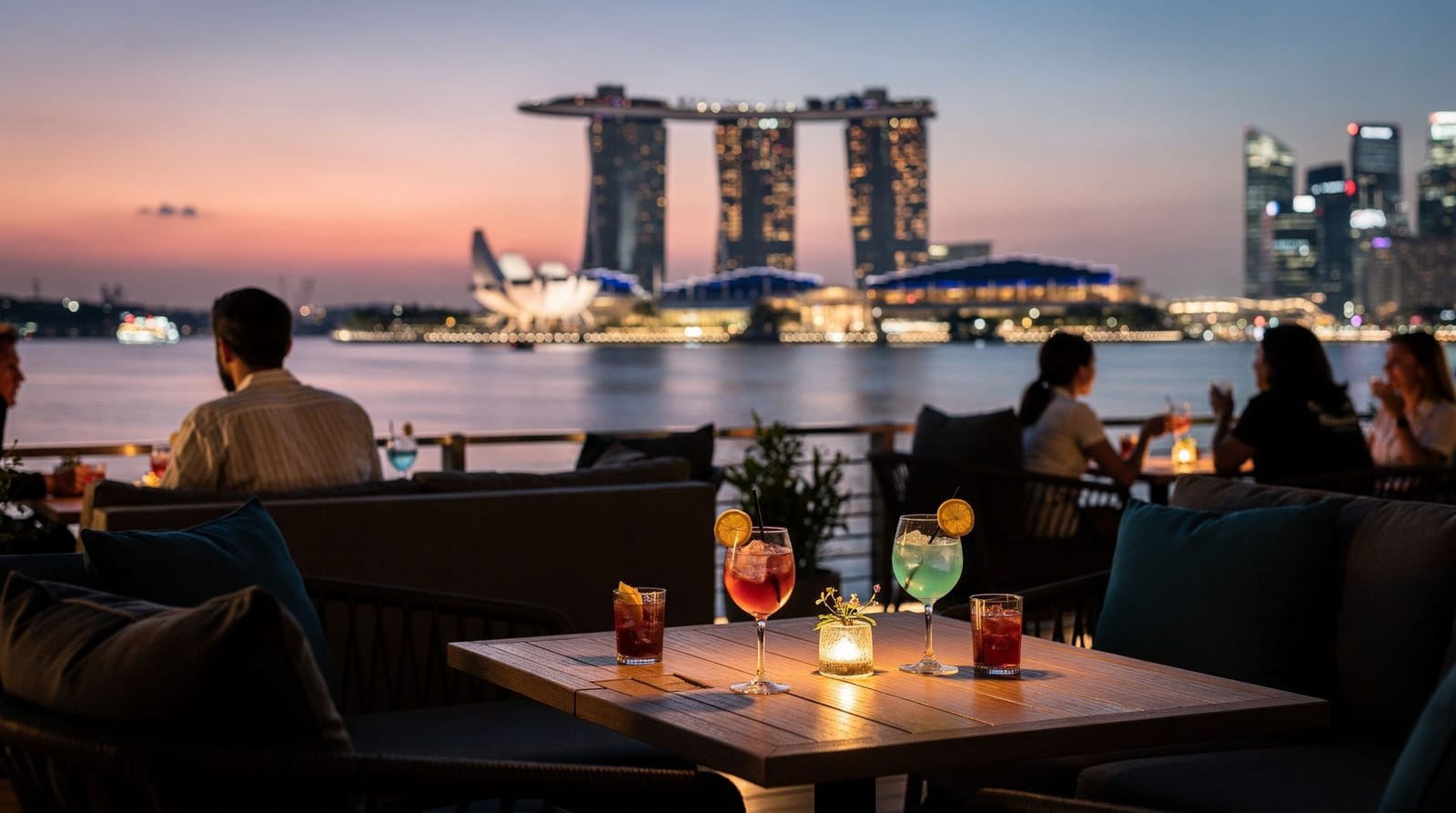
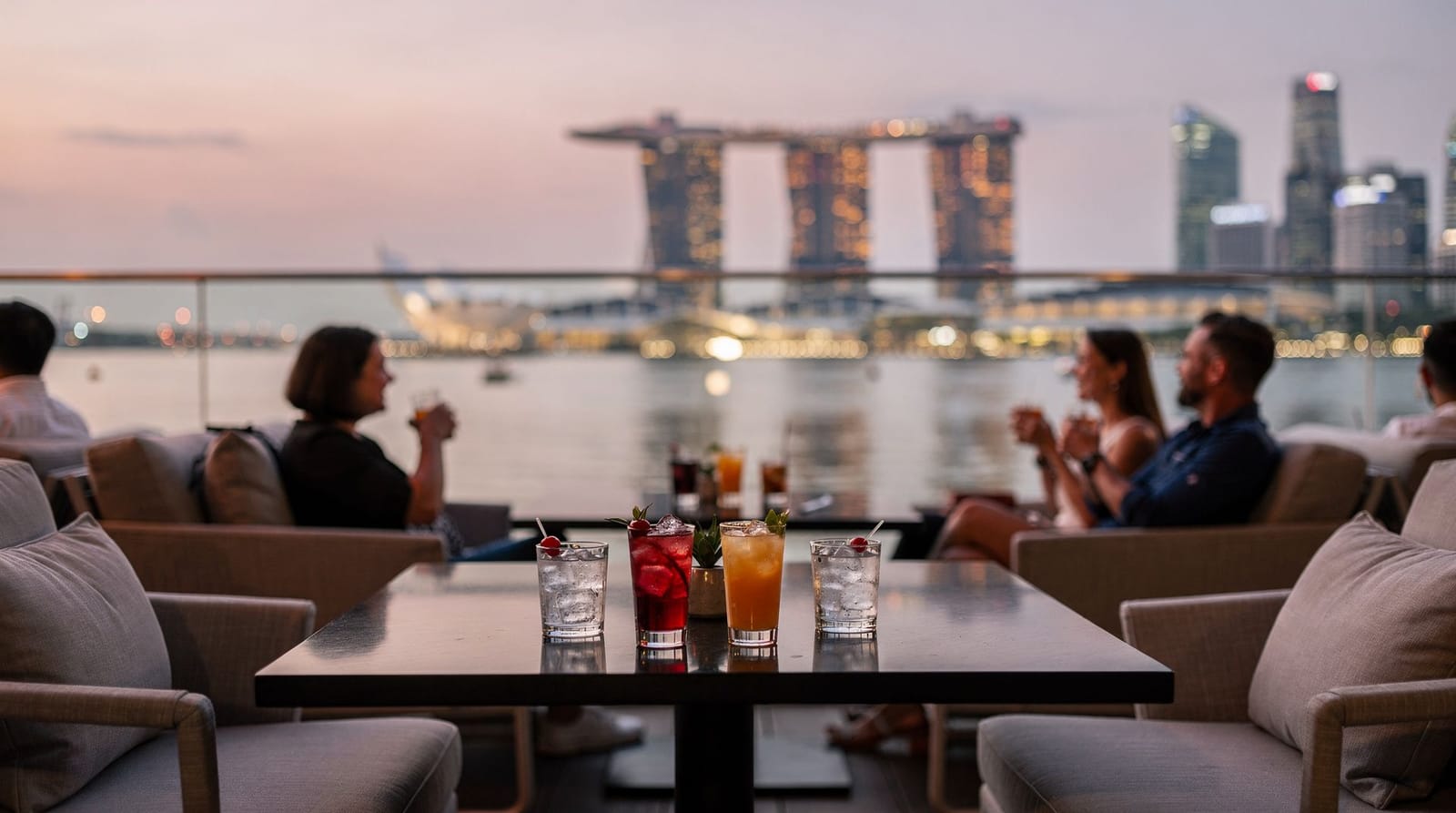
Singapore’s F1 weekend extends well beyond the circuit. The Clarke Quay nightlife area is particularly buzzing — bars that are normally busy become packed, with event-specific pricing to match. The rooftop bars in the Marina Bay area — 1-Altitude, Ce La Vi, the Smoke & Mirrors at the National Gallery — have views over the circuit and are priced accordingly for race weekend but do sell tickets in advance.
Singapore by night with optional Singapore Sling cocktailThe F1 night race guide covers the logistics: getting in and out of the circuit zone, the best grandstands for specific viewing experiences, the food and drink options inside and outside, and how to navigate the city during the closure zones.
One practical note: the MRT runs extended hours during race weekend but the stations nearest the circuit (City Hall, Raffles Place) get extremely crowded post-race. Walking to a station two stops away, or waiting 30–45 minutes at the nearest exit, is the realistic choice. Plan accordingly.
Building a trip around race weekend
If you’re planning a Singapore trip specifically around F1, treat the race as one big day within a longer stay rather than the entire itinerary — both the 2-day and 3-day itineraries work well with the race weekend slotted in as the closing or opening event. Arriving two or three days before the race lets you see Marina Bay’s normal rhythm before the closures start, which makes the contrast during race weekend more legible rather than just confusing. Photographers should note that the circuit fencing changes several of the standard Marina Bay photography vantage points during the event itself — Merlion Park and the Helix Bridge remain accessible, but some waterfront positions near the pit straight are inside the ticketed perimeter for the full weekend.
Getting around and choosing where to base yourself
The circuit runs through Marina Bay and the Civic District, so these are the two areas where closures bite hardest. If you want to understand how the trains work before you arrive, the MRT guide is worth a read, and the broader getting around Singapore page covers Grab and taxis, which are the options most affected by surge pricing over the weekend.
For a base outside the closure zone, Bugis and Orchard Road are the two I’d compare first. Both are connected by MRT, both have plenty of places to eat that don’t depend on the event, and both let you step away from the crowds once the evening is over. If you’re still deciding where to sleep, the where to stay guide lays out the options by area.
Since the race is a night event, the days are yours. The Gardens by the Bay area, the Singapore River cruise and a long hawker lunch fill a daytime slot well, leaving your energy for the evening session.
Would I go again?
Yes, with adjustments. I’d stay in a hotel further from the circuit — something near Orchard Road or Bugis that’s outside the closure zone and accessible by MRT. I’d book restaurants in advance or rely on hawker centres that aren’t in the event footprint. I’d buy a three-day pass rather than single-day to get the full arc of the weekend.
The Singapore Grand Prix is one of the genuinely distinctive sporting events in the world — the combination of night racing, the urban circuit, and the city’s particular intensity during the weekend produces something that can’t be replicated elsewhere. If motorsport appeals to you even mildly, it’s worth experiencing once.
The broader Singapore context — the nightlife guide, the Marina Bay waterfront, the food — all sustain the non-racing hours. The city carries the weight of the event well.
Frequently asked questions about Singapore F1 night race
Is a single-day F1 ticket enough, or should I get the three-day pass? A single day (usually Sunday for the race) covers the main event, but the three-day pass adds Thursday–Friday practice and Saturday qualifying, which many find is where the closest, most legible driving happens from a grandstand seat. If budget allows, the three-day pass gives a fuller sense of the event.
Do I need to stay near Marina Bay for F1 weekend? No, and it may not even be advisable — hotels near the circuit charge a significant premium and road closures make check-ins and general movement more complicated. Staying near Orchard Road or Bugis, both outside the closure zone and MRT-connected, is often the more practical choice.
Top experiences
Bookable activities with verified prices and instant confirmation on GetYourGuide.

Singapore: Universal Studios Singapore entry ticket

Singapore: Gardens by the Bay bundle entry ticket

Singapore: Night Safari and tram ride ticket

Singapore: S.E.A. Aquarium entrance ticket

Singapore: Singapore River cruise

Singapore: Marina Bay Sands observation deck e-ticket

Singapore: Sentosa cable car Sky Pass roundtrip ticket