Little India
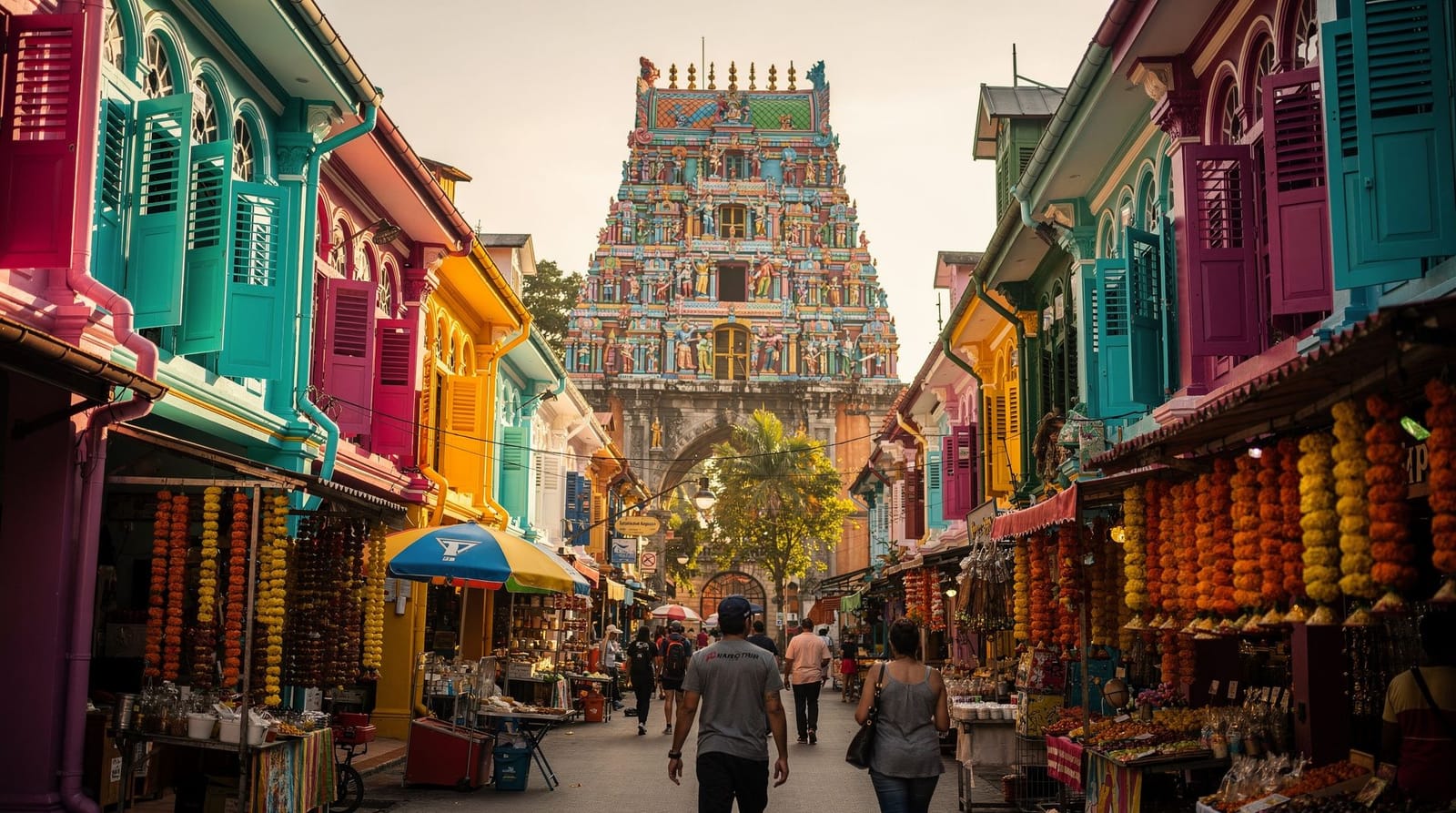
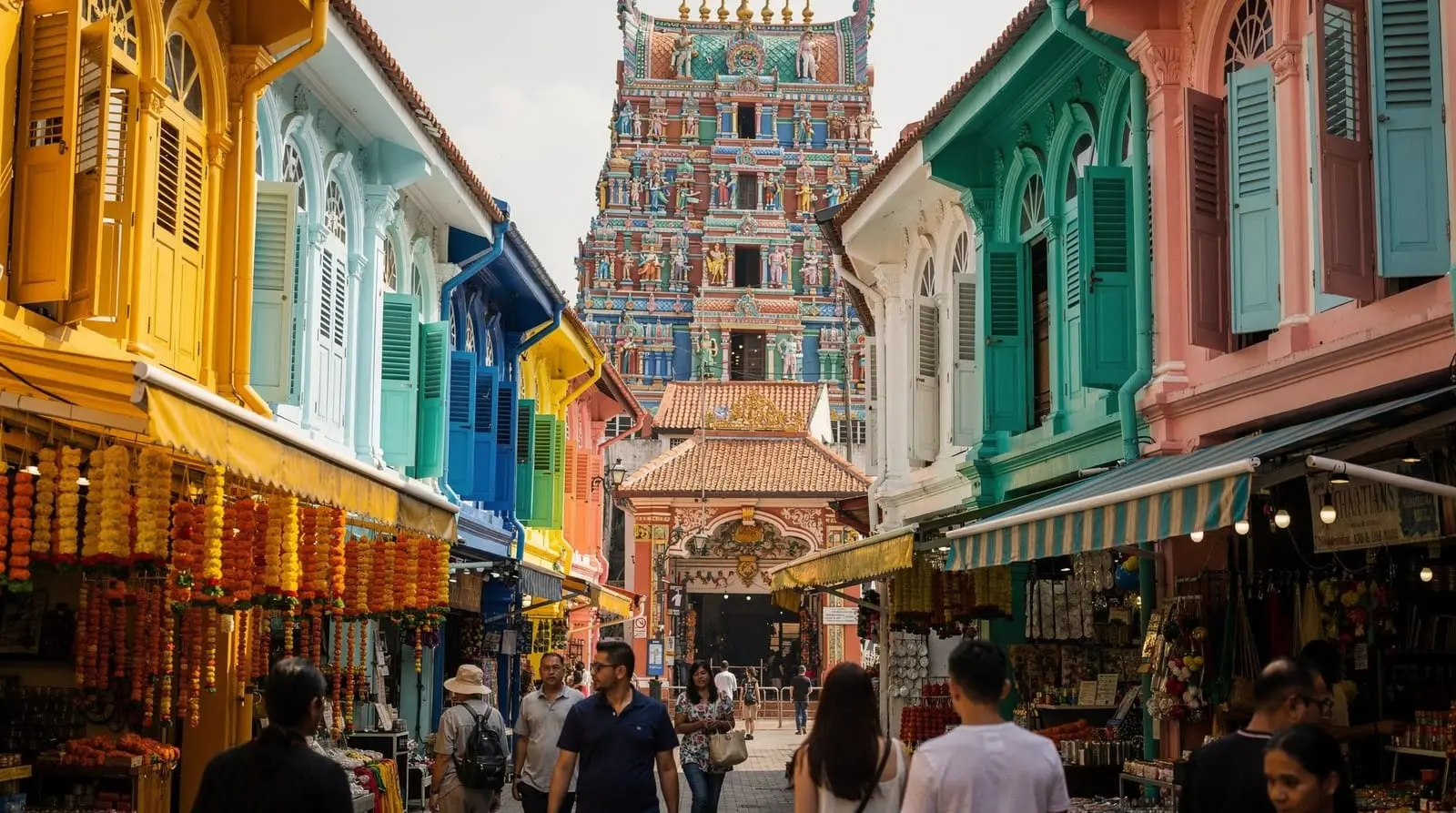
Little India packs Sri Veeramakaliamman Temple, Tekka Market, flower garland stalls.
Singapore: Little India, Tekka Centre and food tastings tour
Quick facts
- MRT access
- Little India (North-East/Downtown lines) — exits onto Serangoon Road
- Character
- Indian Tamil heritage quarter; temples, spice shops, flower stalls, sari shops
- Tekka Centre
- Wet market + hawker centre, open from 6 am; SGD 5–10 per dish
- Sri Veeramakaliamman Temple
- Most active temple in the area; free entry; colourful gopuram (tower)
- Deepavali light-up
- October/November — Serangoon Road lined with decorative light arches
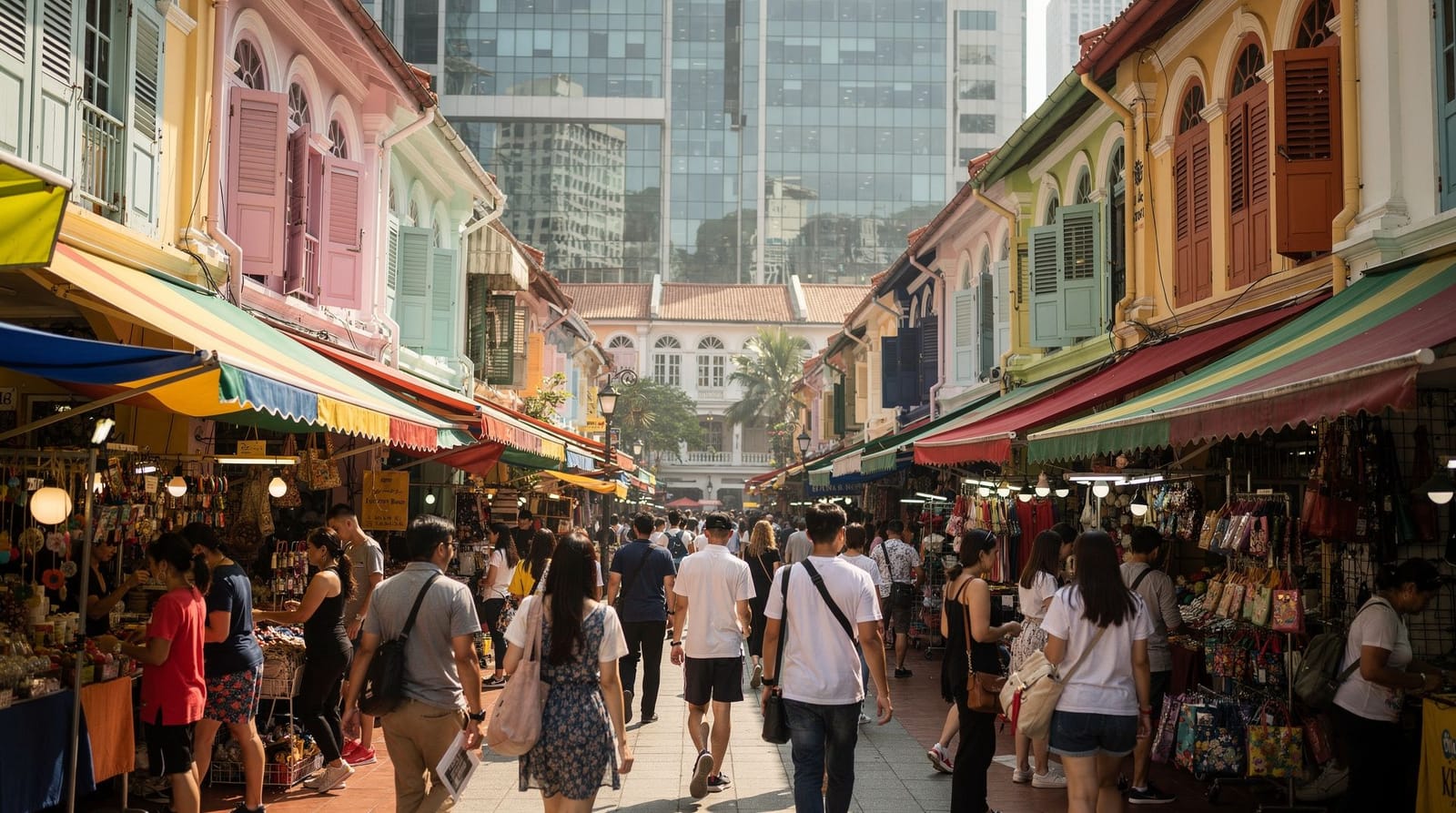
Little India is the most sensory neighbourhood in Singapore. Walk out of the MRT and within 30 seconds you are surrounded by jasmine garlands, turmeric-yellow saris, the smell of incense and curry leaves, and the sound of Tamil film music leaking from a spice shop. It is genuinely different from the rest of the city and one of the most rewarding areas to walk without any particular plan.
| Where | Serangoon Road, central Singapore |
| Cost | Free to walk; hawker meals SGD 5–14 |
| Time needed | Half a day; pairs well with Kampong Glam |
| Getting there | Little India MRT (North-East/Downtown lines) |
| Best time | Morning for the wet market; evening for temple atmosphere |
The neighbourhood — how it is laid out
Little India is centred on Serangoon Road, running roughly from Hastings Road in the south to Lavender Street in the north. The main activity is concentrated in the few blocks around Little India MRT, Tekka Market, and the Sri Veeramakaliamman Temple. Beyond that, the area grades into older housing estates.
Key streets:
- Serangoon Road (main artery, temple, flower stalls, sari shops, money changers)
- Dunlop Street (restaurants, some of the best Indian Muslim food)
- Campbell Lane (garlands, banana leaves, incense suppliers)
- Buffalo Road (connects to Tekka Centre)
- Hindoo Road / Veerasamy Road (more local commercial streets, less tourist-facing)
The best way to explore is on foot with no fixed route — enter at the Tekka Centre, walk up toward Sri Veeramakaliamman Temple, loop through Campbell Lane, and exit somewhere along Serangoon Road.
Tekka Centre — the wet market and hawker centre
Tekka Centre (also called Zhujiao Centre) is the anchor building on the corner of Buffalo Road and Serangoon Road. It has two levels: a ground-floor wet market (produce, meat, fish — open from 6 am, busiest before 10 am) and an upper-floor hawker centre with around 220 stalls.
What to eat at Tekka:
- Roti prata — flaky griddled flatbread with curry sauce for dipping; the plain and egg versions are the default (SGD 1.20–2.00 per piece). Queue at the busier stalls during breakfast rush.
- Fish head curry — whole fish head cooked in a South Indian curry, served with rice and vegetables. Typically SGD 10–18 for a portion.
- Biryani — fragrant spiced rice with chicken, mutton, or fish. SGD 7–12.
- Banana leaf rice — rice served on a banana leaf with multiple curries and side dishes; you eat with your right hand, and the leaf is folded toward you when finished (signal that you are satisfied). SGD 8–14.
- Teh tarik — pulled milk tea, poured from height to create froth. SGD 1–2. An essential Singapore breakfast drink.
The wet market downstairs is worth a look even if you are not buying: the flower garland section (fresh jasmine, marigold, rose garlands used as temple offerings, SGD 1–3 per strand) is particularly photogenic.
Little India, Tekka Centre and food tastings tour — guided walk with temple visit and multiple tastingsSri Veeramakaliamman Temple
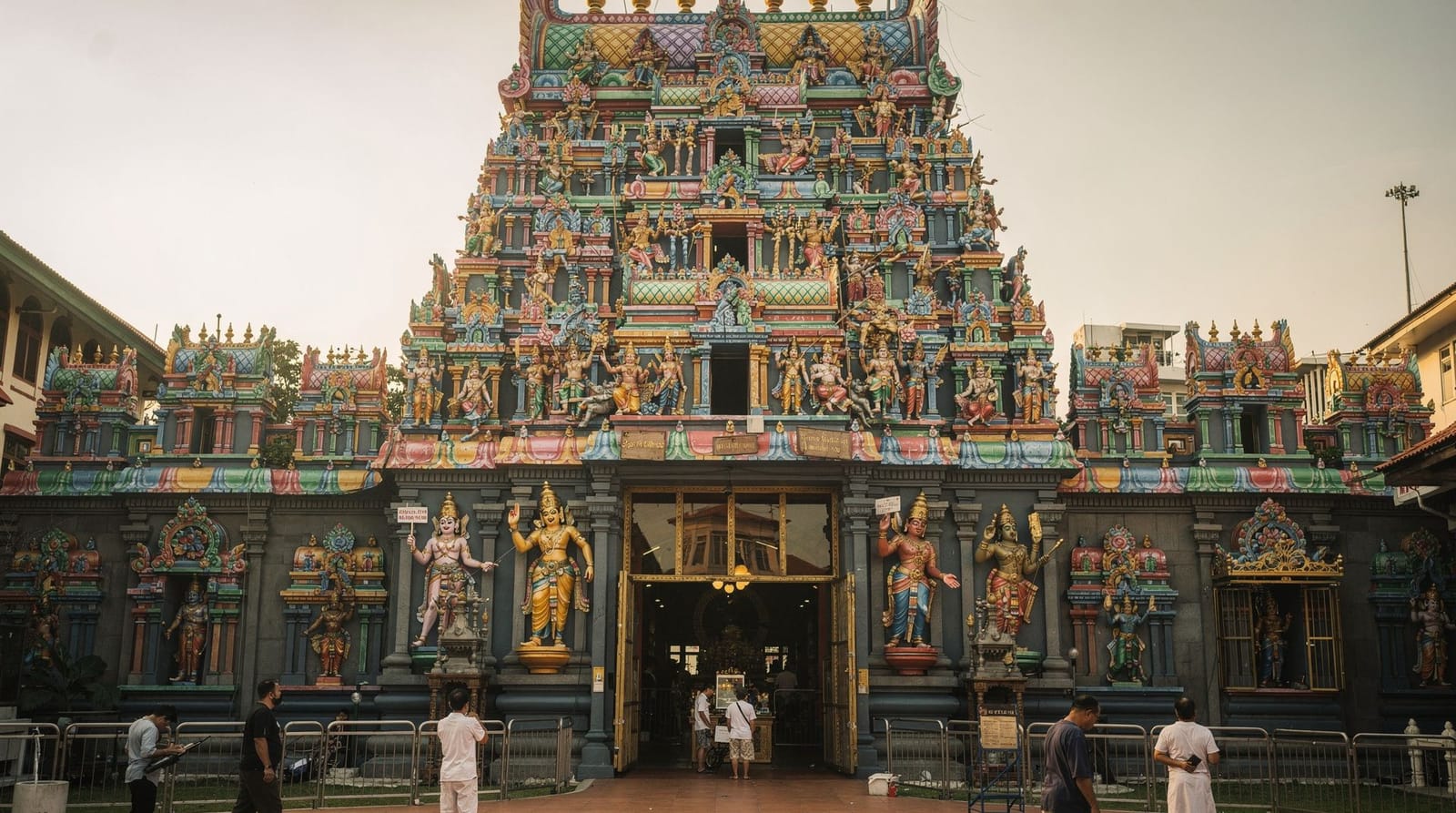
On Serangoon Road, approximately 10 minutes walk north from the MRT. This is the most active temple in Little India — dedicated to the goddess Kali (Veeramakaliamman) and central to the Tamil Hindu community in Singapore. The original temple dates to 1881; the current building was significantly renovated in 1987 and 2011.
The gopuram (entrance tower) is covered in highly detailed polychrome sculpted figures of deities. The colours and density of the figures are characteristic of Dravidian temple architecture from Tamil Nadu. Entry is free; remove shoes before entering; dress modestly (legs and shoulders covered). Photography is generally permitted in public areas; check with the temple office for restrictions during specific ceremonies.
The temple is busiest early morning (6–9 am) and around noon prayer time, and on Fridays and during festival days (Thaipusam, Deepavali, Navaratri). Visiting during an active puja (prayer ceremony) is not intrusive — worshippers are accustomed to respectful observers — but move quietly and follow the guidance of staff.
For a comparative overview of Singapore’s temples, see the temples of Singapore guide.
The food tour options
Several structured food walks cover Little India well. The Little India cultural and food walking tour pairs the neighbourhood’s culinary offerings with an explanation of the Tamil community’s history in Singapore — from the indentured labourers who built the colonial city to the contemporary South Asian professional community. The Little India and local flavours guided tour emphasises the food diversity in the area (Tamil, North Indian, Bangladeshi, Sri Lankan) and takes you to stalls that do not appear in standard tourist guides.
For a combined tour covering all three ethnic quarters — Chinatown, Little India, and Kampong Glam — the temples, Chinatown and Little India private tour is a private option that covers the whole ethnic quarters axis in one day.
The flower and garland stalls
The block of Campbell Lane between Serangoon Road and the back of Tekka Centre has the densest concentration of flower vendors in Singapore. Most are open from early morning. Garlands of jasmine (SGD 2–5 per strand), marigold, and rose are sold primarily for temple offerings; you will see both local shoppers and visitors buying them for the Sri Veeramakaliamman Temple a few blocks away. The visual and olfactory contrast with the rest of Singapore is immediate and striking.
Mustafa Centre
Mustafa Centre on Syed Alwi Road (10 min walk from the MRT) is a 24-hour department store that has taken on near-mythical status among Singapore locals and expats. Six floors of electronics, gold jewellery, clothing, groceries, beauty products, and appliances. The jewellery floor (second floor) sells 22-carat and 24-carat gold jewellery by weight — the price per gram is posted daily and is genuinely competitive. The grocery floor has the best range of South Asian and Southeast Asian food products in Singapore.
Not a tourist attraction per se, but genuinely useful and interesting to walk through. For a guide to what to buy and where, see the Mustafa Centre guide.
Deepavali (Diwali) in Little India
Deepavali — the Hindu Festival of Lights — falls in October or November each year. For about six weeks beforehand, Serangoon Road is lit up with elaborate decorative arches (different theme each year); temporary stalls sell sweets, diyas (clay oil lamps), fireworks, and festival goods. The atmosphere is warm and genuinely festive; it is one of the best times to visit Little India. For the full guide, see Deepavali in Singapore.
Sunday mornings in Little India
Sunday is the most active day in Little India because it is the day off for Singapore’s large population of South Asian migrant workers (construction, domestic work, etc.). Serangoon Road and the areas around the MRT and Tekka Centre become significantly more crowded, with tens of thousands of Bangladeshi, Indian, and Sri Lankan workers socialising, using money transfer services, buying phone credits, and eating at the hawker centres. It is one of the most genuinely multicultural moments in Singapore — loud, warm, and entirely authentic.
The Tamil community in Singapore — brief context
Singapore’s Indian population is predominantly Tamil, originating from what is now Tamil Nadu in southern India. The first large wave of South Indian migrants arrived as indentured labourers under the British colonial system — working on infrastructure projects (roads, government buildings, railways), in the pepper and gambier plantations, and in the port. The Straits Settlements Labour Code of 1873 regulated (and largely perpetuated) this system, which continued until the mid-20th century.
A second, more voluntary migration wave came with the British Indian Army — the large Indian garrison maintained in Singapore until Independence and its aftermath. A third wave followed educational migration in the 1980s–2000s, with Tamil and other South Indian professionals arriving as Singapore’s technology and financial sectors expanded.
Today, Indians make up approximately 9% of Singapore’s citizen and permanent resident population (74% Chinese, 13% Malay, 9% Indian, 4% other). The Little India area remains the cultural and social centre for the Tamil community, though most residents now live in HDB housing estates across the island.
Understanding this context makes the flower stalls, temples, and Tekka Centre feel less exotic and more human: they are community infrastructure, not tourist installations, which is why they work so well to visit.
Little India through a camera
Little India is one of the most visually rewarding neighbourhoods in Singapore for photography, and the density of colour means a short walk yields far more usable frames than the same time spent elsewhere in the city. The flower garland stalls on Campbell Lane are the most reliable subject — strings of marigold and jasmine against weathered shophouse walls, best photographed in the soft morning light before 9 am when the vendors are still setting up. The Sri Veeramakaliamman Temple’s gopuram, densely packed with polychrome deity figures, photographs well from the street at most times of day but is genuinely dramatic around sunset when the low light picks out the relief carving.
Inside Tekka Centre, the wet market’s produce stalls and the flower vendors offer close-range colour and texture shots, though it is worth asking before photographing individual vendors directly. Sunday crowds, while challenging for a leisurely walk, produce some of the most striking street photography in Singapore — the density of people, colour, and movement along Serangoon Road is unlike anywhere else in the city, and even a phone camera captures something genuinely different from the polished Marina Bay skyline shots most visitors come away with.
A short walking sequence if you only have 90 minutes
For visitors with limited time, a compact loop covers the essentials without backtracking: start at Tekka Centre (Little India MRT Exit B), spend 20–30 minutes on the ground-floor wet market and the hawker stalls upstairs for a quick breakfast, then walk north up Serangoon Road toward Sri Veeramakaliamman Temple (10 minutes), allowing 15–20 minutes inside. From the temple, cut through Campbell Lane for the flower stalls (10 minutes), then loop back via Dunlop Street, which has some of the best Indian Muslim food in the district if you want a second, more substantial meal. This sequence works at any time of day but is strongest in the morning, when the market is at its freshest and the temple is calmer than during evening prayer time.
Pairing Little India with a second cultural quarter
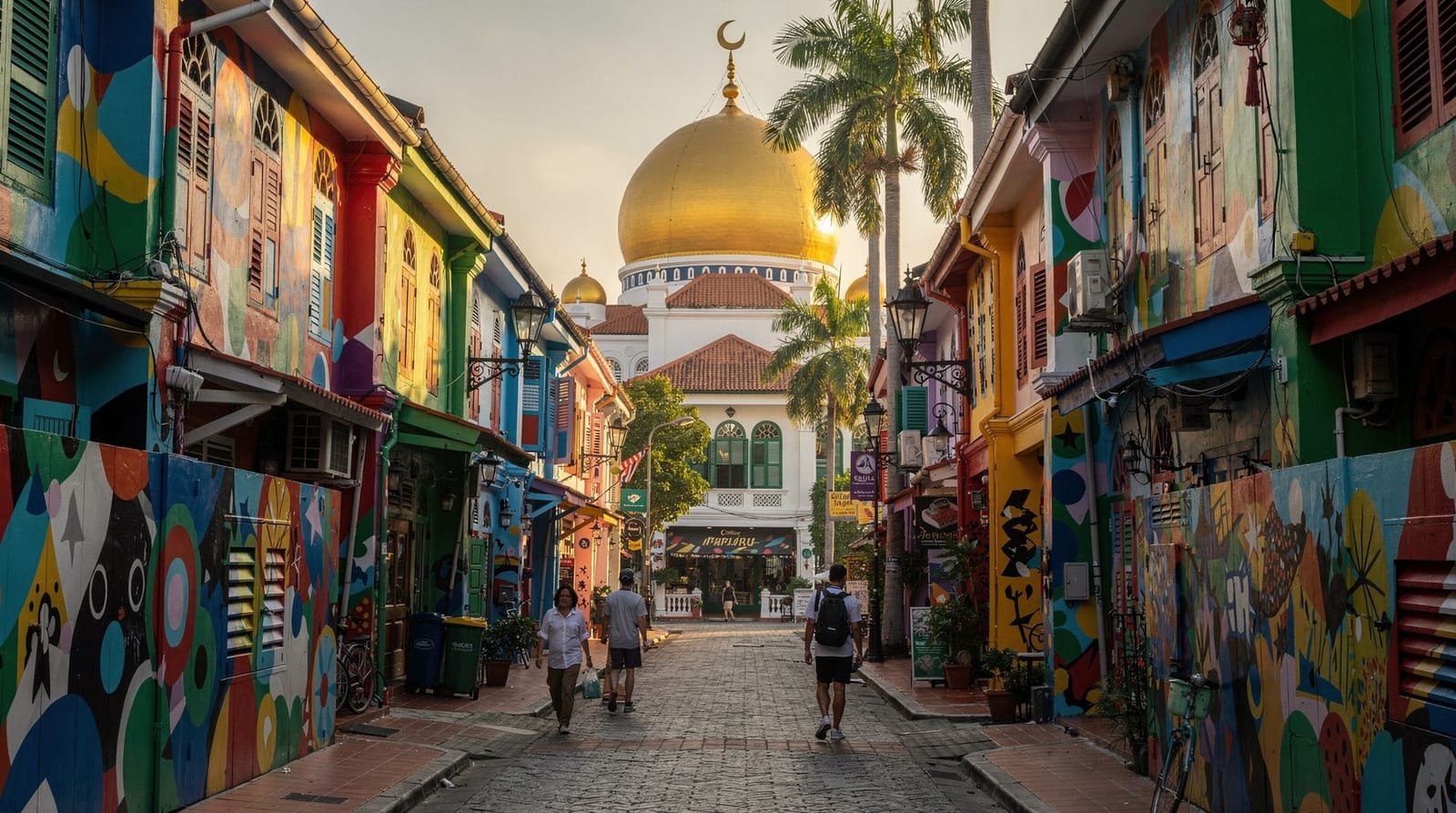
Little India works well as one half of a full cultural-quarters day. Kampong Glam is the natural pairing — about 20 minutes on foot along Serangoon Road and into the Jalan Besar area, or a short walk south. Little India is denser and more commercially active; Kampong Glam is calmer and more boutique-oriented, with better sit-down dining. Doing both in one day (morning in Little India for the wet market and temples, afternoon in Kampong Glam for Sultan Mosque and Haji Lane) is a common and efficient itinerary for visitors with only a day or two to cover Singapore’s ethnic quarters.
What to bring and what to know before you go
Dress: bring a light layer to cover shoulders for temple visits. A scarf or sarong in a bag takes no space. The heat makes this feel onerous — the temples often have sarongs at the entrance but it is better to come prepared.
Cash: carry SGD 20–30. Not all hawker stalls accept card, and money changers on Serangoon Road give slightly better rates than the airport for most currencies.
Pace: Little India rewards slow walking and spontaneous stops more than most Singapore areas. The visual density — jasmine garlands, gold jewellery in window displays, towers of incense, fruit stacked in the wet market — is high. Budget more time than you think you need.
Photography: ask before photographing individuals, especially vendors and temple devotees during prayer. Most people are happy to be photographed, but a gesture and a smile goes a long way. Inside the temples, check with staff before using a camera.
Practical logistics
Little India MRT: North-East Line (purple) and Downtown Line (blue) interchange. Exit B for Serangoon Road and Tekka Centre direction; Exit F for a quieter entry onto Hindoo Road.
Getting to Chinatown: 4 stops south on the Downtown Line to Chinatown station. Or walk about 30 minutes through the Jalan Besar area (an interesting route that passes through a traditional residential neighbourhood).
Getting to Bugis/Kampong Glam: 2 stops south on the Downtown Line to Bugis. Or walk along Serangoon Road south to the Jalan Besar area and into Kampong Glam from the north (20 minutes).
Cash: useful to have. Several hawker stalls accept only cash; money changers on Serangoon Road offer competitive rates.
Tap water: safe to drink throughout Singapore. Carry a bottle — dehydration is a real risk in the heat.
Where to go next from Little India
Little India is one stop on a wider run of heritage districts, and it helps to decide early what the rest of your day looks like. For a deeper, street-by-street read of the district itself, the Little India guide goes further than this overview, and the ethnic quarters guide explains how Little India, Chinatown and Kampong Glam fit together as a trio.
If the temples are what draw you, the Sri Mariamman Temple in Chinatown makes a good counterpoint: it is the Hindu temple of the Chinese quarter, and seeing both in one day shows how the traditions sit side by side. Chinatown itself is an easy next stop by MRT, and Bugis is the closest neighbour if you want shopping and street markets after the morning’s walking.
Food is the other thread. Much of what you will eat here is halal-friendly or vegetarian by tradition, and the halal food guide helps you read the signs and certificates at stalls. If you are watching the budget, the best cheap eats in Singapore puts the prices you find at Tekka Centre in the context of the whole city. Visiting during the festival season? A personal account of the lights and crowds is in the Little India Deepavali blog post, which pairs well with the practical notes above.
The Sri Srinivasa Perumal Temple
Further north on Serangoon Road (about 15 minutes walk from the MRT), the Sri Srinivasa Perumal Temple is one of the oldest Vaishnava (Vishnu-worshipping) Hindu temples in Singapore, founded in 1855. The gopuram (gateway tower) was added in 1979 and is 23 metres tall, covered in detailed polychrome sculptures of Vishnu and associated deities in a Dravidian style.
This temple is the starting point of the Thaipusam procession — one of the most intense Hindu festivals, in which devotees carry kavadi (elaborate devotional frames attached to the body via hooks and skewers) in a state of trance from this temple to the Sri Thendayuthapani Temple on Tank Road, about 3 km away. The procession draws hundreds of thousands of spectators and participants and is one of the most visually extraordinary public events in Singapore. Thaipusam 2026 falls in late January or early February.
For day-to-day visits, the temple is quieter and worth visiting for the architecture alone. Combine it with the flower stalls on Serangoon Road and Sri Veeramakaliamman Temple for a temple walk that covers both Shaivite and Vaishnavite traditions within a few blocks.
Kopi and local coffee culture
Little India is a good area to try traditional Singapore kopi — coffee made by filtering through a sock with a small amount of condensed milk or evaporated milk, served hot or iced. The proper names: kopi (hot, with condensed milk), kopi-o (black), kopi-o kosong (black, no sugar), kopi peng (iced). Price at any traditional kopi shop: SGD 1.20–2.00. Several old-school kopi tiam (coffee shops) operate around the Serangoon Road area, opening from 6 or 7 am. The contrast with the SGD 6–8 flat whites at Haji Lane cafes is instructive.
Frequently asked questions about Little India
Is Little India safe?
Yes. Singapore is one of the safest countries in Asia. The Sunday concentration of migrant workers can feel overwhelming in terms of crowd density, but there is no safety concern. Pickpocketing and scams exist in Singapore generally but at extremely low rates compared to other global cities.
What is the best time to visit Tekka Centre?
Early morning (7–9 am) for the wet market at its freshest and the breakfast hawker rush. The hawker centre runs through the day until around 9 pm. Weekday mornings have shorter queues at the most popular stalls.
Is Little India good for vegetarians?
Very much so. South Indian cuisine has a strong vegetarian tradition — thali (rice plate with multiple vegetable curries), idli (steamed rice cakes), dosa (fermented crepes), sambar (lentil soup), and coconut chutney are all vegetarian. Several restaurants on Serangoon Road specialise specifically in vegetarian Tamil food. See the vegetarian food in Singapore guide.
How long do I need in Little India?
A focused morning visit covering Tekka Centre, the flower stalls, and Sri Veeramakaliamman Temple takes about 2–3 hours. Add Mustafa Centre and you need a full half-day. Combining Little India with Kampong Glam in the afternoon makes a logical full-day cultural quarter circuit.
What should I wear to visit temples in Little India?
Cover your shoulders and knees. Sarongs or lightweight fabric wraps are typically available at major temple entrances if you are not appropriately dressed. Remove shoes before entering all Hindu temples. Avoid visiting during prayer ceremonies unless you intend to observe respectfully and quietly.
Can I combine Little India with Kampong Glam in one day?
Yes, easily. They are about 20 minutes apart on foot or 2 MRT stops via the Downtown Line. A common pattern is Little India in the morning (Tekka Centre wet market, Sri Veeramakaliamman Temple) and Kampong Glam in the afternoon (Sultan Mosque, Haji Lane), finishing with dinner in either quarter.
Top experiences
Bookable activities with verified prices and instant confirmation on GetYourGuide.