Vegetarian food in Singapore: where to eat, what to order, and what to watch out for
Singapore: Little India, Tekka Centre and food tastings tour
Is Singapore easy for vegetarians?
Reasonably — not as easy as India but manageable with knowledge. Indian vegetarian food (Little India, Tekka Centre) is the strongest option. Most hawker centres have at least one vegetarian stall. The main challenge is hidden animal products — belacan (shrimp paste) is common in Malay and Chinese sauces, and lard is used at many Chinese hawker stalls. Being specific about your requirements gets better results than assuming.
| Strongest area | Little India / Tekka Centre (South Indian vegetarian) |
| Typical meal cost | SGD 3–14 |
| Watch for | Belacan (shrimp paste), lard, oyster sauce, fish sauce |
| Best format | Banana leaf rice, dosai, economy rice |
| Vegan difficulty | Moderate — dairy and egg need explicit checking |
Vegetarian eating in Singapore: honest assessment
Singapore is a functional city for vegetarians, not an easy one. The default cooking tradition across Chinese, Malay, and Indian Muslim hawker food uses shrimp paste, fish sauce, lard, and other animal products in ways that are often invisible from a menu. But with knowledge of what to look for and where to go, a vegetarian (and to a greater extent, a lacto-ovo vegetarian) can eat well and affordably.
Vegans face more specific challenges — dairy is present in many Indian dishes, and “vegetarian” at hawker stalls does not automatically mean dairy-free or egg-free.
This guide is direct about the challenges and practical about the solutions.
The strongest option: Indian vegetarian food
South Indian Tamil vegetarian food — served at Little India hawker stalls, at Tekka Centre, and at Indian vegetarian restaurants across the island — represents Singapore’s most accessible and reliable vegetarian tradition.
Why: Tamil Brahmin and many Hindu traditions in Singapore practice vegetarianism, creating a long-established hawker tradition of 100% vegetarian Indian stalls. These stalls serve food that is deliberately free from meat and seafood in the primary ingredients.
Dishes to seek:
Banana leaf rice: White rice served on a banana leaf with multiple vegetable curries, rasam (thin sour tomato-lentil soup), sambar (lentil-vegetable soup), pickle, and papadum. You scoop the curries yourself and the leaf is refilled. Typically SGD 8–14 at vegetarian-only restaurants; SGD 6–10 at hawker stalls.
Dosai (dosa): Large fermented rice-and-lentil crepe, crisp outside, soft inside. Served with sambar and coconut chutney. Masala dosai has a spiced potato filling. Plain dosai has no filling. Both are vegan if no ghee is added (ask to specify “no ghee” for strict vegan).
Idli and vadai: Steamed rice cakes (idli) or lentil fritters (vadai), served with sambar and chutney. SGD 3–5 for a small set. Light, filling, excellent.
Puri with curry: Deep-fried puffed wheat bread with potato or chickpea curry. SGD 3–5.
Best locations:
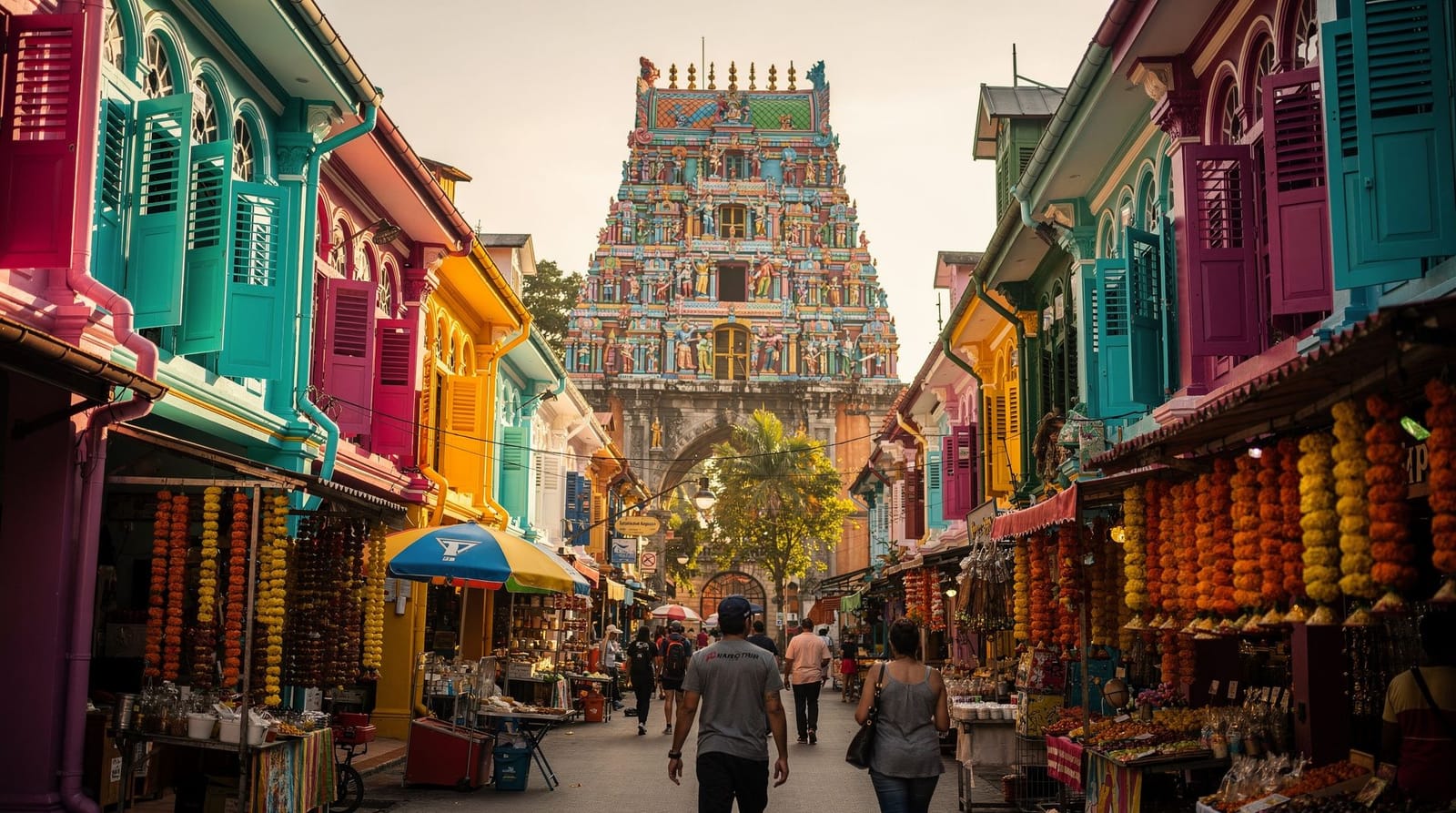
Tekka Centre (Little India, corner of Serangoon Road and Buffalo Road): Multiple Indian vegetarian stalls including Komala Vilas and stalls by the name of various Sri Lankan and Tamil operators. The busiest and most reliable cluster of Indian vegetarian food in Singapore.
Singapore: Little India, Tekka Centre and food tastings tourKomala Vilas Restaurant — 76-78 Serangoon Road. A Singapore institution since 1947, fully vegetarian, South Indian cuisine. Self-service and sit-down options. Very affordable (SGD 10–15 for a full meal).
MTR Restaurant (chain with Singapore outlets): South Indian vegetarian chain from Bangalore, with locations in Singapore serving masala dosai and breakfast items.
Economy rice: the most flexible hawker option
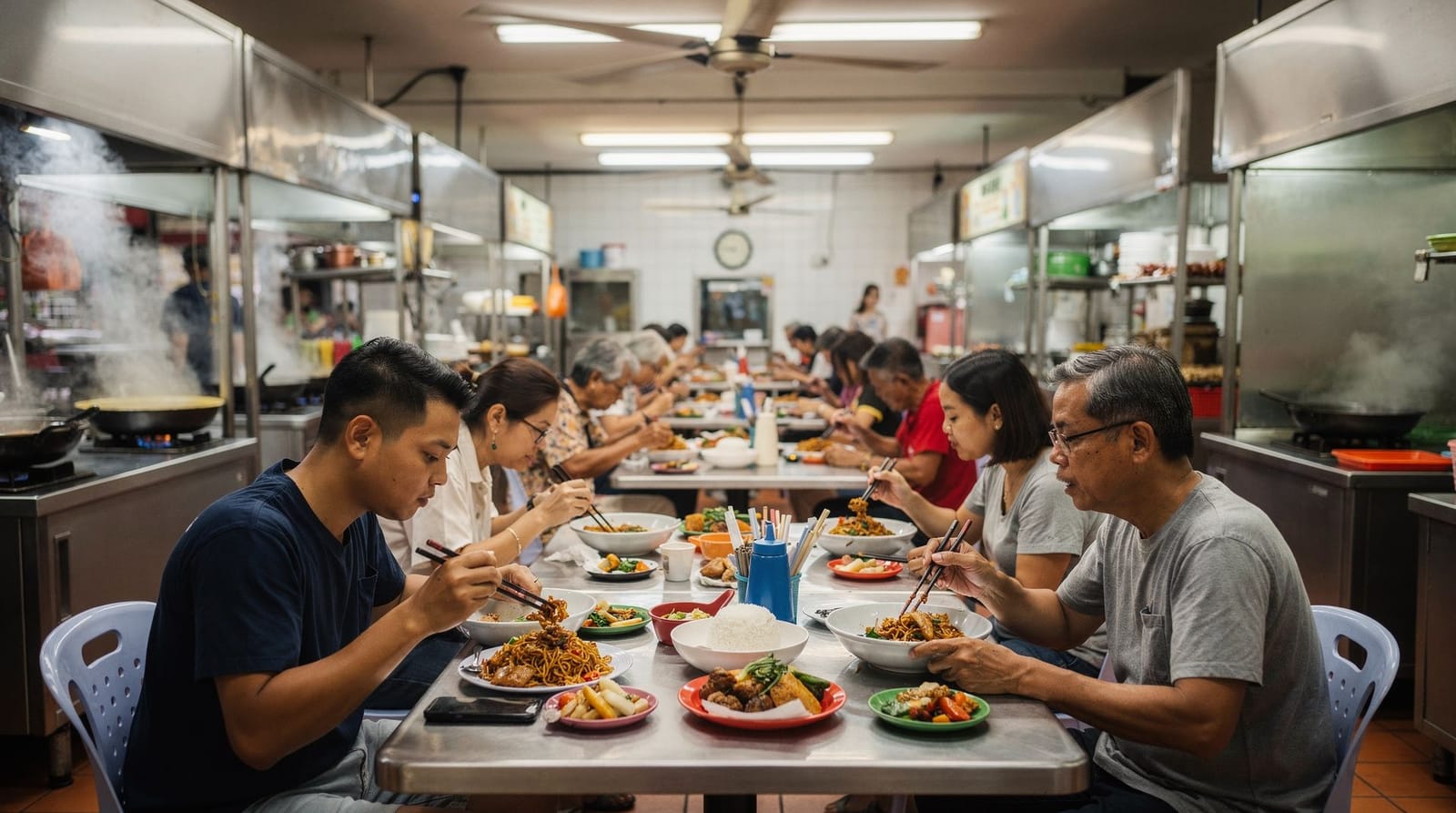
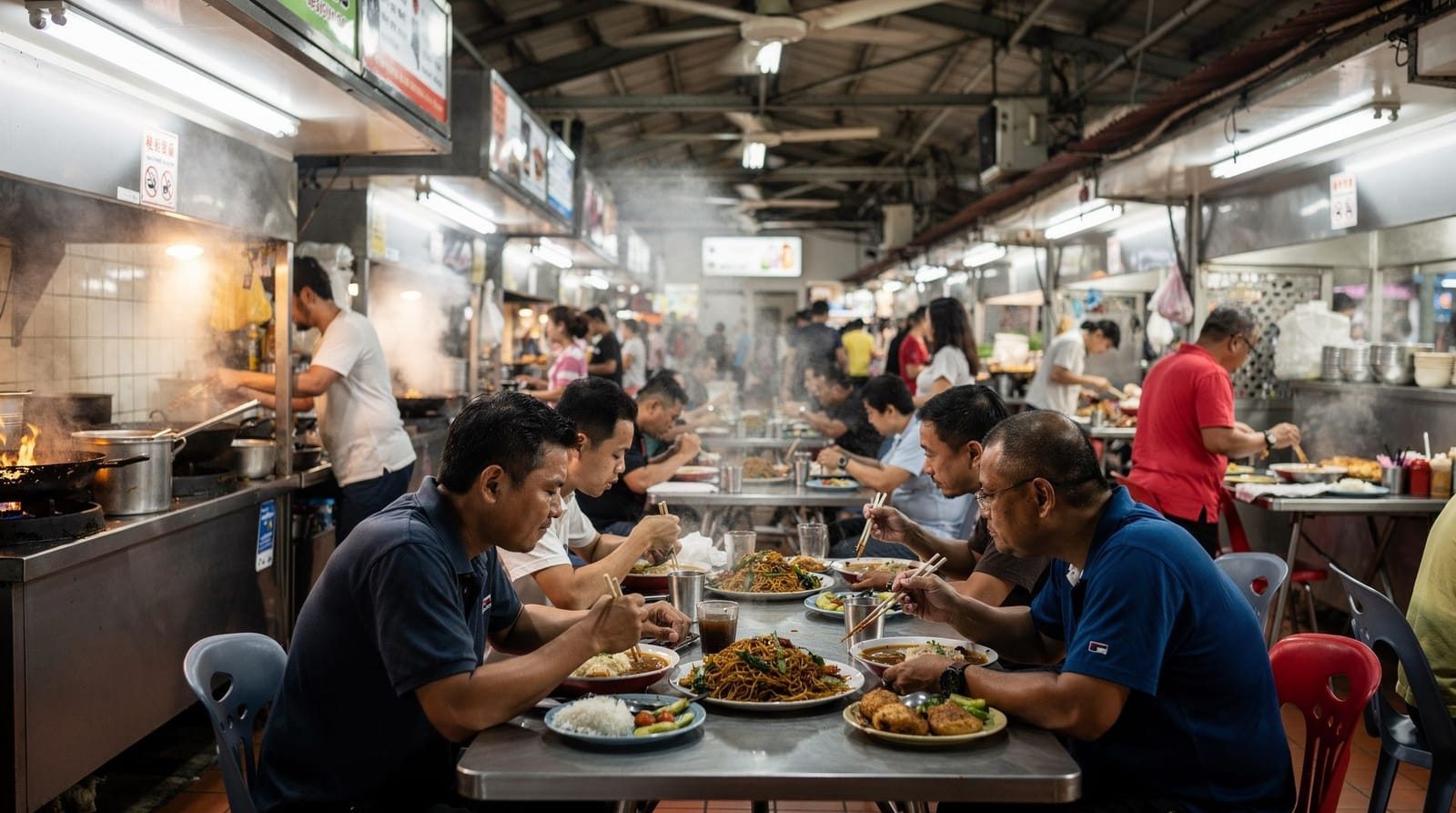
Economy rice (also called mixed rice, or “cai fan” in Hokkien) is a hawker format where cooked dishes are displayed in steam trays — you point to what you want and it is spooned over rice. The appeal for vegetarians: you can see exactly what you are selecting.
What to look for: Braised tofu, stir-fried leafy vegetables (kangkong, kai lan, morning glory), egg dishes (fried egg, braised egg), vegetable curry, and fermented bean curd preparations. At dedicated Chinese vegetarian economy rice stalls, all dishes are meat-free.
The challenge: At mixed economy rice stalls (where meat and vegetable dishes coexist), cross-contamination of serving spoons is common. A dedicated vegetarian stall is preferable if strict.
Cost: Approximately SGD 4–7 for rice with two to three vegetable dishes.
Yong tau foo
One of the most vegetarian-friendly hawker formats. Yong tau foo involves selecting items — tofu, fish balls, vegetables, mushrooms, bittergourd, lady’s finger (okra) — which are cooked in a clear broth or with a sauce.
The issue: The default “fish balls” and some stuffed tofu at many yong tau foo stalls contain minced fish. However, purely vegetarian items (vegetables, plain tofu, mushrooms) can be selected alongside. Specify “no fish ball, no fish cake” when ordering.
Fully vegetarian versions exist at some stalls — ask whether the broth is made with fish stock or vegetable stock. The clear broth version with only vegetable and plain tofu items is the most reliably vegetarian option.
Cost: SGD 4–8 depending on number of items.
Carrot cake (chai tow kway)
Despite the name, carrot cake in Singapore is not a dessert — it is a savoury dish of stir-fried radish cake (white daikon radish, not carrot) with egg, garlic, and a choice of white (no dark sauce) or black (with dark sweet soy sauce) preparation.
The vegetarian question: Many carrot cake stalls use XO sauce or dried shrimp in preparation — ask “no dried shrimp, no XO sauce” explicitly. White carrot cake fried with egg and no additives can be vegetarian if prepared correctly. Not reliable without explicit clarification.
Chinese vegetarian / Buddhist vegetarian food
Singapore has a tradition of Chinese Buddhist vegetarian food, reflecting the significant Buddhist population in the ethnic Chinese community. These stalls typically use:
- Mock meat (wheat gluten, soy protein shaped to resemble pork, chicken, or seafood)
- Tofu in multiple forms
- Mushrooms (particularly shiitake, which adds umami depth)
- Buddhist-tradition ingredients: no garlic, no onion, no chives at some stricter operations (these are considered stimulants in certain Buddhist schools)
Where to find it: Dedicated vegetarian stalls exist at several hawker centres and food courts, more commonly in residential estates than tourist zones. Vegetarian food courts exist in the Chinatown and Little India areas. The NTUC Vegetarian section at large FairPrice supermarkets sells packaged Buddhist vegetarian products.
Hidden non-vegetarian ingredients: what to watch for
The most important practical knowledge for vegetarians in Singapore:
Belacan (shrimp paste): The base of most Malay and Peranakan sauces, including laksa, many sambals, and some fried rice preparations. Not vegetarian. Not always visible on menus. Ask at any Malay or Peranakan stall specifically.
Lard: Used as cooking fat at many Chinese hawker stalls — in noodle dishes, fried rice, and sometimes in the cooking oil. Not used at Malay or Indian Muslim stalls. Ask “no lard” explicitly at Chinese stalls if this matters to you.
Oyster sauce: Commonly used in “vegetable” stir-fries at Chinese stalls (kai lan with oyster sauce is the standard preparation). Ask for vegetarian oyster sauce or “no oyster sauce” if strict. Many stalls can accommodate this.
Fish sauce: Used in some preparations as a seasoning — invisible in final dishes. Present in some Southeast Asian-style sauces at mixed-cuisine stalls.
Chicken stock / prawn stock: Many apparently vegetarian soups and sauces use animal-based stock. Ask whether the broth is “purely vegetable” if you need this confirmed.
Vegetarian at specific hawker centres
Little India / Tekka Centre: Best overall for vegetarians. Multiple dedicated Indian vegetarian stalls. Good mix of South Indian and Indian Muslim vegetarian options.
Chinatown Complex Food Centre: Has a few Chinese Buddhist vegetarian stalls mixed among 260+ total stalls. Look for stalls with signs in Mandarin characters for vegetarian food (素食).
Tiong Bahru Market: Good variety, including some Indian stalls and a mixed economy rice stall with vegetable options. See Tiong Bahru Market for more.
Lau Pa Sat: Has an Indian vegetarian option and some stalls that can accommodate vegetarian requests. The satay outside from 19:00 is not vegetarian.
Ordering with confidence: a short script
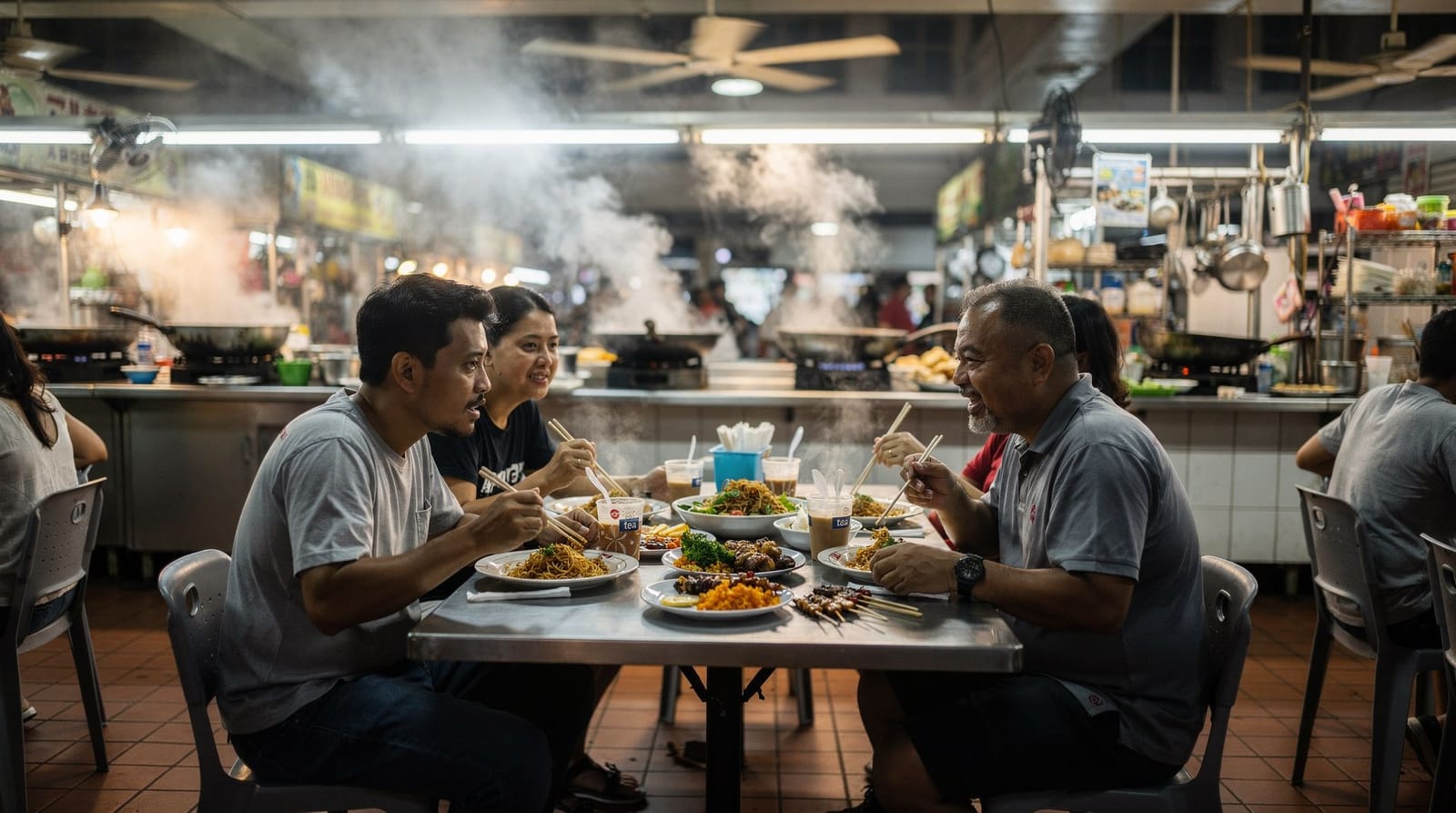
For a mixed hawker stall where you are unsure, a simple three-part request works well in most of Singapore: state what you want (“economy rice, no meat please”), flag the specific risk ingredient for that cuisine (“no lard” for Chinese stalls, “no belacan” for Malay stalls, “no fish sauce” for mixed Southeast Asian stalls), and confirm if unclear (“is this vegetarian?”). Stall owners in tourist-frequented hawker centres are generally used to this and will answer directly rather than being offended by the question — Singapore’s hawker culture is practical, not precious, about dietary requests.
Restaurants beyond hawker centres
Whole Earth: A well-regarded Chinese-Peranakan vegetarian restaurant with multiple branches. Uses mock meat and genuine Peranakan spice profiles without seafood/pork. Priced higher than hawker (SGD 20–35 per person) but provides a restaurant experience.
Joie by Dozo: Upscale vegetarian tasting menu restaurant (Orchard Central). SGD 50–80 for a set menu — appropriate for a special occasion.
The Living Café: Plant-based health food in Bukit Timah. More Western-style wholefood orientation.
Vegetarian traditions in Singapore compared
| Tradition | Reliability | Best dishes | Vegan-friendly |
|---|---|---|---|
| South Indian (Tekka Centre) | Highest | Banana leaf rice, dosai, idli | Mostly, check for ghee |
| Chinese Buddhist | High at dedicated stalls | Mock meat, tofu dishes | Check for egg |
| Economy rice (dedicated stall) | High | Braised tofu, vegetables | Check for egg dishes |
| Malay/Peranakan | Low without asking | Very limited | Not reliable |
| Mixed Chinese hawker stalls | Low without asking | Vegetable stir-fries | Ask “no oyster sauce” |
The clearest pattern: dedicated vegetarian stalls (Indian or Chinese Buddhist) are reliable by default; mixed stalls require explicit questions every time.
Vegetarian food tours and guided experiences
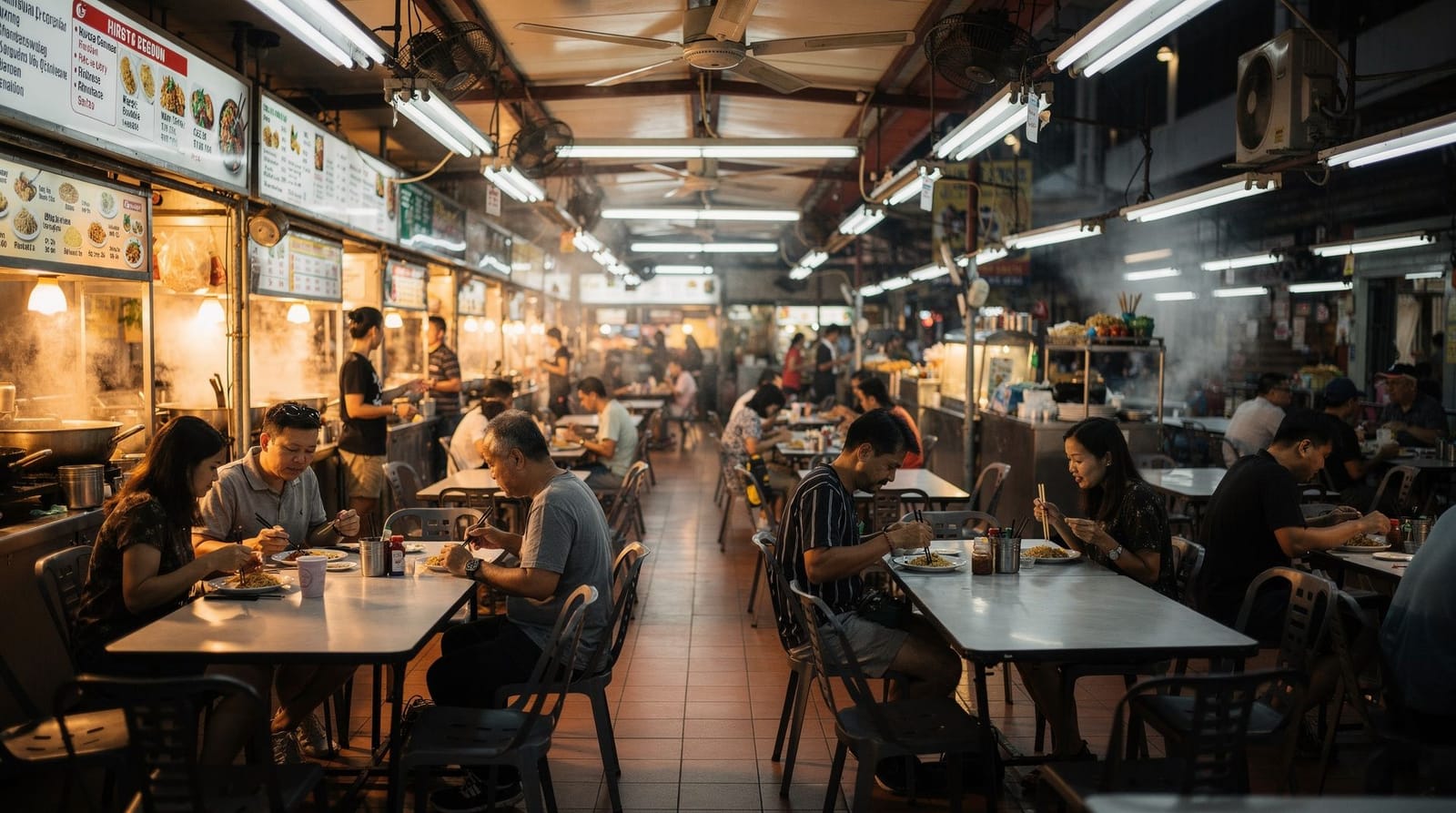
If navigating hidden animal products feels like a hassle on your own, a guided hawker food tour that flags vegetarian-friendly stalls in advance removes the guesswork, particularly useful on a first visit to Singapore’s hawker centres.
Local hawker food tour with tastings — ask your guide to flag vegetarian stallsPractical phrases for vegetarians at hawker stalls
- “No meat please” — understood at all stalls
- “Vegetarian” — the word is understood in English; at Malay stalls “sayuran saja” (vegetables only) also works
- “No shrimp paste / no belacan” — essential phrase at Malay and Peranakan stalls
- “No lard” — specific phrase needed at Chinese stalls
- “Is this vegetarian?” (“Ini vegetarian?”) — understood in Singlish
- At Indian stalls: “Pure veg only” is understood
Fitting vegetarian meals into the rest of your trip
Food is only one part of a Singapore stay, and the easiest way to eat well as a vegetarian is to plan meals around where you already are. If you are still shaping the trip, how many days in Singapore and plan a trip to Singapore help you decide how much time to give to neighbourhoods with reliable vegetarian food. First-time visitors can start with Singapore for first-timers, then layer food stops on top of the sights.
Learn the wider food scene first. Vegetarian choices make more sense once you know what the default dishes are. What to eat in Singapore and must-try dishes in Singapore show what other travellers are ordering, so you can spot which dishes have a vegetarian cousin and which are best left alone. Best hawker centres is a good companion for choosing where to go, and Maxwell Food Centre and Chinatown complex food are useful for seeing how a large mixed hawker centre is laid out before you try to order in one.
Dishes that need a closer look. Some famous dishes are built around animal products, and it helps to know why before you are standing at the counter. Laksa guide explains the gravy that makes laksa difficult for vegetarians, and hainanese chicken rice is simply not a vegetarian dish. Reading about them is still worthwhile, because the same cooking logic applies to many other stalls. Breakfast is gentler: kaya toast breakfast is a classic morning stop that many vegetarians who eat egg and dairy can enjoy, although it is worth asking how the eggs are served.
Travelling with others. If your group includes meat eaters, a shared table at a big hawker centre works well because everyone orders from a different stall. Kid-friendly hawker covers the practical side of eating with children, and halal food in Singapore is useful if your group also has halal requirements, since the two overlap in places but are not the same thing. Solo travel in Singapore is worth a look if you are on your own and want to know how comfortable it is to eat alone.
Neighbourhood by neighbourhood. Little India remains the strongest base for vegetarian eating, and Kampong Glam sits close enough to combine with it in a single day. If you are exploring the older districts, Chinatown rewards a slow wander with Buddhist vegetarian stalls tucked in among the others. For a food-led plan across several days, the foodie itinerary shows how meals can anchor each day, and you can adapt its stops to vegetarian-friendly stalls using the advice above.
Eating well without overspending. Vegetarian hawker food is among the cheapest meals you can find, which makes it a natural fit with Singapore on a budget and cheap eats in Singapore. Dedicated stalls rarely need any negotiation, and that saves you time as well as money.
Budget and cost
Vegetarian eating in Singapore is affordable — Indian hawker stalls and economy rice are among the cheapest formats at hawker centres.
| Meal | Typical price |
|---|---|
| Banana leaf rice (vegetarian restaurant) | SGD 8–14 |
| Economy rice (2 vegetable dishes) | SGD 4–6 |
| Dosai with sambar and chutney | SGD 3–6 |
| Plain tofu yong tau foo bowl (8 items) | SGD 5–7 |
| Idli + vadai set | SGD 3–5 |
For a full picture of Singapore food costs, see Singapore travel costs.
Planning a vegetarian day in Singapore
A practical one-day vegetarian itinerary:
Breakfast (07:30–09:30): Dosai and idli at Tekka Centre, Little India. Two dosai plus sambar and coconut chutney — SGD 5–7. Pair with a filter coffee at the Indian coffee stall (thick, boiled coffee with milk — different from kopi, very good).
Morning walk: Little India — Sri Veeramakaliamman Temple, Serangoon Road, Mustafa Centre if you want to browse. The neighbourhood has the highest concentration of vegetarian-friendly food in Singapore. See Little India Singapore.
Lunch (12:00–13:30): Komala Vilas on Serangoon Road for banana leaf rice — SGD 10–14 for a full vegetarian spread. Or yong tau foo at a hawker centre — select only vegetable and plain tofu items, request vegetable broth.
Afternoon: Kampong Glam / Haji Lane (colourful murals, independent cafes, some vegetarian-friendly cafe options alongside mainstream food).
Dinner (18:30–20:00): Whole Earth restaurant for Chinese-Peranakan vegetarian food — SGD 20–35 per person. Or return to a hawker centre for economy rice with two vegetable dishes.
The plant-based Singapore scene beyond hawkers
Singapore’s plant-based restaurant scene has expanded significantly since 2018, driven by a combination of health-consciousness, environmental awareness, and the government’s “30 by 30” food security initiative (a goal to produce 30% of nutritional needs locally by 2030, which includes plant proteins).
Notable plant-based and vegetarian restaurants beyond hawker centres:
Herbivore: Multiple branches, Japanese-influenced vegetarian cuisine, very approachable for people who find Indian vegetarian food unfamiliar.
Loving Hut: Buddhist-influenced vegan chain, multiple Singapore locations, affordable.
VeganBurg: Singapore-born vegan burger chain, plant-based burgers and sides. The only global plant-based burger brand to originate in Singapore.
Afterglow by Anglow: Raw vegan cafe at Keong Saik Road (Chinatown fringe), organic focus. Pricier than hawker (SGD 20–40 per person) but entirely plant-based.
These options are more expensive than hawker centres but provide variety for longer stays. For budget planning, see Singapore on a budget.
Vegetarian eating near other Singapore attractions
If you are structuring sightseeing around meal times, several major attractions sit close to strong vegetarian options. Near Little India, Tekka Centre is a five-minute walk from the Sri Veeramakaliamman Temple, making it a natural lunch stop after a morning of temple visits. Near Chinatown, several Chinese Buddhist vegetarian stalls sit within the Chinatown Complex Food Centre, convenient after visiting Buddha Tooth Relic Temple or Sri Mariamman Temple. Near Tiong Bahru Market, a mixed economy rice stall with reliable vegetable options rounds out the neighbourhood’s café-and-market morning. Planning meals around these clusters avoids the awkwardness of hunting for vegetarian food in areas where it is scarce.
Cross-contamination: how to assess risk
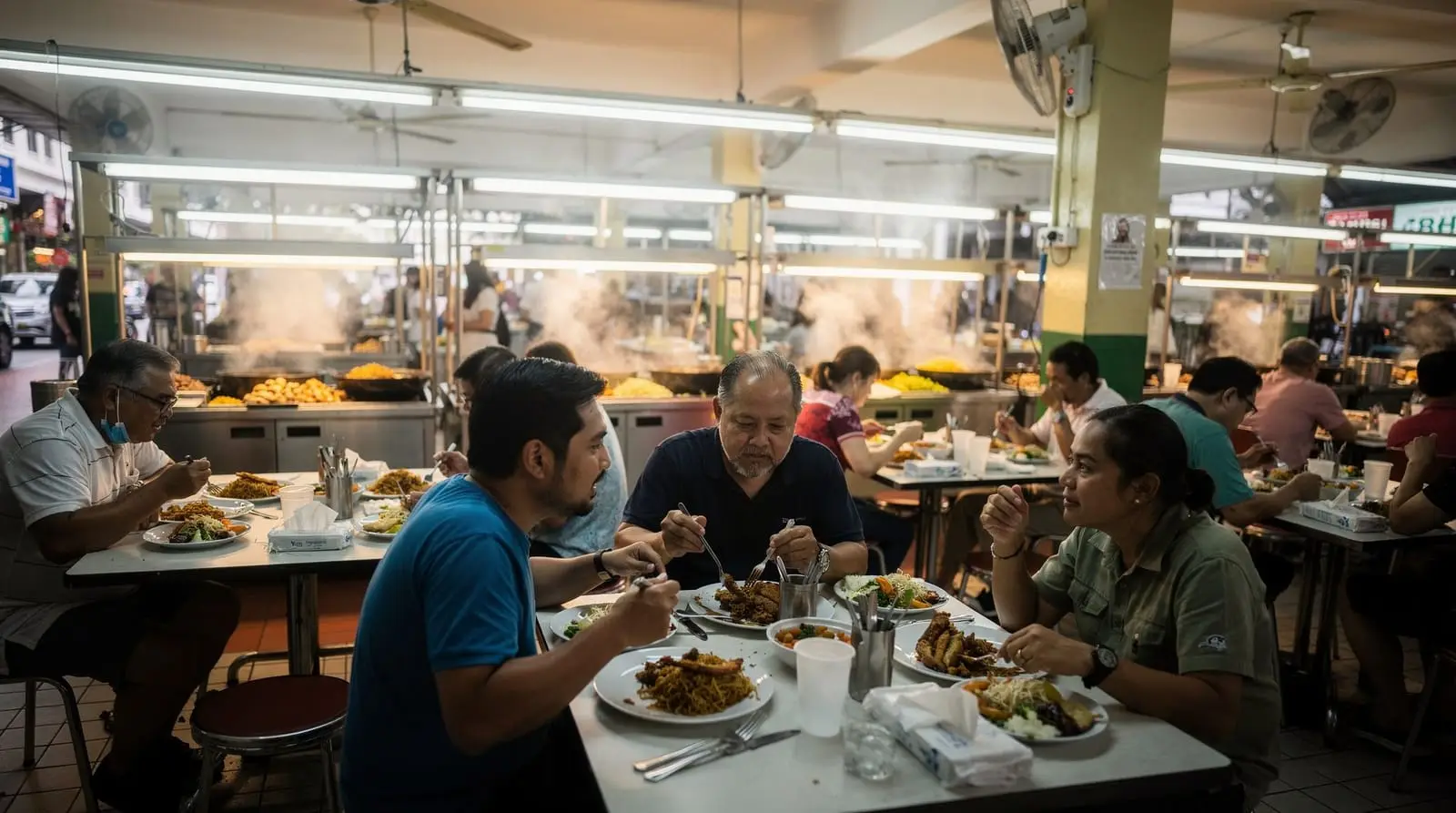
For vegetarians with strict requirements (allergies, religious requirements, or strong ethical commitment), the cross-contamination question at mixed hawker centres is real:
- Separate woks: Most hawker stalls that cook vegetarian and non-vegetarian food use the same wok, wiped between orders. This means trace animal fats from previous cooking may remain.
- Shared fryers: Stalls that fry both tofu and meat items in the same oil present contamination that even a careful order cannot prevent.
- Separate vegetarian stalls: The most reliable solution. A dedicated Indian vegetarian stall or Chinese Buddhist vegetarian stall uses separate equipment throughout.
For strict vegetarians (and particularly vegans), dedicated stalls are significantly preferable to ordering “vegetarian” at mixed stalls. The hawker etiquette guide at Hawker centre etiquette covers the general hawker environment.
Frequently asked questions about vegetarian food in Singapore
Is Singapore easy for vegans specifically?
More challenging than vegetarian. Key issues: dairy (ghee, yogurt) in Indian dishes; egg in many hawker preparations; fish sauce and oyster sauce in Chinese stir-fries; honey in some desserts. Fully vegan meals require careful selection — plain rice with specified vegetable dishes (verified dairy-free), fruit, and clear-broth soups with vegetable stock are reliable bases. The plant-based restaurant scene (Whole Earth, Herbivore, and others) is easier for vegans than hawker centres.
Are there vegetarian options at Marina Bay Sands or Sentosa resort restaurants?
Yes — major resort and hotel restaurants accommodate vegetarian and vegan requests. Quality varies; the hotel’s concierge can advise on specific restaurants with strong vegetarian menus. This is more expensive than hawker centre eating (SGD 25–60+ per person) but more reliably accommodating.
Can vegetarians eat char kway teow?
Not reliably. Traditional char kway teow is made with lard, cockles, and sometimes pork lard bits (chicharon). Requesting “no cockles, no lard” is possible at some stalls but the cooking surface and oil will have been in contact with seafood and pork. A dedicated vegetarian stall is a better choice.
Where is the best Indian vegetarian food in Singapore?
Little India — specifically Tekka Centre and Serangoon Road restaurants. Komala Vilas at 76-78 Serangoon Road is a 75-year-old institution serving pure vegetarian South Indian food. MTR Restaurant (multiple outlets) serves South Indian breakfast items.
Is the hawker centre at the airport (Changi) vegetarian-friendly?
Changi Airport’s terminal food options include Indian vegetarian stalls and some vegetarian-specifically labelled options in the food court areas. Tekka by Violet Oon in some terminals offers Indian options. The airport terminals are more expensive than city hawker centres.
Planning a vegetarian day in Singapore
A practical one-day vegetarian itinerary:
Breakfast (07:30–09:30): Dosai and idli at Tekka Centre, Little India. Two dosai plus sambar and coconut chutney — SGD 5–7. Pair with a filter coffee at the Indian coffee stall (thick, boiled coffee with milk — different from kopi, very good).
Morning walk: Little India — Sri Veeramakaliamman Temple, Serangoon Road, Mustafa Centre if you want to browse. The neighbourhood has the highest concentration of vegetarian-friendly food in Singapore. See Little India Singapore.
Lunch (12:00–13:30): Komala Vilas on Serangoon Road for banana leaf rice — SGD 10–14 for a full vegetarian spread. Or yong tau foo at a hawker centre — select only vegetable and plain tofu items, request vegetable broth.
Afternoon: Kampong Glam / Haji Lane (colourful murals, independent cafes, some vegetarian-friendly cafe options alongside mainstream food).
Dinner (18:30–20:00): Whole Earth restaurant for Chinese-Peranakan vegetarian food — SGD 20–35 per person. Or return to a hawker centre for economy rice with two vegetable dishes.
The plant-based Singapore scene beyond hawkers
Singapore’s plant-based restaurant scene has expanded significantly since 2018, driven by a combination of health-consciousness, environmental awareness, and the government’s “30 by 30” food security initiative (a goal to produce 30% of nutritional needs locally by 2030, which includes plant proteins).
Notable plant-based and vegetarian restaurants beyond hawker centres:
Herbivore: Multiple branches, Japanese-influenced vegetarian cuisine, very approachable for people who find Indian vegetarian food unfamiliar.
Loving Hut: Buddhist-influenced vegan chain, multiple Singapore locations, affordable.
VeganBurg: Singapore-born vegan burger chain, plant-based burgers and sides. The only global plant-based burger brand to originate in Singapore.
Afterglow by Anglow: Raw vegan cafe at Keong Saik Road (Chinatown fringe), organic focus. Pricier than hawker (SGD 20–40 per person) but entirely plant-based.
These options are more expensive than hawker centres but provide variety for longer stays. For budget planning, see Singapore on a budget.
Cross-contamination: how to assess risk
For vegetarians with strict requirements (allergies, religious requirements, or strong ethical commitment), the cross-contamination question at mixed hawker centres is real:
- Separate woks: Most hawker stalls that cook vegetarian and non-vegetarian food use the same wok, wiped between orders. This means trace animal fats from previous cooking may remain.
- Shared fryers: Stalls that fry both tofu and meat items in the same oil present contamination that even a careful order cannot prevent.
- Separate vegetarian stalls: The most reliable solution. A dedicated Indian vegetarian stall or Chinese Buddhist vegetarian stall uses separate equipment throughout.
For strict vegetarians (and particularly vegans), dedicated stalls are significantly preferable to ordering “vegetarian” at mixed stalls. The hawker etiquette guide at Hawker centre etiquette covers the general hawker environment.
Top experiences
Bookable activities with verified prices and instant confirmation on GetYourGuide.

Singapore: Chinatown hawkers food tour with 7 tastings

Singapore: UNESCO hawker culture Chinatown food tasting tour

Singapore: Little India, Tekka Centre and food tastings tour

Singapore: Katong local food and city highlights tour

Singapore: Lau Pa Sat night street food with Marina Bay walk