Best hawker centres in Singapore: the complete honest guide
Singapore: local hawker food tour with tastings
What is the best hawker centre in Singapore?
For first-time visitors, Maxwell Food Centre is the most accessible — central, well-known stalls, easy to navigate. For variety and local atmosphere, Old Airport Road Food Centre in the east is arguably the best overall. For a late-night experience in a landmark setting, Lau Pa Sat. Chinatown Complex has the most stalls and genuine diversity. Each serves a different purpose — this guide helps you choose.
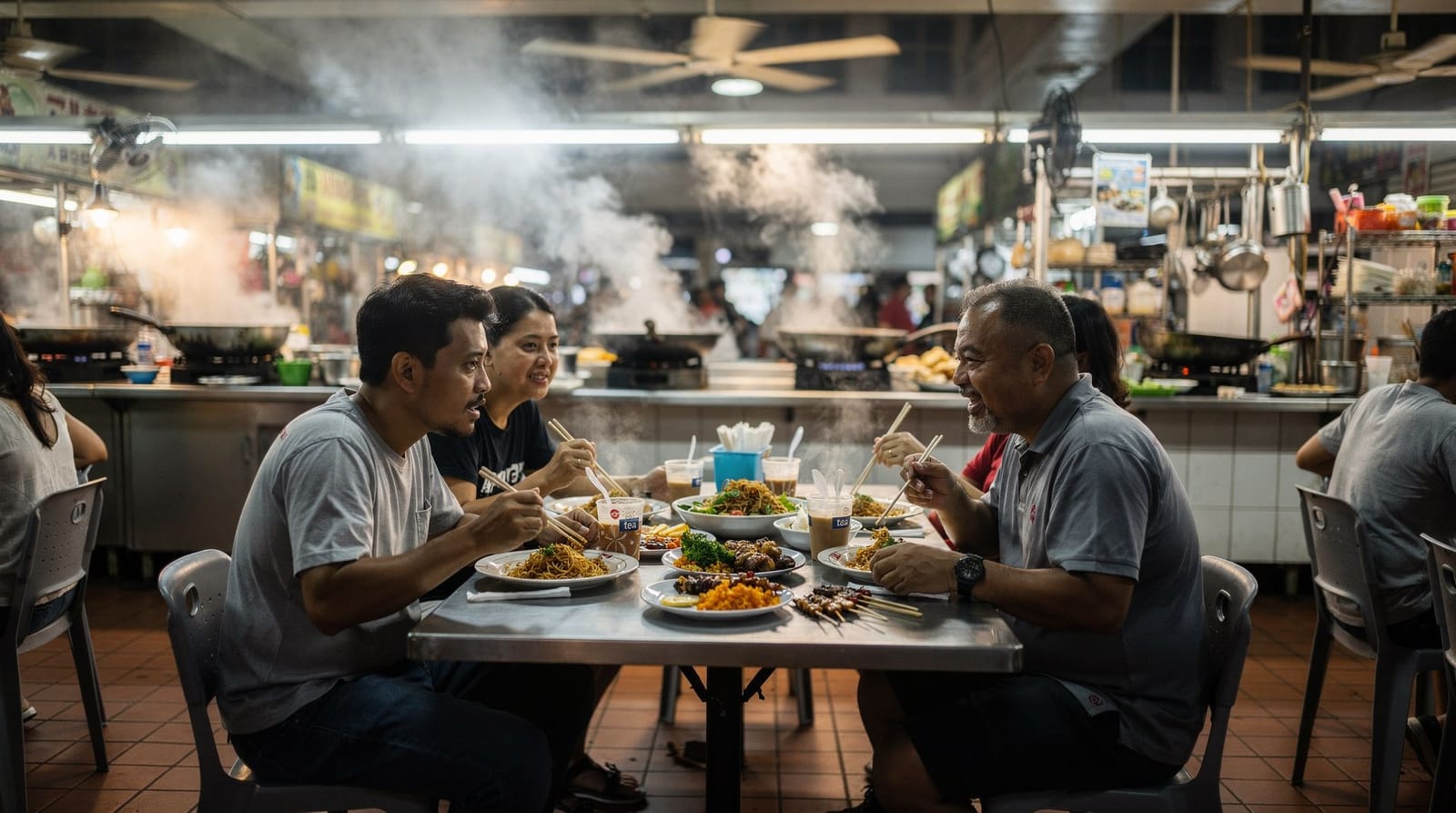
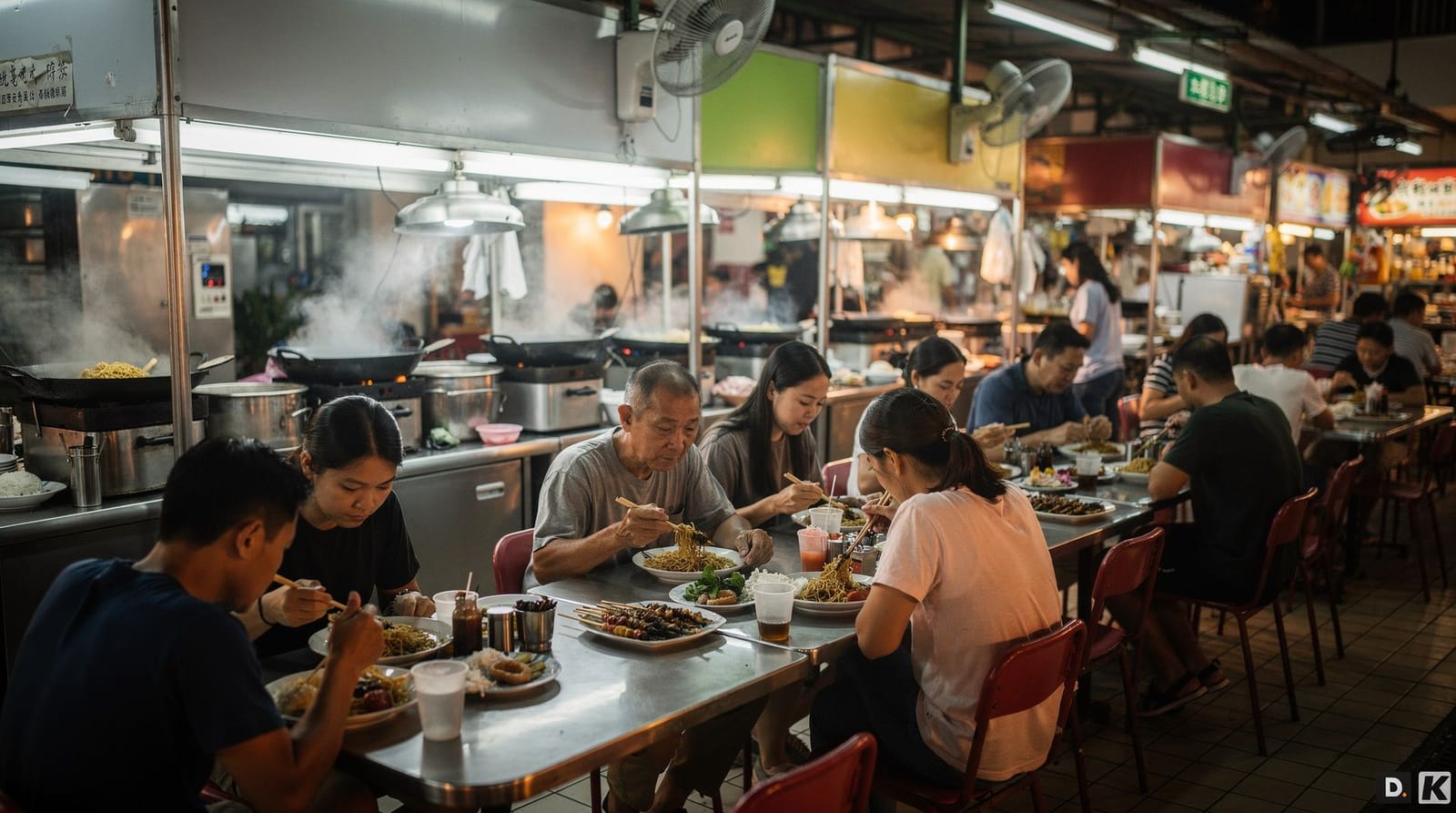
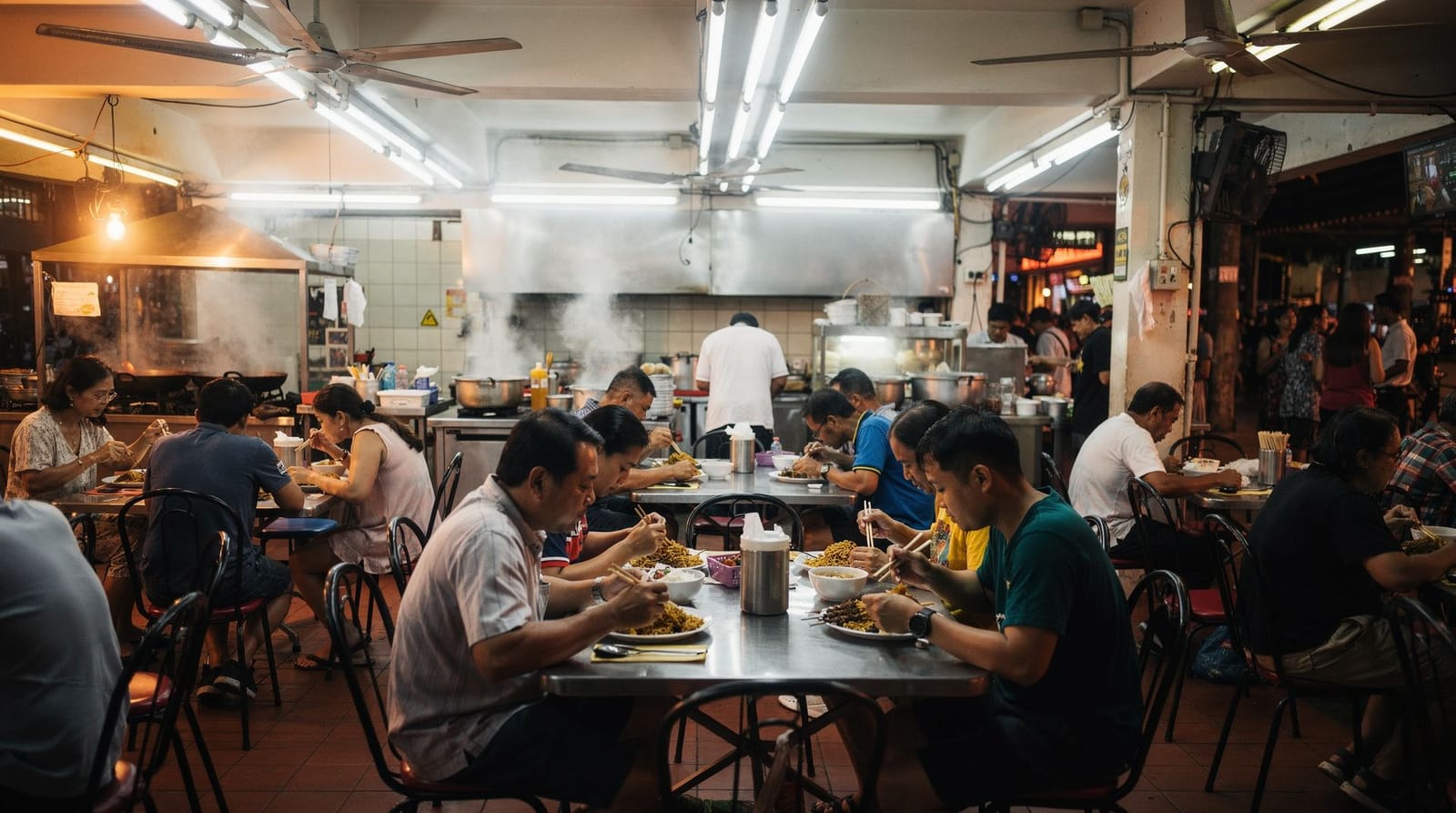
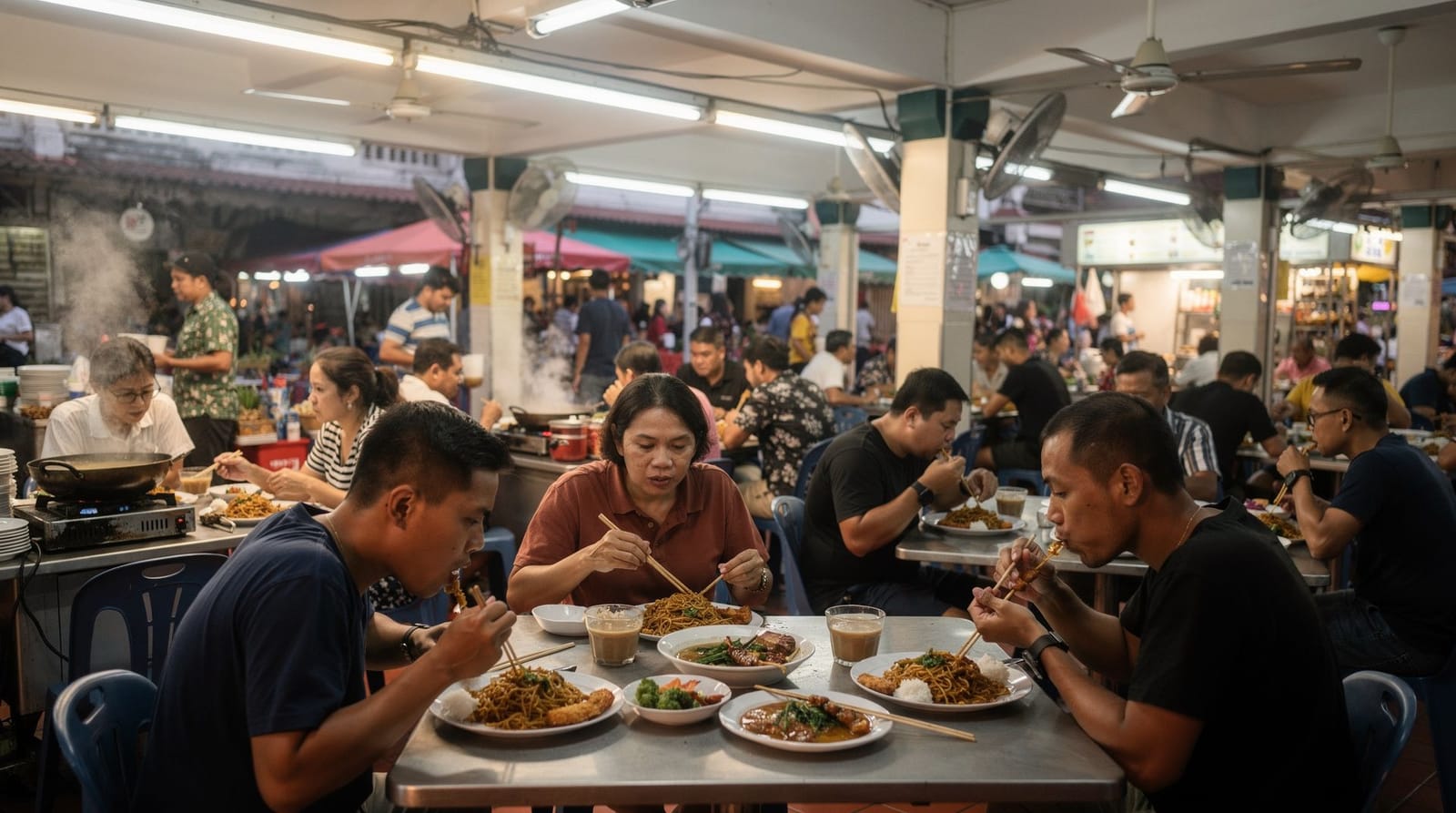
Singapore’s hawker centres are the most important food infrastructure in the country — a claim that is not an exaggeration. When UNESCO added Hawker Culture in Singapore to its list of Intangible Cultural Heritage of Humanity in 2020, it recognised something that any visitor who eats seriously in Singapore quickly understands: the hawker centre is the primary venue of Singaporean culinary identity, far more significant than the restaurants.
This guide ranks and describes the major hawker centres honestly. It names specific stalls, gives realistic prices, tells you when to avoid the queues and when the queue is worth it, and points out which centres are overrated for tourists versus genuinely excellent for everyone.
Why this list is organised the way it is
Ranking hawker centres honestly means resisting the pull of simple popularity metrics. A centre with the most tourist foot traffic is not necessarily the best, and a centre entirely unknown to visitors is not automatically more “authentic” if the food quality does not back it up. This list weighs food quality first, breadth of options second, and accessibility for a first-time visitor third — which is why Old Airport Road, slightly less convenient to reach than Maxwell, still ranks above it. Use this ordering as a starting point rather than a rigid itinerary; which centre suits you best on a given day depends heavily on where else you are exploring.
What makes a hawker centre worth visiting
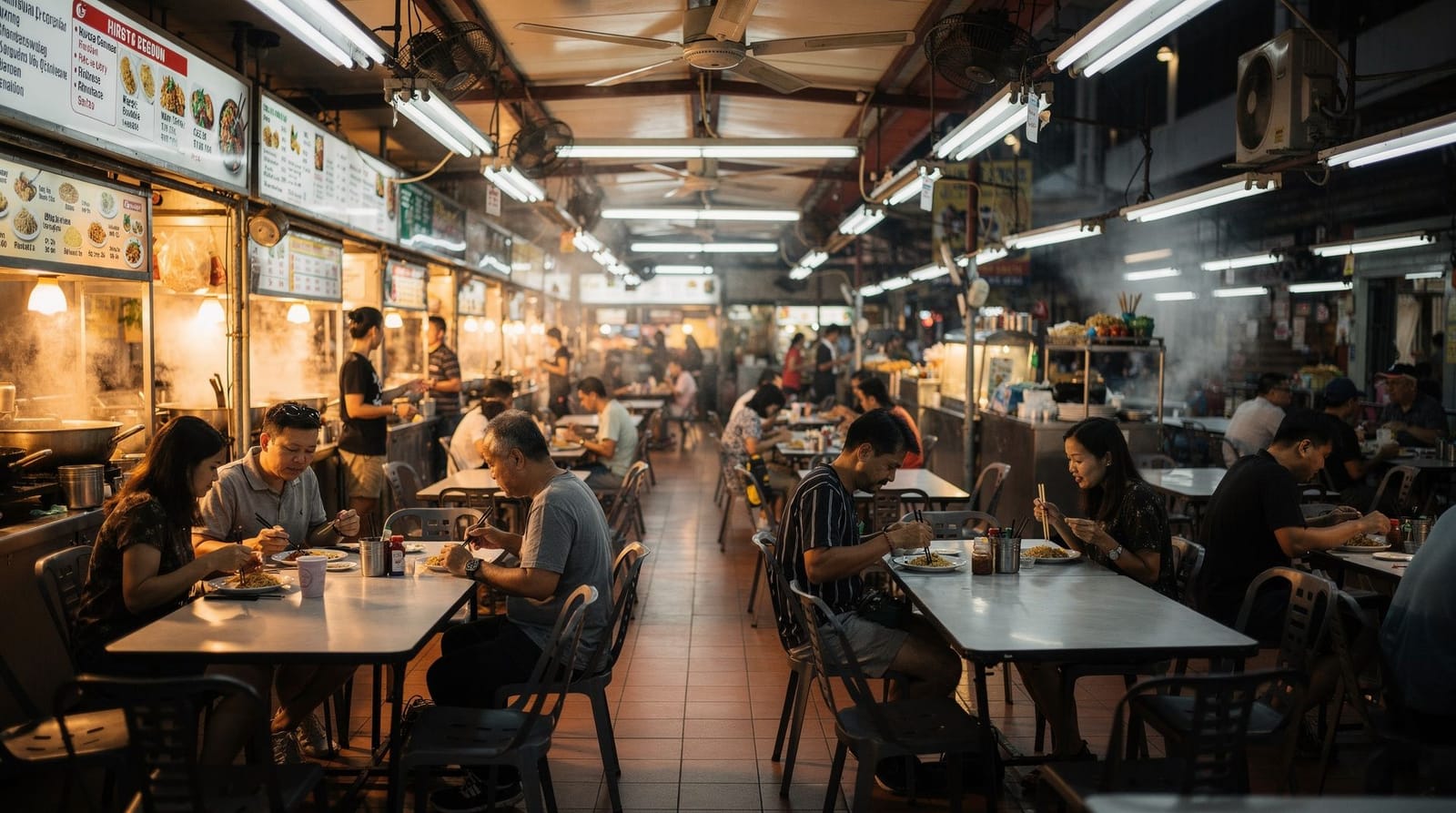
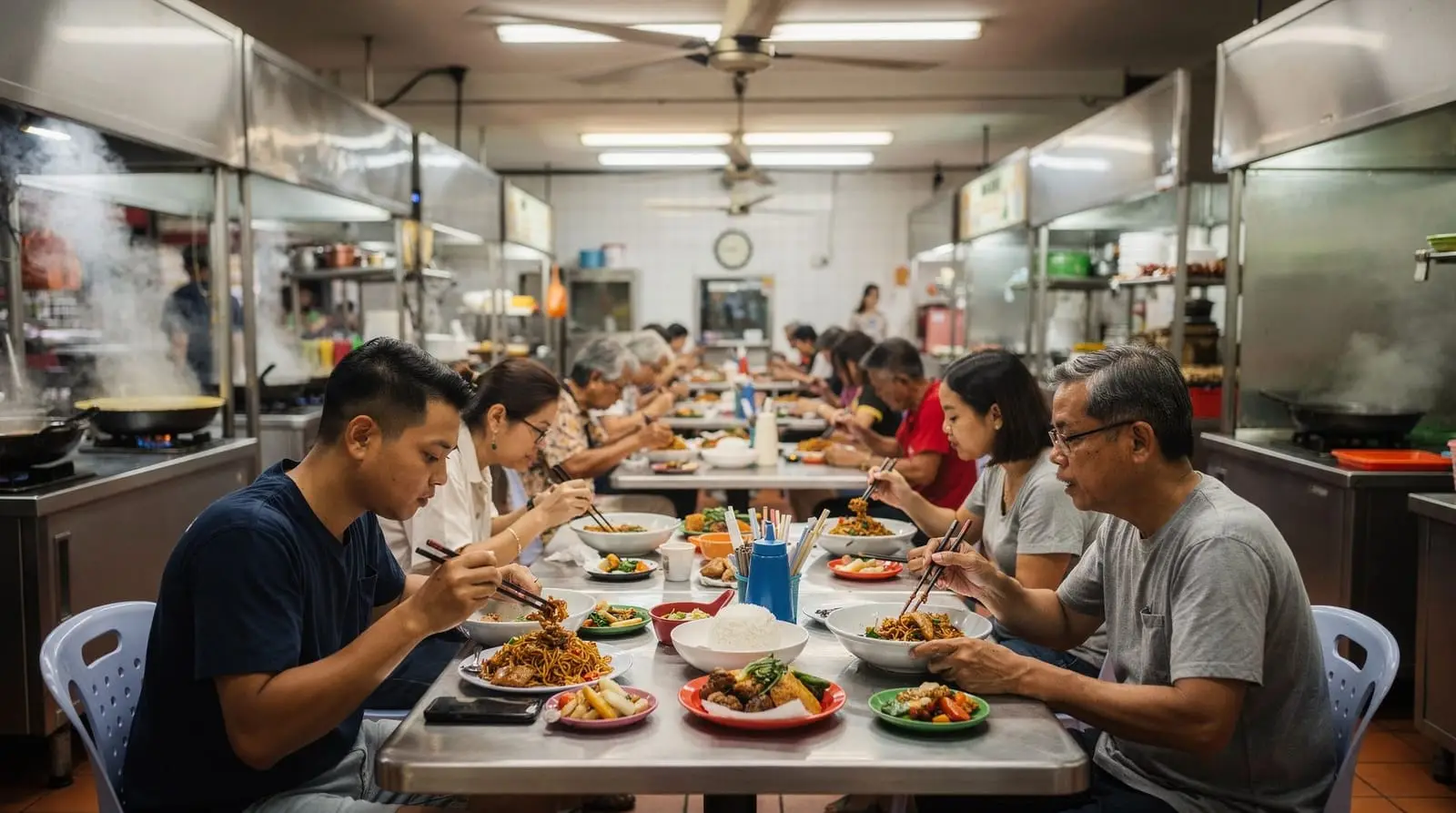
Before ranking, it is worth being clear about what to evaluate. The best hawker centres share several characteristics: a high proportion of individual stalls with long-running owner-operators (not corporate tenants), multiple dishes represented at competition level, a functioning physical space with adequate ventilation and seating, and a genuine local clientele at peak hours.
A hawker centre full of tourists is not inherently bad — Maxwell Food Centre draws tourists and locals alike. But a centre where the regular customers are overwhelmingly local is a more reliable signal of consistent quality than one that subsists on guidebook mentions.
Prices should be treated as approximate and subject to inflation — the SGD figures below reflect 2025–2026 conditions.
| Best overall | Old Airport Road Food Centre |
| Best for first-timers | Maxwell Food Centre |
| Best for atmosphere | Lau Pa Sat (satay street, evenings) |
| Typical meal cost | SGD 4–8 per dish |
| Peak hours to avoid | 12–1:30pm, 6:30–8pm |
Quick reference: hawker centres at a glance
| Centre | Area | Best for |
|---|---|---|
| Old Airport Road | Geylang East | Overall best, Michelin-recognised stalls |
| Maxwell | Chinatown | Convenience, iconic Tian Tian chicken rice |
| Chinatown Complex | Chinatown | Biggest, most diverse, world’s first Michelin street food stall |
| Lau Pa Sat | CBD | Historic building, evening satay street |
| Tiong Bahru Market | Tiong Bahru | Breakfast, local neighbourhood feel |
| Tanjong Pagar Plaza | Tanjong Pagar | Office-lunch overflow when Maxwell queues |
| Tekka Centre | Little India | Indian and South Indian specialities |
1. Old Airport Road Food Centre — the overall best
Location: 51 Old Airport Road, Geylang East; nearest MRT Dakota (Circle Line)
Old Airport Road Food Centre is, by the consensus of serious Singapore food writers and knowledgeable locals, the most complete hawker centre in the city. Opened in 1973, it occupies the former apron area of Singapore’s original Kallang Airport. Over 150 stalls, the highest concentration of Michelin Bib Gourmand and KF Seetoh (Makansutra) recognised stalls of any single centre.
Must-eat stalls:
Toa Payoh Rojak (Stall #01-89): The rojak here — a sweet-savory-spicy salad of cucumber, dough fritters, tofu, turnip, and cockles in prawn paste sauce — is widely cited as the city’s best. Queue starts before opening; arrive by 10h30 for the best selection. ~SGD 5–8.
You Fu Fried Hokkien Prawn Mee (Stall #01-52): Hokkien prawn mee (thick egg and rice noodles with prawn, squid, and egg in prawn stock) is a Singapore signature dish. This stall consistently ranks among the top three in the city. ~SGD 6–8. Queue: significant at peak lunch (arrive before 12h or after 13h30).
BBQ Chicken Wings at Dong Ji Fried Hokkien Mee (nearby): Multiple stalls sell BBQ wings here; the Old Airport Road BBQ seafood section in the evening is a reason to make this a dinner destination. Stingray, otah, chicken wings, and satay from approximately 17h00. ~SGD 3–5 per wing.
Nam Sing Hokkien Fried Mee (Stall #01-32): Another strong Hokkien prawn mee contender — different style (slightly drier, more wok-hei), equally good. The fact that two world-class versions of the same dish coexist here indicates the overall standard.
Fatt Kee Roast Pork (Stall #01-107): Sio bak (Chinese roast pork) with crackling done correctly. ~SGD 5–7.
Honest assessment: Old Airport Road is slightly inconvenient to reach (Dakota MRT plus a 10-minute walk), and less architecturally interesting than Lau Pa Sat. It is also genuinely busy at lunch — the lunch rush is serious. Visit on a weekday evening or early weekend morning for the best experience. Worth the effort for any visitor who cares about eating well.
2. Maxwell Food Centre — best for first-timers
Location: 1 Kadayanallah Rd, Chinatown; nearest MRT Tanjong Pagar (East-West Line) or Chinatown (North-East/Downtown Lines)
Maxwell is the most visitor-friendly major hawker centre — central, accessible, and home to arguably Singapore’s most famous hawker stall. It is not the most adventurous or the best overall, but it delivers reliably on the most important dishes for first-time visitors.
Must-eat stalls:
Tian Tian Hainanese Chicken Rice (Stall #01-10): The stall that Anthony Bourdain visited, that Gordon Ramsay supposedly praised, that has been on every Singapore food list since the early 2000s. Tian Tian’s chicken rice is legitimately excellent — the chicken is silky and precisely poached, the rice is well-seasoned with pandan and ginger, the chilli sauce is balanced and not aggressive. ~SGD 5–7 for a plate of chicken rice. Queue: expect 20–40 minutes on weekends; 10–15 minutes on weekdays. Come at 11h30 to beat the lunch rush.
Is Tian Tian overrated? Partially. It is genuinely good — not hype alone. But the queue inflates the experience, and there are excellent chicken rice stalls at most hawker centres in Singapore without any queue at all. If you have time and want to tick the iconic box, Tian Tian is worth it once. If the queue exceeds 30 minutes, other stalls in Maxwell are a better use of your time.
Zhen Zhen Porridge (Stall #01-67): Congee (rice porridge) with accompaniments — century egg, salted egg, braised pork, or fish. A Singaporean breakfast staple. Subtle, restorative, excellent for a first meal of the day. ~SGD 4–6. Opens early; often sold out by midday.
China Street Fritters (Stall #01-57): Or Luan (egg and vegetable fritters fried with oyster sauce) and other southern Chinese fritters. ~SGD 3–5. This kind of heritage Teochew stall is disappearing from Singapore; Maxwell still has it.
The Maxwell experience: The centre sits in a heritage shophouse neighbourhood next to the Buddha Tooth Relic Temple. Outdoor seating overlooks the street. The combination of hawker food and Chinatown surroundings makes it a natural first hawker visit. The Maxwell Food Centre guide goes deeper.
Reading queue length correctly
A long queue at a hawker stall is a genuine quality signal in Singapore in a way it often is not elsewhere — hawker stalls have no marketing budget and no incentive to manufacture a queue, so a consistent local queue almost always reflects real demand for a genuinely good dish. That said, queue length should be weighed against your own time budget: a 60-minute wait for a marginal quality improvement over a 5-minute alternative rarely makes sense on a short trip. Use queues as one signal among several, not an automatic instruction to wait no matter the length.
3. Chinatown Complex Food Centre — biggest and most diverse
Location: 335 Smith St, Chinatown; nearest MRT Chinatown (North-East/Downtown Lines)
The largest hawker centre in Singapore by stall count — over 260 stalls on two floors. The upper floor is the main food hall; the ground floor is a wet market. The scale means more diversity, and that diversity includes some genuinely outstanding stalls alongside average ones.
Must-eat stalls:
Hong Kong Soya Sauce Chicken Rice and Noodle (Stall #02-126): This was the world’s first Michelin-starred street food stall — it earned a Bib Gourmand then a full star in 2016, causing queues of several hundred people. The soya sauce chicken is dark, lacquered, and fragrant; the char siu (BBQ pork) is some of the best in the city. ~SGD 3.80 for a portion — this was the Michelin star at under SGD 4. Queue: consistently 45–90 minutes on weekdays; more on weekends. Arrive at 10h30 when they open, or accept the wait.
Outram Park Ya Hua Rou Gu Cha (Stall #02-14): Bak kut teh — pork rib soup. The Singapore style is peppery and herbal (versus the Klang, Malaysia version which is darker and more medicinal). This is one of the definitive bak kut teh stalls. ~SGD 7–10 for a claypot with rice. A morning dish — come for breakfast or early lunch.
Stall diversity: Chinatown Complex has large representation of Malay, Indian, Chinese (multiple regional styles), and Thai stalls. The scale means you can eat your way through multiple cuisines in a single visit without repetition.
Honest caveat: The centre is large, slightly dated in infrastructure, and can feel overwhelming on a first visit. Navigation takes some orientation. The tourist-facing stalls on the street level (Smith Street) are separate from the hawker centre itself and significantly overpriced — avoid the rooftop BBQ restaurants outside. The Chinatown Complex food guide covers navigation and the best stalls in detail.
Chinatown Complex hawker food tour — guided with a local expertWeekday vs weekend hawker strategy
Timing your hawker visits around the working week meaningfully changes the experience. Weekday lunchtimes (12–1:30pm) at CBD-adjacent centres like Lau Pa Sat and Tanjong Pagar Plaza are dominated by office workers on a tight schedule — fast turnover, but real queues at the best stalls. Weekends shift the crowd toward Chinatown Complex, Maxwell, and the neighbourhood centres as both locals and tourists have more free time, often producing longer queues than a weekday visit to the same stall. If your schedule is flexible, a weekday visit to CBD-area centres and a weekend morning (before 10:30am) visit to neighbourhood centres both avoid the worst crowding.
4. Lau Pa Sat — for the atmosphere
Location: 18 Raffles Quay, CBD; nearest MRT Raffles Place (East-West/North-South Lines)
Lau Pa Sat is a Victorian cast-iron market building from 1894 — one of the few surviving 19th-century market structures in Southeast Asia — converted into a hawker centre. The architecture is genuinely impressive: high iron arches, large windows, a circular footprint. It was disassembled and rebuilt in 1987 when the MRT tunnel was dug underneath, and restored to its current state.
The food: Competent but not the strongest in the city. The hawker stalls inside cover the Singapore canon — chicken rice, laksa, wonton noodles, Indian food, satay. The stalls are not at Old Airport Road level. For the best experience, eat the satay.
Satay Street: Every evening from around 19h00, Boon Tat Street alongside Lau Pa Sat closes to traffic and becomes Singapore’s most atmospheric satay strip. Dozens of hawkers set up grills; smoke fills the street; the CBD towers loom above. Chicken, beef, mutton, and prawn satay with peanut sauce and ketupat (compressed rice cakes). ~SGD 0.60–1.20 per stick (minimum orders typically 10 sticks). The setting alone justifies coming here for dinner even if the satay is not the absolute best in the city.
Lau Pa Sat food tours: The evening atmosphere makes Lau Pa Sat a centrepiece for food tours. The Lau Pa Sat guide has the full picture.
Lau Pa Sat night street food with Marina Bay walk — evening guided tour5. Tiong Bahru Market — the neighbourhood jewel
Location: 30 Seng Poh Rd, Tiong Bahru; nearest MRT Tiong Bahru (East-West Line)
Tiong Bahru Market is a two-floor wet market and hawker centre in Singapore’s most gentrified heritage neighbourhood. It serves the local Tiong Bahru population — meaning the quality standards are kept honest by regular local customers.
Must-eat stalls:
Jian Bo Tiong Bahru Shui Kueh (1st floor, Stall #02-06): Steamed rice cakes with preserved turnip — one of the most delicate and distinctive hawker dishes in Singapore. The shui kueh here is definitively considered among the city’s best. ~SGD 3.50 for 6 pieces. Morning dish — opens at 06h30, can sell out by 10h. The Tiong Bahru Market guide covers this and the broader stall lineup.
Eng Soon Hong Chee Kway (2nd floor): Or kueh (rice cakes fried in dark soy and preserved radish) — a more robust breakfast version of the rice cake genre.
Outram Park Char Kway Teow (2nd floor): Char kway teow (fried flat rice noodles with cockles, eggs, sausage, and bean sprouts) at Tiong Bahru is a strong version of the city’s most contested hawker dish. Queue: significant on weekend mornings.
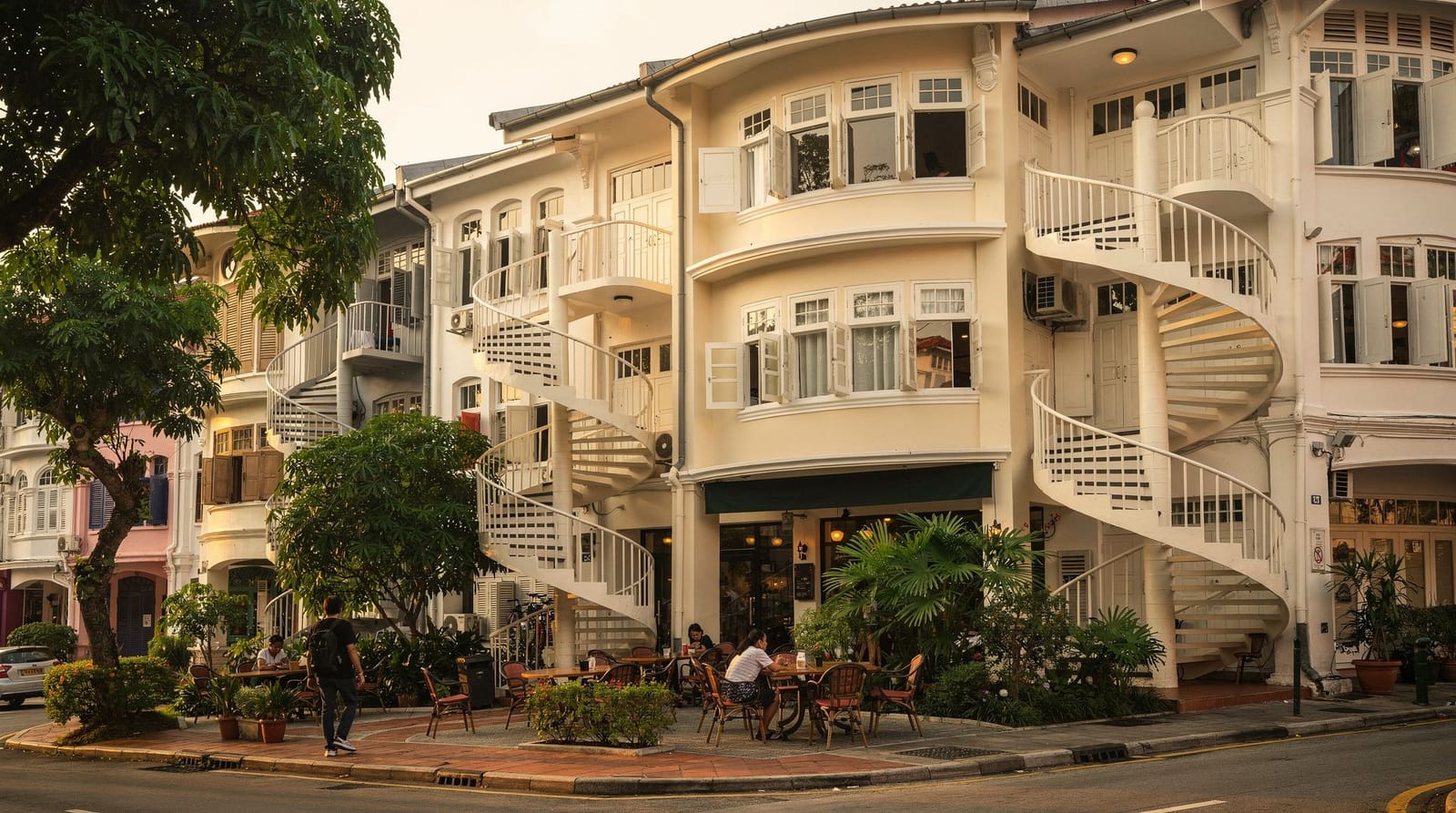
The Tiong Bahru context: Eating at Tiong Bahru Market and then walking the Art Deco shophouse streets is the best single morning itinerary in Singapore for a food-and-neighbourhood experience that feels nothing like tourism. See the Tiong Bahru neighborhood guide for the surrounding area.
6. Tanjong Pagar Plaza Market and Food Centre — the local’s office lunch
Location: 6 Tanjong Pagar Plaza, Tanjong Pagar; nearest MRT Tanjong Pagar (East-West Line)
Less famous than Maxwell (200m away) but regularly cited by Singapore food writers as having higher average quality. A genuine office worker hawker centre — packed 12h–13h30 with CBD professionals, quiet the rest of the time.
Key stalls: Tian Tian’s is actually better here — controversial claim, but multiple Singapore food commentators suggest the less-touristed location means fresher, faster-moving product.
Actually, there is no Tian Tian branch here — but Tanjong Pagar Plaza has excellent chicken rice (stalls named variants here have their own reputation among Tanjong Pagar regulars) and very good wonton noodles and BBQ char siu.
Worth knowing: If you are visiting Maxwell and the Tian Tian queue is 30+ minutes, walking to Tanjong Pagar Plaza is the better decision.
7. Tekka Centre (Tekka Market) — the Little India centrepiece
Location: 665 Buffalo Road, Little India; nearest MRT Little India (North-East/Downtown Lines)
Tekka Centre is the main hawker-market complex in Little India. The ground floor is an Indian wet market of spectacular sensory intensity — spices, fresh herbs, live fish. The upper hawker hall has a high proportion of Indian, Malay, and South Indian stalls.
Key dishes here: Biryani, roti prata (Indian flatbread with curry), mutton curry, fish head curry, thosai (dosa), and various South Indian vegetarian dishes. This is the right centre if you want serious Indian food in the hawker format.
The prata situation: Singapore’s roti prata culture produces dozens of variations on the base flatbread — plain, egg, mushroom, cheese, milo, banana. The debate over which Tekka stall makes the best prata is ongoing and largely inconclusive; visit before 10h for breakfast prata.
Guided hawker food tours
For first-time visitors who want context and guidance, a good food tour is worth the cost — a knowledgeable guide navigates ordering, explains dishes, manages the chope system, and introduces stalls that would be opaque to an independent visitor.
Local hawker food tour with tastings — sample 8+ dishes at multiple centres Evening hawker centre food tour — best after-dark hawker experienceThe hawker etiquette essentials
Chope your seat first: At busy centres during peak hours, leave a tissue packet on a table before queuing. This is widely understood and respected. Without chope-ing, you risk carrying a hot plate of food through a crowded hall with nowhere to sit.
Ordering: Walk to the stall, state your order directly to the cook. Most stalls display photos of their dishes and prices. Payment is usually at the point of ordering. Some stalls (especially those selling individual plates in a continuous flow) prefer you specify immediately whether you are eating in or taking away.
Returns and adjustments: Do not expect McDonald’s-level flexibility. Hawker stalls are mostly solo operators — adjusting spice level is often possible; substitutions generally are not. Be direct and clear about allergies; the cook’s English is usually functional.
Clearing your tray: There is an ongoing debate in Singapore about whether diners should return their own trays. The formal NEA guidance since 2021 is that diners should return trays and crockery to the designated tray return stations. Follow this.
Drinks: Kopi (local coffee) and teh (local tea) stalls are usually separate from food stalls. Order with the local vocabulary: kopi-O (black coffee), kopi (with condensed milk), teh tarik (pulled tea with condensed milk), milo (chocolate malt drink), bandung (rose syrup milk). Specify “kosong” for no sugar.
For a complete guide to the customs, see hawker etiquette and chope guide.
Honest rating: tourist traps versus real quality
Overrated for tourists: The tourist-oriented Smith Street hawker area outside Chinatown Complex, any hawker centre that primarily advertises in English to tourist foot traffic, and stalls at airports and malls that claim “authentic hawker” in their branding.
Stalls that are worth the queue: Tian Tian Chicken Rice (Maxwell), Hong Kong Soya Sauce Chicken (Chinatown Complex), the Old Airport Road satay and Hokkien mee vendors. These queues exist because the product justifies them.
Stalls that are not worth the queue: Any stall with a queue mostly composed of tourists photographing the sign. Quality should be the filter, not social media fame.
What to avoid: Hawker centres that have been converted into tourist destinations at the expense of their local clientele — these exist but are not covered here because their quality has declined as their authenticity has been replaced.
Seasonal and festival context
Several hawker centres run special dishes during Chinese New Year (bak kwa — dried BBQ meat — is everywhere in Chinatown), Hari Raya (Geylang Serai market runs for a month during Ramadan with extraordinary Malay food), and the Singapore Food Festival in August/September.
The must-try dishes guide maps specific dishes to the centres where they are done best.
First-time visitor strategy
For a first Singapore hawker visit, resist the temptation to try to see everything in one sitting. A better approach is to pick one centre, walk the full floor once to survey what is on offer (most centres are small enough to circuit in 5–10 minutes), note two or three stalls with genuine queues of locals rather than tourists, then order small portions from each to sample widely without overcommitting to a single dish. Bring cash in small denominations, expect to eat standing or at a shared table during peak hours, and do not be put off by the utilitarian setting — the quality of the food is almost never reflected in the decor.
How hawker pricing compares internationally
Context helps explain why hawker centres are such remarkable value. A comparable cooked meal — fresh ingredients, made to order, served in a regulated and inspected environment — costs three to five times more in Hong Kong, Tokyo, or Sydney, and considerably more again in London or New York. Singapore has managed to keep hawker prices low despite the city’s overall high cost of living through a combination of subsidised hawker centre rents (managed by NEA and town councils), high stall turnover competition, and a cultural expectation that hawker food should remain accessible to all income levels. This is part of why UNESCO recognised the system specifically as a piece of intangible cultural heritage rather than simply as a tourist attraction — it functions as genuine social infrastructure.
Hawker centres for dietary needs and comfort
Vegetarian, halal, and family comfort considerations vary considerably by centre. Tekka Centre and Geylang Serai have extensive halal-certified Malay and Indian stalls. Chinese vegetarian stalls (marked with a lotus symbol) exist at most large centres, particularly Chinatown Complex and Maxwell. For visitors travelling with young children, Tiong Bahru Market and Maxwell have the most manageable layouts — wider aisles and less peak-hour congestion than Chinatown Complex. For a broader dietary picture beyond hawker centres, see halal food Singapore and vegetarian Singapore.
Pairing a hawker crawl with sightseeing
Several hawker centres sit naturally along sightseeing routes, so a hawker meal does not need to be a separate errand. Maxwell and Chinatown Complex are both a short walk from Chinatown’s temples; Lau Pa Sat is on the walking route between the Civic District and Marina Bay; Tekka Centre pairs naturally with a Little India walking loop. Building meals into your sightseeing route this way avoids the common mistake of eating at whatever restaurant happens to be nearest an attraction — usually the most overpriced option, as covered in the avoid tourist restaurants guide.
Frequently asked questions about hawker centres in Singapore
Which hawker centre has the most Michelin stars?
The Michelin Guide Singapore uses Bib Gourmand (excellent food at moderate prices) rather than traditional stars for most hawker stalls. The most Bib Gourmand stalls are concentrated at Maxwell Food Centre, Old Airport Road Food Centre, and Chinatown Complex. Hong Kong Soya Sauce Chicken Rice at Chinatown Complex held a full Michelin Star (the first street food stall in the world to receive one) from 2016 until the Michelin Singapore guide was discontinued. The Bib Gourmand list changes annually; check current editions.
Are hawker centres open for breakfast?
Yes — many hawker centres open from 06h00 or 06h30, with specific stalls dedicated to breakfast dishes: congee, dim sum, shui kueh, nasi lemak (coconut rice with accompaniments), and kaya toast. Tiong Bahru Market, Adam Road Food Centre, and the various neighbourhood centres are good for early starts.
What is the cheapest dish at a hawker centre?
Simple rice or noodle dishes start at SGD 3.00–3.50 — a plate of mixed rice (economy rice / cai fan) with vegetable and one protein. Kopi is SGD 1.20–1.80. A full hawker meal with a drink can be done for under SGD 6. This is consistently among the cheapest cooked food of this quality anywhere in Asia.
Can I drink alcohol at hawker centres?
Some hawker centres have beer stalls (Tiger Beer, Heineken, and local brands) selling by the bottle or glass. Alcohol is not available at all stalls. In Malay/Muslim-focused centres, no alcohol is served. At centres with a mixed food culture, you will usually find beer available. Prices are higher than supermarket rates: ~SGD 8–12 for a 330ml bottle of Tiger at a hawker centre.
How do I find the best hawker centres in a neighbourhood I’m staying in?
Every major residential area in Singapore has a quality hawker centre within walking distance. Search the HDB website hawker centre list for your area. Makansutra (the Singapore hawker food bible by KF Seetoh) lists the best stalls by centre. Google Maps reviews for individual stalls are a reasonable indicator once filtered for recent reviews from Singapore-based accounts.
Is it true that hawker culture is dying in Singapore?
It is a genuine concern. The average age of hawker operators is over 60; the next generation has not replaced them in the same numbers. Many iconic stalls have closed when the operator retired without a successor. The government has tried various training and succession programmes. The honest assessment is that the best individual stalls are irreplaceable — when the 70-year-old who perfected a specific laksa recipe stops cooking, that specific version of the dish is gone. This makes eating at the remaining first-generation stalls a slightly time-sensitive proposition. The what to eat in Singapore guide covers the broader culinary picture.
Top experiences
Bookable activities with verified prices and instant confirmation on GetYourGuide.