What to eat in Singapore: the honest food guide
Singapore: local hawker food tour with tastings
What should I eat in Singapore?
The non-negotiable dishes are Hainanese chicken rice, chilli crab, laksa, char kway teow, roti prata with curry, and kaya toast with kopi. Most are best eaten at hawker centres, not restaurants. Singapore's food culture rewards eating frequently and cheaply across multiple locations rather than one expensive restaurant meal. Budget SGD 8–12 per meal for excellent food.
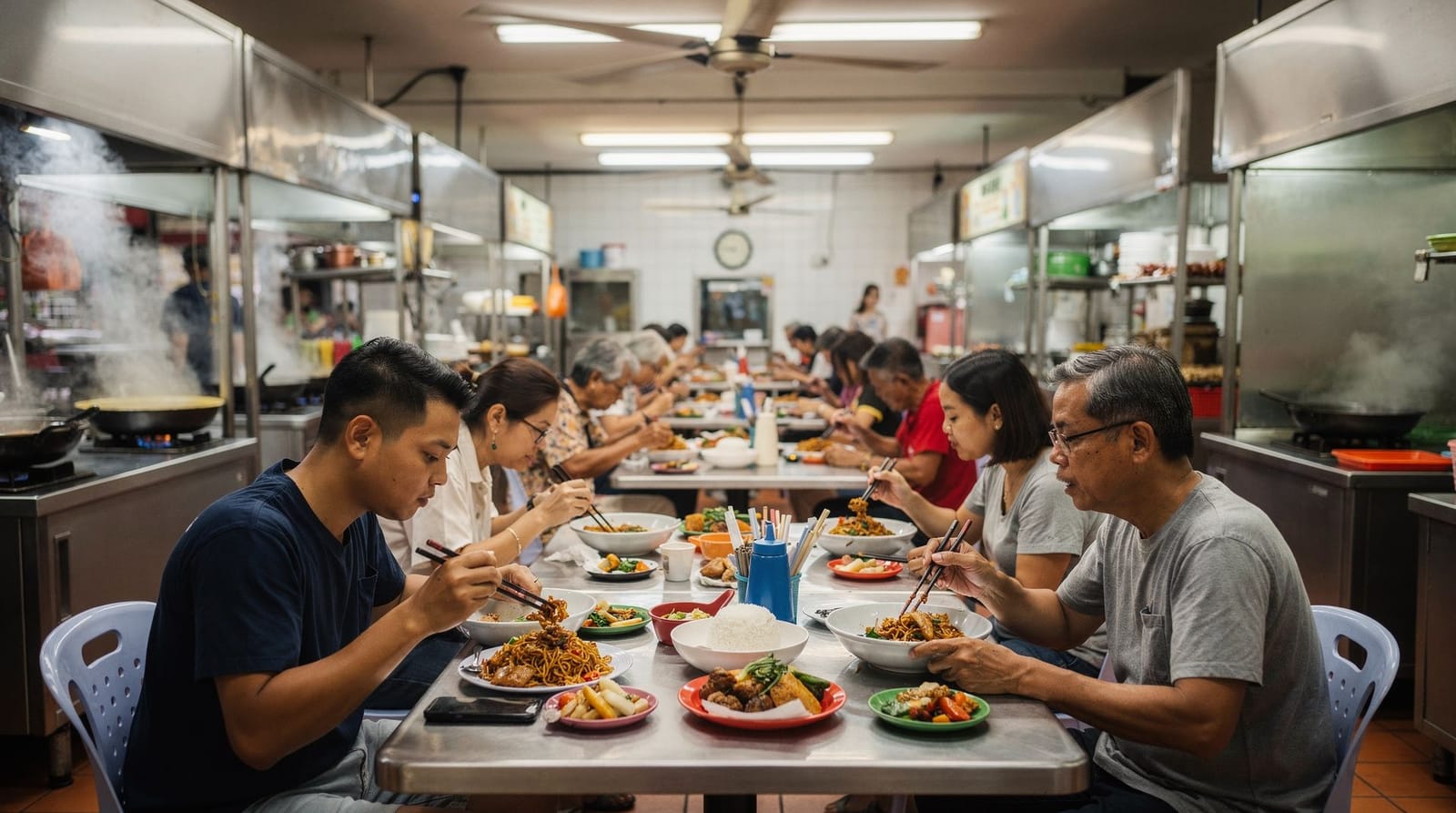
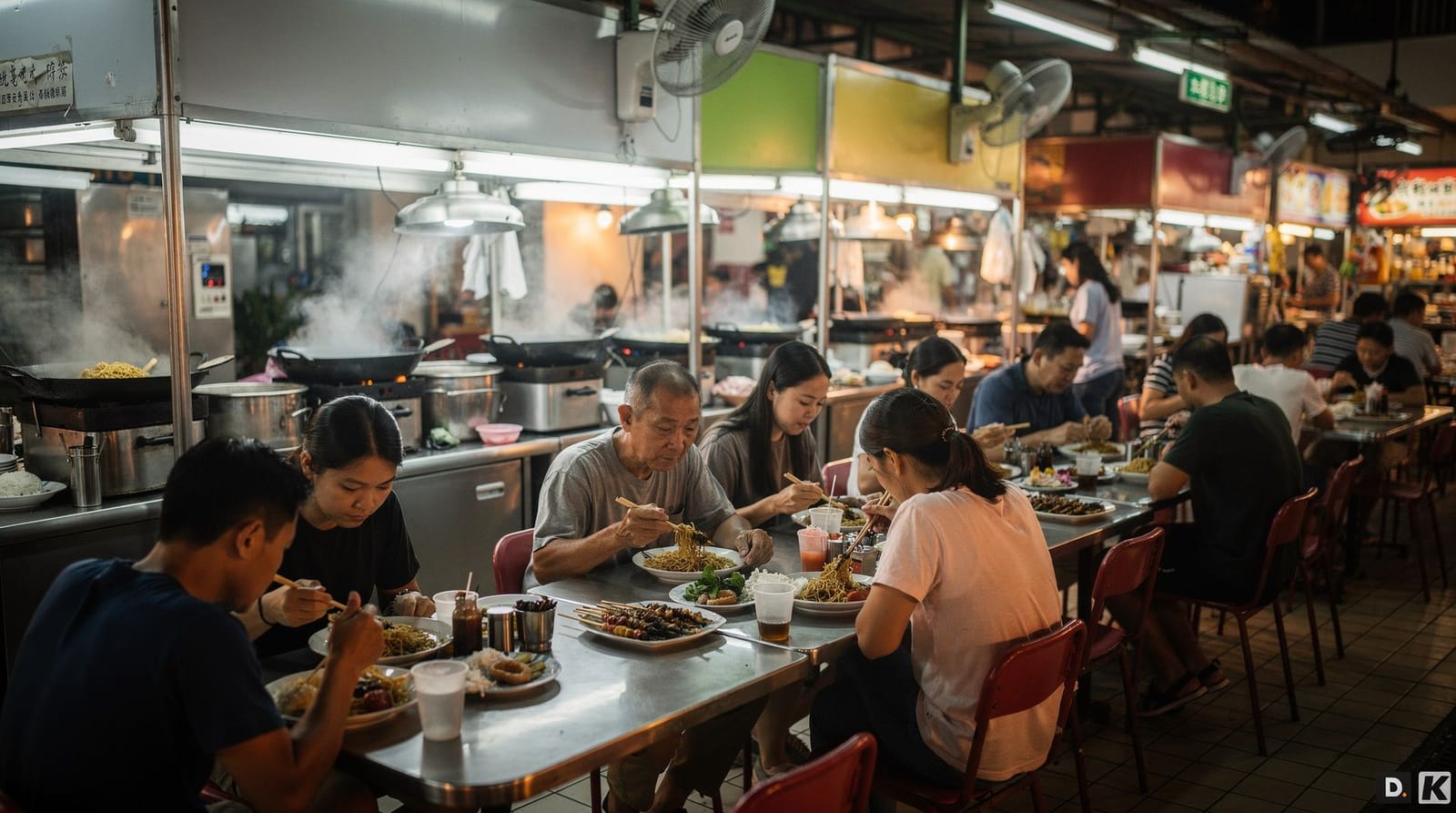
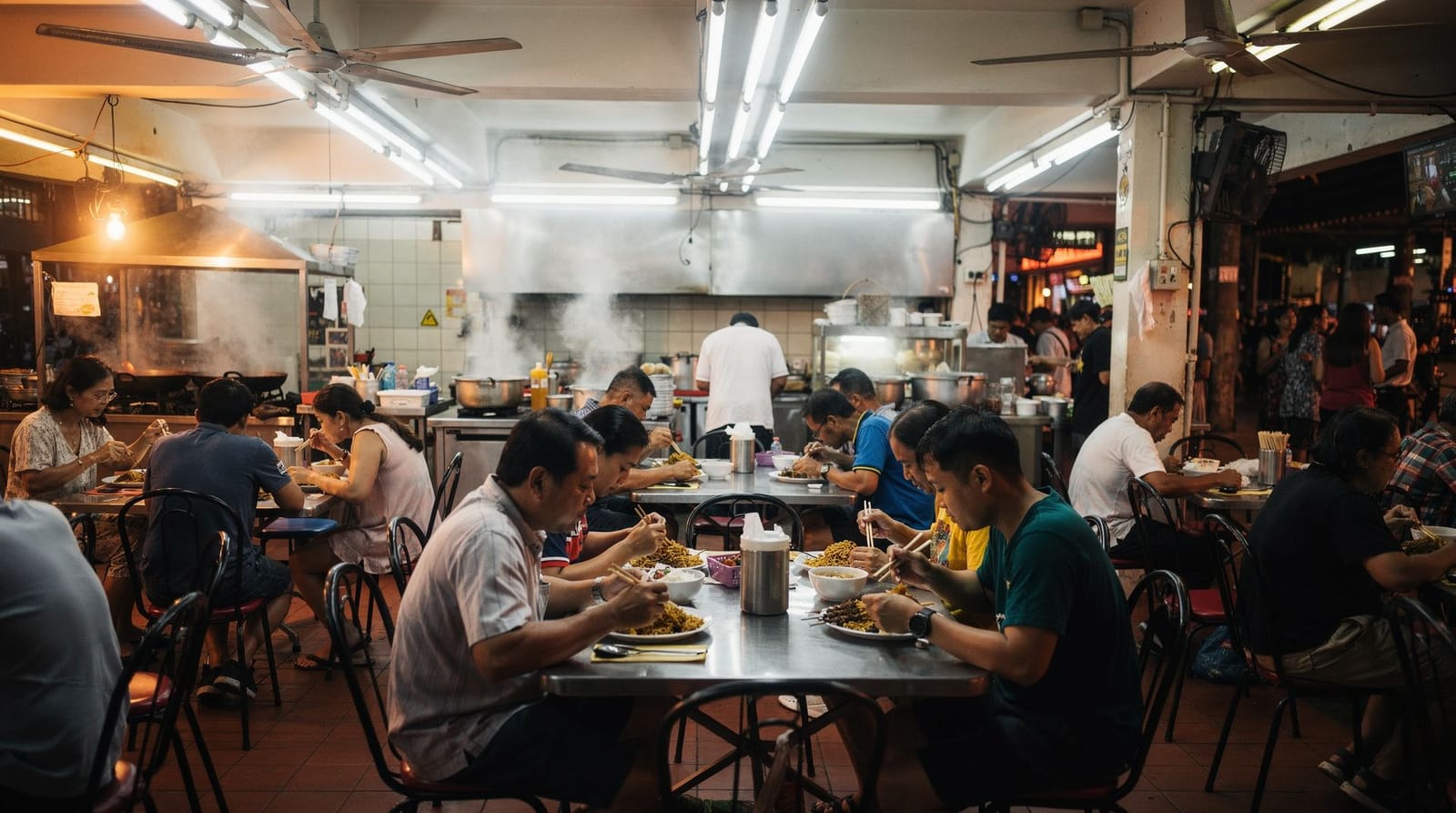
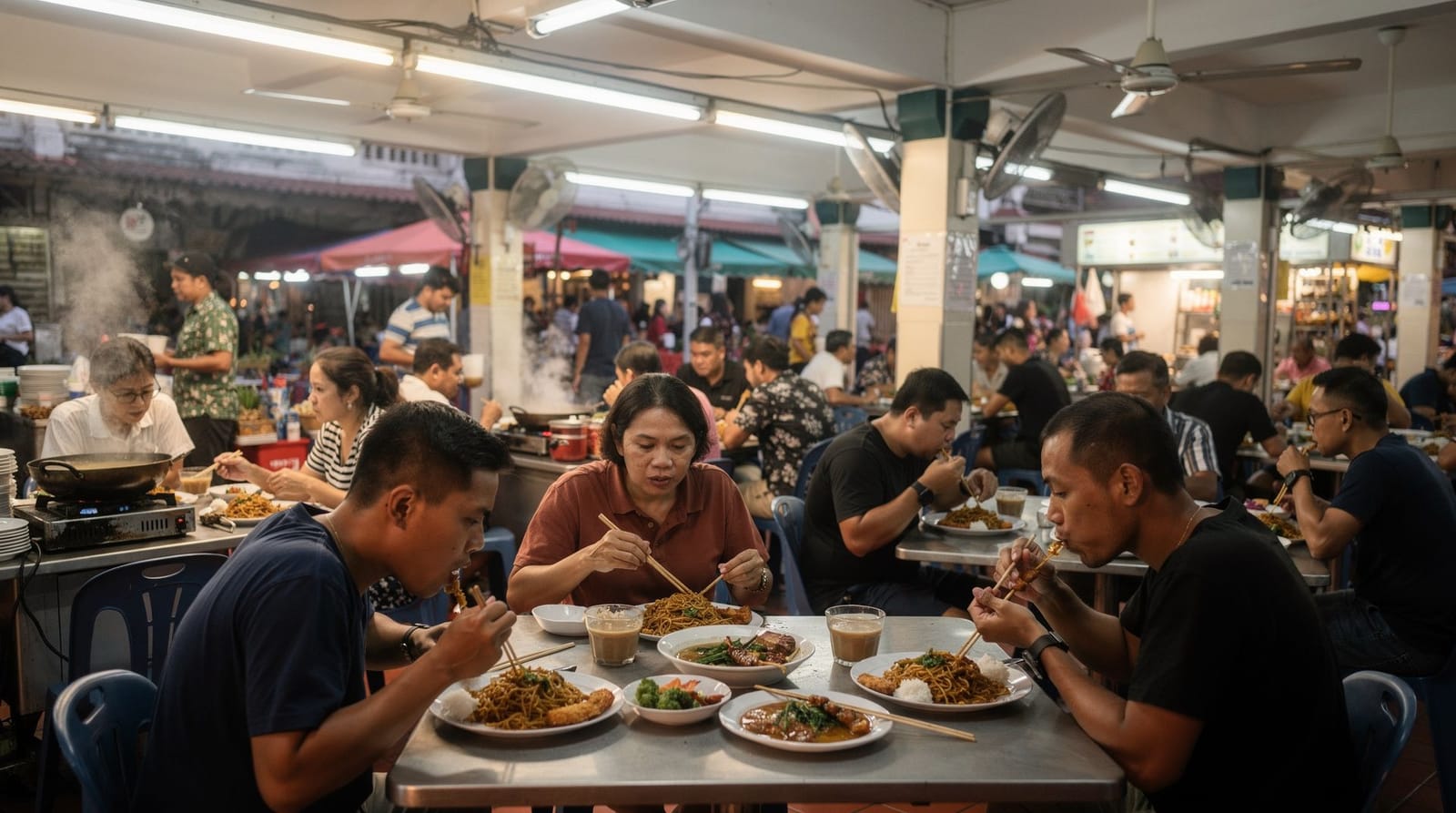
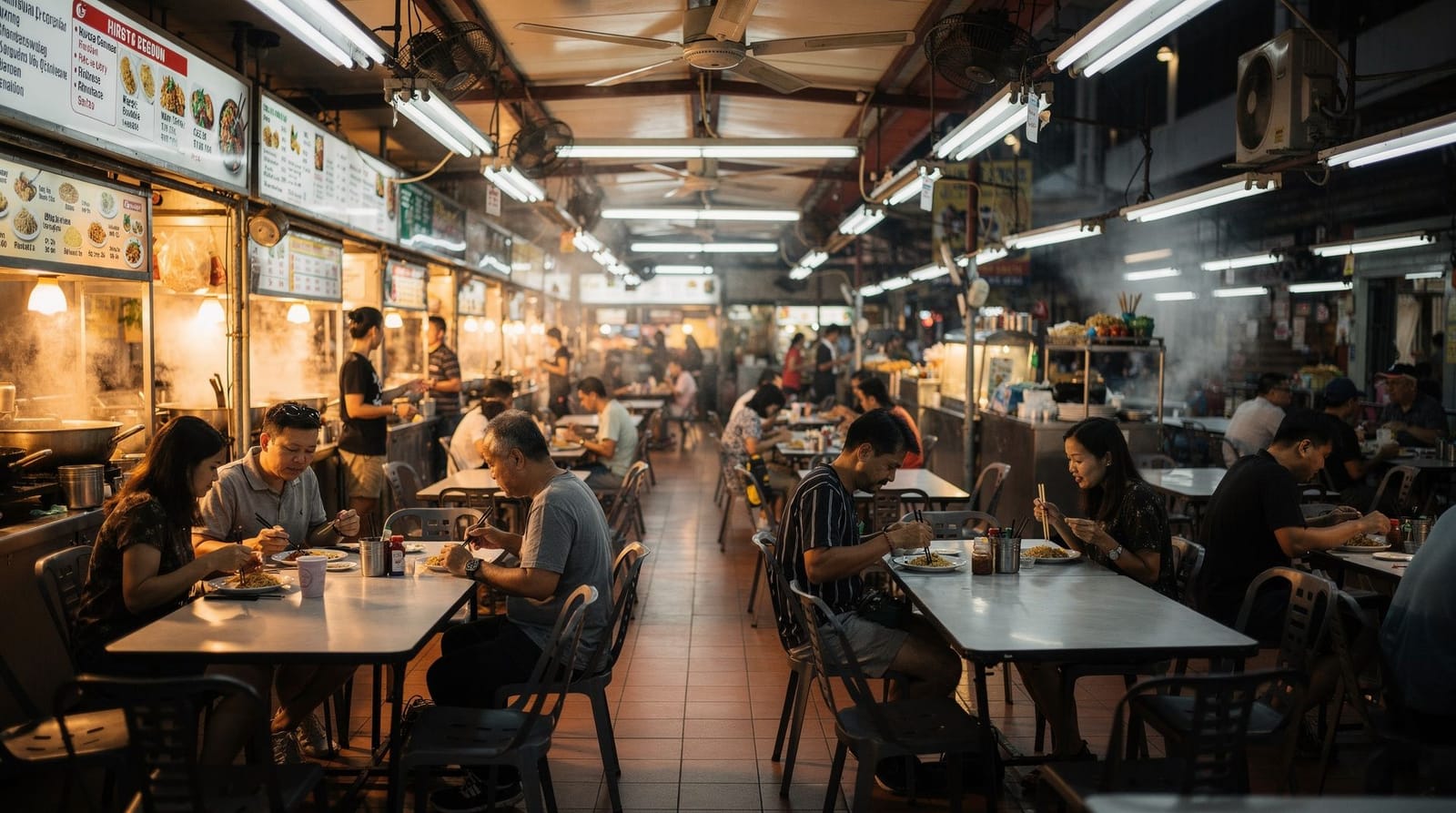
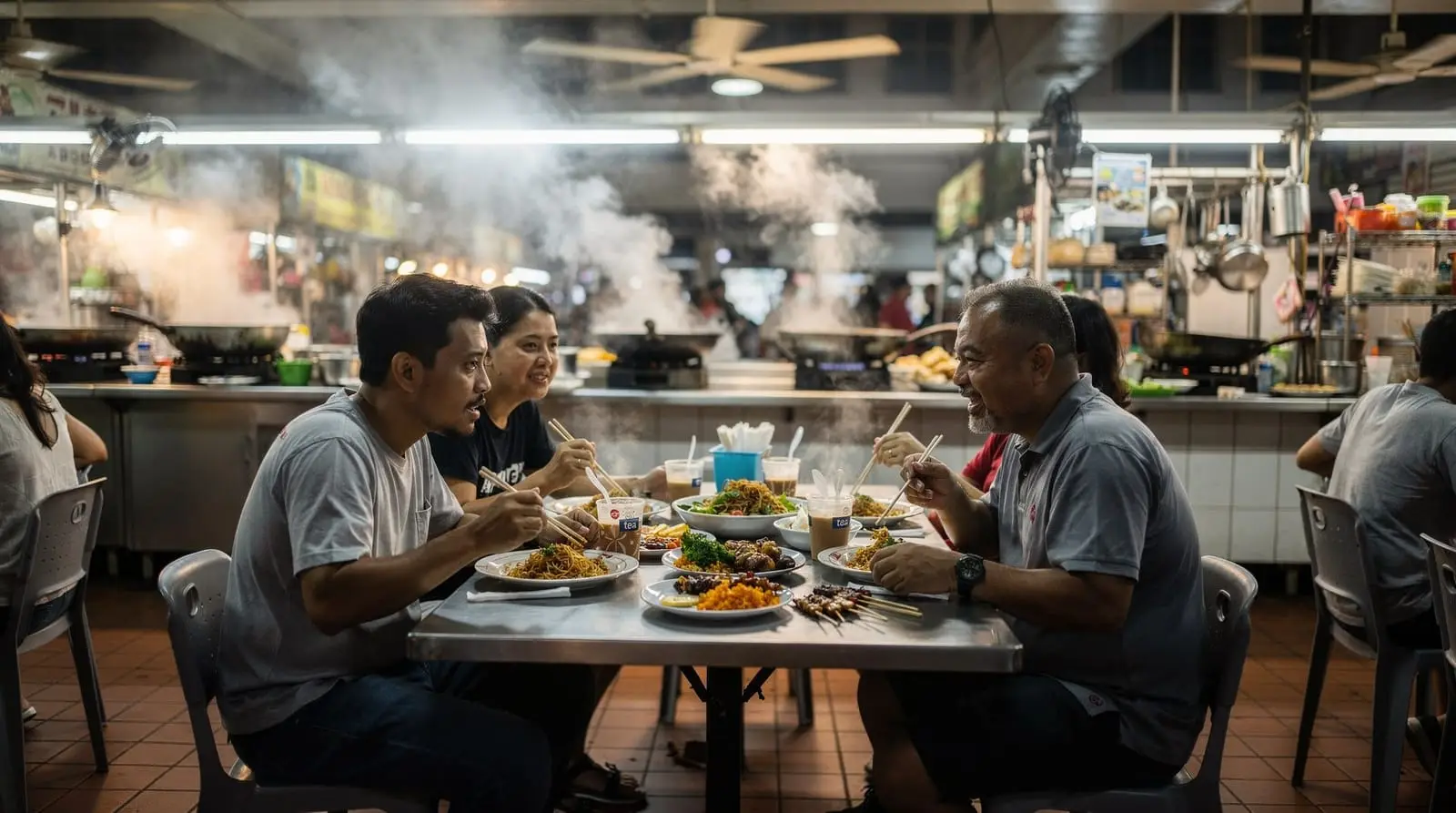
The most useful framing for eating in Singapore is this: the food culture here is defined by the hawker centre, not the restaurant. This is a city where a single dish — prepared by the same person at the same stall for 30 or 40 years — can become nationally significant. The best versions of Singapore’s most important dishes are not in restaurants charging SGD 80 per head. They are at plastic tables in open-sided covered structures, for SGD 5–8 a plate.
Understanding this changes how you plan eating in Singapore. Budget eating here is not a compromise — it is the primary experience.
| Where | Hawker centres citywide, especially Maxwell, Chinatown Complex, Old Airport Road |
| Cost | around SGD 4–10 per hawker dish |
| Time needed | Allow 20–30 min per stall, more for queues at famous ones |
| Getting there | MRT to nearest hawker centre, most are a short walk from a station |
| Best time | Lunch (11:30am–1:30pm) or dinner (6–8pm) for the widest stall selection |
The essential dishes
Hainanese chicken rice
The unofficial national dish. A dish of deceptive simplicity: poached or roasted chicken, served over rice cooked in chicken stock with pandan and ginger, with three dipping sauces (chilli, ginger-sesame, dark soy). The whole exercise is in the quality of execution — the chicken must be silky and precisely cooked, the rice fragrant and separate, the sauces freshly made.
At its best (Tian Tian Maxwell, Ah Tai at Maxwell, Boon Tong Kee on Balestier Road, Wee Nam Kee in the north), Hainanese chicken rice is one of the world’s great simple dishes. At hawker centres with mediocre chicken and day-old rice, it is entirely forgettable. The difference matters.
Where to eat it: Tian Tian Hainanese Chicken Rice, Maxwell Food Centre (expect a queue; worth it once). Ah Tai Hainanese Chicken Rice, also Maxwell, is comparable and less crowded. The Hainanese chicken rice guide ranks the top stalls.
Price: SGD 5–7 for a plate at hawker centres; SGD 15–25 at mid-range restaurants.
Chilli crab
Singapore’s most famous restaurant dish — not a hawker food. Mud crab (Scylla serrata) cooked in a sweet-savoury-spicy tomato and egg sauce. Eaten with deep-fried mantou buns for sauce-mopping. Messy, interactive, and better than it sounds from the description.
Where to eat it: Jumbo Seafood (East Coast, Clarke Quay) is the tourist benchmark — reliable and well-run. No Signboard Seafood (Esplanade) and Long Beach Seafood (multiple locations) are comparable. Expect to pay SGD 70–130 for a 700g–1kg crab plus accompaniments for two people. The chilli crab guide covers the debate between destinations.
What to know: Specify whether you want Sri Lankan crab (larger, more expensive) or Indonesian mud crab when ordering. Ask about the current market price per 100g before committing — prices fluctuate with crab supply and some restaurants are not forthcoming about final bill totals.
Laksa
Two competing styles: Katong laksa (Singapore-style, coconut-milk-rich, short noodles, from the east coast Peranakan tradition) and curry laksa (thinner, spicier, more prevalent at general hawker centres). Both are noodle soups with seafood and curry flavours; they are not the same dish.
Where to eat it: For Katong laksa — 328 Katong Laksa on East Coast Road. For curry laksa — Sungei Road Trishaw Laksa near Lavender (Michelin Bib Gourmand). The laksa guide covers the full spectrum of styles.
Price: SGD 5–8 at hawker centres.
Char kway teow
Flat rice noodles (kway teow) stir-fried over high heat in a well-seasoned wok with cockles, bean sprouts, Chinese sausage, egg, and dark soy sauce. The key element is wok-hei — the smoky charred flavour created only by a sustained high-heat wok. A mediocre version is oily and bland. A good version is extraordinary.
Where to eat it: Hill Street Char Kway Teow at Bedok, Outram Park Char Kway Teow at various locations. The version at Old Airport Road Food Centre (multiple stalls competing at high quality) is reliably good. Queue at peak hours.
Price: SGD 4–6 at hawker centres.
Hokkien prawn mee
Thick yellow egg noodles and thin rice noodles cooked together in prawn and pork stock, then partially dried in the wok, served with sambal chilli and lime. Different from the Penang Hokkien mee (which is a soup dish). This is Singapore-specific. Better versions have intense prawn flavour from a concentrated stock.
Where to eat it: Nam Sing Hokkien Mee and You Fu Fried Hokkien Prawn Mee, both at Old Airport Road Food Centre. These are among the top-ranked stalls.
Price: SGD 5–8.
Bak kut teh (pork rib soup)
Pork ribs in a clear, peppery, herb-broth soup — the Singapore style. The Klang (Malaysia) version is darker and more herbal; the Singapore version emphasises white pepper. Eaten with rice, fried bread (youtiao), and strong Chinese tea. A breakfast and brunch dish, not a dinner dish.
Where to eat it: Outram Park Ya Hua Rou Gu Cha at Chinatown Complex, or the original Ya Hua in Keppel Road. Multiple good options around the Outram Park area.
Price: SGD 7–12 for a claypot with rice.
Roti prata
Indian flatbread cooked on a hot griddle, served with curry dipping sauce. The base is plain (kosong) or egg. More adventurous variations include cheese, mushroom, milo (chocolate), and banana prata. A breakfast dish primarily, though available all day at Indian Muslim stalls.
Where to eat it: Casuarina Curry on Upper Thomson Road is the most consistently praised. Springleaf Prata Place in Yio Chu Kang. Tekka Centre in Little India for the most concentrated prata variety.
Price: SGD 1.50–3.50 for plain/egg; more for variations.
Nasi lemak
Coconut-flavoured rice served with fried anchovies (ikan bilis), roasted peanuts, a hard-boiled or fried egg, cucumber, and sambal chilli sauce. The Malay dish is a national staple found throughout Singapore at Malay hawker stalls and in kopitiams.
Price: SGD 3–6 at hawker stalls.
Kaya toast and kopi
The essential Singapore breakfast. Toast with kaya (pandan-coconut jam) and a slab of cold butter, served with two soft-boiled eggs seasoned with soy sauce and white pepper, and a cup of kopi (condensed-milk coffee) or teh (tea).
Where to eat it: Ya Kun Kaya Toast (multiple outlets), Killiney Kopitiam, Tong Ah Eating House on Keong Saik Road. All are good. The kaya toast and breakfast guide covers the ritual in full.
Price: SGD 4–7 for the set at most outlets.
The Peranakan exception
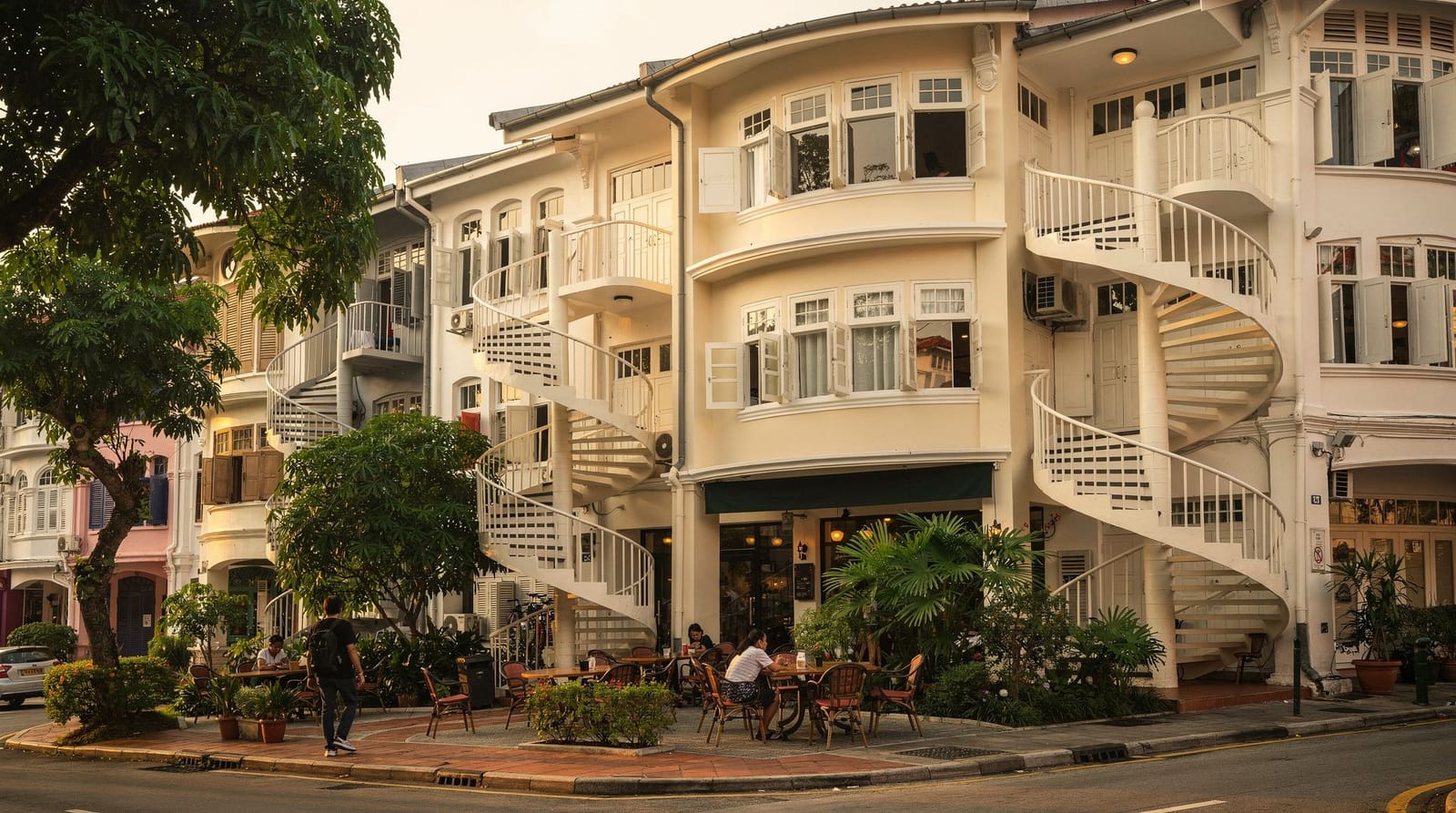
Peranakan cuisine does not translate well to hawker format — it requires long preparation times and complex spice pastes. For serious Peranakan food, a restaurant or old-school kopitiam in Joo Chiat is necessary.
Where to eat: Guan Hoe Soon (Joo Chiat Place) — opened 1953, same family, consistently the benchmark. Candlenut at COMO Dempsey is a Michelin-starred Peranakan restaurant for a more formal experience.
What is overrated
Singapore Sling at Raffles: The cocktail is fine; the queue, prices (~SGD 40), and the experience of drinking in a tourist-overrun bar are not. The Singapore Sling guide gives the honest take.
Durian: Singapore promotes durian tourism, and some visitors love it. Many do not. If you are curious, try it at Geylang’s dedicated durian stalls (May–August season) rather than paying premium prices at tourist outlets. The durian guide covers what to expect.
Airport food halls: Changi Airport’s food outlets are a reasonable last-resort option and genuinely better than most airports globally. They are not a substitute for eating at hawker centres in the city.
Where to eat: format guide
Hawker centres: The primary venue for Singapore food. Government-run, open-sided, cheap. See the best hawker centres guide.
Kopitiams: Privately run traditional coffee shops, occupying the ground floors of older HDB blocks and shophouses. Often home to 3–6 individual stalls and a drinks counter. More neighbourhood, less touristed than hawker centres. The food is typically in the same price range.
Zi Char: Chinese-style restaurant cooking — the Singaporean equivalent of a neighbourhood Chinese restaurant. Plates of fried rice, claypot dishes, and seafood meant for sharing. Evening eating, usually SGD 15–25 per person.
Restaurants: Singapore has a strong restaurant scene across most cuisines. The Michelin Guide Singapore (which has been through various iterations) and Makansutra are the standard references. Budget: a restaurant meal in the city costs SGD 20–60 per person without alcohol.
| Format | Typical cost | Atmosphere | Best for |
|---|---|---|---|
| Hawker centre | SGD 4–10/dish | Communal, open-sided, functional | The core Singapore food experience |
| Kopitiam | SGD 4–8/dish | Neighbourhood, less touristed | Local breakfast, quieter version of hawker |
| Zi Char | SGD 15–25/person | Casual restaurant, sharing plates | Group dinners, evening eating |
| Restaurant | SGD 20–60/person | Formal to fine dining | Special occasions, Peranakan/chilli crab |
Hawker centre etiquette: chope and ordering
Hawker centres run on unwritten rules that make sense once you know them. Chope — reserving a table with a packet of tissues or an umbrella before you order — is standard practice and respected; do it before joining a queue, not after. Order and pay at the stall counter directly (cash is still common at older stalls, though PayNow and cards are increasingly accepted). Bus your own tray at most centres, though some now have cleaning staff. Queues at famous stalls (Tian Tian, Hill Street Char Kway Teow) move fast — have your order ready. The hawker etiquette and chope guide covers the full system if you want the details before your first visit.
Desserts, snacks, and drinks worth trying
Beyond the mains, a few Singapore specialities are worth setting aside stomach space for. Ice kachang and cendol are the classic hot-weather desserts — shaved ice with syrups, red beans, and (for cendol) pandan jelly noodles and coconut milk, around SGD 3–5. Chwee kueh (steamed rice cakes with preserved radish) makes a good light breakfast alongside kopi. For a curated shortlist of the best-value stalls across formats, the Michelin hawker stalls guide and the best cheap eats guide are useful starting points, and the Singapore foodie itinerary sequences a full day of eating if you want it planned out for you.
Food tours
A guided food tour on your first day in Singapore is a high-return investment — guides order efficiently, explain what you are eating, navigate the chope system, and introduce you to stalls you would not find independently.
Chinatown hawker food tour with 7 tastings — the best guided introduction Local hawker food tour with tastings — multi-centre samplingHalf of what makes these dishes work is bought before it is cooked — the right belacan, the right noodle, the right cut of pork: a market-to-table cooking class starts in the wet market, which is where that half of the recipe lives.
Frequently asked questions about Singapore food
Is halal food easy to find in Singapore?
Yes. Given Singapore’s large Muslim population, halal certification is widespread. Most hawker centres have halal stalls clearly marked. Geylang Serai Hawker Centre, Zam Zam on North Bridge Road, and Adam Road Food Centre are particularly strong for halal options. The halal food Singapore guide covers this specifically.
What is the Singapore food scene outside of hawker centres?
A developed restaurant sector spanning Japanese (significant community), Italian, Indian, Thai, and modern European. The most acclaimed restaurants include restaurants in the Marina Bay Sands area, the Dempsey Hill cluster, and the CBD. Singapore has multiple Michelin-starred restaurants. The hawker emphasis in this guide reflects where the most distinctive Singapore food is found — not a dismissal of the restaurant sector.
Can I eat well in Singapore on a strict budget?
Exceptionally well. SGD 20–25/day covers three full hawker meals and drinks. Singapore’s low-cost food infrastructure — the result of decades of government subsidised hawker stall rentals — is one of the most unusual things about the city’s food culture compared to other high-income cities.
What should I eat in Singapore on a one-day visit?
Morning: kaya toast and kopi at a kopitiam. Mid-morning: roti prata at an Indian Muslim stall. Lunch: chicken rice and char kway teow at a hawker centre. Afternoon: cendol (dessert) or ice kachang. Evening: satay at Lau Pa Sat, or chilli crab at a seafood restaurant. Compressed into one day, this covers the most important Singapore food categories.
Top experiences
Bookable activities with verified prices and instant confirmation on GetYourGuide.