Laksa in Singapore: styles, best stalls, and where to eat the real thing
Singapore: Katong local food and city highlights tour
Duration: 3h
Where is the best laksa in Singapore and what does it cost?
328 Katong Laksa on East Coast Road is the most acclaimed stall — Michelin Bib Gourmand, distinct cut-noodle style, around SGD 8 per bowl. For a central option, Janggut Laksa at Queensway and Alexandra Village Food Centre both have strong followings. Singapore laksa costs SGD 5–10 at hawker stalls. The Katong version (Peranakan-influenced, short cut noodles) is the Singapore-specific style most visitors should try first.
| Where | Katong (328 Katong Laksa) or hawker centres islandwide |
| Cost | around SGD 5–10 per bowl |
| Time needed | 30–45min for a sit-down bowl, plus queue at peak |
| Getting there | Bus/taxi to East Coast Road for the Katong original |
| Best time | Weekday mornings, 10:00–12:00, for shorter queues |
Why laksa is worth understanding before you eat it
Laksa is one of the dishes most associated with Singapore’s food identity, but “laksa” in Southeast Asia covers a family of related dishes that differ significantly by region. Singapore laksa, and particularly the Katong variant, is a specific preparation with a distinct character. Understanding what you are eating — and which version you are encountering — makes the experience significantly richer.
This guide covers the Singapore varieties, the best stalls, and practical information for visitors.
What is Singapore laksa
The word “laksa” is thought to derive from a Sanskrit or Persian root meaning “many,” possibly referring to the many ingredients. In Singapore and Malaysia, it refers to a family of spiced noodle soups with two primary strands: laksa lemak (rich with coconut milk) and assam laksa (sour, tamarind-based).
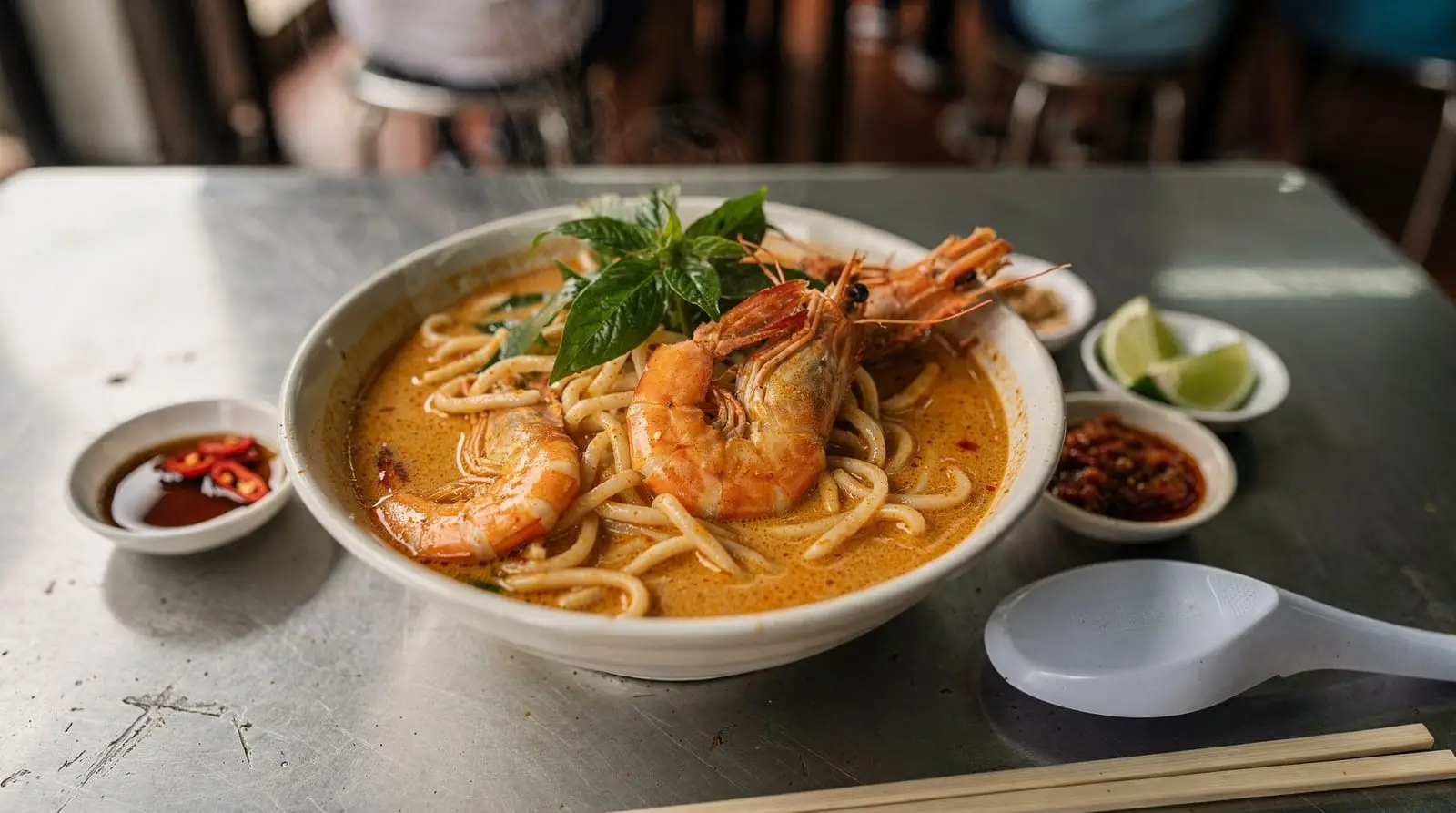
Singapore curry laksa (laksa lemak) is the dominant form in Singapore. The defining characteristics:
- Broth: Coconut milk blended with prawn stock, rempah (spice paste of lemongrass, galangal, shallots, garlic, dried chillies, belacan, and dried prawns), and sometimes fresh prawn heads fried separately for additional prawn fragrance. The broth is rich, aromatic, and complex.
- Noodles: Most commonly bee hoon (thin rice vermicelli), though some stalls offer yellow egg noodles or a mix.
- Toppings: Prawns (whole, shell-on or peeled), cockles (small clams), fish cake slices, tau pok (fried tofu puffs, which absorb the broth), beansprouts.
- Garnish: Fresh laksa leaves (Vietnamese coriander / daun kesum), cut chilli, fried shallots.
The dish arrives in a bowl and is eaten with chopsticks and a spoon (or spoon only for the Katong cut-noodle version).
The Katong variant: what makes it distinct
Katong — the coastal neighbourhood between the city centre and the east, associated with Singapore’s Peranakan (Straits Chinese) community — developed a specific laksa variant in the mid-20th century. The Katong laksa has several distinguishing features:
Cut noodles: The bee hoon is cut into short pieces before serving (usually with scissors in the kitchen). This allows the entire dish to be eaten with a spoon only — no chopstick management of long noodles. This is said to have been a service adaptation by earlier stalls to make the dish more practical.
Richer broth: Katong laksa tends toward a more concentrated, coconut-milk-heavy broth than some central-Singapore versions. The prawn flavour is prominent.
Cockle emphasis: Cockles are a significant element — typically more prominent than in some other versions.
Spice profile: The rempah paste in the Katong version has a distinctive fragrance — the specific proportion of lemongrass and dried shrimp contributes a quality that loyal fans find unique to this style.
The best laksa stalls
328 Katong Laksa — East Coast Road
The canonical Katong laksa stall, Michelin Bib Gourmand recognised, and the stall most food writers cite when discussing Singapore laksa.
Location: Multiple outlets, but the flagship is at 216 East Coast Road (accessible from Paya Lebar or Eunos MRT with a bus or taxi connection, approximately 15–20 minutes from the city centre).
Price: SGD 7–9 per bowl depending on size (small, medium, large). Additional toppings (extra prawns) add SGD 1–2.
What to expect: The broth is thick and richly fragrant, clearly prawn-heavy with good coconut depth. The cut noodles soak up the broth effectively. The cockles should be fresh with no muddy aftertaste. Order a medium bowl as a starting point.
Queue: 15–30 minutes on weekday lunch; longer on weekends. The stall opens around 09:00. Some visitors make it a morning meal before peak.
Tip: Eat at the stall rather than dabao (takeaway) — the noodles absorb the broth and become over-saturated if transported. The dish is at its best eaten immediately.
Janggut Laksa — Queensway Shopping Centre
A long-established stall with a dedicated following among locals. Located at the basement of Queensway Shopping Centre (near Commonwealth MRT). Claims historical significance as one of the originators of the Katong-style cut-noodle laksa — there is a documented rivalry with 328 over which stall was “first.” The broth is slightly different in character — arguably lighter, with more distinct lemongrass notes.
Price: SGD 6–8.
The 328 vs Janggut rivalry, briefly: Both stalls claim roots tracing back to the same original Katong laksa seller from the mid-20th century, and Singapore food media has covered the dispute over decades without a definitive resolution. For visitors, the practical takeaway is simpler than the history: both are genuinely good, the styles are close enough that most people cannot reliably tell them apart in a blind tasting, and choosing between them should come down to which location is more convenient on the day rather than which “wins.”
Sungei Road Laksa — Jalan Berseh
A famously traditional stall at the former Sungei Road area (near Little India). Uses charcoal braziers rather than gas burners — a distinction that purists argue creates a different smokiness in the broth. One of the most persistently recommended stalls by Singapore food bloggers and journalists.
Note: The original Sungei Road Thieves’ Market area was redeveloped; check current location via Google Maps before visiting.
Marine Parade Food Centre — multiple laksa stalls
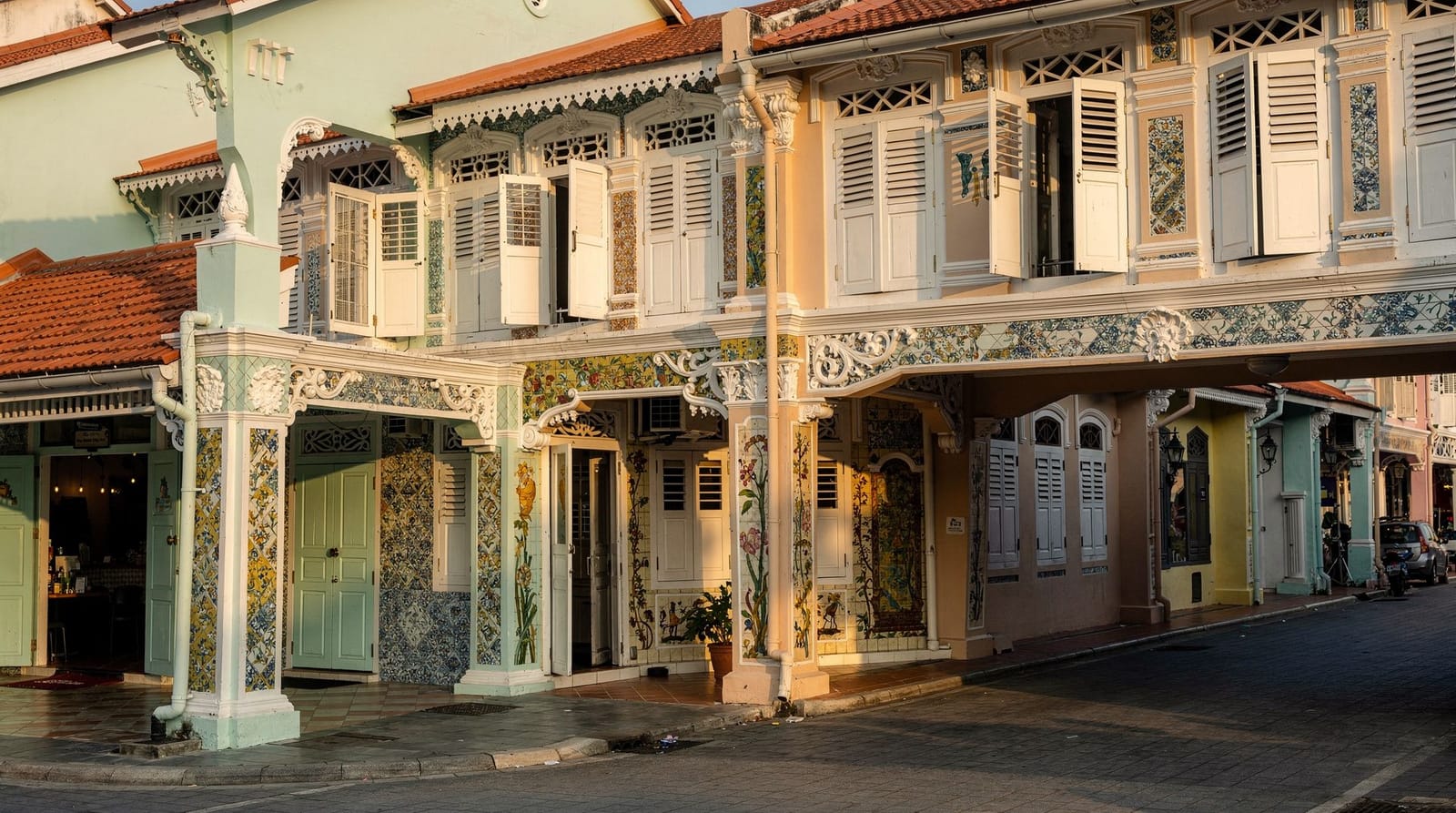
The Marine Parade area (east coast, near Parkway Parade mall) has several well-regarded laksa stalls within easy proximity to the Katong/Joo Chiat Peranakan neighbourhood — see Katong and Joo Chiat for context on the area. Combining laksa at Marine Parade with a walk through the Peranakan shophouses of Joo Chiat is an excellent half-day.
Chinatown Complex Food Centre and Old Airport Road
Both large hawker centres have laksa stalls with good reputations. Chinatown Complex Food Centre is the most centrally accessible option; Old Airport Road Food Centre is considered by locals to have some of the best all-round hawker variety in Singapore and typically includes at least one strong laksa option.
How to order laksa
At most hawker stalls the ordering process is straightforward:
- Specify bowl size (small / medium / large — sometimes called “small / regular / big”)
- Specify any ingredient modifications: “no cockles” (if you don’t like cockles), “add extra prawns”
- Specify spice level if available: “less spicy” is understood at all stalls
- Pay at the stall — cash or QR code
- Collect when called or indicated (many stalls bring the bowl to your table directly; at busy centres you may be given a number)
On cockles: Fresh cockles are a test of stall quality — they should be clean, with no muddy flavour, and cooked just-done (still slightly soft). If you have never had cockles and are uncertain, try them — they are mild and briny in a well-run stall. The hawker etiquette chope guide covers table reservation and other hawker norms.
The assam laksa option
Assam laksa deserves a brief note: it is a completely different dish from curry laksa and is worth trying as a contrast if you have more than one meal to spend on laksa.
Assam laksa characteristics:
- Broth: sour, tamarind-based (no coconut milk)
- Fish: flaked mackerel, horse mackerel, or sardine
- Aromatics: torch ginger flower (bunga kantan), Vietnamese mint (daun kesum), pineapple
- Noodles: thick round rice noodles (laksa noodles)
- Flavour profile: tangy, fishy, aromatic — entirely different from laksa lemak
Assam laksa is primarily a Penang speciality and is harder to find in authentic form in Singapore. The best Singapore versions tend to be at Penang-style hawker stalls or at food courts that specifically advertise Penang cuisine.
Laksa across Southeast Asia: a quick comparison
Laksa is a regional family, not a single dish, and menus in Singapore sometimes list several versions side by side. Knowing the differences helps you order what you actually want:
| Style | Broth | Origin | Where to find in Singapore |
|---|---|---|---|
| Singapore/Katong curry laksa | Coconut milk + prawn stock | Singapore (Peranakan) | 328 Katong, most hawker centres |
| Assam laksa | Sour tamarind, no coconut | Penang, Malaysia | Select Penang-style stalls |
| Sarawak laksa | Tamarind-sambal-coconut hybrid | Sarawak, Malaysia | Rare, specialist stalls only |
| Laksa Johor | Spaghetti noodles, thick gravy | Johor, Malaysia | Occasionally at Malay food stalls |
This site’s other Singapore food coverage — What to eat in Singapore and Must-try dishes in Singapore — places laksa alongside chicken rice, chilli crab and the rest of the national dish canon, useful if you’re planning a food-focused day rather than a single laksa pilgrimage. If Katong is on your route anyway, pairing laksa with Michelin-starred hawker stalls in Singapore helps you plan a wider Bib Gourmand crawl in the same trip.
Guided tours including Katong laksa
The Katong district is east of the city centre and is often combined with a food tour that includes laksa alongside other Peranakan dishes.
Singapore: Katong local food and city highlights tourFor broader food tours that include laksa as one of several dishes at hawker centres around the city:
Singapore: local hawker food tour with tastingsNutrition and dietary notes
Allergens: Laksa contains shellfish (prawns, cockles), belacan (shrimp paste — present even at Malay-run halal stalls in a halal-certified form), and sometimes egg (in fish cake). There is no standard gluten-free guarantee — soy sauce is sometimes used in stall preparation.
Halal: Most Malay-run laksa stalls are halal-certified. Check for the MUIS certification logo at the stall. Some stalls use pork-derived lard in the broth — this varies by operator and ethnicity of the cook. Ask specifically if required. For comprehensive guidance, see halal food Singapore.
Vegetarian: Standard laksa contains shrimp paste and seafood — it is not vegetarian. Some specific stalls and food courts offer a vegetarian laksa with tofu-based rempah and no meat toppings; this is uncommon and requires searching. See vegetarian Singapore for alternatives.
Calories: A medium bowl of Singapore curry laksa is approximately 450–600 calories, depending on the coconut milk concentration and toppings.
Laksa as part of Singapore’s heritage
Curry laksa reflects Singapore’s multicultural food history: the Peranakan community (Straits-born Chinese who blended Chinese and Malay cultural elements) developed the laksa lemak style, while the use of belacan, lemongrass, and galangal reflects Malay culinary tradition, and the noodle base reflects Chinese influence. No single community can claim sole credit for the dish — it is, in the most accurate sense, a Singaporean creation.
The peranakan culture guide covers the broader context of Singapore’s Peranakan heritage, which produced several of the city’s most distinctive foods including laksa, ayam buah keluak, and kueh (Peranakan desserts and snacks).
Budget summary
| Bowl size | Typical price at hawker stall |
|---|---|
| Small | SGD 5–6 |
| Medium (recommended) | SGD 7–8 |
| Large | SGD 9–10 |
| Extra prawns (add-on) | SGD 1–2 |
This makes laksa one of the most affordable significant dishes in Singapore’s repertoire. At SGD 8, a medium bowl at 328 Katong Laksa represents a Michelin Bib Gourmand meal at hawker pricing. For a full budget breakdown of eating in Singapore, see Singapore travel costs.
Making your own laksa: understanding the rempah
Visitors who want to recreate laksa at home will find the challenge lies entirely in the rempah — the spice paste that is the foundation of the dish. A genuine Singapore curry laksa rempah contains:
- Dried chillies (soaked and pounded)
- Fresh lemongrass (the tender lower stalk)
- Galangal (the blue ginger, distinct from regular ginger in flavour)
- Shallots or small red onions
- Garlic
- Belacan (dried shrimp paste, toasted in a dry wok first)
- Dried shrimps (soaked)
- Turmeric (fresh or dried)
- Candle nuts (macadamia as a substitute)
The paste is ground in a traditional stone mortar (batu lesung) or a blender. Traditional pounding in a stone mortar produces a slightly coarser, more aromatic result; the blender is faster. The paste is then fried in oil until it “breaks” — separates and turns fragrant, usually 10–15 minutes of active stirring — before the coconut milk and stock are added.
Making laksa at home is a Saturday project, not a weeknight task. The reward is a broth with genuine depth that no packaged paste fully replicates. Packaged laksa paste (Prima Taste, A1, Baba’s brands from Singapore) is widely sold at major supermarkets and online — a compromise option that produces a credible result in 20 minutes.
Singapore cooking classes sometimes include laksa rempah making as part of a broader Singapore cuisine session. For guided cooking options, see the cooking experiences listed in Singapore foodie itinerary.
Laksa and Singapore’s food identity
Of all Singapore’s iconic dishes, laksa is the one that most clearly embodies the multicultural synthesis at the core of Singaporean food culture. The Peranakan community (Straits-born Chinese with Malay cultural elements) created the Katong variant; the Malay culinary tradition supplies the rempah technique and belacan; the Chinese contribution is the noodle format and the preference for broth-based dishes. Three traditions in one bowl.
This synthesis is not a marketing narrative — it reflects actual historical processes. The Peranakan community in Katong were the children and grandchildren of Chinese-Malay intermarriage in the 19th-century Straits Settlements. Their food was a natural combination of what was available, what was familiar from both sides of the family, and what tasted good. Laksa is the most successful result.
Understanding this context transforms the eating experience from food tourism into something more meaningful — you are tasting a cultural history that is specific to one city and one period of social history. For more on this context, see peranakan culture guide.
Budget and logistics summary
| Stall | Location | Style | Price (medium bowl) |
|---|---|---|---|
| 328 Katong Laksa | East Coast Road | Cut noodle (Katong) | SGD 7–9 |
| Janggut Laksa | Queensway Shopping Centre | Cut noodle (Katong) | SGD 6–8 |
| Sungei Road Laksa | Jalan Berseh area | Classic charcoal | SGD 6–8 |
| Various (central) | Chinatown Complex / Lau Pa Sat | Standard curry laksa | SGD 5–8 |
For a full picture of budget eating in Singapore, see best cheap eats Singapore.
Frequently asked questions about laksa in Singapore
Is Katong laksa different enough from regular laksa to make the trip east?
Yes, if you are a food-focused visitor. The cut-noodle service style, broth concentration, and cockle emphasis at 328 Katong are notably different from a generic central-Singapore laksa. The Katong neighbourhood itself is worth visiting for the Peranakan shophouses and food variety — the laksa is a reason to go, not the only reason.
Can I get laksa in central Singapore without going to Katong?
Yes. The Chinatown Complex Food Centre, Lau Pa Sat, and most large hawker centres have at least one creditable laksa stall. The quality varies; you will not get the specific Katong-style cut noodle presentation in central Singapore, but you can eat good curry laksa without leaving the tourist corridor.
Is coconut milk bad for health?
Coconut milk is high in saturated fat, and a bowl of curry laksa is a calorie-dense meal. In the context of a balanced diet and an active holiday, it is fine. Do not eat laksa three times a day for two weeks and expect no consequences.
What drink goes with laksa?
Cold barley water, chrysanthemum tea, or fresh calamansi lime juice are the most common pairings — light, cooling drinks that balance the richness of the broth. Iced teh (cold tea with milk) also works. Avoid heavy or sweet drinks that would compete with the complex broth.
How is laksa different from tom yam soup?
Completely different. Tom yam is a Thai soup with lemongrass-lime-galangal broth, typically clear or mildly milky, and distinctly sour-spicy. Singapore laksa uses a much richer coconut milk and prawn stock base with a different spice paste. The overlap is only that both use galangal and lemongrass in their spice profiles.
Making your own laksa: understanding the rempah
Visitors who want to recreate laksa at home will find the challenge lies entirely in the rempah — the spice paste that is the foundation of the dish. A genuine Singapore curry laksa rempah contains:
- Dried chillies (soaked and pounded)
- Fresh lemongrass (the tender lower stalk)
- Galangal (the blue ginger, distinct from regular ginger in flavour)
- Shallots or small red onions
- Garlic
- Belacan (dried shrimp paste, toasted in a dry wok first)
- Dried shrimps (soaked)
- Turmeric (fresh or dried)
- Candle nuts (macadamia as a substitute)
The paste is ground in a traditional stone mortar (batu lesung) or a blender. Traditional pounding in a stone mortar produces a slightly coarser, more aromatic result; the blender is faster. The paste is then fried in oil until it “breaks” — separates and turns fragrant, usually 10–15 minutes of active stirring — before the coconut milk and stock are added.
Making laksa at home is a Saturday project, not a weeknight task. The reward is a broth with genuine depth that no packaged paste fully replicates. Packaged laksa paste (Prima Taste, A1, Baba’s brands from Singapore) is widely sold at major supermarkets and online — a compromise option that produces a credible result in 20 minutes.
Singapore cooking classes sometimes include laksa rempah making as part of a broader Singapore cuisine session. For guided cooking options, see the cooking experiences listed in Singapore foodie itinerary.
Laksa and Singapore’s food identity
Of all Singapore’s iconic dishes, laksa is the one that most clearly embodies the multicultural synthesis at the core of Singaporean food culture. The Peranakan community (Straits-born Chinese with Malay cultural elements) created the Katong variant; the Malay culinary tradition supplies the rempah technique and belacan; the Chinese contribution is the noodle format and the preference for broth-based dishes. Three traditions in one bowl.
This synthesis is not a marketing narrative — it reflects actual historical processes. The Peranakan community in Katong were the children and grandchildren of Chinese-Malay intermarriage in the 19th-century Straits Settlements. Their food was a natural combination of what was available, what was familiar from both sides of the family, and what tasted good. Laksa is the most successful result.
Understanding this context transforms the eating experience from food tourism into something more meaningful — you are tasting a cultural history that is specific to one city and one period of social history. For more on this context, see peranakan culture guide.
Budget and logistics summary
| Stall | Location | Style | Price (medium bowl) |
|---|---|---|---|
| 328 Katong Laksa | East Coast Road | Cut noodle (Katong) | SGD 7–9 |
| Janggut Laksa | Queensway Shopping Centre | Cut noodle (Katong) | SGD 6–8 |
| Sungei Road Laksa | Jalan Berseh area | Classic charcoal | SGD 6–8 |
| Various (central) | Chinatown Complex / Lau Pa Sat | Standard curry laksa | SGD 5–8 |
For a full picture of budget eating in Singapore, see best cheap eats Singapore.
Top experiences
Bookable activities with verified prices and instant confirmation on GetYourGuide.