Peranakan culture in Singapore: a genuine guide to Straits Chinese heritage
Singapore: Peranakan culture tour
What is Peranakan culture and where can you experience it in Singapore?
Peranakan (also called Straits Chinese or Nonya/Baba) culture is the unique hybrid civilisation that emerged when Chinese immigrants married local Malay women in the Straits Settlements (Singapore, Penang, Malacca) from the 15th century onward. The result is a distinctive fusion culture with its own language (Baba Malay), cuisine (Nonya food), dress, architecture, and crafts. In Singapore, the best places to experience it are the Peranakan Museum (Armenian Street), the Katong-Joo Chiat neighbourhood, and the Peranakan townhouses of Blair Road. Guided tours add significant context.
Quick answer: Peranakan (Straits Chinese) culture is Singapore’s most distinctive heritage tradition — a 400-year-old fusion of Chinese, Malay, and European elements visible in food, architecture, dress, and domestic crafts. Experience it through the Peranakan Museum (SGD 15), the Katong-Joo Chiat neighbourhood, and Nonya cuisine at established restaurants. A guided tour adds depth that walking alone does not provide.
| Where | Peranakan Museum (Armenian Street, Civic District) and Katong-Joo Chiat (eastern Singapore) |
| Cost | Museum around SGD 15; Nonya meals SGD 15–100+ depending on restaurant; walking is free |
| Time needed | Half a day for the essentials; a full day with a guided tour and the Asian Civilisations Museum |
| Getting there | City Hall MRT for the museum; Paya Lebar MRT plus a short walk or ride for Katong |
| Best time | Weekday mornings for the museum; late afternoon into evening for Katong food |
Who the Peranakans are
The Peranakan story begins in the 15th century, when Chinese merchants arrived in the port cities of maritime Southeast Asia — Malacca, Penang, Singapore — and married local Malay women. Their descendants, over generations, developed a culture that was neither wholly Chinese nor Malay but a distinct synthesis of both, layered with Dutch, Portuguese, and British colonial influences over the centuries of Straits Settlement history.
The word “Peranakan” comes from Malay and means “locally born” — distinguishing these Straits-born communities from more recent Chinese immigrants who maintained stronger ties to mainland Chinese culture. By the 19th century, Peranakan families had developed their own language (Baba Malay, a Malay creole with Hokkien loanwords), their own culinary tradition (Nonya cuisine), their own dress codes (Peranakan sarong kebaya for women, batik for men), and their own elaborate material culture — beadwork, embroidery, porcelain, jewellery, and distinctive architecture.
Singapore’s Peranakan community was concentrated in the Katong-Joo Chiat area of the eastern city and in pockets of the colonial town centre (Emerald Hill, Blair Road). Many Peranakan families were wealthy merchants who built the elaborate townhouses that still survive as the most visually striking domestic architecture in Singapore.
The Peranakan Museum
The best starting point for understanding Peranakan culture is the Peranakan Museum at 39 Armenian Street in the Civic District, five minutes’ walk from City Hall MRT. The museum occupies the beautifully restored Tao Nan School building (1910) and houses one of the world’s most complete collections of Peranakan material culture.
What to see:
- The wedding collection: The 12-day Peranakan wedding ceremony (tok panjang) was one of the most elaborate ritual sequences in Southeast Asian culture. The museum’s recreations of wedding chambers and displays of ceremonial items — embroidered wedding beds, beaded slippers (kasot manek), elaborate dress, ceremonial food sets — are the highlight of the collection.
- Porcelain: Peranakan families commissioned distinctive batik-patterned porcelain from kilns in Fujian and later Japan.
The collection includes entire table services in the characteristic palette of pink, blue, and green on white.
- Beadwork: Peranakan women spent years producing intricate beaded panels — bags, slippers, cushions — using micro-sized beads in designs that combined Chinese symbolism with Malay floral motifs. This craft tradition is now rare; the surviving examples in the museum are extraordinary in their precision.
- Architecture rooms: Period-furnished room settings showing how a wealthy Peranakan household would have appeared in the early 20th century.
Practical: Adult admission approximately SGD 15. Children under 6 free. Open Tuesday–Sunday, closed Monday. Allow 2 hours minimum. The museum shop stocks quality Peranakan crafts and reproductions. See Peranakan Museum Singapore for the detailed museum guide.
Katong-Joo Chiat: walking the heartland
The Katong-Joo Chiat neighbourhood in Singapore’s east is the geographic heart of Peranakan Singapore. A 20-minute taxi ride or MRT + walk from the city centre (Paya Lebar station is the closest), the area retains an exceptional concentration of Peranakan shophouses, family businesses, and eating places.
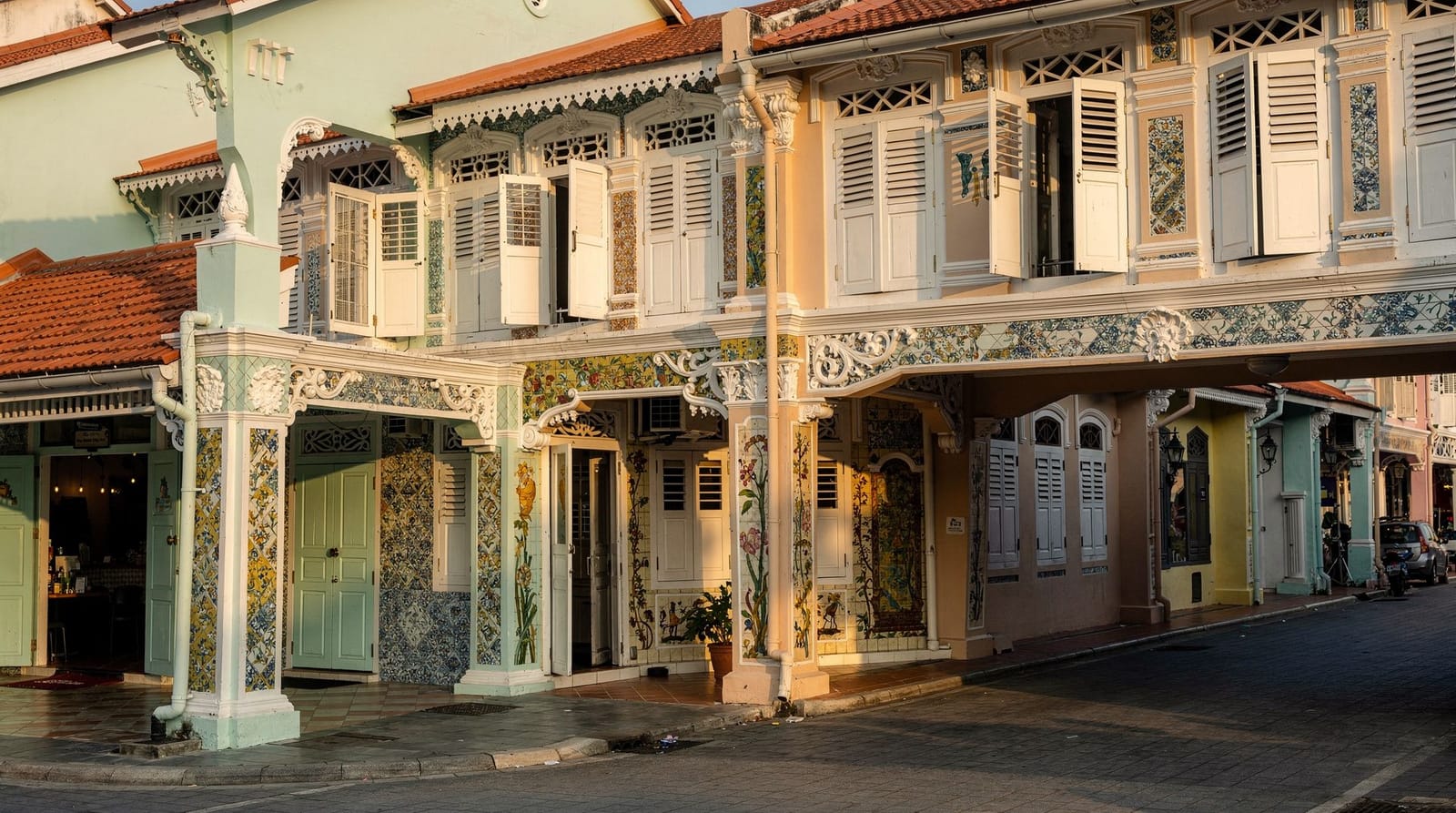
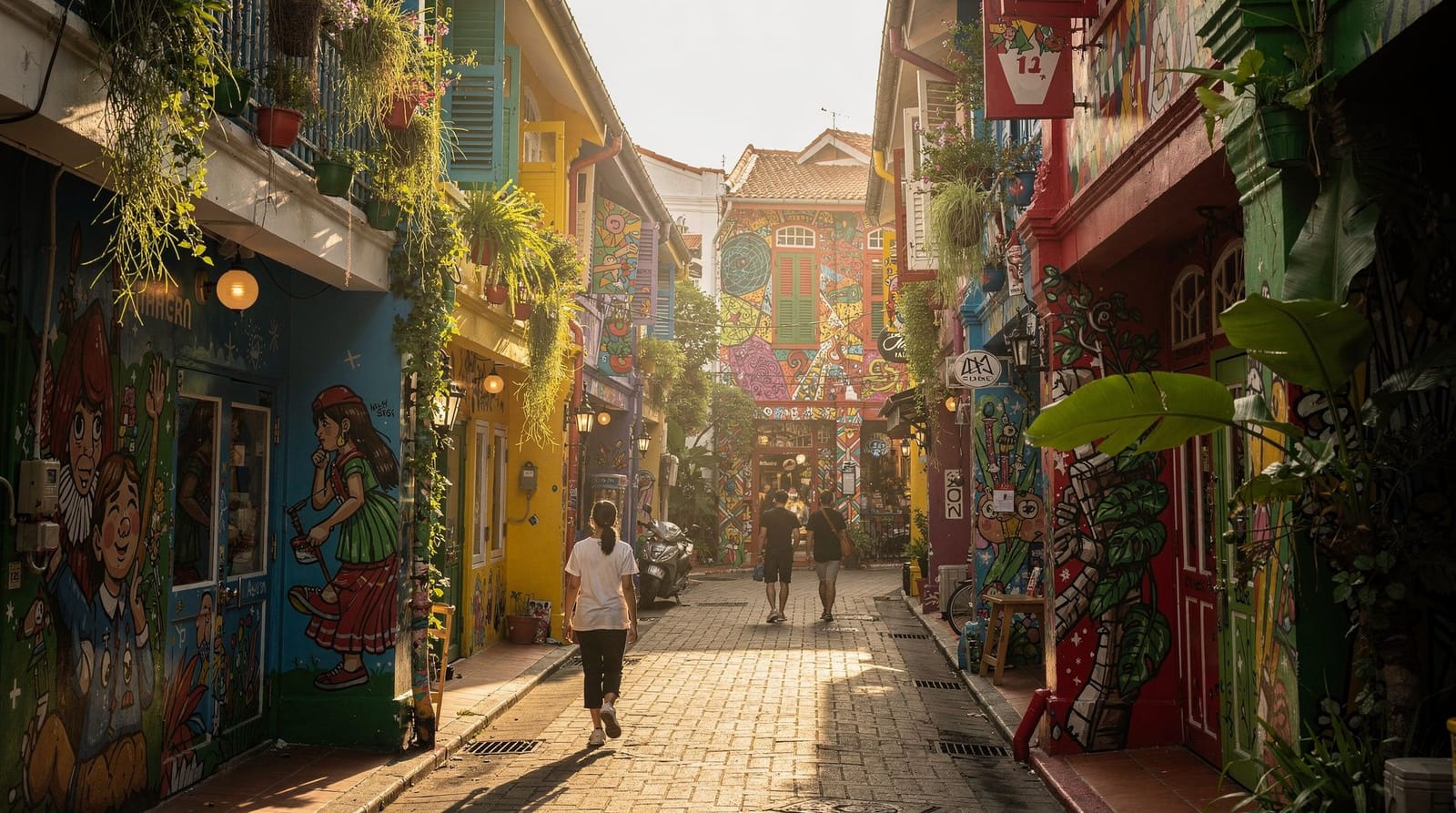
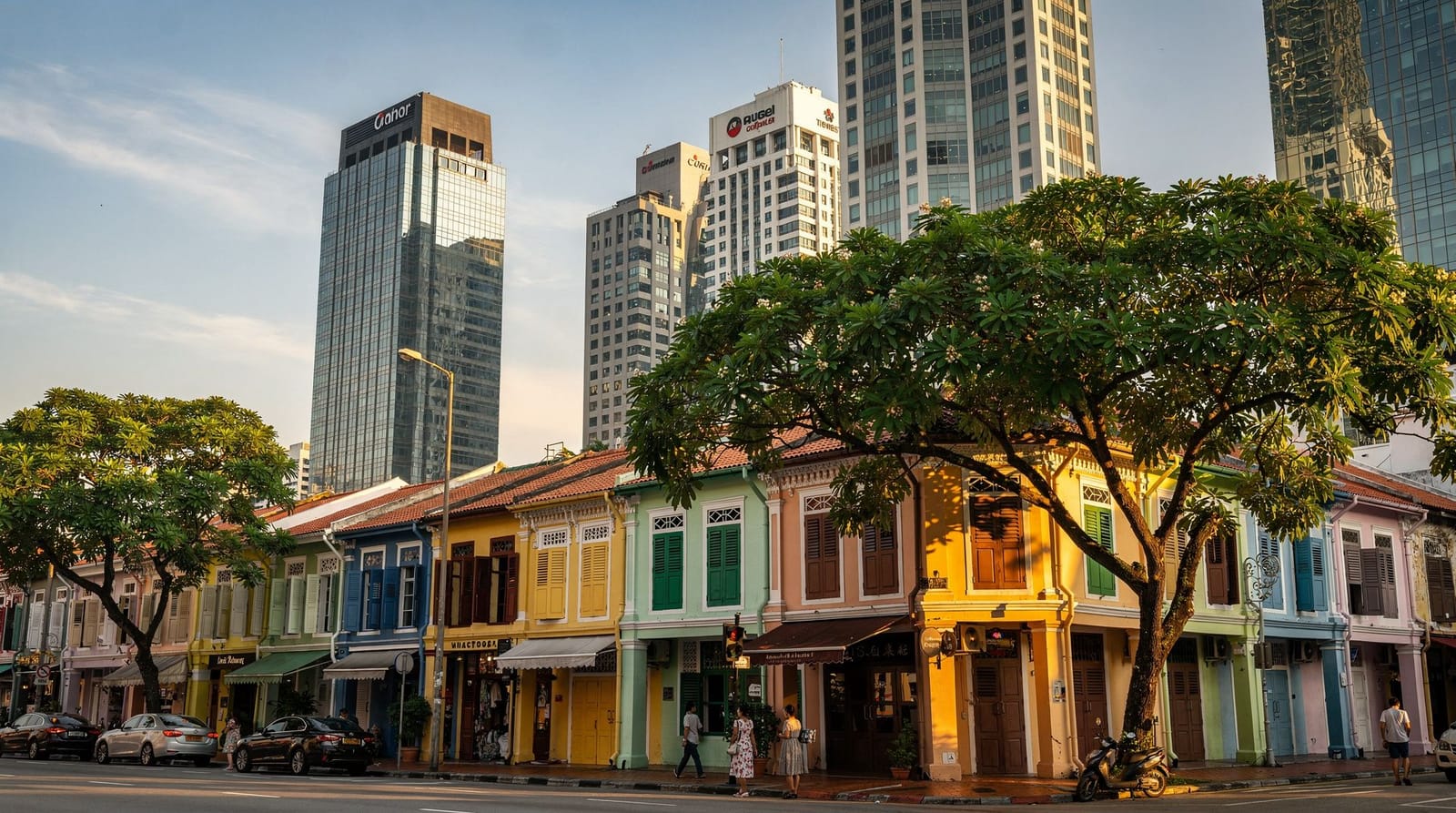
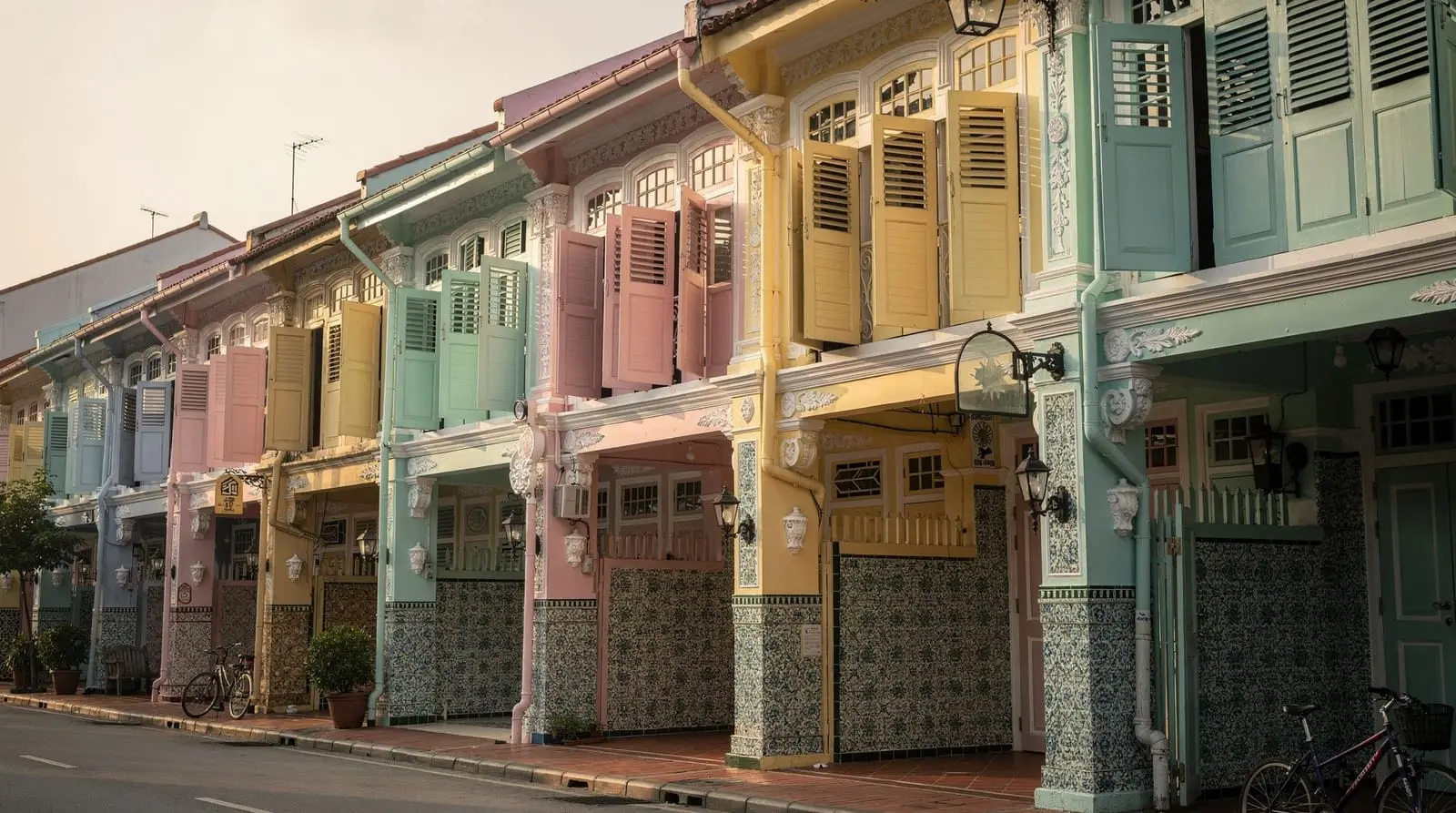
Koon Seng Road is the most photographed block — a terrace of late 19th-century shophouses in pastel colours with elaborate plaster decoration, ornate shuttered windows, and traditional five-foot ways (covered walkways at ground level). The renovation of this terrace has been well done, retaining authentic character without Disneyfication.
Joo Chiat Road itself is a long working street with a mix of Peranakan heritage buildings, contemporary shops, and surviving traditional businesses (rattan weavers, kueh makers, temples). Walking the full length from Joo Chiat Complex to Marine Parade Road takes about 30 minutes and passes a dozen points of architectural interest.
East Coast Road is the food hub — multiple Nonya restaurants and kueh shops including Kim Choo Kueh Chang (No. 109 East Coast Road), whose handmade kueh is made fresh daily and sold by the piece. The 328 Katong Laksa stall and its competing neighbours along this stretch are the starting point for a useful and delicious argument about Singapore’s definitive laksa. See Laksa in Singapore.
Katong Antique House (208 East Coast Road) is a private collection of Peranakan antiques displayed in a restored shophouse — not an official museum, but an eccentric, stuffed-full space that captures the material density of a genuinely collected Peranakan interior. Opening hours are irregular; worth trying to visit. See Katong and Joo Chiat for a full neighbourhood guide.
Guided Peranakan culture tour
A guided tour adds interpretive depth that self-guided walking cannot easily replicate. The Peranakan culture tour typically runs 3–4 hours, covers the Katong neighbourhood with a local guide from a Peranakan or cultural heritage background, and includes context on architectural details, social customs, food culture, and the community’s history and current status.
The better tours will visit the shophouses, explain the significance of specific architectural features, take you to a kueh maker or tea house, and provide an honest account of how the community has changed — including the tension between heritage preservation and the economic pressures on surviving Peranakan businesses.
Singapore: Peranakan culture tourFor visitors who want the cuisine woven more tightly into the tour rather than just the architecture and history:
Peranakan culture and cuisine experiencePeranakan culture came out of Chinese traders marrying into local Malay families, and it shows up in the details rather than in monuments — beaded slippers, tiled shophouse fronts, a cuisine that is neither Chinese nor Malay: a Peranakan culture highlights tour is what makes those details legible.
Singapore vs Penang vs Malacca for Peranakan heritage
Singapore is not the only place to encounter Peranakan culture, and being honest about the comparison helps set expectations:
| Destination | Strength | Best for |
|---|---|---|
| Singapore (Katong, Peranakan Museum) | Best-curated museum collection, easiest access, polished restoration | First-time visitors, limited time |
| Penang, Malaysia | Largest living community, Baba Malay still spoken | Depth of living culture, longer trips |
| Malacca, Malaysia | Jonker Street heritage district, historic townhouses | Combining with a Malacca day trip |
If your Singapore trip has room for it, day trips from Singapore covers logistics for reaching nearby Malaysia, though Penang and Malacca both require more than a single day.
Nonya cuisine: what to eat and where
Nonya food rewards curiosity. It is not merely “spicy Chinese food” or “mild Malay food” — it has its own flavour logic, built around the rempah (spice paste of shallots, galangal, lemongrass, chillies, and belacan pounded by hand), coconut milk, and tamarind.
Essential dishes to try:
Laksa (two main types): Katong laksa is the Singapore-specific version — a rich, coconut-forward prawn broth with thick rice noodles, cockles, fish cake, and shredded chicken, garnished with fresh laksa leaf. Not to be confused with assam laksa (Penang style, which is tamarind-sour rather than coconut-sweet).
Ayam buah keluak: The most distinctively Peranakan dish — chicken braised with the buah keluak nut (from the kepayang tree, native to Borneo and Sumatra). The nut’s black flesh is scraped out, mixed with spices, and returned to the shell. The flavour is intense and earthy, unlike anything in standard Malay or Chinese cooking.
Otak-otak: Fish paste (tenggiri/Spanish mackerel) blended with coconut milk, galangal, chillies, and kaffir lime leaf, wrapped in banana leaf and grilled over charcoal. Sold at hawker stalls throughout Singapore; the Peranakan versions at specialist shops are notably better.
Kueh: The umbrella term for Peranakan small cakes and sweets — kueh lapis (layered spiced steamed cake), ondeh-ondeh (pandan balls with palm sugar filling and coconut coating), kueh pie tee (crisp pastry cups), ang ku kueh (glutinous rice cake with mung bean filling in red tortoise shell shape). Kim Choo Kueh Chang in Katong and Bengawan Solo (multiple outlets) are the best places to try a range.
Where to eat Nonya food:
- True Blue Cuisine (49 Armenian Street, near Peranakan Museum): Established, reliable, mid-range priced. Good ayam buah keluak and laksa.
- Candlenut (17A Dempsey Road): The world’s first Michelin-starred Peranakan restaurant. More expensive (SGD 60–100+ per person) but a serious culinary experience for those wanting the refined version.
- Guan Hoe Soon (38 & 40 Joo Chiat Place): Claimed to be Singapore’s oldest Nonya restaurant (est. 1953). Unfussy, authentic, good-value classics.
- Kim Choo Kueh Chang (109 East Coast Road): For kueh specifically. Buy by the piece; everything is made fresh daily.
Peranakan architecture: what to look for
Understanding Peranakan shophouse architecture transforms a walk through Katong or Emerald Hill from pleasant to genuinely fascinating. Key features:
The five-foot way: The covered walkway along the ground floor of shophouses, set one storey below the projecting upper floor — creating a pedestrian corridor protected from rain and sun. Required by Raffles’ 1822 Town Plan; the measurement of five feet is supposedly the minimum walkway width specified.
Facade decoration: Elaborate plaster reliefs featuring Chinese symbolic motifs (bats for luck, peaches for longevity, carp for prosperity) combined with European decorative forms — pilasters, corbelled brackets, Baroque scrollwork. The synthesis of decorative vocabularies is the visual essence of Peranakan architecture.
Glazed floor tiles: Geometric or floral patterned cement tiles imported from Guangdong and later Belgium and England — characteristic of Peranakan interiors. Often visible through shophouse doorways.
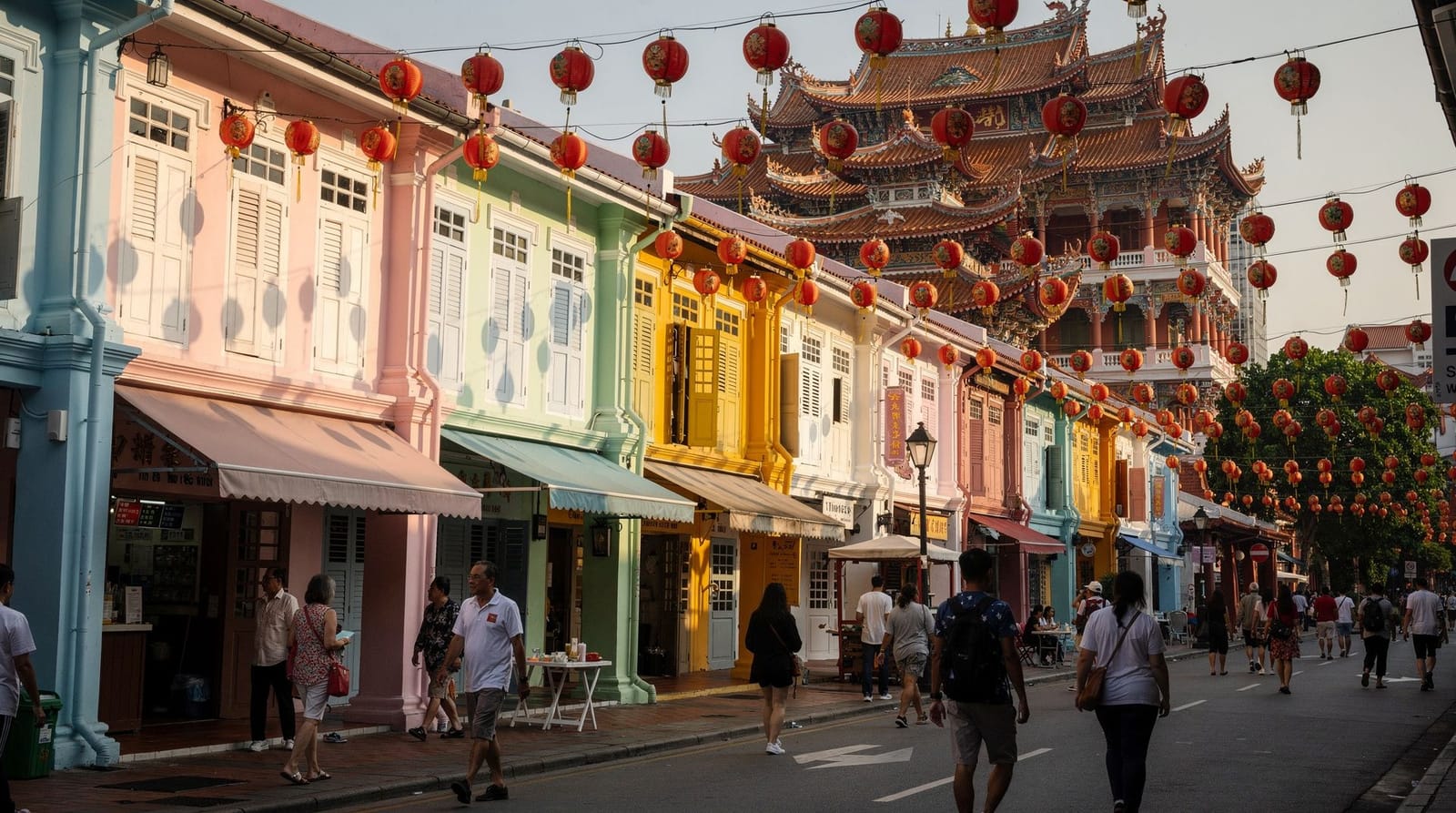
Colour palette: The Katong restoration used authentic pastel colours documented from historical photographs and paint analysis — pale mint greens, powder blues, terracotta pinks, and ivory whites. The colour palette is distinctive to the period and region.
Blair Road, Tanjong Pagar: A less-visited alternative to Katong’s Koon Seng Road — a terrace of largely intact Peranakan shophouses in the Tanjong Pagar area. Worth visiting alongside Chinatown Singapore.
Planning your time: two ways to approach it
If you have half a day: Start at the Peranakan Museum for the historical grounding (2 hours), then take a Grab or MRT-plus-walk to Katong for lunch at a Nonya restaurant and a walk along Koon Seng Road and East Coast Road (1.5–2 hours). This order works better than the reverse — understanding the wedding customs, beadwork techniques and porcelain patterns in the museum makes what you see in Katong’s shopfronts and antique house noticeably richer.
If you only have 90 minutes: Skip the museum and go straight to Katong. Walk Koon Seng Road, have lunch or a laksa stop on East Coast Road, and pop into Katong Antique House if it happens to be open. It is a real but shallower version of the experience — you will see the architecture and taste the food without the historical framing. Adding the Peranakan Museum guide as pre-trip reading can partly substitute for the in-person visit if time is genuinely tight.
Peranakan crafts and where to find them
Beyond the museum displays, several Peranakan craft traditions are still practised and sold in Singapore, making genuine souvenirs rather than mass-produced trinkets. Beadwork (kasot manek slippers, small bags and panels) is time-intensive and increasingly rare — expect to pay a premium for handmade pieces from specialist shops rather than tourist-market imitations.
Batik sarongs and kebaya tops appear in Katong boutiques and at the Peranakan Museum shop, ranging from modestly priced printed versions to genuinely hand-drawn batik at a much higher cost. Nonya porcelain reproductions (the pink, blue and green floral tableware seen in the museum) are sold as smaller decorative pieces — teacups, small plates — that travel well and reference the collection directly. For a broader view of what makes a good Singapore souvenir versus a forgettable one, see best souvenirs Singapore.
Pairing Peranakan heritage with the rest of your trip
Peranakan culture makes more sense when you see it next to Singapore’s other communities. The Asian Civilisations Museum places Peranakan objects in a wider Asian story, while Tiong Bahru and the Katong-Joo Chiat destination page show how older neighbourhoods have kept their character. If food is what draws you, the Singapore foodie itinerary can absorb a Nonya meal without much rearranging, and the blog’s Peranakan food journey and Katong Peranakan walk give a first-hand feel for what a day in the area looks like.
Travellers with a short stay can slot a Peranakan morning into the one-day Singapore itinerary, and those building a longer trip will find it fits naturally into the three-day plan. Either way, treat it as an unhurried part of the day rather than a box to tick between bigger attractions.
The Peranakan community today
The Peranakan identity is undergoing a revival in Singapore. A generation of younger Singaporeans with Peranakan heritage is reconnecting with the culture through food, fashion (kebaya revival), community organisations, and advocacy for shophouse conservation. The Peranakan Association of Singapore and the Peranakan Museum’s education programmes are active.
At the same time, some traditional Peranakan practices are fading — Baba Malay is spoken by fewer people with each generation, the traditional 12-day wedding ceremony has been reduced by most modern families, and many Peranakan family businesses have closed or been absorbed. The experience available to visitors in 2026 is genuine but represents a heritage that is still actively being negotiated.
Frequently asked questions about Peranakan culture Singapore
Are the Peranakans a Chinese or Malay group?
Neither, strictly. They are a distinct mixed community that emerged from intermarriage between Chinese migrants and local Malay (and sometimes other indigenous) women. They historically identified primarily as Chinese in colonial censuses but maintained distinctly hybrid cultural practices. Today, Peranakans in Singapore are typically classified as Chinese for administrative purposes but maintain a distinct cultural identity.
Is the Peranakan Museum the same as the Asian Civilisations Museum?
They are separate institutions but part of the same management group (National Heritage Board). The Asian Civilisations Museum at Empress Place covers broader Asian history including Peranakan collections. The Peranakan Museum on Armenian Street is the specialist institution with the most comprehensive Peranakan collection. If time is limited, the Peranakan Museum is the more focused choice.
Is there a Peranakan community in Malaysia?
Yes. Malaysia has significant Peranakan communities in Penang, Malacca, and Johor — all former Straits Settlement territories. Penang is often considered to have the most living Peranakan community; Malacca’s Jonker Street area is the most tourist-oriented. Both are accessible as day trips or short trips from Singapore.
What language do Peranakans speak?
Historically, Baba Malay — a Malay-based creole with Hokkien vocabulary incorporated. In modern Singapore, most Peranakans speak English as their primary language (reflecting Singapore’s English-language education policy from the 1960s onward). Baba Malay survives mainly among older community members in Penang and Malacca.
How long should I spend exploring Peranakan culture in Singapore?
A focused half-day covers the essentials: morning at the Peranakan Museum (2 hours), then Grab to Katong for lunch at a Nonya restaurant and a walk along Koon Seng Road and East Coast Road (2 hours including kueh shopping). A guided cultural tour (half-day, 3–4 hours) can replace or complement the self-guided walk. Adding the Asian Civilisations Museum or the Tiong Bahru estate extends the heritage dimension to a full day.
Top experiences
Bookable activities with verified prices and instant confirmation on GetYourGuide.