Temples of Singapore: Buddhist, Hindu, Taoist, and Sikh — honest guide
Singapore: temples, Chinatown and Little India private tour
What are the best temples to visit in Singapore?
Singapore has genuinely exceptional religious architecture across Buddhist, Hindu, Taoist, and Sikh traditions. The five worth prioritising are Buddha Tooth Relic Temple (Chinatown, free, architecturally spectacular), Sri Mariamman Temple (Chinatown, oldest Hindu temple, free), Sri Veeramakaliamman Temple (Little India, free, most visually dramatic), Thian Hock Keng Temple (Telok Ayer, Hokkien Taoist, free, UNESCO heritage category), and Gurudwara Sahib Silat Road (Sikh, free, open to visitors). Sultan Mosque (Kampong Glam) is covered separately. All require covered shoulders and covered knees. Footwear is removed at all temples.
Quick answer: Singapore’s temples span Buddhist, Hindu, Taoist, and Sikh traditions with remarkable architectural richness. All are free to enter. Dress code applies universally: cover shoulders and knees, remove footwear at Hindu and Sikh temples. The five best are Buddha Tooth Relic Temple (Chinatown), Sri Mariamman (Chinatown), Sri Veeramakaliamman (Little India), Thian Hock Keng (Telok Ayer), and Gurudwara Sahib Silat Road.
| Where | Chinatown, Little India, Telok Ayer, Tanjong Pagar |
| Cost | Free (donations welcome) |
| Dress code | Covered shoulders and knees; shoes off at Hindu/Sikh temples |
| Getting there | MRT Chinatown (NE4/DT19), Little India (NE7/DT12) |
| Time needed | 20–30 min per temple; half-day for a multi-temple walk |
Which temple should you prioritise?
| Temple | Tradition | Signature feature | Time needed |
|---|---|---|---|
| Buddha Tooth Relic Temple | Buddhist | Grand hall, golden altar | 30–45 min |
| Sri Mariamman | Hindu | Gopuram tower, oldest Hindu temple | 20–30 min |
| Sri Veeramakaliamman | Hindu | Most vivid, dramatic gopuram | 20–30 min |
| Thian Hock Keng | Taoist | Nail-free carpentry, oldest Hokkien temple | 20–30 min |
| Gurudwara Sahib Silat Road | Sikh | Free community langar meal | 30–60 min |
Why Singapore’s temples matter
Singapore is a multi-ethnic, multi-religious city-state where four official religions — Buddhism/Taoism (Chinese community), Islam (Malay community), Hinduism (Indian community), and Christianity — coexist within a few square kilometres. The density of significant religious architecture is exceptional: you can walk from a 19th-century Hindu temple to a Sikh gurudwara to a Hokkien Taoist temple to a mosque within 20 minutes.
This is not superficial diversity — these are living institutions with active congregations, daily rituals, and deep community roots. Visiting as a tourist means stepping into ongoing religious life, not a museum. The experience is richer for that reason, and it asks something of visitors: respectful behaviour, appropriate dress, and genuine curiosity rather than the tourist urge to photograph everything.
Buddha Tooth Relic Temple (Chinatown)
See the dedicated Buddha Tooth Relic Temple Singapore guide. In brief: a five-storey Tang Dynasty-style Buddhist temple on South Bridge Road in Chinatown, completed in 2007, housing a tooth relic of the historical Buddha. Architecturally one of Singapore’s most impressive buildings — the grand hall with its golden main altar and elaborate ceiling deserves a proper visit. Free entry, open 7 am–7 pm daily. Dress code strictly enforced — sarong wraps available at the entrance.
Sri Mariamman Temple: Singapore’s oldest Hindu temple
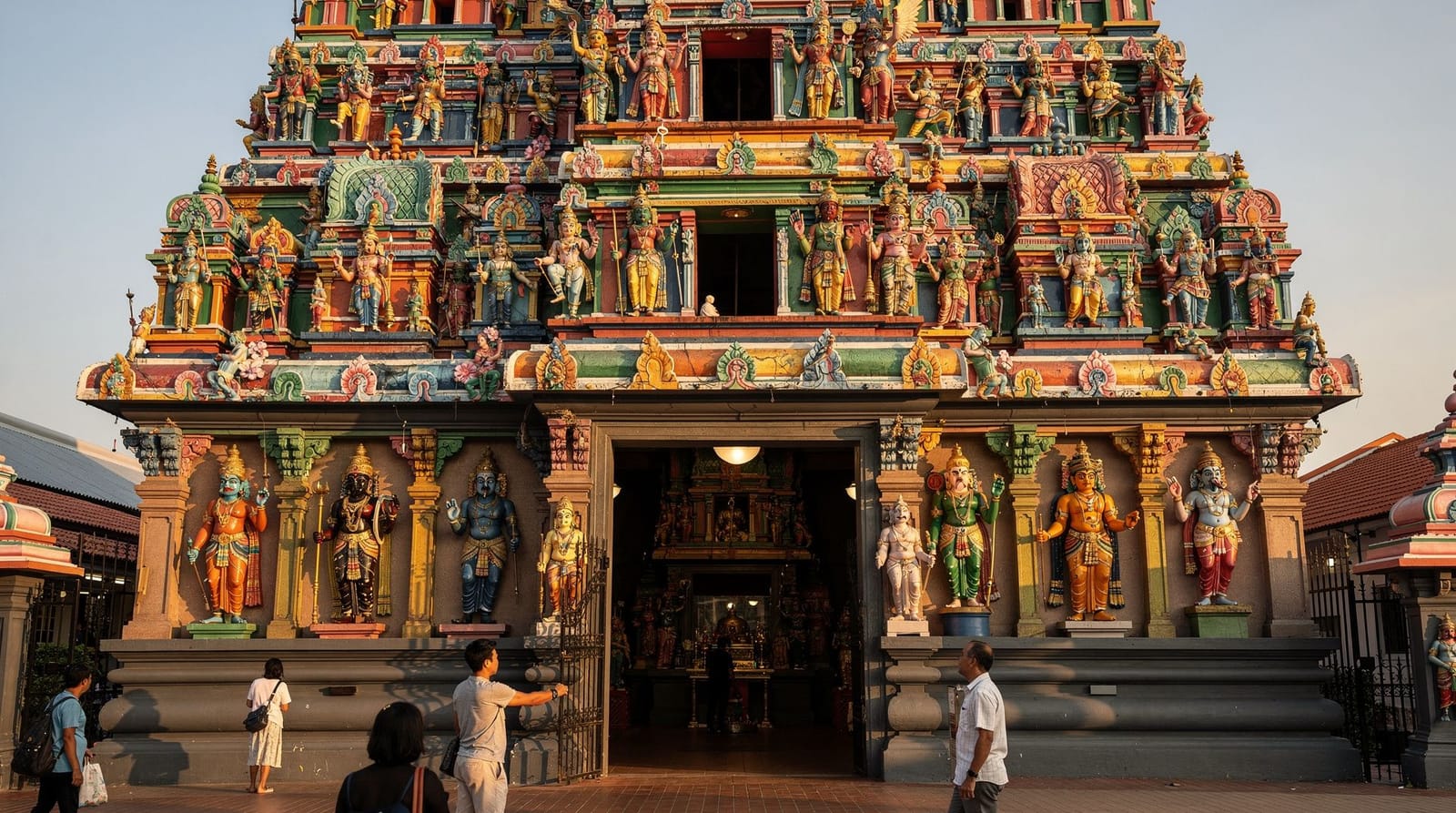
Sri Mariamman Temple at 244 South Bridge Road, Chinatown, is Singapore’s oldest Hindu temple and one of the most significant. Founded in 1827 by Naraina Pillai (a Tamil trader from Penang who arrived on the same ship as Stamford Raffles), the current structure dates from 1843 with substantial renovations over the following century.
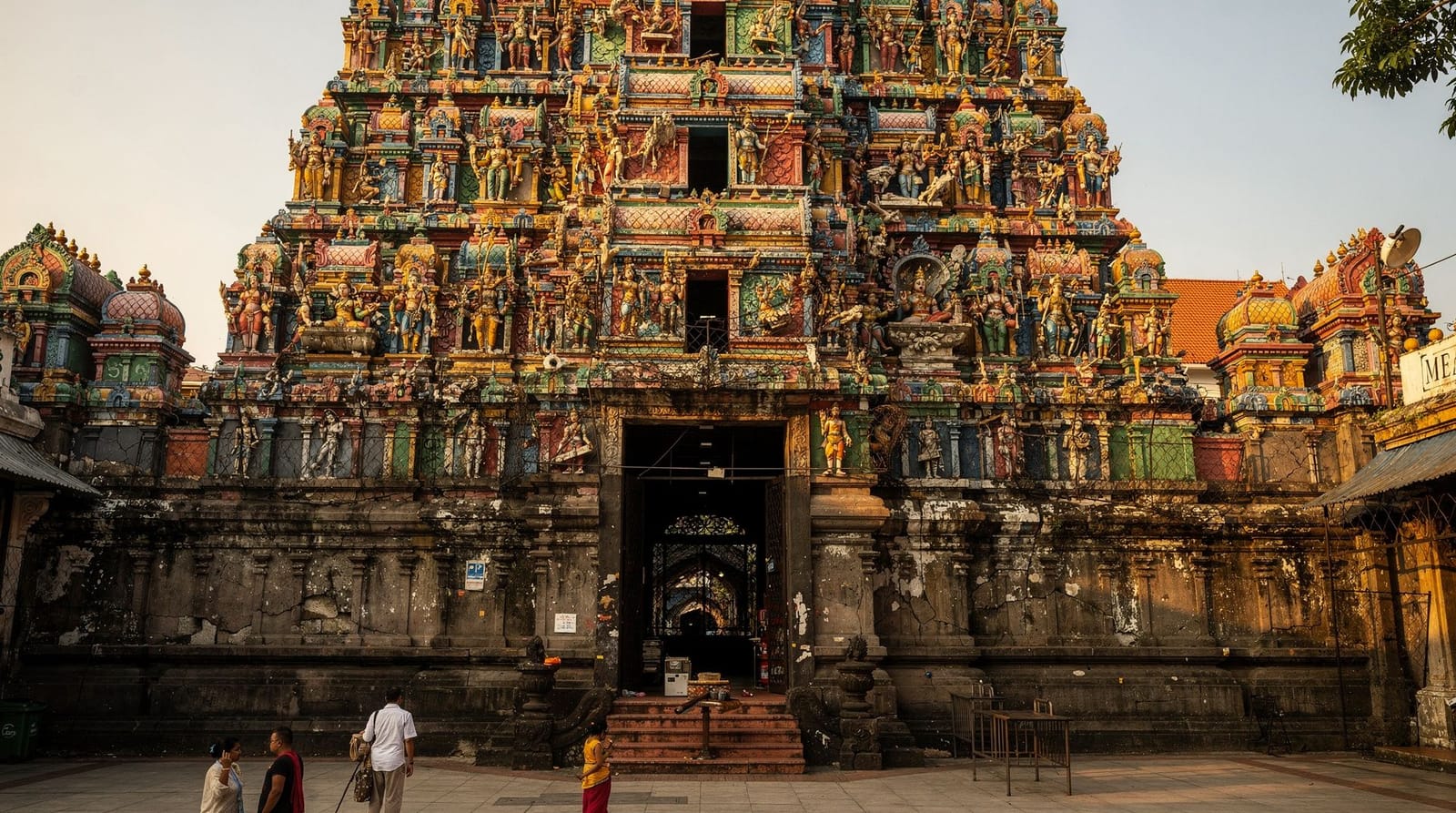
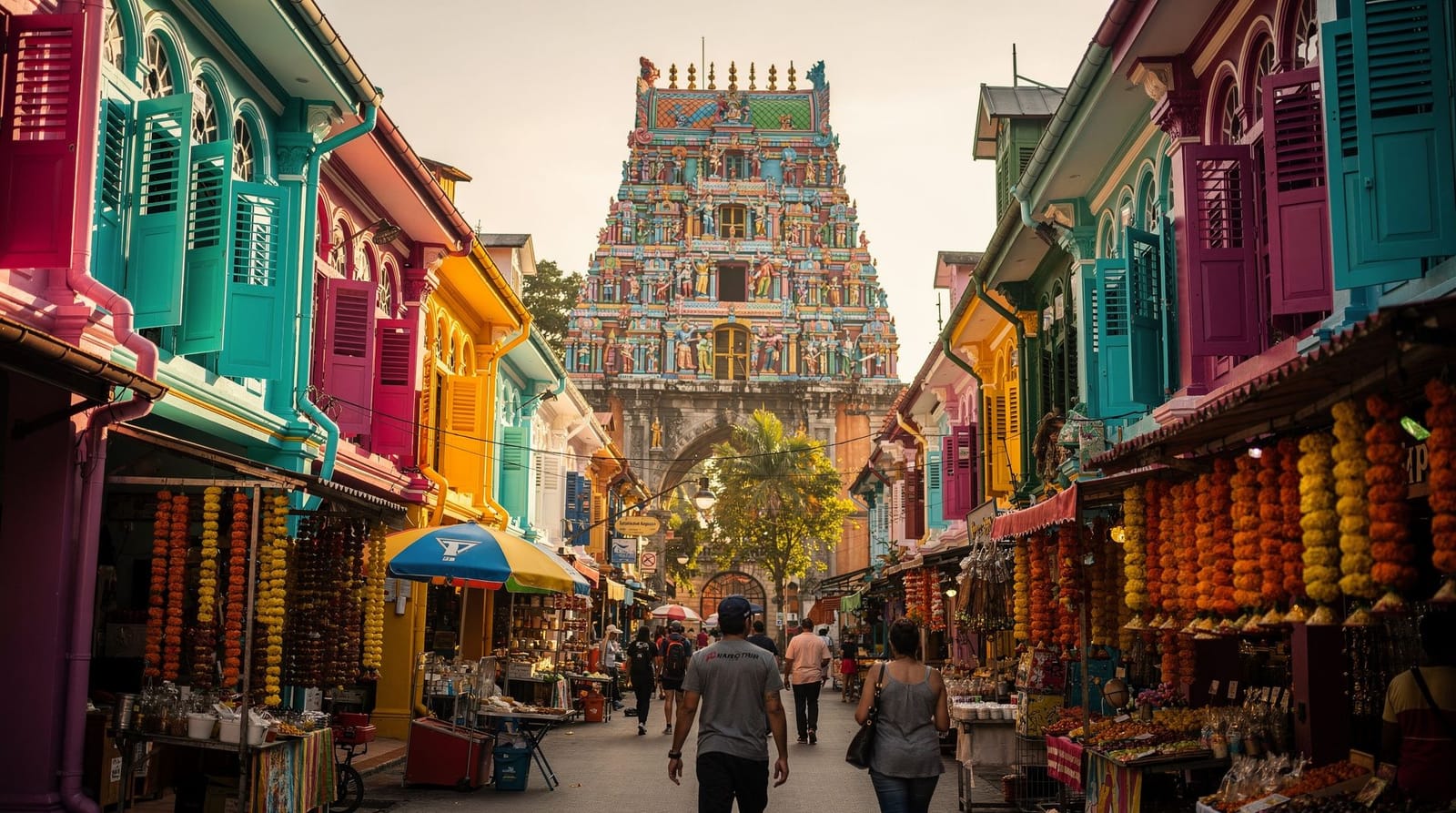
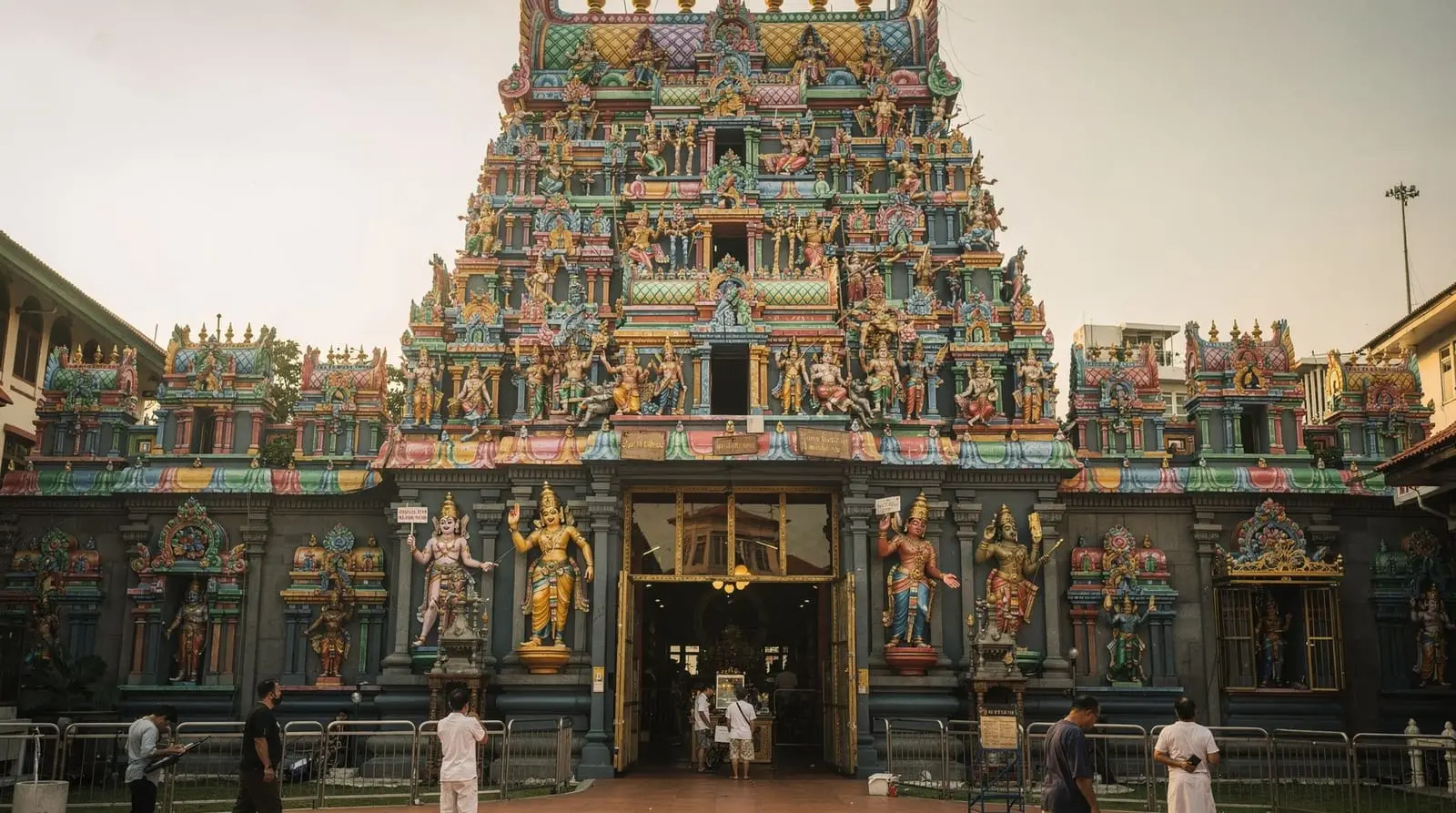
The gopuram: The most immediately striking element is the gopuram — the tiered gateway tower covering the entrance — decorated with hundreds of hand-modelled and painted stucco figures of Hindu deities, celestial attendants, and animals. The current gopuram was renovated in 1936 and again in the 1980s; the polychrome figures in their densely packed tiers are a genuinely extraordinary piece of religious folk art.
The main shrine: The presiding deity is Mariamman — a form of the mother goddess associated with healing, disease prevention, and rain. The main shrine hall houses the main Mariamman murti (image) flanked by smaller shrines to other deities (Durga, Ganesha, Murugan). The ritual oil lamps, flower offerings, and incense create a sensory environment that is unlike anything in Singapore’s secular architecture.
The Draupadi Amman Shrine (inner courtyard): A smaller inner shrine to Draupadi — the heroine of the Mahabharata — which is the focus of the annual Thimithi firewalking festival (typically October/November). Devotees walk across a pit of burning coals as an act of devotion. The firewalking itself is not a tourist spectacle — it is an intensely observed religious ritual.
Practical: Free entry. Open approximately 6 am–noon and 6–9 pm daily (afternoon closure is standard for Hindu temples). Shoes removed before the main hall. Covered shoulders and knees required. Photography permitted in outer areas. See Sri Mariamman Temple Singapore for the full guide.
Sri Veeramakaliamman Temple: Little India
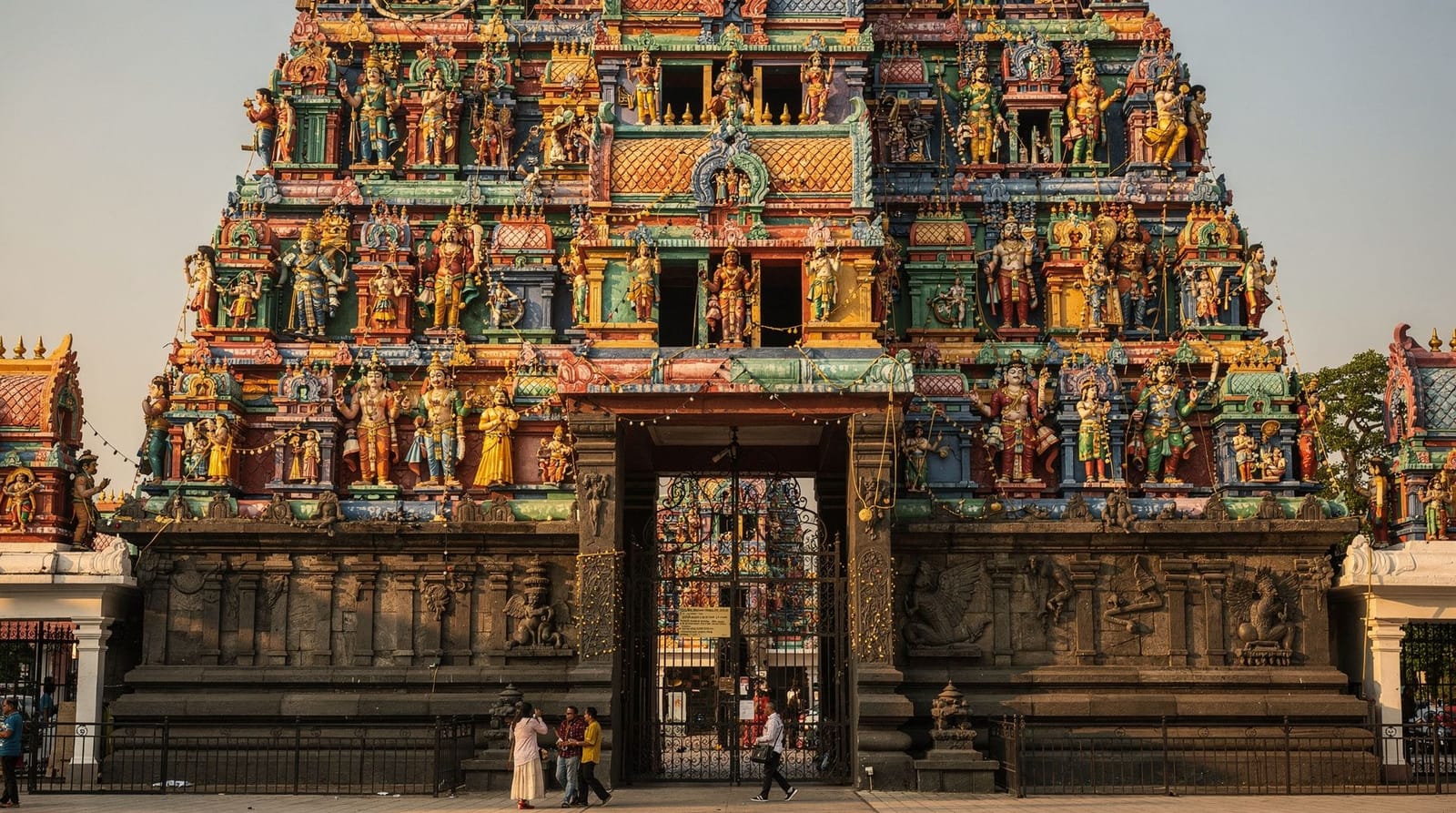
Sri Veeramakaliamman Temple at 141 Serangoon Road in Little India is dedicated to Kali — the goddess of time, power, and destruction who, in the Tamil tradition, is a protector of the oppressed. “Veerama Kali Amman” translates roughly as “fierce-goddess Kali.”
The temple was established in 1855 by Bengali labourers and has been rebuilt and expanded several times. The current structure is visually the most dramatic of Singapore’s major Hindu temples — the gopuram is larger and more densely decorated than Sri Mariamman’s, and the colour palette is more vivid, with red, gold, and bright blue dominant.
The main hall: Kali in her primary manifestation here is depicted as a four-armed, black-skinned figure in a fierce posture — this is not the gentle maternal goddess of some other traditions. Her primary consort Shiva and son Ganesha are also worshipped within the complex. The ritual activity inside is typically more intense than at Sri Mariamman — Little India’s temple sees high devotional traffic from the Tamil community.
Deepavali season: During Deepavali (Festival of Lights, October/November), the Sri Veeramakaliamman area and the surrounding streets of Little India are decorated with elaborate light installations. The temple itself is a focal point for devotional visits. See Little India Singapore.
Practical: Free entry. Open approximately 5:30 am–noon and 5–9 pm daily. Shoes removed before the main hall. Covered shoulders and knees required. Photography permitted in outer areas; inner sanctum photography often restricted. More active during puja times — visitors should stand aside respectfully.
Thian Hock Keng: Singapore’s oldest Taoist temple
Thian Hock Keng (“Temple of Heavenly Happiness”) at 158 Telok Ayer Street is Singapore’s oldest and most historically significant Hokkien Chinese temple. Dedicated to Mazu (Matsu) — the Fujian sea goddess who protects seafarers — it was the place where Hokkien immigrants gave thanks for safe passage to Singapore. Completed in 1842 (built on the site of an earlier 1820 joss house), it is constructed without nails, using traditional Chinese joinery techniques.
Architecture: The temple is a masterpiece of southern Fujian temple architecture — a series of courts and halls with sweeping tiled roofs, granite pillars from China, and cast-iron railings from Scotland. The exterior courtyard, with its ornamental ridgeline and blue roof tiles, is distinctive within Singapore’s urban landscape.
Interior: The main hall houses a gilded statue of Mazu flanked by attendant deities. The smoky atmosphere from joss sticks, the sound of drums during ceremonies, and the visual richness of the shrine create a genuinely atmospheric environment. The rear hall is dedicated to Guan Yu (the god of war and righteousness).
Heritage: Thian Hock Keng is on Singapore’s government preservation list and has been recognised by UNESCO Asia-Pacific Cultural Heritage awards. It sits on Telok Ayer Street, which was the original shoreline of Singapore before 19th-century land reclamation pushed the sea back — meaning the sea goddess temple literally stood at the harbour’s edge when it was built.
Practical: Free entry. Open daily 7:30 am–5:30 pm. No strict dress code for the outer courts; modest dress appropriate for the inner hall. Photography generally permitted.
Gurudwara Sahib Silat Road: Sikh temple
The Silat Road Gurudwara (formally Gurdwara Sahib Silat Road) near Tanjong Pagar is one of Singapore’s most accessible Sikh temples for visitors. Singapore has a Sikh community dating to the 1800s — Sikh soldiers served with the colonial administration and many settled permanently.
Langar (community meal): The Sikh tradition of langar — a free community meal served to all visitors regardless of religion or background — operates at this gurudwara. Visitors who arrive during meal times (typically lunch around noon and afternoon) can join the communal meal in the langar hall at no cost and with no requirement to be Sikh. This is one of Singapore’s most genuine cultural experiences.
Visit protocol: Cover your head (a cloth is provided at the entrance if you have not brought one). Remove shoes. Men and women may be directed to separate sections during prayer. Follow the custodians’ guidance. The prayer hall (Darbar Sahib) has the Guru Granth Sahib (the holy scripture) permanently installed and tended.
Etiquette across traditions: a quick primer
Each tradition has its own conventions, and mixing them up is a common (and easily avoided) visitor mistake:
- Buddhist and Taoist temples: Bow rather than kneel is common; shoe removal varies by temple, so follow the signage at the door rather than assuming.
- Hindu temples: Shoes always come off before the main hall. Avoid standing directly in front of the deity image during active puja — step to the side.
- Sikh gurudwara: Head covering is required for everyone regardless of gender; a cloth is provided if you have not brought one. Shoes off, and legs should be covered.
- Photography: Assume restrictions in the inner sanctum of any tradition unless a sign explicitly says otherwise, and never photograph someone mid-prayer without their evident consent.
For the equivalent etiquette at Singapore’s other major place of worship, see the dedicated Sultan Mosque guide, which covers dress code and prayer-time access in detail.
Combining temples with a broader cultural day
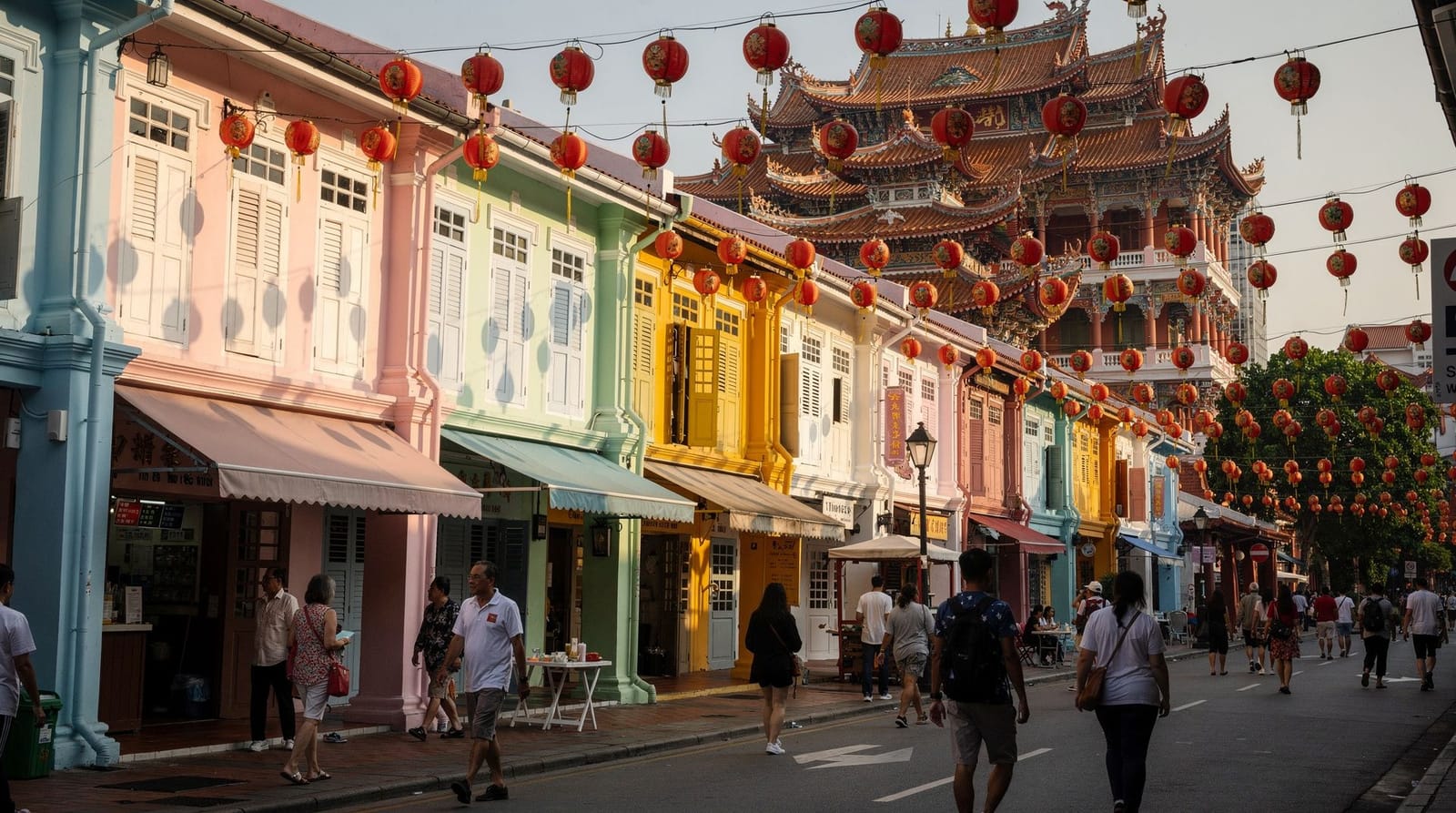
A temple walk pairs naturally with Singapore’s wider heritage offering. The Chinatown guide covers the neighbourhood context around Buddha Tooth Relic Temple, Sri Mariamman, and Thian Hock Keng, including where to eat between temple stops. For deeper historical grounding, the colonial Singapore guide and the National Museum of Singapore explain how the city’s multi-religious character developed.
If your visit coincides with a festival, Deepavali in Singapore and Chinese New Year in Singapore are worth checking against your travel dates — temple visits during these periods are far more atmospheric, if also busier. For a broader survey of Singapore’s cultural institutions, see the museums guide.
A guided temple tour
A guided tour covering multiple temples — Buddha Tooth Relic, Sri Mariamman, Thian Hock Keng, and a mosque — provides context that reading about these places cannot fully convey. A guide who understands these traditions can explain the symbolic vocabulary of Hindu iconography, the logic of Taoist spatial arrangement, and the etiquette that distinguishes respectful visiting from thoughtless tourism.
Singapore: temples, Chinatown and Little India private tour Singapore: Chinatown heritage tour & tea tastingPlanning a temple walk in Singapore
A half-day combining several temples in Chinatown and Little India:
Morning (9 am – 1 pm):
- Buddha Tooth Relic Temple (30–45 minutes): enter the museum and the Buddha Hall
- Sri Mariamman Temple (20–30 minutes): walk the outer court, observe the gopuram detail
- Thian Hock Keng (20–30 minutes): cross Chinatown on foot via South Bridge Road and Neil Road
MRT to Little India (15 minutes from Chinatown MRT to Little India MRT):
- Sri Veeramakaliamman Temple (20–30 minutes): arrive during a quieter period (mid-morning, 9:30–10:30 am is usually before noon puja)
- Lunch on Serangoon Road or at a Tekka Centre hawker stall
Tips:
- Carry a scarf or lightweight long shirt in a bag for dress code compliance
- Arrive at any temple after 8:30 am and before noon for quietest conditions
- Budget SGD 0–10 for donations across all temples (appropriate; not required)
Frequently asked questions about temples in Singapore
Do temples in Singapore charge for photography?
Most allow photography in outer areas and main halls but restrict it in the inner sanctum (directly in front of the main deity). Rules are posted at entrances. Always ask before photographing devotees in prayer. Video is generally treated the same as photography. Commercial photography (professional camera, tripod, crew) requires advance permission.
Are there any temples open at night?
Some temples maintain evening prayer sessions (6–9 pm is common). Thian Hock Keng closes by 5:30 pm. Sri Mariamman has an evening session from approximately 6–9 pm. The Buddha Tooth Relic Temple is open until 7 pm. For evening visits, verify current hours directly with each temple as these change around festivals.
Is there a dress code for men specifically?
Yes. Men should wear shirts with sleeves (at minimum short sleeves — tank tops and vests are not appropriate). Shorts that cover the knee are acceptable; above-the-knee shorts require a sarong wrap provided at the entrance. Remove hats in the inner halls. At the Sikh gurudwara, cover your head with the cloth provided.
Which temple is most visually impressive?
Buddha Tooth Relic Temple wins for architectural scale and interior grandeur. Sri Veeramakaliamman wins for gopuram drama and colour. Thian Hock Keng wins for historical atmosphere and authenticity. The honest answer is that all four are impressive in different registers.
Can I visit multiple temples in one day?
Yes — the Chinatown cluster (Buddha Tooth Relic, Sri Mariamman, Thian Hock Keng) are within a 10-minute walk of each other and can all be visited in a half-morning. Adding Little India’s Sri Veeramakaliamman extends the day but requires an MRT journey. The Sultan Mosque in Kampong Glam adds a further 30-minute MRT and walk from Little India. A comprehensive temple day covering all four traditions (Buddhist, Hindu, Taoist, Muslim) is entirely feasible in one day.
Top experiences
Bookable activities with verified prices and instant confirmation on GetYourGuide.