Sri Mariamman Temple Singapore: visitor guide to Chinatown's Hindu landmark
Singapore: Chinatown heritage tour & tea tasting
What is Sri Mariamman Temple and is it worth visiting?
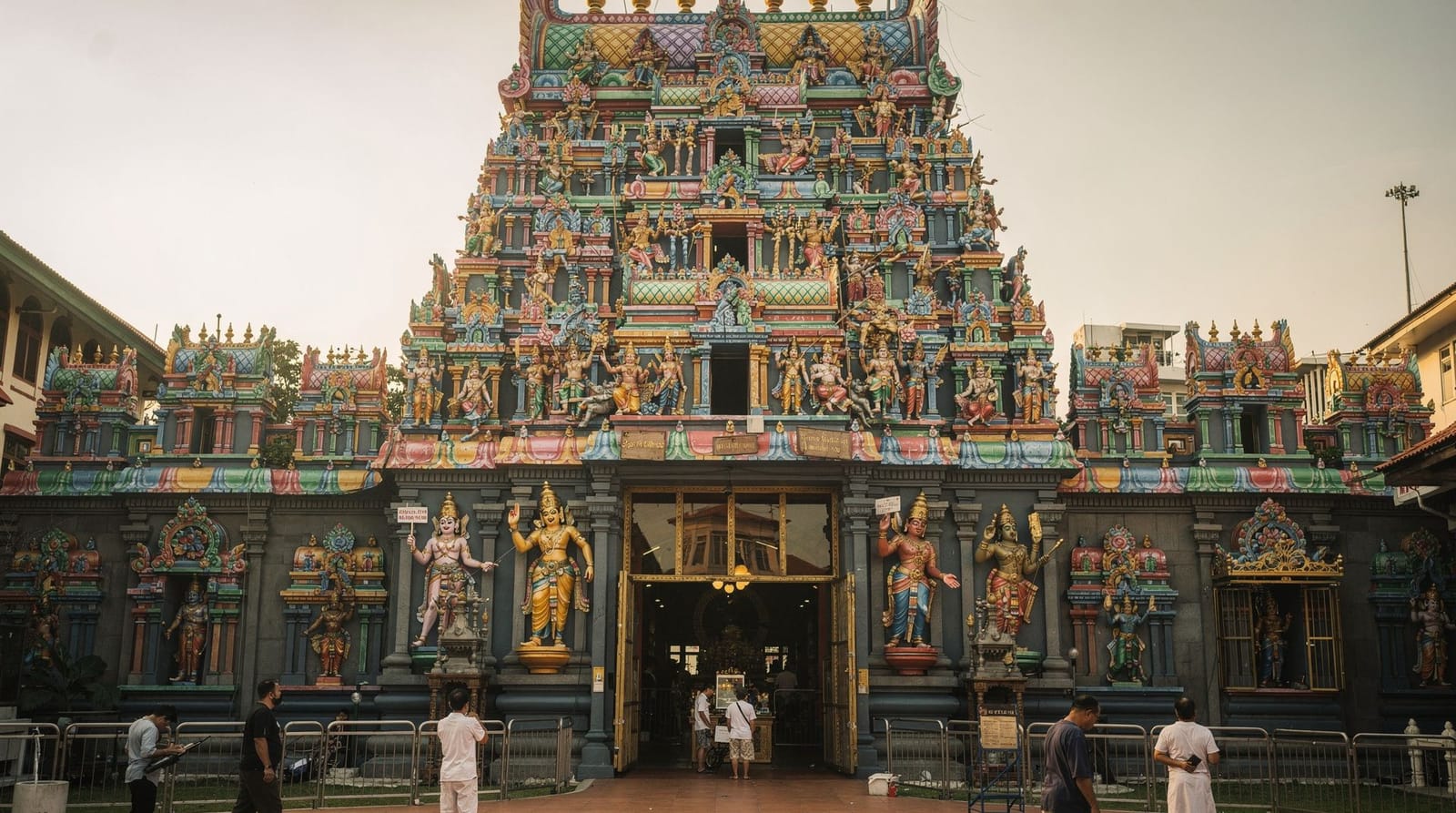
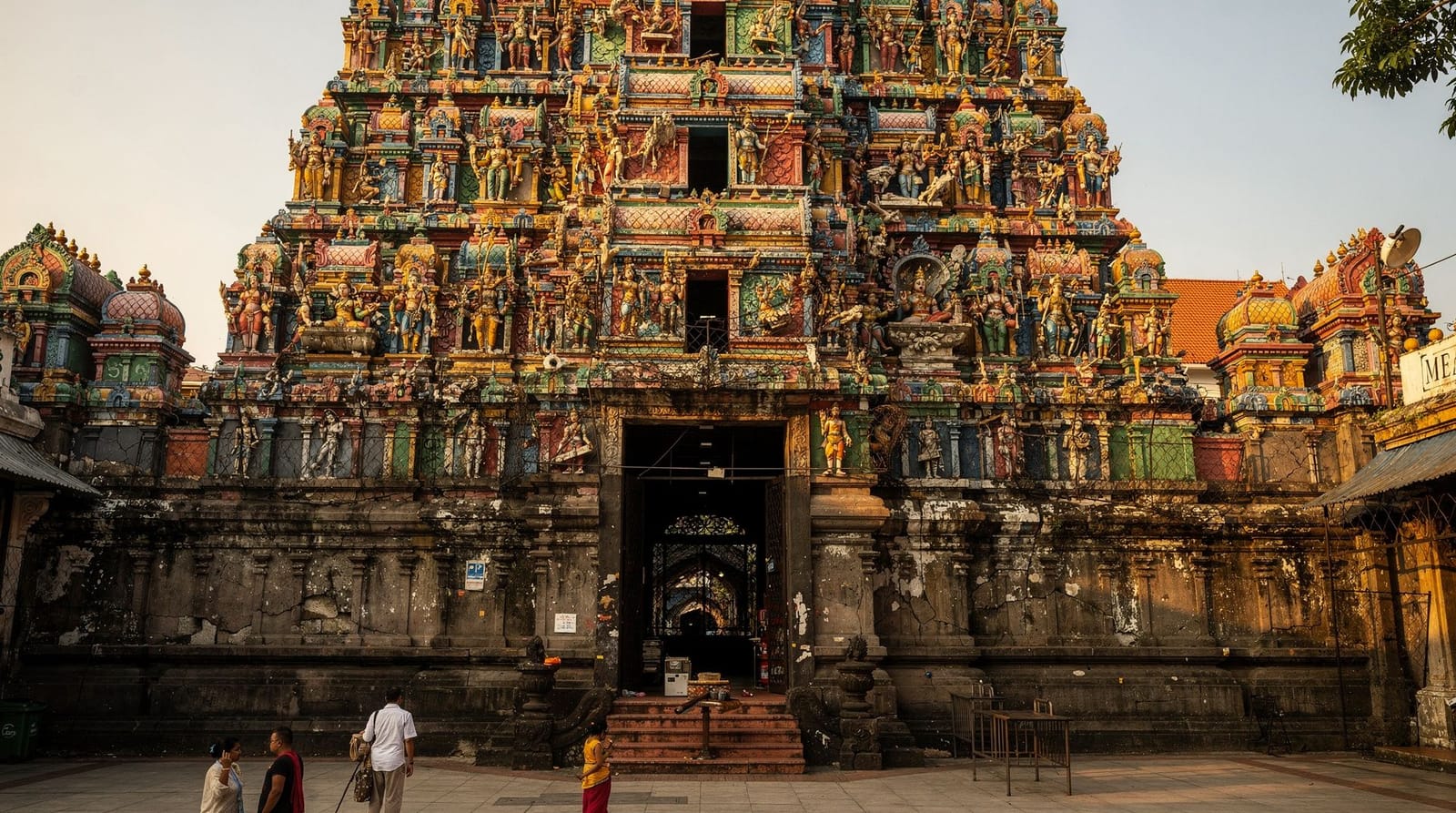
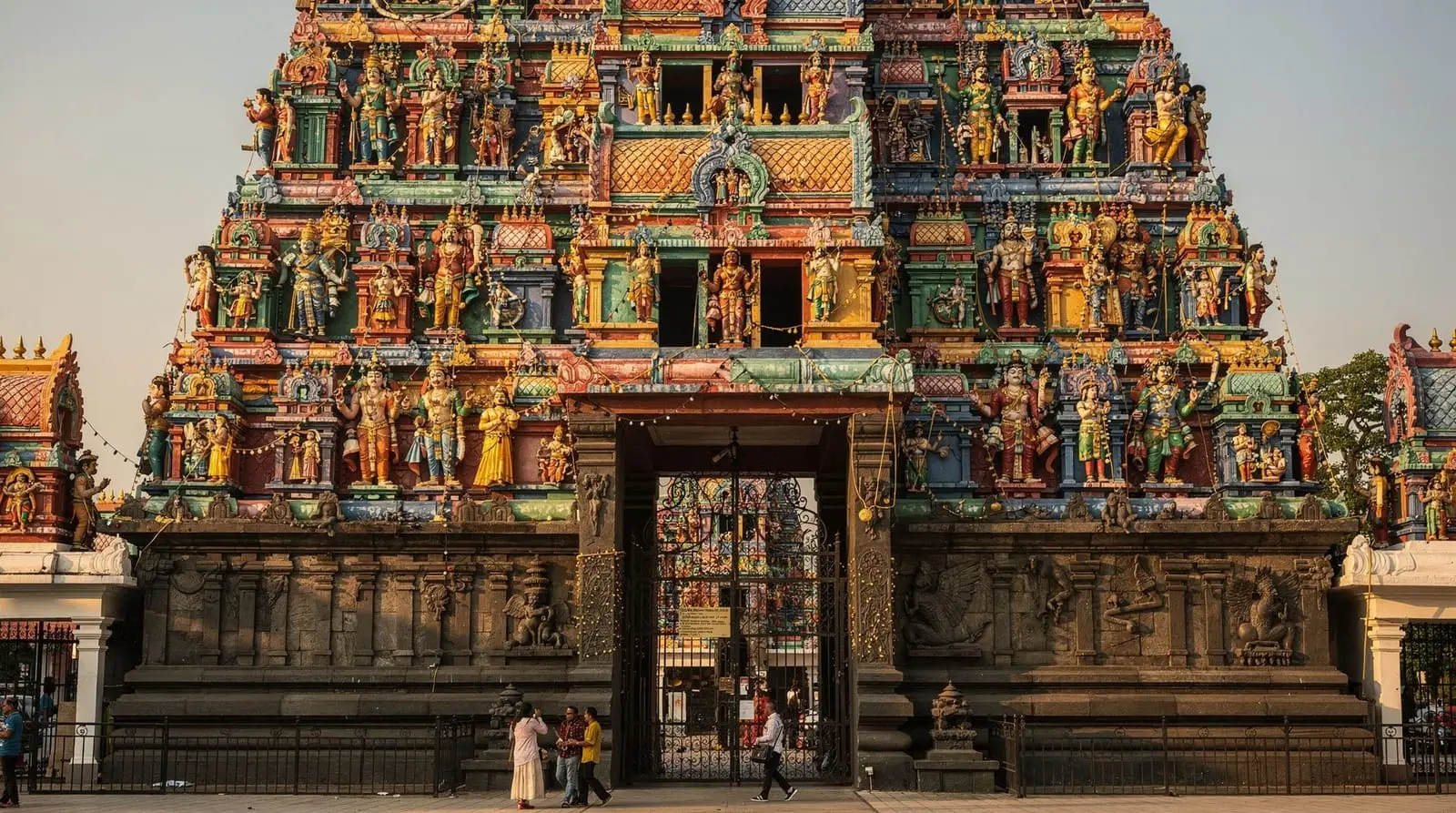
Sri Mariamman Temple at 244 South Bridge Road in Chinatown is Singapore's oldest Hindu temple, founded in 1827 and rebuilt in its current form in 1843. It is genuinely worth visiting — the gopuram (entrance tower) is decorated with hundreds of hand-modelled and brightly painted stucco Hindu deities, making it one of Singapore's most visually extraordinary structures. Entry is free. Dress code required — covered shoulders and knees, shoes removed before the main hall. Open approximately 6 am–noon and 6–9 pm daily.
Quick answer: Sri Mariamman Temple is Singapore’s oldest Hindu temple and one of its most visually striking buildings — the six-tiered gopuram covered in painted stucco figures is genuinely extraordinary. Free entry. Open approximately 6 am–noon and 6–9 pm. Cover shoulders and knees (sarongs provided). Remove shoes at the hall entrance.
| Where | 244 South Bridge Road, Chinatown |
| Cost | Free (donations welcome) |
| Time needed | 20–30 minutes |
| Getting there | Chinatown MRT (NE4/DT19), Exit A |
| Dress code | Shoulders and knees covered; shoes off at hall |
| Best time | Outside puja hours (avoid 6–7am, 11am–noon, 6–8pm crowds) |
What Sri Mariamman Temple is
Sri Mariamman Temple is a living South Indian Hindu temple in the heart of Chinatown — an institution that has served Singapore’s Tamil Hindu community continuously for nearly two centuries. At 244 South Bridge Road, it sits among Chinatown’s historic shophouses, announced by a gopuram that rises six tiers above the street level and stops passing traffic.
The temple is both Singapore’s oldest Hindu temple and one of its most religiously active. It is not a heritage museum or a tourist attraction that happens to have religious imagery — it is a working temple with daily puja ceremonies, a regular congregation, and an annual festival calendar that draws thousands of Tamil Hindu devotees from across Singapore and Malaysia.
The gopuram: the first thing to understand
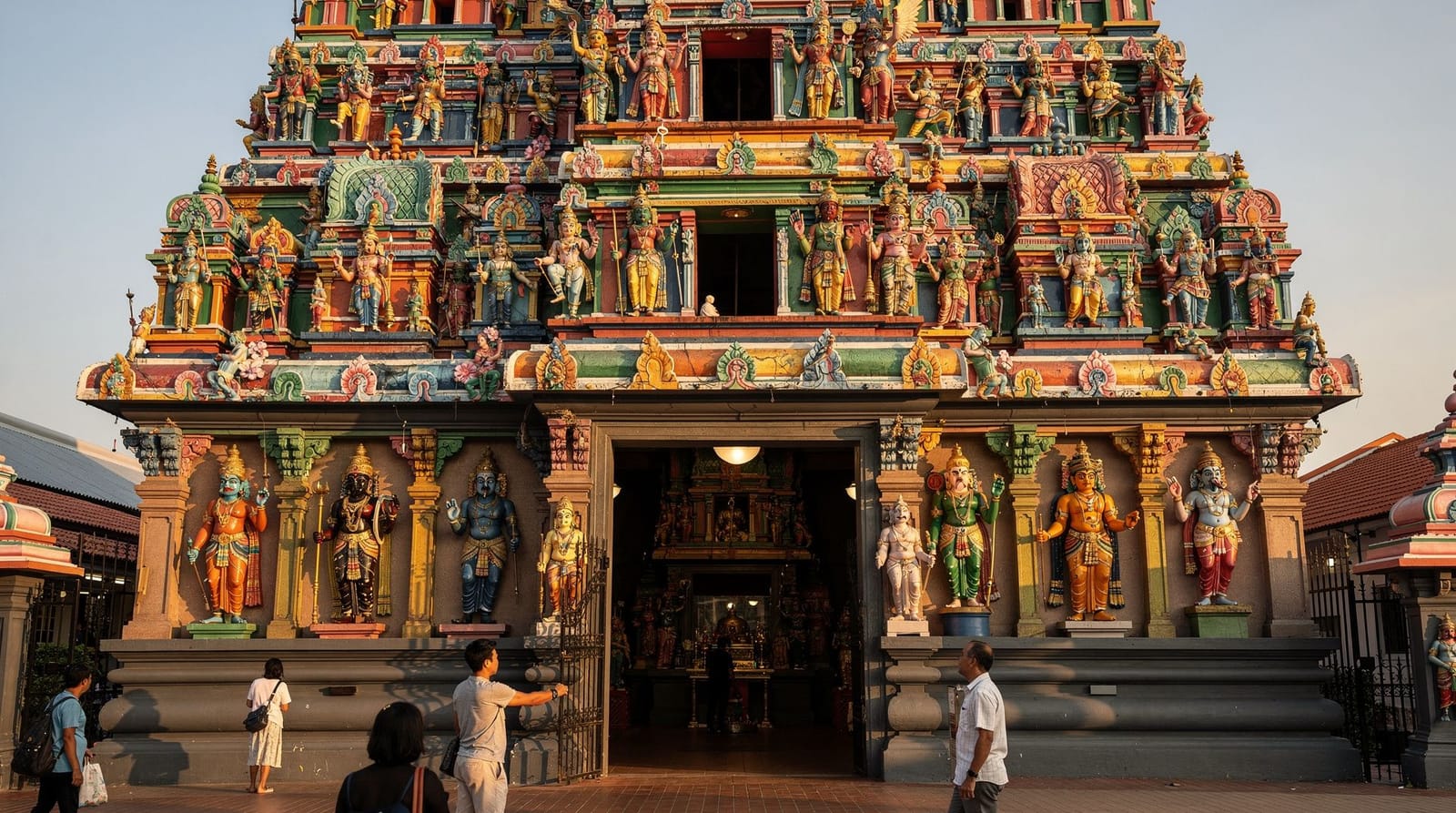
The gopuram (gateway tower) is the architectural centrepiece of Sri Mariamman Temple and one of Singapore’s genuinely remarkable structures. Standing approximately 20 metres high, it consists of six tiers of progressively smaller registers, each covered densely with hand-modelled and brightly painted stucco figures.
What the figures represent: The tiers are populated with a cosmological hierarchy of Hindu figures. At the base and lower tiers: major deities — Brahma, Vishnu, Shiva, and their consorts and avatars. Above them: celestial guardians (dvarapalas), divine musicians (gandharvas), and minor deities. At the uppermost tier: the divine kalasha (pot) and the auspicious symbols marking the pinnacle.
The figures are painted in vivid colours — reds, blues, greens, golds — following iconographic conventions where specific colours indicate the nature of different deities (blue for Vishnu, white for Brahma, red for Durga in her warrior aspect). The overall effect is of extraordinary density and colour against Singapore’s typically restrained shophouse streetscape.
Historical note: The current gopuram figures were modelled in the 1980s renovation by traditional Tamil craftsmen (stapathis) brought from South India, following the same techniques used in the original construction. Some of the original 1843 figures were retained; others were replaced where weather and time had damaged them beyond repair. This is not unusual for South Indian temples, where maintenance and renewal of stucco work is considered standard religious practice rather than inauthenticity.
Inside the temple
The outer courtyard
Passing through the gopuram arch takes you into the outer courtyard — a raised platform with columns, covered by the gopuram’s inner face. Shoes are not yet removed at this point (the shoe rack is at the inner hall entrance). This is the best position from which to examine the gopuram figures at close range — the ground-level detail is extraordinary and worth several minutes of study.
The courtyard walls incorporate niches housing smaller deity images. Incense smoke from the inner hall drifts through the courtyard. The sensory environment is distinct from anything else in Chinatown’s surrounding streets.
The main shrine hall
The inner prayer hall is entered through a lower gateway. Shoes are removed before the threshold (a rack is provided). The hall is colonnaded in the South Indian style, with stone columns and a painted ceiling.
The main shrine is dedicated to Mariamman — a four-armed standing figure in the typical South Indian iconographic mode, with elaborate jewellery and a crown. Flanking shrines hold images of Vinayagar (Ganesha, the elephant-headed god, widely worshipped as a remover of obstacles), Murugan (the war god popular with Tamil communities), and other deities.
During puja, a priest (pujari) performs ritual washing, dressing, and offering of food and flowers to the main image, accompanied by bell ringing, conch blowing, and Tamil devotional chanting. These are not performances for visitors — they are the daily rounds of ritual care that the image is understood to require. Observers should stand at the outer edge of the hall and watch quietly.
The Draupadi Amman shrine
Within the inner courtyard, a separate shrine is dedicated to Draupadi — the heroine of the Mahabharata epic, who is worshipped in the Tamil tradition as a goddess in her own right. This shrine is the focus of the annual Thimithi firewalking ceremony.
The shrine is simpler than the main hall and more intensely devotional in atmosphere — votive offerings, oil lamps, and fresh flowers are concentrated here at festival times.
Thimithi: the firewalking ceremony
Thimithi (Tirupiravithiram or Theemithi in different transliterations) is the most significant annual event at Sri Mariamman Temple. Held in October or November on a date determined by the Tamil calendar, the ceremony commemorates Draupadi’s trial by fire — her crossing of burning coals as proof of her purity and righteousness.
In the ceremony as performed in Singapore, male devotees who have completed a 48-day vow (vegetarian diet, celibacy, daily prayer) walk barefoot across a pit of burning coals approximately 3 metres long. Some devotees carry offerings; some have previously undergone vel piercing (a practice of devotional piercing with skewers). The firewalking itself is the culmination of weeks of preparation and devotion.
For visitors: The Thimithi ceremony is a legitimate act of religious devotion that attracts Tamil Hindu observers from across Southeast Asia. Non-Hindu observers are permitted to watch from the designated spectator areas. The appropriate posture is the same as at any religious ceremony — quiet observation, no flash photography of devotees in prayer states, and awareness that you are witnessing something spiritually significant to the participants, not an entertainment event.
History and architectural context
Sri Mariamman Temple’s story is inseparable from the history of Tamil migration to Singapore. When Raffles established Singapore in 1819, he assigned different ethnic communities to different parts of the town plan. The Indian community was allocated land in the Chulia (or Chola) area — the section of what is now Chinatown around South Bridge Road and Cross Street.
Naraina Pillai, who built the first temple in 1827, was part of an early wave of Tamil migration — primarily from the Coromandel Coast (modern Tamil Nadu and Andhra Pradesh) and from the longer-established Tamil communities in Penang and Malacca. The temple served both recent arrivals and established Tamil traders.
The 1843 reconstruction established the Dravidian architectural vocabulary — the gopuram gateway, the pillared mandapa hall, the enclosed sanctuary — that characterises South Indian temple design. The craftsmen who executed it brought techniques directly from Tamil Nadu, establishing a stylistic lineage that connects the Singapore temple to its South Indian architectural tradition.
The temple was gazetted as a National Monument in 1973, recognising its architectural and historical significance.
Practical information
Address: 244 South Bridge Road, Singapore 058793
Getting there: Chinatown MRT (NE4/DT19), Exit A, walk south on South Bridge Road approximately 6–8 minutes. Or Tanjong Pagar MRT (EW15), short walk north on Maxwell Road to South Bridge Road.
Opening hours: Approximately 6 am–noon and 6–9 pm daily (the afternoon closure is standard for South Indian temples, which typically observe a mid-day closing for the deity’s rest). Hours may extend slightly during festival seasons.
Entry: Free. Donations are appropriate and welcome.
Dress code: Cover shoulders and knees. Sarong wraps provided at the entrance, typically at no charge. Remove shoes before the inner hall.
Photography: Permitted in the outer courtyard and of the gopuram. Check for signs before photographing inside the hall; do not photograph devotees at prayer without their awareness and consent.
Duration: 20–30 minutes for a focused visit. Longer if present during a puja ceremony.
What to do nearby
Buddha Tooth Relic Temple is 200 metres north on the same street — a natural pairing. See Buddha Tooth Relic Temple Singapore.
Maxwell Food Centre is directly adjacent — one of Singapore’s finest hawker centres. Breakfast or lunch of kaya toast, chicken rice, or curry immediately before or after the temple is a sensible sequence. See Maxwell Food Centre.
Chinatown Heritage Trail extends through the surrounding shophouses — the full Chinatown cultural walking circuit is covered in Chinatown Singapore.
Thian Hock Keng (Telok Ayer Street, 10-minute walk) completes a Chinatown temple morning with the Hokkien Taoist perspective — see Temples of Singapore.
Singapore: Chinatown heritage tour & tea tastingPlacing the temple in a wider Singapore day
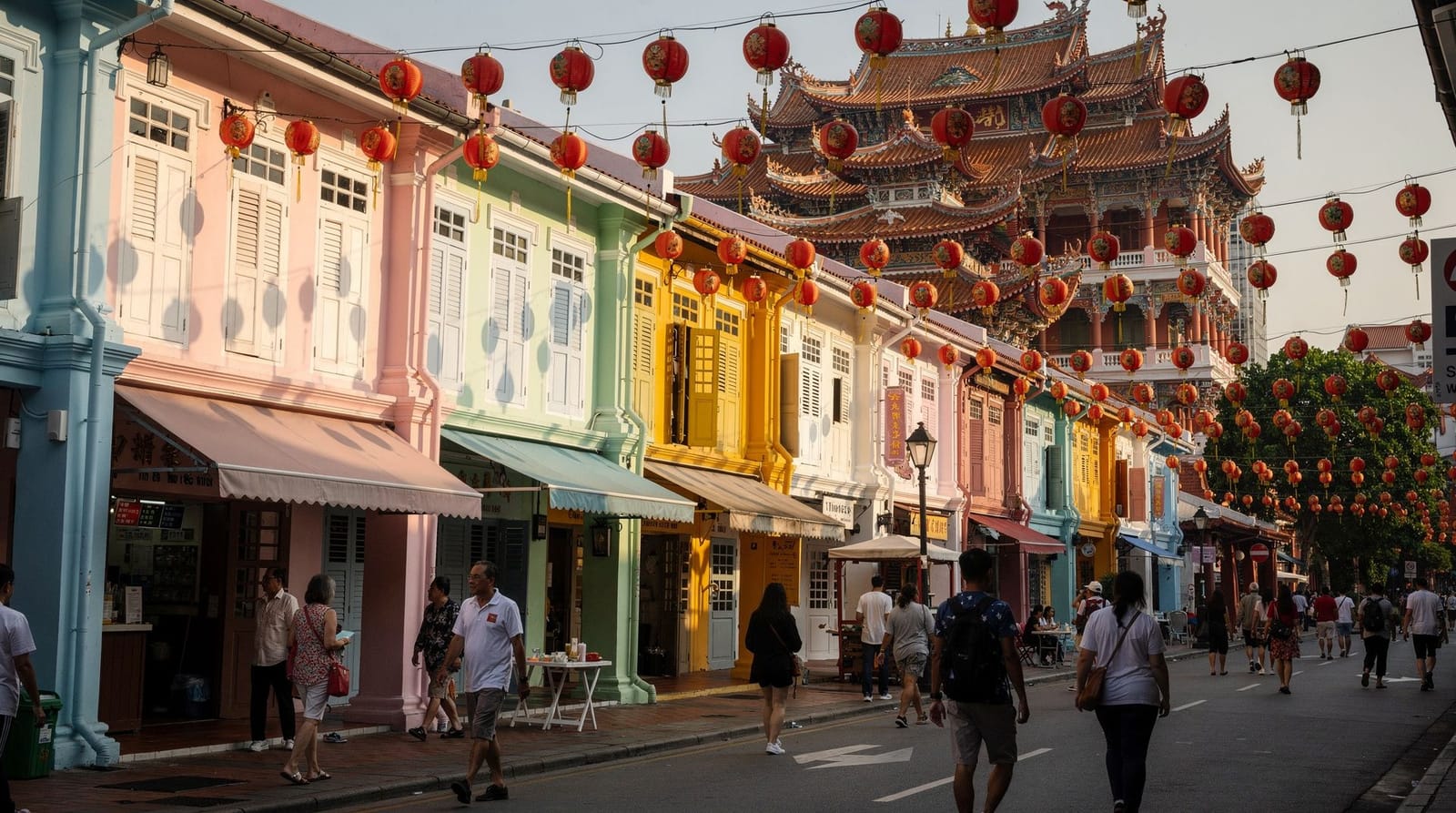
Sri Mariamman is easiest to appreciate when you see it as one piece of the city’s layered ethnic geography. The Chinatown destination page shows how the temple sits among shophouses, clan houses and markets, and the ethnic quarters guide explains why a Tamil Hindu temple ended up in what is now a largely Chinese district. For the bigger story behind that, Singapore history 101 gives the colonial town-plan background in a few pages.
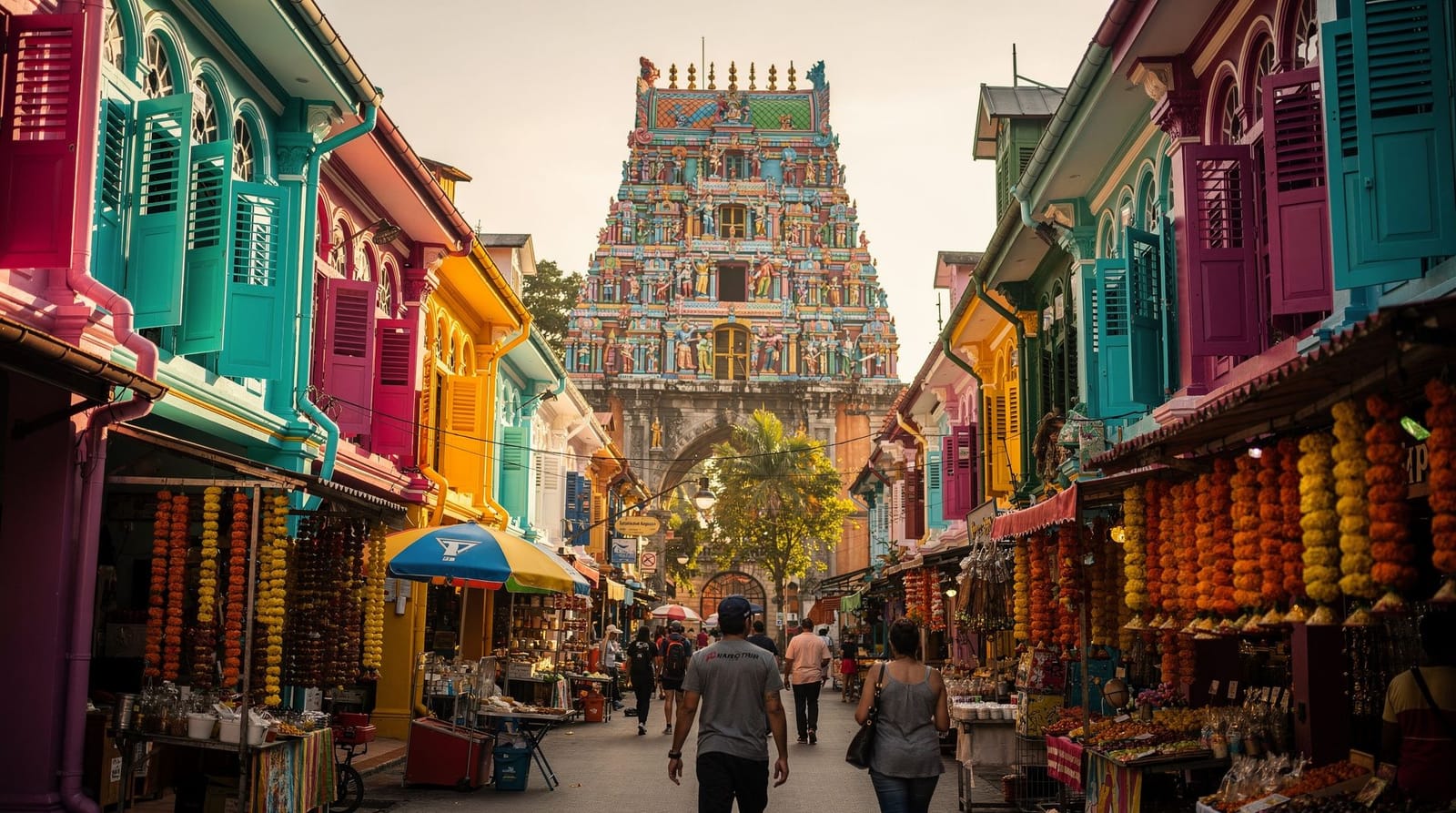
If the temple leaves you curious about Hindu life in Singapore, the natural next stop is Little India. The Little India guide and the Little India destination page cover the temples, spice shops and food of that quarter, and Deepavali in Singapore describes the festival season when the neighbourhood is at its most vivid. For a contrasting place of worship in the same city, the Sultan Mosque guide covers the Kampong Glam landmark, and Kampong Glam is a short ride away.
Food is the other half of a good Chinatown visit. The Chinatown Complex food guide is a good companion to Maxwell, and hawker etiquette and chope will help if you are new to ordering and seating at a food centre. Since the temple costs nothing to enter, it also fits neatly into a day built around free things to do in Singapore, and it slots into the cultural stretch of a longer plan such as the 3-day Singapore itinerary.
Visiting as part of a guided multicultural temple walk
For visitors who want context beyond a self-guided visit, a guided walking tour covering Sri Mariamman alongside Chinatown’s Buddhist and Taoist sites and Little India’s temples gives a genuinely richer understanding of Singapore’s religious diversity than reading signage alone. A knowledgeable local guide can explain iconography, ongoing rituals, and etiquette in real time, which is particularly useful during puja hours when knowing what to observe (and what to avoid doing) matters.
Book a private guided temples tour of Chinatown and Little IndiaEtiquette essentials, summarised
A short list to keep in mind before stepping through the gopuram:
- Cover shoulders and knees — a scarf or sarong works if your clothing does not already meet this; ones are provided at the entrance.
- Remove shoes before the inner hall, not the outer courtyard — the shoe rack marks the transition point.
- Do not touch or photograph devotees at prayer without their awareness — observe quietly from the hall’s outer edge.
- Keep voices low inside the hall, especially during active puja ceremonies.
- Do not enter the innermost shrine areas — these are reserved for temple staff and devotees performing specific rituals.
A short Chinatown temple-and-food morning
For visitors with about three hours, a natural sequence combines Sri Mariamman with the immediately surrounding sights: start at Buddha Tooth Relic Temple (200 metres north) for the Buddhist perspective, walk south to Sri Mariamman for the Hindu gopuram and inner hall, then finish with lunch at Maxwell Food Centre directly next door — chicken rice, laksa, or kaya toast depending on the hour. This single-street sequence covers three distinct religious and culinary traditions within a 10-minute walking radius, which is a genuinely efficient use of a short Chinatown morning. See Chinatown Singapore for extending the walk further into the surrounding shophouse streets.
Singapore: UNESCO hawker culture Chinatown food tasting tourFrequently asked questions about Sri Mariamman Temple Singapore
Can I attend a puja ceremony at Sri Mariamman?
Yes. Puja ceremonies are not closed to non-Hindus but should be observed from a respectful distance — stand at the outer edge of the hall, do not crowd the shrine, speak quietly, and do not reach past devotees to photograph the deity. If the ceremony requires more space than the hall permits for observers, wait in the courtyard. The morning puja (around 6–7 am) and evening puja (around 6–8 pm) are the most active.
Is there a tourist entrance fee hidden in the process?
No. The temple does not charge any entry or visitor fee. There is no separate “tourist entrance” or ticketing process. The sarong wrap (if needed) is provided without charge. Some temples in Southeast Asia have adopted fee systems; Sri Mariamman in Singapore has not.
How long has Sri Mariamman Temple been on this site?
The temple has occupied this site since 1827 — nearly 200 years. Singapore was founded in 1819, making the temple almost as old as modern Singapore itself. The current structure dates from 1843 with subsequent renovations, but the institutional and site continuity from 1827 is unbroken.
What other Hindu temples are in Singapore?
Sri Veeramakaliamman Temple (141 Serangoon Road, Little India) is the most significant other Hindu temple — dedicated to Kali, visually dramatic, with the largest and most colourful gopuram of any Singapore Hindu temple. Sri Srinivasa Perumal Temple (397 Serangoon Road) is the starting point for the Thaipusam procession. Sri Thendayuthapani Temple (15 Tank Road, also known as the Chettiars’ Temple) is a Chettiar merchant community temple near Fort Canning. The full context is covered in Temples of Singapore.
Does the temple have facilities for visitors?
The temple has a shoe rack at the entrance, a small information board explaining the history and significance of the main deity, and staff who can answer basic questions. There is no cafe, restaurant, or gift shop within the temple premises. The Maxwell Food Centre directly adjacent covers all refreshment needs.
Top experiences
Bookable activities with verified prices and instant confirmation on GetYourGuide.