Chinatown Singapore: the honest neighbourhood guide
Singapore: half-day Chinatown past and present tour
Is Singapore's Chinatown worth visiting?
Yes — Chinatown is genuinely worth a half-day, especially for the Buddha Tooth Relic Temple, the Chinatown Complex hawker centre, and the Sri Mariamman Temple. The night market on Pagoda Street is atmospheric but heavily tourist-oriented. Come in the morning for hawker food and heritage, and stay for lunch at the Complex (SGD 5–8 per dish).
Chinatown is Singapore’s most-visited neighbourhood, and it earns that reputation — but not always for the reasons the tourist brochures suggest. The best of it is the food, the temples, and the shophouse architecture. The worst is the souvenir market on Pagoda Street, which has drifted far from its roots into generic trinket territory. This guide tells you where to spend your time and where to keep walking.
| Where | Chinatown MRT (NE4/DT19), south of the Singapore River |
| Cost | Free walking; SGD 5–9 hawker meal; SGD 3 Sri Mariamman entry |
| Time needed | Half-day (3–4 hours) for the main sights |
| Getting there | Downtown or North-East Line to Chinatown, Exit A |
| Best time | Weekday mornings for food and quiet temples |
Getting there and orientation
Chinatown MRT station (NE4/DT19) sits at the northern edge of the district. Exit A deposits you directly on Pagoda Street, the main tourist drag. The core of the neighbourhood runs south along South Bridge Road and Eu Tong Sen Street, with the shophouse terraces spreading east and west across Smith Street, Trengganu Street, and New Bridge Road.
The district is very walkable — you can cover the main sights in two to three hours on foot without backtracking much. In the late morning heat (30–33°C year-round), the covered five-footway walkways along the shophouses provide some relief, though the mid-afternoon is genuinely punishing. Early mornings are the local rhythm.
The Buddha Tooth Relic Temple
The most architecturally striking building in Chinatown is the Buddha Tooth Relic Temple and Museum at 288 South Bridge Road. Built in 2007 in Tang Dynasty architectural style, it houses what the temple claims is a tooth relic of the historical Buddha, kept in a 3.5-metre gold stupa on the fourth floor.
The temple is free to enter and genuinely impressive inside — the main prayer hall is large and ornate, and the ground floor is accessible to non-Buddhist visitors as long as you dress respectfully (shoulders and knees covered; sarongs available at the entrance). The Buddhist culture museum on the upper floors gives context for the artefacts and ritual objects on display.
Worth noting: you cannot photograph the relic stupa itself. The rooftop garden on the fourth floor has nice views over the district. Allow 45–60 minutes.
Open daily 07:00–19:00. Free.
Sri Mariamman Temple
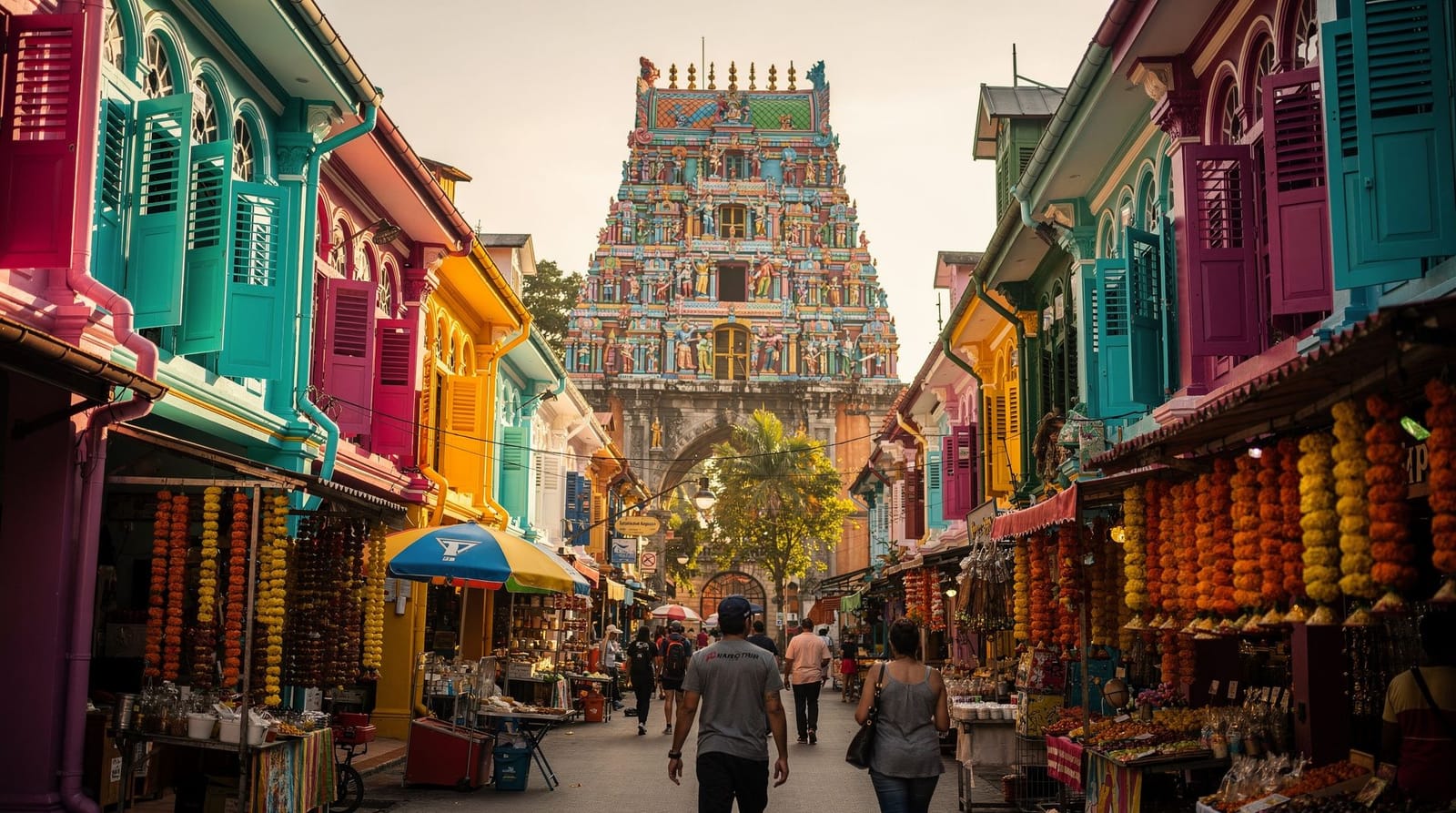
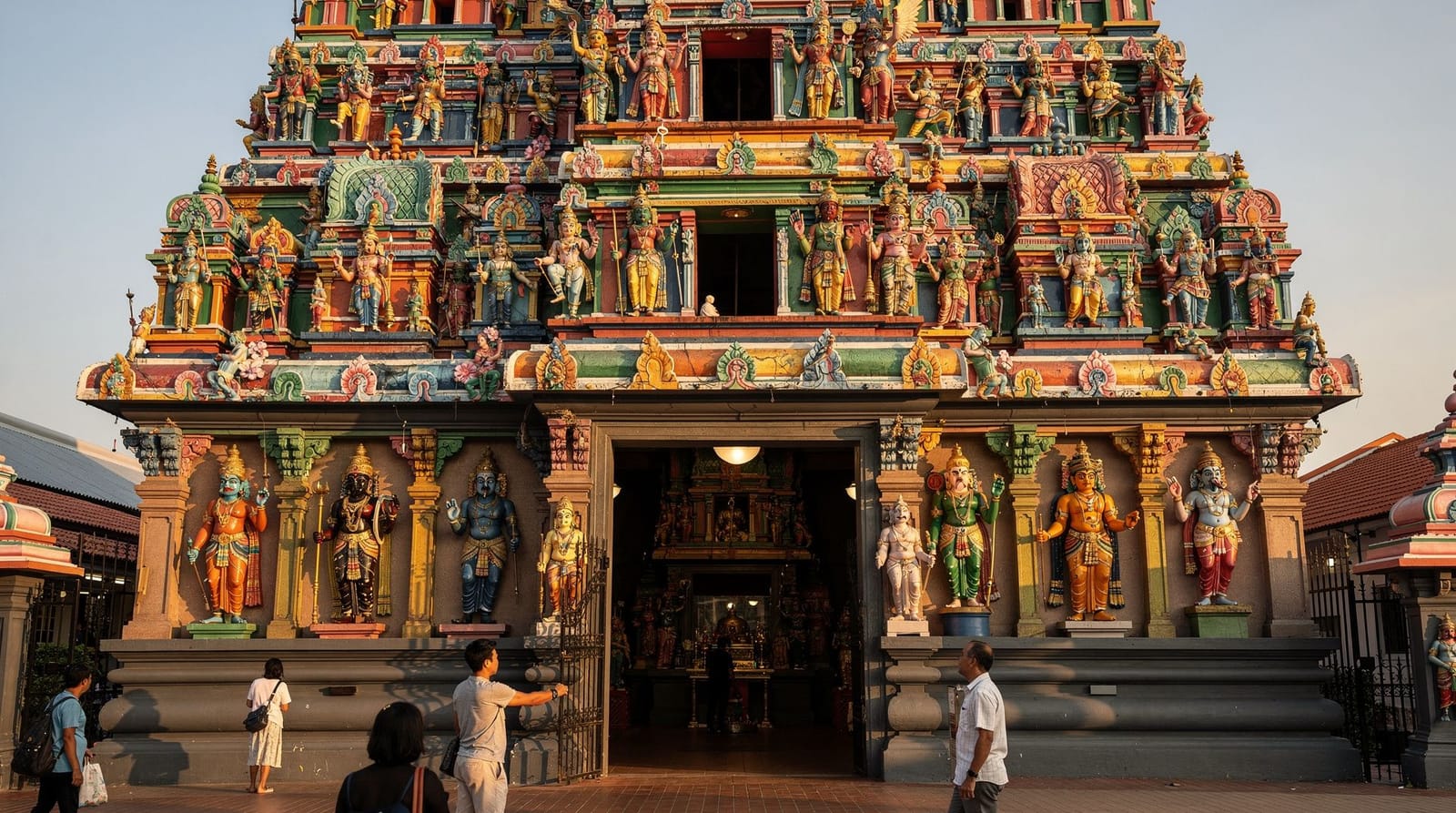
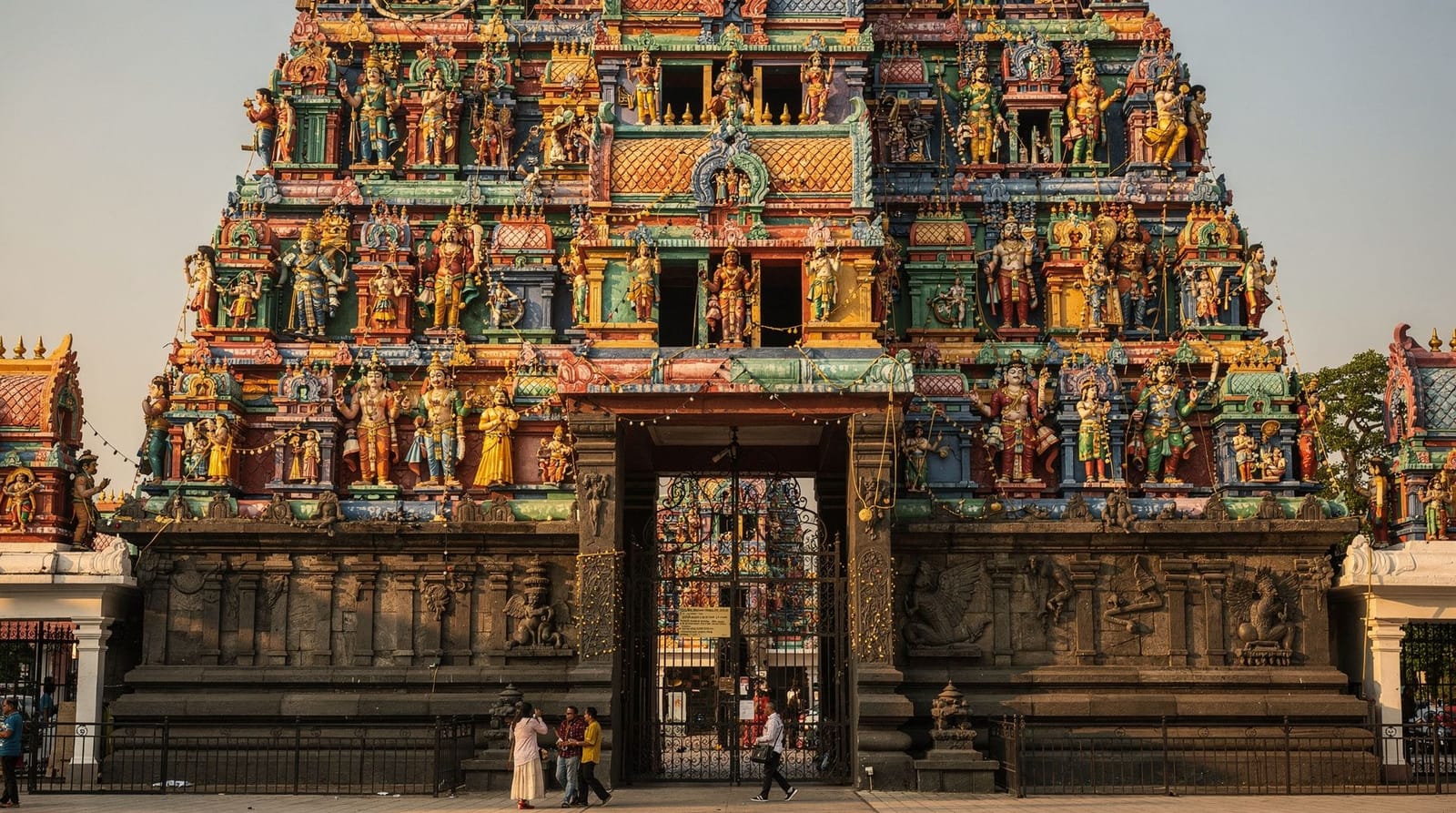
A 10-minute walk north along South Bridge Road brings you to Sri Mariamman Temple (244 South Bridge Road), Singapore’s oldest Hindu temple, founded in 1827. The current structure dates mostly from 1843, with subsequent renovations. The gopuram (entrance tower) is densely decorated with painted figures — 72 deities and mythological scenes stacked in tiers above the gate.
Entry is SGD 3 for non-Hindus (cover knees and shoulders; remove shoes at the entrance). The interior is an active place of worship — be quiet and respectful. The temple hosts the Theemithi fire-walking festival each year in October/November.
This is one of the most historically significant religious sites in Singapore and well worth the short detour from the main Chinatown strip.
Chinatown Complex Food Centre
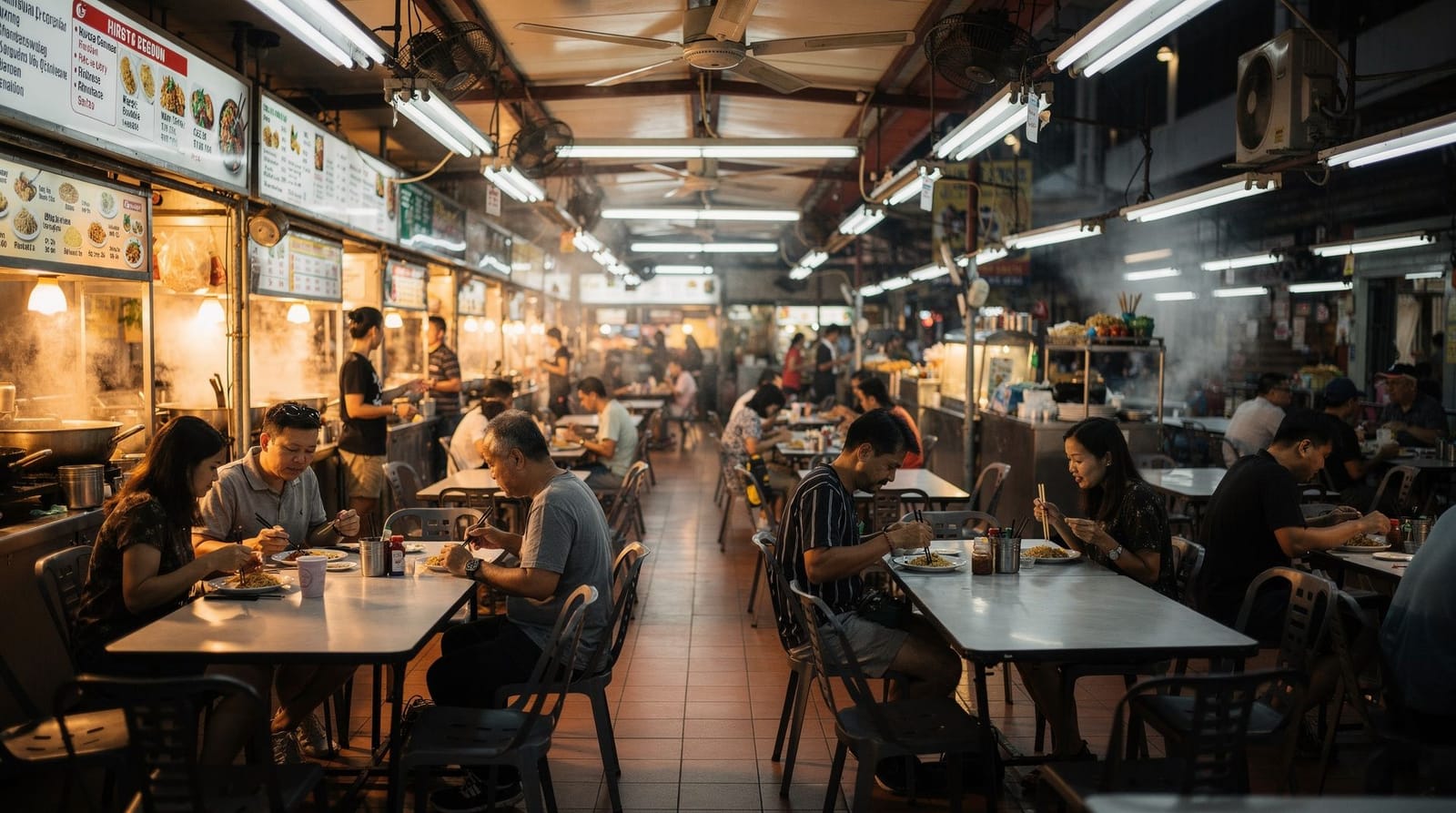
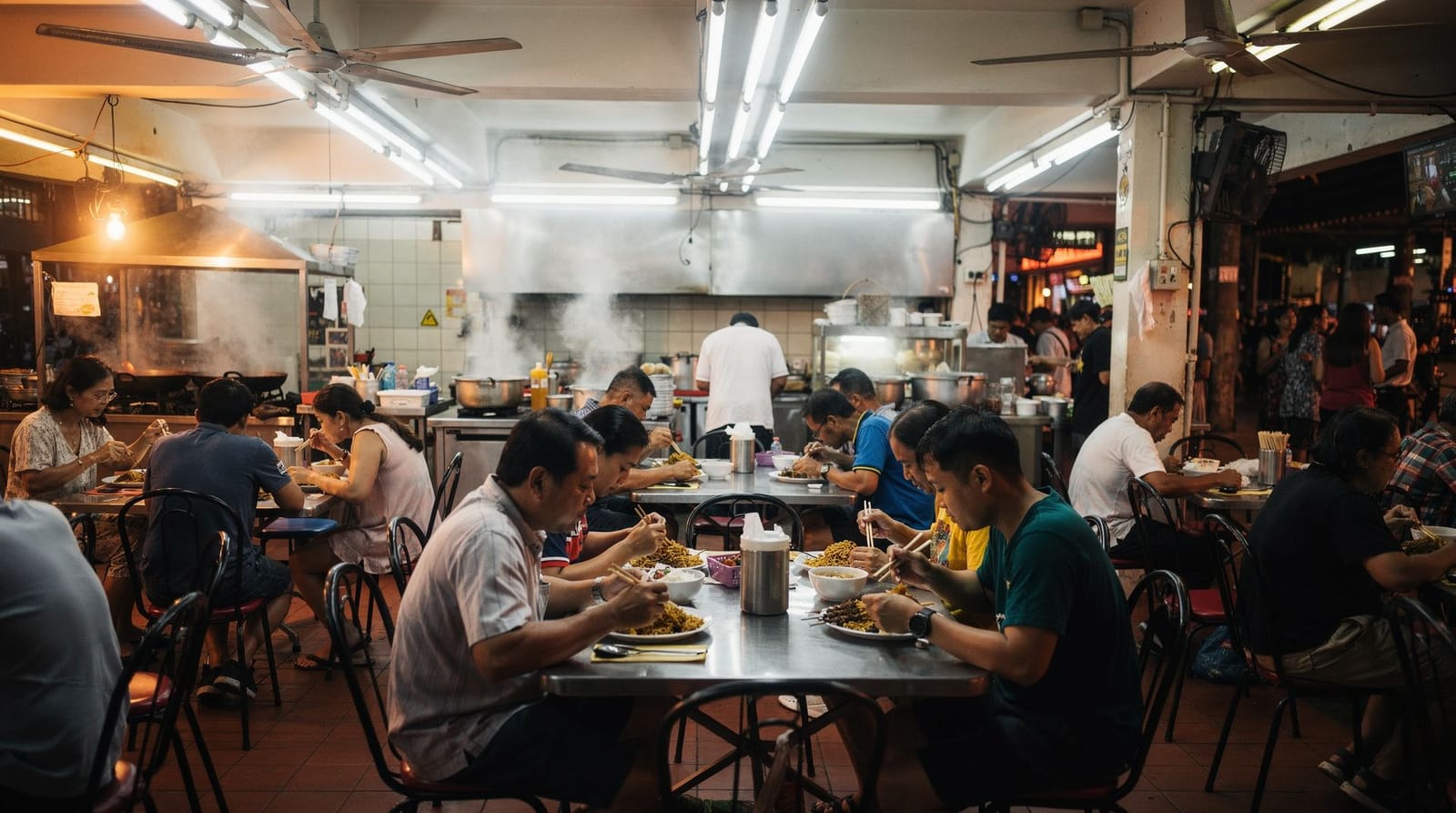
For most visitors, the single best reason to come to Chinatown is to eat at Chinatown Complex Food Centre at 335 Smith Street (2nd floor). This is one of Singapore’s largest hawker centres — over 200 stalls across a busy, no-frills hall. It’s entirely local in character, prices are genuine hawker prices (SGD 4–9 per dish), and the food quality is high.
Recommended stalls:
- Lian He Ben Ji Claypot Rice — claypot rice with chicken, salted fish, and lap cheong sausage; queues at lunch
- Outram Park Fried Kway Teow Mee — one of Singapore’s best char kway teow (fried flat noodles with cockles, egg, and Chinese sausage)
- Stall 02-127 Wonton Mee — dry or soup wonton noodles at SGD 4–5
- Heng Kee Curry Rice — economy rice (pick-your-dishes rice) with good curries and braised pork
The Complex is open most days from around 07:00. The 2nd floor food centre closes at varying times per stall — most run until 15:00 or so, some into the evening. Arrive by 11:30 for lunch to avoid the worst queues.
For a guided experience of Chinatown’s food and history combined:
Singapore: half-day Chinatown past and present tourThe shophouse streets
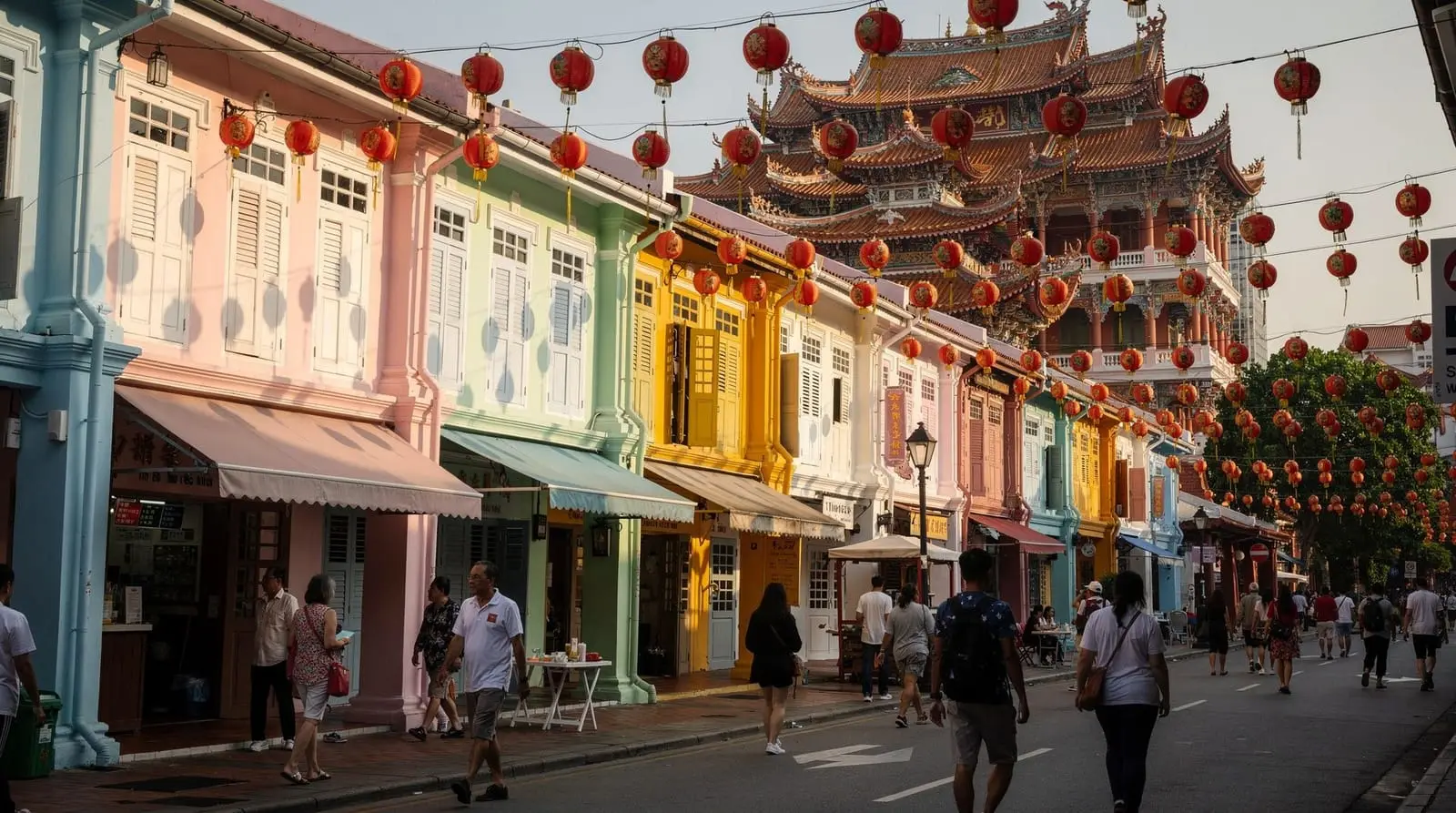
The blocks between South Bridge Road, Keong Saik Road, and Ann Siang Hill contain some of Singapore’s best-preserved shophouse terraces. The original two-storey structures with their characteristic five-foot covered walkways date from the late 19th and early 20th centuries.
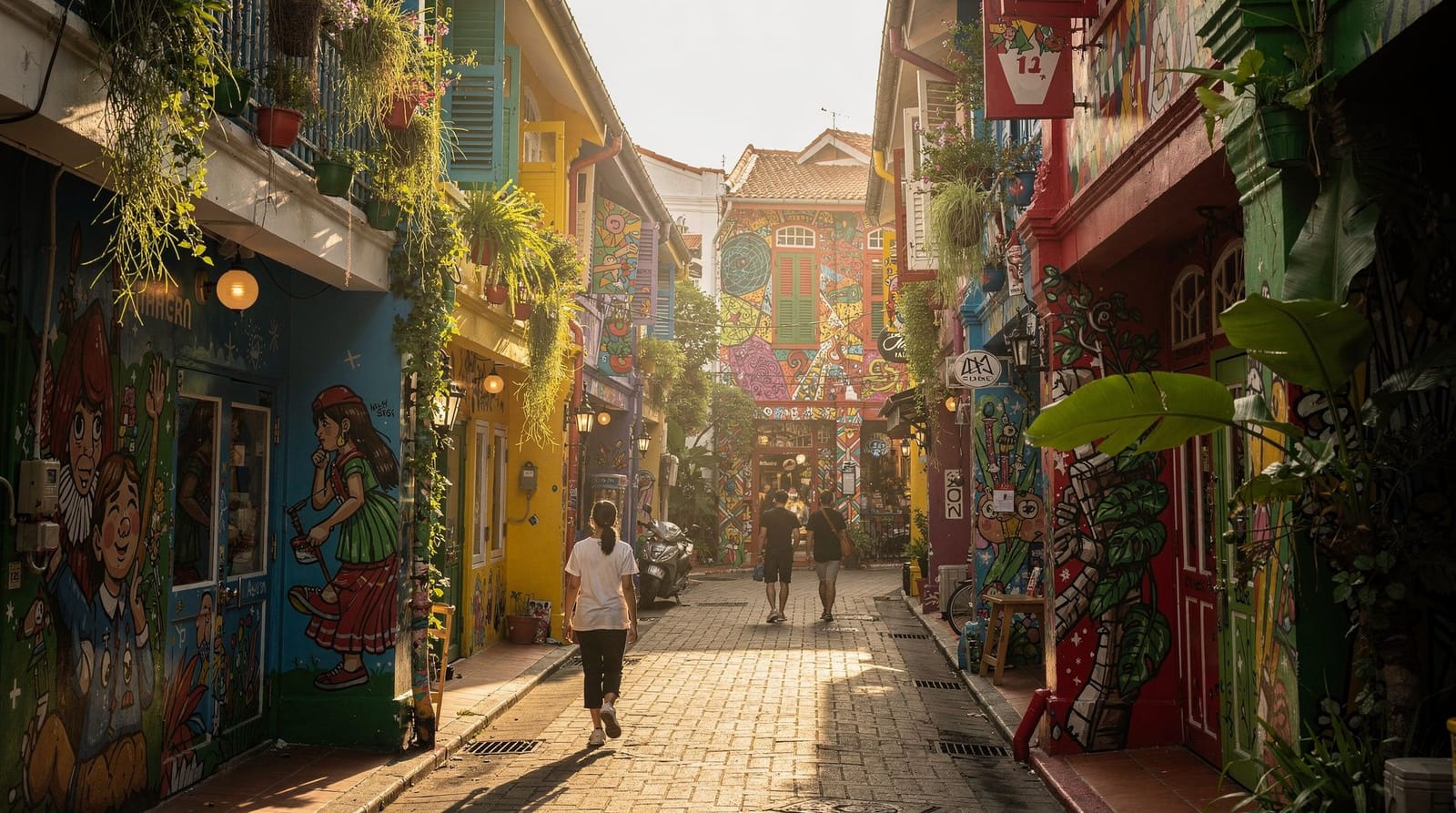
Ann Siang Hill and Club Street are the most atmospheric — now occupied by independent restaurants, cocktail bars, and boutique hotels. The Keong Saik Road area has gentrified considerably and has good independent food and coffee options. For a less touristy version of Chinatown, this is where to spend time.
Duxton Hill (a short walk further south, near Tanjong Pagar MRT) has a similar character and tends to be even less crowded with tourists.
Yue Hwa Chinese Emporium
If you want Chinese cultural goods — tea, silk, traditional clothing, herbal medicine, stationery — Yue Hwa Chinese Products Emporium at 70 Eu Tong Sen Street is the most authentic option in Chinatown. It’s a large, multi-floor department store that has been operating since 1935. Prices are fair and the range is wide; quality varies by product type but the tea and silk sections are particularly good.
Much better value and more genuine than the souvenir stalls on Pagoda Street, which sell the same mass-produced miniatures as markets across Southeast Asia.
The night market (honestly assessed)
The outdoor market on Pagoda Street and Trengganu Street is busy most evenings, especially on weekends. Stalls sell a mix of tourist souvenirs (fridge magnets, Singapore-logo T-shirts, wood carvings), snacks, and Chinese New Year goods (in season). The atmosphere — neon lights, incense from the temple, food smells — is genuinely evocative.
However: prices are tourist-grade (SGD 10–30 for items widely available more cheaply in Mustafa Centre in Little India or online). Don’t expect to bargain heavily. The best approach is to enjoy the atmosphere and eat something, rather than to shop seriously.
Maxwell Food Centre
A 15-minute walk southeast from Chinatown MRT (or exit Tanjong Pagar MRT for a shorter walk) brings you to Maxwell Food Centre on Maxwell Road. This is one of Singapore’s most famous hawker centres, anchored by Tian Tian Hainanese Chicken Rice (stall 10–11) and Rojak, Popiah and Cockle stall. It’s busier and more tourist-aware than Chinatown Complex but still excellent.
Read the full guide: Maxwell Food Centre
Chinatown during Chinese New Year
Chinese New Year (February 2026 — Year of the Horse) is the best time to visit Chinatown if you can plan around it. The entire district is transformed with red lanterns, light installations, and seasonal decorations from mid-January. The River Hongbao festival runs at Marina Bay simultaneously. Crowds are substantial, especially on New Year’s Eve and the first two days, but the atmosphere is unique.
Outside CNY season, Chinatown is pleasant year-round. The Mid-Autumn Festival in September brings moon cake stalls and lantern displays, which are less crowded and more relaxed than the CNY period.
Linking Chinatown to other districts
Chinatown is most naturally combined with one or two other districts in a longer day:
- Kampong Glam / Haji Lane (see guide) — connected by MRT or a 25-minute walk through the civic district
- Little India (see guide) — 12 minutes by MRT (change at Bugis), very different atmosphere
- Marina Bay — walk north through the civic district to Merlion Park and the waterfront (about 20 minutes on foot)
If you want to cover all three ethnic quarters in one day, the combined walking tour is an efficient option:
Singapore: Chinatown, Little India & Kampong Glam walkPractical information
MRT: Chinatown (NE4/DT19), Exit A. Walking distance from Clarke Quay (NE5) and Tanjong Pagar (EW15). Opening hours: The neighbourhood is accessible at all times. Temples open 07:00–19:00. Hawker centres from around 07:00; hours vary by stall. Best time: Weekday mornings for food and atmosphere. Avoid the Pagoda Street area on Saturday afternoons when it is at peak tourist density. Budget: A meal at the hawker complex costs SGD 5–9; a temple visit is free (Sri Mariamman SGD 3). Add SGD 20–30 if you want to shop at Yue Hwa.
For a broader look at Singapore’s food culture: best hawker centres and what to eat in Singapore.
To plan your wider Singapore visit: things to do in Singapore and Singapore for first-timers.
A half-day itinerary through Chinatown
If you’re not sure how to sequence the sights, this order works well and avoids unnecessary backtracking:
| Time | Stop |
|---|---|
| 9:00am | Arrive via Chinatown MRT Exit A; walk Pagoda Street while it’s quiet |
| 9:30am | Buddha Tooth Relic Temple (45–60 min) |
| 10:45am | Sri Mariamman Temple (20–30 min) |
| 11:30am | Chinatown Complex Food Centre for an early lunch, ahead of the queue |
| 1:00pm | Ann Siang Hill and Club Street shophouses, or Yue Hwa Emporium |
| 2:00pm | Continue to Kampong Glam, Little India, or Marina Bay |
This sequence front-loads the temples before the midday heat and times the hawker lunch to beat the worst of the queues, leaving the afternoon free to either continue exploring or retreat somewhere air-conditioned once the sun is at its strongest. See the Singapore 1-day itinerary for how Chinatown fits into a single-day plan, or the 3-day itinerary if you’re spreading the ethnic quarters across separate days.
The Chinatown Heritage Centre: worth the ticket?
The Chinatown Heritage Centre, a paid exhibition on Pagoda Street (around SGD 16 per adult), reconstructs cramped shophouse living quarters from Chinatown’s early-20th-century immigrant era. It’s well produced, but honestly covers ground that overlaps with what a slow walk through the district — and a look inside a restored shophouse on Ann Siang Hill — already conveys for free. Worth it if you have a specific interest in social history and want the guided narrative; skippable if you’re already tight on time and budget for the day.
Photography in Chinatown
The temple gopurams, red lanterns (especially in the run-up to Chinese New Year), and shophouse facades along Ann Siang Hill and Club Street are among Singapore’s most photogenic streets. Early morning light on Pagoda Street before the crowds arrive is the best window for people-free shots. See the best photo spots guide and Instagram spots in Singapore for specific angles across the wider city, not just Chinatown.
Evenings add a different mood: the temples are floodlit, the Pagoda Street lanterns glow against the shophouse fronts, and the street feels genuinely lively without the daytime heat. If you’re weighing an evening return, Singapore at night covers Chinatown alongside the city’s other after-dark neighbourhoods worth a look on the same trip.
Frequently asked questions about Chinatown Singapore
What is Chinatown famous for in Singapore?
Chinatown is known for the Buddha Tooth Relic Temple, the Sri Mariamman Temple, the Chinatown Complex hawker centre, and the shophouse architecture along Smith Street and Ann Siang Hill. It is also the main focus of Chinese New Year celebrations in Singapore, with extensive light-ups and the River Hongbao festival nearby.
How long should I spend in Chinatown?
A half-day (three to four hours) covers the main sights comfortably: the two temples, a hawker lunch at Chinatown Complex or Maxwell, and a walk through the shophouse streets. A full day allows for exploring Duxton Hill, visiting Yue Hwa, and continuing to either Kampong Glam or Little India.
What is the Chinatown Street Market?
The street market on Pagoda Street and Trengganu Street operates most evenings. It’s primarily a tourist souvenir market with some food stalls. The atmosphere is pleasant but the shopping is tourist-grade — see the guide above for honest expectations.
Is Chinatown Complex the best hawker centre in Singapore?
It is one of the best for variety and local character. Other strong contenders are Maxwell Food Centre (nearby, more famous), Lau Pa Sat (financial district), and Old Airport Road Food Centre (Geylang, more adventurous). See the best hawker centres guide for a fuller comparison.
Can I visit Chinatown on a budget?
Yes. Chinatown is one of the most budget-friendly parts of Singapore: hawker meals cost SGD 4–8, both main temples are free or very cheap, and simply walking the streets costs nothing. Avoid the tourist restaurants on Smith Street and the souvenir stalls, and you can spend a rewarding half-day for under SGD 15.
What is Keong Saik Road known for?
Keong Saik Road is a gentrified shophouse street on the fringes of Chinatown, known for boutique hotels (Keong Saik Hotel, Pickled Pelican), independent cafés, and cocktail bars. It is a good option for dinner or drinks after the temple and hawker portion of your Chinatown visit, and less hectic than the Pagoda Street area.
Top experiences
Bookable activities with verified prices and instant confirmation on GetYourGuide.