Ethnic quarters guide: Chinatown, Little India and Kampong Glam
Singapore: Chinatown, Little India & Kampong Glam walk
Are Singapore's ethnic quarters worth visiting?
Yes — all three are genuinely worth a half-day each, and they complement each other well. Chinatown and Kampong Glam are the most photographed; Little India is the most viscerally alive and arguably the most authentic in atmosphere. All three can be combined in a full-day walking loop. The heritage buildings, temples, food, and street life are real — though tourist retail has claimed a share of each area. Morning visits (before noon) are cooler and less crowded.
What are Singapore’s ethnic quarters?
When Stamford Raffles planned the layout of his new trading post in 1822, he designated separate zones for different ethnic communities — a practical measure to reduce inter-communal conflict and simplify administration. That decision, made 200 years ago, is why Singapore’s three main historic quarters still exist: Chinatown in the south, Little India to the north, and Kampong Glam (the Arab and Malay quarter) between them.
These are not theme parks recreating a past that never existed. People have lived and worshipped and traded in these neighbourhoods continuously since the 1820s. The buildings, temples, mosques, and markets are real. Tourism has added a commercial overlay — but it sits on top of genuine cultural geography rather than replacing it. See the Singapore history 101 guide for the fuller background on how Raffles’ original town plan shaped the city that exists today.
| Where | Chinatown, Little India, Kampong Glam — a north-south corridor |
| Cost | Free to walk; temple/mosque entry free; museums SGD 6–20 |
| Time needed | Half a day each, or a full day for all three |
| Getting there | MRT — Chinatown, Little India, and Bugis stations |
| Best time | Weekday mornings before noon, cooler and less crowded |
Chinatown: what’s real and what’s for tourists
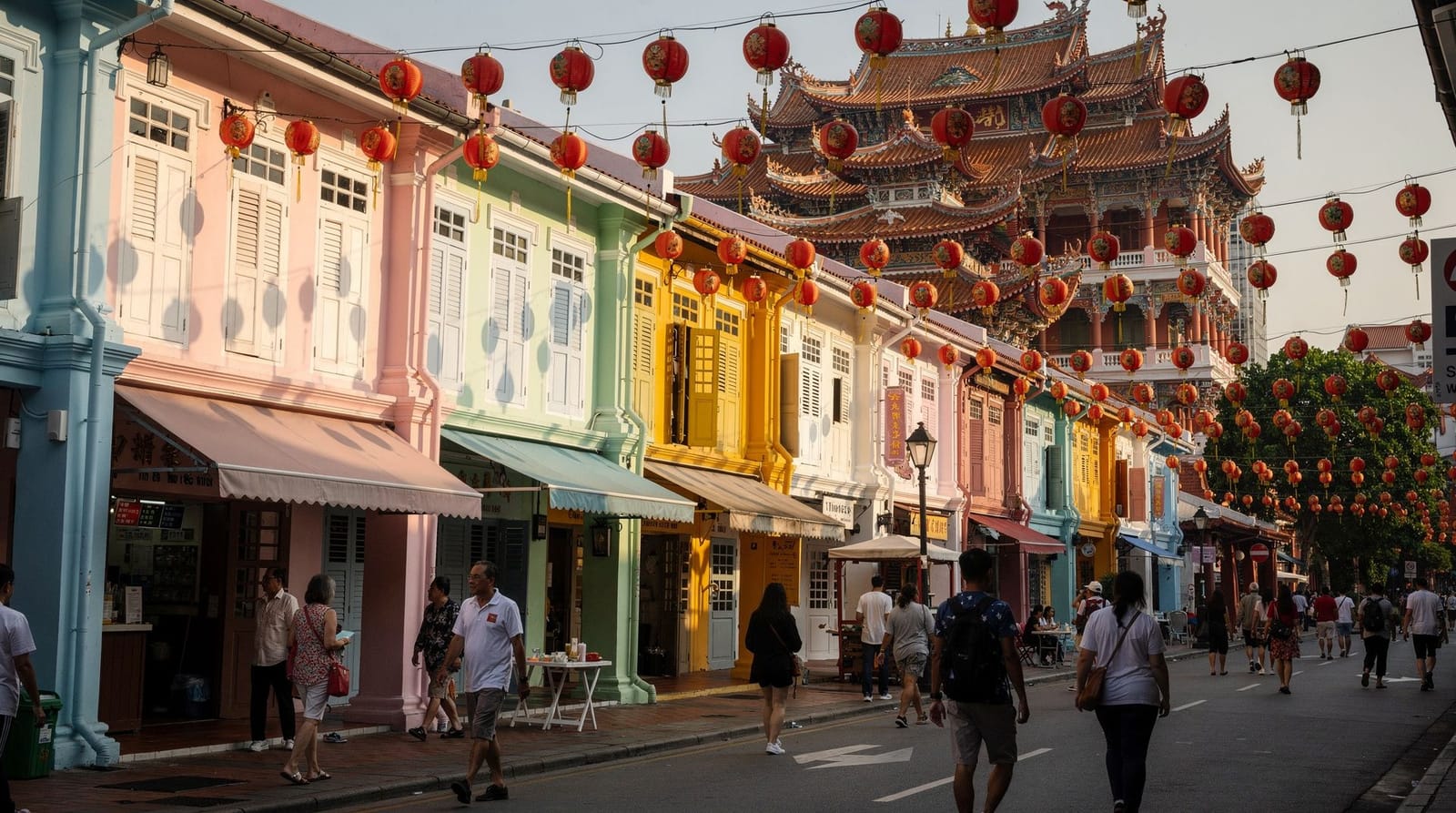
Chinatown (Niu Che Shui in Hokkien — “Buffalo Cart Water,” named for the water carts that once served the district) was the heart of Chinese immigrant life in colonial Singapore. At its peak in the early 20th century, it was one of the most densely populated places on earth — thousands living in shophouse cubicles, operating clan associations, temples, and businesses.
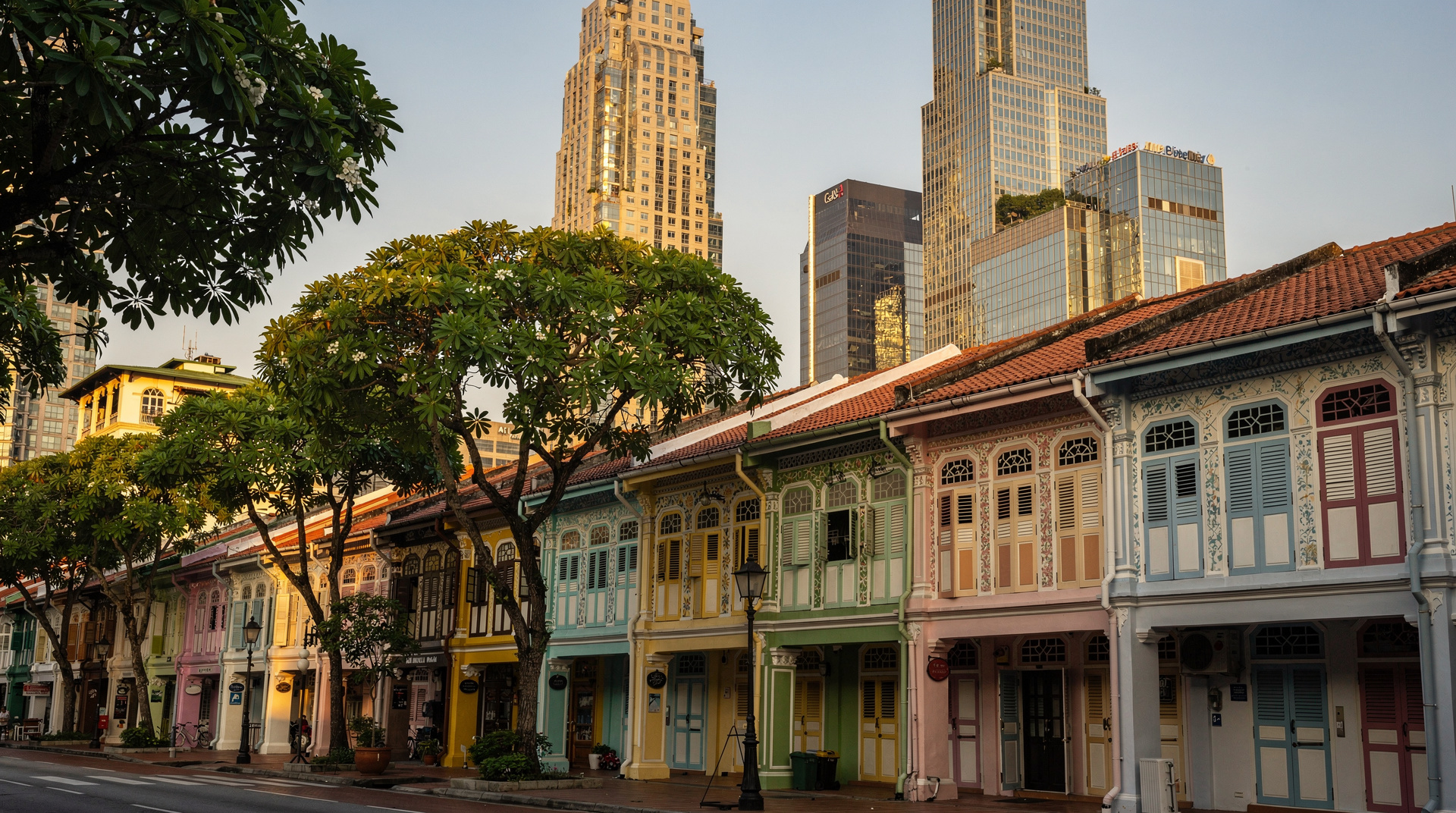
Urban renewal from the 1960s onward demolished much of the original housing and displaced the community. What remains is the heritage shophouse streetscape and the landmarks, with a retail and food function that has shifted significantly toward tourism.
What is genuinely worth your time:
Buddha Tooth Relic Temple (South Bridge Road): A four-storey Tang Dynasty-style Buddhist temple built 2002–2007, housing a tooth relic of the historical Buddha. Architecturally spectacular — the interior courtyard, the gold-panelled walls of the main hall, and the rooftop garden are all extraordinary. Free entry. The museum floors cover Buddhist art and history from across Asia. Visit before noon on weekdays for quieter conditions.
Sri Mariamman Temple (South Bridge Road): The oldest Hindu temple in Singapore (1827). The gopuram (entrance tower) is covered in hundreds of colourful painted deities — a Dravidian architectural tradition transported intact to the tropics. Hindu religious services are held daily. The Thaipusam procession and the Theemithi (fire-walking) festival both originate here.
Thian Hock Keng Temple (Telok Ayer Street): Singapore’s oldest Hokkien temple (1839), dedicated to Mazu, the goddess of the sea. Originally built on the seafront (the land has since been reclaimed), it was the first point of worship for arriving immigrants. The architecture and courtyard are beautifully preserved.
Chinatown Heritage Centre (Pagoda Street): A museum built inside three authentic shophouses, reconstructing the living conditions of Chinatown residents across different eras — from the cramped cubicle houses of the 1900s to the slightly improved conditions of later decades. The experience of seeing just how many people lived in impossibly small spaces is quietly shocking. Entry SGD 20 adults.
Maxwell Food Centre: One of Singapore’s best hawker centres, immediately south of the main Chinatown area. Tian Tian Hainanese Chicken Rice (stall 10/11) is the most famous chicken rice stall in the country. Real food at real Singapore prices.
What to skip or manage:
Pagoda Street and the Tourist Souvenir Zone: the cluster of stalls selling miniature Merlions, chopsticks, and “I Love Singapore” merchandise. This exists entirely for tourists and the goods are not notably better or cheaper than elsewhere. If you want to buy souvenirs in Chinatown, look at the more curated shops on Smith Street or Club Street for something less generic.
For a deeper dive into Chinatown alone, including more restaurant picks and a fuller temple-by-temple breakdown, see the dedicated Chinatown guide. The Buddha Tooth Relic Temple and Sri Mariamman Temple each have their own dedicated pages too — see Buddha Tooth Relic Temple and Sri Mariamman Temple for visiting details, opening hours, and etiquette specifics.
Singapore: Chinatown, Little India & Kampong Glam walkLittle India: the most alive of the three
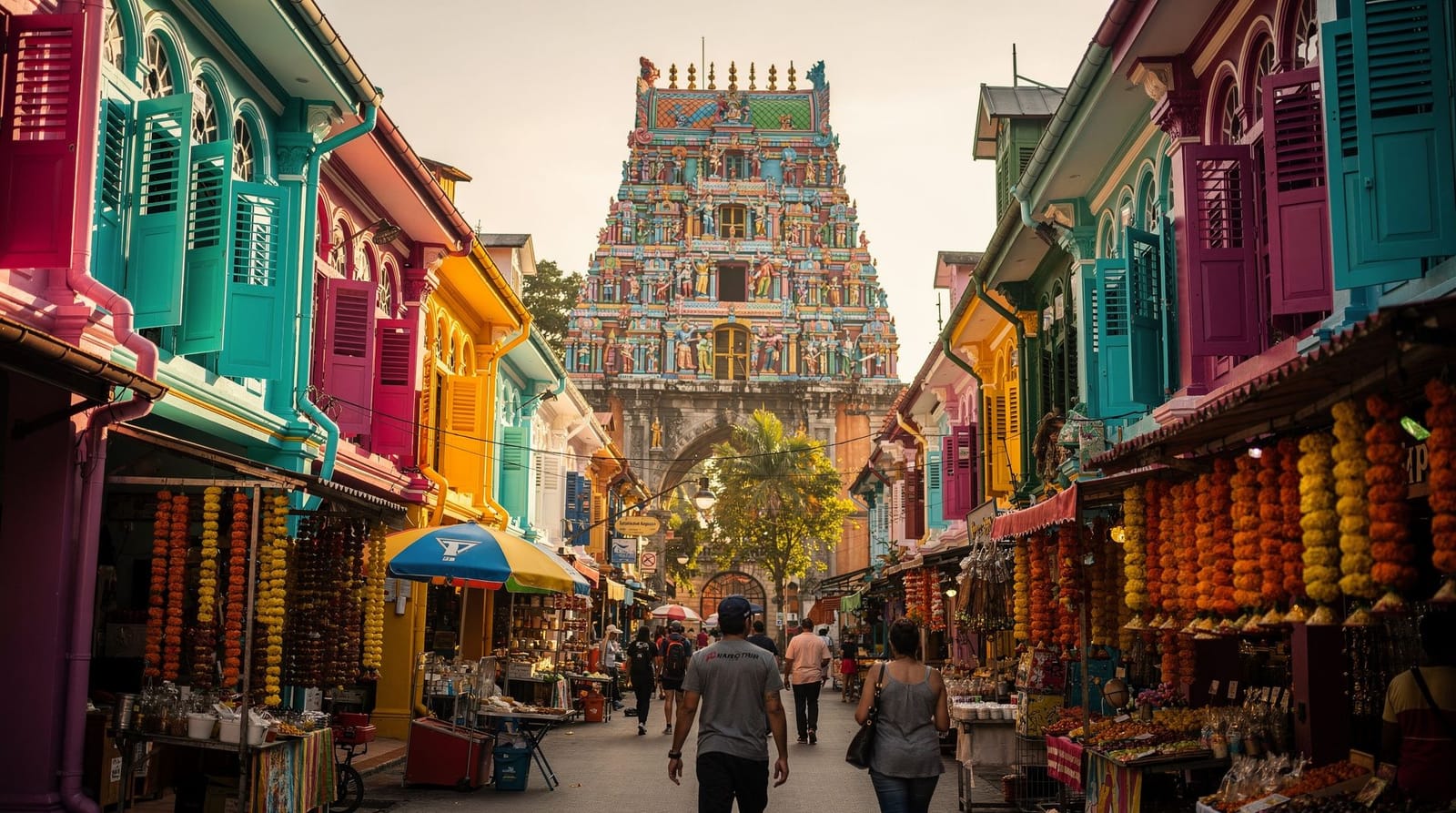
Little India (Serangoon Road and its surrounding streets) is the least polished of the three quarters and arguably the most rewarding for that reason. It does not primarily exist for tourists. It is a functioning neighbourhood where South Asian immigrants shop, eat, pray, and socialise. The tourist infrastructure is thinner; the cultural density is higher.
The Serangoon Road flower market: The garland shops along the first few blocks of Serangoon Road sell fresh jasmine, marigold, and lotus garlands woven for Hindu temple offerings. The scent hits you before you see them. This is functional commerce — these garlands go to temples and homes, not to tourists — but visitors are welcome to watch.
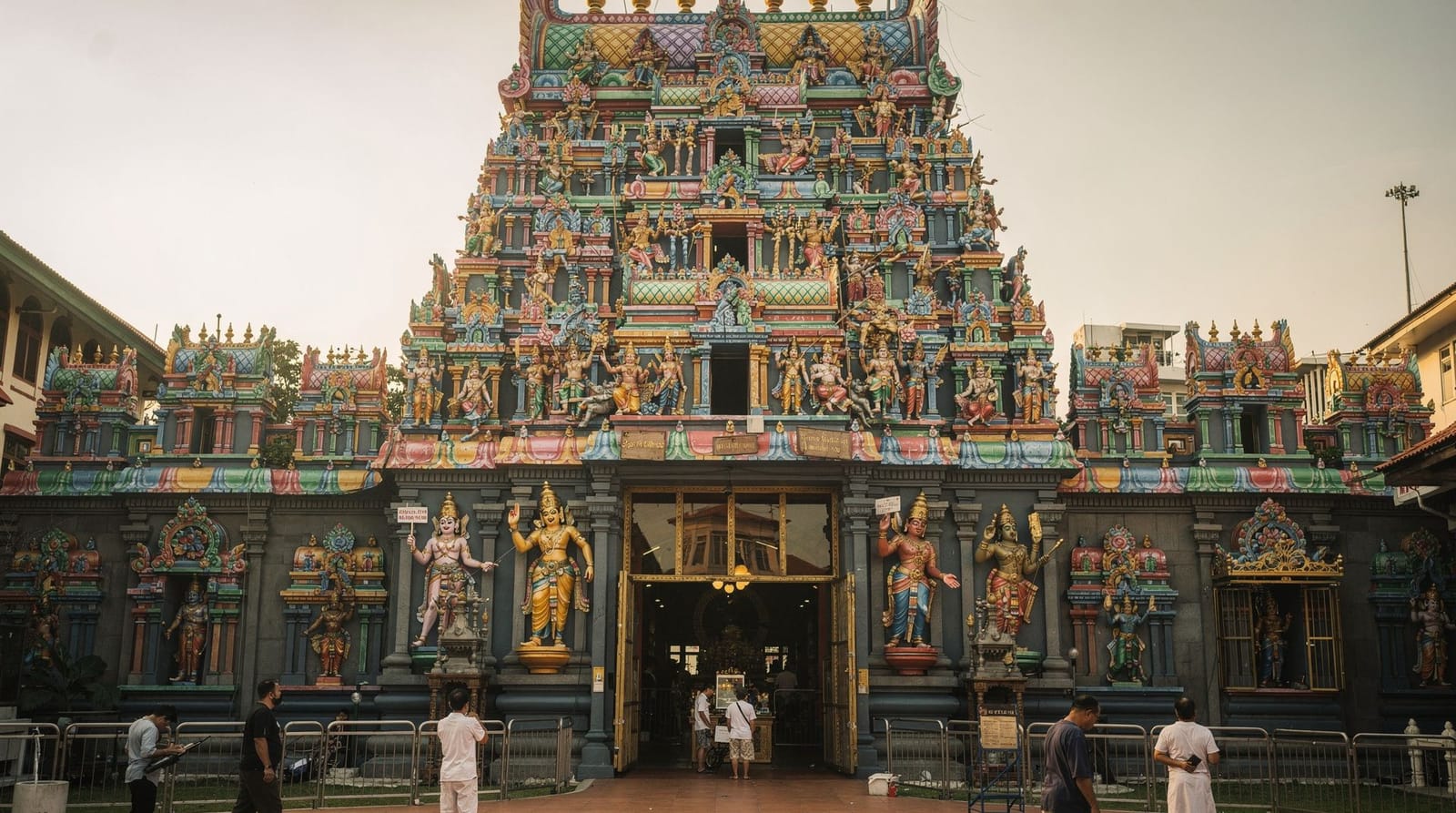
Sri Veeramakaliamman Temple (Serangoon Road): The most elaborately decorated Hindu temple in Singapore — the six-tiered gopuram covered in painted figures of gods, demons, and devotees. Dedicated to Kali (Veeramakaliamman — “Kali the courageous”). Open daily; most active in early morning and evening prayer sessions. The interior is fragrant with incense and camphor.
Little India Arcade (Campbell Lane): A proper Indian shopping centre — not a market, but a converted colonial building with small shops selling saris, Bollywood CDs, handicrafts, henna artists, and food. This is genuinely where local Indian residents shop, not a curated tourist experience.
Mustafa Centre: At the edge of Little India (Corner of Syed Alwi Road), Mustafa is a 24-hour department store unlike any other in Singapore. See the dedicated Mustafa Centre guide — it deserves its own page.
Abdul Gafoor Mosque (Dunlop Street): A beautifully proportioned 1910 mosque with an unusual Moorish-Edwardian architectural hybrid. Quieter and less visited than Sultan Mosque; arguably more architecturally interesting in its details. Visitors welcome outside prayer times.
Food in Little India: The best Tamil food in Singapore is here. Banana leaf curry restaurants (where rice and curries are served on actual banana leaves — you fold the leaf inward when finished) are concentrated along Race Course Road and Syed Alwi Road. Mutton bone soup, thosai, idli, and roti prata are all available from very early morning.
Sunday in Little India: On Sunday mornings, the neighbourhood fills with tens of thousands of South Asian migrant workers (construction, domestic, marine industry) who have their day off. The streets, malls, and parks around Serangoon Road and Tekka Centre are packed. This is one of the most genuinely multicultural scenes in Singapore — not for Instagram but for actually seeing how the city works. Some visitors find it overwhelming; others find it one of Singapore’s most honest and moving urban experiences.
The dedicated Little India guide covers more restaurant and shopping detail than fits here. If you are visiting during the Hindu festival season, the Deepavali in Singapore guide has specific dates and light-up details.
Kampong Glam: Arab quarter, Malay royalty, and Haji Lane
Kampong Glam (Kampung Gelam in Malay) was the original settlement of Singapore’s Malay and Arab communities. The name comes from the gelam tree (Melaleuca cajuputi) that once grew here. The area around Sultan Gate was the palace of the Sultans of Singapore — the royal family who signed the original treaties with Raffles.
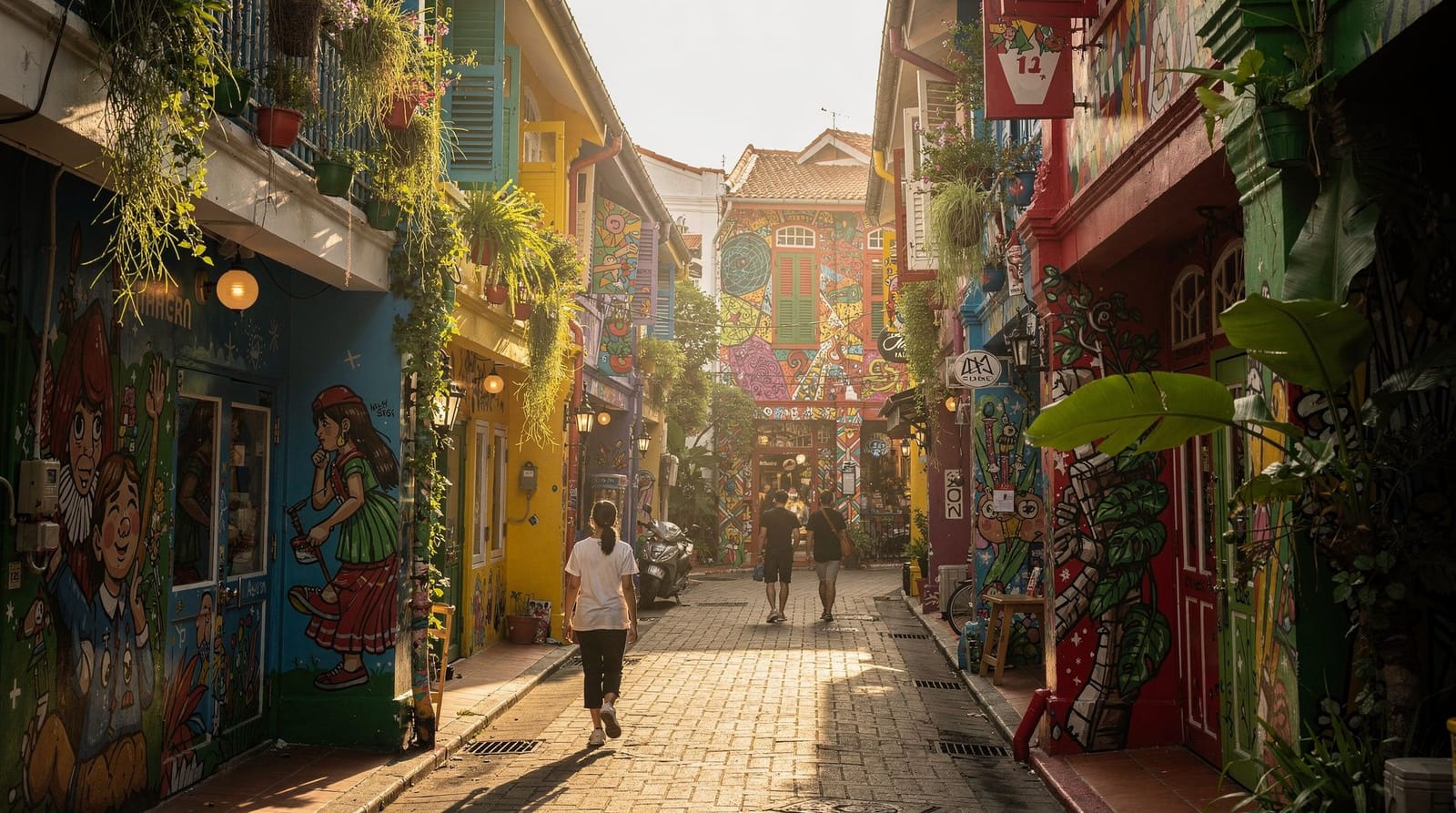
Today the area offers a sophisticated mix of heritage architecture, street art, Muslim-world food and craft, and Singapore’s most interesting independent boutique strip.
Sultan Mosque (Masjid Sultan): The centrepiece. Built in 1932 with funding partly from Sultan Hussein Shah and partly from the colonial government, the mosque’s golden onion domes are one of Singapore’s most distinctive skyline elements at ground level. The dome is constructed with glass bottles embedded at the base (filled with air to improve acoustics and support the dome structure) — look for the brown glass row at the dome’s base. Entry is free for visitors outside prayer times. Dress code strictly enforced: robes are provided at the entrance.
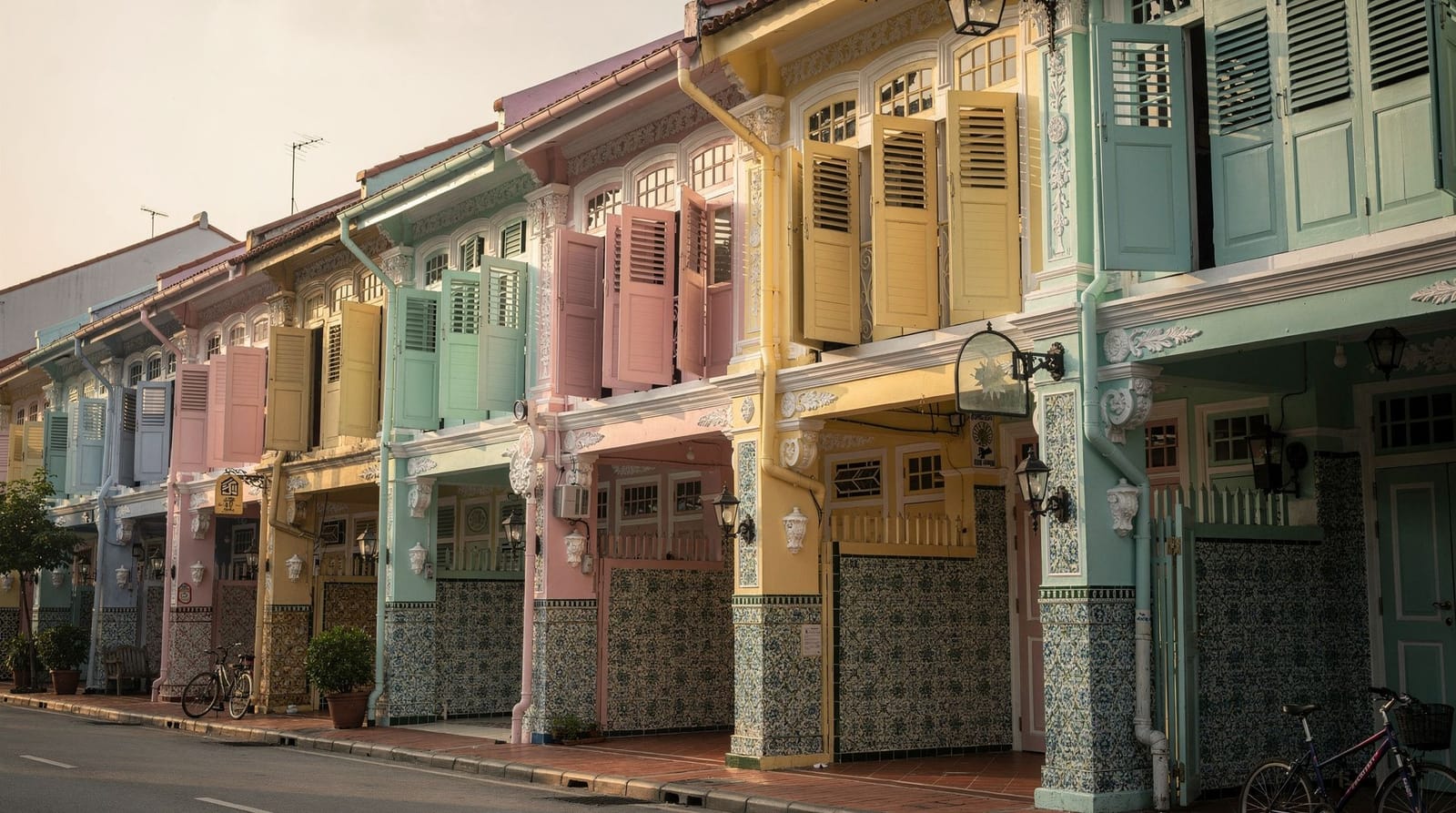
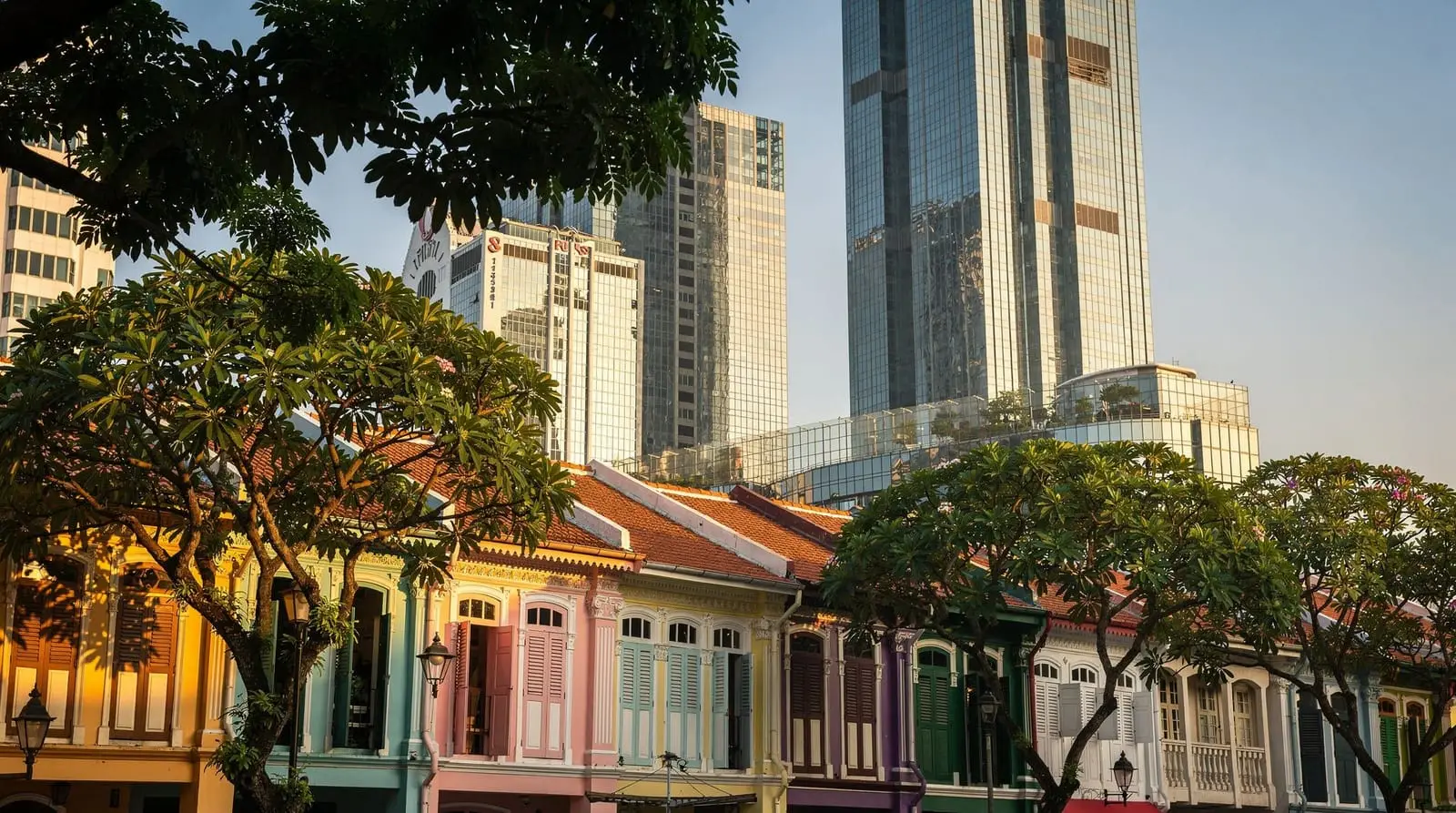
Haji Lane: The most photographed street in Singapore outside the marina. A narrow lane of pastel-painted shophouses with independent boutiques, vintage clothing shops, bars, and cafes. The street art walls change regularly. Best visited on weekday afternoons — on weekend evenings it becomes very crowded.
Arab Street: The original mercantile street of the Arab community — fabric merchants (batik, silk, songket) and perfume shops that have operated for generations. Serious fabric buyers come here; browsers also welcome. The hookah cafes along the street are popular with tourists and local young Malays alike.
Bussorah Street: The most atmospheric approach to Sultan Mosque — a pedestrianised street lined with restaurants, handicraft shops, and the occasional performance space, with the mosque’s dome framed at the far end. Excellent for photography in late afternoon light.
Malay Heritage Centre: On the grounds of the former Istana Kampong Gelam (palace), this museum covers Malay culture, language, and history in Singapore and the wider Nusantara world. Well-curated, undervisited. Entry SGD 6 adults.
Food in Kampong Glam: Halal food is the default throughout the neighbourhood. Zam Zam Restaurant (on North Bridge Road, opposite Sultan Mosque) has served murtabak (stuffed flatbread with mutton or chicken) since 1908 — a rare piece of food heritage that is genuinely as old as it claims. Arab Street cafes serve Turkish coffee, mint tea, and Middle Eastern dishes alongside the local Malay staples.
For more on the mosque itself — visiting hours, dress code, and photography tips — see the dedicated Sultan Mosque guide, and the Kampong Glam and Haji Lane guide for a fuller neighbourhood breakdown.
Comparing the three quarters
| Quarter | Atmosphere | Best for | Busiest time |
|---|---|---|---|
| Chinatown | Polished, temple-dense, tourist-heavy in parts | Architecture, Buddha Tooth Relic Temple, hawker food | Weekend afternoons |
| Little India | Raw, functioning, least touristy | Genuine street life, Tamil food, Sunday crowds | Sunday mornings |
| Kampong Glam | Curated boutique strip, mosque-centred | Photography, Haji Lane, halal food | Weekend evenings |
If you can only choose one, Little India rewards curiosity the most; Kampong Glam photographs best; Chinatown has the widest range of genuinely significant heritage sites in one compact area.
Singapore: street food, cultural & historical tour of 3 ethnic quartersHow to do all three in one day
A full-day circuit linking all three quarters is one of the best single days you can have in Singapore. The distances are manageable with a combination of MRT and walking.
Morning (9–11:30 am): Little India Start at Little India MRT. Walk the garland market on Serangoon Road, visit Sri Veeramakaliamman Temple, explore Tekka Centre wet market (one of Singapore’s best). Tamil breakfast at Komala Vilas or any banana-leaf stall.
Late morning (11:30 am–1 pm): Kampong Glam Walk or take MRT one stop to Bugis. Head to Arab Street, Haji Lane, and Sultan Mosque. Mosque visit before noon Friday prayers; otherwise any time. Lunch at Zam Zam or a Bussorah Street restaurant.
Afternoon (1:30–5 pm): Chinatown MRT to Chinatown station. Visit Buddha Tooth Relic Temple (arrive by 4 pm before evening services make interior access limited). Chinatown Heritage Centre if time allows. Maxwell Food Centre for a late lunch or early dinner. Walk Club Street and Ann Siang Hill for the quieter, more local end of Chinatown.
Distance and logistics: Total walking approximately 8–10 km with MRT connections. Flat terrain throughout, but heat and humidity in the 30–32°C Singapore afternoon are real. Carry water. The covered hawker centres and temple interiors provide regular shade breaks. Pace yourself — trying to see every single site in each quarter in one day leads to fatigue and rushed, unsatisfying visits; it’s better to pick two or three highlights per quarter and move at a comfortable walking speed.
What to buy in the ethnic quarters (honestly)
Chinatown: Avoid the generic souvenir stalls unless you specifically want mass-market items. Better options: Chinese tea (several specialist tea shops on Tanjong Pagar and Smith Street), quality calligraphy, genuine Chinese ceramics (not the tourist miniatures). The Chinatown point mall has a wider selection.
Little India: Indian textiles (saris, salwar kameez fabric) at competitive prices on Serangoon Road and Little India Arcade. Fresh spices from Tekka Centre. Incense and puja supplies if those interest you.
Kampong Glam: Batik fabric from Arab Street merchants (genuine Javanese and Malay batik, not printed-in-China approximations). Traditional Malay perfumes (attar) — several specialist shops sell oud-based scents that are genuinely high quality. Independent boutique clothing on Haji Lane.
Photography in the ethnic quarters
Each quarter has a distinct visual character worth planning for if photography is a priority. In Chinatown, the golden hour light on Ann Siang Hill’s colourful shophouse facades works best in the late afternoon, while the Buddha Tooth Relic Temple’s rooftop garden offers unusual elevated views over the district. Little India’s flower garland shops are most photogenic in the early morning when the vendors are actively stringing garlands and the light is soft.
Kampong Glam rewards late-afternoon light on Bussorah Street, with Sultan Mosque’s golden domes catching warm tones as the sun lowers — arrive by 5–5:30 pm in most months to catch this window before the crowds peak in the evening. Across all three areas, be respectful inside religious buildings: photograph the architecture and public courtyards freely, but avoid photographing worshippers mid-prayer without permission.
Guided options versus exploring independently
All three quarters reward independent exploration — none require a guide to appreciate. That said, a guided walk adds context that’s easy to miss alone: the significance of specific temple carvings, the history behind particular shophouse facades, or which food stalls are actually run by multi-generational families versus newer arrivals. If your time is limited and you want the highlights condensed into a single guided outing that covers all three quarters without the logistics of planning your own route, the combined walking tour referenced above does exactly that. Independent travellers with more time are better served spending a full half-day in each quarter rather than rushing a guided highlights reel.
Where to go next
If the quarters leave you wanting more context, the destination pages for Chinatown, Little India and Kampong Glam map each neighbourhood in more detail. For the temple side of the story, temples of Singapore puts the places mentioned here alongside others worth knowing about. Food planning is easier with the guides to halal food in Singapore and vegetarian eating, and the Maxwell Food Centre guide helps if you plan a hawker stop at the end of the Chinatown leg. If this walking day is one piece of a longer stay, the first-timer itinerary shows where it can slot in.
Frequently asked questions about the ethnic quarters
Is it safe to visit Little India on Sundays?
Yes, completely. The large Sunday crowds of migrant workers are peaceful. The 2013 Little India riot — one of Singapore’s very rare incidents of public disorder — was a highly specific event (involving alcohol, a traffic accident, and particular tensions in the migrant community) rather than a reflection of any ongoing danger. Little India on Sundays is busy, noisy, and entirely safe.
Do I need to cover up to visit the ethnic quarters?
For temples and mosques, yes — shoulders and knees covered, shoes removed at temple/mosque entrances. For the street areas themselves, normal tourist clothing is fine. Loaner cover-ups (robes, sarongs) are available at mosque and temple entrances if you arrive underdressed.
Is Haji Lane worth the hype?
Partially. The street art and pastel shophouses are genuinely attractive and photograph well. The boutiques are hit-or-miss — some sell interesting independent local design; others are expensive vintage at prices better found elsewhere. The bars here are solid for an evening drink. It is worth a 30-minute walk-through but does not need to be a destination in itself unless you are specifically shopping for local fashion.
Are the ethnic quarters far from each other?
The three quarters form a roughly north-south corridor. Little India to Kampong Glam is about 700 metres (10–15 minutes walking). Kampong Glam to Chinatown is about 2 km (25–30 minutes walking or one MRT stop change). The full circuit by foot is achievable but MRT connections make the afternoon portions more comfortable in Singapore’s heat.
Can I eat in all three areas without dietary restrictions being a problem?
Chinatown is predominantly pork-serving Chinese food — non-halal but easily navigated by non-pork eaters (chicken and seafood are abundant). Little India is predominantly Hindu-aligned food — no beef, much vegetarian, some halal-certified. Kampong Glam is entirely halal. Vegetarians do best in Little India (banana-leaf vegetarian restaurants are excellent). Halal eaters can eat throughout Little India and all of Kampong Glam.
Top experiences
Bookable activities with verified prices and instant confirmation on GetYourGuide.