Deepavali in Singapore: Little India light-up, festivals, and what to see
Singapore: food tour of Chinatown, Little India & Kampong Glam
What is Deepavali like in Singapore?
Deepavali (Diwali) in Singapore centres on Little India, where the annual light-up transforms Serangoon Road and surrounding streets into one of Asia's most vivid festival corridors. In 2026 Deepavali falls in October or November — the exact date depends on the Hindu lunar calendar. The light-up is free, the street bazaar is excellent, and temple visits at Sri Veeramakaliamman and Sri Srinivasa Perumal are genuinely moving. No admission fee for any public events.
Deepavali in Singapore
Deepavali — the Festival of Lights (also called Diwali in Hindi-speaking communities) — is one of Singapore’s four major public holidays and one of its most visually striking annual events. Singapore’s Tamil-Indian community, which has been present since the island’s founding in 1819, celebrates with a festival that has grown far beyond the community itself into a city-wide cultural event.
The celebration centres on Little India, specifically along Serangoon Road, but extends into the surrounding streets and spills over into community events across the island. Unlike some festivals that are primarily private family affairs, Deepavali in Singapore has a substantial public dimension that is genuinely accessible to visitors.
| Where | Serangoon Road and surrounding streets, Little India |
| Cost | Free — light-up, bazaar browsing, and temple visits cost nothing |
| Time needed | 2–3 hours for the light-up, bazaar, and a temple visit |
| Getting there | Little India MRT (North-East Line), direct to the corridor |
| Best time | Weekday evenings 7–9 pm, or the switch-on ceremony in late September/early October |
The Little India Deepavali light-up
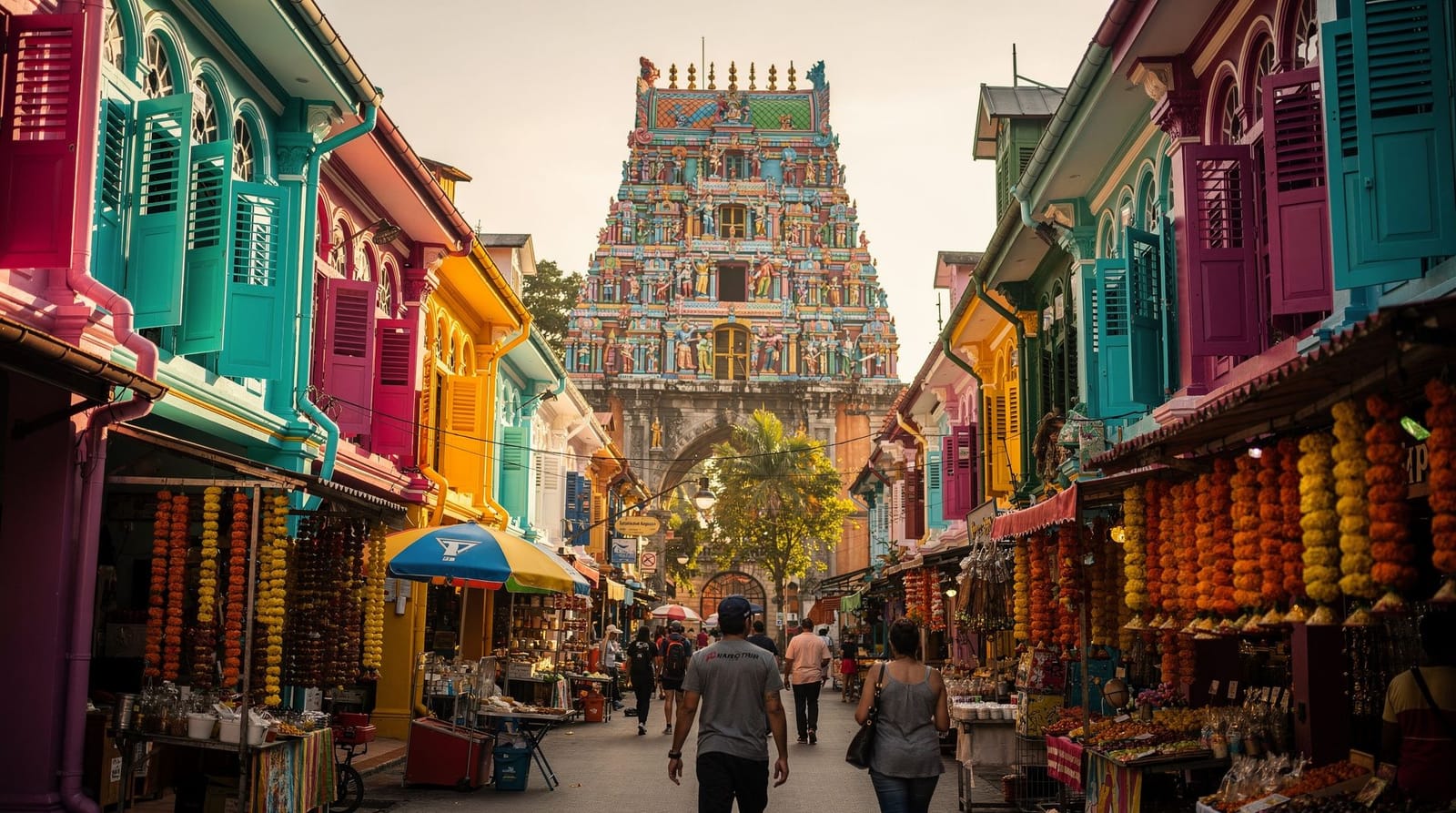
The centrepiece of Singapore’s public Deepavali celebration is the annual light-up along Serangoon Road and surrounding streets. Each year, a different design theme is used to create a corridor of illuminated arches, lamps, and LED displays stretching hundreds of metres through the heart of Little India.
When it runs: Typically 4–6 weeks before Deepavali through to approximately one week after. The official switch-on ceremony usually happens in late September or early October.
What to see:
- Illuminated decorative arches over Serangoon Road — photographed from the centre of the road with the street lights framing the composition
- Campbell Lane and Dunlop Street, both of which have their own smaller light installations
- Shop facades decorated with traditional kolam (geometric rangoli patterns made from rice powder or coloured powder)
- Oil lamp displays — the traditional diyas (clay oil lamps) appear in arrangements outside homes and temples
Best time to visit: Weekday evenings 7–9 pm for lighter crowds. The official Deepavali public holiday and the weekend closest to it are the most crowded nights. Unlike Chinese New Year, even the busiest Deepavali nights in Singapore are manageable — Little India is not as geographically compressed as Chinatown.
Getting there: Little India MRT station (North-East Line) deposits you directly at the top of the Serangoon Road light-up corridor. Farrer Park MRT (North-East Line) is useful for the northern end of Little India near Tekka Market.
The street bazaar
A street bazaar runs along the Deepavali light-up corridor selling:
- Festival clothing: sarees, kurtas, and accessories in silk and embroidered fabrics
- Diyas (oil lamps) and decorative items
- Rangoli powder and stencils
- Festival sweets and snacks
- Henna application (mehendi) — offered by vendors along the street, usually SGD 8–20 per design
The bazaar is genuine commerce rather than tourist theatre — locals are shopping here for their actual Deepavali needs. As a visitor you are welcome to browse, buy, and participate.
Temples: the spiritual heart of Deepavali
Two temples are the spiritual focus of Deepavali in Singapore:
Sri Veeramakaliamman Temple (141 Serangoon Road) — dedicated to the goddess Kali, this is one of Singapore’s oldest and most important Hindu temples. Built in 1881 by Bengali labourers, it was extensively restored and its gopuram (ornate entrance tower) is a landmark of Little India. Deepavali puja (prayer ceremonies) here draw large crowds of worshippers.
Sri Srinivasa Perumal Temple (397 Serangoon Road) — a major Vaishnavite temple, home to some of Singapore’s most elaborate Deepavali rituals. The temple’s annual Thaipusam procession starts here, but Deepavali also sees significant ceremony.
Visiting etiquette: Remove shoes at the entrance (shoe racks provided). Modest dress (shoulders and knees covered). Women may be asked to cover their head or use a provided scarf during some ceremonies. Photography in outer courtyards is generally permitted; inside the inner sanctum, follow signage.
Both temples are free to enter. Pooja timings vary — check with the temple for specific ceremony times during Deepavali.
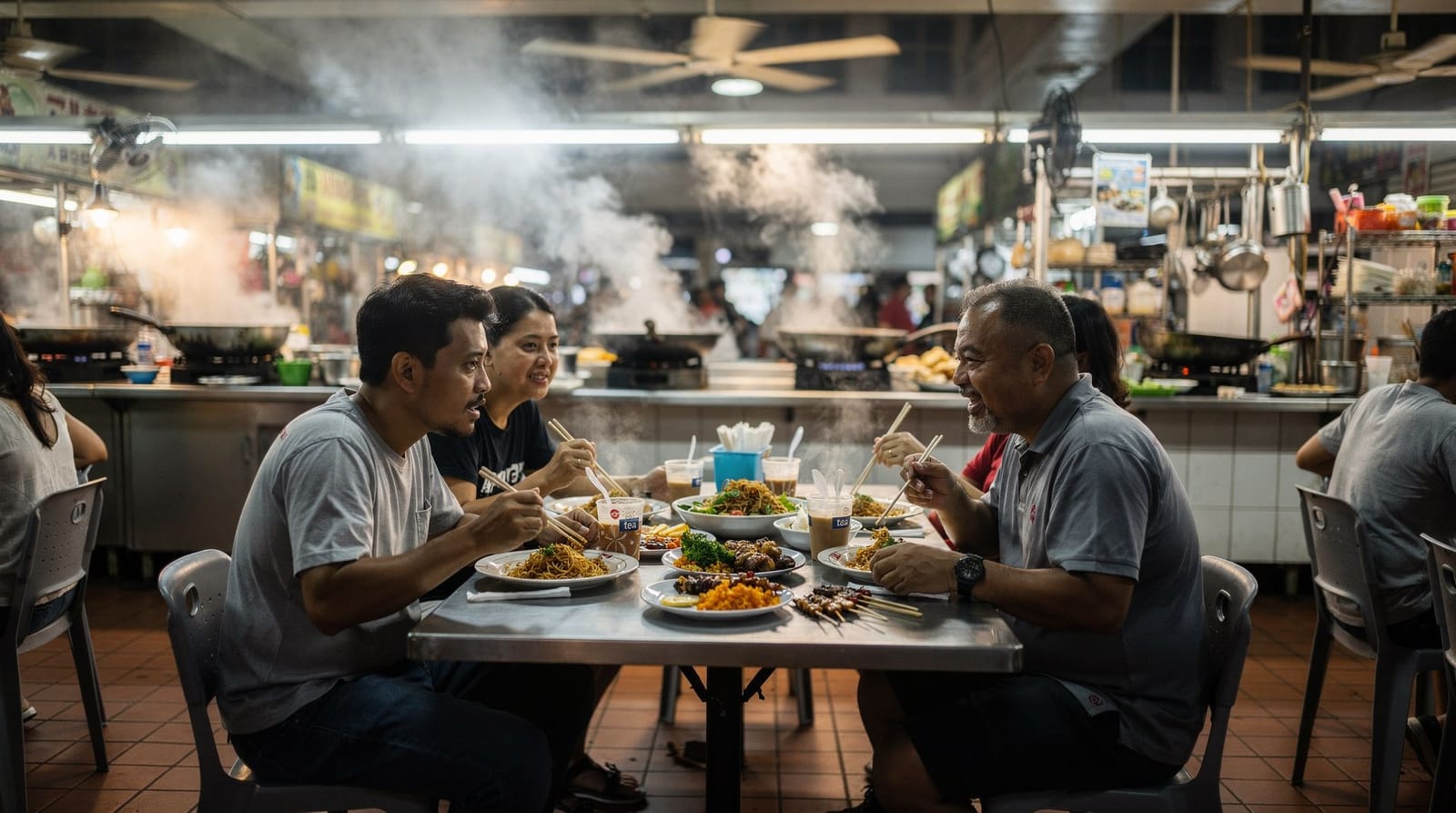
If you would rather have a local guide explain the temples, the kolam art, and the significance of the light-up as you walk rather than navigate on your own, a small-group cultural walk covers Little India’s food and heritage in context.
Little India cultural and food walking tour Singapore: Little India, Tekka Centre and food tastings tourWhat to eat during Deepavali
Little India during Deepavali is one of the great eating opportunities in Singapore. The street bazaar and surrounding restaurants are fully operational.
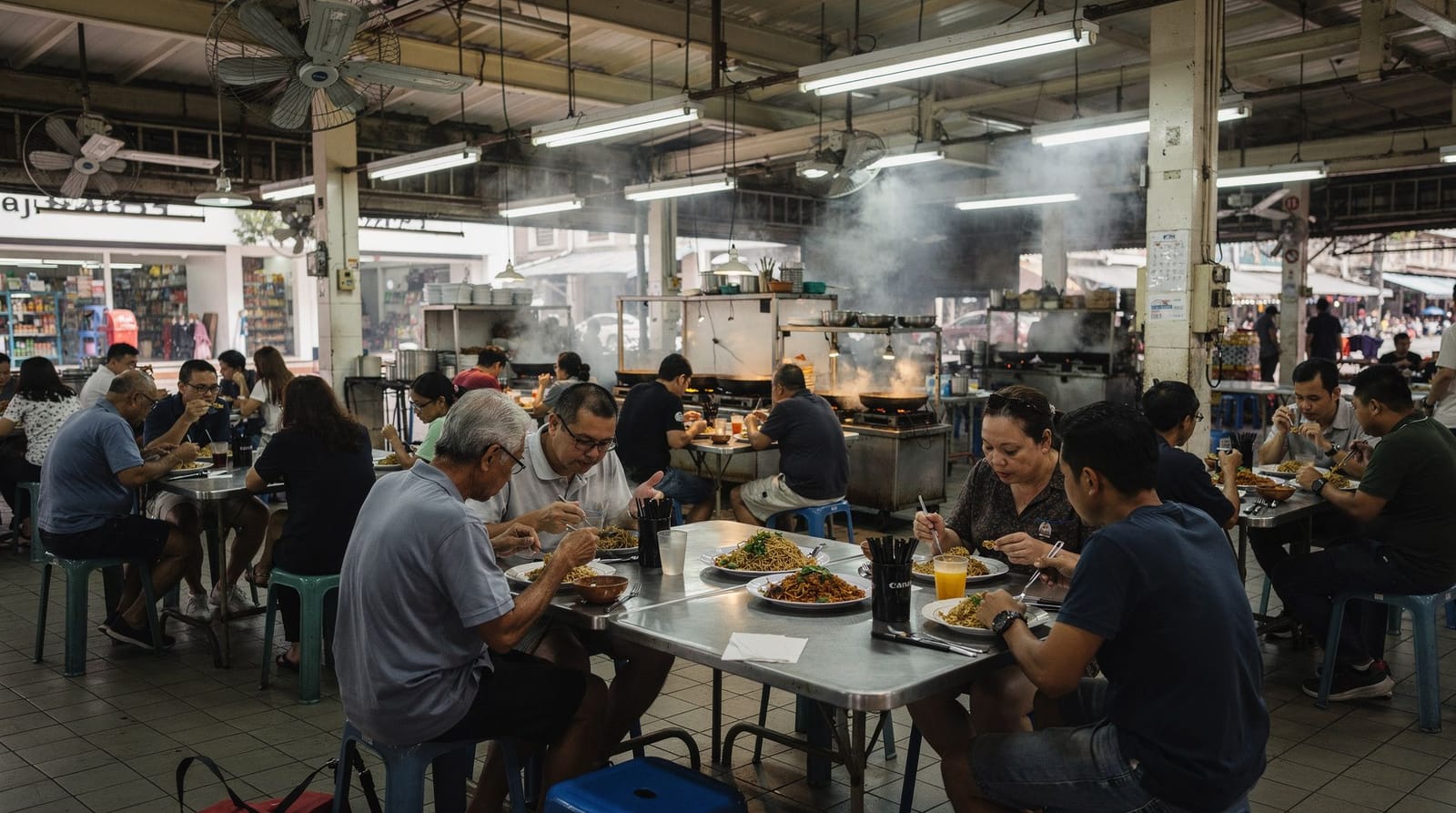
Tekka Market (corner of Serangoon Road and Buffalo Road) is Singapore’s best wet market for Indian ingredients and its food centre upstairs is excellent. On Deepavali period weekends, it is buzzing with activity.
Specific things to try:
- Banana leaf rice — a south Indian lunch institution: rice and multiple curries served on a fresh banana leaf, eaten with your right hand. Komala Vilas and Banana Leaf Apolo are the classic choices on Race Course Road nearby
- Murukku — crispy, spiral-shaped savoury snacks made from rice flour, available as street food and takeaway
- Laddu and halwa — traditional festival sweets, sold at sweet shops throughout Little India
- Thosai (dosa) — fermented lentil and rice crepe served with sambar and chutneys; excellent breakfast or brunch option at the many South Indian restaurants
Little India also has Singapore’s best concentration of halal Indian food — see Halal food in Singapore for more.
What else happens during Deepavali season
Beyond the light-up and street bazaar, the Deepavali period in Singapore includes:
Deepavali village: The Singapore Tourism Board and Indian Chambers of Commerce typically organise a “Deepavali festival village” at one of the community centres or near Serangoon Road with cultural performances, heritage exhibitions, and organised activities. Admission is usually free.
Cultural performances: Traditional Bharatanatyam (classical Indian dance), Carnatic music performances, and folk art demonstrations are staged at community centres and arts venues across Singapore during the Deepavali season. Check the Indian Cultural Centre and Esplanade website for programming.
Community events at other Indian areas: Farrer Road and the Holland Road area (where a significant Indian professional community lives) also see neighbourhood Deepavali celebrations. These are less touristic and offer a more residential community atmosphere.
If you want to see more of Hindu Singapore while the festival atmosphere is in the air, the temples of Singapore guide covers other places of worship worth adding, and Sri Mariamman Temple in Chinatown is a natural companion to the Little India temples. For the wider neighbourhood beyond festival season, the Little India destination page gives the year-round picture.
Deepavali and other festivals in October–November
Deepavali often overlaps with the broader October–November festival period, which in Singapore can also include:
- Mid-Autumn/Mooncake Festival: Usually September or October, with lantern displays at Chinatown and Gardens by the Bay
- Hari Raya Haji: Islamic festival marking the end of Hajj pilgrimage — 2026 date to be confirmed
- Singapore International Film Festival: Usually November
This period — October to November — is one of Singapore’s most culturally dense months despite being the beginning of the wet season.
Deepavali week by week
| Period | What’s happening | Crowd level |
|---|---|---|
| 4–6 weeks before | Light-up switches on; bazaar stalls begin setting up | Low — good for unhurried photos |
| 2–3 weeks before | Bazaar in full swing, shopping for festival clothing and diyas | Moderate |
| Final weekend before | Peak shopping, temple preparations intensify | High — arrive early evening |
| Deepavali public holiday | Temple pujas, family visits, light-up at its busiest | Highest |
| Week after | Light-up winds down, some stalls remain | Low, still atmospheric |
Visiting in the early weeks of the light-up gives a genuinely different experience from visiting on the holiday itself — fewer crowds, the same lights, and an easier time getting photos of the Serangoon Road arches without people in frame.
A practical Deepavali evening
For a single, well-paced visit: arrive at Little India MRT around 6:30–7 pm before full darkness, walk the Serangoon Road light-up corridor while the sky still has some colour, browse the bazaar stalls on Campbell Lane and Dunlop Street, stop at Sri Veeramakaliamman Temple for 15–20 minutes, then have dinner at Banana Leaf Apolo or Komala Vilas on Race Course Road. This whole sequence takes 2.5–3 hours and covers the essential Deepavali experience without rushing. If you have more time, pair it with a stop at Kampong Glam beforehand — the two ethnic quarters are a short MRT ride apart and make a natural cultural double-header. See the ethnic quarters guide for how they compare.
Practical tips for visiting during Deepavali
Weather: Deepavali falls in October or November, which is the inter-monsoon to early Northeast Monsoon period. Expect afternoon thunderstorms and the possibility of heavier rain. The light-up is impressive in rain (the reflections on wet streets are photogenic) but have a plan for shelter. The Singapore weather month by month guide and the what to pack list help you prepare, and best time to visit Singapore explains how the festival fits into the wider calendar.
Crowds: Much more manageable than CNY. Little India has more open space than Chinatown’s compressed festival layout. Even on the busiest Deepavali evening, navigation is comfortable.
Getting around: Little India MRT is the obvious entry point. The surrounding streets (Serangoon Road, Race Course Road, Dunlop Street, Buffalo Road) are easily walkable from the station.
What to buy: Festival sweets as gifts (vacuum-packed laddu and murukku travel well), saree fabric, brass diyas/oil lamps as souvenirs, or a henna design.
Photography: The light-up is extremely photogenic at dusk (blue hour when the sky still has colour and the lights are fully active). The overhead arches along Serangoon Road photographed from street level make for strong images. See Best photo spots in Singapore for more Singapore photography tips.
Frequently asked questions about Deepavali Singapore
Is Deepavali a public holiday in Singapore?
Yes. Deepavali is one of Singapore’s 11 annual public holidays. Shops, businesses, and some attractions may close or have reduced hours on the holiday itself. Public transport runs on a public holiday schedule. The street bazaar and restaurants in Little India itself typically stay open — this is their busiest trading period.
How does Singapore celebrate Deepavali differently from India?
Singapore’s Tamil community follows South Indian Hindu traditions (particularly Tamil Nadu), which differ from North Indian (Hindi-speaking) Diwali customs. The emphasis is on oil lamps (diyas), new clothing, visiting family, and temple prayers rather than firecrackers (banned in Singapore) or fireworks displays. The street light-up is a Singapore Tourism Board-organized public enhancement on top of the community’s private celebrations.
Can non-Hindus attend Deepavali temple ceremonies?
Yes. Singapore’s Hindu temples are generally open to all visitors during Deepavali, including non-Hindus. Be respectful of ongoing prayers, remove shoes, dress modestly, and follow any guidance from temple staff. The public outer areas of the temple are freely accessible; inner sanctums during active puja may have some restrictions.
Is Little India safe to visit during Deepavali at night?
Very safe. Singapore has one of the world’s lowest crime rates. Little India during Deepavali evenings is well-lit, well-attended, and policed. The main safety consideration is simply traffic and pedestrian management on busy evenings — stick to designated pedestrian paths when crossing streets.
What is the best restaurant in Little India for Deepavali dinner?
Banana Leaf Apolo (Race Course Road) is the most famous for banana leaf rice and fish head curry — reservations are recommended during the Deepavali period. Komala Vilas (Serangoon Road) is a long-running vegetarian institution. Muthu’s Curry (Race Course Road) is renowned for fish head curry. All three are within 5 minutes’ walk of the Little India MRT station.
Is it possible to visit both Little India for Deepavali and Marina Bay on the same evening?
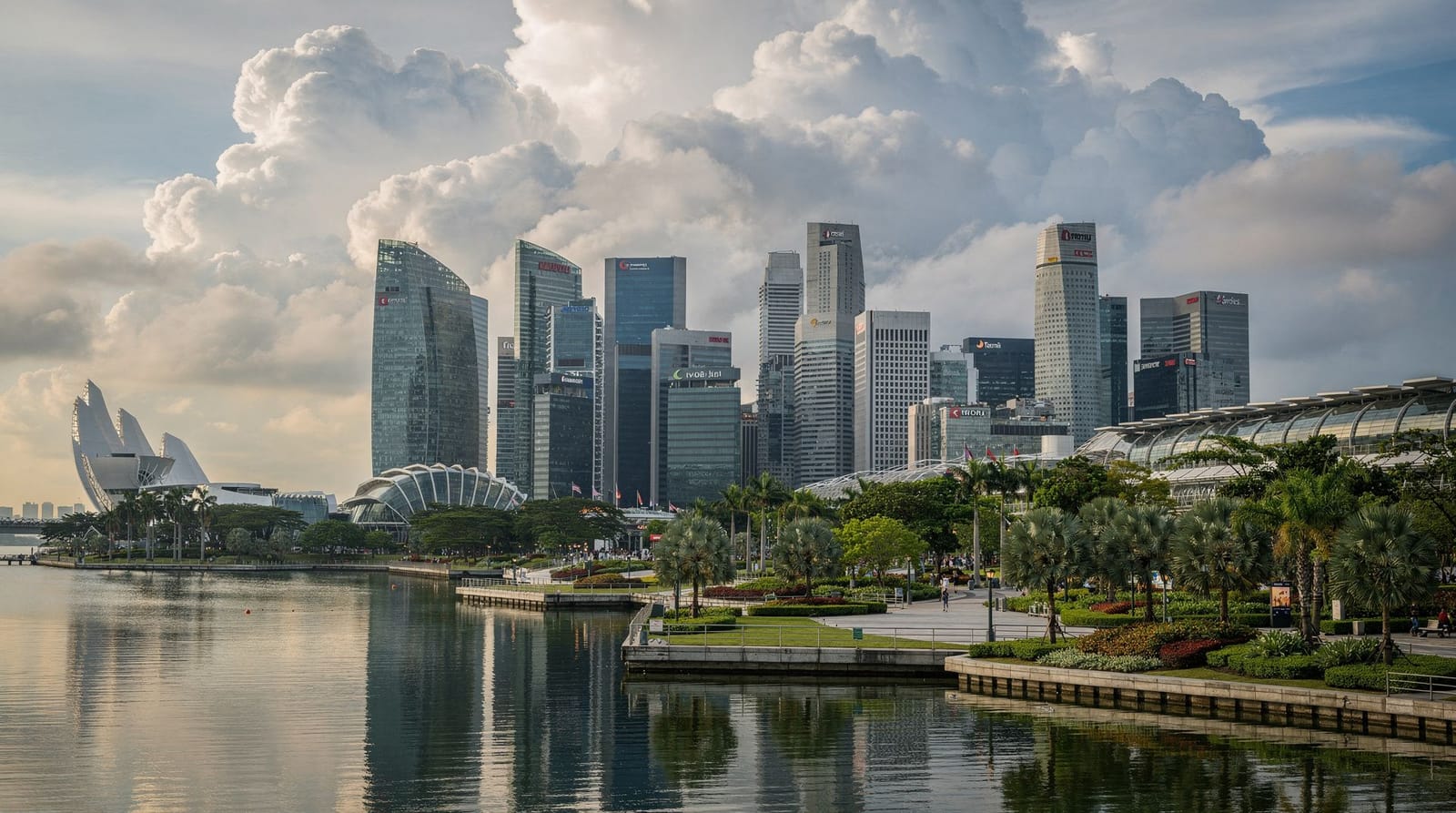
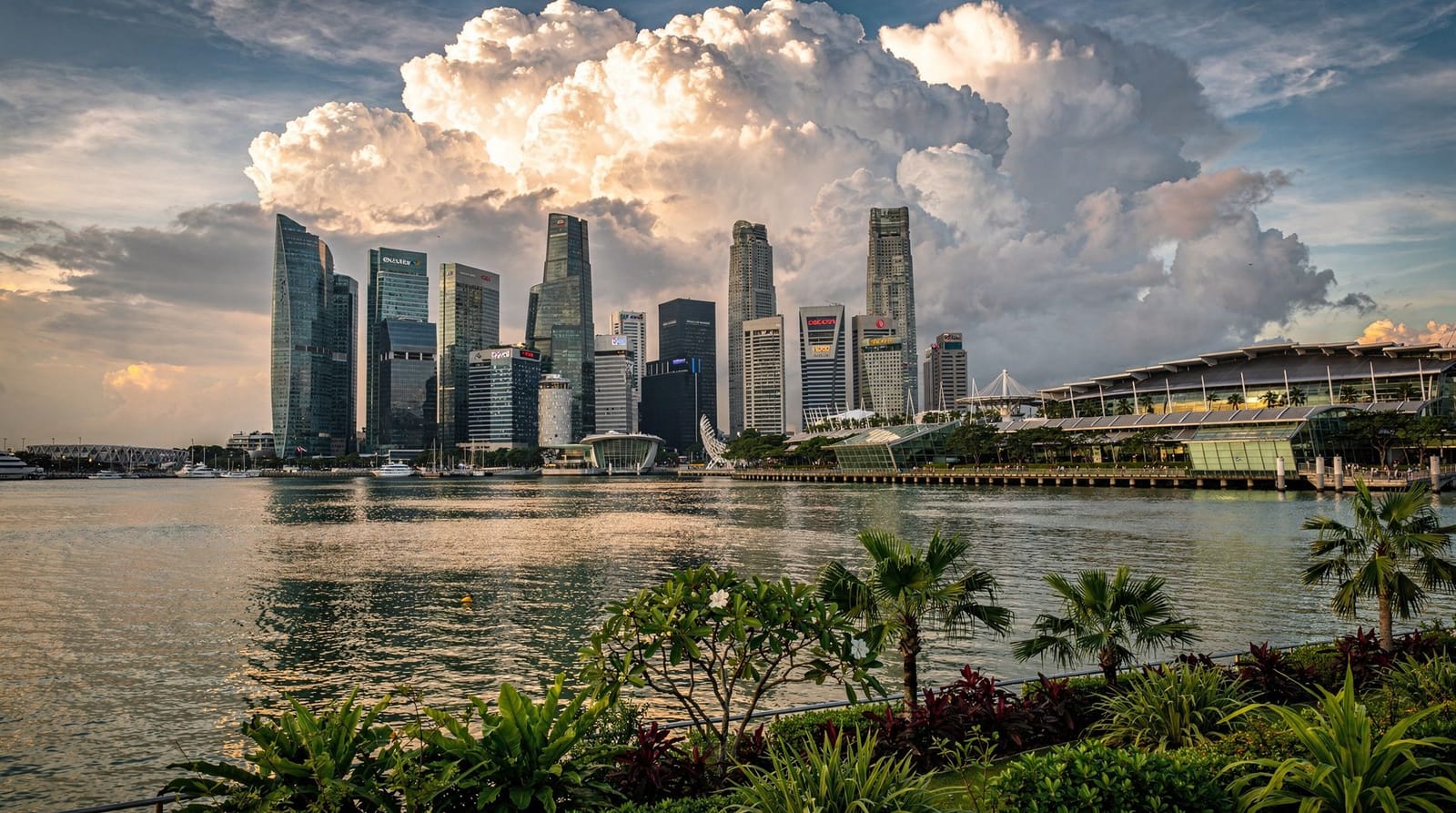
Yes — Little India MRT to Marina Bay Sands is approximately 10–12 minutes by MRT (change at Dhoby Ghaut or City Hall). Seeing the Deepavali light-up first (7–8 pm) and then moving to Marina Bay for the Spectra light show (8 pm or 9 pm) or a waterfront drink makes a practical and genuinely memorable Singapore evening. See Spectra and Garden Rhapsody: Singapore’s free light shows explained for Marina Bay show timings.
Top experiences
Bookable activities with verified prices and instant confirmation on GetYourGuide.