Singapore weather month by month: rain, heat, and what to expect
Singapore: Gardens by the Bay bundle entry ticket
What is the weather like in Singapore each month?
Singapore is hot (30–32°C) and humid year-round with no real seasons. The driest, most comfortable period runs February to April and June to September. November is the wettest month (~320 mm). August to October is haze season. June is the hottest month. December and January are wet but festive. There is no bad month to visit — just wetter or smokier ones.
| Driest month | February (~129 mm) |
| Wettest month | November (~320 mm) |
| Hottest month | June (up to 33–34°C) |
| Haze risk | August–October |
| Temperature range | 25–34°C year-round |
| Best all-round month | February |
Understanding Singapore’s climate
Singapore is 1.3 degrees north of the Equator. This means no spring, no autumn, no winter — only tropical heat, high humidity, and rain patterns shaped by two annual monsoon systems. Every month is warm. Every month has some rain. The differences between months are real but more nuanced than European seasonal variation.
The two monsoon systems:
Northeast Monsoon (November to March): Moisture-laden winds from the South China Sea bring Singapore’s heaviest rainfall. November is the wettest single month. December and January are also significantly wet. The rain tends to come as prolonged, heavy downpours.
Southwest Monsoon (June to September): Drier conditions arrive from the Indian Ocean. This period is Singapore’s closest equivalent to a dry season — relative to the rest of the year, not by any global standard.
Inter-monsoon (April–May and October): Short transitional periods characterised by afternoon convective thunderstorms — often sudden, intense, and short-lived.
If you are still choosing dates, the best time to visit Singapore guide gives the short answer, and this page gives the detail behind it. For the wider planning picture, including how long to stay, read how many days in Singapore and the plan a trip to Singapore overview alongside the month entries below.
January
Average temperature: 26–30°C
Average rainfall: ~170–200 mm
Rainy days: ~14–16
Monsoon: Northeast (wet period)
January begins the year still under Northeast Monsoon influence. The first two weeks tend to be the wetter half. Heavy downpours, especially in the afternoons and evenings, are common. By the second half of January, conditions start improving and rainfall eases.
What to expect: A quieter, more affordable month to visit. Post-Christmas and New Year crowds thin out. Hotels are cheaper than the festive peak. Chinese New Year preparations begin appearing in Chinatown from mid-January onward (for years when CNY falls in February), adding festive colour. Thaipusam (Tamil Hindu festival) usually falls in late January or early February.
Rainy-day fallbacks: When a downpour sets in, the free museums in Singapore and the rainy day with kids ideas keep a wet afternoon useful without spending much. A ready-made plan for the same situation is the Singapore rainy day itinerary.
Verdict: Not the best weather month but good value. Fine if you are comfortable with rain and want quieter, more affordable conditions.
February
Average temperature: 26–31°C
Average rainfall: ~129 mm
Rainy days: ~11–12
Monsoon: Northeast (fading) → dry
February is Singapore’s driest month and the single most comfortable for outdoor activities. Mornings are often clear, temperatures feel slightly less oppressive than the peak summer months, and rainfall is well below the annual average.
2026 highlight: Chinese New Year falls on 17–18 February 2026 (Year of the Horse). The River Hongbao festival at Marina Bay, Chinatown light-up, and Chingay Parade make this the most festive month in Singapore’s calendar. See Chinese New Year in Singapore for the full guide.
What to expect: The combination of best weather and best festival makes February the optimal month to visit Singapore if timing allows. Book accommodation 2–3 months ahead — CNY weekend sees prices spike and rooms sell out.
Clear mornings also suit a first look at the city. If this is your first visit, pair the month with the Singapore first-timer itinerary and the must-see list for first-time visitors, and keep the busiest outdoor stops for the clearest hours of the day.
Verdict: Best overall month. Book early.
March
Average temperature: 26–32°C
Average rainfall: ~150–180 mm
Rainy days: ~12–14
Monsoon: Transitional
March is a pleasant shoulder month. The Northeast Monsoon has fully passed, the Southwest Monsoon has not yet established, and Singapore enjoys relatively dry and comfortable conditions. Occasional afternoon thunderstorms appear but mornings are reliable.
What to expect: Good conditions for outdoor sightseeing — Southern Ridges and Henderson Waves, Singapore Botanic Gardens: the honest visitor guide for 2026, MacRitchie Treetop Walk. Hari Raya Puasa (end of Ramadan) may fall in late March 2026, bringing the Geylang Serai bazaar and Malay food festival atmosphere.
Verdict: Excellent month. Slightly more rain than February but good temperatures and no major weather concern.
April
Average temperature: 27–33°C
Average rainfall: ~160–180 mm
Rainy days: ~13–15
Monsoon: Inter-monsoon
April marks the inter-monsoon transition with afternoon convective thunderstorms becoming more frequent. Mornings remain clear and pleasant, but afternoon outdoor plans need flexibility. Heat intensifies as we approach the year’s hottest period.
What to expect: International school Easter holidays bring families to Singapore. Hotel prices rise slightly. The Great Singapore Sale has not yet started. Good for morning sightseeing, museum days, and indoor attractions in the afternoon.
A useful rhythm for this month is a morning walk, then an indoor stop once the sky builds. The museums in Singapore round-up is a good source of afternoon options, and Gardens by the Bay rewards an early start before cloud and heat arrive.
Singapore: Gardens by the Bay bundle entry ticketVerdict: Good but start planning your schedule around morning outdoor time and indoor afternoon fallbacks.
May
Average temperature: 27–33°C
Average rainfall: ~165–185 mm
Rainy days: ~13–15
Monsoon: Inter-monsoon → Southwest
May is hot. Daytime highs reach 33°C or above. Afternoon thunderstorms are frequent — the inter-monsoon pattern means sudden heavy rain that often clears within an hour. Vesak Day (Buddha’s birthday) falls in May, with celebrations at Buddha Tooth Relic Temple in Chinatown and across Buddhist communities.
What to expect: Challenging for extended outdoor activities due to heat. Plan for early morning outdoor sightseeing and afternoon air-conditioned attractions. i Light Singapore (Marina Bay light art festival) may run in May or June.
If the heat is a worry, lean on shade and water: Sentosa beaches work best early or late, and the Singapore with kids guide has pacing ideas for families who need regular cool-down breaks.
Verdict: Manageable if you plan around the heat. Not the ideal month for outdoor-focused trips.
June
Average temperature: 27–34°C
Average rainfall: ~130–160 mm
Rainy days: ~12–14
Monsoon: Southwest (drier)
June is simultaneously the hottest month (peak daytime temperatures 33–34°C) and one of the drier ones. The Southwest Monsoon reduces rainfall significantly. The Great Singapore Sale runs June to August. School holidays drive family travel demand up.
What to expect: Hot outdoor conditions. Good beach time at Sentosa if you can handle the heat. The Great Singapore Sale offers discounts across Orchard Road and major malls. Universal Studios Singapore is excellent in June if you start early and use the park’s indoor rides and air-conditioned zones strategically.
Singapore: Universal Studios Singapore entry ticketShopping fits the heat well, since malls are air-conditioned: the Orchard Road shopping guide and the Great Singapore Sale page explain where to focus. Families can also check the Sentosa with kids guide before choosing a day.
Verdict: Good for shopping and family travel; challenging for extensive outdoor sightseeing due to extreme heat.
July
Average temperature: 27–33°C
Average rainfall: ~155 mm
Rainy days: ~13
Monsoon: Southwest
July is among Singapore’s drier months. Rain is less frequent than the monsoon peaks. Temperatures remain high but slightly less extreme than June. It is a prime family travel month (Northern Hemisphere summer holidays) so popular attractions are busy.
What to expect: Good overall conditions. Singapore Zoo, Night Safari, and outdoor destinations like Pulau Ubin are particularly enjoyable during drier Southwest Monsoon months. Book popular tours ahead.
Verdict: Good month. Pack sun protection and plan outdoor activities for early morning.
August
Average temperature: 27–33°C
Average rainfall: ~155–175 mm
Rainy days: ~13–14
Monsoon: Southwest → haze risk begins
National Day is 9 August. The NDP (National Day Parade) is held at the Padang or The Float@Marina Bay, with fireworks visible from Marina Bay, the Esplanade waterfront, and many rooftop spots around the city. An annual highlight worth planning around.
Haze risk: August marks the start of the haze season, when transboundary smoke from Sumatra and Kalimantan fires can drift into Singapore. In good years haze is minimal; in El Niño years it can be significant. Check the NEA PSI index.
For fireworks and skyline views, the Marina Bay after dark and light shows at Spectra and Rhapsody guides help you choose a vantage point, though a hazy evening can soften any view.
Verdict: Good conditions and excellent for National Day atmosphere; monitor haze daily.
September
Average temperature: 27–32°C
Average rainfall: ~165–190 mm
Rainy days: ~14–15
Monsoon: Southwest ending → inter-monsoon
F1 Night Race: The Singapore Grand Prix typically falls in late September. If you are attending, plan everything around race weekend. If you are not, book accommodation outside the Marina Bay/CBD area or visit a week before or after — hotel rates triple during race weekend.
Haze risk peaks. September is historically the worst month for haze, particularly in El Niño years.
Mid-Autumn Festival (Mooncake Festival) falls in September or October — lanterns in Chinatown, Gardens by the Bay light displays, and mooncakes everywhere.
Verdict: Weather is manageable but haze and F1 logistics dominate planning. See Singapore F1 night race: honest guide to tickets, logistics, and whether it’s worth it and Singapore haze season: what it is, when it happens, and how to plan around it.
October
Average temperature: 26–32°C
Average rainfall: ~170–190 mm
Rainy days: ~14–16
Monsoon: Inter-monsoon (transitional)
October is the inter-monsoon transition back toward the Northeast Monsoon. Afternoon thunderstorms are frequent. Haze can still affect Singapore into October in bad years. Deepavali falls in October or November — the Little India light-up and festival preparations are spectacular. See Deepavali in Singapore.
The festival side of October pairs naturally with the Little India guide and the Little India destination page, both useful for deciding where to be when the lights go up and the afternoon clouds roll in.
Verdict: Moderate conditions. Good for culture and festivals; be prepared for afternoon rain and haze.
November
Average temperature: 25–31°C
Average rainfall: ~320 mm**
Rainy days: ~18–20
Monsoon: Northeast (wet)
November is Singapore’s wettest month — not by a small margin. Average rainfall of ~320 mm and around 20 rainy days mean you will encounter significant rain. The rain often comes in extended downpours rather than brief showers, which is more disruptive to outdoor plans.
What to expect: Indoor-focused travel strategy is strongly recommended. This is when Singapore’s world-class museums (National Gallery Singapore, ArtScience Museum & teamLab Future World), air-conditioned hawker centres, and shopping centres come into their own. Hotel prices are lower than most months — a genuine budget advantage.
Food is a good wet-weather anchor too. The best hawker centres and what to eat in Singapore guides give you reasons to plan meals as the main event of the day, with the Singapore monsoon travel tips post adding a traveller’s view.
Verdict: The least pleasant weather month. Good for budget travellers who do not mind rain and want indoor-focused Singapore.
December
Average temperature: 25–30°C
Average rainfall: ~230–260 mm
Rainy days: ~15–17
Monsoon: Northeast (wet)
December is wet but festive. Orchard Road Christmas light-up (Asia’s most famous), Marina Bay’s year-end light displays, and the general celebratory atmosphere make December appealing despite the rain. Singapore’s winters are the rest of the world’s tropical paradise — 25°C nights feel pleasant rather than cold.
What to expect: The most expensive month for accommodation after Chinese New Year. Book 3–4 months ahead for Christmas and New Year’s Eve. Rain is frequent but showers often clear, allowing outdoor evening activities. ZoukOut EDM festival at Sentosa typically falls in December.
Evenings are when December shines. Once a shower passes, Orchard Road and the Singapore at night guide cover the walks and light displays worth timing around the weather.
Verdict: Great atmosphere, poor weather, high prices. Worth it if you embrace the festive season.
Quick comparison at a glance
| Category | When |
|---|---|
| Best for weather | February, March, June, July |
| Best value | January, October, November |
| Most festive | February (CNY), August (National Day), December (Christmas) |
| Avoid if rain-averse | November, December |
| Avoid if haze-sensitive | August–October |
| Family school holidays | June–July, December |
Packing and daily rhythm around the weather
Dress for two climates in one day. Outdoor Singapore is hot and humid; indoor Singapore (malls, MRT, restaurants, hotel lobbies) is aggressively air-conditioned, often colder than most visitors expect. A light long-sleeve layer or cardigan solves both extremes without adding real bulk to a suitcase.
Structure the day around the heat, not the calendar. Regardless of month, the 11am–3pm window is the most physically demanding time to be outdoors in direct sun. Outdoor-heavy plans — Southern Ridges, Singapore Zoo, Sentosa beaches — work best started before 10am, with an indoor or shaded midday break.
Watch two numbers, not one. Rainfall totals matter less day-to-day than the PSI (haze) reading in August–October and the hourly rain radar the rest of the year. Both are free to check (NEA’s MyENV app) and take 10 seconds before heading out.
Rainy-season itinerary shift. During the wetter Northeast Monsoon months (November–January), lean the day plan toward museums, Jewel Changi, ArtScience Museum, and hawker centres, and treat outdoor time (Gardens by the Bay, Southern Ridges) as a flexible add-on when a dry window opens. See Singapore in the rain for a full rainy-day plan.
How Singapore’s weather compares to nearby destinations
Travellers weighing Singapore against a regional add-on trip often assume similar weather patterns nearby — this is not quite right. Singapore’s equatorial position means it lacks the more defined wet/dry split found further from the equator in mainland Southeast Asia (Bangkok, for instance, has a more pronounced dry season from November to February). If you are combining Singapore with Bangkok or another regional stop, check that destination’s own seasonal calendar separately rather than assuming it tracks Singapore’s rain pattern — a good Singapore month is not automatically a good month for a add-on city.
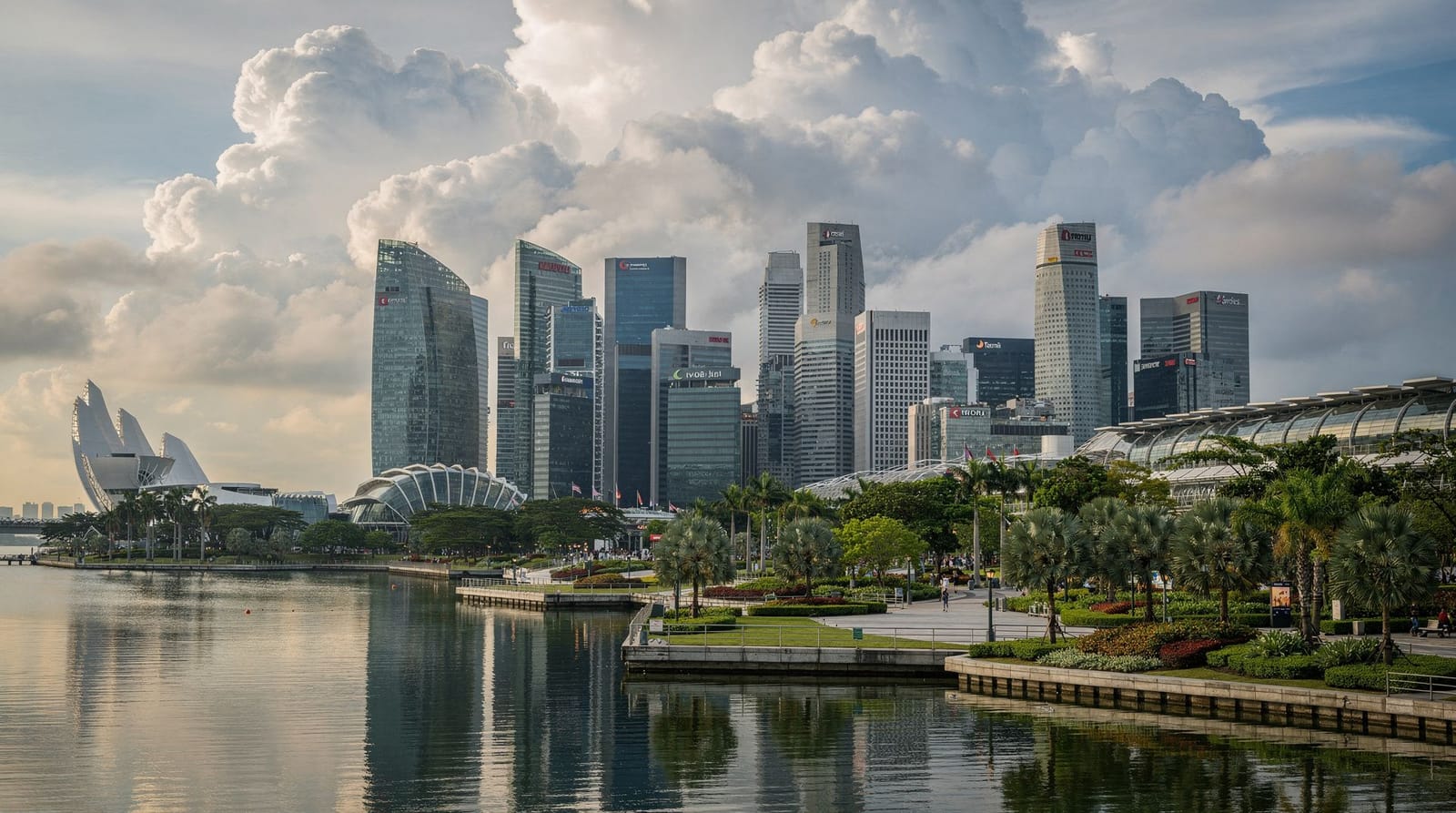
Within Singapore itself, the reclaimed and heavily built-up CBD/Marina Bay area can feel marginally hotter in the afternoon than the greener Botanic Gardens or Southern Ridges corridor, due to the urban heat island effect — worth factoring in if you are choosing between an afternoon at Marina Bay or a shaded walk at Botanic Gardens on a particularly hot day.
Frequently asked questions about Singapore weather month by month
Is Singapore weather the same throughout the country?
Yes — Singapore is a city-state of roughly 730 km² (smaller than London), so weather is effectively uniform across the island. Slight microclimatic differences exist between the more forested central catchment area (slightly cooler) and the urban CBD (urban heat island effect), but these are minor.
Does rain ruin a Singapore trip?
Rarely, if you plan well. Singapore rain is intense but usually brief (30–60 minutes). Covered walkways, underground MRT connections between attractions, air-conditioned malls, and excellent indoor attractions mean you can move through the city without being constantly exposed. The Singapore in the rain guide has specific strategies.
Is the humidity worse at certain times of year?
Humidity is high year-round (70–90%). The monsoon months (November–March) tend to feel slightly more oppressive because of the persistent overcast skies and rain rather than any significant change in humidity percentage. February, being dry and breezy, often feels the most comfortable despite similar humidity readings.
Are outdoor attractions open during heavy rain?
Most outdoor attractions stay technically open during rain. Singapore Zoo and Night Safari continue operating in all but the most extreme conditions. Gardens by the Bay outdoor gardens are accessible in light rain. USS and Adventure Cove have rain policies for specific rides. Always check the weather forecast and have a backup indoor plan.
What is the UV index like in Singapore?
Extremely high year-round — UV index often reaches 10–12 (Extreme category) on clear days. Sunscreen SPF 50+, UV-protective clothing, and hats are important regardless of which month you visit. The equatorial sun burns faster than most visitors expect.
Does Singapore get cold?
No. The coolest Singapore typically gets is around 23–24°C on a rainy night during the Northeast Monsoon. Inside air-conditioned buildings (malls, hotels, restaurants), temperatures are often aggressively cold (20–22°C). Bringing a light layer or cardigan for indoor air-conditioning is genuinely useful.
Top experiences
Bookable activities with verified prices and instant confirmation on GetYourGuide.