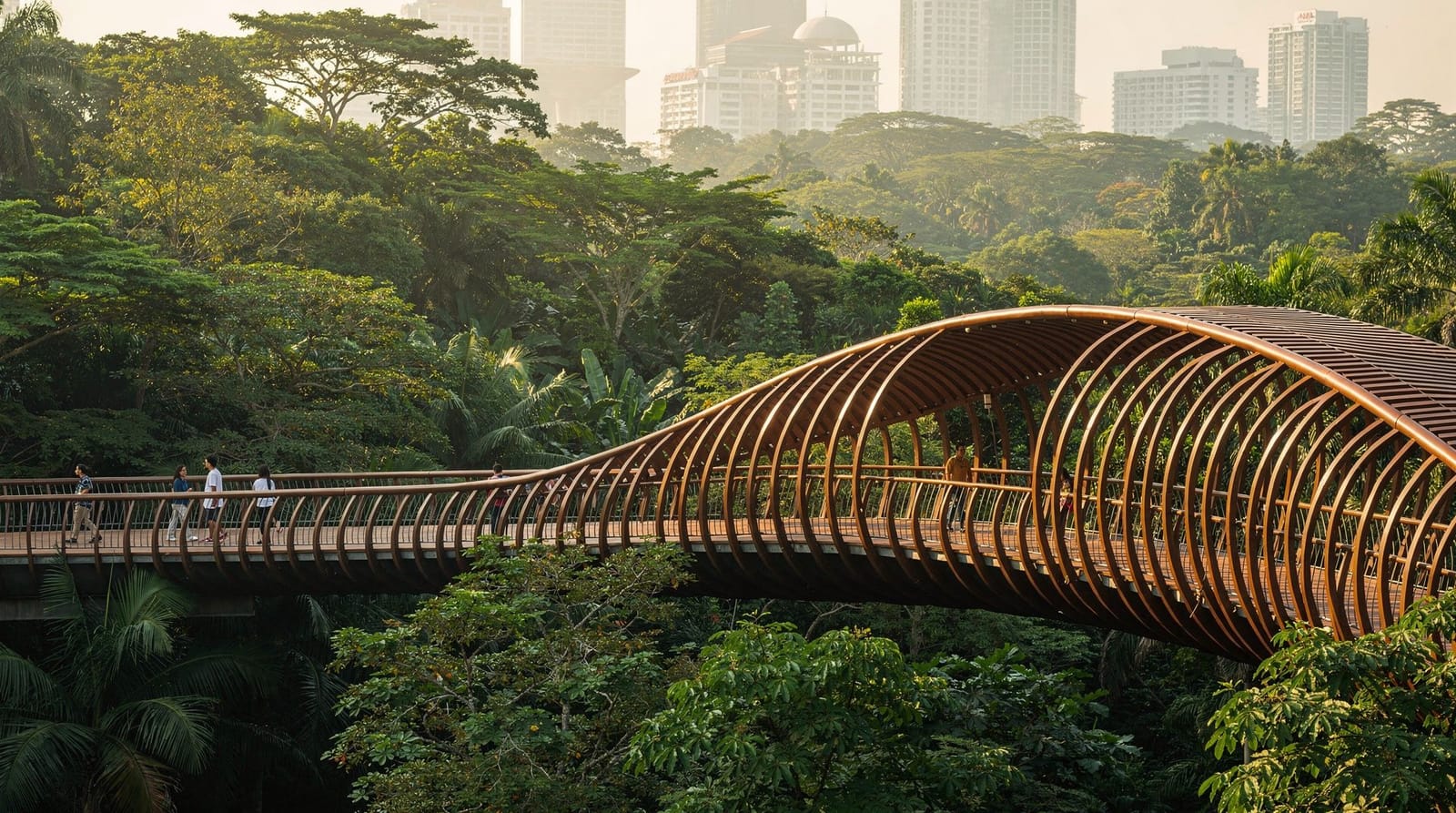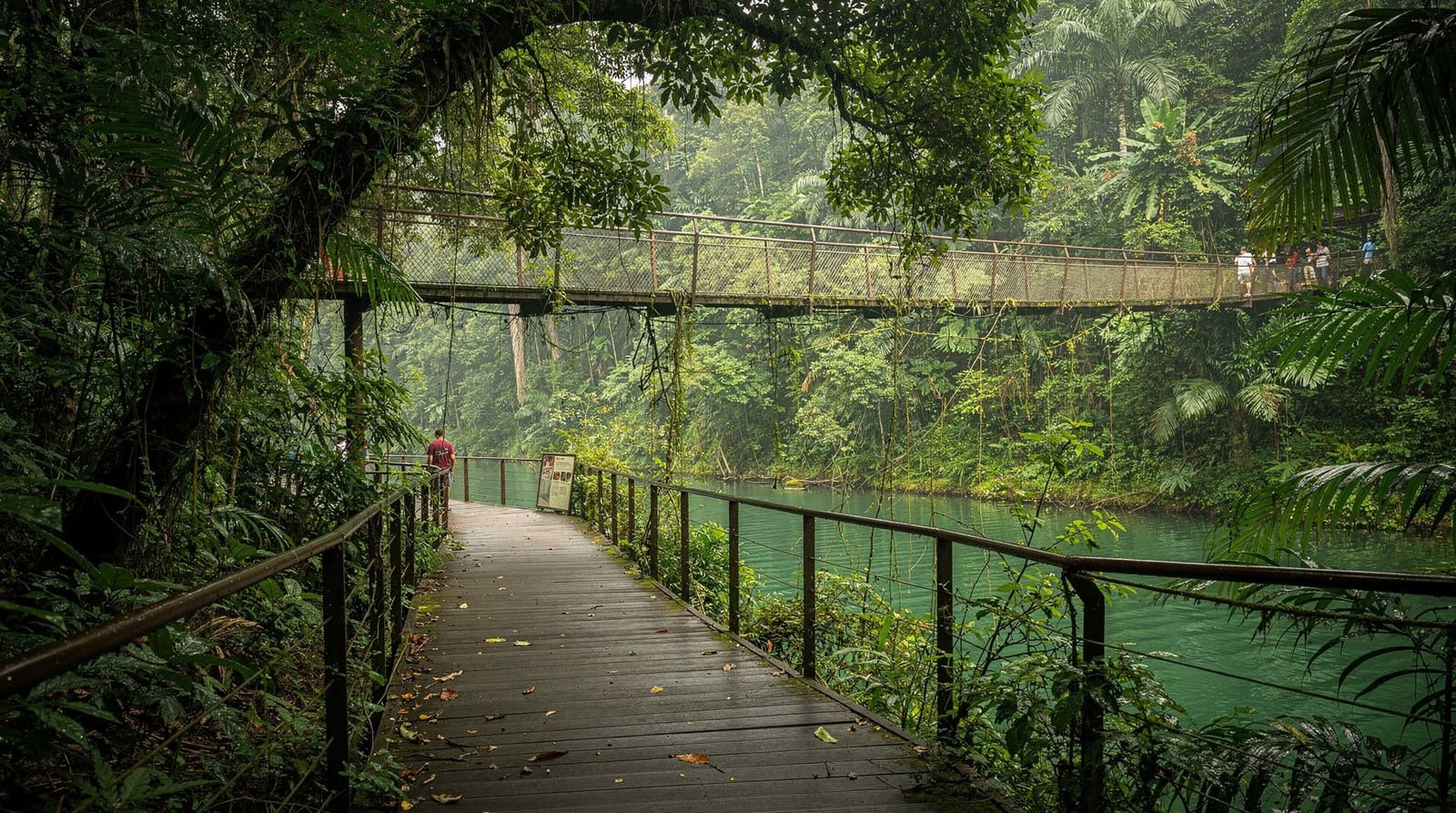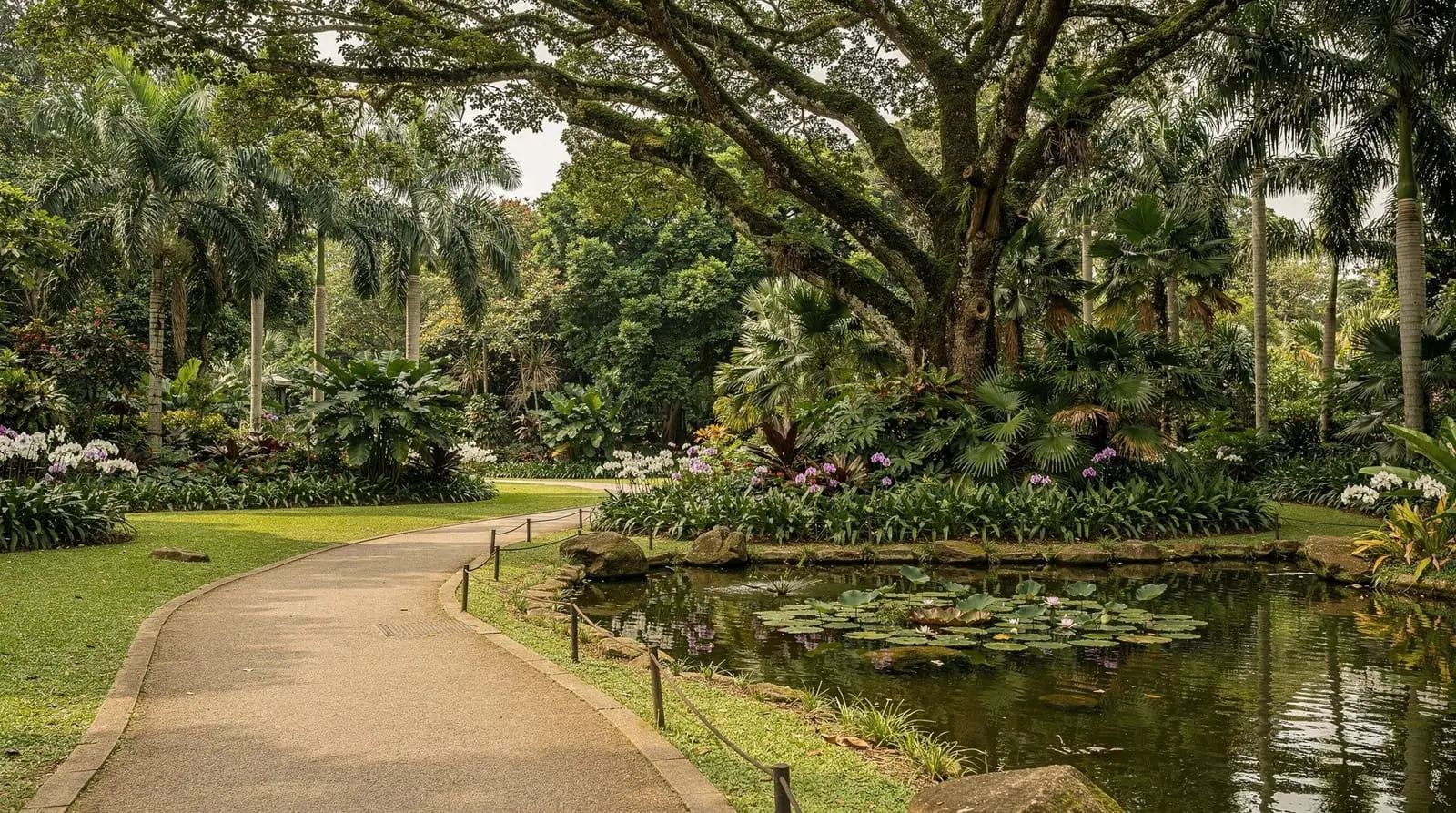
Singapore Botanic Gardens
Singapore's Botanic Gardens is a UNESCO World Heritage Site — free entry, 160 years of history.
Singapore: Botanic Gardens & Tiong Bahru walking tour with breakfast
Duration: 3.5h
Quick facts
- Character
- 74-hectare tropical garden, UNESCO World Heritage Site, free entry
- MRT access
- Botanic Gardens (Circle Line and Downtown Line) — direct entry
- Entry
- Free (most areas); National Orchid Garden SGD 15 adults, SGD 5 children
- Opening hours
- 05h–00h daily (24-hour access to most areas)
- Founded
- 1859 — 160+ years of continuous operation
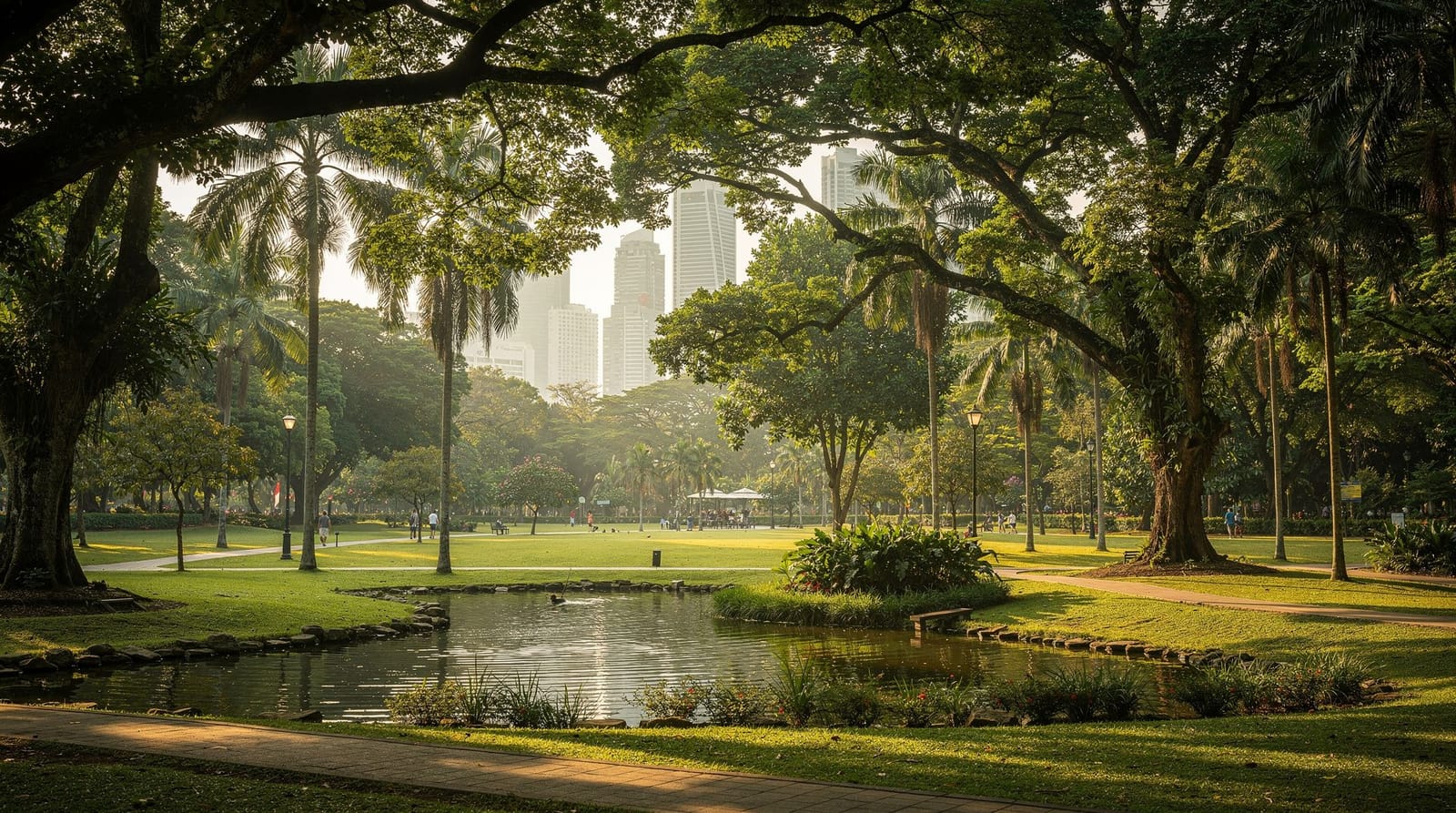
The Singapore Botanic Gardens is one of the very few things in Singapore that is both free to enter and genuinely excellent. Founded in 1859 and designated a UNESCO World Heritage Site in 2015 — one of only a handful of tropical botanical gardens to hold this status globally — it covers 74 hectares of forested terrain in central Singapore and operates as a living collection of tropical plant species, an active research institution, and a public green space used daily by residents.
The honest version: most tourists spend 90 minutes here and see about a third of what the gardens offer. The National Orchid Garden alone merits a proper hour; the heritage trees in the Tanglin Core have no equivalent in the city; the free Friday evening concerts at the Symphony Stage are one of Singapore’s genuinely pleasant experiences. Come earlier than you think you need to, bring water and sun protection, and don’t skip the Orchid Garden.
| Where | Central Singapore; Botanic Gardens MRT (Circle/Downtown Line) direct entrance |
| Cost | Free (main gardens); National Orchid Garden around SGD 15 adults |
| Time needed | Half a day for a proper visit; 90 min minimum for the Orchid Garden alone |
| Getting there | MRT to Botanic Gardens station, or 10–20 min from Orchard Road |
| Best time | 07h–10h for coolest conditions and best light |
The National Orchid Garden
The National Orchid Garden is the paid section of the Botanic Gardens — SGD 15 adults, SGD 5 children — and is worth every cent. It contains Singapore’s collection of over 1,000 orchid species and more than 2,000 hybrids, including the Vanda Miss Joaquim (the national flower) and a substantial display of Dendrobium, Cattleya, and Spathoglottis species in flower simultaneously throughout the year.
The VIP Orchid Garden displays hybrid orchids named after visiting heads of state — there is a Princess Diana orchid (Dendrobium Elizabeth), a Nelson Mandela orchid, and several named for ASEAN leaders. The naming tradition began in 1956 and continues; the collection is now both a horticultural and diplomatic record.
The garden is densest with blooms in the cool season (December–February) and after rain. Morning is the best time for photography — strong directional light and fewer visitors before 10h.
The botanic gardens guide covers the Orchid Garden layout and which sections have the most consistent flowering.
The heritage trees
The Botanic Gardens has some of the oldest and largest trees in Singapore — specimens of the broad-canopied Rain Tree (Samanea saman) and the Tembusu (Fagraea fragrans, featured on the SGD 5 note) that were planted in the 19th century. The largest Rain Trees near the Shaw Foundation Stage have canopy spreads of over 40 metres; standing under them during the heat of the day provides the most effective natural air-conditioning Singapore offers.
The Tanglin Core, the oldest section of the gardens (accessed from the Tanglin Gate near Holland Road), has the densest concentration of heritage trees. A heritage tree map is available at the visitor centre.
Jacob Ballas Children’s Garden
The Jacob Ballas Children’s Garden (free entry; open from 08h, closed Mondays) is a 1-hectare children’s space within the Botanic Gardens designed for children under 12. It has water play areas, a tree house, rope bridges, and a small farm section. It is well-executed and notably uncrowded compared to similar facilities. Bring a change of clothes for children who will inevitably end up in the water features.
For a full family-oriented guide to the Botanic Gardens and similar outdoor attractions, the Singapore with kids guide and rainy day with kids guide have complementary options.
Free evening concerts
The Shaw Foundation Symphony Stage hosts free outdoor concerts most Friday and Saturday evenings — the programme ranges from Singapore Symphony Orchestra performances to jazz, chamber music, and occasional pop/rock acts. Concerts typically start around 19h30 and run 90 minutes. Audiences bring picnic mats, cold drinks, and takeaway food; the atmosphere is relaxed and genuinely Singaporean.
The schedule is published on the Botanic Gardens website. No ticketing is required — arrive early for the best grass seating near the stage.
This is one of the best free activities in Singapore. The free things to do in Singapore guide includes it alongside other genuinely no-cost experiences.
The walking tour — Botanic Gardens and Tiong Bahru
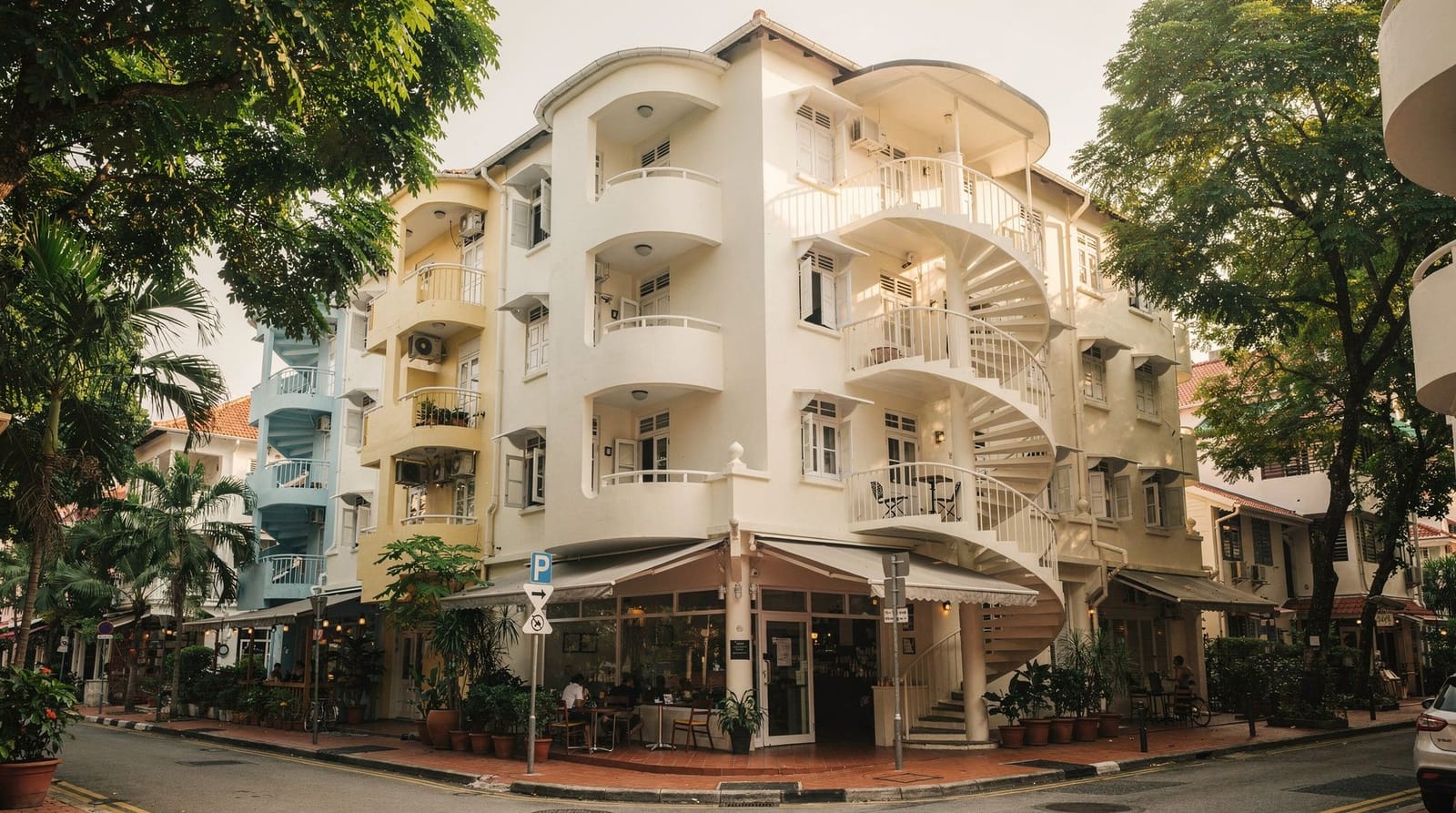
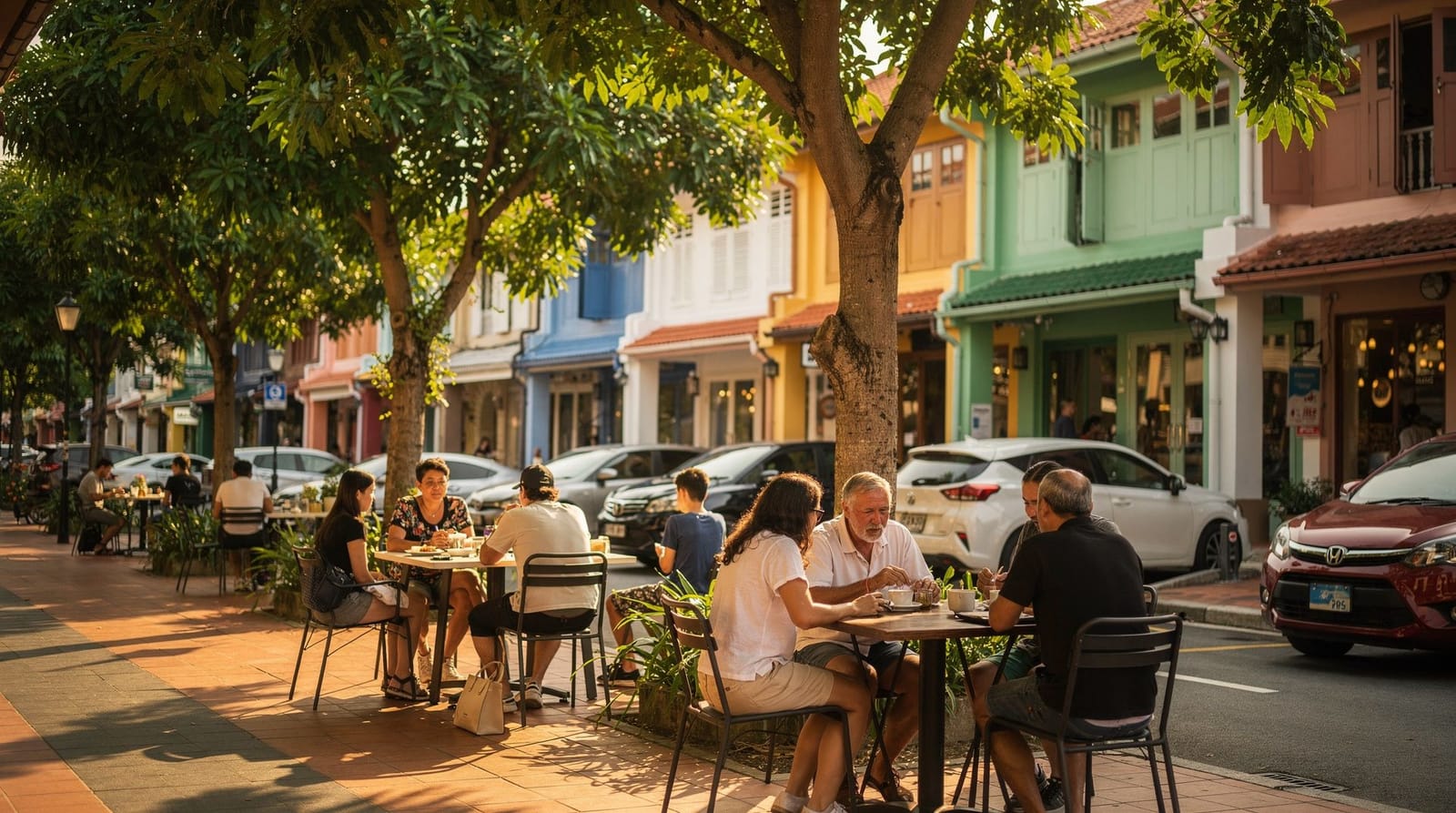
The guided walking tour that combines a Botanic Gardens visit with a Tiong Bahru breakfast is one of the more thoughtfully structured morning experiences available. Starting from the Botanic Gardens, it walks through the heritage section and then heads to Tiong Bahru for a market breakfast with tastings. The total time is about 3.5 hours; the breakfast component is included in the tour price.
Botanic Gardens and Tiong Bahru walking tour with breakfastFor a longer walk that connects Chinatown with the Botanic Gardens and includes the garden history in more depth:
Guided walking tour of Chinatown and Botanic GardenGetting there
Botanic Gardens MRT on the Circle Line and Downtown Line is the primary access point, with a direct entrance to the Bukit Timah Core section of the gardens. The Tanglin Gate (near Holland Road) is the access point for the oldest section.
From Orchard Road: approximately 10 minutes by taxi or Grab; 15–20 minutes on foot via Nassim Road.
From Holland Village: 15 minutes by Grab or a pleasant 25-minute walk through the adjacent residential streets.
The getting around Singapore guide covers MRT routing in more detail.
Connecting from the Botanic Gardens
The Botanic Gardens sits naturally between several west-side destinations. Holland Village is 15 minutes on foot or a short bus ride; Dempsey Hill is adjacent. For nature-focused visitors, the southern ridges guide covers the park connector that links the Botanic Gardens corridor to the west.
For the Tiong Bahru pairing, the guided tour above is the most efficient structure; independently, MRT from Botanic Gardens to Tiong Bahru requires changing at one station.
Ginger Garden and Eco Lake — beyond the headline attractions
Most visitors head straight for the Orchid Garden and miss two sections that reward a slower pace. The Ginger Garden, immediately adjacent to the Orchid Garden entrance, is a smaller, free display of over 250 ginger and ginger-related species (including turmeric and cardamom relatives) laid out around a waterfall feature — a genuinely pleasant 20-minute stop that most tour itineraries skip entirely because it isn’t ticketed. The Eco Lake, the gardens’ largest water body, has a paved loop popular with joggers and a quieter far shore where swan sightings and heron activity are common in early morning.
For a longer, connected outdoor day, the southern ridges guide and the MacRitchie treetop walk guide cover the two other major green corridors on Singapore’s west side — between the three, a nature-focused visitor could fill two full days without repeating scenery.
How to pace a visit
The gardens reward a loose plan rather than a strict one. A sensible shape for the day: arrive early, walk the shaded heritage areas while the air is still cool, take the Orchid Garden once you have your bearings, then settle somewhere with a view of water or lawn for a long break. Resist the urge to tick off every section. The gardens are big enough that trying to see everything turns a pleasant outing into a route march, and the best moments tend to come when you stop walking: a bench under a rain tree, a quiet stretch beside the lake, a bird you did not expect.
Wear shoes you can walk in for a few hours, carry water, and keep a light rain layer in your bag. Showers in Singapore arrive fast and leave fast, and the canopy in the older sections gives decent cover while you wait. If you want a sense of how the weather shapes a trip, the Singapore weather month by month guide and the Singapore in the rain guide are worth a look before you fix your day.
Photography and quiet corners
Photographers do best with the first light of the morning, when the low sun picks out the texture of old trunks and the lawns are still empty. The Orchid Garden suits close-up work, while the heritage areas suit wide frames with long tree shadows. If you are collecting images across the city, the best photo spots guide and the Instagram spots guide put the gardens in context alongside more famous backdrops.
For quiet, head away from the main entrance routes. Most visitors follow the same few paths, so a short detour onto a secondary trail is often enough to find a stretch with nobody else on it. That is the real luxury of the place: a large green space with room to breathe, a short ride from the busiest shopping streets.
Making it part of a wider Singapore trip
The gardens fit easily into a first visit. On a short stay, they work well as a calm counterweight to the denser, louder parts of the city, and the Singapore for first-timers guide shows where a morning like this sits among the headline sights. For a day-by-day view, the 2-day Singapore itinerary and the 3-day Singapore itinerary both leave room for a green morning, while the first-timer itinerary gives the broader picture.
Travelling as a couple or with a family changes the pace. The Singapore for couples itinerary suits a slow garden stroll followed by a long lunch, and the Singapore with kids itinerary pairs well with the children’s garden described above. If you are watching your spending, the gardens are an obvious anchor for the Singapore on a budget itinerary, since so much of the site costs nothing.
When the weather turns, the Singapore rainy day itinerary offers indoor alternatives, and the Orchard Road destination page is close at hand for shelter, shops and a meal once you leave the gardens. For a different kind of green space on the same side of the island, Bukit Timah and the Bukit Timah hike guide offer a wilder, more rugged contrast to the manicured lawns here.
Frequently asked questions about the Botanic Gardens
Is the Singapore Botanic Gardens free?
Most of it is — the main gardens, heritage trees, Jacob Ballas Children’s Garden, and access to all outdoor paths are free and open daily from 05h. The National Orchid Garden is the only paid section (SGD 15 adults). The free-access areas alone are worth several hours.
When is the best time to visit?
Early morning — the gardens open at 05h and the combination of lower temperature, bird activity, and fewer visitors makes 07h–10h the optimal window. Late afternoon (after 16h) when the direct sun is less intense is the second choice. Avoid 11h–15h if you are sensitive to heat.
Is the National Orchid Garden worth the entry fee?
Yes. It is one of the most concentrated and well-maintained orchid collections in the world, in a garden designed for both scientific display and aesthetic enjoyment. The SGD 15 entry is among the best value paid attractions in Singapore.
Are there food options inside the Botanic Gardens?
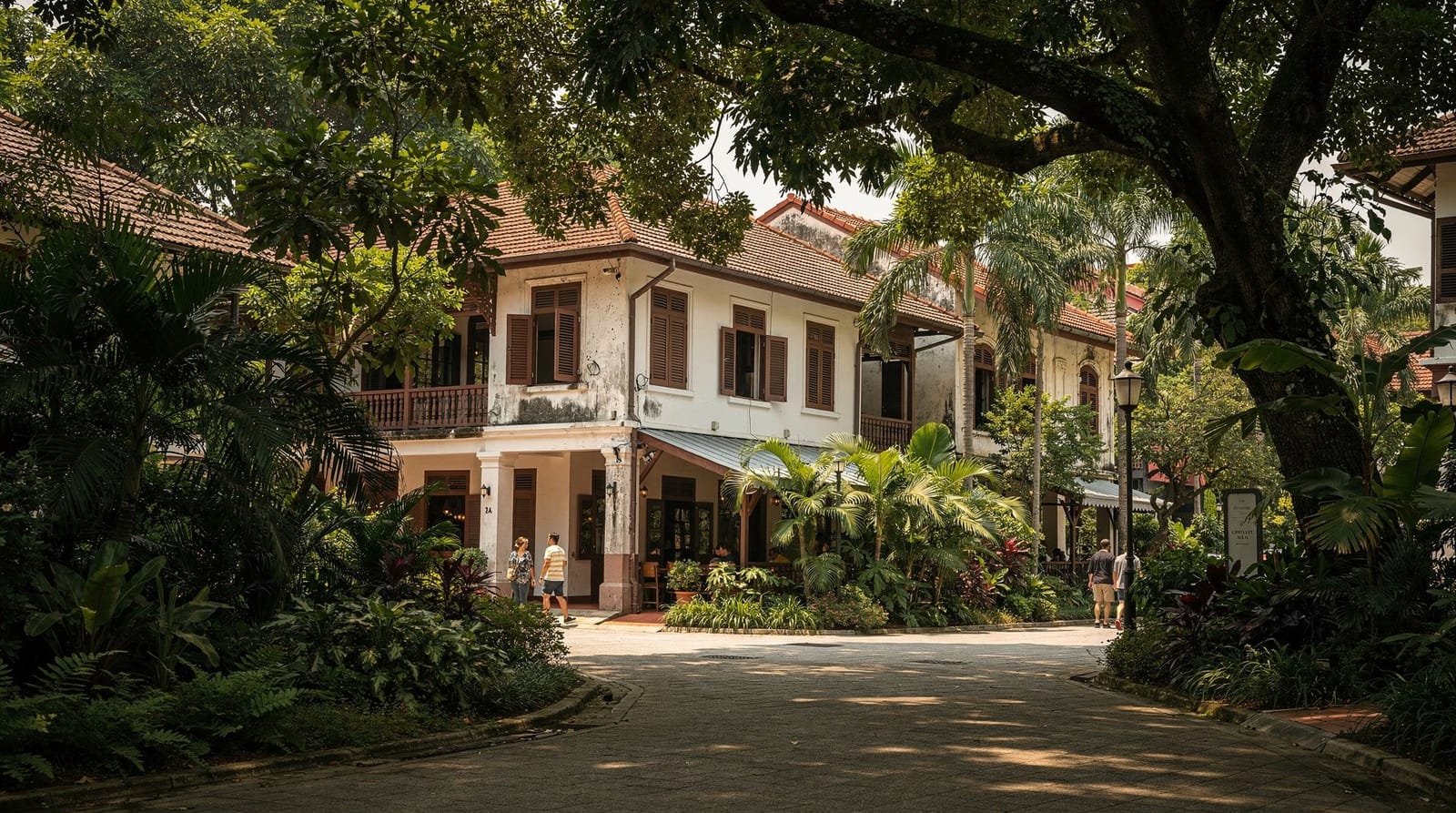
Yes — several. The Corner House (a heritage black-and-white colonial bungalow converted to a restaurant) is the high-end option inside the gardens. Casa Verde near the Tanglin Gate is a mid-range café. For cheaper food, Tiong Bahru Market (accessible by MRT) is the logical supplement before or after a gardens visit.
Can I jog in the Botanic Gardens?
Yes — the gardens are a popular jogging venue for residents. The Eco Lake loop and the main heritage tree trails are the most used running routes. The 5h–07h window on weekday mornings has the fewest pedestrian obstacles; weekend mornings are busier.
How does the Botanic Gardens compare to Gardens by the Bay?
They are complementary rather than competing. Gardens by the Bay (near Marina Bay Sands) has the Supertree Grove, Cloud Forest, and Flower Dome — engineered spectacles in a controlled environment. The Botanic Gardens is the opposite: a 160-year-old naturalistic collection in a heritage setting, mostly outdoors and mostly free. Both are worth visiting on a Singapore trip of 3 days or more.
Do I need to book tickets for the National Orchid Garden in advance?
No booking is required for most visitors — tickets are sold at the entrance and queues are rarely long outside major public holidays. Advance timed-entry booking is occasionally introduced for peak periods (Chinese New Year, school holidays); check the official Botanic Gardens website if visiting during one of those windows.
Top experiences
Bookable activities with verified prices and instant confirmation on GetYourGuide.