Getting around Singapore: the complete transport guide
Singapore: eSIM data plan
What is the best way to get around Singapore?
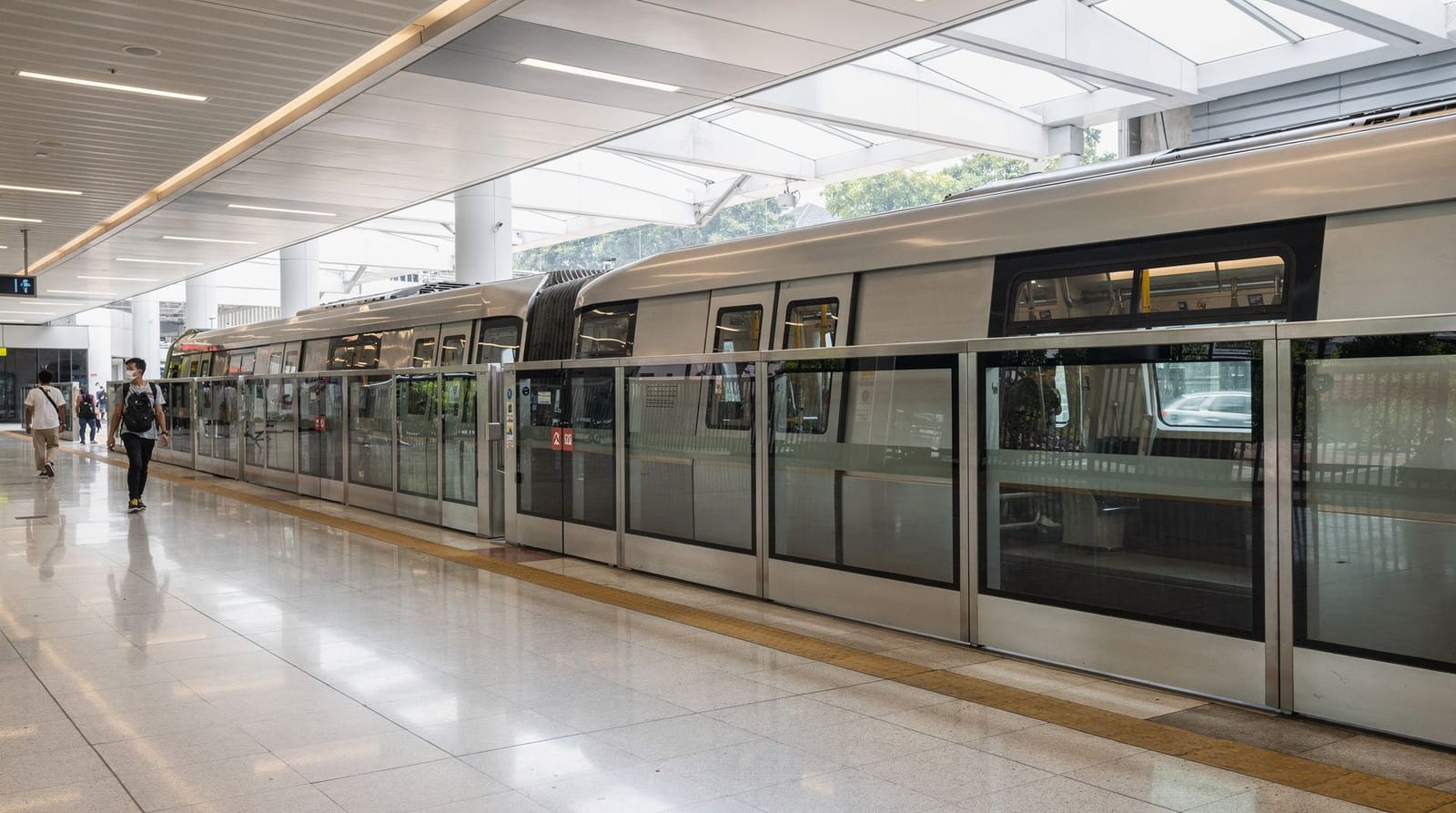
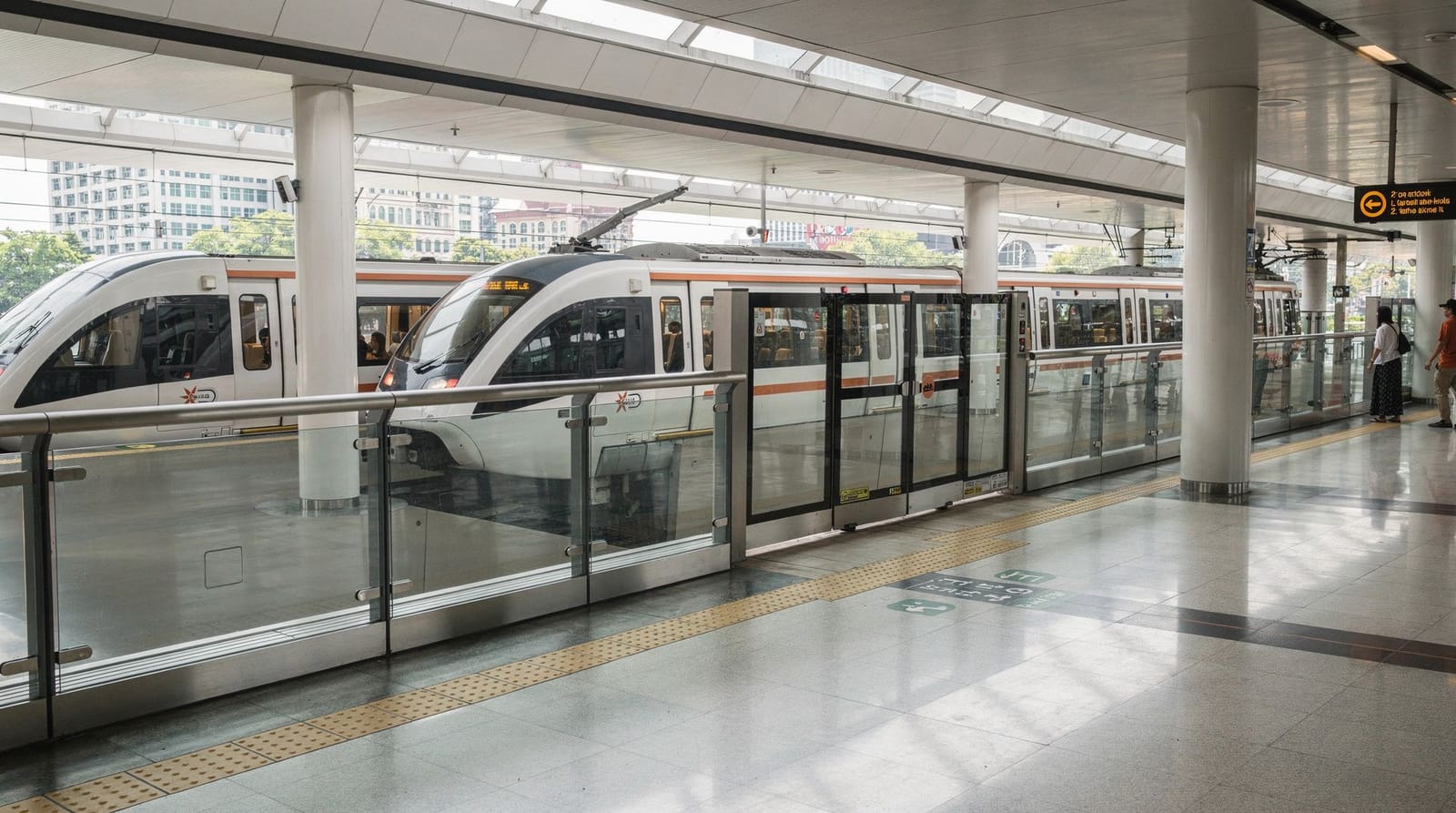
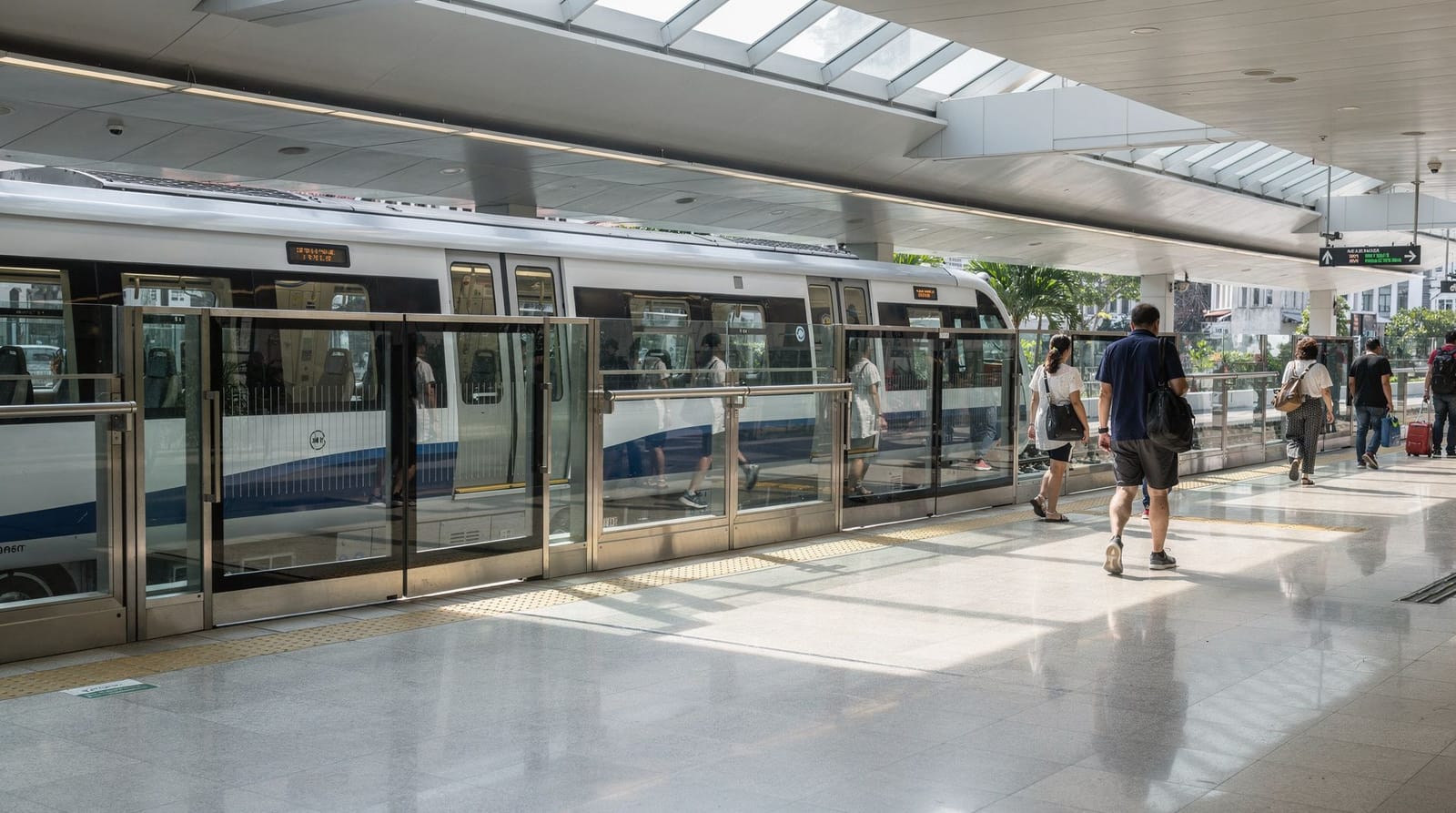
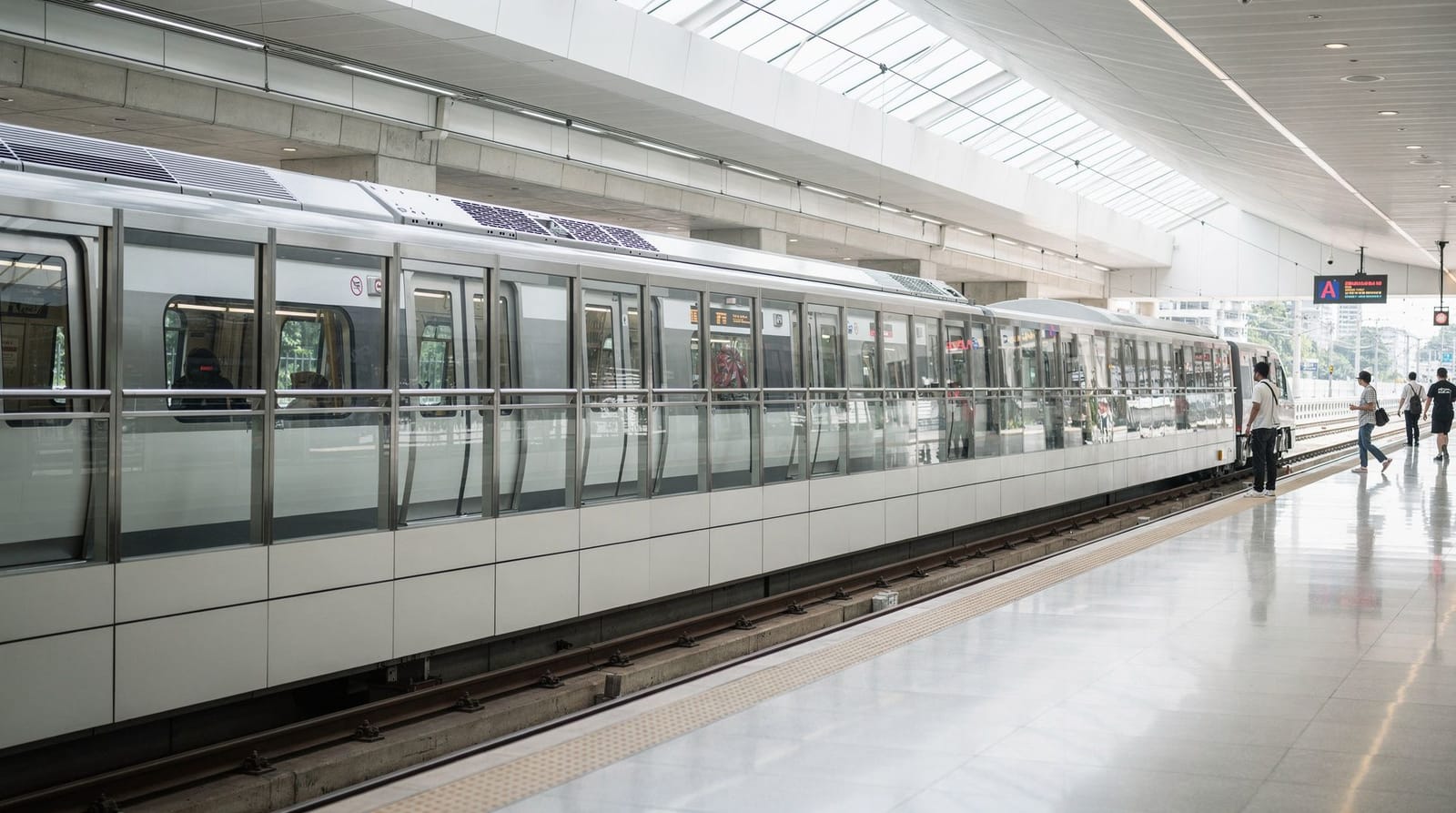
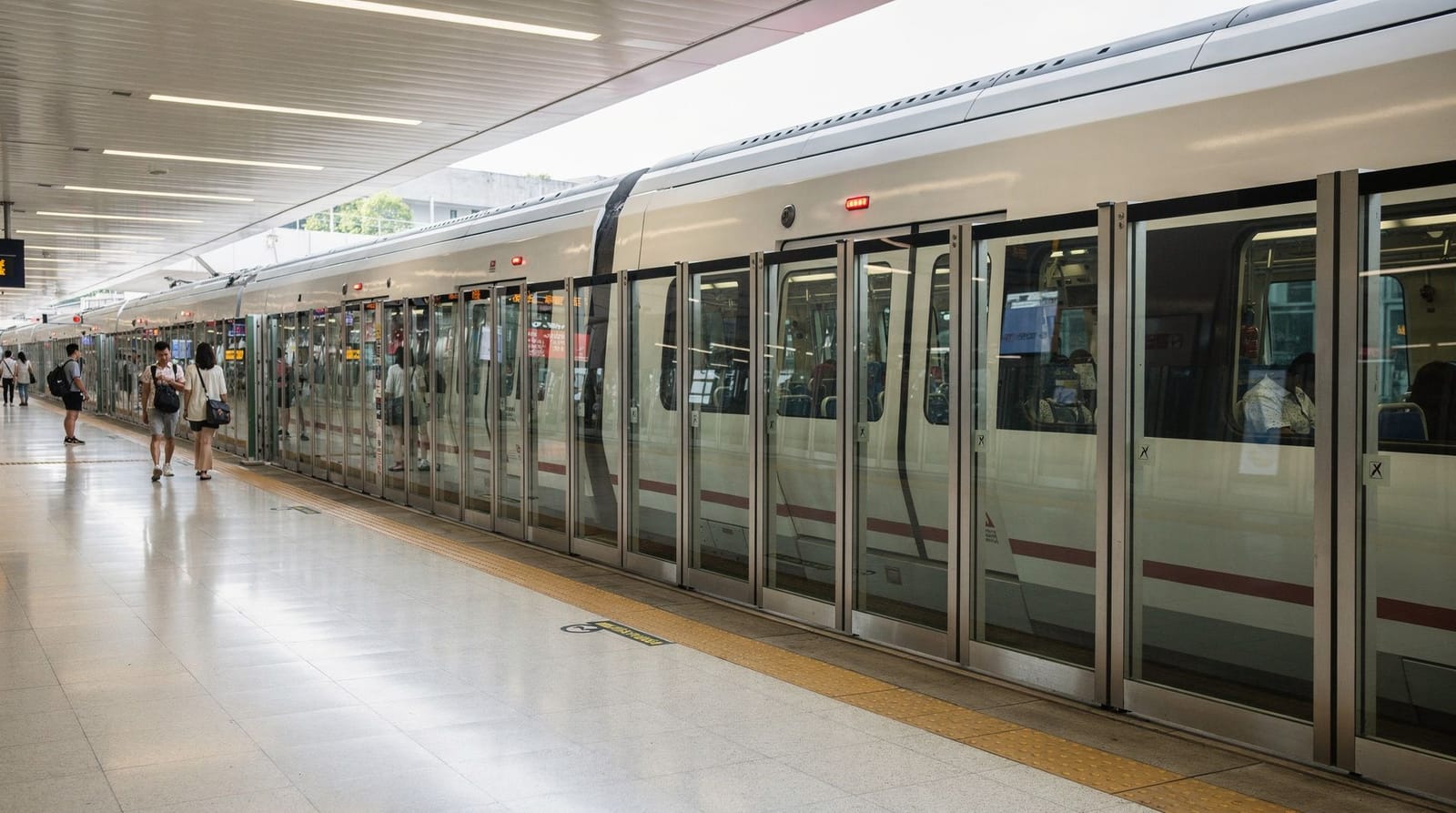
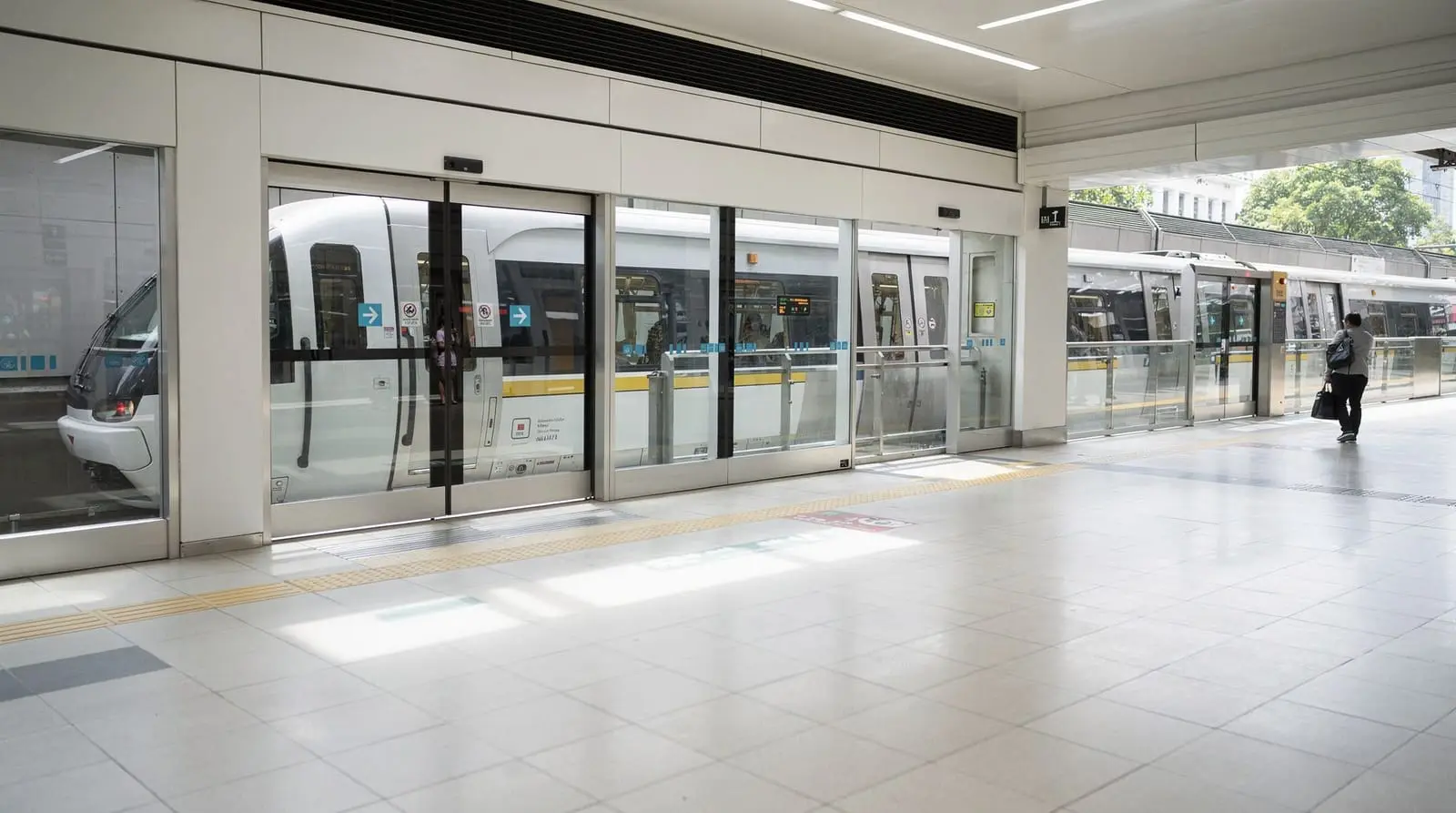
The MRT (Mass Rapid Transit) is the default answer for most journeys — it is fast (rarely more than 40 minutes city-to-city), clean, air-conditioned, and cheap (most rides SGD 1.20–3.00). Buses fill gaps where the MRT does not reach. Grab (ridehail) is useful for door-to-door convenience or late-night travel when bus frequency drops. Walking is underrated — Singapore's network of covered walkways, underground connections, and sheltered overhead bridges make many journeys on foot comfortable despite the heat. Taxis still exist but Grab has largely replaced them in practice.
Singapore transport: the overview
Singapore has one of the world’s best urban transport systems — a fact that is consistently verified by independent rankings and the practical experience of millions of visitors. The MRT is reliable, clean, and air-conditioned. Buses are comprehensive and GPS-tracked. Grab is efficient and ubiquitous. Walking infrastructure is exceptional.
For a tourist, this translates to: almost anywhere you want to go in Singapore is straightforward to reach, and you will spend very little time navigating or waiting compared to most major cities.
The main decisions are about payment method (EZ-Link, SimplyGo contactless, or Tourist Pass) and which mode to use when. This guide covers both systematically. For the payment-method decision specifically, see EZ-Link vs SimplyGo; if you plan to ride unlimited all day, check the honest math in the Singapore Tourist Pass guide before buying one.
| Default choice | MRT — fast, cheap, air-conditioned |
| Cost per ride | Around SGD 1.20–3.00 (MRT/bus, distance-based) |
| Payment | EZ-Link card, SimplyGo contactless, or Tourist Pass |
| Late night | Grab (MRT stops around midnight) |
| Airport to city | MRT around SGD 2–3, Grab around SGD 25–45 |
The MRT: your primary tool
The Mass Rapid Transit (MRT) is Singapore’s metro system — six lines connecting most of the city with clean, frequent, air-conditioned trains. Fares are calculated by distance and start at SGD 0.92 (minimum, very short trips) and cap at around SGD 2.50–3.00 for the longest cross-city journeys.
The lines you will use most:
-
North-South Line (red): Runs from Jurong East in the west through the city centre (Orchard, City Hall, Raffles Place, Marina Bay) to the northeast. This is the spine of tourist Singapore.
-
East-West Line (green): Connects Changi Airport in the east through the city (City Hall, Raffles Place, Outram Park) to Jurong Lake District in the west. Essential for airport connections.
-
Circle Line (orange): A circular line linking Dhoby Ghaut, Marina Bay, Harbourfront, and Botanic Gardens — excellent for connecting without going through the city centre.
-
Downtown Line (blue): Serves Bugis, Chinatown, Little India area, and extends to Tampines/Changi in the east and Buona Vista in the west.
-
Thomson-East Coast Line (brown): Newer line serving Woodlands in the north, through Marina Bay, down to Bayshore in the east. Increasingly useful for city-east connections.
MRT frequency: Trains run every 2–5 minutes at peak times, 5–7 minutes off-peak. Service starts around 5:30 am and ends around midnight–12:30 am. For late nights, Grab or night buses are the alternatives.
The full network, station by station, with interchange details and which line serves which attraction, is covered in the MRT guide to Singapore — worth a skim before your trip if you want to move confidently from day one.
MRT tips:
- Always tap in AND tap out — the fare is calculated by distance and incomplete taps result in maximum fare charges
- The MRT app (MyTransport.SG) and Google Maps both give accurate real-time MRT information
- Air-conditioning in carriages is intense — if you are temperature-sensitive, carry a light layer
- Eating, drinking, and durian are all prohibited in the MRT system and are enforced (fines of SGD 500)
Buses: the comprehensive network
Singapore’s bus network is extensive and covers areas the MRT does not reach — including many residential areas and tourist attractions not on MRT lines (such as parts of Sentosa, some park connectors, and specific suburban attractions).
For tourists, buses are less intuitive than the MRT but the MyTransport.SG app or Google Maps makes navigation straightforward — enter your destination and both apps will tell you which bus to take, where to board, and when to get off.
Bus payment: Same as MRT — EZ-Link, SimplyGo contactless, or Tourist Pass. Tap on and off. The same stored-value card or contactless card works on both MRT and buses.
Bus fare: Similar price range to MRT — SGD 0.80–2.20 depending on distance. Slightly cheaper per ride than MRT for short hops.
Express buses (SBS Transit and SMRT): Several express bus routes (running 71 km/h on expressways between areas) are faster than MRT for specific journeys. These are worth knowing about for airport routes and some beach connections.
Grab: the app-based ridehail
Grab is Southeast Asia’s dominant ridehail platform (equivalent to Uber in function). Every taxi in Singapore can also be booked through Grab. The app is well-designed and gives upfront fare estimates before you confirm.
How to use: Download the Grab app before arriving, register with your phone number and payment card. In Singapore, select your pickup location, enter your destination, choose ride type (GrabCar, GrabCar Plus, GrabTaxi), and see the upfront fare. Confirm and wait — typical wait times in the city centre are 3–8 minutes.
Grab prices: A city centre to nearby attraction journey (e.g., Orchard to Marina Bay) costs around SGD 8–15. Changi Airport to city centre: SGD 25–45 depending on time of day and traffic. Sentosa surcharge (SGD 6 road entry fee) applies on top of Grab fares to/from Sentosa by road.
Surge pricing: Grab prices increase during peak demand (weekday rush hours, Friday evenings, heavy rain). A ride that costs SGD 15 at midday may cost SGD 25–35 during peak surge. If surge pricing is high, consider waiting 10–15 minutes for it to drop, or using the MRT instead.
GrabFood: Note that “Grab” in Singapore also refers to the food delivery platform (equivalent to DoorDash/Deliveroo). This is separate from the ridehail function — make sure you are using the ridehail section of the app.
Taxis: still around, slightly more complicated
Traditional metered taxis (primarily ComfortDelGro in blue and yellow, SMRT Cabs in red) are still widely available in Singapore. They can be hailed on the street, joined at taxi ranks outside hotels and attractions, or booked via the ComfortDelGro app.
Taxi fares start at SGD 3.00–4.50 (flag-fall) plus SGD 0.22–0.25 per 400m, plus surcharges (airport surcharge, midnight surcharge, peak period surcharges). The surcharges make traditional taxis more complicated to cost than Grab’s upfront pricing.
Practical assessment: For most tourists, Grab is simpler than traditional taxis. The one advantage of a street-hailed taxi is immediate availability without an app — useful if your phone battery is dead or you do not have data.
Walking: the underrated option
Walking in Singapore is more practical than it sounds. Here is why:
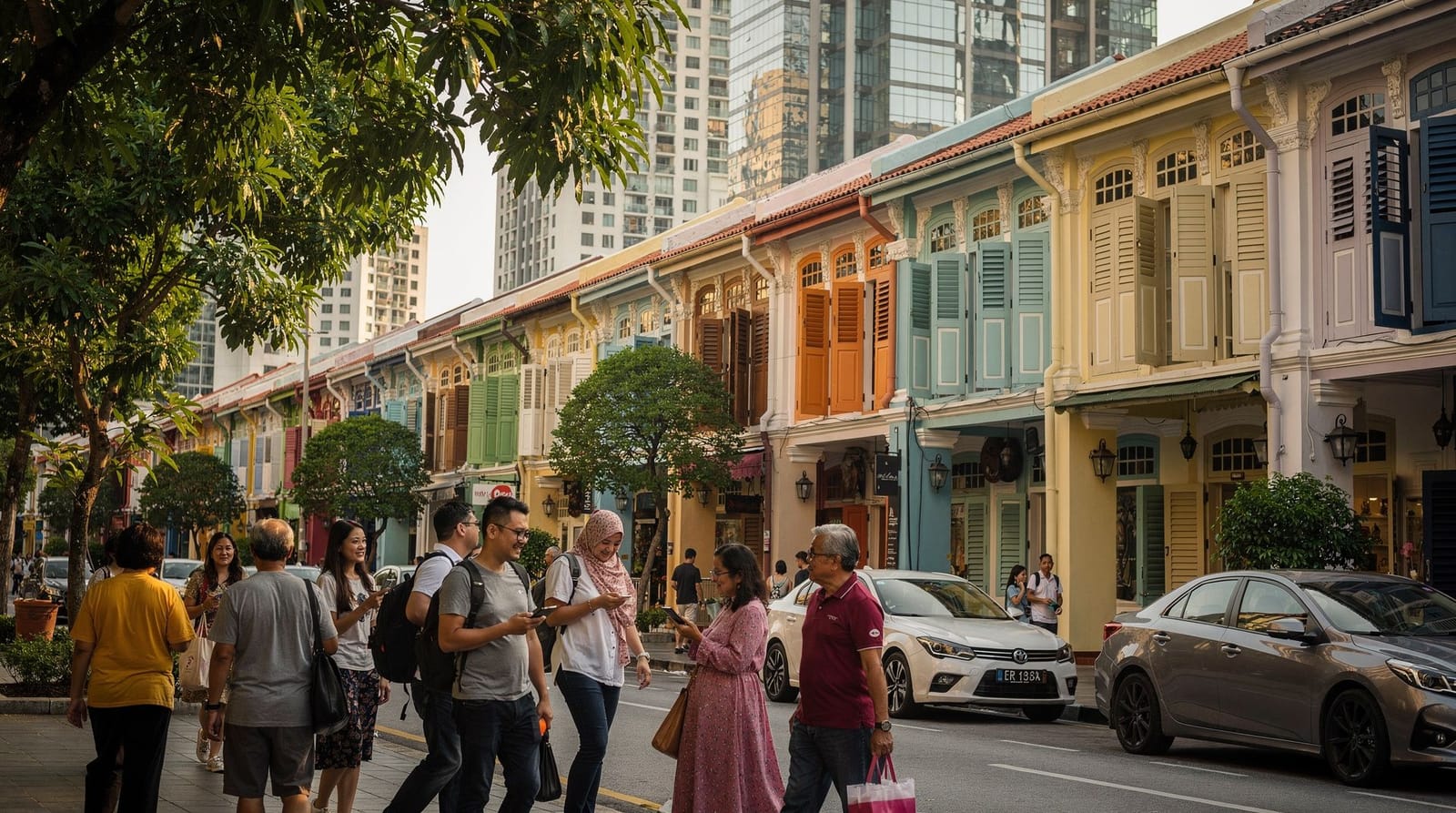
Covered infrastructure: Singapore’s city centre has an extraordinary network of underground walkways (connecting MRT stations, malls, and buildings), overhead covered bridges, and sheltered pedestrian paths. You can walk from Raffles Place MRT to Marina Bay Sands, from Orchard MRT through multiple malls to Dhoby Ghaut, and through Changi Airport terminal to terminal, without stepping outside.
Distances are manageable: Chinatown to Clarke Quay is 12 minutes on foot. Raffles Place to Marina Bay Sands is 20 minutes. Orchard Road end-to-end is 25 minutes. These are tourist-relevant journeys that are entirely walkable.
The heat problem and solutions: Singapore at noon is genuinely hot (30–32°C) and humid. Solutions: walk early morning (6–9 am, before peak heat), walk in the evening (6–9 pm, when temperature drops slightly), use the covered walkway network during the day, and accept that the 10-minute walk between MRT stations will involve some sweat.
Park connector network: Singapore’s 300+ km of Park Connectors (PCN) link parks and nature reserves with dedicated cycling and walking paths. More relevant for recreation than tourism, but useful if you are visiting East Coast Park, Botanic Gardens, or doing the Southern Ridges walk.
Quick comparison: which mode for which trip
| Mode | Best for | Typical cost | Watch out for |
|---|---|---|---|
| MRT | Most city-to-city trips | Around SGD 1.20–3.00 | Ends around midnight |
| Bus | Areas the MRT does not reach | Around SGD 0.80–2.20 | Less intuitive without an app |
| Grab | Late night, luggage, door-to-door | Around SGD 8–45 depending on distance | Surge pricing in rain/peak hours |
| Taxi | Street-hail with no app/data | Around SGD 8–40 with surcharges | Harder to estimate cost upfront |
| Walking | Short hops in the city centre | Free | Midday heat, 30–32°C |
Getting to specific places
Sentosa has its own transport quirks — cable car, Sentosa Express monorail, or a road entry fee by taxi/Grab — covered fully in the getting to Sentosa guide and the Sentosa transport options guide.
Changi Airport to the city is straightforward on the MRT (East-West Line, around 30–45 minutes to the city centre) or Grab (around SGD 25–45, 20–30 minutes depending on traffic). Full breakdown, including which terminal connects to which MRT entrance, in the Changi Airport to city guide. If you only have a few hours between flights, the Changi layover guide covers whether it is worth leaving the airport at all.
For a broader first-trip orientation that ties transport into the rest of your planning, see Singapore for first-timers and Plan a trip to Singapore. If transport costs are part of a tighter overall budget, the Singapore on a budget guide folds MRT and Grab spending into a full daily estimate, and Grab and taxis in Singapore goes deeper on Grab-specific tactics for keeping fares down.
Getting a SIM card or eSIM
Staying connected simplifies every transport mode — Google Maps for the MRT, Grab for ridehail, and local data for general navigation.
At Changi Airport: Singtel, StarHub, and M1 all have kiosks in the arrivals halls. Tourist SIM cards (7-day unlimited data) cost SGD 10–15. You can also buy from Mustafa Centre and 7-Eleven stores.
eSIM: Increasingly available and recommended if your phone supports it. Order before departing home and activate on landing — no need to find a physical store.
Singapore: eSIM data plan Singapore: M1 tourist SIM cardHop-on hop-off buses: the tourist option
For first-time visitors who want an overview of the city without navigating the MRT, the hop-on hop-off bus provides a day-pass looping through major attractions with live or audio commentary.
Two operators run competing services: Big Bus (open-top double-decker) and FunVee. Day passes cost around SGD 43–54 per adult. The routes cover Marina Bay, Orchard, Clarke Quay, Chinatown, Little India, Kampong Glam, and Sentosa.
Honest assessment: useful for orientation on day one, not the most efficient way to actually visit attractions. But for visitors who prefer a guided overview to self-navigation, it is a legitimate option.
Singapore: Big Bus hop-on hop-off tour by open-top bus Singapore: hop-on hop-off sightseeing FunVee city tourSingapore transport for specific situations
Late night (after midnight): MRT stops around midnight. Night buses (routes prefixed with N) run on selected routes through the night with reduced frequency. Grab is available 24 hours. For late-night returns from Clarke Quay or Orchard Road, Grab is the practical option.
Heavy rain: Singapore has intense but usually brief afternoon thunderstorms. Grab prices surge during rain. If the storm starts while you are at an attraction, wait 20–30 minutes for it to pass and Grab prices to normalise, or take the MRT if you are near a station.
With heavy luggage: Grab is the best option from/to the airport with large bags. Taxis also work well. The MRT is physically possible (there are lifts at all stations) but navigating crowded trains with large suitcases is uncomfortable.
With young children: The MRT system is fully stroller-accessible with lifts at all stations. Singapore is genuinely one of the more pram-friendly cities in Asia. Grab’s GrabFamily option offers cars with child seats (book in advance — limited availability).
Frequently asked questions about getting around Singapore
Do I need to book transport in advance?
No — Singapore’s public transport operates on show-up-and-go basis. The MRT and buses do not require booking. Grab is instant booking via app. The only advance planning needed is ensuring you have an EZ-Link card, SimplyGo contactless capability, or Tourist Pass before your first public transport journey.
Is Singapore’s transport system accessible for wheelchair users?
Yes, extensively. All MRT stations have lifts (not just escalators). Bus stops have accessibility features and many buses are low-floor wheelchair accessible. The newer MRT stations and trains are excellent for wheelchair access. The MRT app and TransitLink website have specific accessibility information per station.
Can I use Google Maps for Singapore public transport?
Yes — Google Maps has accurate, real-time Singapore MRT and bus routing. It shows which bus to take, when to change lines, and live departure times. The MyTransport.SG app (official Singapore Land Transport Authority app) is also excellent and sometimes has more granular real-time bus information.
Is cycling a practical option for tourists?
For leisure cycling (East Coast Park, Sentosa, Coney Island), yes — bicycle rentals are available at these locations. For getting around the city as a transport mode, less so — traffic is fast and cycling infrastructure in the city centre is improving but not yet tourist-friendly. Shared e-scooters are also available via apps. See Cycling in Singapore for the full picture.
What is the speed of Singapore’s MRT compared to Grab?
For most city-to-city journeys, the MRT and Grab take similar times when accounting for surface traffic. The MRT does not sit in traffic; Grab does. At peak hours (8–9 am, 6–7 pm), the MRT is significantly faster for common routes. At off-peak times, Grab’s door-to-door convenience often makes the total journey time similar despite higher cost.
Top experiences
Bookable activities with verified prices and instant confirmation on GetYourGuide.