Chinatown
Singapore's Chinatown has the Buddha Tooth Relic Temple, Maxwell hawker centre, and Sri Mariamman Temple — one of Asia's best preserved heritage quarters.
Singapore: Chinatown hawkers food tour with 7 tastings
Quick facts
- MRT access
- Chinatown (North-East/Downtown lines) — exits directly into the heritage area
- Character
- Chinese heritage quarter; shophouses, temples, hawker food, lanterns
- Key hawker
- Maxwell Food Centre (5 min walk, SGD 5–12/dish); Chinatown Complex (4th floor)
- Buddha Tooth Relic Temple
- Free entry; 10 am–5 pm; 4th floor museum has the tooth relic (Buddhist artefact)
- Best time
- Early morning for the market; evening for lanterns and hawker food; Chinese New Year is exceptional
Singapore’s Chinatown is one of the best in Asia — not because it is the most dramatic or the most ancient, but because it has been preserved and managed intelligently enough that both the heritage architecture and the daily life of the neighbourhood coexist. This is where you eat some of the best hawker food in the city, see two of Singapore’s most important temples, and walk streets that have been selling goods and telling stories since the 1820s.
| Where | Chinatown MRT (North-East/Downtown Line), central Singapore |
| Cost | Free to walk; hawker dishes SGD 5–12; Buddha Tooth Relic Temple free |
| Time needed | Half a day to a full day depending on eating |
| Getting there | MRT direct to Chinatown; Maxwell Food Centre 5 min walk from Exit A |
| Best time | Early morning for the market; evening for lanterns and food |
The hawker centres — what to eat and where
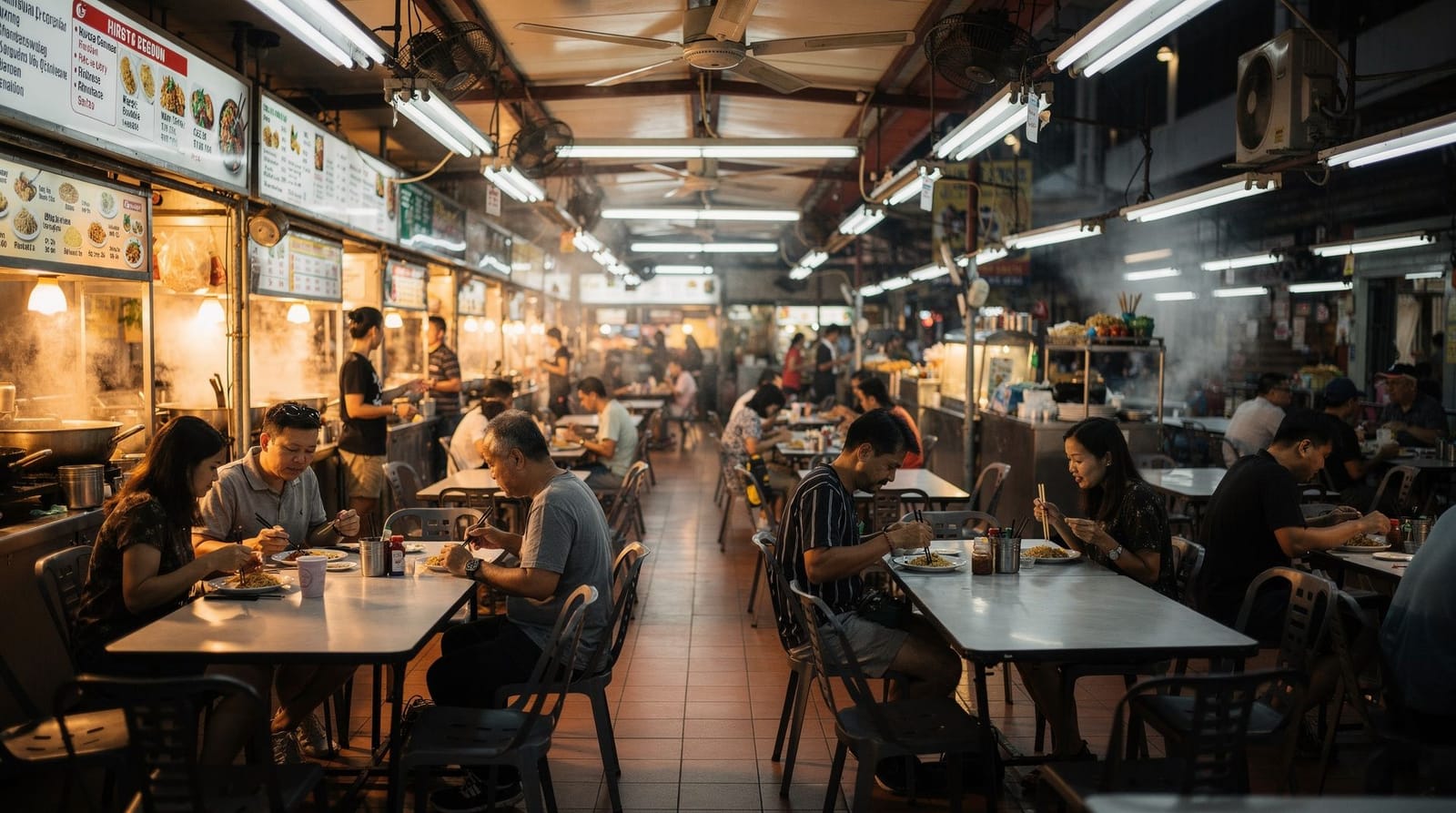
Maxwell Food Centre is the most important eating reason to come to Chinatown. It is on Maxwell Road, a 5-minute walk south from Chinatown MRT (Exit A, past the Sri Mariamman Temple). The centre has around 100 stalls; prices SGD 5–12 per dish.
What to order:
- Tian Tian Hainanese Chicken Rice (stall 10 or 11) — Gordon Ramsay famously lost a chicken rice competition to the owner, Mdm Foo Kui Lian. The rice is fragrant with chicken fat and ginger; the chicken is poached and silky. Expect a queue; it moves in about 10 minutes. SGD 5–8.
- Maxwell Fuzhou Oyster Cake — a deep-fried patty of pork, prawns, and oysters. Unusual and very good.
- Rojak — a local fruit and vegetable salad with prawn paste dressing and peanuts, typically SGD 4–6.
- Hokkien Mee (thick noodles in dark soy sauce), Laksa (coconut-based curry soup), Char Kway Teow (stir-fried flat noodles with egg and cockles) — all available from multiple stalls.
Chinatown Complex Food Centre (Block 335, Smith Street, 4th floor) is the largest hawker centre in Singapore with over 260 stalls. Tong Heng Confectionery (ground floor, Smith Street side) sells traditional Chinese pastries — the egg tart with its diamond-shaped shortcrust base is the most famous item (SGD 1.50–2 each). The food centre itself is more local in character than Maxwell — fewer tourist-facing stalls, excellent hunting ground if you like to point and try things without a menu.
The Chinatown Complex hawker guide and the Maxwell Food Centre guide go deeper on specific stall recommendations.
The food tour option
The hawker trail approach works well here if you want someone to navigate you through the correct stalls and explain what you are eating. The Chinatown hawkers food tour with 7 tastings covers the main dishes — chicken rice, char kway teow, kaya toast, rojak, sambal stingray — with a local guide providing the cultural context. It is honest about what is genuinely local and what has been adapted for tourists. The UNESCO hawker culture Chinatown food tasting tour frames hawker culture specifically in the context of its 2020 UNESCO Intangible Cultural Heritage status.
Hawker etiquette note: in Singapore, reserving a seat at a hawker centre is done by leaving a packet of tissues on the table — this is called “choping” and is universally understood. See the hawker etiquette guide.
Buddha Tooth Relic Temple and Museum
The temple on South Bridge Road was completed in 2007 in Tang Dynasty architectural style. It is one of the most significant Buddhist temples in Singapore and one of the best designed. Entry is free; dress modestly (shoulders and knees covered — sarongs available at the door).
The ground floor has the main prayer hall. The fourth floor museum houses the temple’s most sacred relic — a tooth believed to be the left canine tooth of the historical Buddha, recovered from his funeral pyre in Kushinagar, India. The relic is housed in a 3.5-tonne gold stupa. The museum also holds a substantial collection of Buddhist art, relics, and artefacts from across Asia. All floors are open to visitors during visiting hours (10 am–5 pm).
Allow 45 minutes to an hour. The rooftop garden (accessible via the 4th floor) has views over the Chinatown rooftops and is quiet enough for reflection.
For the full guide, see the Buddha Tooth Relic Temple guide.
Sri Mariamman Temple
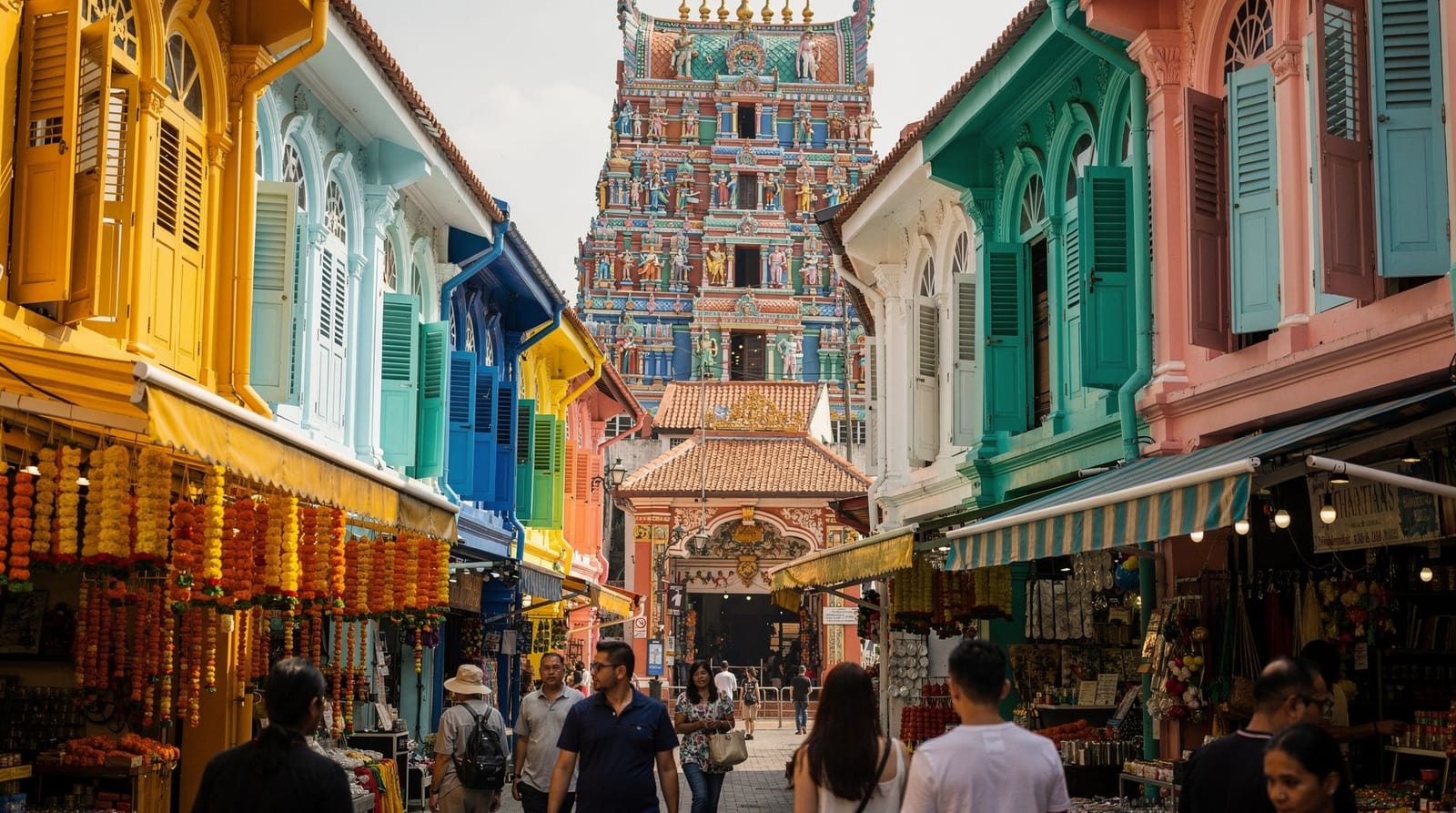
On the corner of South Bridge Road and Eu Tong Sen Street — a 10-minute walk from Chinatown MRT — Sri Mariamman Temple is Singapore’s oldest Hindu temple, founded in 1827 (current building mainly from 1843). The gopuram (gateway tower) is covered in brightly painted figurines of deities; it is one of the most photographed structures in Chinatown despite being in a predominantly Chinese area — which itself says something about Singapore’s ethnic mix.
The temple is dedicated to Sri Mariamman, a goddess associated with disease prevention, and is an active place of worship. Entry is free. The annual Thaipusam and Thimithi (firewalking festival) ceremonies are held here. Dress modestly; remove shoes before entering. For the full guide, see Sri Mariamman Temple.
The heritage streets
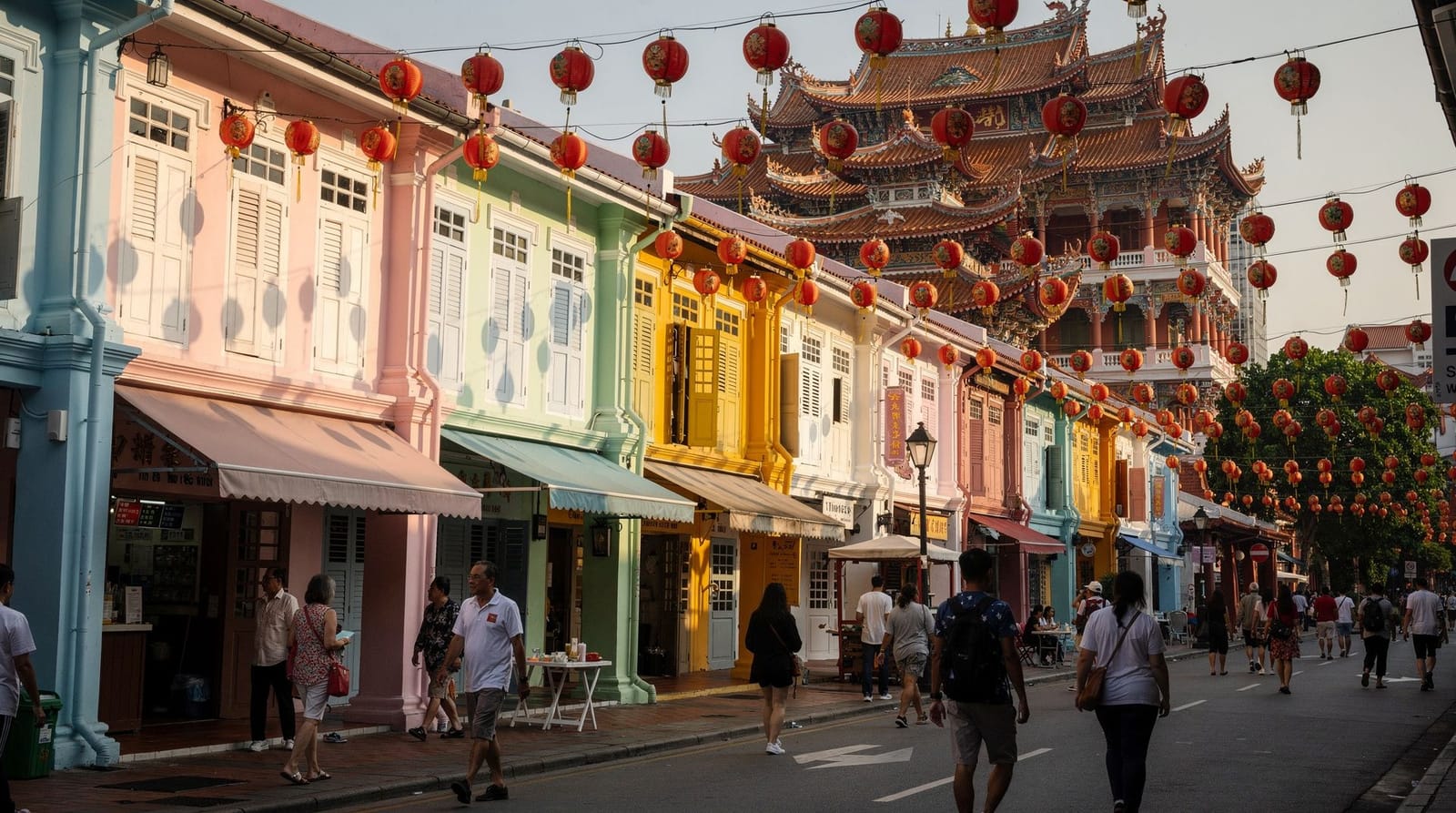
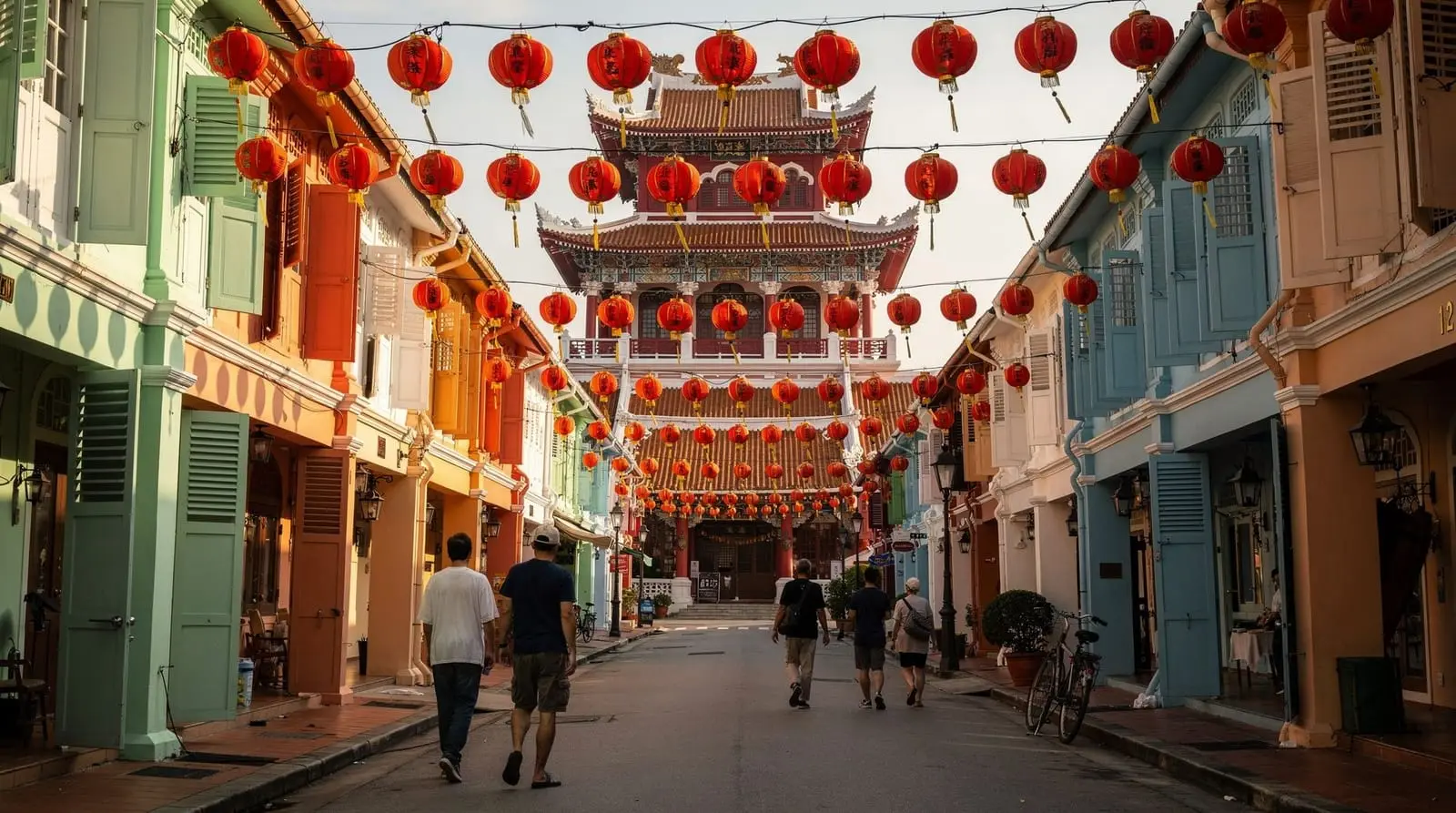
Pagoda Street, Trengganu Street, Smith Street, and Temple Street form the core of the heritage shophouse area. The architecture is Peranakan-influenced — narrow two-storey shophouses with shuttered windows and ornate facades in pastel or vivid colours. Ground floors are now largely tourist-facing shops (dried goods, souvenirs, Chinese tea, traditional sweets), but the buildings themselves are the point.
Keong Saik Road and Club Street (walking distance south/west) have the more contemporary face of Chinatown — restaurants with modern Singaporean and fusion menus, cocktail bars, and creative agencies occupying restored shophouses. This is where young Singaporeans eat on a night out. Prices step up from hawker to mid-range (SGD 20–45 per main), but quality is generally strong.
The heritage and tea tour
The Chinatown heritage tour with tea tasting combines a walk through the neighbourhood’s historical layers with a traditional Chinese tea session — an opportunity to understand the role of tea houses in the Chinese community and try several varieties (oolong, pu-erh, white tea) with a local host. It is genuinely engaging for anyone interested in both the history and the tasting.
For the full past-and-present narrative of Chinatown’s development from coolie labour district to heritage zone, the Chinatown past and present half-day tour is the most comprehensive walking option.
Chinese New Year in Chinatown
Chinese New Year (17–18 February 2026) is the exceptional time to visit Chinatown. From late January, Pagoda Street and Eu Tong Sen Street are transformed with red lanterns, gold decorations, and a market of traditional goods, CNY pastries, and festive foods. The area is busiest on the eve of New Year and the first two days. For the full context, see the Chinese New Year in Singapore guide.
Practical information
Chinatown MRT: North-East Line (purple) and Downtown Line (blue) interchange. Exit A for Maxwell Food Centre direction; Exit C or D for Smith Street and the heritage streets.
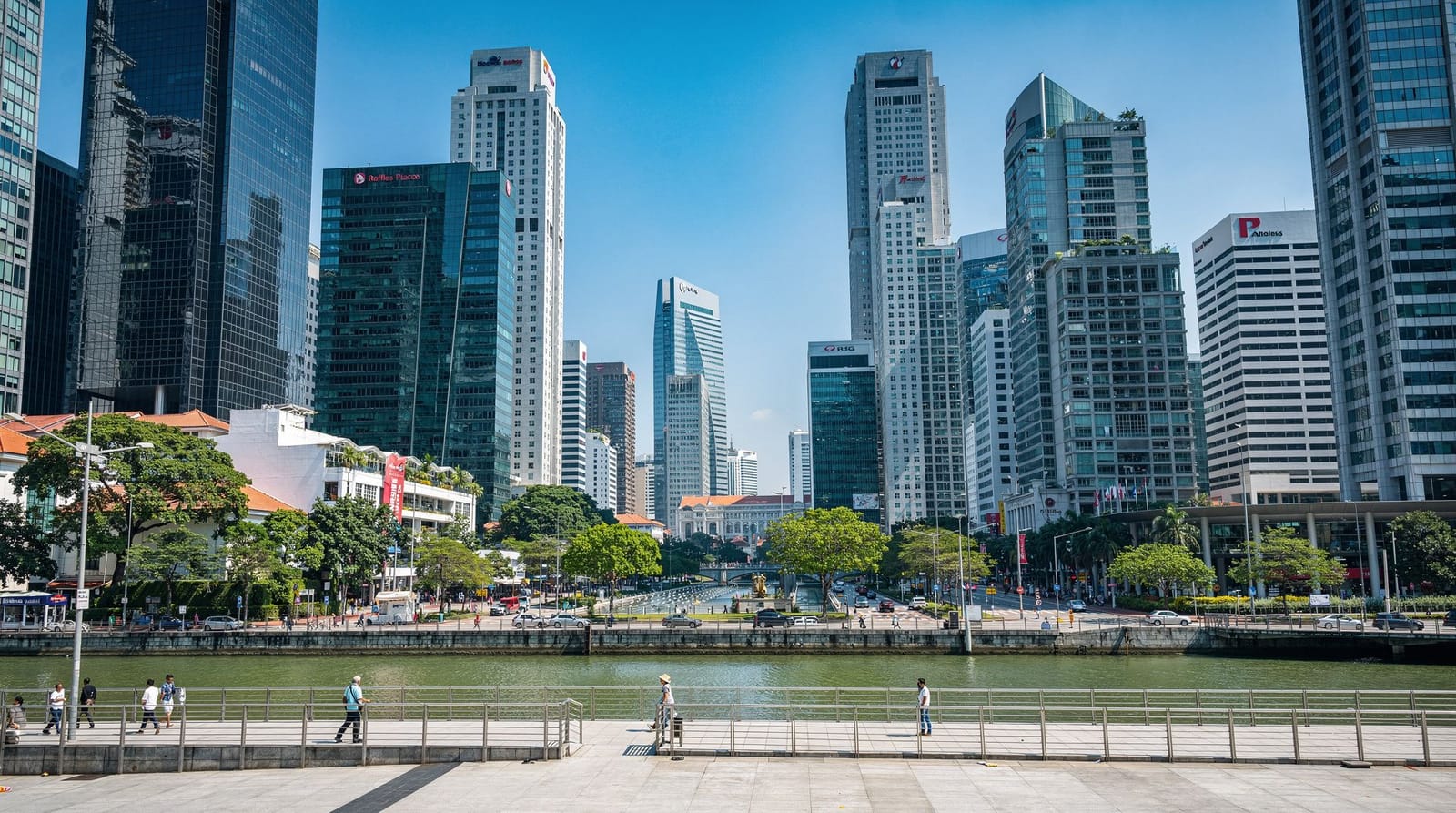
Getting to Marina Bay from Chinatown: 15 min walk north through Raffles Place, or MRT (East-West Line one stop from Raffles Place, transfer to Circle/Downtown Line). Alternatively, grab a bike or taxi — SGD 6–10.
Getting to Little India from Chinatown: MRT on the Downtown Line is cleanest (4 stops via Fort Canning, Rochor). Walking takes about 30 min via Orchard Road direction.
Currency: all hawker centres accept both cash and NETS/PayLah mobile payments. Some older stalls are cash only — carry SGD 20–30 in cash.
The Chinatown story — how this community formed
Singapore’s Chinese community arrived primarily as migrants from southern China — Fujian (Hokkien speakers), Guangdong (Cantonese, Teochew), and Hakka provinces — from the 1820s onward, drawn by the port economy Raffles established. The 1822 town plan placed the Chinese quarter south of the Singapore River, and by the 1860s it was one of the most densely populated areas in Southeast Asia.
The community organised itself by clan associations (kongsi) and dialect groups. Hokkien merchants dominated trade; Cantonese dominated artisan crafts; Teochew worked the ports and gardens. The clan houses and temples that anchored these communities are the reason the architecture in Chinatown is what it is — the money went into building institutions and places of worship that expressed identity and provided mutual support.
By the 1970s, Chinatown had deteriorated severely — overcrowded, dilapidated, and slated for clearance under Singapore’s urban renewal programme. Between 1966 and 1985, the population of the area dropped by two-thirds as residents were relocated to HDB housing estates. The restoration of the shophouses and temples began in earnest in the late 1980s under the Urban Redevelopment Authority’s conservation programme, which preserved the external architecture while allowing internal renovation. The result is what you see today.
The Chinatown food tour in detail
The organised food tour options are worth using here because the stall landscape is dense and guidance prevents you from eating at the tourist-facing mediocre stalls rather than the genuinely excellent local ones. The Chinatown street food tour covers a curated selection of hawker dishes on a walking format — useful for getting oriented before returning independently. For a deeper cultural framing around Singapore’s UNESCO hawker heritage status, the UNESCO hawker culture Chinatown tour puts the food in the context of what Singapore was arguing when it submitted the hawker culture nomination in 2020.
Tong Heng Confectionery and traditional Chinese sweets
Before leaving Chinatown, there are a few food items that are specific to this area and worth seeking out. Tong Heng Confectionery (285 South Bridge Road, near the Smith Street junction) is a third-generation Chinese pastry shop that has been making traditional Southern Chinese baked goods since 1939. The signature item is the diamond-shaped egg tart (dan ta) — a shortcrust pastry shell with a barely set, slightly sweet egg custard filling, warm from the oven. SGD 1.50–2.00 each; buy a few.
Also worth knowing: the Chinatown Heritage Centre (48 Pagoda Street) is a museum in three original shophouses that recreates life in Chinatown from the early colonial period through the 1960s. The focus is on the coolies and working families who actually lived in these buildings — not the merchant class. Entry around SGD 18 adults; about 1.5 hours to visit properly. It is one of Singapore’s more honest heritage museums.
Yum cha (dim sum) restaurants in Chinatown have a long tradition — several restaurants on Smith Street and South Bridge Road open for breakfast and early lunch with trolley or order-sheet dim sum service. Har gow (steamed prawn dumplings), siu mai (pork and prawn), char siu bao (BBQ pork bun), and lo mai gai (glutinous rice in lotus leaf) are the standards. Price per basket: SGD 4–8. Arrive before 10 am on weekends to beat the queues.
Where to stay in Chinatown
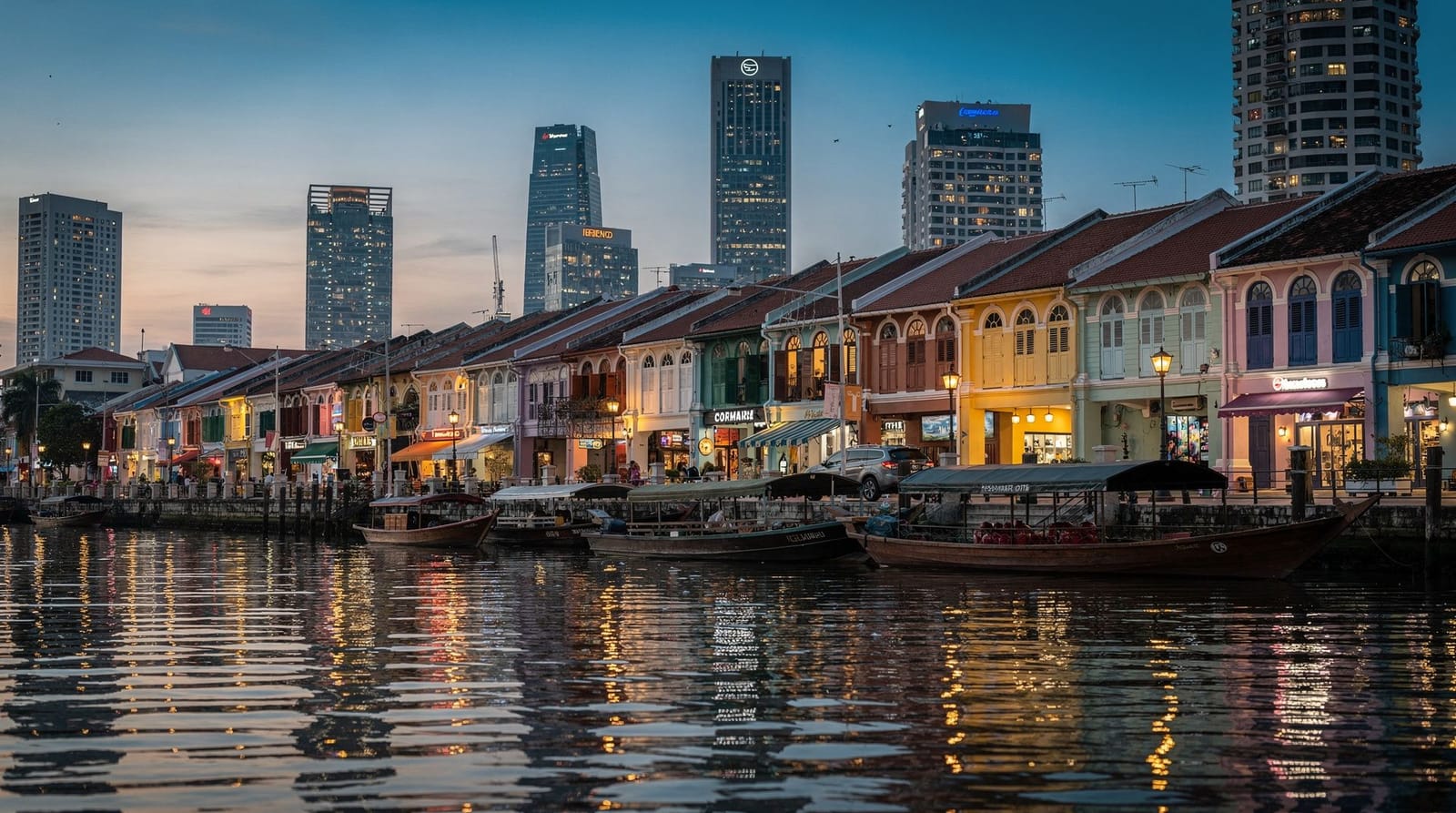
Chinatown has a good concentration of boutique hotels and budget guesthouses in restored shophouses. Staying here gives immediate access to the best hawker food in the city and easy MRT connections everywhere. The area is quieter after 10 pm than Clarke Quay but livelier than the Civic District.
Mid-range options (SGD 150–300): The Scarlet Singapore, Adler Luxury Hostel (excellent for solo travellers), New Majestic Hotel. Budget (SGD 50–120): multiple hostels on Mosque Street and Trengganu Street with traditional shophouse layouts. For full hotel guidance, see where to stay in Singapore.
Chinatown vs Little India vs Kampong Glam — which first?
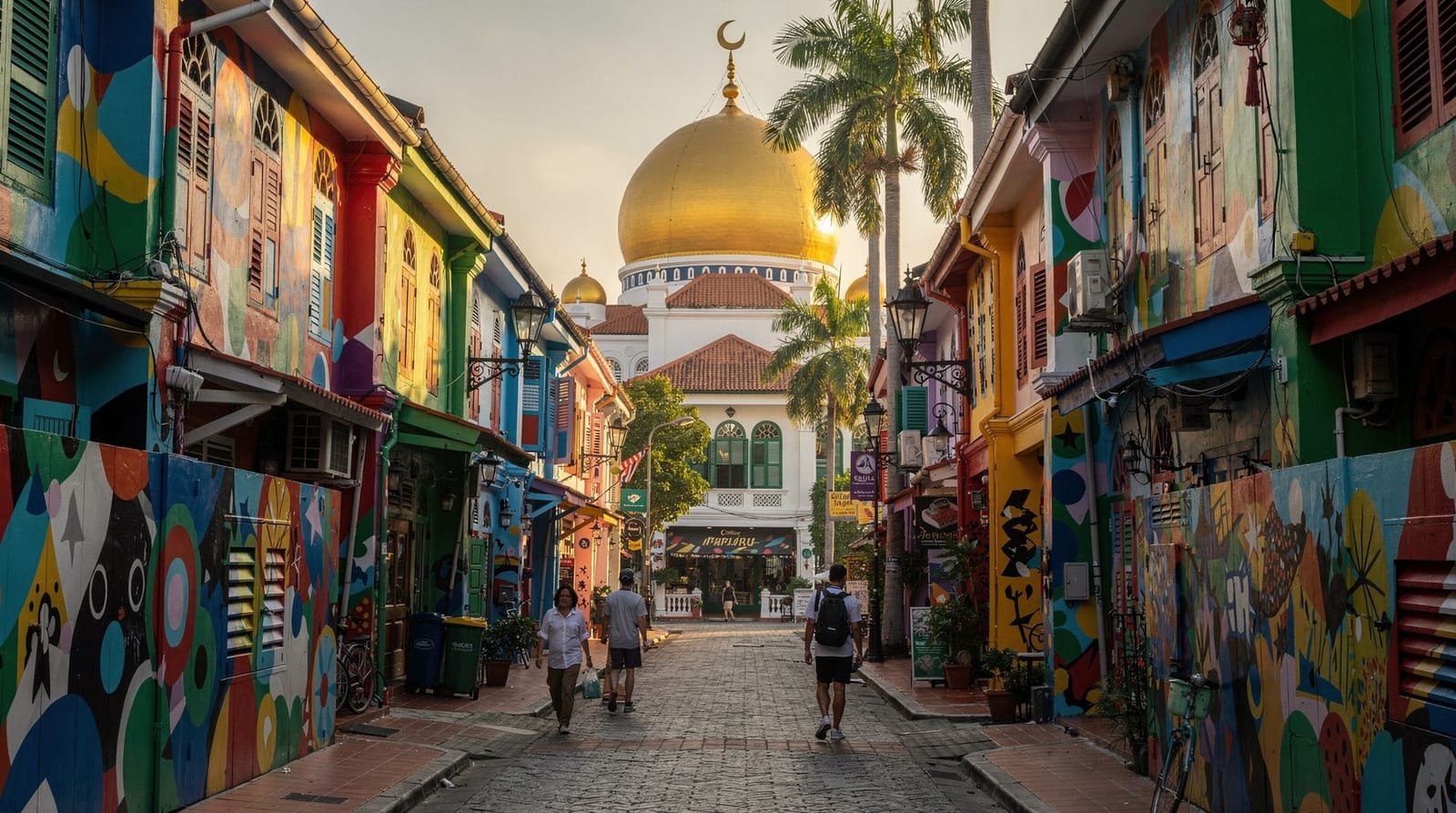
Singapore’s three ethnic quarters sit within a few MRT stops of each other, and first-time visitors often ask which deserves the most time. Chinatown has the strongest hawker food scene of the three and the most polished heritage restoration, making it the best single stop if you only have half a day. Little India has a rawer, more sensory-dense atmosphere — better for travellers who want the least “curated” of the three quarters. Kampong Glam is the smallest and most walkable, pairing naturally with a Bugis shopping stop. Most itineraries with a full day to spare do Chinatown and one other quarter rather than all three, since rushing dilutes the experience of each.
Frequently asked questions about Chinatown
Is the Maxwell Food Centre better than the Chinatown Complex?
Both are excellent; they serve slightly different purposes. Maxwell has a curated set of famous stalls in a smaller, more navigable space — better for a focused first hawker experience. Chinatown Complex is larger, more local in character, and better for extended exploration. If you only have time for one, Maxwell is the more efficient choice.
What time does Tian Tian Chicken Rice open?
Stall 10 at Maxwell Food Centre typically opens around 11 am and sells out by 3 pm. Arrive before noon to avoid a long queue and to guarantee availability. The stall is closed on Mondays.
Is Chinatown worth visiting even if you are not interested in hawker food?
Yes. The Buddha Tooth Relic Temple and Sri Mariamman Temple are worthwhile regardless of dietary interest. The shophouse architecture and the heritage streets are photogenic and historically interesting. The tea tour is a good alternative anchor activity. Food is the primary reason to come, but not the only one.
Can I visit Chinatown during Chinese New Year?
Yes, and it is one of the best times. Expect crowds (especially on the eve and first two days), higher-than-usual prices in some market stalls, and a festive atmosphere that genuinely transforms the area. Book accommodation in advance if your trip is during CNY. Transport is more crowded but still functional.
How do I get to Chinatown from Marina Bay Sands?
MRT: Bayfront to Raffles Place (two stops on the Circle/Downtown Line or one stop then transfer), then Raffles Place to Chinatown (one stop on the East-West Line). Total about 15 minutes. Walking takes 25–30 minutes through the CBD.
Is Chinatown or Little India better for a first-time visitor?
Both are worthwhile, but if forced to choose one, Chinatown edges ahead for most travellers thanks to its stronger hawker food concentration (Maxwell Food Centre in particular) and the Buddha Tooth Relic Temple. Little India offers a more intensely sensory, less polished experience that some travellers prefer specifically for that rawness. Ideally, budget time for both — they are only a few MRT stops apart.
Top experiences
Bookable activities with verified prices and instant confirmation on GetYourGuide.