Bugis
Bugis covers budget street markets, Haji Lane's independent shops, and the edge of Kampong Glam's Malay quarter. Honest guide to what is worth your time.
Singapore: Little India and Kampong Glam hidden trails
Quick facts
- MRT access
- Bugis (East-West/Downtown lines) — central, easy transfer hub
- Character
- Budget shopping, street markets, indie boutiques, Malay heritage border
- Haji Lane
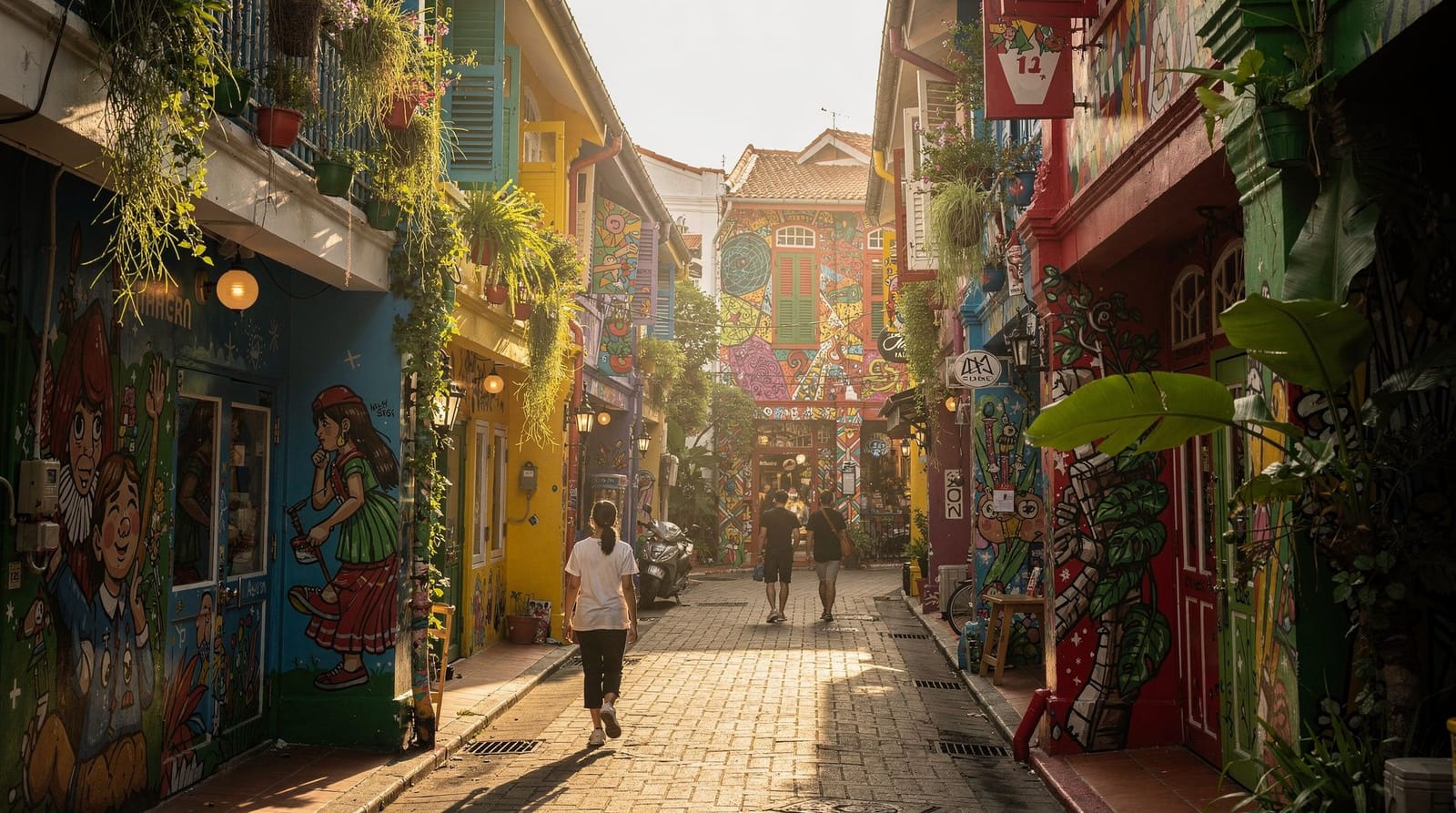
- Narrowest main street in Singapore; indie fashion, cafes, murals
- Bugis Street
- Covered market, SGD 5–20 items — tourists and locals; best on weekday afternoons
- Nearby
- Kampong Glam / Sultan Mosque (5 min walk north); Arab Street (connecting)
Bugis is where budget shopping, independent boutiques, and the western edge of the Kampong Glam Malay quarter all collide in a few blocks that are denser with interest than they first appear. It is an area that rewards wandering more than planning — the best discoveries here are usually unexpected.
| Where | Bugis MRT (East-West/Downtown Line), central Singapore |
| Cost | Free to walk; Bugis Street items SGD 5–20, Haji Lane boutique prices SGD 40–200+ |
| Time needed | Half a day for Bugis, Haji Lane and Kampong Glam together |
| Getting there | MRT direct to Bugis; Sultan Mosque 8 min walk north |
| Best time | Late afternoon/evening; Saturday for Haji Lane’s liveliest atmosphere |
Bugis Street market
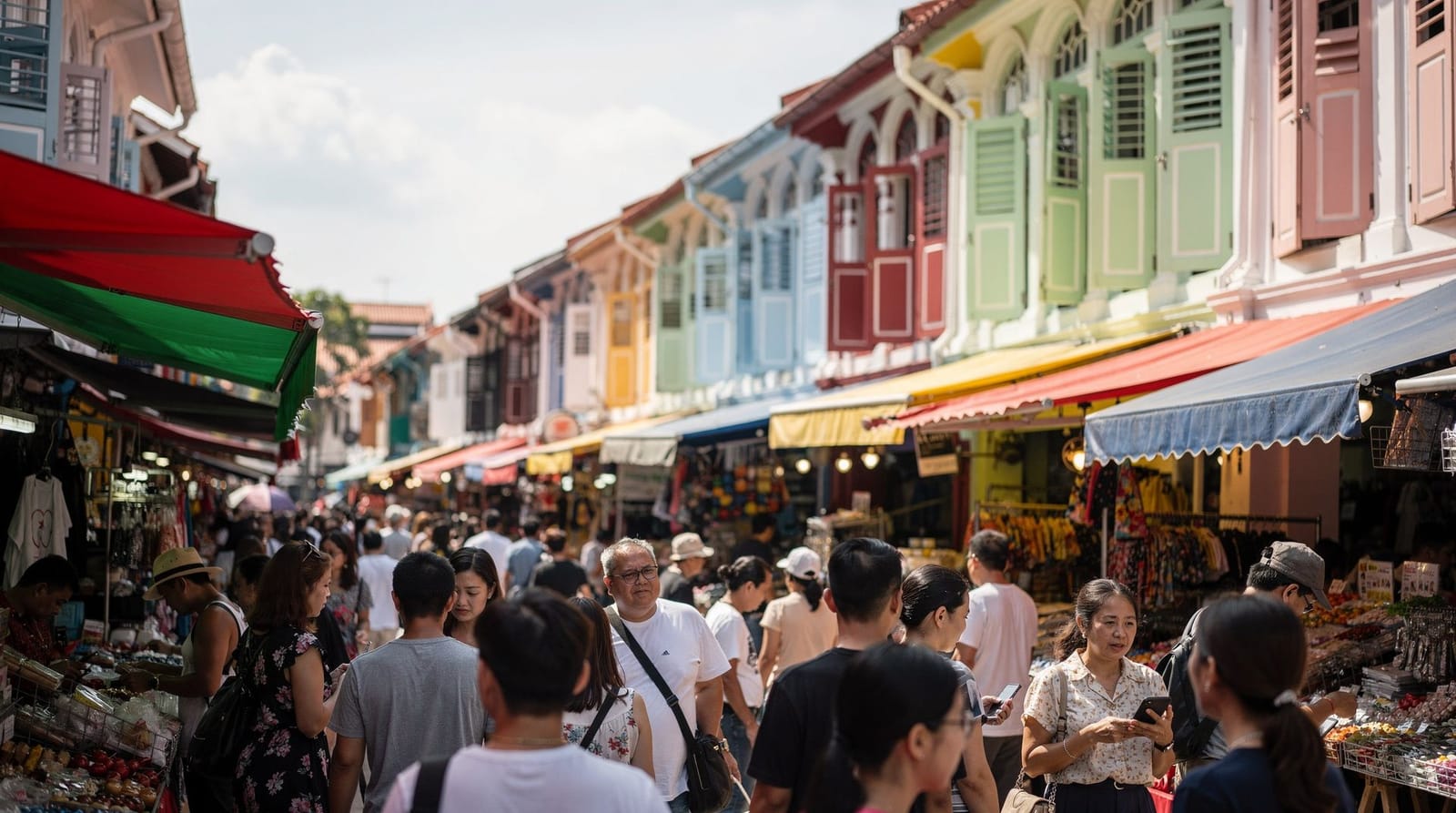
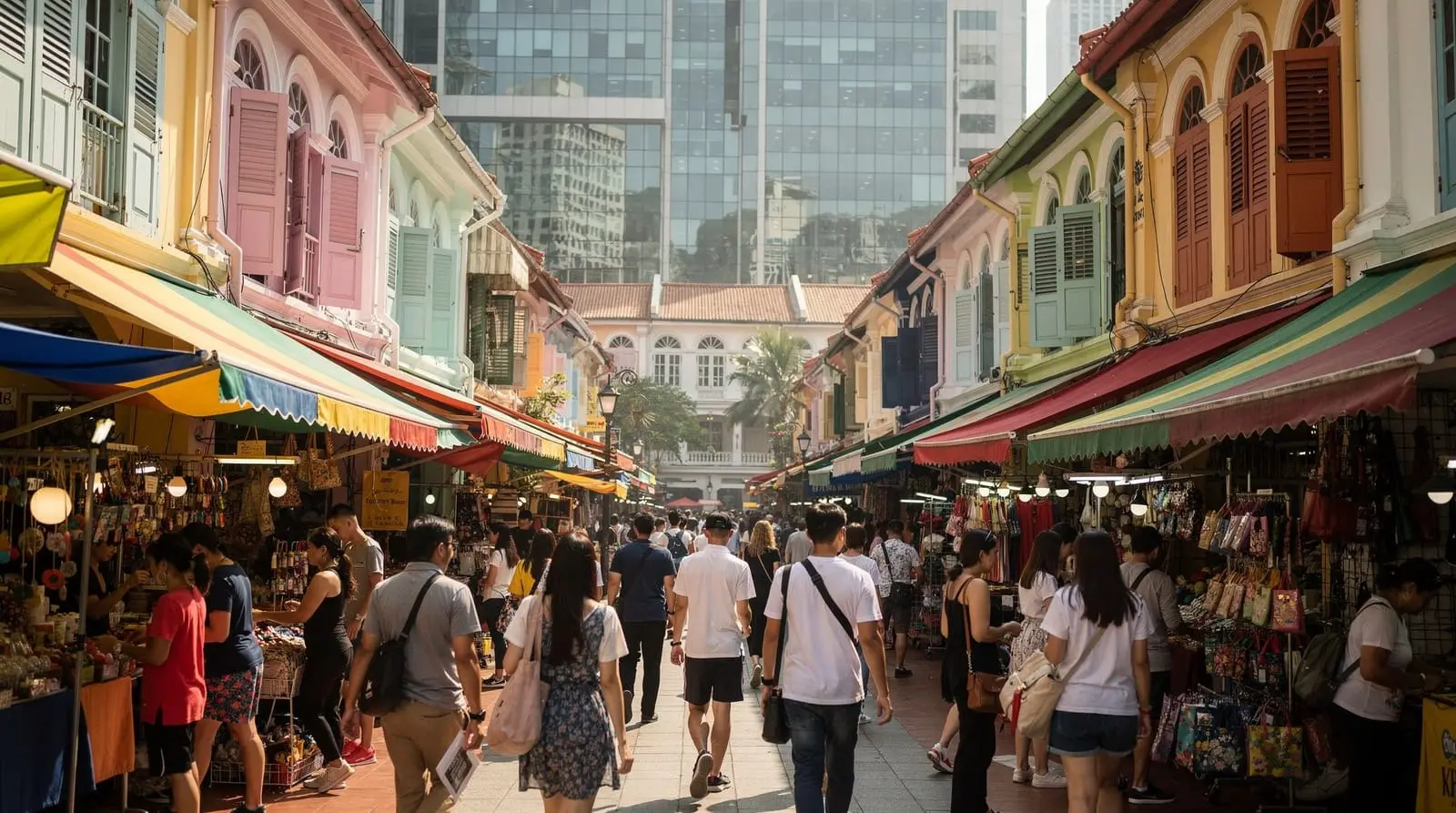
Bugis Street was once Singapore’s most notorious night market — chaotic, colourful, and not entirely legal by modern standards. The redeveloped version is a covered three-level market with around 800 stalls selling clothes, accessories, cosmetics, phone cases, novelty items, and street food. It is lively and heavily tourist-oriented but also genuinely used by young Singaporeans for cheap fashion.
Prices: SGD 5–20 for most clothing items; cheaper if you are willing to negotiate (though most stalls have fixed prices displayed). The ground floor is the most useful; upper floors get progressively less interesting. Best approached with low expectations and an openness to finding something unexpected.
Useful for: cheap souvenirs (SGD 3–8 for fridge magnets, printed tees, MRT-themed items), summer clothing if you have underestimated Singapore’s heat, and a quick look at Singapore’s chaotic retail culture. Not useful for: quality goods, anything with much craftsmanship, or authentic local products (most items are mass-produced imports).
Haji Lane
Haji Lane is the narrow street one block north of Bugis Street, running parallel to Arab Street. It is 750 metres long and lined with shophouses that have been converted into independent boutiques, vintage shops, and cafes. On weekday afternoons it is manageable and pleasant; on Saturdays it becomes more crowded and the atmosphere is livelier.
The shops skew toward independent fashion designers (local and international), vintage clothing (two or three good vintage shops with Singaporean and Southeast Asian finds), home goods, and accessories. Prices are not cheap — this is a boutique street, not a discount market — but the products have a different quality and character from the Bugis Street market stalls.
The cafes and small restaurants on Haji Lane are worth knowing about: Blu Jaz Cafe (jazz bar, Moroccan-influenced, good cocktails), Piedra Negra (Mexican, outdoor seating, lively on weekends), several small bakeries and kopi-style coffee outlets. Prices: coffee SGD 6–10, a meal SGD 15–30.
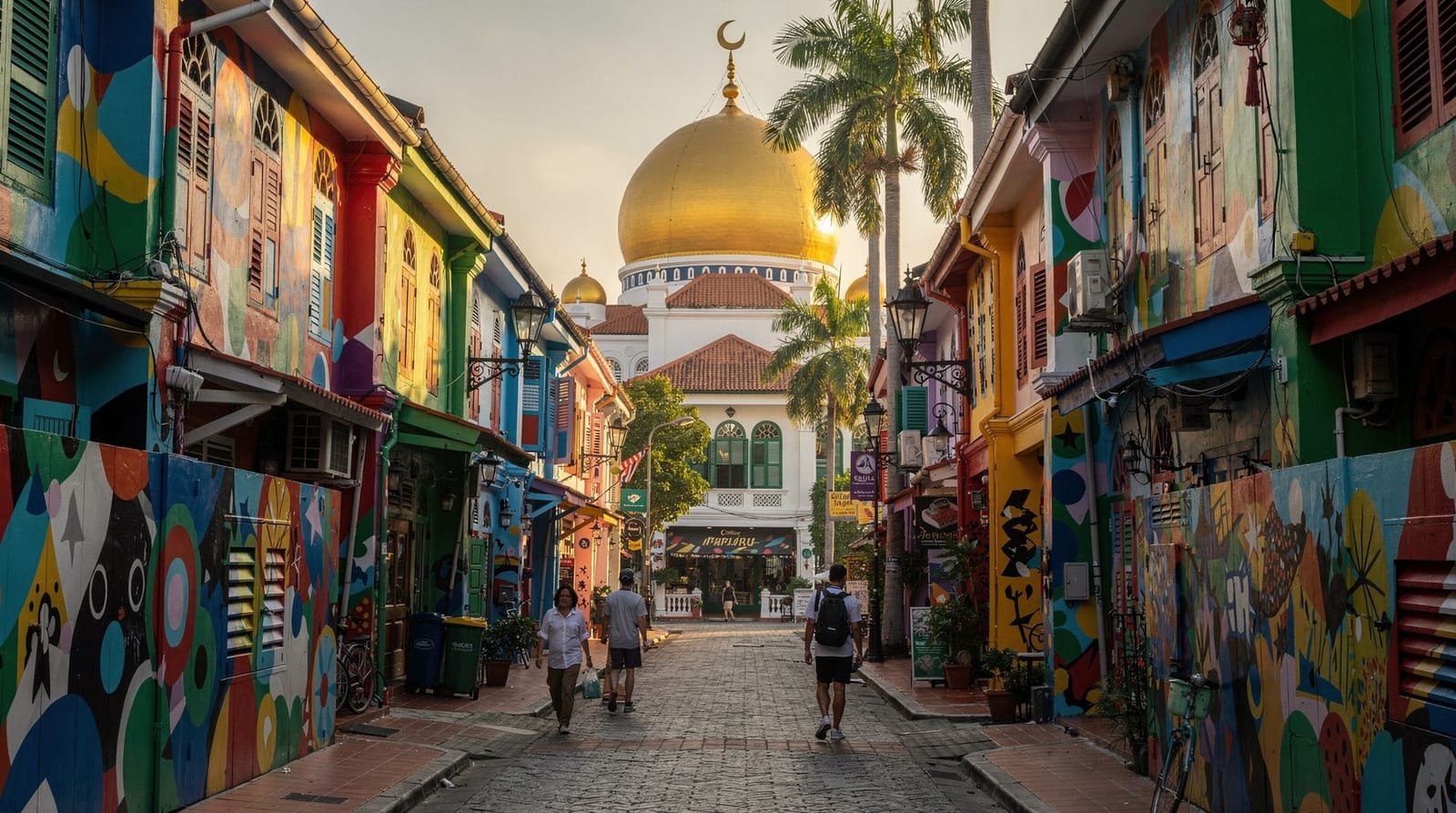
For the best photo opportunities: the murals painted on the end walls of the lane and on shop shutters change periodically but there is usually something interesting. Early morning light on the pastel-painted shophouse facades is the best photography window.
The Kampong Glam and Haji Lane guide has more detail on the specific shops and how to navigate the street.
Bugis Junction mall
Immediately above and adjacent to Bugis MRT is Bugis Junction — a mid-range mall with a glass-covered indoor street (a Victorian-style arcade). Usefully air-conditioned, with a Cold Storage supermarket (good for stocking up on local snacks, Milo, kaya jam), Japanese restaurant chains, and a Cold Rock ice cream. Not a destination in itself but convenient for getting your bearings and escaping the heat.
The transition to Kampong Glam
Bugis essentially merges northward into Kampong Glam — Singapore’s Malay and Muslim heritage quarter. Sultan Street leads north from Haji Lane directly to the Sultan Mosque, the most important mosque in Singapore, with its distinctive golden dome. Arab Street runs parallel to Haji Lane with a concentration of fabric, carpet, and souvenir shops that specifically serve the Muslim community and have done so since the 19th century.
The Little India and Kampong Glam hidden trails tour covers the area’s heritage with local context that the walking signs alone do not provide. The Kampong Glam Vespa sidecar ride is a more stylised option — a 2-hour tour of the Kampong Glam and Civic District on a classic Vespa with sidecar, which is genuinely fun and gives a different physical perspective on the architecture.
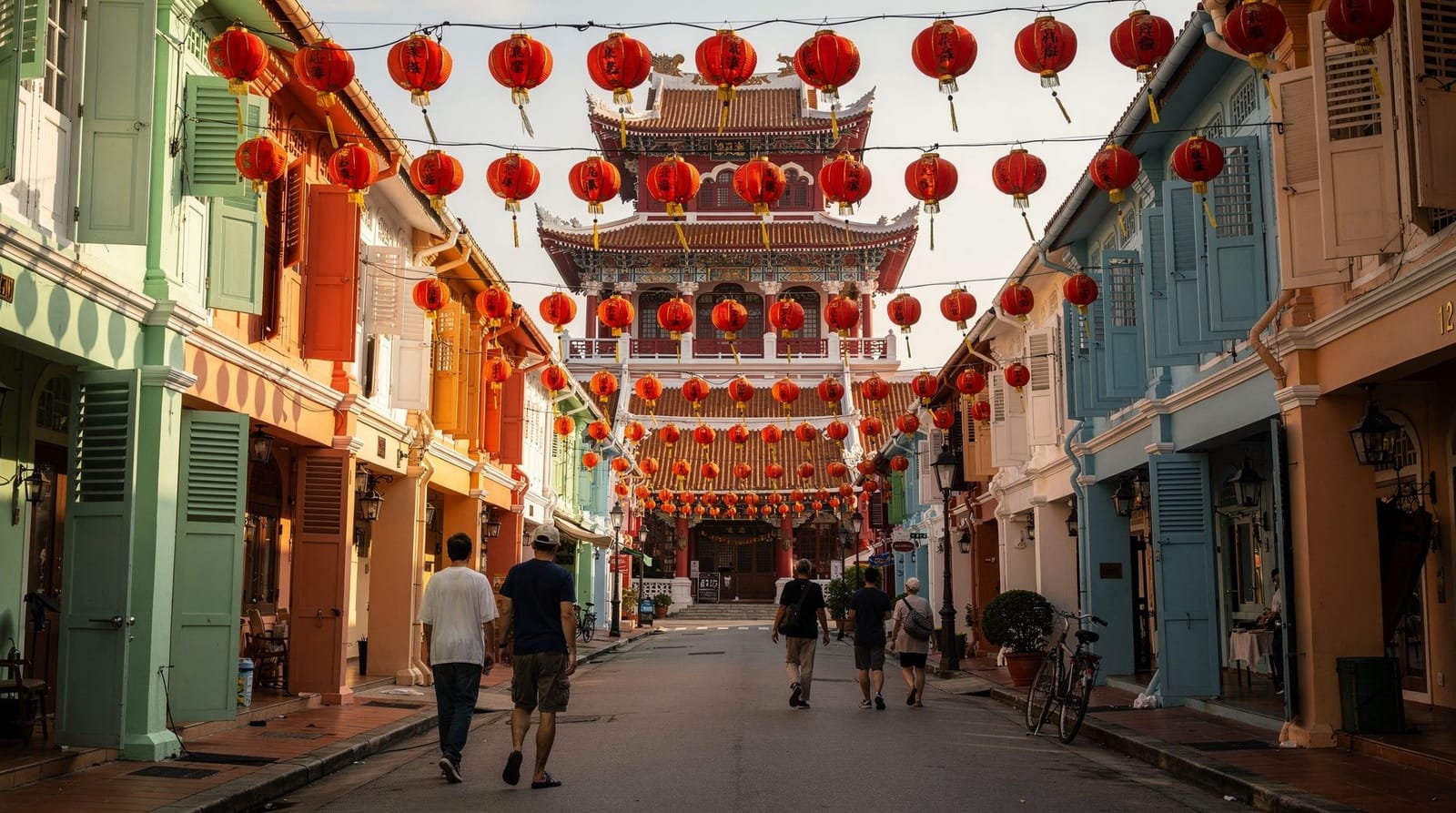
For a connected tour covering Chinatown, Little India, and Kampong Glam in sequence, the Chinatown, Little India and Kampong Glam walking tour is a practical option for first-timers wanting to see all three ethnic quarters in a day. The ethnic quarters guide explains the historical reasons for the different communities’ locations.
Arab Street — fabrics, carpets, and the old trade
Arab Street itself (parallel to Haji Lane, one block west) has a different character from the boutique lane. The original Arab Street merchants were Yemeni and Hadhrami Arab traders who arrived in the 19th century and established a commercial community around the mosque. The street still has shops selling batik fabric (Javanese-origin wax-resist cloth, SGD 8–30 per metre), carpets, prayer mats, baskets, rattan goods, and perfume.
For visitors interested in Southeast Asian textiles, the fabric shops on Arab Street carry a genuine and varied range — not tourist-grade goods but the same fabric that is sold for Eid clothing throughout the region. The basket and rattan shops stock homeware items that are genuinely made locally or regionally, at prices that are honest rather than tourist-marked-up.
Bussorah Street, which runs from Haji Lane to Sultan Mosque, is a pedestrianised mall with restaurants and cafes set up in the open air facing the mosque’s golden domes. On Fridays after the midday prayer, the street fills with worshippers and the atmosphere is at its most characteristic.
Sultan Mosque and the Malay quarter
The Sultan Mosque (Masjid Sultan) on North Bridge Road was built in 1928 on the site of an earlier 1824 mosque. It is the most significant mosque in Singapore and an active place of worship. Visitors are welcome outside prayer times (check times on arrival); dress modestly (no shorts above the knee, shoulders covered — sarongs are available at the entrance). Entry is free.
The mosque’s golden onion domes are visible from several streets away and are the visual anchor of the Kampong Glam quarter. The surrounding streets — Bussorah Street, Kandahar Street, Baghdad Street — have preserved their heritage shophouses and have a concentration of Malay restaurants, craft shops, and small hotels. For the full guide, see the Sultan Mosque guide.
Eating in the Bugis area
Zam Zam Restaurant (699 North Bridge Road, corner of Arab Street and North Bridge Road) is a Singaporean institution — open since 1908, known for murtabak (stuffed flatbread with egg and minced meat filling) and biryani. Prices are very reasonable (SGD 6–12). Queue is common at lunch and dinner; it moves quickly.
Warong Nasi Pariaman (738 North Bridge Road) — traditional Nasi Padang (Minang-style rice with various curries and sides), a style of cuisine that the Malay/Indonesian community has been serving in Singapore for over a century. Order by pointing at what looks good. SGD 8–14 for a full plate.
Bugis Cube food court and the food basement of Bugis Junction have standard hawker fare at SGD 5–10 per dish — useful for a quick meal before or after shopping.
For a broader guide to hawker food in this part of the city, see what to eat in Singapore.
The Bras Basah area — between Bugis and the Civic District
The area between Bugis MRT and City Hall MRT (roughly along Bras Basah Road and Middle Road) has an interesting concentration of art institutions, heritage schools, and quiet streets that most visitors pass through without stopping.
The National Museum of Singapore (stamford Road, 10 min walk from Bugis MRT) is housed in a neo-Palladian 1887 building and covers Singapore’s social history from pre-colonial trading post to modern city-state. The permanent Singapore History Gallery is free after 6 pm on Fridays. It is less international in focus than the National Gallery but more personal — oral histories, household objects, and local artefacts rather than fine art.
CHIJMES (the Convent of the Holy Infant Jesus) is a restored 19th-century Catholic convent complex on Victoria Street, now used as a restaurant and bar venue. The Gothic chapel and courtyard gardens are architecturally significant and open to the public. Popular for events; pleasant for a quiet drink in the courtyard on a weekday evening. For the full museums landscape, see the museums in Singapore guide.
Waterloo Street runs from Bugis toward Bras Basah and has an unusual concentration of temples and a gurdwara within a few hundred metres: Kwan Im Thong Hood Cho Temple (one of the busiest temples in Singapore, crowds of devotees on the 1st and 15th of each lunar month), Sri Krishnan Temple (Hindu, immediately adjacent to the Chinese temple — an ecumenical arrangement that is very Singaporean), and the Maghain Aboth Synagogue (oldest synagogue in Southeast Asia, 1878, external only for visitors). This street is one of the better compact examples of Singapore’s multi-religious landscape in practice.
Practical logistics
Bugis MRT: Downtown Line (blue) and East-West Line (green) intersect here, making it one of the most useful stations for crossing the city. The station concourse connects underground to Bugis Junction.
Walking distances from Bugis MRT: Haji Lane 5 min; Sultan Mosque 8 min; Arab Street 8 min; Kampong Glam heartland 10–15 min.
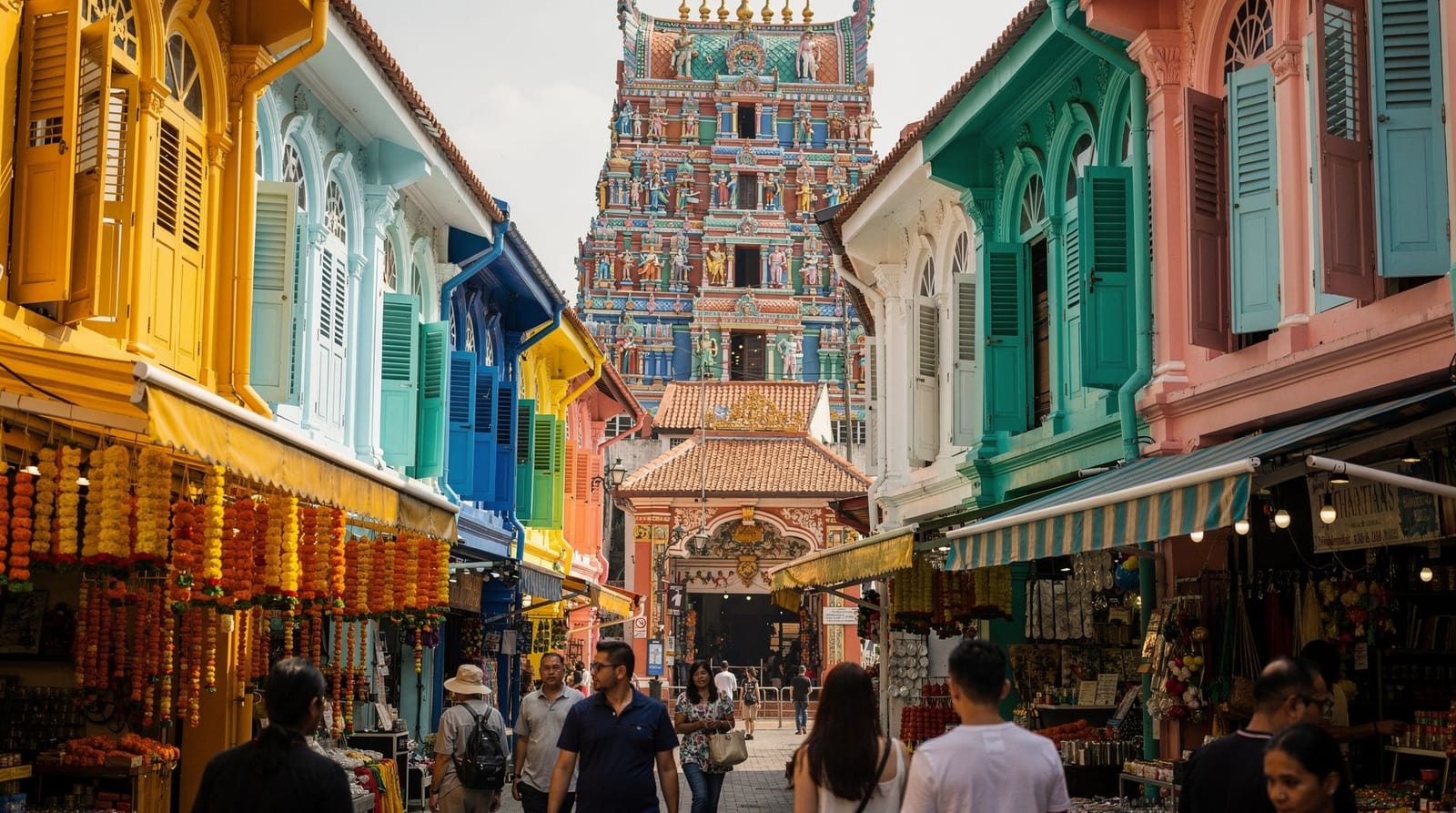
Getting to Little India: 2 stops on the Downtown Line to Little India station, or walk 20 min through the Jalan Besar area.
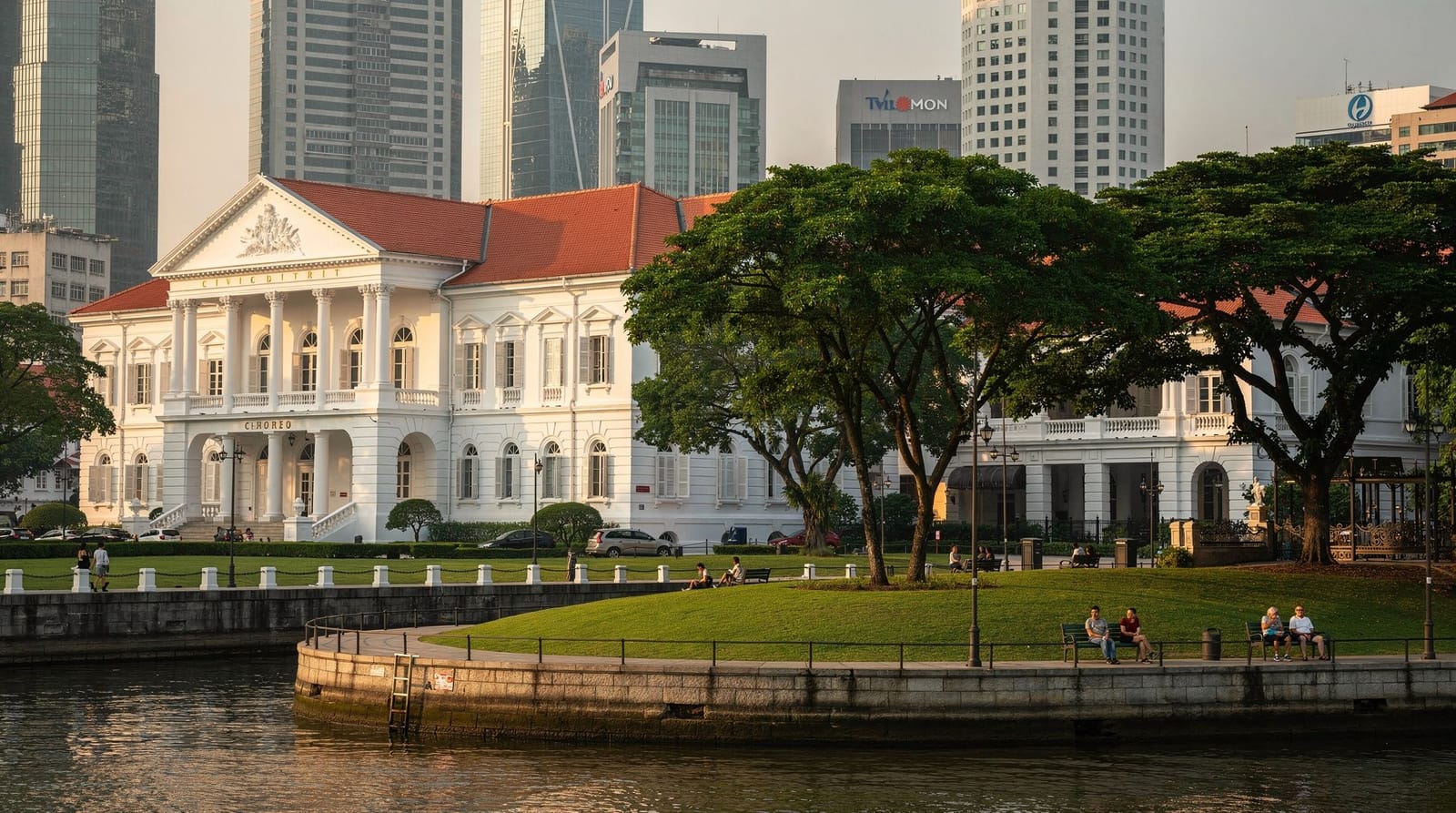
Getting to City Hall / Civic District: 2 stops west on the East-West Line.
Jalan Besar — the neighbourhood just east
Five minutes walk east of Bugis MRT is the Jalan Besar neighbourhood — a largely ungentrified residential area that has a quiet, local character quite different from the tourist-facing Haji Lane strip. The area has seen some gentrification around Horne Road and Kelantan Road (coffee shops and small eateries aimed at a younger local crowd) but remains primarily a HDB residential zone.
Jalan Besar Hawker Centre (adjacent to the Jalan Besar Swimming Complex on Tyrwhitt Road) is a well-regarded but relatively unknown hawker centre, popular with local workers and residents. It serves a wide range of Chinese and Indian dishes; the roti prata stalls are particularly good. Lunch is the peak time; prices are lower than the more tourist-accessible hawker centres. An honest option if you want hawker food without the Chinatown or Little India crowds.
Lavender Food Square (on Lavender Street, between Jalan Besar and Lavender MRT) is a covered hawker centre known for Beef Kway Teow (flat rice noodles in beef broth) — a dish that is harder to find in Singapore than it should be, imported from the Teochew communities. SGD 5–8 per bowl.
Photography tips for Bugis and Haji Lane
The pastel shophouse facades of Haji Lane are best photographed in the early morning (before 9 am) when the lane is empty and the eastern light catches the facades cleanly. By mid-morning the lane fills with delivery scooters and opening shops; by afternoon it is often crowded. The murals are worth finding — check Instagram tags for the current murals as they change periodically. Arab Street shopfronts (particularly around Block 79) have ornate awnings and carpet displays that photograph well.
Bugis Street market inside is difficult to photograph well — it is covered, poorly lit, and densely packed. Focus on the street-facing stalls at the entry level if you want usable images. The surrounding Liang Seah Street (one block north) has older shop facades that are often missed.
Is Bugis worth a dedicated visit?
For most itineraries, yes as a half-day stop rather than a full-day destination — the area rewards a focused two-to-three hour loop (Bugis Street, Haji Lane, Sultan Mosque, Arab Street) more than an open-ended wander. Travellers with limited time in Singapore who have to choose between Bugis and a full Chinatown or Little India visit should generally prioritise those denser cultural quarters first, then add Bugis and Kampong Glam if a second afternoon is available. The Civic District sits two MRT stops away and pairs naturally with a Bras Basah detour if you are already in the area for the museums.
Frequently asked questions about Bugis
Is Bugis Street worth visiting?
Yes for a quick look, especially if you want cheap souvenirs or summer clothing. Do not expect artisan crafts or quality goods. Budget 30–45 minutes; more if you find something worth buying. It is different enough from the mall experience to be worth a short diversion.
What is the difference between Bugis and Kampong Glam?
Bugis refers to the area around the MRT station and the market; Kampong Glam is the traditional Malay heritage quarter immediately north, anchored by Sultan Mosque and the Malay Heritage Centre. They overlap — Haji Lane sits between them. In practice, most visitors cover both in the same visit.
Are there halal food options in Bugis?
Yes — the entire Kampong Glam quarter operates largely as a halal food area. Zam Zam, Warong Nasi Pariaman, and most restaurants on Bussorah Street and Arab Street are halal. The halal food guide has further detail.
Can I take photos at Sultan Mosque?
Yes, from outside and in the public areas of the mosque, including the main prayer hall during visitor hours. Photography during prayer times is not permitted. The mosque staff are generally welcoming to respectful visitors.
Is Haji Lane good for shopping?
Haji Lane is good for independent boutique and vintage shopping if you are comfortable with boutique prices. Do not expect bargains — the shops here price their goods at SGD 40–200+ for clothing, similar to a decent boutique in any major city. The experience is the atmosphere and the curation, not the price. For budget shopping, Bugis Street is more appropriate.
How much time should I budget for Bugis and Kampong Glam together?
Half a day (3–4 hours) covers the essentials comfortably: Bugis Street (30–45 min), Haji Lane (45 min–1 hour including a cafe stop), Sultan Mosque and Arab Street (1 hour), and a meal at Zam Zam or Warong Nasi Pariaman. Add another hour if visiting the National Museum or CHIJMES in the Bras Basah area, or a full extra hour for Jalan Besar’s local hawker scene.
Top experiences
Bookable activities with verified prices and instant confirmation on GetYourGuide.