Civic District
The Civic District is Singapore's colonial and cultural heart — National Gallery, Padang, Esplanade.
Singapore: National Gallery entry tickets
Quick facts
- MRT access
- City Hall (North-South/East-West lines) — exits directly into the district
- Character
- Colonial architecture, national museums, Padang, Esplanade arts centre
- National Gallery
- World's largest Southeast Asian art collection; adult SGD 20, free on Fridays 6–9 pm
- Free sights
- Padang, St Andrew's Cathedral, Victoria Theatre exterior, Supreme Court
- Esplanade
- Free performances at the outdoor theatre most evenings; library on level 3
The Civic District is Singapore’s institutional and historical centre — the square mile where Raffles landed in 1819, where the colonial administration built its grandest buildings, and where independent Singapore has placed its most important cultural institutions. It is walkable from City Hall MRT in any direction, and it contains more worthwhile history per square metre than anywhere else in the city.
| Where | City Hall MRT (North-South/East-West Line), central Singapore |
| Cost | Free colonial walk; National Gallery around SGD 20 (free Fri 6–9pm) |
| Time needed | Half a day; pair with Marina Bay or Clarke Quay for a full day |
| Getting there | MRT direct to City Hall; exits lead straight to the Padang |
| Best time | Morning for photography; midday for air-conditioned museums |
What the Civic District actually covers
The district runs roughly from Fort Canning Hill in the northwest, along the riverfront east to the Esplanade, and south to the riverside. The central spine is St Andrew’s Road, with the Padang (the historic open field) on the west and the Singapore River on the east. The colonial buildings — Supreme Court, City Hall, Victoria Theatre, Parliament House — all cluster within 10 minutes walk of each other.
This is also where you find the National Gallery Singapore, the Asian Civilisations Museum, the Arts House, the Esplanade (the performing arts centre), and the Padang itself (still used for National Day parades and major public events).
National Gallery Singapore
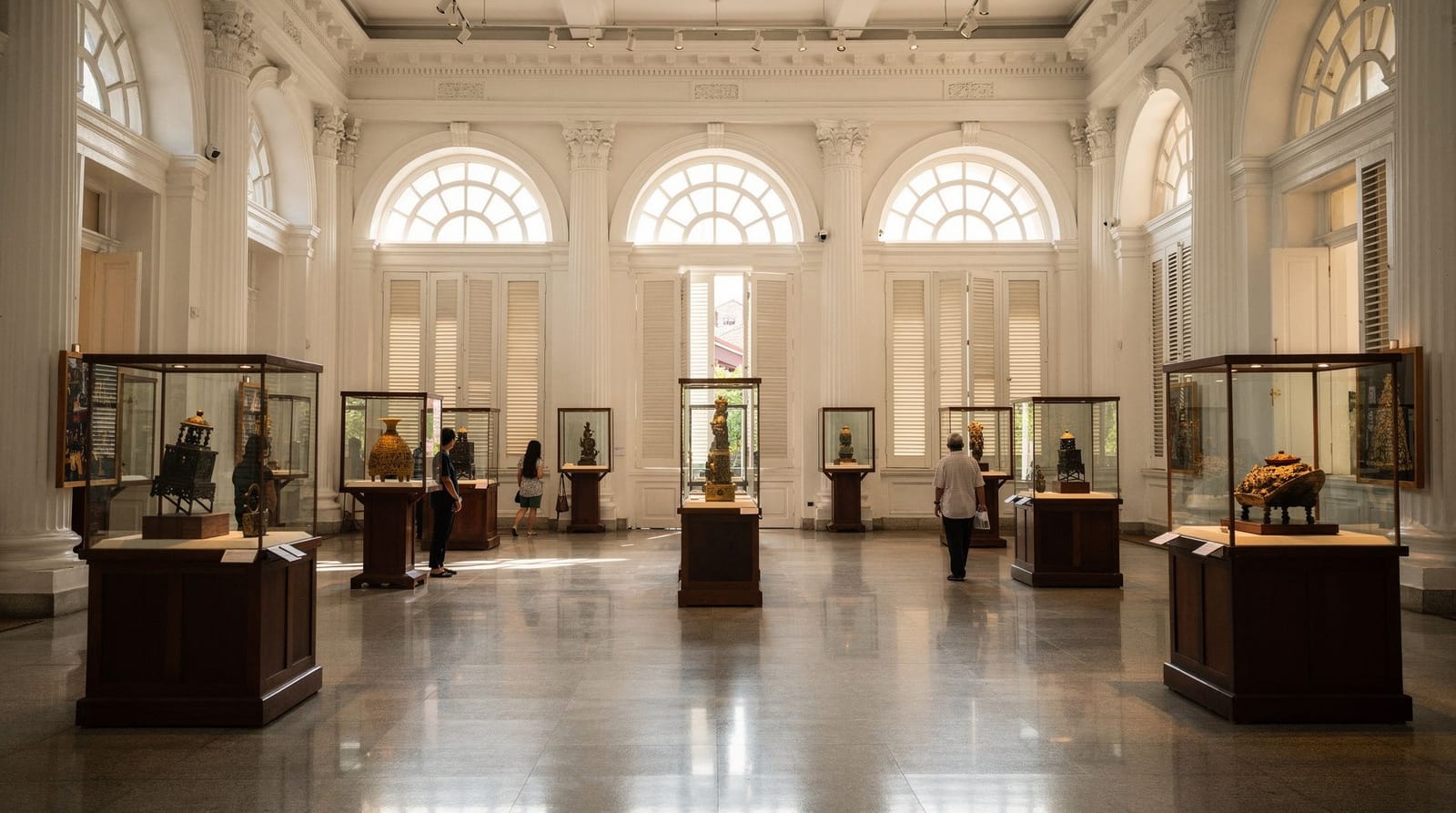
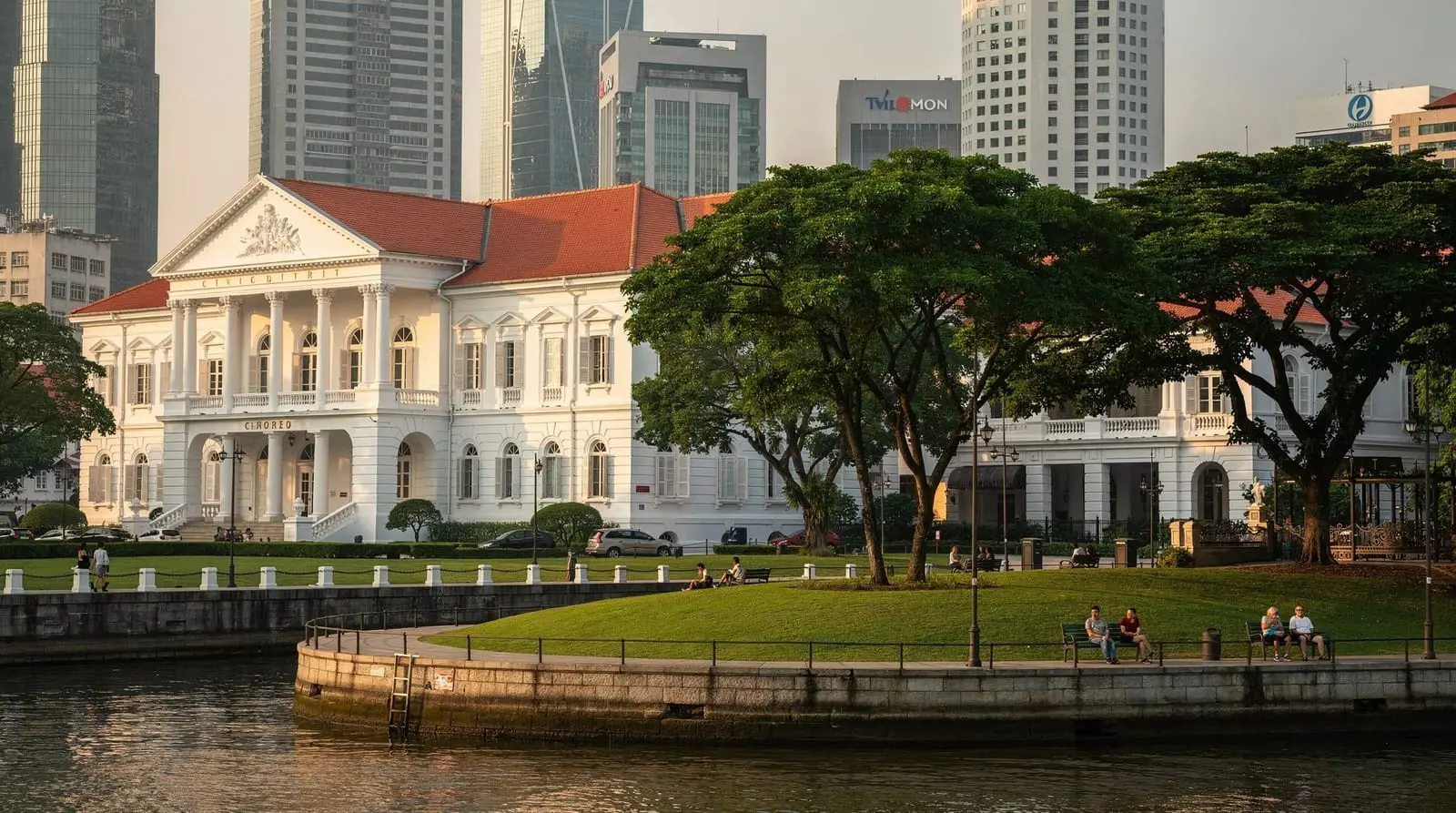
The National Gallery occupies two connected colonial buildings — the old Supreme Court (completed 1939) and the old City Hall (1929) — linked by a covered courtyard. The merger is architecturally bold and successful. It holds the world’s largest public collection of modern Southeast Asian art, covering Singapore and the broader region from the 19th century to the present.
Adult entry is SGD 20 for the permanent galleries; SGD 25–35 for combined permanent and special exhibitions (varies). Importantly, entry to the permanent collection is free on Friday evenings from 6 pm to 9 pm — the best time for visitors on a budget. The gallery closes at 7 pm on most days; 9 pm on Fridays.
The DBS Singapore Gallery (level 1, free entry) gives a historical overview of Singapore’s visual art. The UOB Southeast Asia Gallery covers the broader region. Both are well-curated; the UOB gallery in particular has work by major Vietnamese, Indonesian, Thai, and Filipino artists that most Western visitors will not have encountered before.
National Gallery Singapore entry tickets — book in advance for popular special exhibitionsFor a full guide to what to see and how long to allow, see the National Gallery guide.
The colonial walk — free, self-guided
The concentration of 19th and early 20th-century colonial architecture in the Civic District is one of the densest in Southeast Asia. All of the buildings below are visible from the street at no charge:
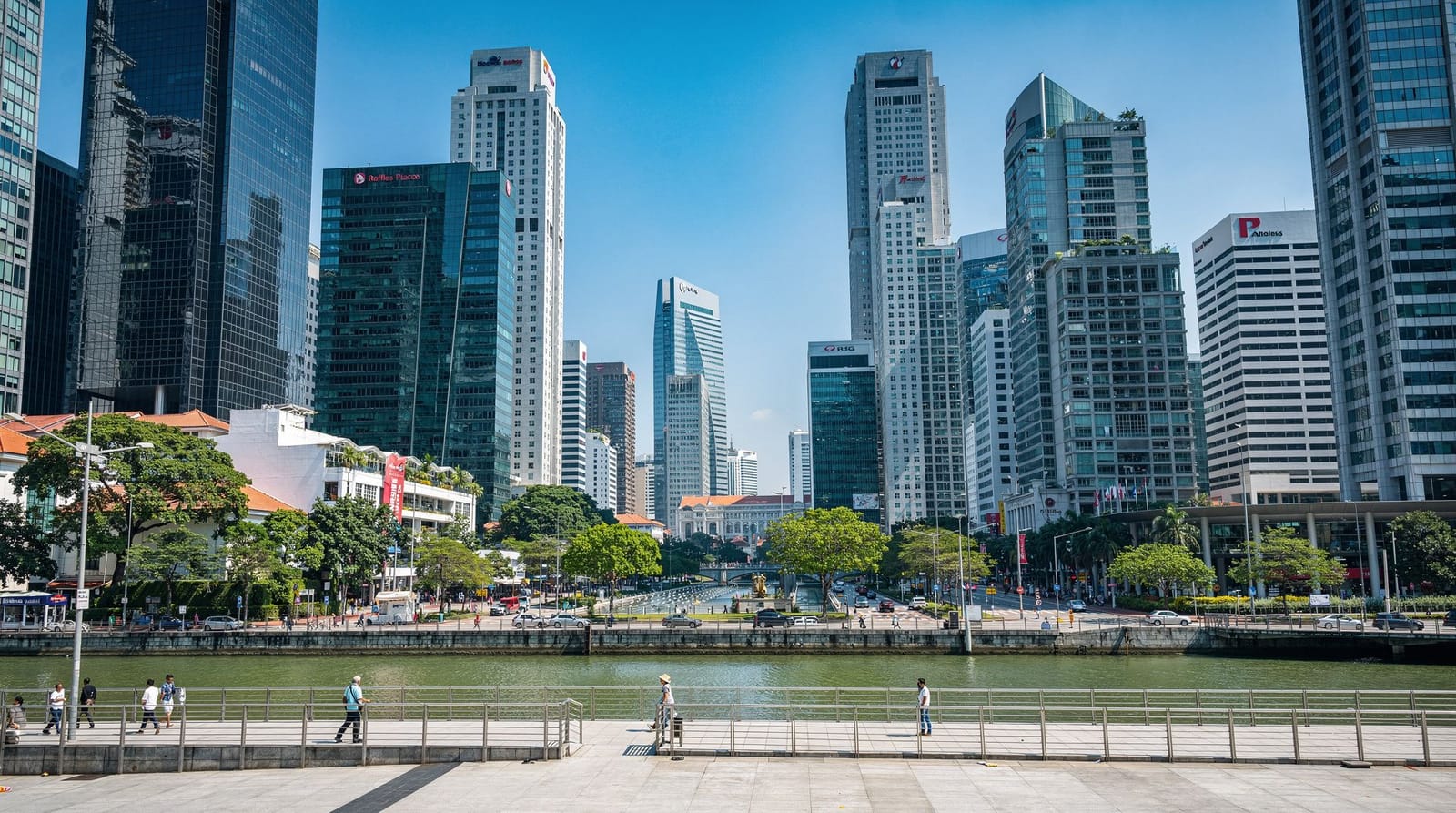
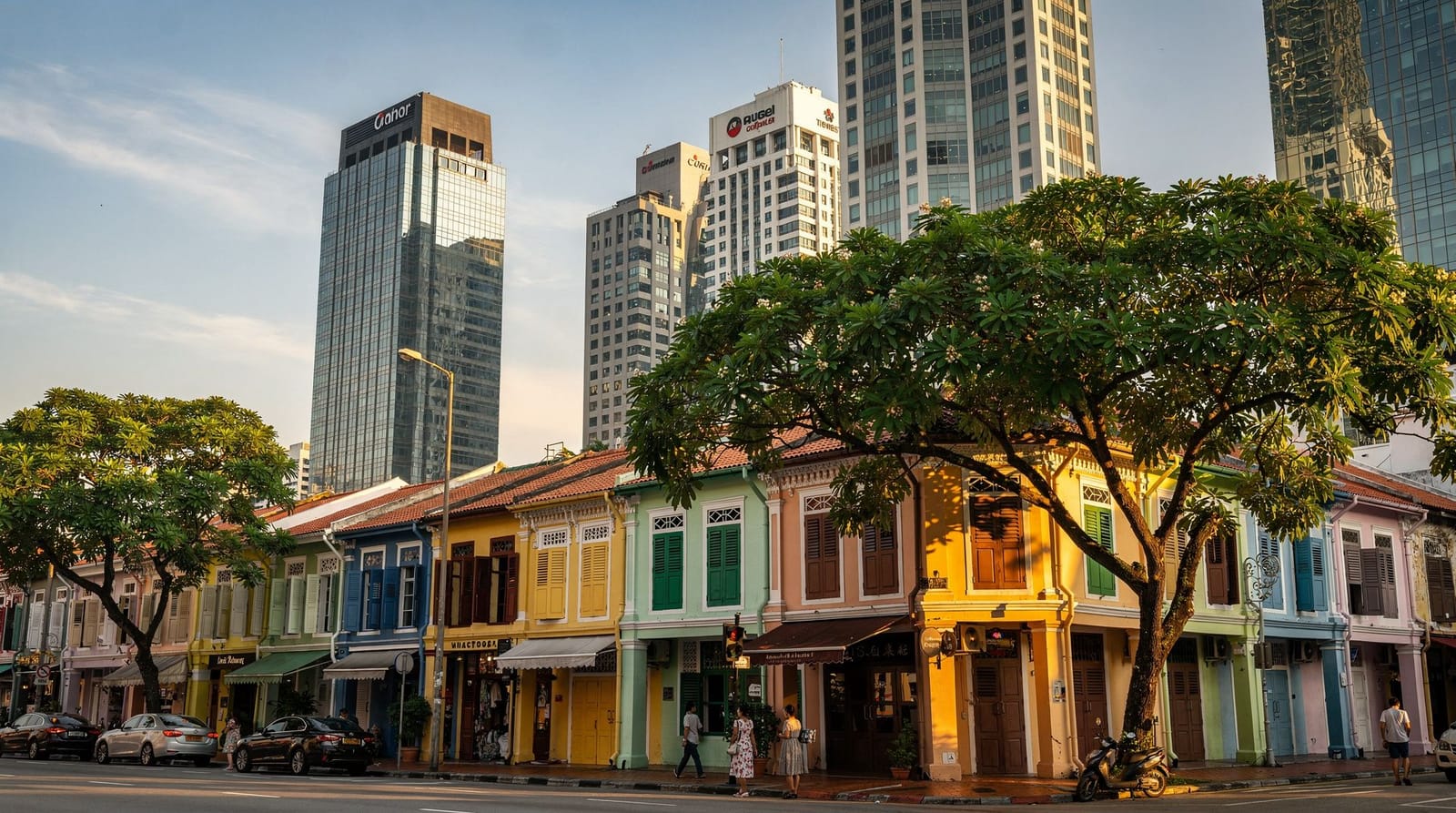
Padang — the open field in front of City Hall. Used for cricket since the 1830s (Singapore Cricket Club still operates on the southern end), National Day parade rehearsals, and periodic public events. Walk across it freely; the contrast of the manicured lawn against the glass towers of the CBD behind is distinctly Singaporean.
St Andrew’s Cathedral (North Bridge Road) — Anglican cathedral completed in 1862, in neo-Gothic style. Open to visitors daily; free entry. The interior is cool and quiet; the plaster on the walls was historically mixed with eggshells, sugar, and coconut husks (a technique called “Madras chunam”) — worth looking at closely.
Asian Civilisations Museum (Empress Place, riverfront) — a museum covering the history and material culture of Asian civilisations, specifically exploring Singapore’s trade and migration connections with the broader continent. Housed in a 1864 Palladian building. Adult entry SGD 20; free entry Friday 6–9 pm (same as National Gallery). Good permanent collection; strong on Tang shipwreck findings. See the Asian Civilisations Museum guide.
Victoria Theatre and Concert Hall — returned to use after major restoration. The attached clock tower is the most prominent colonial landmark on the riverfront. Check the programme for public performances; the Concert Hall is one of Singapore’s best acoustic venues.
The Arts House (the Old Parliament House, built 1827) — Singapore’s oldest surviving government building. Now a multi-arts venue with occasional free exhibitions and performances. The exterior is particularly fine.
The guided colonial walk option
The walking tour options in this area are strong. The colonial splendour walking tour with lunch covers the district’s key buildings with historical commentary over about 3 hours, including a meal at a local heritage restaurant — a structured alternative to self-guided wandering if you want the history explained properly. The Civic District and Marina Bay guided walk combines both areas in one tour, which is efficient if you are covering both on the same visit.
Esplanade — Theatres on the Bay
The Esplanade — built in 2002 and nicknamed the “Durian” for its spiky aluminium sunshades — is Singapore’s main performing arts centre. It houses concert halls, a theatre, and a shopping mall-arts complex on the Marina Bay waterfront. The free outdoor theatre on the waterfront side of the Esplanade has regular performances — music, dance, theatre — most evenings and weekend afternoons. Check the Esplanade website for the schedule; quality ranges from school ensembles to professional performances.
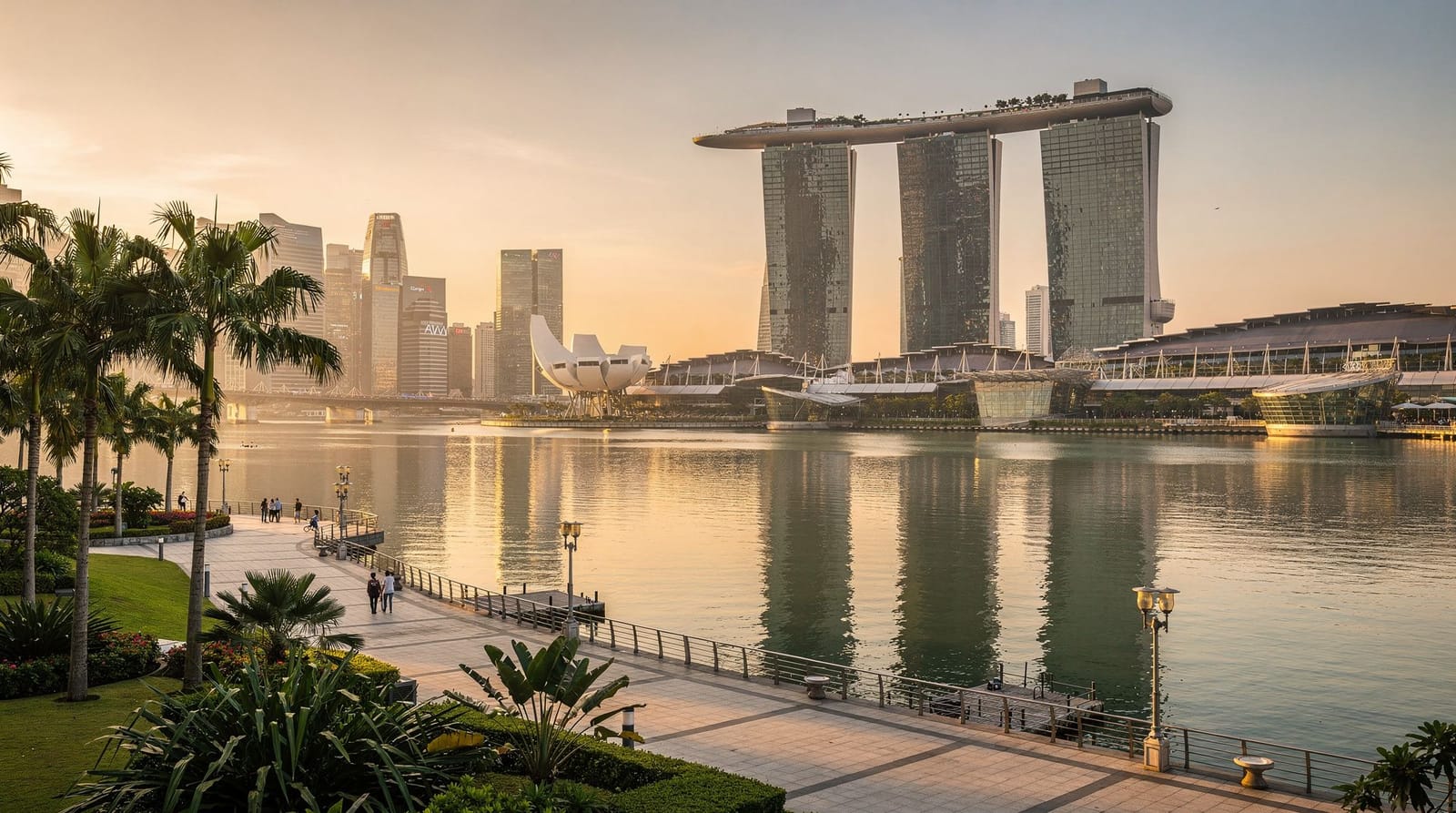
The rooftop of the Esplanade gives excellent views toward Marina Bay Sands and the bay. The food outlets in the mall at the base of the Esplanade run the expected mid-range restaurant range.
The Fort Canning connection
Fort Canning Hill rises immediately northwest of the Civic District. The Singapore River bends around its base. The hill is the site of the Raffles-era government buildings and various fortifications, and in WW2 it was the command centre for the Malay and Singapore campaigns. It is covered in its own guide (see the Fort Canning destination guide), but it is worth knowing that the Civic District and Fort Canning are best done together — the walking distance is under 10 minutes.
The Fort Canning walking tour can be combined with a Civic District morning for a coherent half-day of history.
Practical logistics
City Hall MRT (North-South/East-West interchange) has exits that put you directly adjacent to the Padang and the National Gallery. Exit A for City Hall and St Andrew’s Cathedral; Exit E for Victoria Theatre and the Asian Civilisations Museum.
Walking: the entire Civic District is comfortable to walk if you start early morning or wait until late afternoon. Midday heat (11 am–3 pm) makes outdoor walking unpleasant.
Food: the Civic District itself has limited affordable eating. The closest hawker option is Maxwell Food Centre in Chinatown (15 min walk south) or Lau Pa Sat near Raffles Place (10 min walk east). See the Lau Pa Sat guide.
Raffles — the man and the myth
Stamford Raffles landed on Singapore on 29 January 1819 and quickly recognised the island’s potential as a free port. He struck a deal with the local Malay Temenggong and later with the Sultan of Johor to establish a British trading post. The town plan that Raffles drew up in 1822 — which divided the settlement into separate ethnic quarters (Chinese in the south, Indians along Chulia Street, Malays near the river mouth, Europeans in the civic area) — is directly responsible for the geographic layout of Chinatown, Little India, and Kampong Glam that visitors walk through today.
The Raffles statue outside the Asian Civilisations Museum (on the north bank of the river, near Cavenagh Bridge) marks the approximate spot where he is said to have first landed. It is one of those heritage markers where the specifics are probably slightly wrong but the intent is correct. The original marble statue was unveiled in 1887 by the colonial administration; the bronze copy now stands at the landing site, while the original marble version is inside the National Museum of Singapore.
The Raffles Hotel connection: the long-standing myth that the last wild tiger in Singapore was shot in the Raffles Hotel bar is not accurate — the tiger was trapped and shot at the Sea View Hotel in Katong in 1904, not at Raffles. The Singapore Sling origin story at Raffles is better documented (bartender Ngiam Tong Boon, Long Bar, around 1915). These details matter if you are telling the story rather than just repeating it.
Merlion Park from the Civic District
Merlion Park — where the stone half-fish, half-lion statue stands facing the bay — is on the southern edge of the Civic District at the mouth of the Singapore River, adjacent to One Fullerton. It is a 10-minute walk from City Hall MRT via the waterfront. The park is open 24 hours and free. The Merlion is considerably smaller than most photos suggest (8.6 metres); its smaller cousin stands nearby. For the full guide, see Merlion Park guide.
What to combine with the Civic District
The Civic District is logically paired with:
- Marina Bay (10 min walk east) — combine for a full day covering colonial history in the morning and the waterfront in the afternoon/evening.
- Clarke Quay (10 min walk west) — the obvious evening complement for dinner and the river cruise.
- Chinatown (15 min walk south) — rounds out the historical tour with the Chinese heritage quarter and the Buddha Tooth Relic Temple.
- Fort Canning (10 min walk northwest) — the hill that was Raffles’ first base and later the WW2 command bunker.
For a structured itinerary, see Singapore in 2 days or Singapore for first timers.
The National Library and arts cluster
The new National Library Building on Victoria Street (10 min walk from City Hall MRT, toward the Bugis end) has a free public reading room with good views and WiFi — useful as a cool, quiet work or planning space. The library holds the Singapore Collection (heritage documents and publications) and hosts regular public talks and exhibitions. The building’s design (by Ken Yeang) is notable for its bioclimatic approach.
Immediately adjacent, the Singapore Art Museum on Bras Basah Road (SAM) specialises in contemporary Southeast Asian art. It underwent major renovation and reopened in expanded form; adult entry around SGD 15. Less comprehensive than the National Gallery but with a more contemporary programme and a stronger connection to living artists from the region. Worth visiting if modern and contemporary art is a specific interest. For an overview of all the museums in this area, see the museums in Singapore guide.
The Civic District on foot — a suggested sequence
For a half-day on foot from City Hall MRT: exit toward St Andrew’s Cathedral (10 min, free), cross the Padang, enter the National Gallery via the Supreme Court entrance (allow 2 hours minimum), exit via the Esplanade side, walk the river to the Asian Civilisations Museum (30 min), continue past Cavenagh Bridge and the Raffles Landing Site to Merlion Park (10 min), then walk back to Bayfront MRT for Gardens by the Bay or Clarke Quay.
This 4–5 hour walk covers the entire arc from colonial administration to contemporary Southeast Asian culture, all within about 2.5 km. The pacing is your own — you can spend as long or short a time in each institution as the content warrants. The midday heat makes moving between air-conditioned buildings the right strategy; schedule outdoor stretches for before 10 am or after 4 pm.
Singapore’s history in 8 minutes at the National Museum
If you want the full story before walking the Civic District, the Singapore History Gallery at the National Museum of Singapore (10 min walk from City Hall MRT, on Stamford Road) runs a concise multi-media presentation of Singapore’s history from the 14th century to independence. It is the best orientation before walking the colonial buildings, because most of what you are looking at becomes more interesting when you know who built it, when, and why. The Singapore history guide provides a comparable written overview.
Civic District vs Marina Bay — which comes first?
Both are close enough to combine, but the order matters for comfort. Do the Civic District’s outdoor colonial walk and museums first, in the morning while temperatures are manageable and the National Gallery offers air-conditioned relief through the midday heat, then move to Marina Bay in the late afternoon and evening when the Rain Vortex-style waterfront lighting and Gardens by the Bay’s Supertree light shows are at their best. Doing it in reverse means walking the exposed Padang and colonial streets during the hottest part of the day, which is avoidable with better sequencing.
Frequently asked questions about the Civic District
Is the National Gallery Singapore free?
The permanent collection is free on Friday evenings (6–9 pm). At other times, adult entry is SGD 20 for permanent galleries only. Special exhibitions cost more. Concession pricing is available for seniors and students. The DBS Singapore Gallery (ground floor, covering Singapore art specifically) is permanently free with any entry.
How long do I need at the National Gallery?
Allow 2–3 hours for a focused visit. The two main permanent galleries (Singapore and Southeast Asia) are extensive. A full day allows you to cover special exhibitions as well; most visitors find 3 hours is the right balance.
Can I walk from the Civic District to Gardens by the Bay?
Yes, in about 25–30 minutes along the Esplanade waterfront and then east along the bay. Alternatively, Bayfront MRT is a 10-minute walk and covers the distance in 2 stops. The riverside walk is pleasant in the evening.
What is the Padang used for?
The Padang is the historic sports and public ground in front of City Hall. Singapore Cricket Club plays on the southern half; Singapore Recreation Club uses the northern end. The Padang is used for National Day parades (9 August), large public celebrations, and occasional concerts. It is open to walk through freely at all times.
Are there free things to do in the Civic District?
Yes — the Padang, St Andrew’s Cathedral, the exterior of all colonial buildings, the Esplanade outdoor performances, and the National Gallery permanent collection on Friday evenings are all free. A self-guided colonial walk costs nothing and covers the district’s main architectural highlights.
How much time should I set aside for the Civic District alone?
Half a day (3–4 hours) covers the essentials: the colonial walk (St Andrew’s Cathedral, the Padang, Victoria Theatre), a proper visit to the National Gallery (2–3 hours if going inside), and a stop at Merlion Park. Add another hour for the Asian Civilisations Museum, or extend into a full day by continuing on to Marina Bay or Clarke Quay in the evening.
Top experiences
Bookable activities with verified prices and instant confirmation on GetYourGuide.