Singapore for first-timers: the 3-day orientation plan
Singapore: Big Bus hop-on hop-off tour by open-top bus
Quick answer: First time in Singapore? Three days, no car, contactless bank card on the MRT, hawker centre every meal, and two paid attractions (Gardens conservatories + one wildlife experience). Everything else — the Singapore Sling, the Flyer, the Orchard Road malls — you can decide about later, or not at all.
| Where | Marina Bay, Chinatown, Little India, Kampong Glam, Mandai/Sentosa |
| Cost | around SGD 250–400/person for 3 days, mid-range |
| Time needed | 3 full days |
| Getting around | MRT (contactless), Grab as backup, no car needed |
| Best time to go | Book Night Safari/USS ahead for weekends |
What first-timers need to know before they arrive
Singapore surprises almost everyone. The cleanliness and order are genuine (littering fines are SGD 1,000; the roads really do work). The food is exceptional and cheap at hawker centres (SGD 5–10 per dish) and excellent but expensive in restaurants. The heat is real — 30–32 °C every day, humidity 80–90 %. The MRT works perfectly.
What catches first-timers out:
- The tourist tax at hotel restaurants — pay three times the hawker price for worse food
- Orchard Road — it’s an upscale shopping street, not a neighbourhood with character
- The Singapore Sling at Raffles — SGD 37–42 for a cocktail that’s not as good as you’d expect. Visit Raffles for the colonial building; drink somewhere cheaper. See Singapore Sling: is it worth it?
- Underestimating the heat — plan indoor breaks 12:00–14:00 every day
Full list of what to avoid: Singapore tourist traps and what to skip in Singapore.
Day 1: Marina Bay and a city orientation
The first day should orient you — give you the skyline, give you the geography, and give you a proper hawker meal so you understand what makes Singapore’s food culture exceptional.
Morning: the skyline (08:30–11:30)
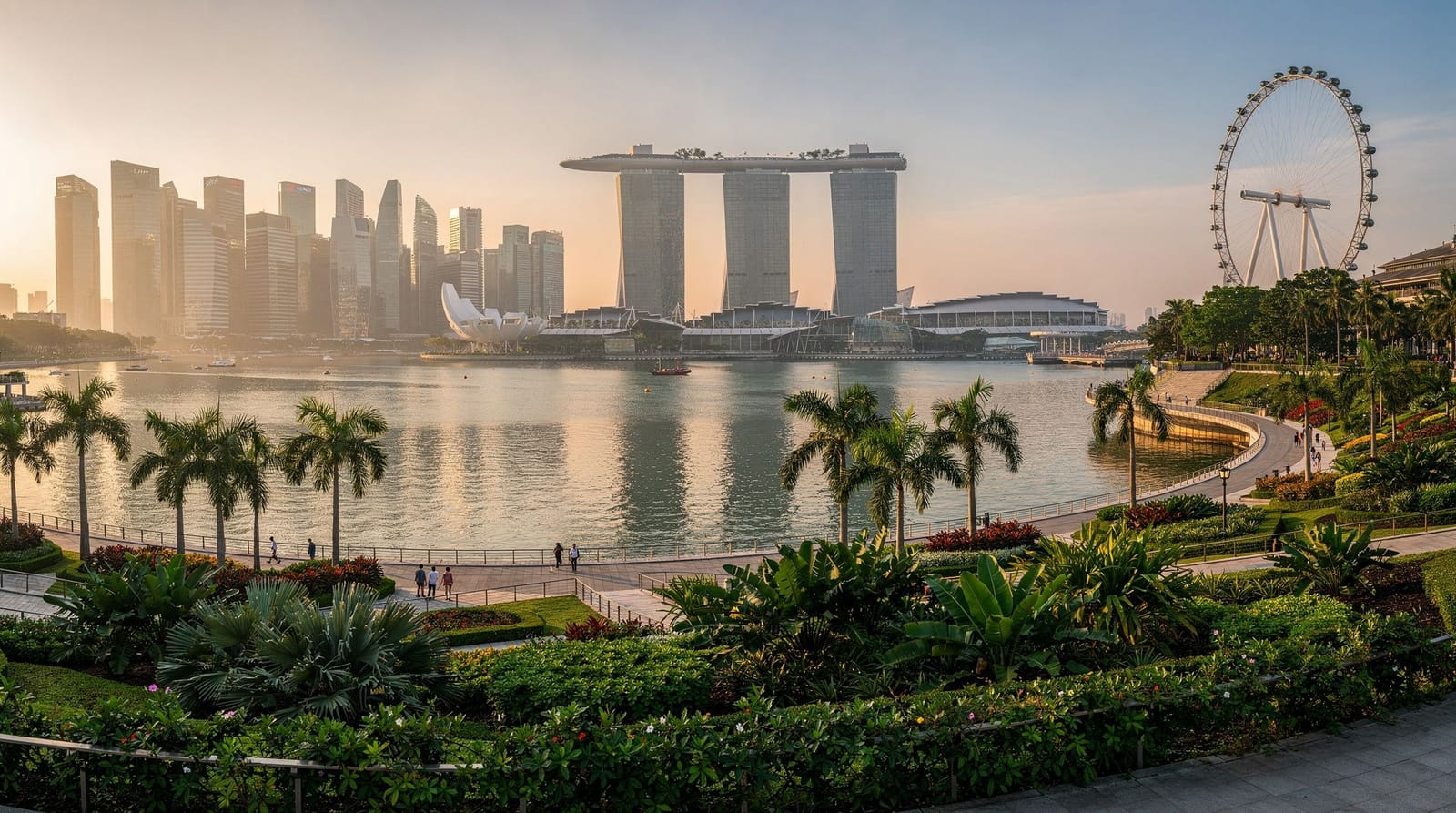
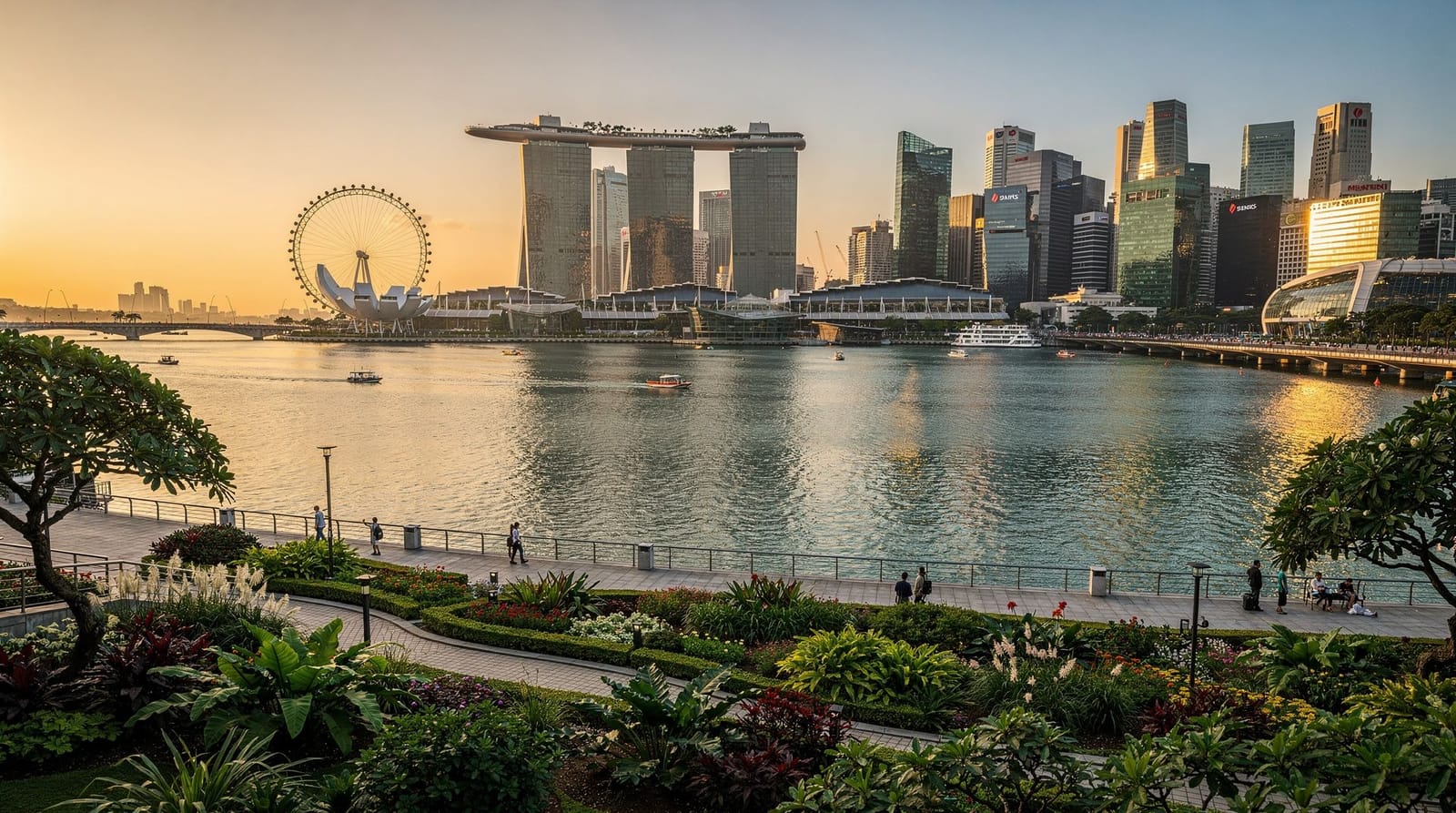
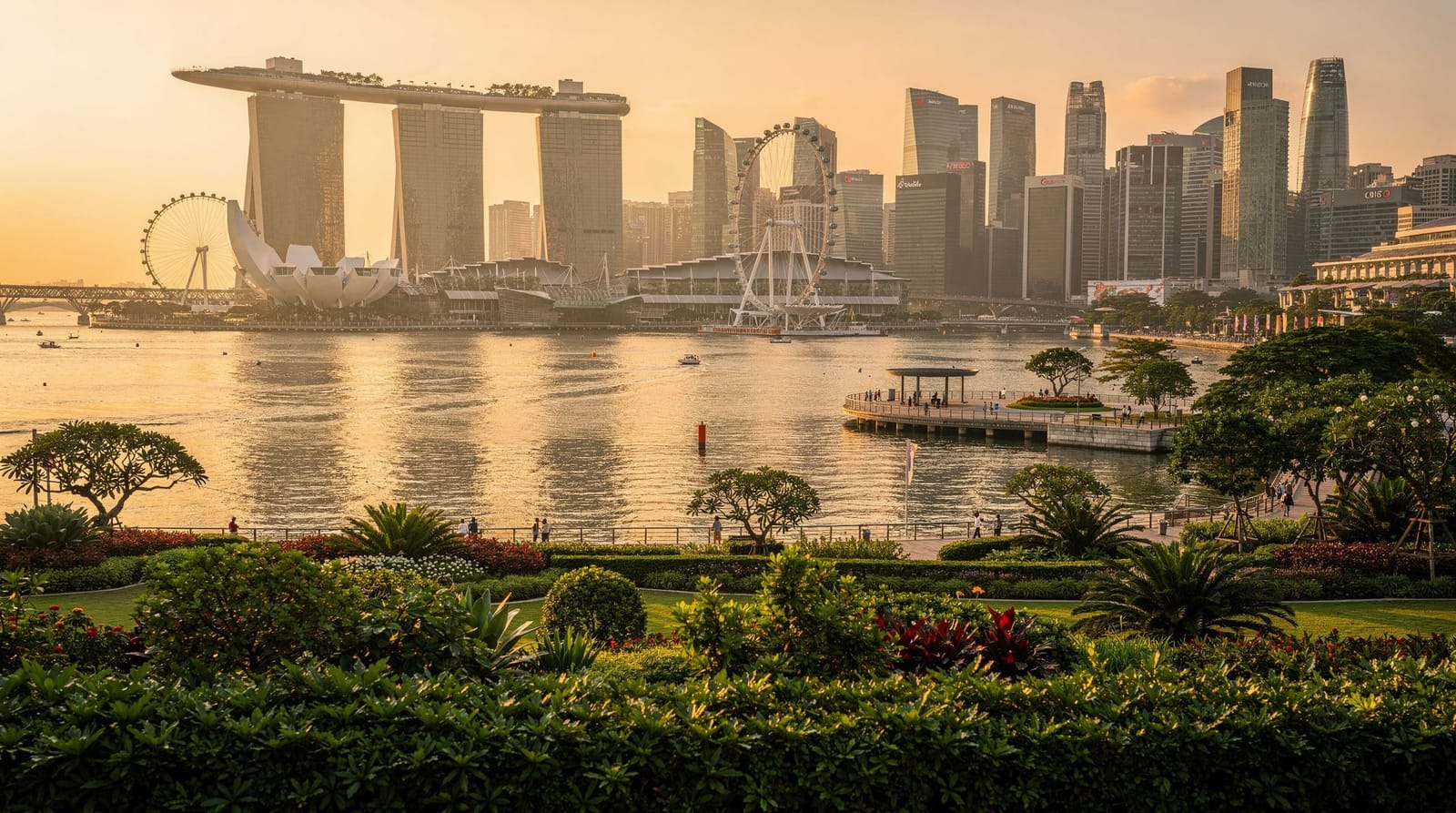
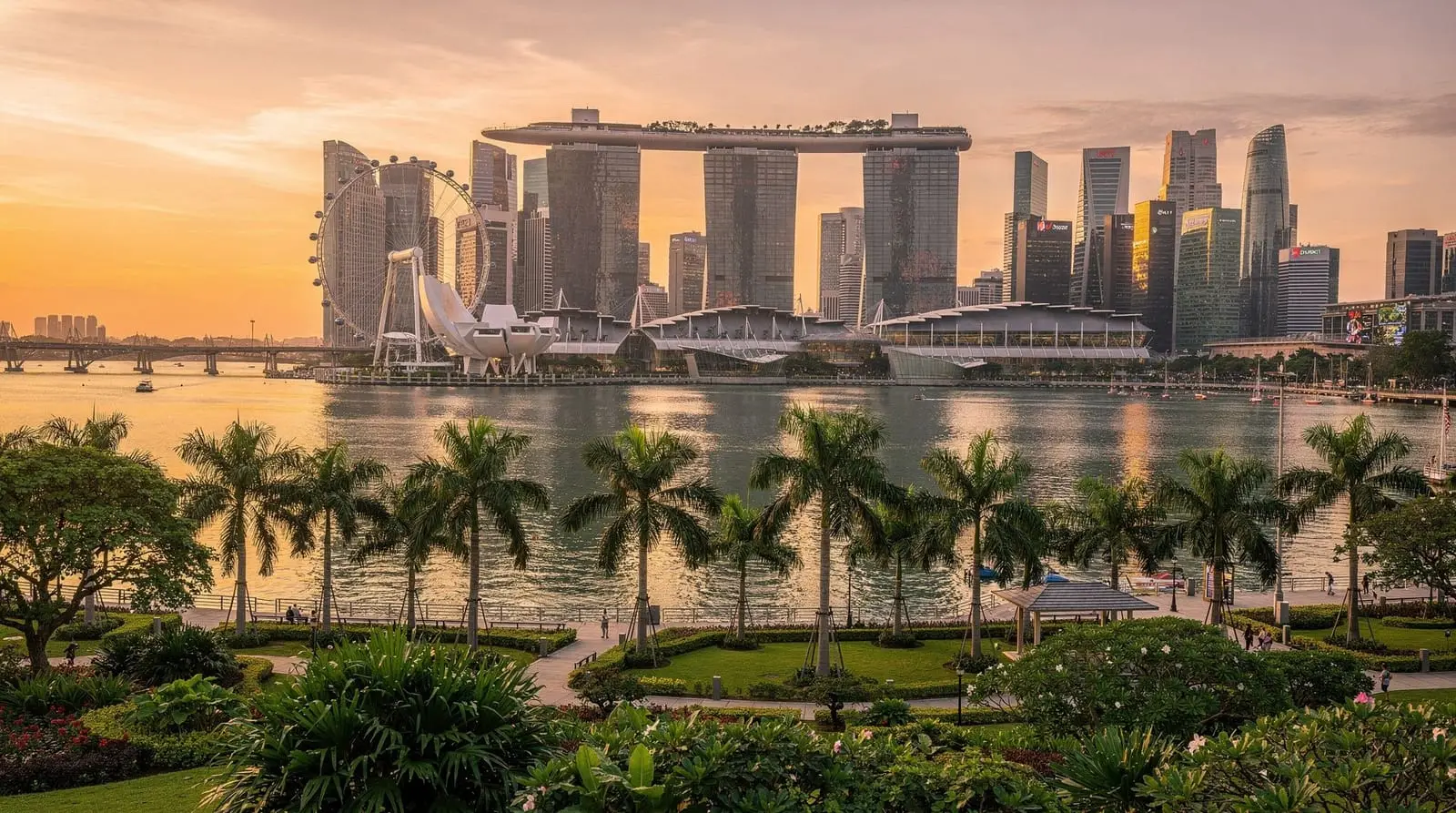
08:30 — Merlion Park: From your hotel, take the MRT to City Hall (East-West or North-South Line, exit B). Walk 5 minutes to Merlion Park. Free. The lion-fish statue is smaller than expected (the big one is 8.6 metres) but the framing across the water to Marina Bay Sands is the iconic Singapore shot. Spend 15 minutes here.
Walk east along the waterfront promenade: One Fullerton, the Helix Bridge (a pedestrian bridge modelled on DNA structure, good for architecture photographers), and the front of the ArtScience Museum (lotus-flower building, worth seeing from outside even if you skip the inside).
10:00 — Marina Bay Sands SkyPark: For a first-timer, the observation deck is worth it. 57th floor, 360-degree views, the whole island visible on a clear morning. Tickets around SGD 32–36; book online to avoid the box office queue. Honest assessment at is MBS worth it?
A practical orientation note from up here: you can see the Supertrees of Gardens by the Bay to the south, Sentosa and its resort hotels to the southwest, the forested central reservoir (MacRitchie, visible as a green mass), and the Straits of Johor to the north where Malaysia begins. Singapore is small — 50 km across — and from 57 floors up, you can see almost all of it.
Late morning: Gardens by the Bay (11:00–13:00)
Walk 10 minutes from MBS to Gardens by the Bay. The outdoor grounds are free — walk through the Supertree Grove (metal tree structures 25–50m tall, dripping with plants, best photographed from the ground looking up or from the OCBC Skyway bridge between two of them). The Skyway itself costs SGD 14 for adults.
The two conservatories are the paid highlight:
- Cloud Forest: A 35-metre mountain inside a glass dome, covered in ferns, mosses, and orchids, with artificial mist and a waterfall down the front face. About 50 minutes to walk properly.
- Flower Dome: Mediterranean-climate plants, seasonal floral installations, drier and cooler than Cloud Forest. About 40 minutes.
Bundle ticket (~SGD 46). Pre-book online for timed entry.
Gardens by the Bay — both conservatories bundleLunch: your first hawker meal (13:00–14:30)
This is the most important meal of the trip. Go to a hawker centre — not a restaurant, not a hotel buffet, a hawker centre. For day 1, take MRT from Bayfront (2 stops) to Tanjong Pagar and walk 5 minutes to Maxwell Food Centre.
What to order (go to whichever stall has a queue):
- Hainanese chicken rice — poached or roasted chicken, fragrant rice, three dipping sauces, SGD 5–6
- Laksa — coconut-curry noodle soup, prawn or fish, the Singapore version is thicker and richer than elsewhere, SGD 5–7
- Char kway teow — flat rice noodles, wok-fried with egg, bean sprouts, cockles and Chinese sausage, SGD 5–8
Order one main dish, add a drink (barley water or sugar cane juice, SGD 1.50), and sit. Total: SGD 10–12. Guide to dishes: must-try dishes in Singapore.
A guided hawker tour for a first visit can add useful context — the 7-tasting Chinatown hawker tour covers seven dishes with explanation of the cultural background at each.
Afternoon: Chinatown (14:30–17:30)
Walk from Maxwell to Chinatown MRT area. What to actually see:
- Buddha Tooth Relic Temple (288 South Bridge Road): Free. Remove shoes. A four-storey Tang-dynasty-style building completed in 2007, housing a tooth relic believed to be the Buddha’s. The rooftop garden is free and quiet. Take the lift to the top, walk down.
- Sri Mariamman Temple (244 South Bridge Road): Free, shoes off. Singapore’s oldest Hindu temple (1827), vivid gopuram (tower) with deities, active worship. Go in if you can — it’s a functioning place of devotion.
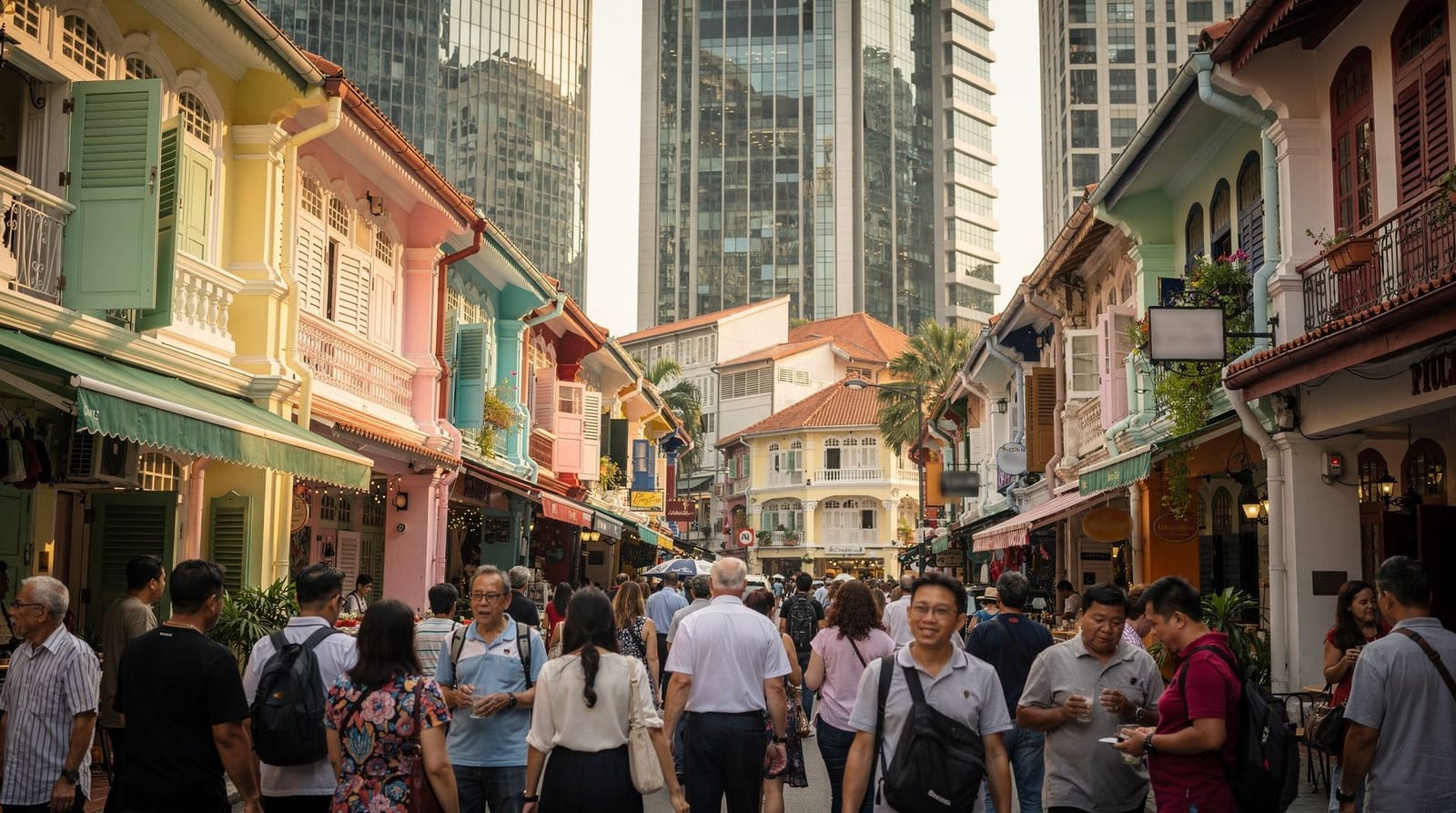
- Ann Siang Hill and Club Street: Behind the main tourist streets, a block of restored shophouses with coffee bars and boutiques. The real neighbourhood feeling.
Skip: the souvenir stalls on Pagoda Street (tourist prices, generic merchandise). The Chinatown guide has an honest map of what’s worth your time.
Evening: Supertree light show (19:30–21:00)
Return to Gardens by the Bay for the Garden Rhapsody light show — the Supertrees illuminate in sync with music at 19:45 and 20:45, about 10 minutes each show. Free. Arrive 15 minutes before for a good spot in the grove. This is one of Singapore’s genuinely great free experiences.
Dinner at Satay by the Bay (Gardens hawker, SGD 8–15 per person) or back at a hawker centre in Chinatown.
Day 2: The other ethnic quarters (Little India and Kampong Glam)
This is the walking and eating day.
Morning: Little India (08:30–11:30)
Tekka Centre (Buffalo Road, Little India MRT): South Indian breakfast. Dosai (fermented lentil crepe with sambar and coconut chutney), idli (steamed rice cakes), or prata (flaky flatbread) — SGD 2–5 per item. The hawker floor is upstairs; the wet market (fish, vegetables, flowers) is downstairs and interesting to walk through.
Walk Serangoon Road: the Sri Veeramakaliamman Temple (141 Serangoon Road, free, shoes off, Hindu, dedicated to the goddess Kali, very active for morning puja). The side streets — Dunlop Street, Kerbau Road — have the old provision shops and the jasmine garland sellers who supply temples and shrines across the city.
Little India is dense, aromatic, and genuinely different from downtown Singapore — it’s one of the best 90 minutes on any first visit.
Mid-morning: Kampong Glam (11:30–13:30)
MRT from Little India to Bugis (DT Line, 2 stops). Walk 10 minutes north.
Sultan Mosque (North Bridge Road): free, open to non-Muslims outside prayer times (check the schedule posted at the entrance), cover shoulders and knees. The golden dome is the defining image of Kampong Glam. Walk Bussorah Street opposite the mosque — old Malay shophouses, now cafes and traditional craft sellers.
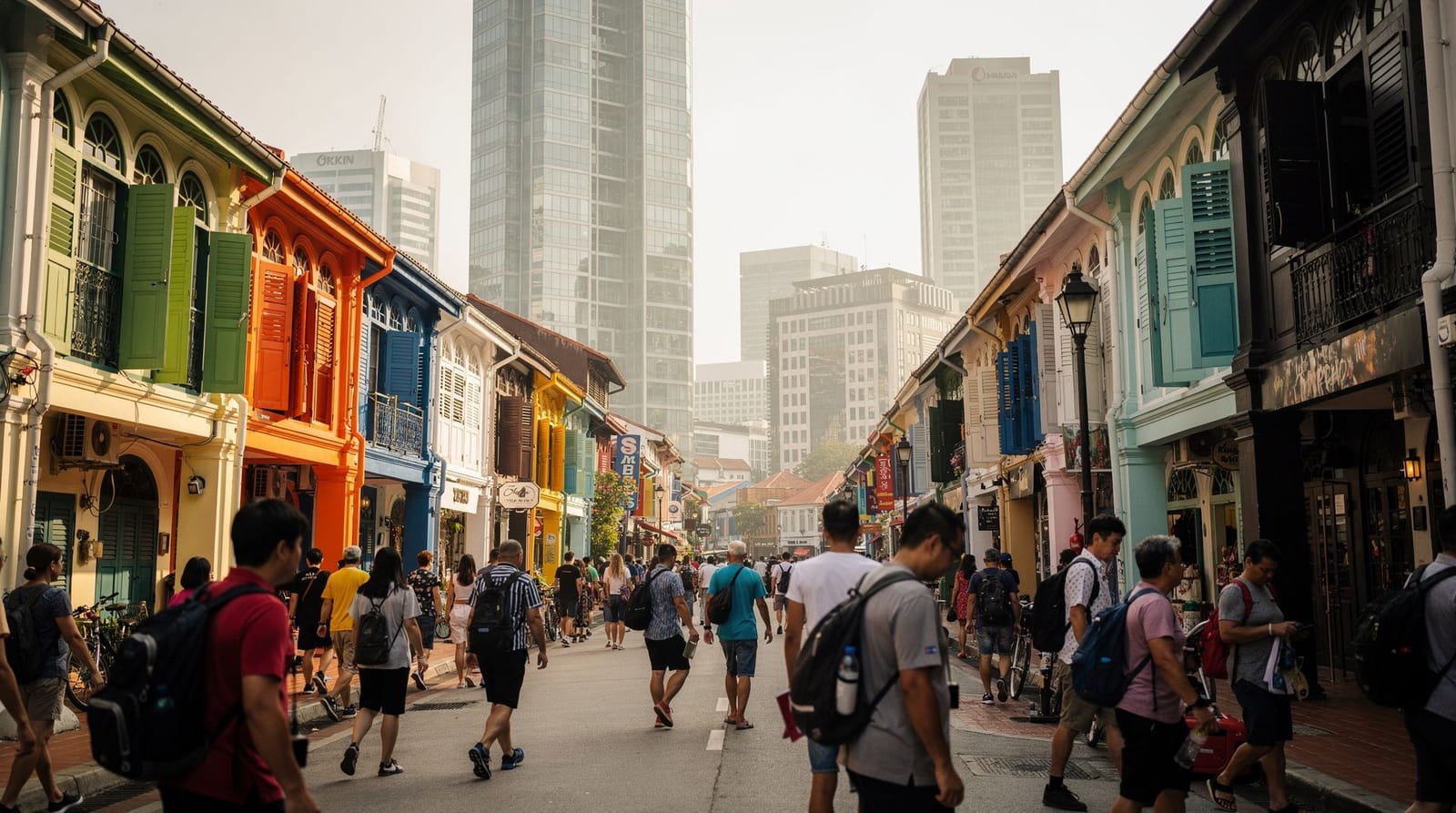
Haji Lane (parallel to Arab Street): A narrow alley of brightly painted shophouses with boutique fashion shops, coffee, street art. It’s Instagram-friendly but not overdone — the mix of independent shops is genuine. Full Kampong Glam guide.
Lunch (13:00–14:00)
Zam Zam (697–699 North Bridge Road, opposite Sultan Mosque): Murtabak — a thin-dough stuffed flatbread with egg, onion, and meat, cooked on a flat griddle. One of the oldest restaurants in Singapore (est. 1908). SGD 8–12 per person.
Afternoon: Civic District and Fort Canning (14:00–17:30)
Walk or MRT to City Hall. The Civic District is Singapore’s colonial administrative heart:
- Padang: The old cricket ground, flanked by the 1929 Supreme Court and City Hall — now the National Gallery Singapore (SGD 20, Southeast Asian art), a remarkable adaptive reuse of two colonial buildings connected underground.
- St Andrew’s Cathedral (next to City Hall MRT): Free, colonial Gothic, dating from 1862, used as a hospital during the Japanese occupation.
- Fort Canning Park (5-minute walk from City Hall): Free hilltop park with colonial and pre-colonial history — Raffles’ original settlement, the WWII Battlebox bunker, good views.
If you want to skip the museums, just walk through the Civic District for the architecture and down to Boat Quay for the colonial waterfront. The restored shophouses and the original godowns (warehouses) along the river are the clearest physical expression of how Singapore made its money in the 19th century.
Evening: Clarke Quay and a bumboat (18:00–21:00)
Clarke Quay at dusk is the classic Singapore evening — bars and restaurants in the old warehouses, outdoor seating, the river reflections, the city towers lit behind it. A bumboat river cruise (SGD 25–30, 40 minutes, departs from Boat Quay) gives you the colonial river context from the water — good if you want the story behind the buildings.
Dinner at Clarke Quay or walk to Keong Saik Road in Chinatown for better restaurant value (less tourist pricing than the quay-front restaurants).
Day 3: One big attraction — your choice
By day 3 of a first visit, you know enough about Singapore to make a real choice. Two main options:
Option A: Night Safari (best unique Singapore experience)
Take a mid-morning rest, explore a neighbourhood market, or visit the Botanic Gardens (MRT to Botanic Gardens, CC Line, free, UNESCO site). Then:
19:30 — Night Safari: Mandai Wildlife Reserve (Ang Mo Kio MRT + bus, or Grab). The world’s first nocturnal zoo — 900+ species in 10 habitat zones, tram ride included, walking trails optional. Genuinely unique experience; nothing like it anywhere else. Tickets ~SGD 55, pre-book.
Night Safari — admission with tram rideFull honest guide: Night Safari.
Option B: Sentosa day (best for theme parks and beaches)
HarbourFront MRT → Sentosa Express → Universal Studios Singapore (morning, ~SGD 83, queues shortest when gates open) → afternoon on the Sentosa beaches → Wings of Time show in the evening (SGD 23–28).
Guide: Universal Studios Singapore and Sentosa.
Arriving: your first hour in Singapore
Most first-timers land at Changi Airport, and it’s worth knowing before you land that most nationalities now file a short digital arrival card in advance — check the arrival card and visa guide a day or two before your flight so you’re not doing it in the immigration queue. From the airport, the MRT into the city takes 30–45 minutes depending on your hotel’s line, or a taxi/Grab runs SGD 25–40 and 20–30 minutes; the Changi Airport to city guide breaks down every option with current fares.
Where to stay on a first visit
Location matters more than luxury for a first three-day trip. Bugis and Kampong Glam put you within walking distance of two of this itinerary’s three ethnic quarters and a short MRT ride from Marina Bay. Chinatown and Tanjong Pagar are quieter and equally well connected, with easier access south toward Sentosa. Avoid a hotel on Orchard Road for a first visit — it’s convenient for shopping but adds transit time to almost everything else in this plan. Full detail at the where to stay guide.
How long you actually need
This plan assumes three days, which is the honest minimum for a satisfying first visit — enough to see the icons, walk all three ethnic quarters, and add one big attraction. If your trip is shorter, the 2-day itinerary compresses this same structure; if you have longer, how many days in Singapore explains exactly what each extra day buys you. Weather is worth a glance too — Singapore’s climate barely varies but rainfall does, and the month-by-month weather guide shows which months carry the heaviest afternoon downpours if your travel dates are still flexible.
Transport for first-timers
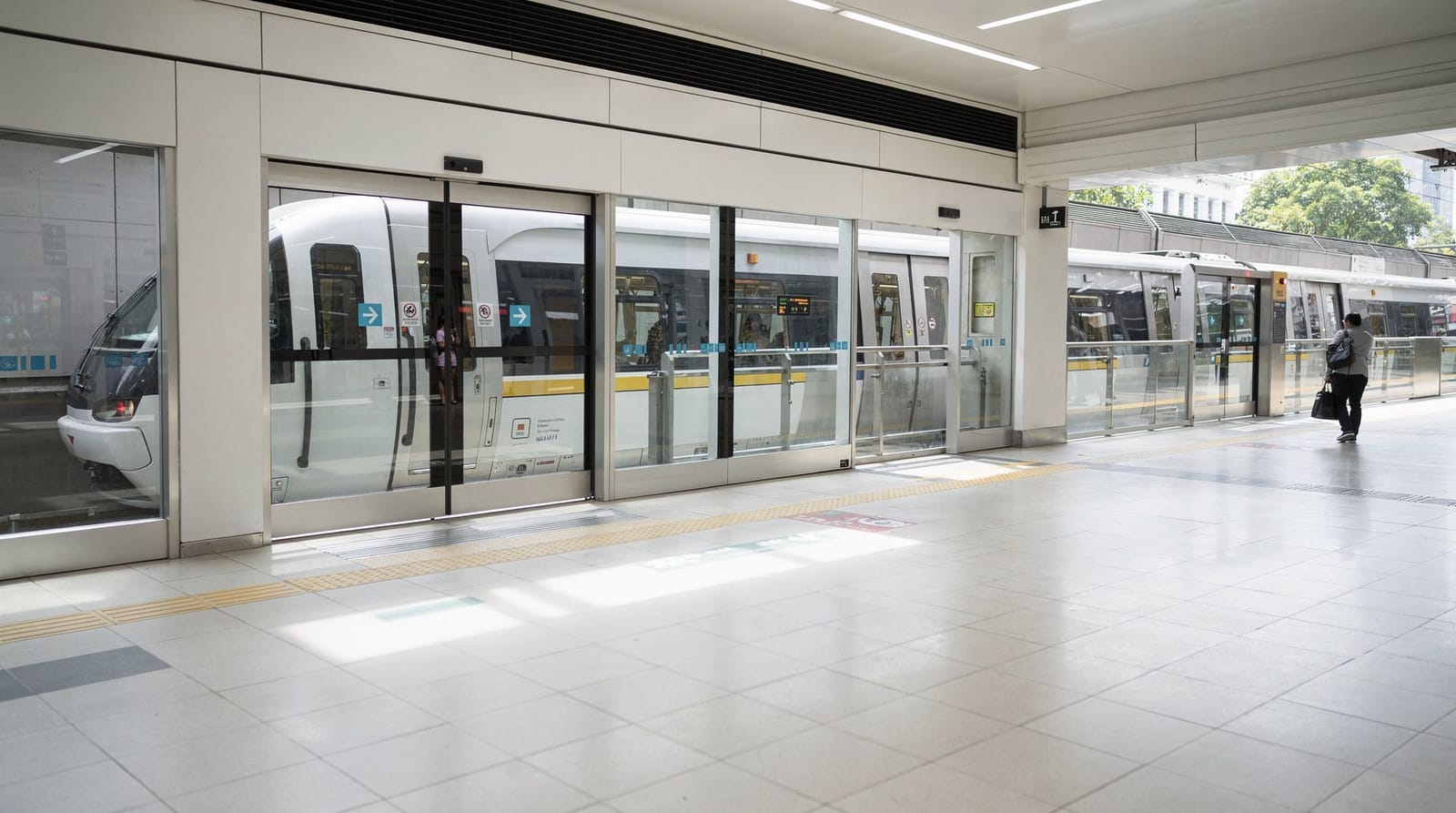
MRT: Tap your contactless bank card (Visa/Mastercard/Amex) directly on the fare gates — tap in, tap out, billed at the adult fare (usually SGD 0.90–2.50 per ride). This is the simplest option for most visitors. No need to buy a card.
Grab: The ride-hailing app used everywhere in Southeast Asia — download before you arrive. Works on any SIM. Fares are fixed (unlike Singapore taxis which meter), and you can see the route and cost before you accept.
Walking: The city is walkable between adjacent MRT stations and the covered five-foot-ways (shaded ground-floor walkways along shophouses) make it manageable even in heat. Avoid extended outdoor walking between 12:00 and 15:00.
Full guide: getting around Singapore and, for a deeper dive into the MRT specifically (lines, interchange stations, peak-hour tips), the MRT guide to Singapore.
First-timer practical checklist
- Download Grab (ride-hailing) before arrival
- Check your bank card works contactlessly (it should if issued in the US, UK, EU, Australia)
- Pack a refillable water bottle — dehydration is the main physical risk
- Dress for temples: shoulders and knees covered (a scarf works)
- Cash for hawker centres: SGD 50–80 per person for three days of hawker meals
- Confirm visa status if your nationality is not visa-exempt
- Learn “chope” — reserving a hawker table with a tissue packet before you order; see the hawker etiquette guide
- Read Singapore for first-timers for the full practical guide
Frequently asked questions for first-timers
Is Singapore good for first-time Asia visitors?
Excellent. Singapore is the easiest entry point to Asia: English everywhere, no language barrier, no safety concerns, clean water, excellent transport. If you’re anxious about Southeast Asia travel, Singapore is the place to start — then compare it with Bangkok or Bali on your next trip.
What do I actually need cash for?
Hawker centres are the main cash need. Many individual stalls accept NETS (local bank card) or PayNow QR, but cash is still the universal option. ATMs are at every MRT station. Withdraw SGD 50–100 when you arrive; top up at Chinatown or Little India area ATMs (often lower fees than airport ATMs).
Is Singapore safe for solo travellers?
Very — it’s consistently among the world’s top-5 safest cities. Solo female travellers specifically report it as one of the most comfortable cities in the world at night. The main danger is making fun of the government on social media (genuinely, Singapore has defamation laws that apply to social media posts).
What’s the most important thing to eat?
Hainanese chicken rice for the cultural centrepiece, laksa for the flavour hit, kaya toast with half-boiled eggs for breakfast (any Ya Kun or Toast Box branch, SGD 5–7 for the set). See must-try dishes in Singapore.
Is the hop-on hop-off bus worth it for first-timers?
For orientation, yes. The Big Bus Singapore hop-on hop-off covers the main stops (Marina Bay, Chinatown, Little India, Orchard Road, Sentosa connector) and is useful if you want a quick city overview on day 1 before planning your own route. It doesn’t replace the MRT for getting around, but as a live orientation it works well for first-timers.
Do I need to book an arrival card before I fly?
Most nationalities now need to file Singapore’s digital arrival card, usually within three days of arrival. It takes a few minutes online. Check the specifics for your passport at the arrival card and visa guide before you travel — doing it in advance avoids a slower manual process at immigration.
What should I do if three days feels too rushed once I’m there?
It happens more often than you’d expect — first-timers frequently want a fourth day once they’re actually in Singapore. If you have any flexibility, extending by a day to add Katong, Tiong Bahru, or Pulau Ubin is the easiest way to fix that feeling; see how many days in Singapore for what each extra day realistically buys you.
Top experiences
Bookable activities with verified prices and instant confirmation on GetYourGuide.