Must-try dishes in Singapore: 20 essential eats
Singapore: Chinatown hawkers food tour with 7 tastings
What are the must-try dishes in Singapore?
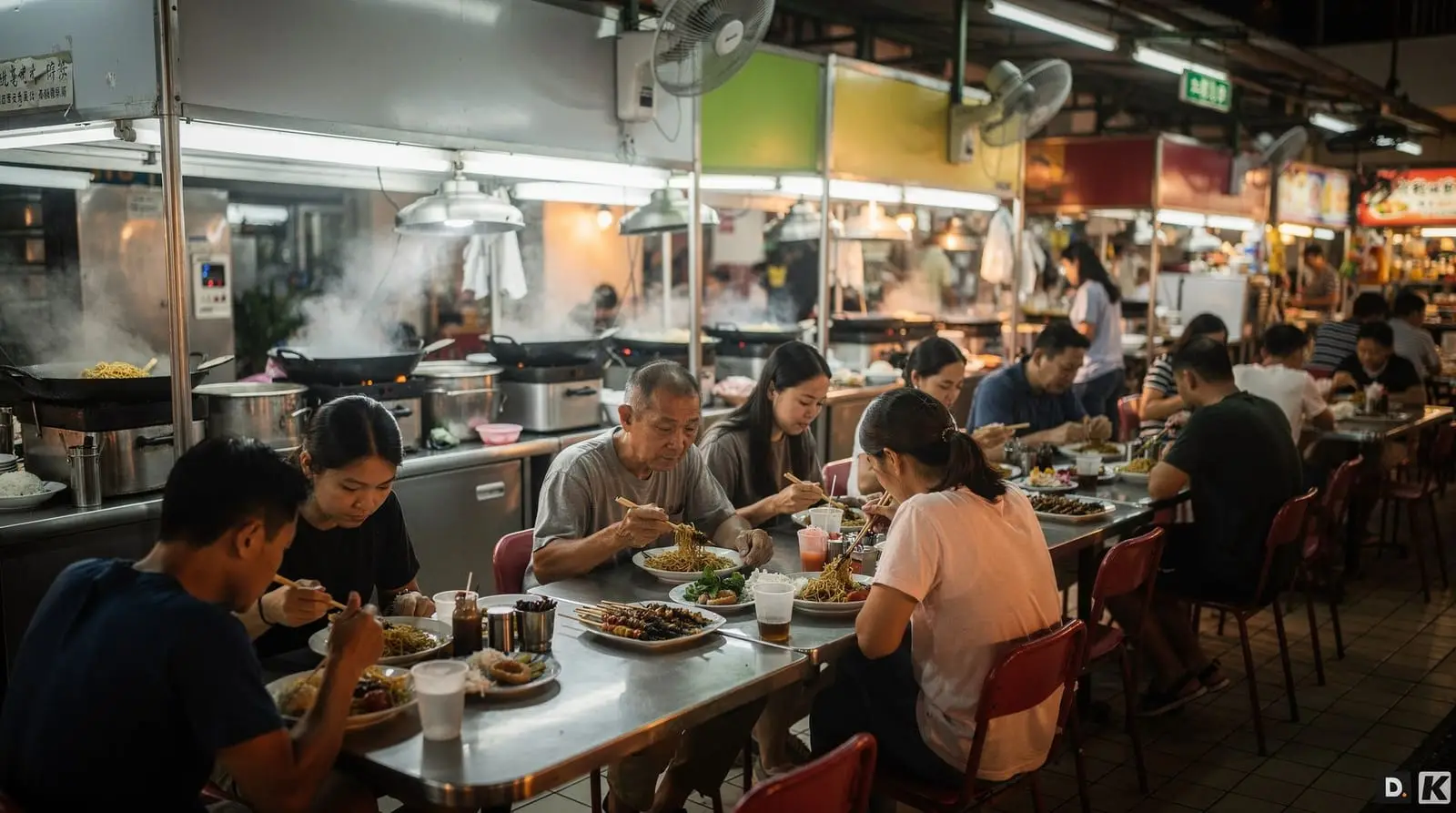
The non-negotiables are Hainanese chicken rice, chilli crab, laksa, char kway teow, roti prata, bak kut teh, kaya toast with kopi, satay, nasi lemak, and Hokkien prawn mee. Most are best eaten at hawker centres for under SGD 10. This guide covers all 20 essential Singapore dishes with recommended stalls and honest prices.
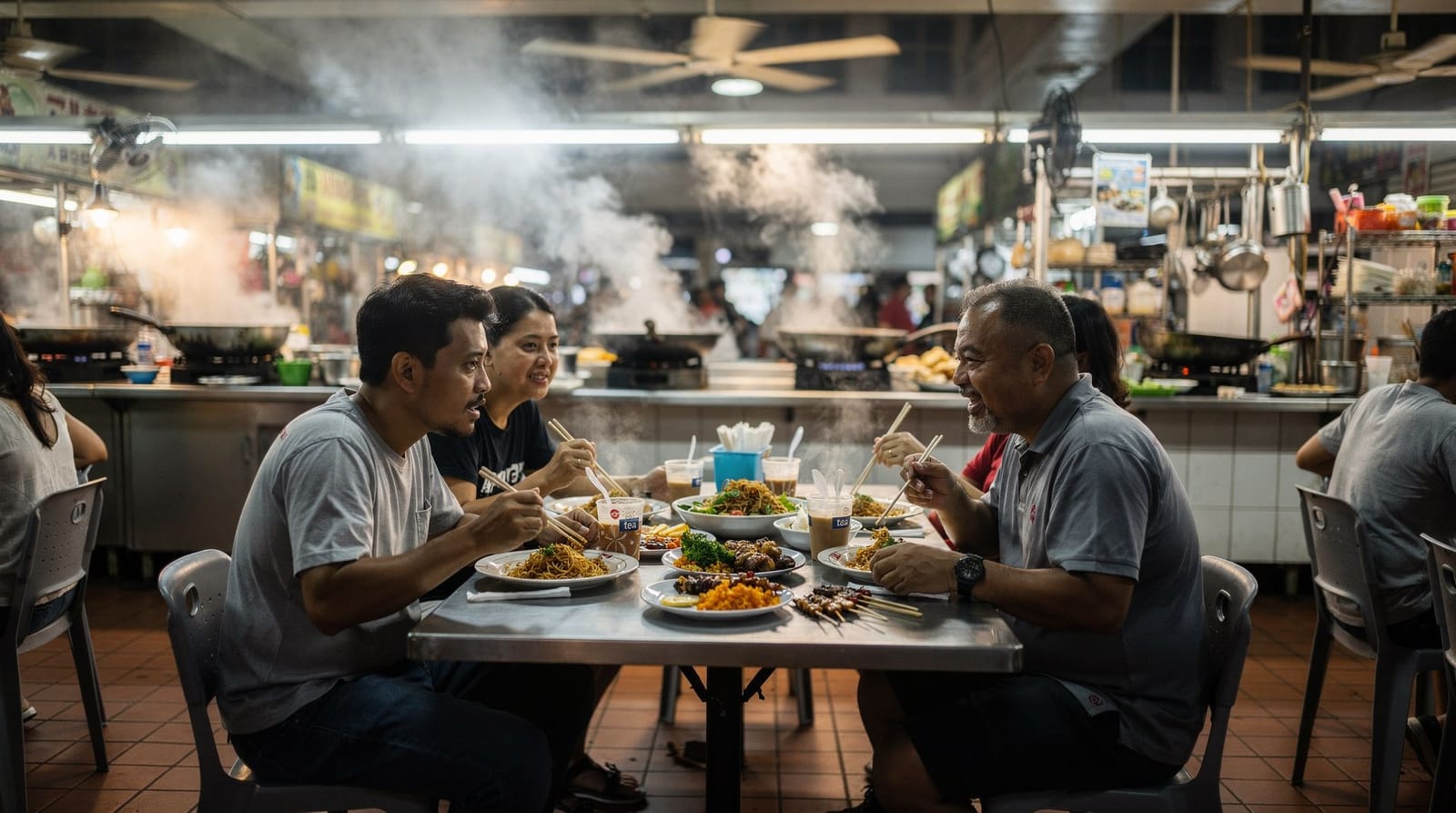
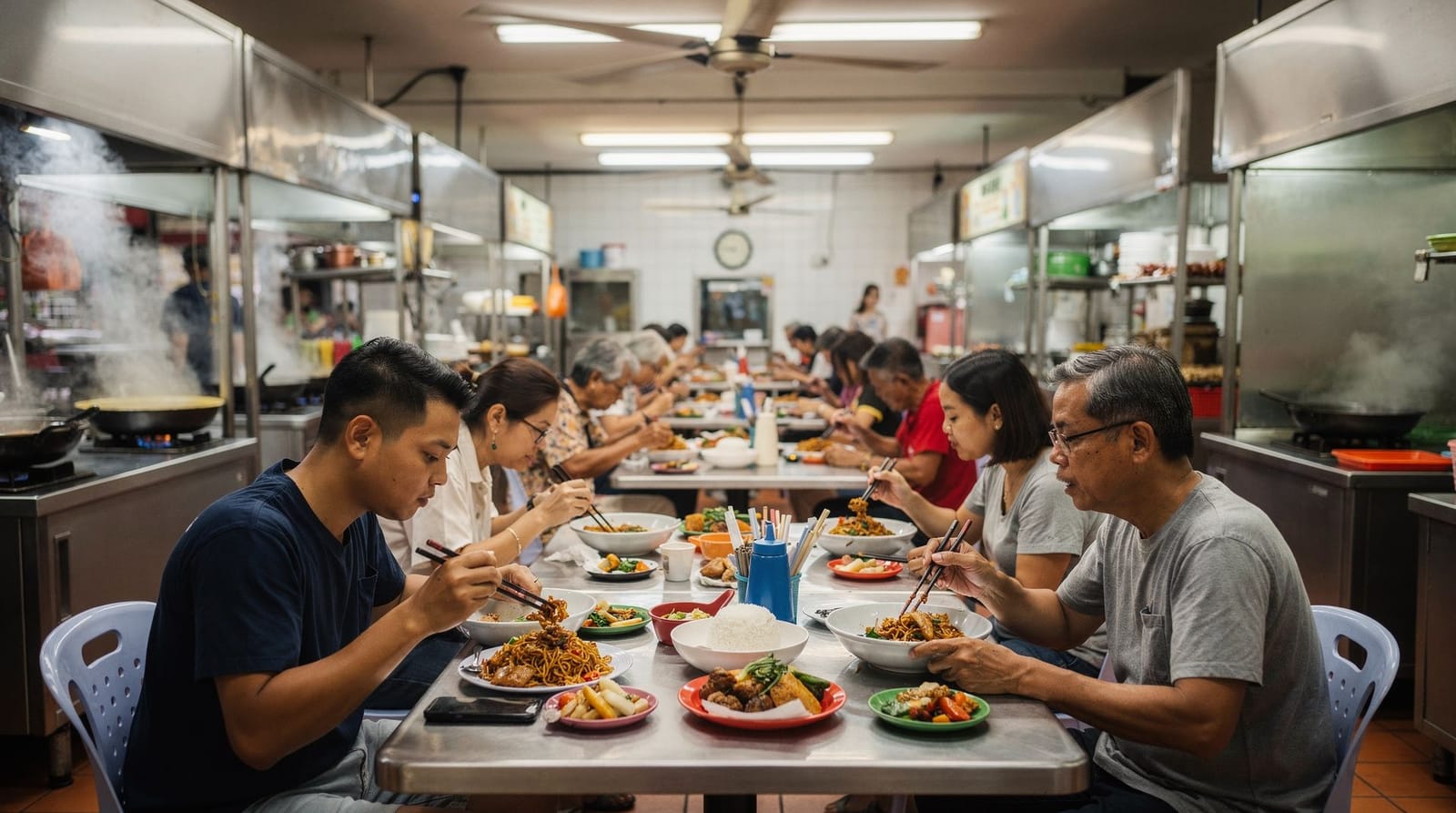
Singapore’s food culture is built on specificity. The best chicken rice cook in the city has been making the same dish for four decades. The char kway teow master at the top-ranked stall uses the same wok seasoned over thirty years. Understanding this specificity — that the same dish varies enormously between stalls, and that seeking out the best version is the point — is the key to eating well here.
This guide covers 20 essential dishes with what they actually are (not the marketing version), where to find the best versions, what to expect to pay, and any honest caveats.
| Where | Hawker centres island-wide, plus a few restaurant-only dishes |
| Typical cost | Around SGD 4–8 per hawker dish |
| Splurge dish | Chilli crab, around SGD 70–130 for a whole crab |
| Best single stop | Old Airport Road Food Centre or Maxwell Food Centre |
| Etiquette | Chope (reserve) with tissue packets; queue where locals queue |
Cheat sheet: price and where to start
| Dish | Typical price | Best first stop |
|---|---|---|
| Hainanese chicken rice | SGD 5–7 | Maxwell Food Centre |
| Chilli crab | SGD 70–130/crab | Jumbo Seafood, East Coast Park |
| Laksa | SGD 5–8 | 328 Katong Laksa |
| Char kway teow | SGD 4–6 | Old Airport Road Food Centre |
| Roti prata | SGD 1.50–5 | Tekka Centre |
| Satay | SGD 0.60–1.20/stick | Lau Pa Sat, Boon Tat Street |
| Durian | SGD 10–80/kg | Geylang Road (in season) |
1. Hainanese chicken rice
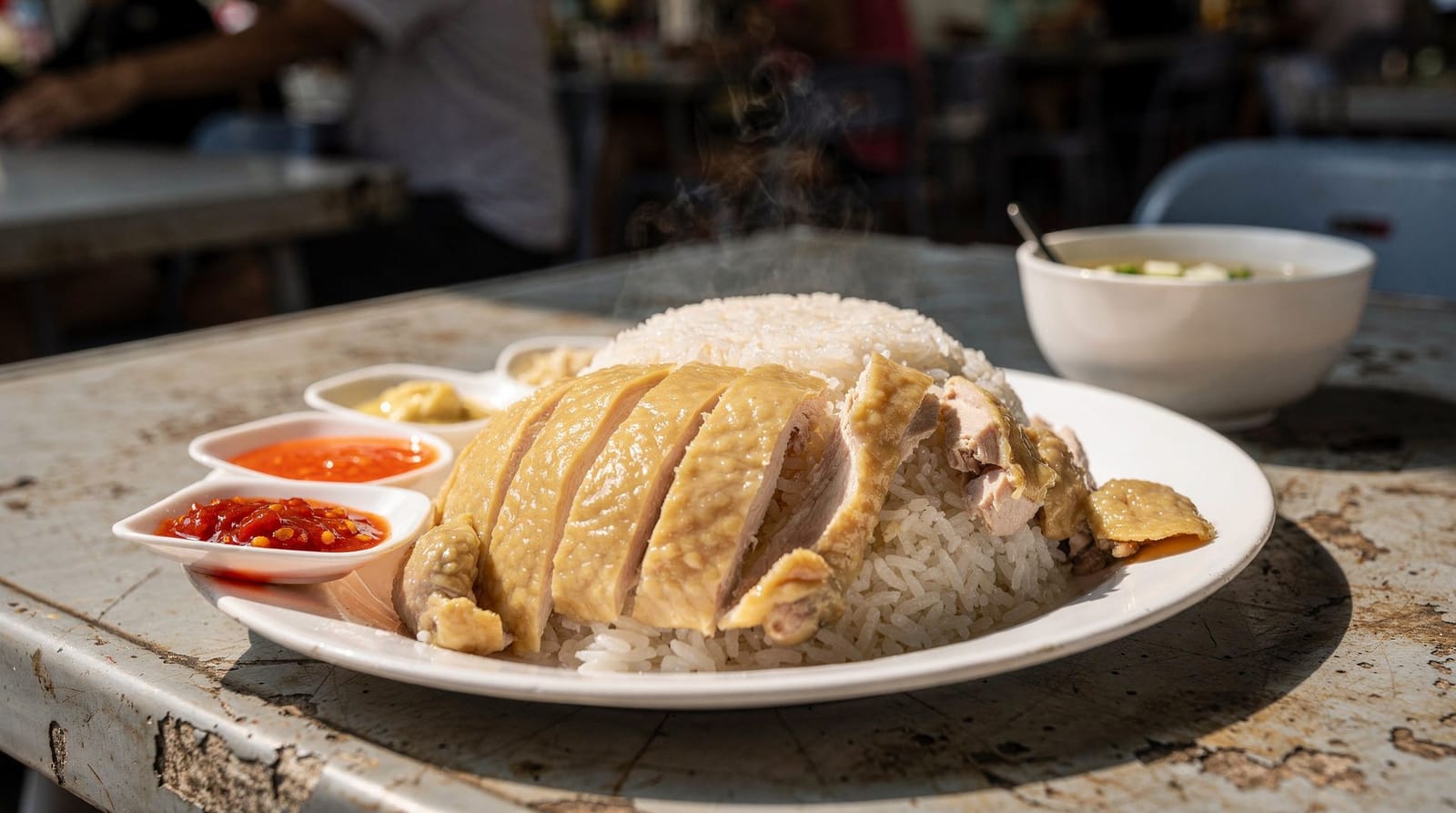
Poached chicken (or roasted for a darker variation) served over rice cooked in seasoned chicken stock, with three sauces: fresh-ground ginger-sesame, chilli sauce, and dark soy. The whole dish hinges on the quality of the chicken — it should be silky, just-cooked, slightly translucent near the bone.
Best versions: Tian Tian Hainanese Chicken Rice, Maxwell Food Centre (Stall #01-10, queue 15–40 minutes). Ah Tai Hainanese Chicken Rice, also Maxwell (less queue, comparable quality). Boon Tong Kee on Balestier Road for a sit-down version.
Price: SGD 5–7 (hawker); SGD 15–25 (restaurant).
The Hainanese chicken rice guide covers the debate over where the actual best version is in exhaustive detail.
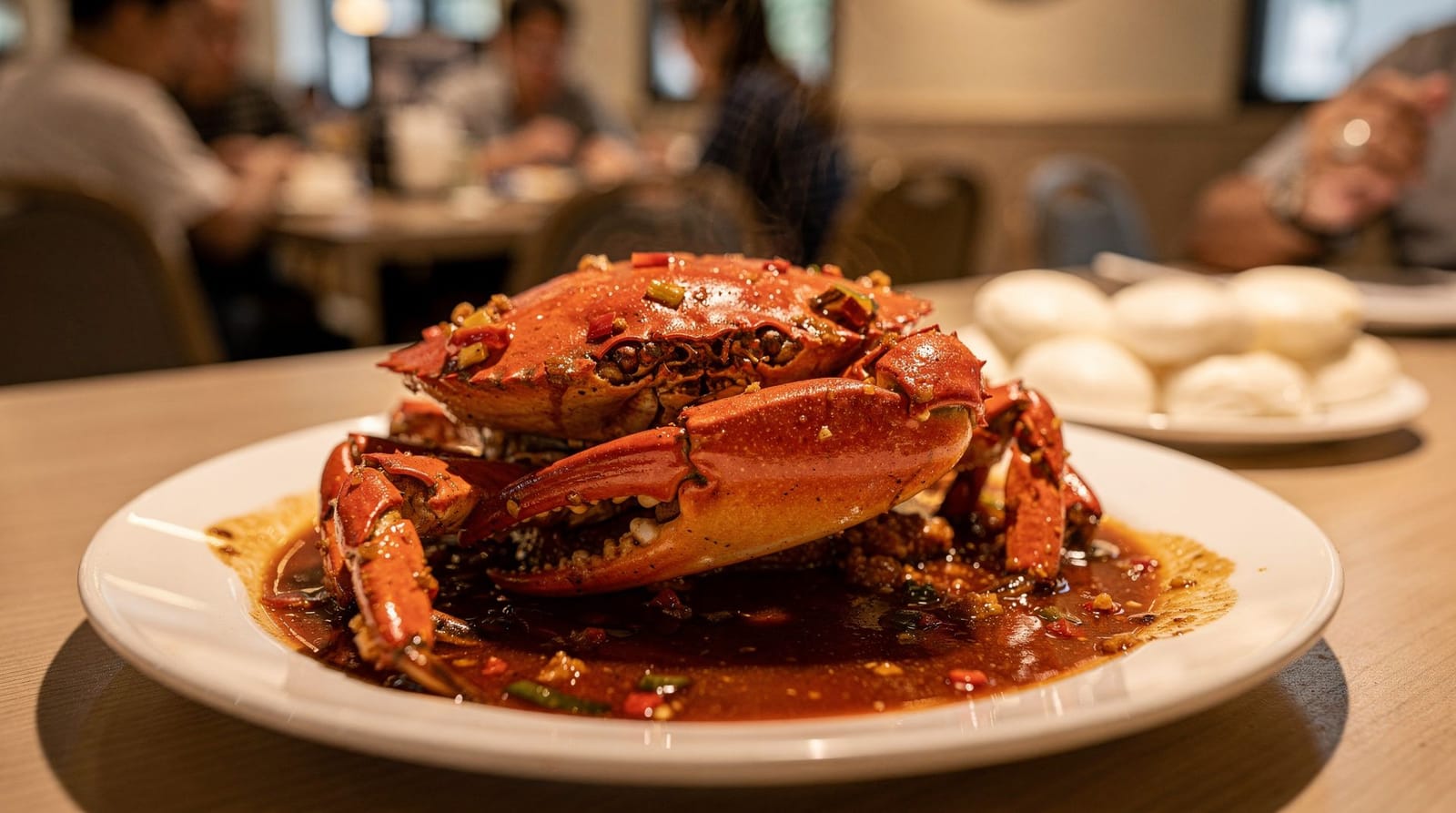
2. Chilli crab
Mud crab cooked in a thick, sweet-savoury-spicy sauce of tomato, egg, and fermented black bean, served with steamed or deep-fried mantou buns for sauce mopping. A restaurant dish requiring a full evening and a substantial budget.
Best versions: Jumbo Seafood (East Coast Park or Clarke Quay); No Signboard Seafood (Esplanade); Long Beach Seafood (Dempsey Hill).
Price: SGD 70–130 for a crab (700g–1kg) plus buns. Check current price per 100g before ordering.
The chilli crab guide compares destinations and covers the pepper crab alternative.
3. Laksa
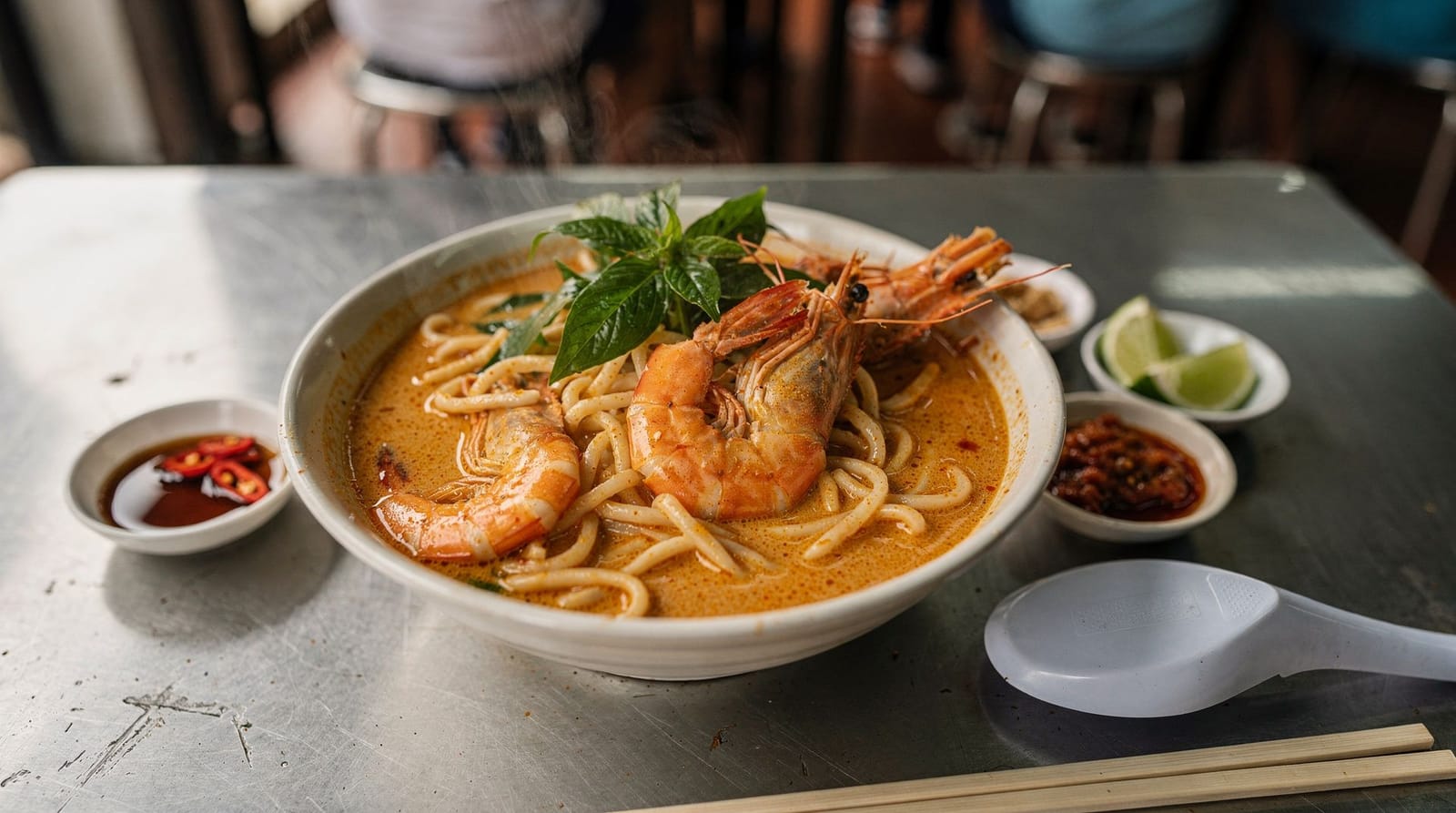
A coconut-curry noodle soup. The Singapore (Katong) version uses thick, short noodles in a coconut-rich, prawn-fragrant broth with cockles, tofu puffs, and bean sprouts. The hawker centre version uses thinner noodles in a slightly spicier soup. Not interchangeable — they are different dishes.
Best versions: 328 Katong Laksa, East Coast Road, for the Katong style. Sungei Road Trishaw Laksa (near Lavender, Michelin Bib Gourmand) for the central hawker version.
Price: SGD 5–8.
The laksa guide covers all the regional variations available in Singapore.
4. Char kway teow
Flat rice noodles fried over high heat with Chinese sausage, cockles, egg, bean sprouts, and dark soy. The dish requires a very hot wok and a fast, confident cook. Good char kway teow has wok-hei — smoky, slightly charred, impossible to replicate without professional equipment.
Best versions: Hill Street Char Kway Teow at Bedok South Road (queue expected); multiple strong stalls at Old Airport Road Food Centre. The stall at Tiong Bahru Market (Outram Park Char Kway Teow) is consistently praised.
Price: SGD 4–6 at hawker centres.
5. Hokkien prawn mee
Thick yellow egg noodles and thin rice noodles cooked with prawns, squid, egg, and pork belly in prawn-and-pork stock, semi-dry style (not a soup). Served with sambal chilli and a lime wedge squeezed over the top. The stock is the defining element.
Best versions: Nam Sing Hokkien Mee and You Fu Fried Hokkien Prawn Mee, both at Old Airport Road Food Centre (Stalls #01-32 and #01-52 respectively). These are among the top-ranked stalls in the city.
Price: SGD 5–8 at hawker centres.
6. Satay
Skewered, marinated meat (chicken, beef, or mutton) grilled over charcoal, served with peanut sauce, compressed rice cakes (ketupat), and raw onion and cucumber. Singapore’s satay differs from Malaysian and Indonesian versions in the marinade balance; the local peanut sauce is sweeter.
Best versions: The satay strip on Boon Tat Street alongside Lau Pa Sat every evening from ~19h00 — approximately 50 grills operating in open air. Old Airport Road Food Centre has several good satay stalls. The Lau Pa Sat guide covers the evening satay experience.
Price: SGD 0.60–1.20 per stick (usually sold in sets of 10+).
7. Roti prata
Indian Muslim flatbread cooked on a circular griddle, served with curry sauce for dipping. The base is plain (kosong) or with egg cracked inside (egg prata). Variations extend to cheese, mushroom, and sweet versions. A breakfast and supper dish.
Best versions: Casuarina Curry on Upper Thomson Road; Springleaf Prata Place. For a central option, the prata stalls at Tekka Centre, Little India.
Price: SGD 1.50 (plain) to SGD 3.50 (egg); specialty versions up to SGD 5–7.
8. Nasi lemak
Coconut rice served with crispy fried anchovies (ikan bilis), roasted peanuts, hard-boiled or fried egg, cucumber slices, and sambal chilli paste. The Malay national dish, widely available at hawker centres throughout Singapore at halal stalls.
Best versions: The Village Nasi Lemak at Boon Lay MRT, Adam Road Food Centre Nasi Lemak (the queue here is instructive). Multiple good stalls at Toa Payoh Lorong 8 Hawker Centre.
Price: SGD 3–6.
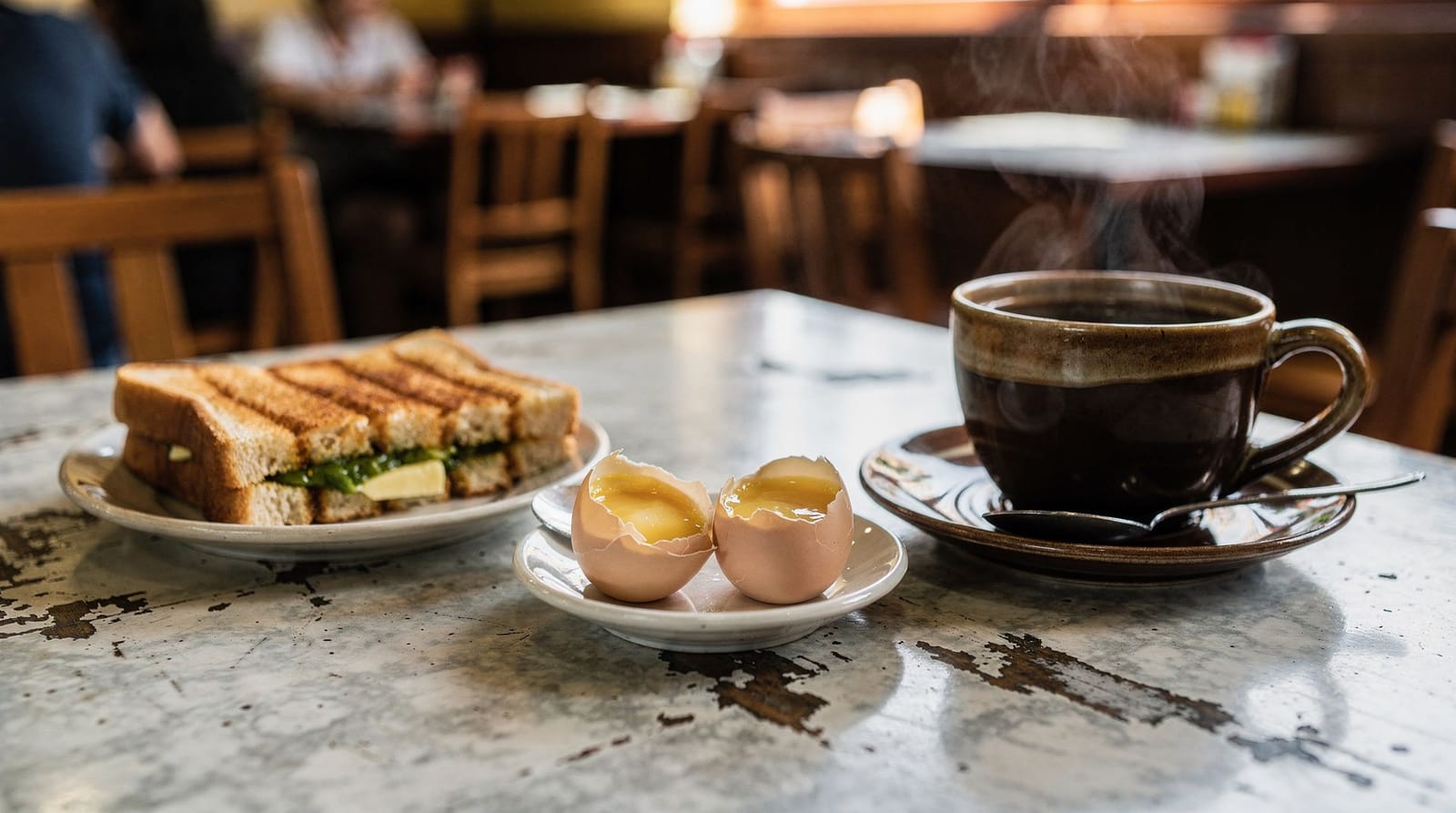
9. Kaya toast and kopi
Toast spread with kaya (egg and coconut jam, pandan-flavoured) and cold butter, served with two soft-boiled eggs in a small bowl (seasoned with soy sauce and white pepper), and a glass of kopi. The essential Singapore breakfast ritual.
Best versions: Ya Kun Kaya Toast (multiple outlets), Killiney Kopitiam (multiple outlets), Tong Ah Eating House on Keong Saik Road for a heritage setting.
Price: SGD 4–7 for the full set.
The kaya toast and breakfast guide is a dedicated guide to this ritual.
10. Bak kut teh
Pork ribs in a clear, pepper-and-herb broth. The Singapore style emphasises white pepper; the Malaysian Klang style is darker, more medicinal. Eaten with rice, fried bread sticks (youtiao), and strong Chinese tea (the tannins cut through the pork fat).
Best versions: Outram Park Ya Hua Rou Gu Cha at Chinatown Complex or the original on Keppel Road. Song Fa Bak Kut Teh (chain) is reliably good for a sit-down experience.
Price: SGD 7–12 for a claypot.
11. Carrot cake (chai tow kway)
Despite the name, this contains no carrot — it is a fried cake made from radish (chai tow) and rice flour, cubed and fried with egg and preserved radish in either black (dark soy, sweeter) or white (lighter, eggy) versions. A breakfast and snack dish. One of the more unusual items for visitors unfamiliar with Hokkien and Teochew cooking.
Best versions: Multiple strong stalls at Old Airport Road Food Centre; Tiong Bahru Market has an excellent version.
Price: SGD 3.50–5.
12. Oyster omelette (or luak)
Cockles or oysters set into a starchy, eggy batter and fried until the edges crisp while the centre remains slightly gooey — served with a sweet-spicy chilli sauce. Teochew in origin, popular at hawker centres island-wide.
Best versions: Bedok South Road Fried Oyster (consistently ranked); multiple stalls at Old Airport Road.
Price: SGD 5–8.
13. Wonton noodles (wonton mee)
Thin egg noodles in a light broth or tossed dry with dark soy, served with char siu (BBQ pork), wonton dumplings (shrimp paste in thin pastry), and choy sum (Chinese greens). A Cantonese heritage dish refined over decades of hawker competition.
Best versions: Hill Street Tai Hwa Pork Noodle (Crawford Lane) — a Michelin-starred version of the related bak chor mee (minced pork noodles); Yong Kee Famous Wonton Noodles at various locations.
Price: SGD 4–7.
14. Otak-otak
Spiced fish paste (mackerel or tenggiri) mixed with coconut milk, chilli, galangal, and turmeric, wrapped in banana or coconut leaf, grilled over charcoal. The leaf chars; the fish cake inside is fragrant and firm. Eaten as a snack or side.
Where to find it: Hawker centres across the city; East Coast Road in Katong for the Peranakan version. Commonly sold individually for SGD 1–2 per piece.
15. Rojak
A fruity-savoury salad of cucumber, turnip, pineapple, dough fritters (youtiao), hard tofu, and cockles, tossed in a thick prawn paste sauce with lime, peanuts, and torch ginger flower. The flavour combination is pungent, sweet, spicy, and acidic simultaneously.
Best versions: Toa Payoh Rojak at Old Airport Road Food Centre (Stall #01-89) — widely cited as the city’s best.
Price: SGD 5–8.
16. Bao (steamed buns)
Soft steamed buns filled with char siu (BBQ pork), lotus paste, red bean, or custard. Found at dim sum restaurants and a few hawker stalls. Not as common at standard hawker centres as in Hong Kong — seek out dim sum restaurants in the Chinatown and Tanjong Pagar areas.
17. Kway chap
Flat broad rice sheets (kway) in a dark, herbal, aromatic broth, served with braised pork organs — intestines, liver, skin, and ears — alongside hard-boiled eggs and tofu. A Teochew dish and not for every visitor. If you eat offal, this is one of the most distinctive dishes in the city.
Where to find it: Chinatown hawker centres and Teochew establishments around Maxwell and Tanjong Pagar.
Price: SGD 5–8.
18. Cendol
A coconut milk dessert with green rice-flour worms (the cendol noodles), shaved ice, red beans, and palm sugar (gula melaka). Refreshing in the heat. The green colour comes from pandan. Available at hawker centres throughout the city.
Price: SGD 2–4.
19. Ice kachang
A taller, more elaborate shaved ice dessert with attap chee (palm seeds), corn, red beans, grass jelly, and coloured syrups, topped with condensed milk and evaporated milk. Midday heat refreshment.
Price: SGD 3–5.
20. Durian
Singapore’s most controversial food. The “king of fruits” — large, spiky, with a flesh that is creamy, rich, and produces a powerful odour that is banned in hotels and public transport. The season is May–August when local and Malaysian durian is at its peak. Musang King (D197) is the premium variety; Black Thorn is the most expensive; D24 is the hawker-accessible standard.
Where to eat it: Geylang Road during season — the largest concentration of durian stalls in Singapore. Prices range from SGD 10–15 (D24) to SGD 50–80 for premium Musang King per kilogram.
The durian guide covers varieties, how to pick one, and what to expect from your first encounter.
A cooking class if you want to go deeper
Understanding how these dishes are made changes how you eat them. Singapore’s cooking class options cover the fundamentals of Singaporean, Malay, and Chinese cuisine in 3–4 hours with hands-on preparation.
Hands-on cooking class with cultural immersion — learn 3-4 Singapore dishes Chinatown hawkers food tour with 7 tastings — eat your way through the key dishesHawker centre vs restaurant: when to pay more
Most of this list is best eaten at hawker centres, where decades of specialisation and fierce competition keep quality high and prices low. But a handful of dishes genuinely improve in a restaurant setting: chilli crab benefits from a proper kitchen’s control over the wok and sauce reduction, and Peranakan dishes like ayam buah keluak need the long, slow preparation that a hawker stall’s turnover speed can’t accommodate. As a rule of thumb, if a dish requires more than 30 minutes of active cooking per portion, it’s usually a restaurant dish in Singapore, not a hawker one — the stall economics don’t work otherwise. For the reverse case — dishes that get worse the more “elevated” the setting — chicken rice, char kway teow, and roti prata are all better and cheaper at a good hawker stall than at any restaurant trying to recreate them.
Building a one-day food itinerary
If you only have one day to eat your way through this list, sequence it around the heat and the centres, not the dishes. Start at Tekka Centre or Maxwell Food Centre for roti prata or chicken rice before 9am, when queues are shortest. Head to Old Airport Road Food Centre for lunch — it clusters more top-ranked stalls (Hokkien prawn mee, char kway teow, oyster omelette, rojak) than anywhere else, so one meal there covers four dishes if you split plates with a companion. Rest through the early afternoon heat, then finish at Lau Pa Sat for the evening satay strip. This route also works well folded into a hawker crawl through Chinatown if you want a more guided, narrative version of the same idea.
Dietary notes: halal, vegetarian, and allergies
Singapore’s hawker scene is unusually accommodating. Nasi lemak, satay, and roti prata stalls are commonly halal-certified — look for the green halal certification sticker at the stall front. Vegetarian and vegan options exist but require more searching; Indian vegetarian stalls in Little India and Chinese vegetarian (“su”) stalls are the most reliable sources. Shellfish appears in many dishes that don’t obviously announce it — char kway teow and Hokkien mee both typically include cockles or prawns by default, so flag allergies clearly when ordering. See the dedicated Halal food in Singapore and Vegetarian food in Singapore guides for stall-by-stall detail.
Frequently asked questions about Singapore dishes
What is Singapore’s national dish?
Officially, Hainanese chicken rice is widely cited as the national dish, though Singapore has never formally designated one. Chicken rice appears on national airline menus, at government functions, and in school canteens. It is the most universally eaten dish across all of Singapore’s ethnic communities.
What is the spiciest dish in Singapore?
Mala (numbing-spicy Sichuan) hot pot is the spiciest option and has become ubiquitous in Singapore over the last decade. Within traditional Singapore dishes, laksa and char kway teow with extra sambal are the hottest common hawker dishes. Requesting “less spicy” or “no chilli” is always possible — Singapore cooks are accustomed to the request.
Which dishes are specific to Singapore and cannot be found elsewhere?
Hainanese chicken rice exists in Malaysia but the Singapore version is a distinct preparation. Katong laksa (the short-noodle, spoon-served coconut laksa) is Singapore-specific. Singapore chilli crab, while influenced by regional seafood cooking, is unique. The combination and co-existence of Chinese, Malay, and Indian dishes at the same centres — that integration — is what makes Singapore’s food culture uniquely Singaporean even when individual components have regional roots.
Is there a specific dish I should try at my first hawker visit?
Chicken rice is the reliable entry point — widely available, not confronting, at every centre. Char kway teow or Hokkien prawn mee for a more distinctive Singapore flavour on a second visit. Roti prata for breakfast. Avoid starting with kway chap (offal) or durian unless you already know you enjoy strong flavours.
Top experiences
Bookable activities with verified prices and instant confirmation on GetYourGuide.