A hawker crawl through Chinatown: what to eat and in what order
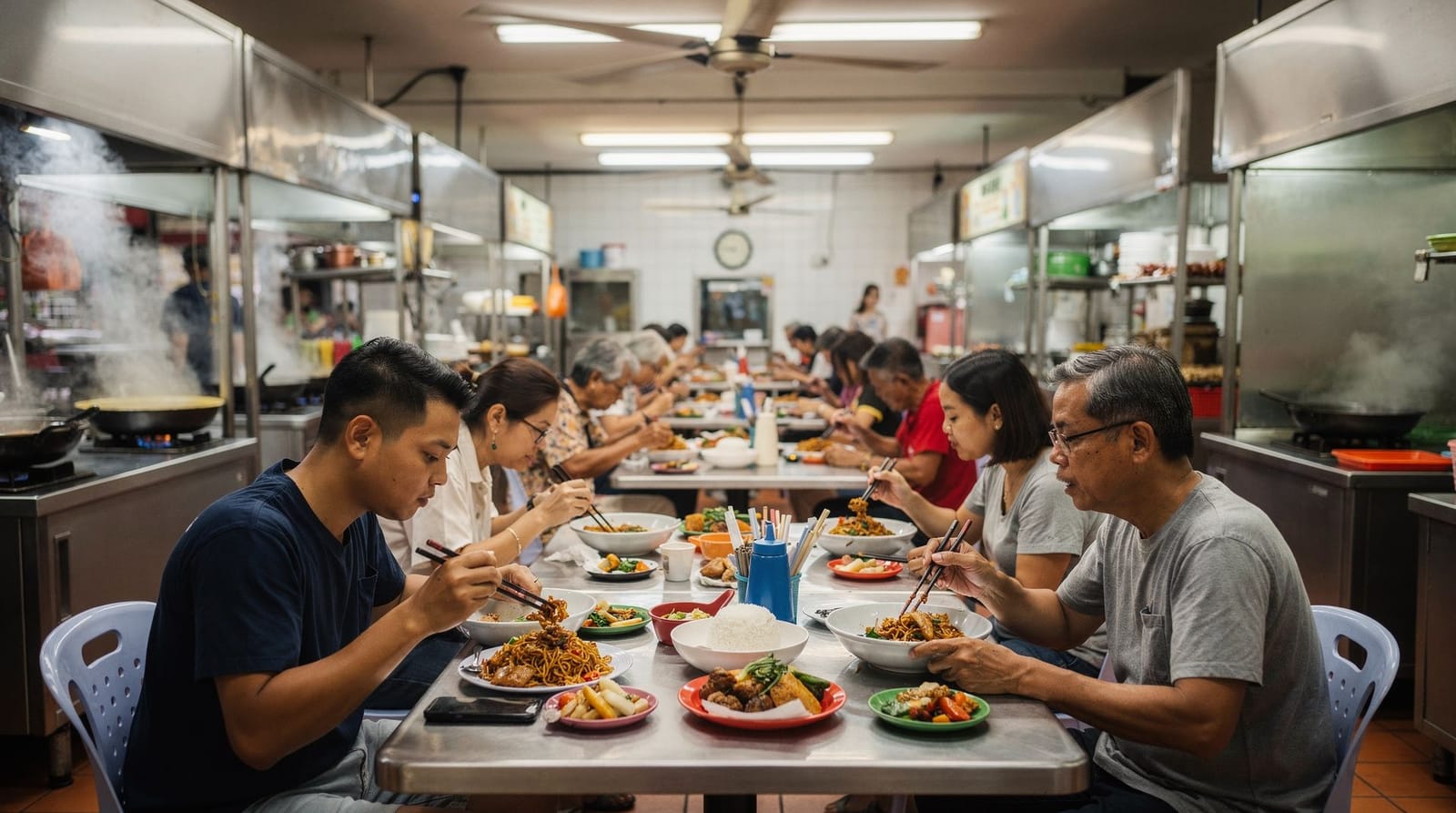
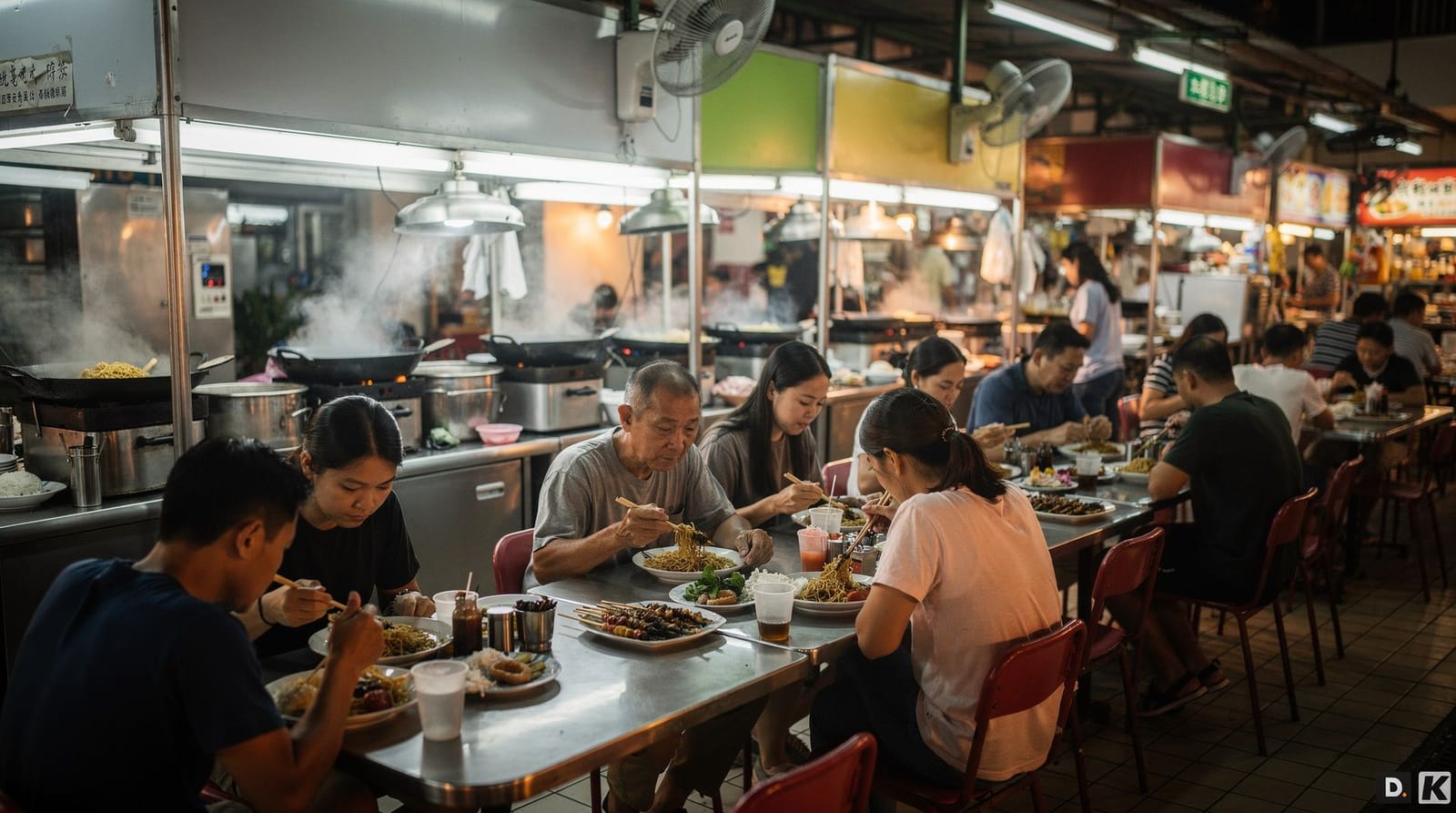
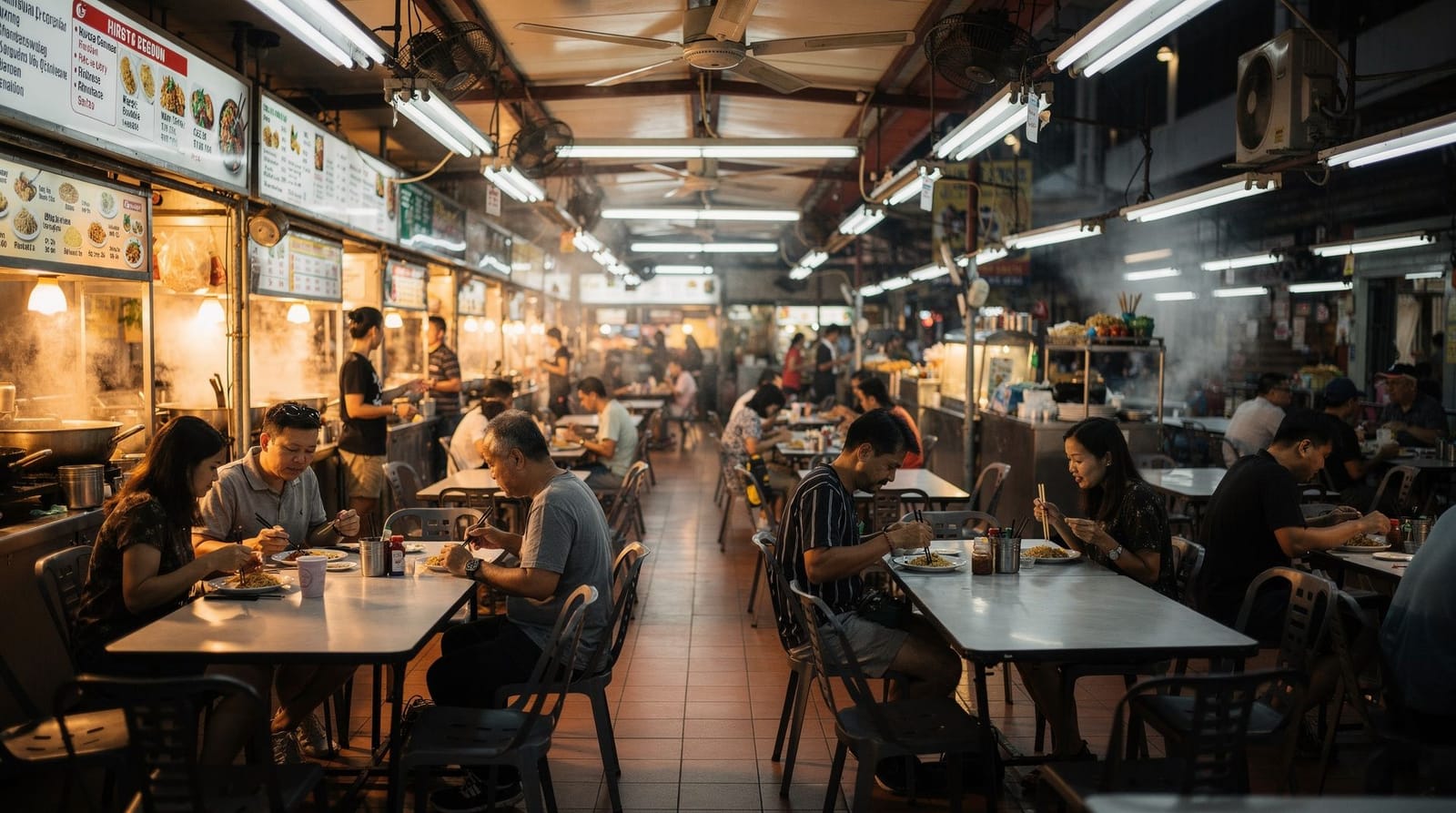
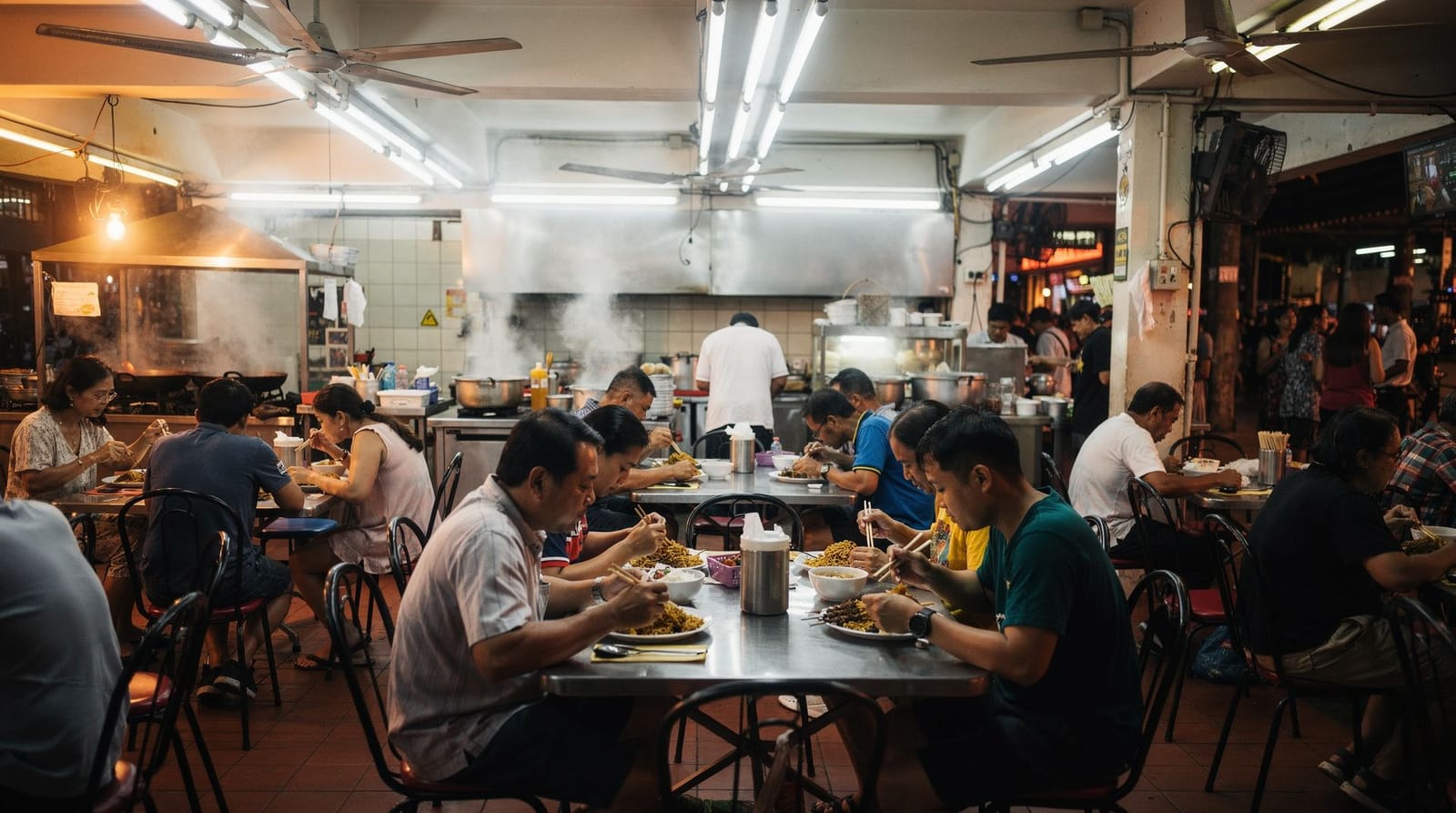
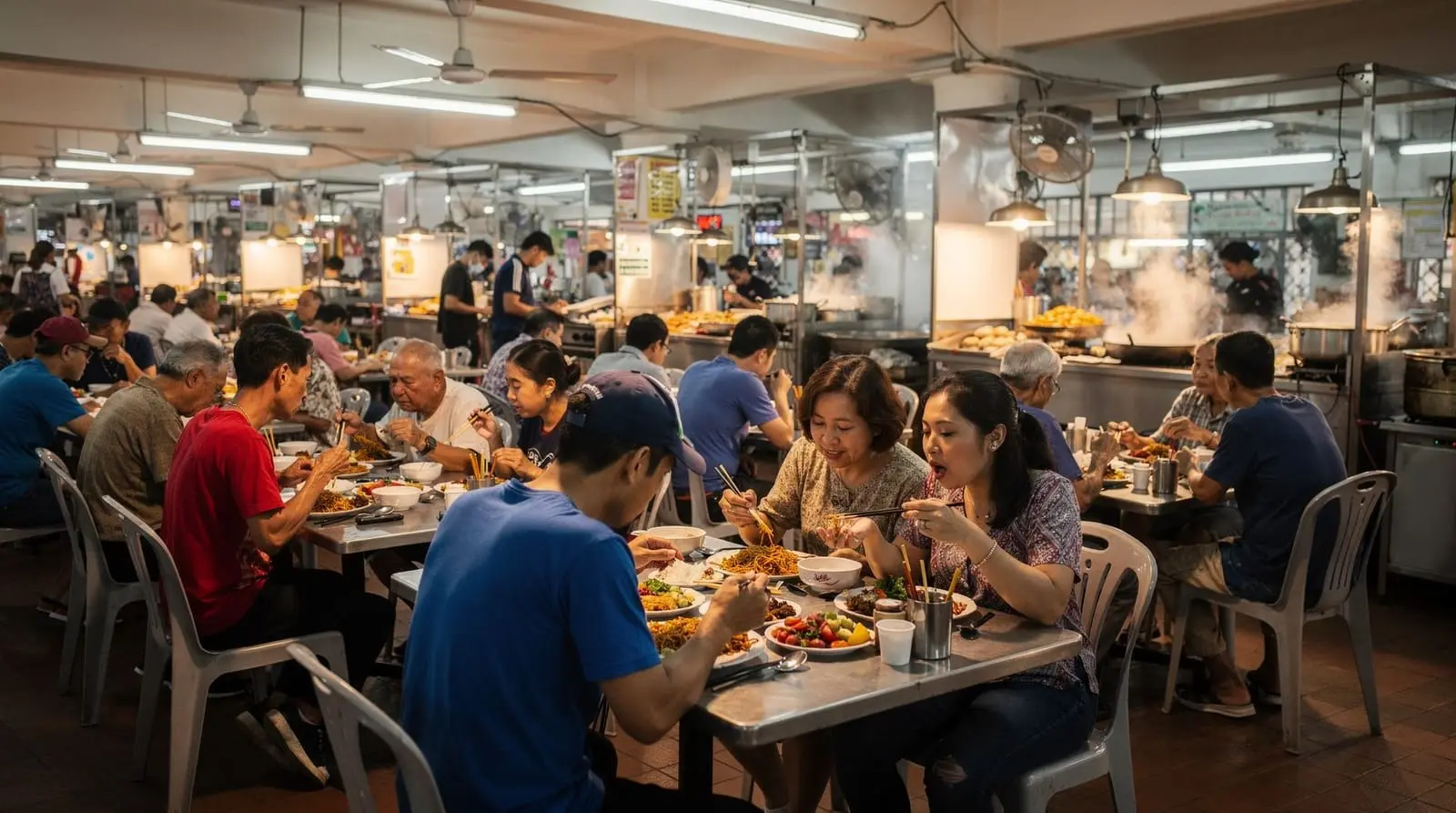
The most honest way to understand Singapore through food is to do a hawker crawl — not the Instagrammed version with matching crockery and good lighting, but the sweaty, tray-carrying, plastic-stool version where you eat standing up and make decisions based on queue length and the smell coming from the nearest wok.
Chinatown is the best place to do this. Within about a 15-minute walk of each other you have three of the city’s most important hawker centres — Maxwell, the Chinatown Complex, and Lau Pa Sat — plus a half-dozen individual coffee shops and hawker stalls. This is not a neighbourhood you pass through hungry. You arrive hungry, eat in stages, and leave with strong opinions.
Here is what to eat, in what order, across an afternoon.
| Where | Maxwell → Chinatown Complex → Lau Pa Sat |
| Time needed | A full afternoon into evening, around 6–7 hours with breaks |
| Cost | Around SGD 30–40 per person for all eight dishes |
| Best start time | Noon at Maxwell, no later |
| Payment | Cash still preferred; PayNow/QR increasingly accepted |
The crawl at a glance
| Stop | Time | Dishes |
|---|---|---|
| Maxwell Food Centre | 12:00–1:30pm | Chicken rice, curry puffs |
| Chinatown Complex | 1:30–4:00pm | Laksa, char kway teow, cheng tng |
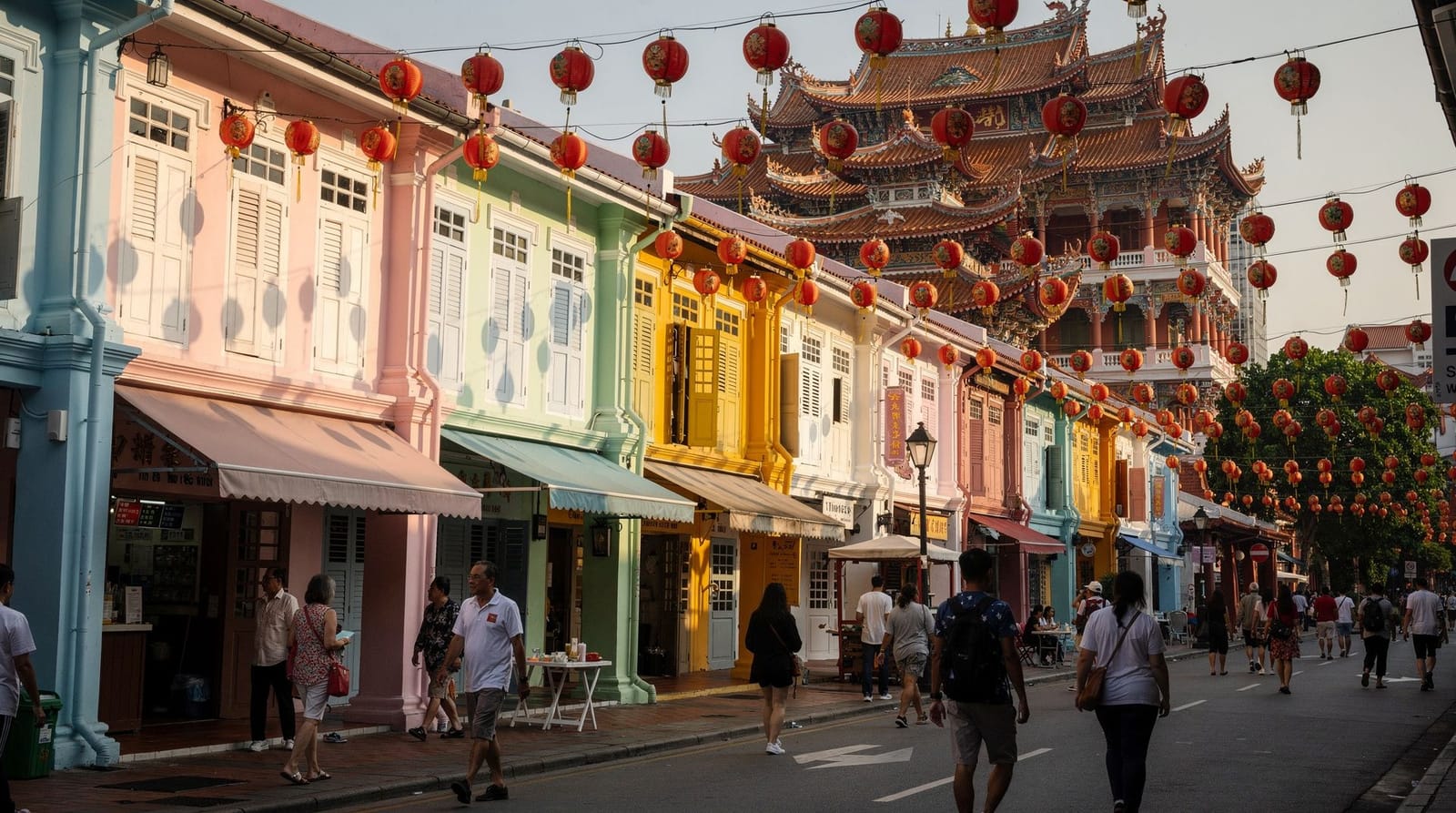
| Neighbourhood walk | 4:00–6:00pm | Shophouses, Buddha Tooth Relic Temple |
| Lau Pa Sat | 6:00–8:00pm | Satay, sambal stingray, kopi-o |
Maxwell Food Centre: start here at lunchtime (before 2pm)
Maxwell is on the corner of Maxwell Road and South Bridge Road, a five-minute walk from Chinatown MRT. Arrive between 11:30am and 1pm for the best selection — some stalls run out of signature dishes by mid-afternoon.
First dish: Hainanese chicken rice at Tian Tian. This is the most famous chicken rice stall in Singapore, which means the queue at peak time can be 20–30 minutes. The debate about whether it’s worth the wait is ongoing among serious eaters. My position: yes, but only once — for comparison. The chicken is extraordinary, poached to a precise silkiness that feels almost boneless, the rice cooked in stock and ginger until it carries the flavour of the whole process. A plate with breast and thigh costs SGD 6–8 depending on portion size. Order it with the dark soy sauce and ginger paste on the side.
If the Tian Tian queue puts you off, Ah Tai Hainanese Chicken Rice diagonally opposite is consistently excellent and usually has a shorter line. The rice at Ah Tai has slightly more ginger flavour. Both are worth your attention. The Hainanese chicken rice guide covers the dish in more depth if this ends up being your favourite discovery of the trip, and Maxwell’s own guide, the Maxwell Food Centre guide, has a fuller stall-by-stall breakdown.
Second dish: Curry puffs at Old Chang Kee or the Maxwell equivalent. The curry puff is Singapore’s greatest underrated snack — a flaky, deep-fried pastry shell around a filling of curried potato, egg, and sometimes chicken. SGD 1.80–2.50 each. They are best eaten immediately, when the pastry is still slightly crackling.
Get a sugarcane juice (SGD 1.50–2) to drink — the stalls at Maxwell press it to order and it is one of the better cooling agents available in a city that frequently demands cooling.
The Chinatown Complex: volume and variety
Walk up Smith Street, take a right on Sago Street, and you’ll hit the Chinatown Complex Food Centre on the upper floor of the building at Block 335, Smith Street. This is a larger, louder, more overwhelming space than Maxwell — roughly 250 stalls and a ceiling that seems to trap every smell the building has ever generated into a concentrated, not unpleasant aromatic cloud.
Third dish: Laksa. Singapore laksa is a coconut milk curry soup with rice noodles, prawns, fish cake, and sometimes cockles, topped with a sambal paste. It is rich and heavily spiced and entirely impossible to eat without getting some on yourself. Budget SGD 4–6 per bowl. The laksa stalls in the Chinatown Complex vary in quality — look for the ones with a queue, a bowl of red sambal visible on the counter, and noodles made fresh rather than kept in a vat. The laksa guide has a fuller list of Singapore’s best versions if you want to compare beyond Chinatown.
Fourth dish: Char kway teow — flat rice noodles wok-fried at high heat with egg, bean sprouts, Chinese sausage, and dark soy sauce. A good version has what the Chinese call wok hei, the smoky breath of a very hot wok applied quickly. It costs SGD 4–5 and looks simple. The cooking technique is not simple at all, which is why the quality gap between a mediocre and an excellent version is enormous.
Fifth dish: Something sweet. Cheng tng is a clear dessert soup — a mix of barley, longans, lotus seeds, and other ingredients in a lightly sweet broth, served warm or cold. SGD 2–3. It is understated and extremely good after the heaviness of laksa and char kway teow.
The Chinatown hawkers food tour with 7 tastings is a good option if you want someone to navigate the ordering and the stories behind each dish — guides typically cover Maxwell, the Complex, and a few street stalls you’d likely miss on your own.Lau Pa Sat: late afternoon into evening
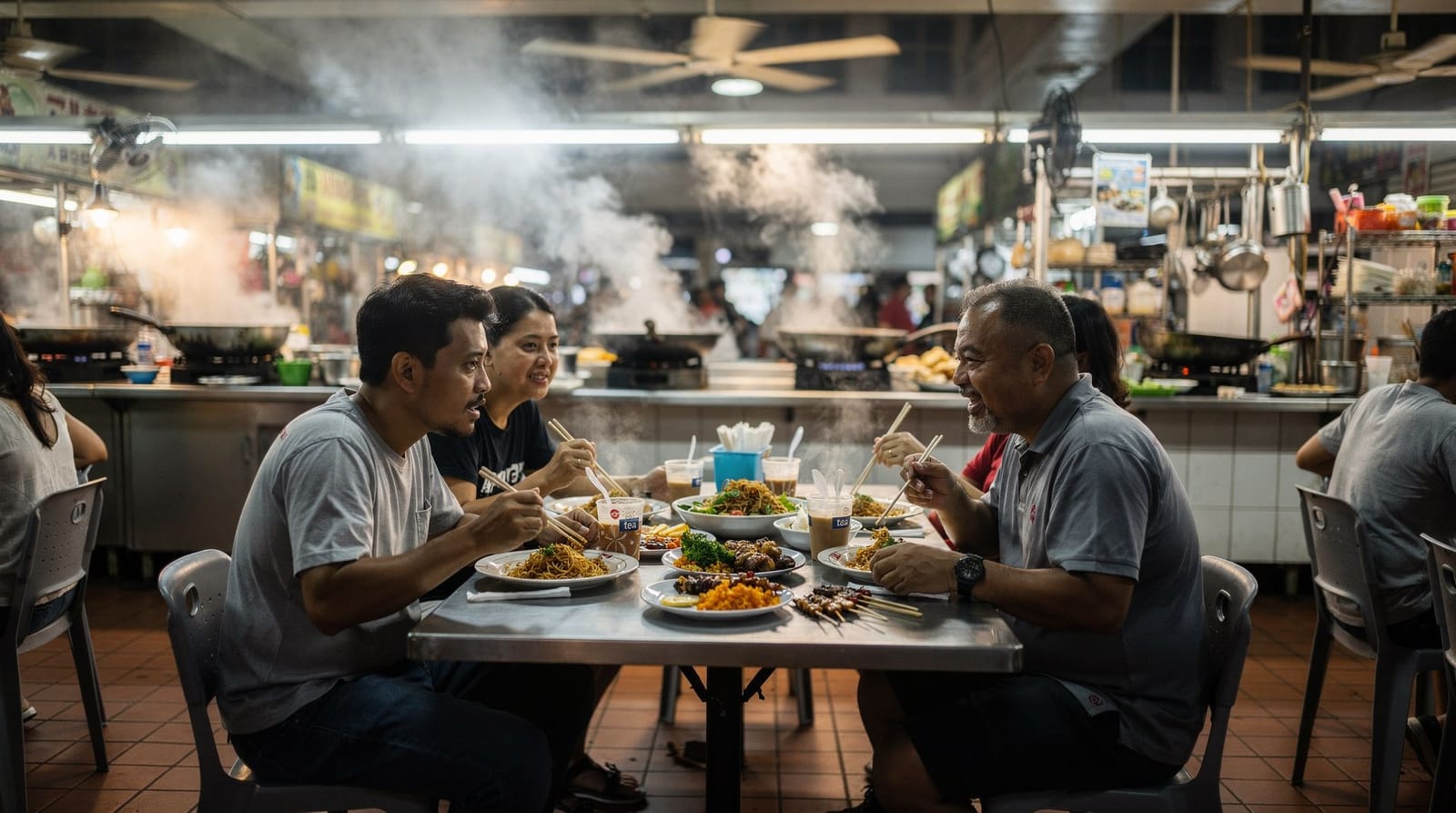
Lau Pa Sat (Telok Ayer Market) is a Victorian-era cast-iron market building that now functions as a hawker centre, sitting somewhat surreally amid the glass towers of the CBD near Raffles Place MRT. It’s more tourist-facing than Maxwell or the Chinatown Complex, which affects the prices (slightly higher, around SGD 8–15 for a main) but not necessarily the quality.
The building itself is the attraction at Lau Pa Sat — the restored ironwork and the octagonal roof are genuinely lovely, and the evening light through the high windows does something architecturally flattering that the fluorescent lighting at the Chinatown Complex decidedly does not.
Sixth dish: Satay from the Satay Street stalls. After 7pm, the street immediately adjacent to Lau Pa Sat (Boon Tat Street) is closed to traffic and becomes a row of satay vendors cooking over charcoal — chicken, beef, mutton, and prawn, served with peanut sauce, cucumber, and compressed rice. SGD 0.80–1 per stick, typically with a minimum order of 10. The char on a properly cooked satay stick, the sweetness of the marinade, and the peanut sauce that somehow manages to be simultaneously rich and light — this is one of the better eating experiences in Singapore and it happens outside on a plastic chair, which is appropriate.
Seventh dish: Sambal stingray (at the Lau Pa Sat stalls if available, otherwise at a nearby coffee shop). This is the fish that appears at nearly every Singapore hawker centre in the evening — a wing of stingray grilled over charcoal, spread generously with a sambal paste of blended chillies, shrimp paste, and lime juice, wrapped in a banana leaf. It sounds challenging and tastes extraordinary. SGD 12–18 depending on the size of the wing.
Singapore: hawker culture food tour and sightseeingA note on the Chinatown neighbourhood itself
The food is the main reason to do this walk, but Chinatown rewards a slower pace. The shophouses along Club Street and Ann Siang Road are some of the best-preserved in Singapore — two and three-storey, with the characteristic five-foot-way covered walkway at ground level. The Buddha Tooth Relic Temple on South Bridge Road is free to enter and genuinely impressive inside, with the kind of gilded interior that takes a moment to fully register.
The area around Pagoda Street has been heavily touristed for years and is where you’ll find the souvenir stalls and slightly tired street food that caters to the coach-tour crowd. This is the part of Chinatown to move through quickly on your way to the parts that are still about actually living and working.
Practical notes for the crawl
Start at Maxwell no later than noon. Move to the Chinatown Complex by 2pm. Arrive at Lau Pa Sat around 6–7pm when the satay vendors are setting up. Drink water consistently throughout — the heat and the salt content of what you’re eating will catch up with you if you don’t.
Cash is still preferred at many stalls, though PayNow and various QR code payment systems are increasingly accepted. Keep SGD 30–40 on you for a full afternoon of eating.
Both Maxwell and the Chinatown Complex have Michelin-recognised stalls if you want to fold star-chasing into the crawl rather than treating it as a separate trip — the Michelin hawker stalls guide lists which stalls at each centre carry the recognition. And if you’d rather understand hawker etiquette before you’re standing confused in front of a chit machine, the hawker etiquette and chope guide covers the unwritten rules around seat reservation and ordering that locals take for granted.
Doing it differently: fewer stops, more time
Not everyone wants to move through three hawker centres in one afternoon, and that’s a reasonable choice. A slower version of this crawl picks just one centre — Maxwell for the most manageable size, or the Chinatown Complex for the widest variety — and spends two to three unhurried hours there instead, ordering half portions across four or five stalls rather than committing to full plates everywhere. This avoids the slight food fatigue that can set in by dish six, and it leaves room to sit somewhere with a cold drink between stalls rather than treating the whole afternoon as a schedule to hit. The best hawker centres guide can help you pick a single centre if the full three-stop version feels like too much for one visit.
The what to eat in Singapore guide covers every dish you’re likely to encounter, with notes on what to look for in a good version versus a mediocre one. It’s worth reading before you arrive so that when you’re standing in front of 250 stalls with no frame of reference, you have at least a shortlist.
Eighth dish: at the end of the afternoon, wherever you happen to be, order a kopi-o — Singapore black coffee, sweetened, served in a small cup, made with a robusta blend that is roasted with sugar and butter. SGD 1–1.50. It is not subtle. It is exactly what you need to get from dinner to the evening with your attention intact.
The Singapore foodie itinerary structures a full multi-day food trip if you want to go further than a single afternoon in Chinatown. One afternoon is a very good start. It is also almost certainly not enough.
Adapting the crawl to your own table
A crawl like this works best when you treat the order as a suggestion rather than a contract. If you travel with someone who avoids pork, the halal food guide will help you choose stalls with confidence, and vegetarians will find the vegetarian Singapore guide a useful companion, since several of the dishes above lean heavily on meat and seafood. Travelling with children changes the pace too: the kid-friendly hawker guide explains how to keep a young appetite interested without turning the afternoon into a negotiation.
Getting between the stops is easy on foot, but the heat is real. If you would rather save your legs for the eating, the MRT guide and the wider getting around Singapore guide explain how to hop between neighbourhoods without fuss. The Raffles Place and CBD destination page is worth a glance before you reach Lau Pa Sat, because it puts the glass towers around the old market building into context.
Where to go after the crawl
Once the Chinatown loop has given you a taste for hawker culture, there is plenty more to explore. The Buddha Tooth Relic Temple guide and the Sri Mariamman Temple guide cover two of the area’s most visited places of worship, both easy additions to the quiet part of the afternoon. The Lau Pa Sat guide goes deeper on the final stop, and the ethnic quarters guide shows how Chinatown fits alongside Little India and Kampong Glam, each with its own food traditions.
If a later morning calls for something lighter, the kaya toast breakfast guide is the natural follow-up to the kopi-o that closes this crawl. For other hawker hubs, the Old Airport Road food centre guide and the Tiong Bahru Market guide are good next stops, and the Tiong Bahru destination page pairs the food with a very different neighbourhood feel.
Eating well also means knowing where not to sit. The guide to avoiding tourist restaurants and the Singapore tourist traps guide explain how to spot overpriced places, which is useful on the busier streets around Pagoda Street. If this crawl is part of a short stay, the one-day Singapore itinerary and the two-day itinerary show where an afternoon of eating can slot into a wider plan. For other dishes worth chasing, the chilli crab guide and the durian guide cover two more rites of passage, and the Chinatown destination page gathers everything about the district in one place.
Frequently asked questions about hawker crawl through Chinatown
Can I do this hawker crawl in half a day instead of a full afternoon? Yes, if you cut it to two stops instead of three — Maxwell for lunch and either the Chinatown Complex or Lau Pa Sat, skipping the third. Trying to fit all three centres plus the neighbourhood walk into under four hours usually means rushing the food, which defeats the point.
Is it better to go on a weekday or weekend? Weekdays, if you have the choice — queues at Maxwell and the Chinatown Complex are noticeably shorter, and Lau Pa Sat’s satay street is less crowded before 7:30pm. Weekends bring more locals out for the same food, which pushes queue times up across all three stops.
Top experiences
Bookable activities with verified prices and instant confirmation on GetYourGuide.

Singapore: Universal Studios Singapore entry ticket

Singapore: Gardens by the Bay bundle entry ticket

Singapore: Night Safari and tram ride ticket

Singapore: S.E.A. Aquarium entrance ticket

Singapore: Singapore River cruise

Singapore: Marina Bay Sands observation deck e-ticket

Singapore: Sentosa cable car Sky Pass roundtrip ticket