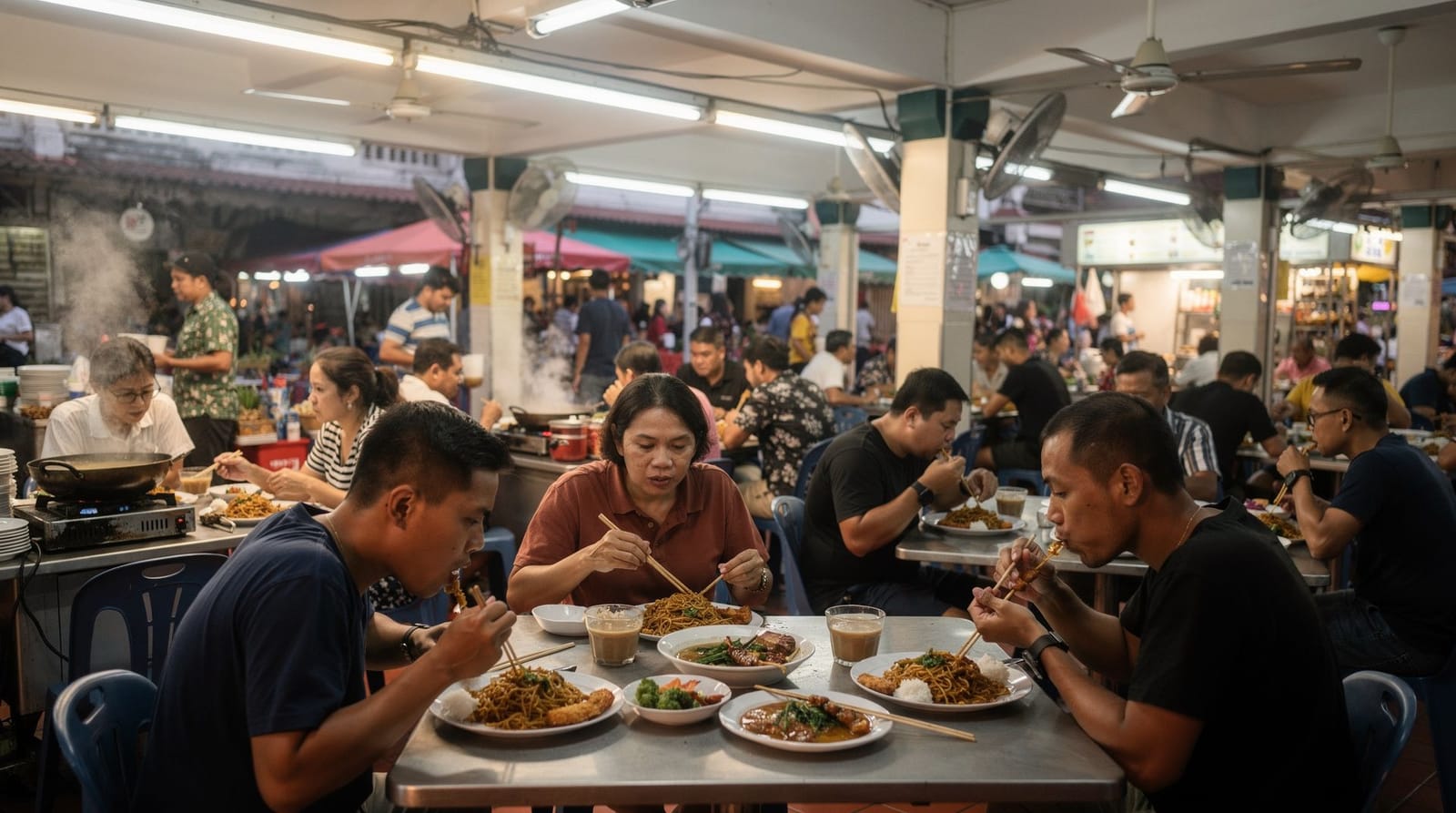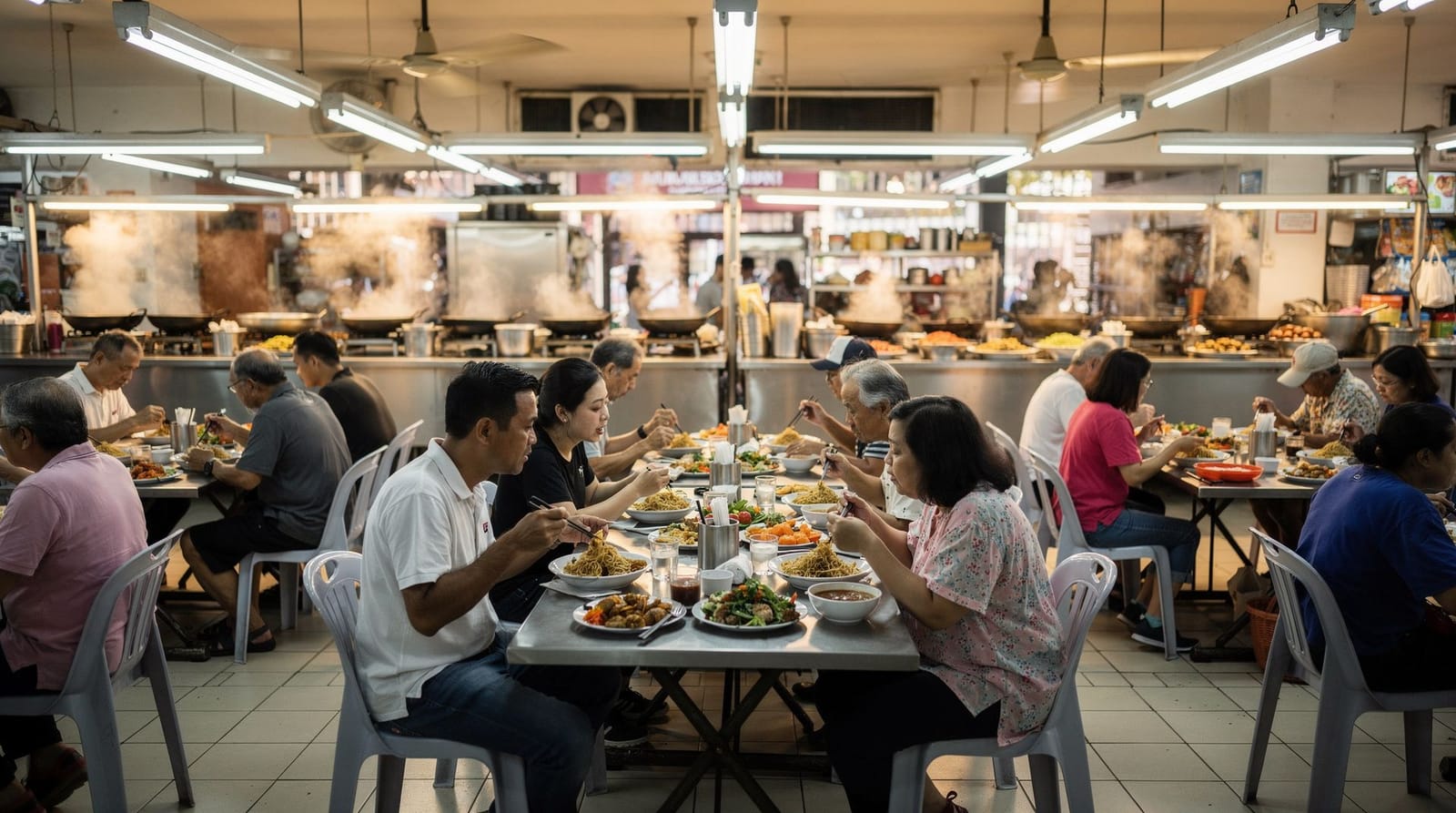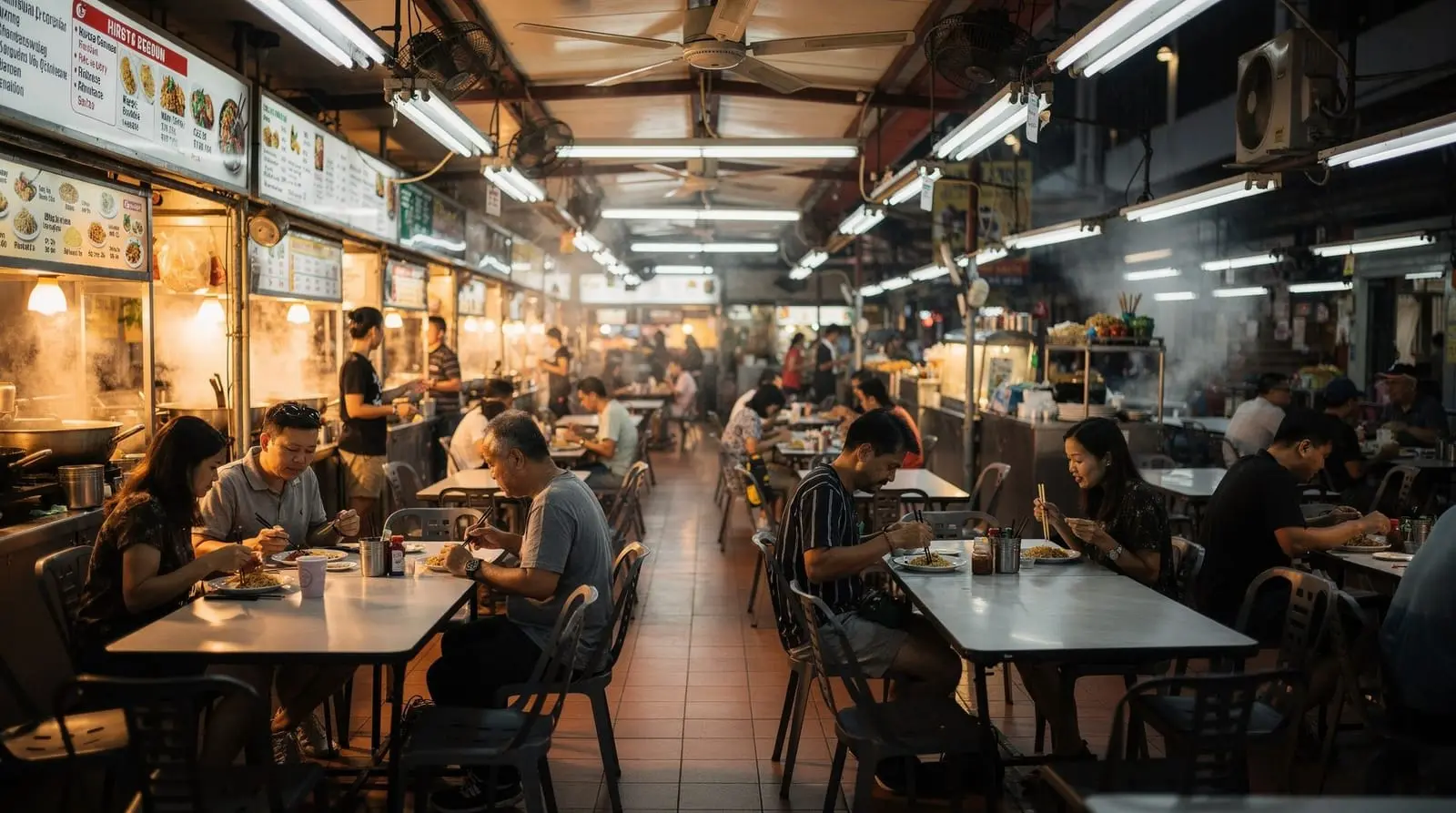
Chinatown Complex Food Centre: the complete guide
Singapore: food tours — Chinatown Complex hawker
Is Chinatown Complex Food Centre worth visiting?
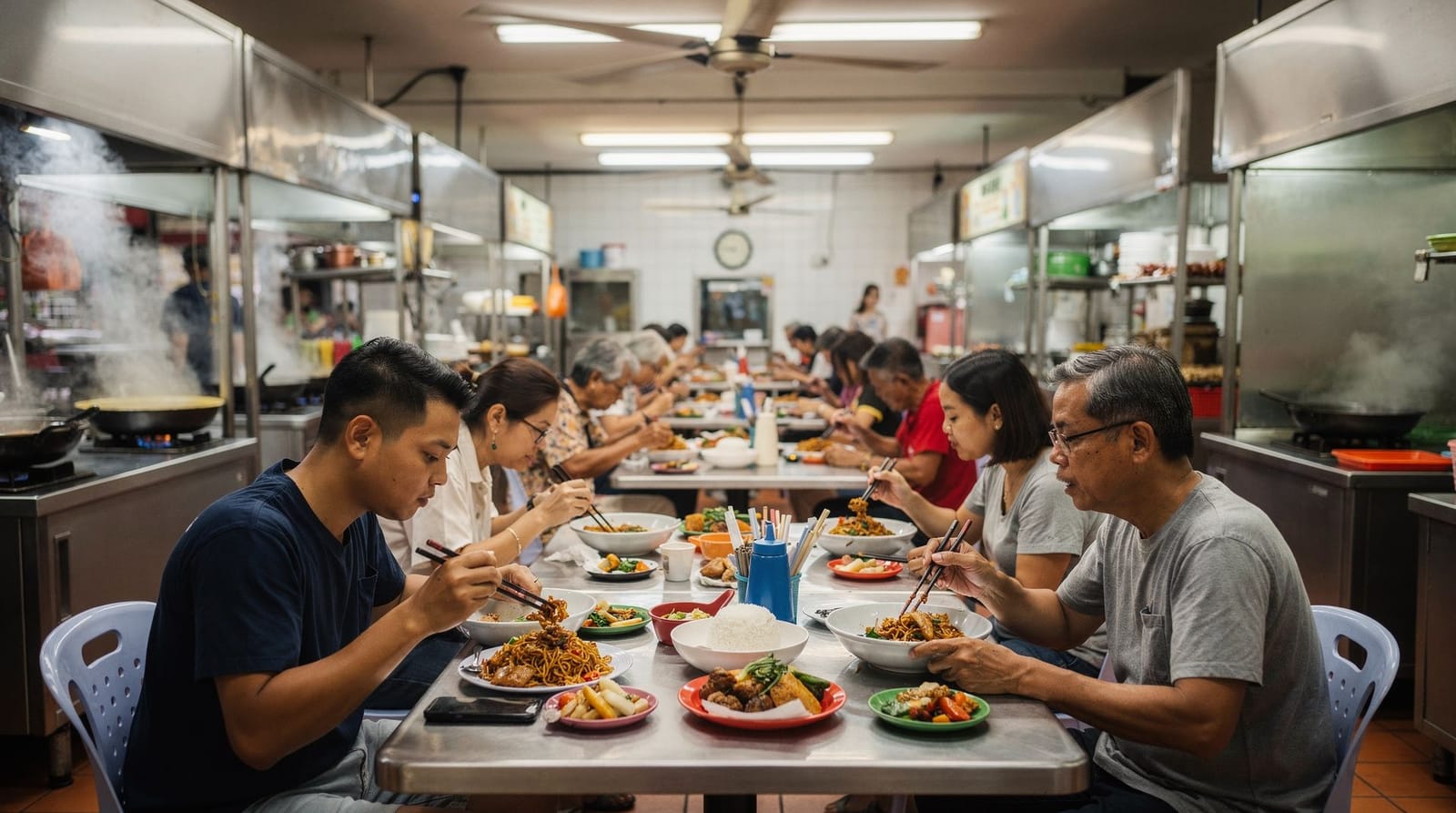
Yes — it is Singapore's largest hawker centre and contains some of its most significant stalls, including the former world's first Michelin-starred hawker stall (Hong Kong Soya Sauce Chicken). The sheer scale means more diversity than any other centre. Navigation takes orientation; the upper floor (Level 2) is where most of the best food is found.
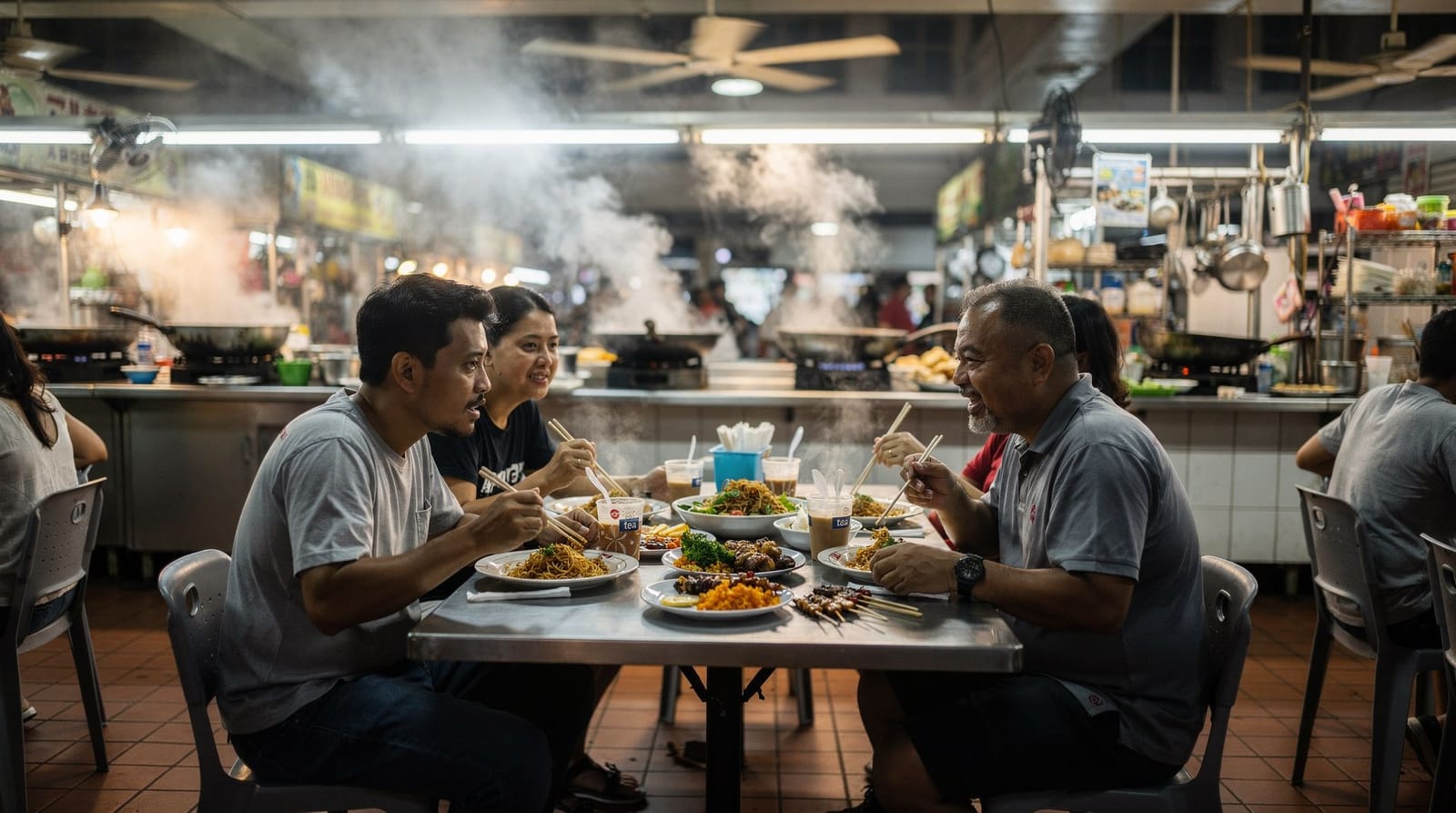
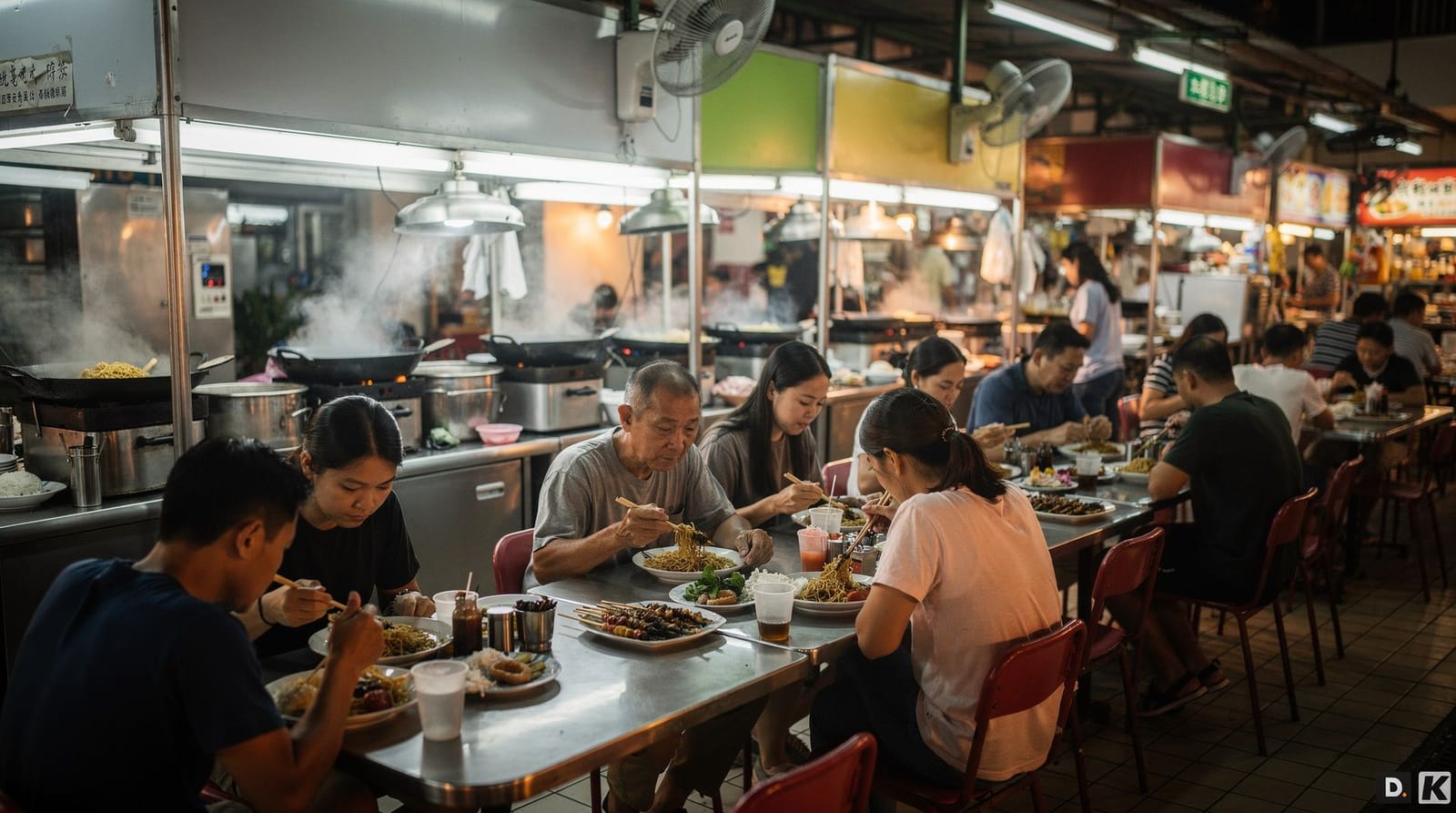
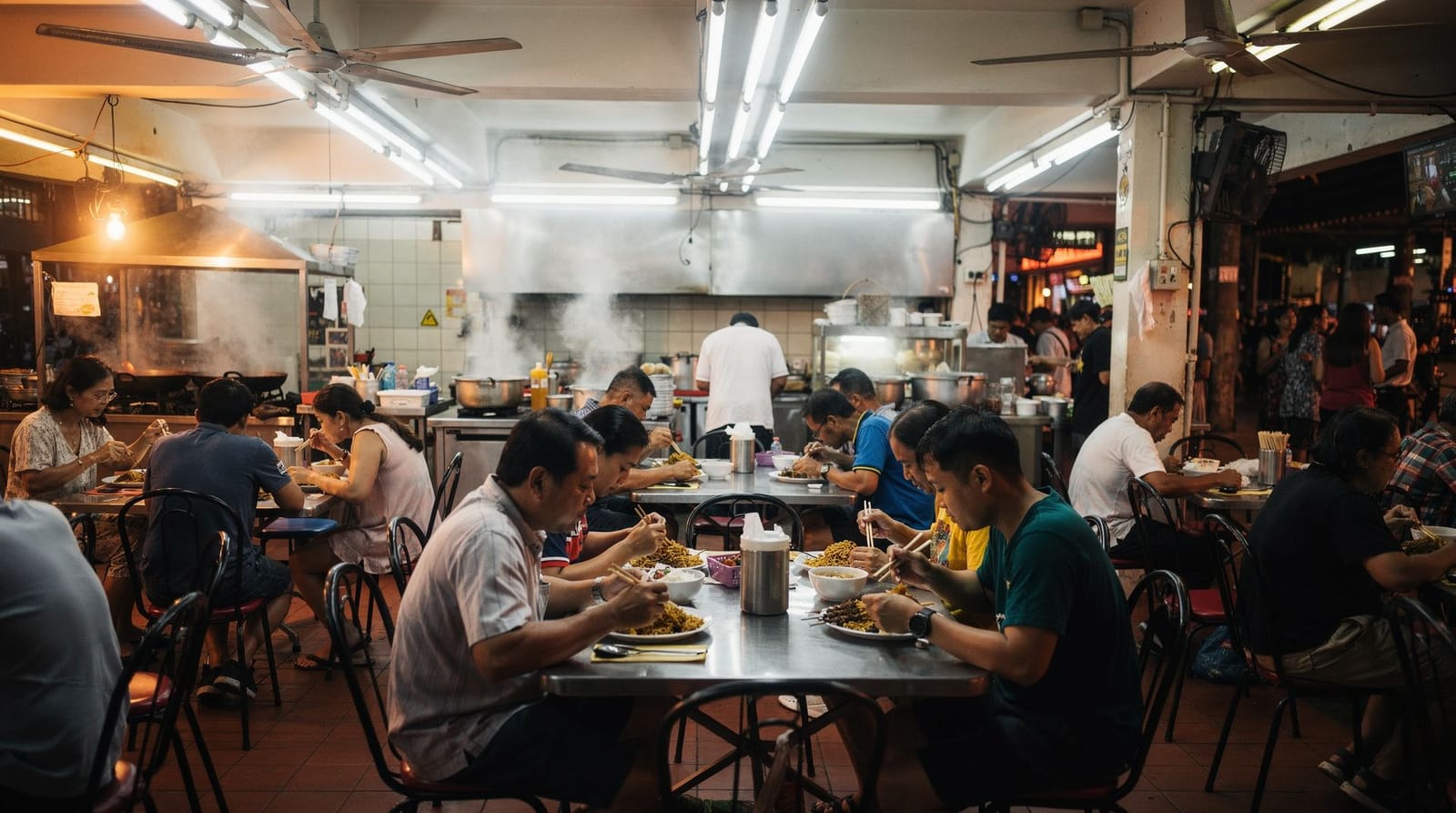
Chinatown Complex is the most comprehensive hawker experience in Singapore — 260+ stalls on the upper floor alone, representing the widest range of Chinese regional cooking, Malay food, Indian food, and their hybrids available under one roof. It is also the home of what was, briefly, the most talked-about food stall on earth.
In 2016, the Michelin Guide Singapore awarded a Bib Gourmand — and then a full Michelin Star — to a hawker stall at Chinatown Complex. Hong Kong Soya Sauce Chicken Rice and Noodle at Stall #02-126 became the world’s first street food stall to receive a Michelin star. The queue the following day reportedly reached 200 people before the stall opened.
That star has since been reclassified to Bib Gourmand (excellent food at moderate prices — still a high recognition), but the stall continues to operate and the chicken is still worth eating. The story remains one of the most useful illustrations of Singapore’s hawker culture: a single cook, at a single stall, serving the same dish for decades, reaching the highest formal recognition in the restaurant world.
| Where | 335 Smith Street, Chinatown (Level 2) |
| Cost | SGD 3.50–8 per dish; free entry |
| Time needed | 1–2 hours to eat well and explore the floor |
| Getting there | MRT Chinatown (NE4/DT19), Exit A or D, 5 min walk |
| Best time | Arrive by 10:30am for the shortest queues |
Getting there and navigating
The entrance is on Smith Street. The ground floor is a wet market — fresh vegetables, meat, fish, and a few early-morning cooked stalls. Take the escalator or stairs to the second floor for the main hawker centre.
The upper floor can feel overwhelming on a first visit — it is large, the stalls are numbered but not always intuitively organised, and the signage assumes familiarity. The stall numbering runs 02-001 through to approximately 02-300, roughly following the perimeter and then filling in the interior. The most famous stalls are typically on the outer perimeter of the floor.
Navigation tip: Walk the full perimeter of the upper floor on arrival to locate stalls before committing. The chope-ing system matters here more than at smaller centres — at peak times, finding a seat after getting food can be genuinely challenging. Claim a table first.
Hong Kong Soya Sauce Chicken Rice and Noodle (Stall #02-126)
The centrepiece stall. Chan Hon Meng, the hawker, has been preparing the same dish for over 30 years. The soya sauce chicken is dark, lacquered, fragrant with five-spice and dark soy — a Cantonese preparation that produces a dramatically different flavour profile from the pale, poached Hainanese chicken rice at Maxwell.
The dish: Soya sauce chicken (whole half-chicken or selected pieces) or char siu BBQ pork, served over rice or thin egg noodles. The char siu here is frequently cited as among the best in Singapore — deeply caramelised, slightly charred at the edges, with a balance of fat and lean that comes from a specific cut and long marination.
Price: SGD 3.80 for a plate of rice with chicken — this is what the Michelin star cost. A significant portion with char siu: approximately SGD 6–8.
Queue management: Arrive at 10h30 when the stall opens. Expect a 20–30 minute wait at opening, 45–90 minutes at peak lunch (12h–13h30). The hawker serves quickly; the queue moves faster than it looks. On weekday mornings, the opening wait is your best option.
Is it worth it? The chicken is excellent — genuinely different from supermarket-style soya chicken, with a depth of flavour and texture precision that justifies the recognition. The price is extraordinary by any standard. Whether the queue is worth it relative to other strong stalls in Singapore depends on your visit schedule — if you can arrive at opening, yes. If it means 90 minutes standing in midday heat, the calculus changes.
Outram Park Ya Hua Rou Gu Cha (Stall #02-14)
Bak kut teh — Singapore-style pork rib soup. Clear, peppery broth with whole ribs, served with rice, fried bread sticks (youtiao for dipping), and Chinese tea. This stall’s lineage traces to the Outram Park area where bak kut teh was a morning dock worker’s breakfast in the 1950s. The broth here is properly pepper-forward with underlying herbal notes — not the watery commercial version.
Best time to eat: Morning (07h–11h) when the soup is freshest and the pork has the best texture. The stall also serves into the lunch period.
Price: SGD 7–12 for a claypot with rice and fried bread.
Sin Heng Claypot Bak Koot Teh (elsewhere in centre)
A competing bak kut teh operation with a loyal following. The claypot version retains more heat and the pork absorbs more seasoning. Compare both if you visit on different days or have appetite for a second portion.
Stall diversity: what else to eat
With 260+ stalls, a comprehensive list is impossible. The higher-value categories at Chinatown Complex:
Malay and Peranakan stalls: A significant portion of the upper floor stalls serve Malay rice, nasi padang (rice with a buffet of curried side dishes), and mee siam (spicy Malay noodles in tamarind broth). Quality is above average because these stalls serve Chinatown’s non-Chinese residents and the broader lunch crowd.
Economy rice (cai fan): Multiple stalls offer the Chinese economy rice format — choose 2–3 dishes over white rice; price determined by what you select. This is the cheapest full meal at the centre: SGD 3.50–5 with protein and vegetable over rice.
Wonton noodles and roast meats: Several strong wonton noodle stalls on the outer perimeter. The roast meat stalls (selling sio bak — crispy roast pork — alongside char siu) are reliably good at multiple stalls.
Dessert: Tau huay (silken tofu pudding), chendol, and ice kachang stalls are clustered on one side of the floor. A worthwhile post-meal stop.
The ground floor wet market
Worth a walk-through even if you are not shopping. The Chinatown wet market sells live seafood (prawns, crabs, fish), fresh herbs and vegetables, and Peranakan-specific ingredients like buah keluak (the black Indonesian nut used in ayam buah keluak). The market is most active between 06h00 and 10h30; by noon most wet market vendors are closing.
Smith Street: what to avoid
The outdoor “Chinatown Food Street” on Smith Street (immediately outside Chinatown Complex) is a separate operation aimed at tourists. Prices are higher, the hawker atmosphere is manufactured, and the food quality is not at the level of the Complex interior. It is easily identified by the tourist-facing signage and the restaurant-style overhead lighting on the street. Skip it in favour of the actual hawker centre upstairs.
Guided navigation
The scale of Chinatown Complex makes a guided food tour genuinely useful — a good guide covers the key stalls efficiently, manages the queue sequencing, and provides context for what you are eating.
Chinatown Complex hawker food tour — guided with a local expert who knows the stalls Chinatown hawkers food tour with 7 tastings — covers Chinatown Complex and surrounding stallsWith something like two hundred and sixty stalls under one roof, the difficulty here is not finding food but choosing: a Chinatown hawker crawl through eight dishes is a shortcut past the paralysis, and it orders in the sequence locals actually eat.
Practical details
Location: 335 Smith Street, Chinatown (upper floor level 2) MRT: Chinatown (NE4/DT19) — Exit A or D, 5 minutes on foot Opening hours: Upper floor from approximately 06h00 (early stalls); most active 10h30–15h00 and again 17h30–21h00 Entry fee: Free Payment: Mostly cash at stalls; PayNow QR increasingly available Seating: 400+ seats; at peak lunch, competitive — use the chope system
Combining with the rest of Chinatown
Chinatown Complex sits inside Singapore’s broader Chinatown heritage district, and it’s worth building the food centre into a longer walk rather than treating it as a standalone stop. The Buddha Tooth Relic Temple is a five-minute walk and worth 30–45 minutes on its own. The Sri Mariamman Temple, Singapore’s oldest Hindu temple, sits a similar distance away and shows the district’s genuine multicultural layering — Chinese, Hindu, and Muslim sites within a few blocks of each other.
For a broader sense of how Chinatown Complex compares to Singapore’s other big hawker names, see the best hawker centres guide and the Michelin hawker stalls guide, which covers the other Bib Gourmand and starred stalls across the island. First-time visitors unsure of hawker norms — tray return, seat claiming, ordering at the counter — should skim the hawker etiquette guide before diving into a 260-stall floor; it makes the first ten minutes far less overwhelming.
Chope-ing and finding a seat
The “chope” system — reserving a table with a packet of tissues before you order — is a genuine Singapore institution, and Chinatown Complex is one of the places where it matters most given the seating pressure at peak lunch. Place a tissue packet, umbrella, or similar item on a table to signal it’s taken, then go order. It is a strictly respected social norm; nobody will take a choped table, and you shouldn’t take one either. On a quiet weekday morning this barely matters — by 12:30pm on a weekday it is close to essential if you want a seat near the busier stalls.
If Chinatown Complex is fully packed and you’d rather not wait for a table, Maxwell Food Centre and Lau Pa Sat are both reasonable overflow options a short MRT ride away, and both are covered by the best cheap eats guide alongside a wider set of hawker options across the island.
Frequently asked questions about Chinatown Complex Food Centre
Is the Michelin star stall still at Chinatown Complex?
Yes. Hong Kong Soya Sauce Chicken Rice and Noodle remains at Stall #02-126. The Michelin designation has shifted from a full star to Bib Gourmand, but the stall operates continuously and the hawker’s technique has not changed.
Is Chinatown Complex good for vegetarians?
More than average. The centre has dedicated Chinese Buddhist vegetarian stalls serving mock-meat versions of common dishes, multiple Indian vegetarian stalls with thosai and rice options, and various vegetable-focused economy rice options. More vegetarian choice here than at Maxwell or Lau Pa Sat.
How does Chinatown Complex compare to Maxwell Food Centre?
Maxwell is smaller, better curated for visitors, has the most famous single stall (Tian Tian), and is easier to navigate. Chinatown Complex has more stalls, more diversity, the former Michelin-starred stall, and a more genuinely local atmosphere — but requires more effort to use well. A first Singapore visit benefits from Maxwell; a second from Chinatown Complex.
Can I visit both Maxwell and Chinatown Complex in one morning?
Yes. They are 800 metres apart — a 10-minute walk through the Chinatown conservation area. A practical approach: eat at one for breakfast/early lunch, walk through the Chinatown heritage area (Buddha Tooth Relic Temple, Sri Mariamman Temple, heritage shophouses), and stop at the other for a snack or a lighter second meal.
What is the best stall at Chinatown Complex for someone who only has 30 minutes?
Hong Kong Soya Sauce Chicken at Stall #02-126 if the queue allows (arrive at opening). Otherwise, the economy rice stalls for a fast, varied, cheap meal covering multiple dishes. A cai fan plate takes under 5 minutes to assemble and pay for.
Top experiences
Bookable activities with verified prices and instant confirmation on GetYourGuide.