Buddha Tooth Relic Temple Singapore: honest visitor guide
Singapore: Chinatown heritage tour & tea tasting
Is the Buddha Tooth Relic Temple worth visiting in Singapore?
Yes. The Buddha Tooth Relic Temple on South Bridge Road in Chinatown is one of Singapore's most impressive buildings — a five-storey Tang Dynasty-style Buddhist temple completed in 2007, housing a tooth relic claimed to belong to the historical Gautama Buddha. Entry is free. The ground-floor Buddha Hall with its 9-metre gilded main altar is genuinely spectacular. The upper floors include a museum with Buddhist artefacts and the Sacred Light Room housing the relic itself. Budget 45–75 minutes. Dress code is strictly enforced.
Quick answer: The Buddha Tooth Relic Temple is Singapore’s most architecturally impressive Buddhist institution — free, open daily 7 am–7 pm, with strict dress code (covered shoulders and knees, sarongs provided). The ground-floor Buddha Hall alone justifies the visit. Budget 45–75 minutes. Adjacent to Maxwell Food Centre and Sri Mariamman Temple for a Chinatown morning.
| Where | 288 South Bridge Road, Chinatown |
| Cost | Free (donations welcome) |
| Time needed | 45–75 minutes |
| Getting there | Chinatown MRT, Exit A, 8 min walk |
| Dress code | Covered shoulders and knees; sarongs provided |
What the Buddha Tooth Relic Temple is
The Buddha Tooth Relic Temple and Museum (officially Fo Guang Shan Tian Fu Gong, or in common usage the Buddha Tooth Relic Temple) occupies a prominent position on South Bridge Road in the heart of Singapore’s Chinatown conservation area. Completed in 2007 after a decade of planning and construction, the five-storey building is the most recently constructed of Singapore’s major religious institutions but arguably its most architecturally ambitious.
The temple was founded and built under the direction of Venerable Shi Fazhao, a Singapore-based Singaporean Buddhist monk who trained in China and Taiwan. The institution is affiliated with the Mahayana Buddhist tradition and follows the Chinese Zen (Chan) lineage. Its stated purpose is threefold: to house the Buddha tooth relic, to provide a centre of Buddhist learning and practice in Singapore, and to preserve Buddhist art and culture.
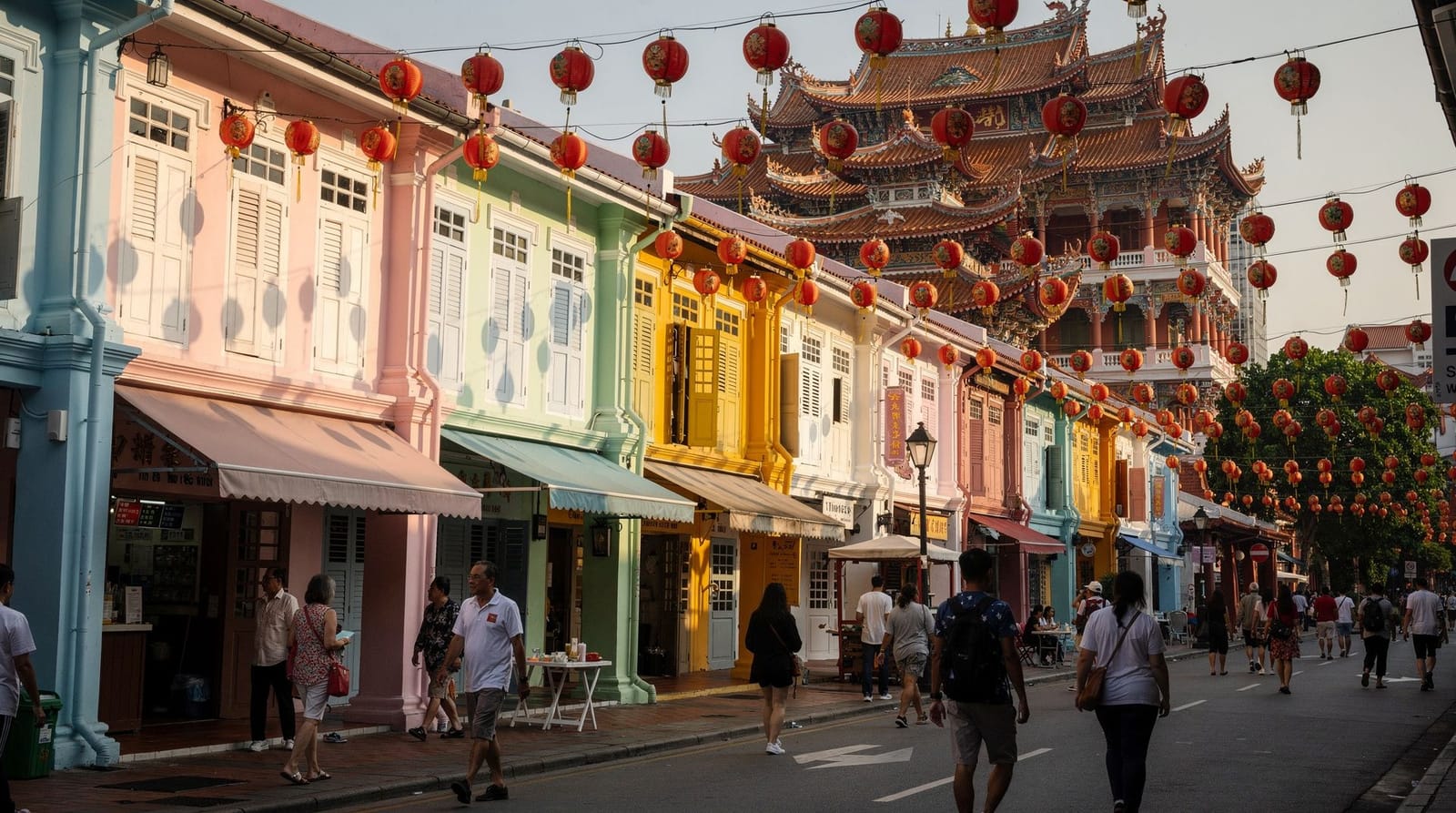
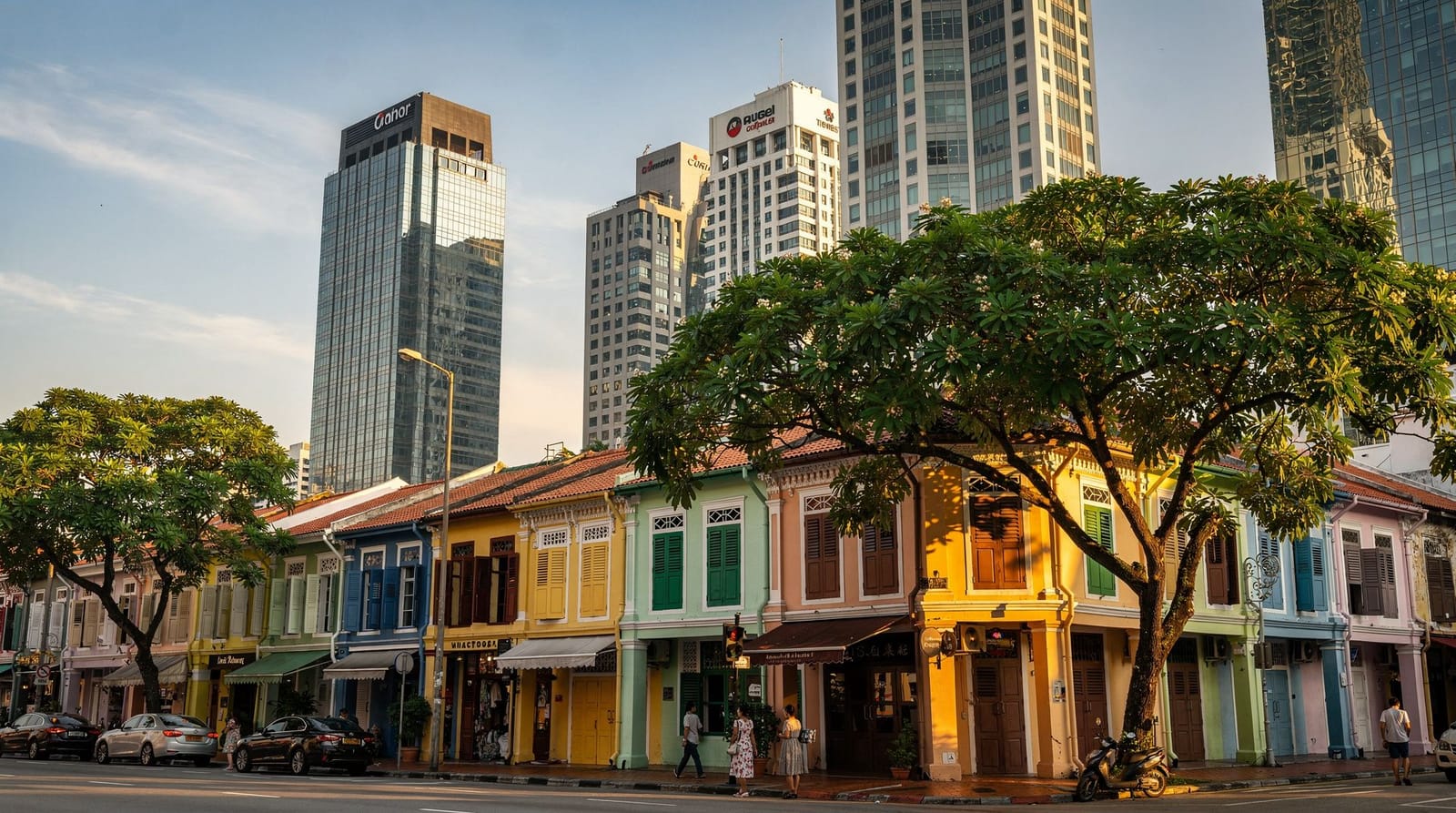
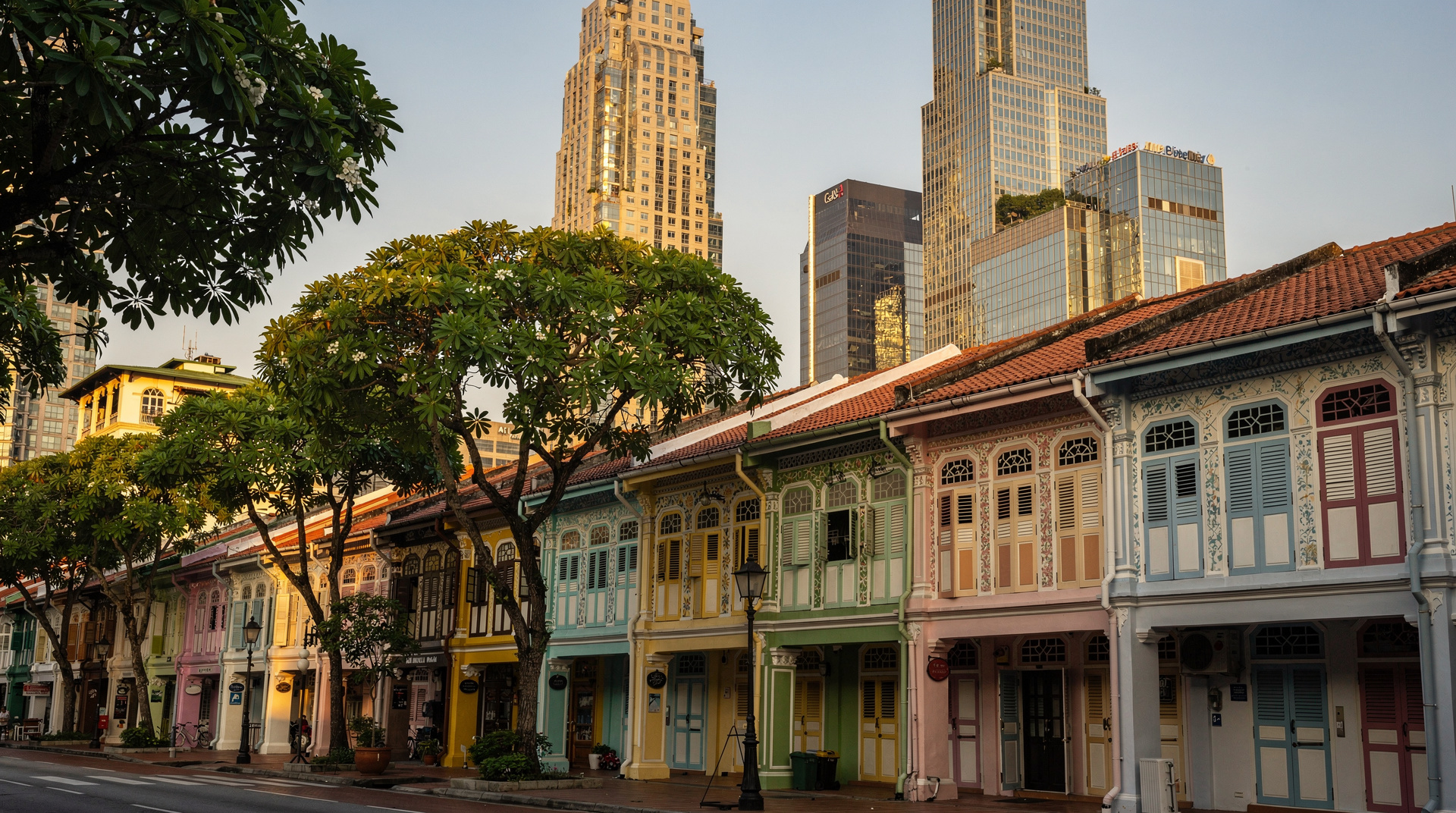
The architectural model is Tang Dynasty Chinese palace and temple design — the dynasty (618–907 CE) associated with a golden period of Buddhist patronage in China. The result is deliberately monumental: red columns, tiled sweeping roofs with ornamental ridgelines, and an exterior that stands in marked visual contrast to the colonial shophouses of the surrounding Chinatown streetscape.
The building floor by floor
Ground floor: the Buddha Hall
The main entrance on South Bridge Road leads to the Ground Level Buddha Hall — the heart of the temple. This is the room that stops visitors in their tracks.
The central altar features a 9-metre gold-coloured Buddha image flanked by four smaller bodhisattva figures. The entire altar structure is gilded and elaborate — dozens of candles, lotus flowers, and incense burners create a layered visual density that takes several minutes to absorb properly. The hall has the characteristic Mahayana Buddhist smell of sandalwood incense that will later be recognisable in every Chinese temple you encounter in Southeast Asia.
The hall is large enough to accommodate significant congregations for prayer ceremonies. On ordinary visiting days, you will find a mix of devotees at prayer and visitors observing — the two coexist quietly and respectfully.
The side walls of the hall feature detailed painted murals depicting scenes from the Buddha’s life — the birth, the great departure from the palace, the enlightenment under the Bodhi tree, the first sermon at Deer Park, and the parinirvana. These are large-scale, traditionally executed, and worth studying in detail.
What to do in the Buddha Hall: Stand quietly, take in the scale and detail, observe respectfully. If visiting during a chanting ceremony, remain at the perimeter. The incense is intense — those with respiratory sensitivities may want to limit their time in the hall proper.
Second floor: Buddhist Cultural Museum
The second floor houses the Buddhist Cultural Museum — a collection of Buddhist art and religious objects from across Asia. The collection spans bronze Buddha images from Myanmar, Thailand, Sri Lanka, and China; temple implements and ritual objects; and donated devotional items. The quality and breadth of the collection is genuinely impressive for a 2007 institution — Venerable Shi Fazhao accumulated the collection through decades of contacts in the Buddhist world.
Display cases are well-lit and labelled in English and Chinese. The museum provides context for understanding the difference between the major Buddhist traditions — Theravada (Sri Lanka, Thailand, Myanmar), Mahayana (China, Japan, Korea, Vietnam), and Vajrayana (Tibet, Nepal, Bhutan) — through the visual differences in how the Buddha and related figures are depicted.
Third floor: Da Zhong Tang (Grand Assembly Hall)
The third floor is primarily a ceremony and lecture hall used for dharma talks, community gatherings, and events. It may not be accessible during visitor hours when events are in progress. Check with the information desk.
Fourth floor: Sacred Light Room
The Sacred Light Room on the fourth floor houses the tooth relic in a large stupa (reliquary structure) encased in 320 kg of gold, donated by devotees. The room is accessible to visitors but the atmosphere is more intensely devotional than the museum floors — this is the sanctum rather than the exhibition space.
The relic itself is within the gold stupa and not directly visible to visitors. The room is maintained as a place of prayer, with devotees making offerings and prostrations. Visitors should be particularly quiet and respectful here.
A note on authenticity: Buddhist relics — teeth, bones, hair of the historical Buddha — are sacred objects of faith for Mahayana Buddhists. The historical and scientific verification of these relics is effectively impossible for objects over 2,500 years old. The temple presents the relic within the framework of Buddhist faith rather than academic history. Approaching it with curiosity and respect — regardless of one’s own religious position — is the appropriate visitor orientation.
Rooftop: 10,000 Buddhas Pavilion
The rooftop Pavilion of Ten Thousand Buddhas (Wan Buddha Tower) is a multi-tiered structure with walls lined by thousands of identical small Buddha images donated by devotees, each inscribed with the donor’s name. In the centre is a large prayer wheel. The rooftop offers good views over the Chinatown roofscape toward the CBD towers — one of the more unusual perspective combinations in Singapore.
The pavilion is a place for quiet walking meditation — visitors circumambulate the prayer wheel clockwise. The rooftop is open sky and very hot in the afternoon; mornings are significantly more pleasant.
Look closely at the small Buddha images lining the pavilion walls: each was individually donated and inscribed with a devotee’s name, a detail that turns what first reads as decorative repetition into a genuinely personal record of thousands of individual acts of devotion built up over nearly two decades since the temple opened. It’s worth slowing down here rather than treating the rooftop as a quick photo stop before heading back down.
Getting there and practical information
Address: 288 South Bridge Road, Singapore 058840
Getting there: Chinatown MRT (NE4/DT19, North-East and Downtown Lines), Exit A, walk south approximately 8 minutes along South Bridge Road. The red-gold facade of the temple is clearly visible.
Opening hours: Temple 7 am–7 pm daily. Museum 9 am–6 pm daily.
Entry: Free throughout. Donations welcome.
Dress code: Covered shoulders and covered knees required. Sarong wraps are provided at the entrance for those who need them — no charge. Remove shoes before entering the main prayer hall. A locker system is available at the entrance for bags.
Photography: Permitted in all areas except where signage indicates otherwise. The Buddha Hall allows photography when prayer is not in progress; be discreet and do not use flash toward worshippers. The museum galleries allow photography of displays.
Duration: 45–75 minutes for a thorough visit including all floors. Longer if attending a ceremony or exploring the museum collection in depth.
Combining with the surrounding area
The Buddha Tooth Relic Temple sits at the southern end of Chinatown’s most concentrated area of interest. A practical morning sequence:
- Buddha Tooth Relic Temple (45–75 minutes): Start here before the heat and crowds build
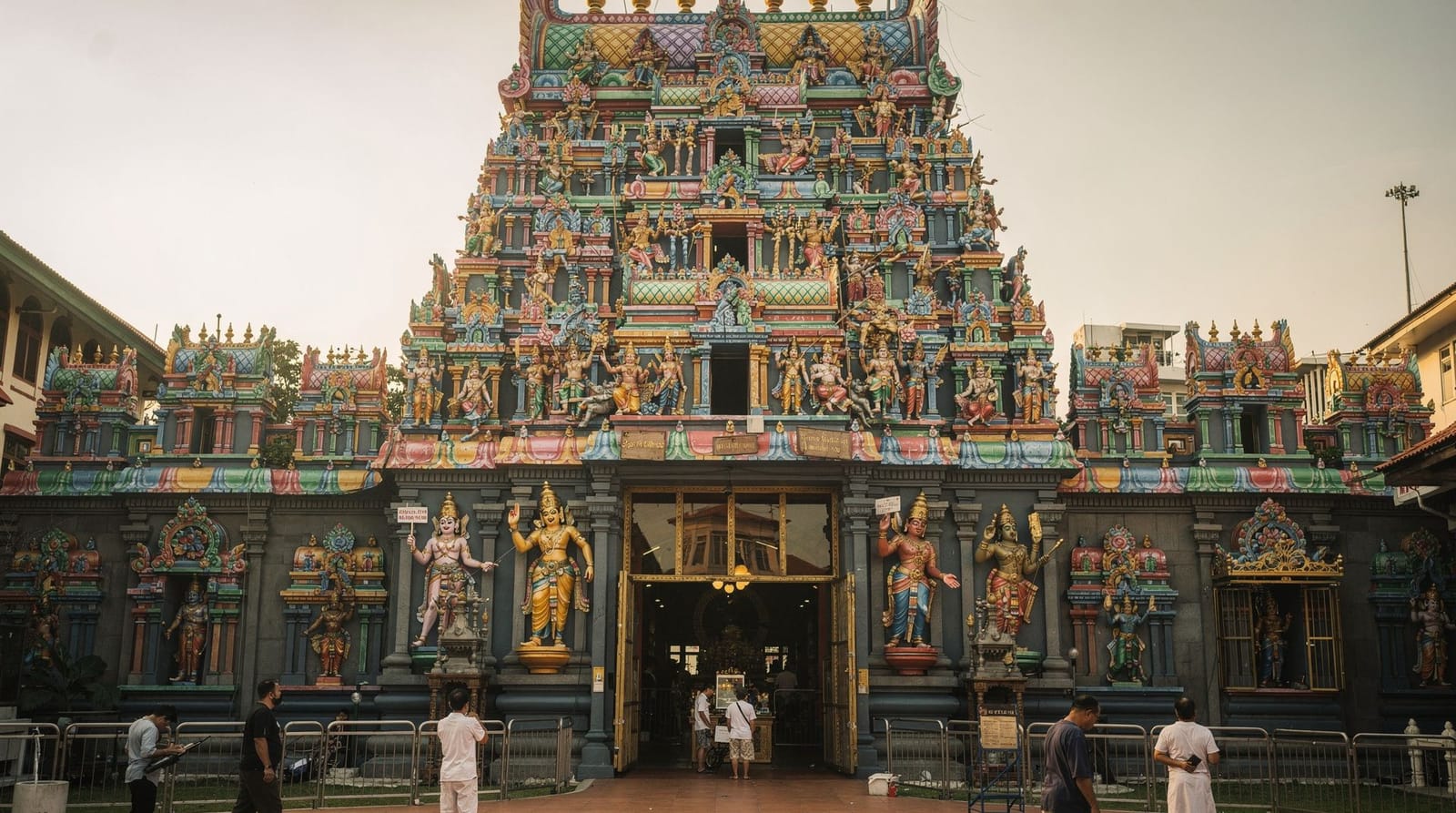
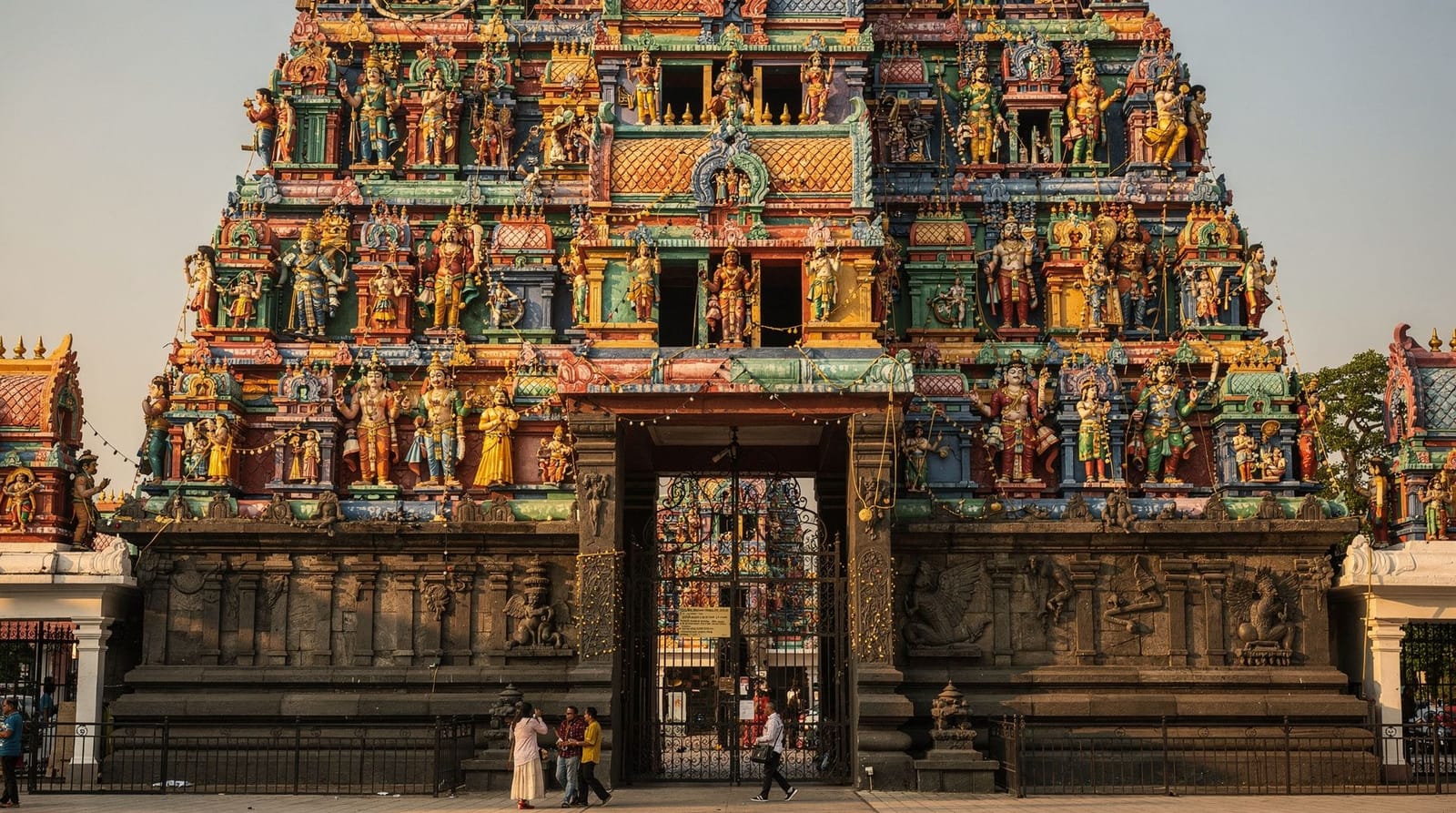
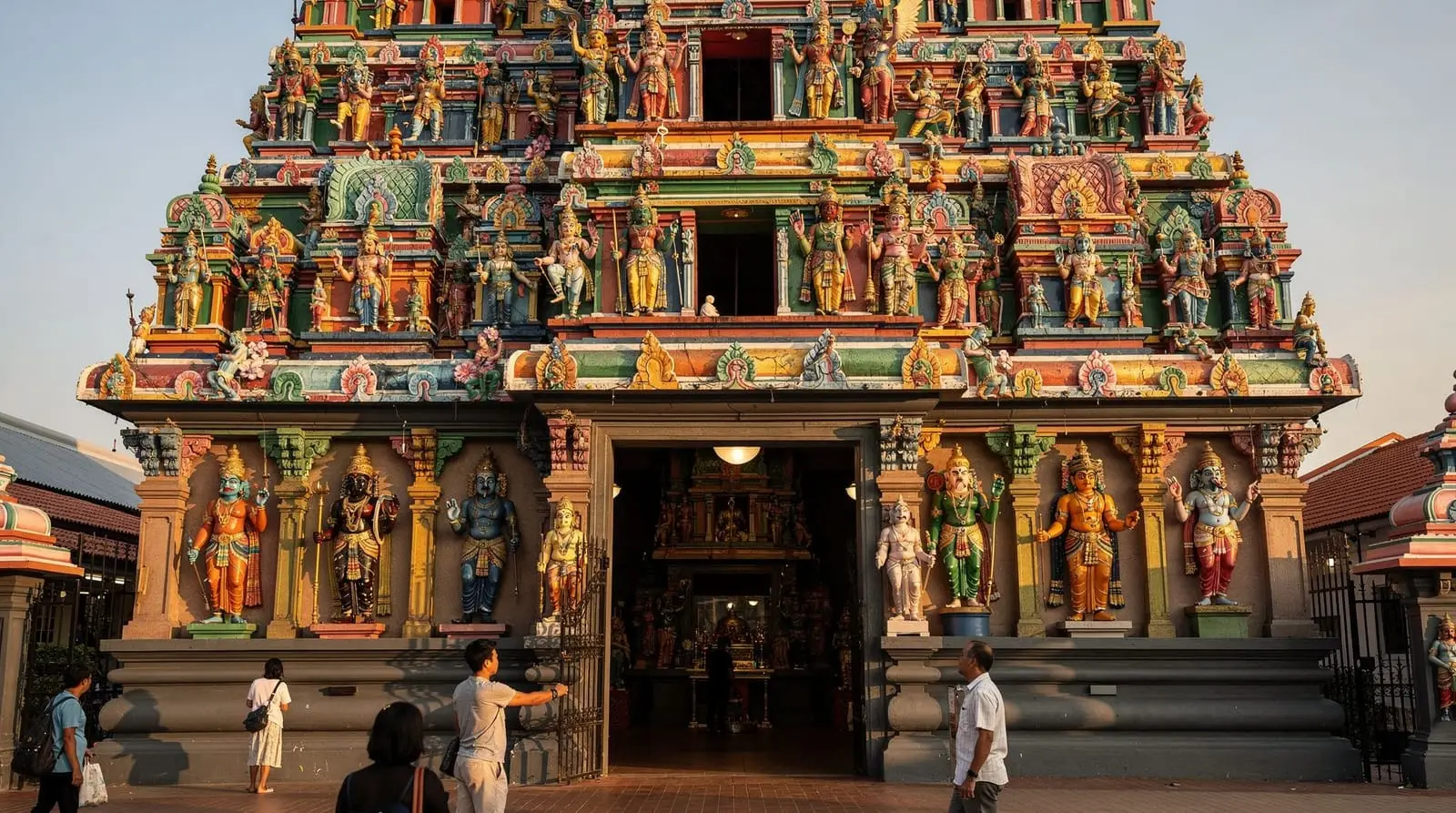
- Sri Mariamman Temple (200 metres north on South Bridge Road, 20–30 minutes): Singapore’s oldest Hindu temple, free, open mornings
- Maxwell Food Centre (directly opposite the temple entrance, 30–45 minutes): Breakfast or mid-morning meal — kaya toast, dim sum, chicken rice from the famous Tian Tian stall, chilli crab roe buns
- Chinatown Street Market (pagoda Street, 15–20 minutes): Souvenir shopping in the pedestrianised section north of the temple
- Thian Hock Keng Temple (15-minute walk northeast to Telok Ayer Street): Completing the Chinese temple circuit with the oldest Taoist temple
See Chinatown Singapore for the full neighbourhood guide and Maxwell Food Centre for the food centre breakdown.
Singapore: Chinatown heritage tour & tea tastingIf the temple whets your appetite for the neighbourhood, the Chinatown destination page places it among the surrounding streets, and Chinatown Complex food centre is the natural next stop for a bigger, more local meal. For the wider story of how these streets came to hold Buddhist, Hindu, and Taoist places of worship side by side, the ethnic quarters guide gives useful background before or after your visit.
Guided vs self-guided
Self-guided visits work well here — the museum labels are thorough in English, and there’s no need to book ahead or pay anything. A guided option is worth considering only if you want the temple woven into a broader half-day covering Chinatown, Little India, and Kampong Glam’s mosque together, since a knowledgeable local guide can explain the distinctions between Buddhist, Hindu, and Islamic religious architecture as you move between them — a comparison that is much harder to piece together on your own without background reading.
Singapore: temples, Chinatown and Little India private tourFitting the temple into a longer trip
Because entry is free and the visit is short, the temple slots easily into almost any plan. It works well on a first visit alongside the other sights in Singapore for first-timers, and it is a sensible rainy-day or heat-of-the-day option since much of the visit is indoors, as covered in free things to do in Singapore. If you are building a full schedule, the one-day Singapore itinerary shows how a Chinatown morning can sit beside other highlights without rushing either.
What to skip if you’re short on time
If you only have 20–30 minutes, prioritise the ground-floor Buddha Hall and the rooftop 10,000 Buddhas Pavilion — these are the two most visually striking spaces and require no reading to appreciate. The second-floor museum rewards more time than a rushed visit allows; if pressed, skip it in favour of the free Sri Mariamman Temple just up the road, which gives a genuinely different (Hindu, still-active, centuries-older) experience in a similar amount of time.
Frequently asked questions about Buddha Tooth Relic Temple Singapore
How old is the Buddha Tooth Relic Temple?
The current building was completed in 2007 — it is a relatively new construction, not a historical building. The institution was established specifically to house the tooth relic and provide a Buddhist cultural centre. The architectural style references Tang Dynasty China but the building itself is 21st century. This is not a historical artefact in the sense that Thian Hock Keng (1842) is — it is a new religious institution that has chosen a historically informed aesthetic.
Is the tooth relic actually visible?
The relic is enclosed within the golden stupa in the Sacred Light Room on the 4th floor. The stupa itself is visible and impressive; the tooth within is not directly on display. This is consistent with how major Buddhist relics are typically treated — they are present as objects of veneration within a reliquary, not exhibited in display cases.
Is this temple appropriate for children to visit?
Yes. Children find the scale of the Buddha Hall genuinely impressive, and the museum’s Buddhist statuary and artefacts are visually engaging. The atmosphere requires quieter behaviour than some attractions, which is worth preparing children for. The rooftop pavilion with its thousands of small Buddha images tends to be a particular point of curiosity for children.
What language are the museum labels in?
English and Mandarin Chinese. The temple documentation is produced in both languages with equivalent depth. No specific language ability is required for a visitor to navigate the temple and understand the exhibitions.
Is there a temple shop?
Yes. There is a shop at the ground floor with Buddhist religious items, incense, books, and some gifts. This is a legitimate religious items shop rather than a tourist souvenir outlet — items are available for devotional use. Staff can advise on appropriate items for non-Buddhists who want to bring back something meaningful.
How does Buddha Tooth Relic Temple compare to Thian Hock Keng?
They represent different aspects of Chinese Buddhist/Taoist tradition in Singapore. Buddha Tooth Relic Temple (2007) is architecturally more dramatic and has a dedicated museum — better for a structured learning experience. Thian Hock Keng (1842) is historically older and feels more authentically lived-in — better for a sense of continuity with the immigrant community that built it. Both are free, both are within 15 minutes’ walk of each other, and visiting both in a single morning is entirely practical. See Temples of Singapore for the comparative overview.
Top experiences
Bookable activities with verified prices and instant confirmation on GetYourGuide.