Hainanese chicken rice in Singapore: the dish, the best stalls, and how to eat it
Singapore: Chinatown hawkers food tour with 7 tastings
Where is the best chicken rice in Singapore and what does it cost?
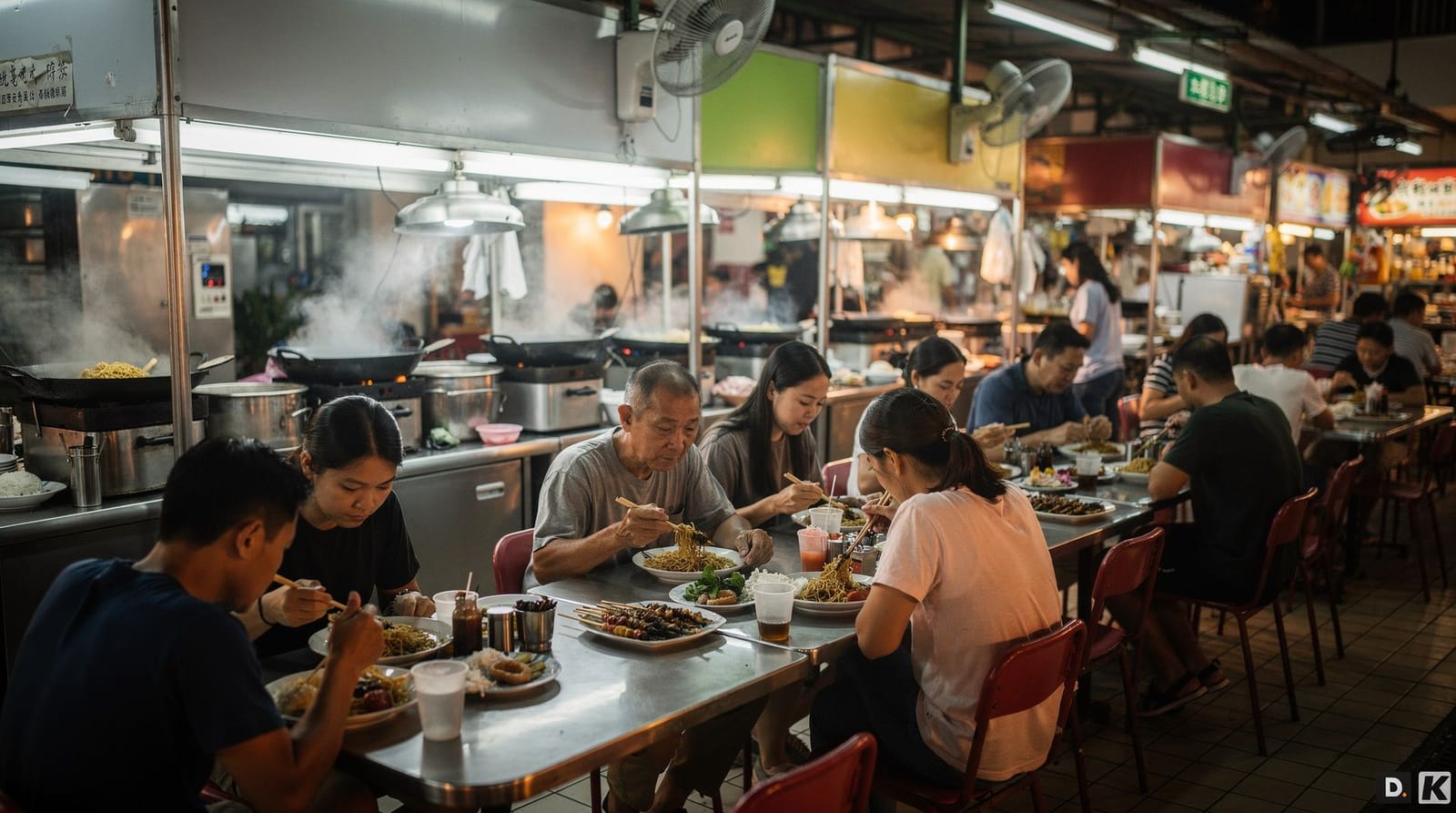
Tian Tian Hainanese Chicken Rice at Maxwell Food Centre is the most famous stall (SGD 6–8, queue 20–40 minutes at peak). Boon Tong Kee and Wee Nam Kee are respected restaurant versions. The dish costs SGD 5–8 at hawker stalls, SGD 15–25 at dedicated restaurants. Locals argue endlessly about the best — the honest answer is that several stalls are excellent and the differences are subtle.
The dish Singapore argues about most
Ask ten Singaporeans which is the best chicken rice stall and you will receive ten different answers, accompanied by strong opinions about why the others are wrong. This is the hallmark of a genuinely beloved dish — not just well-liked, but central enough to personal identity that the argument matters.
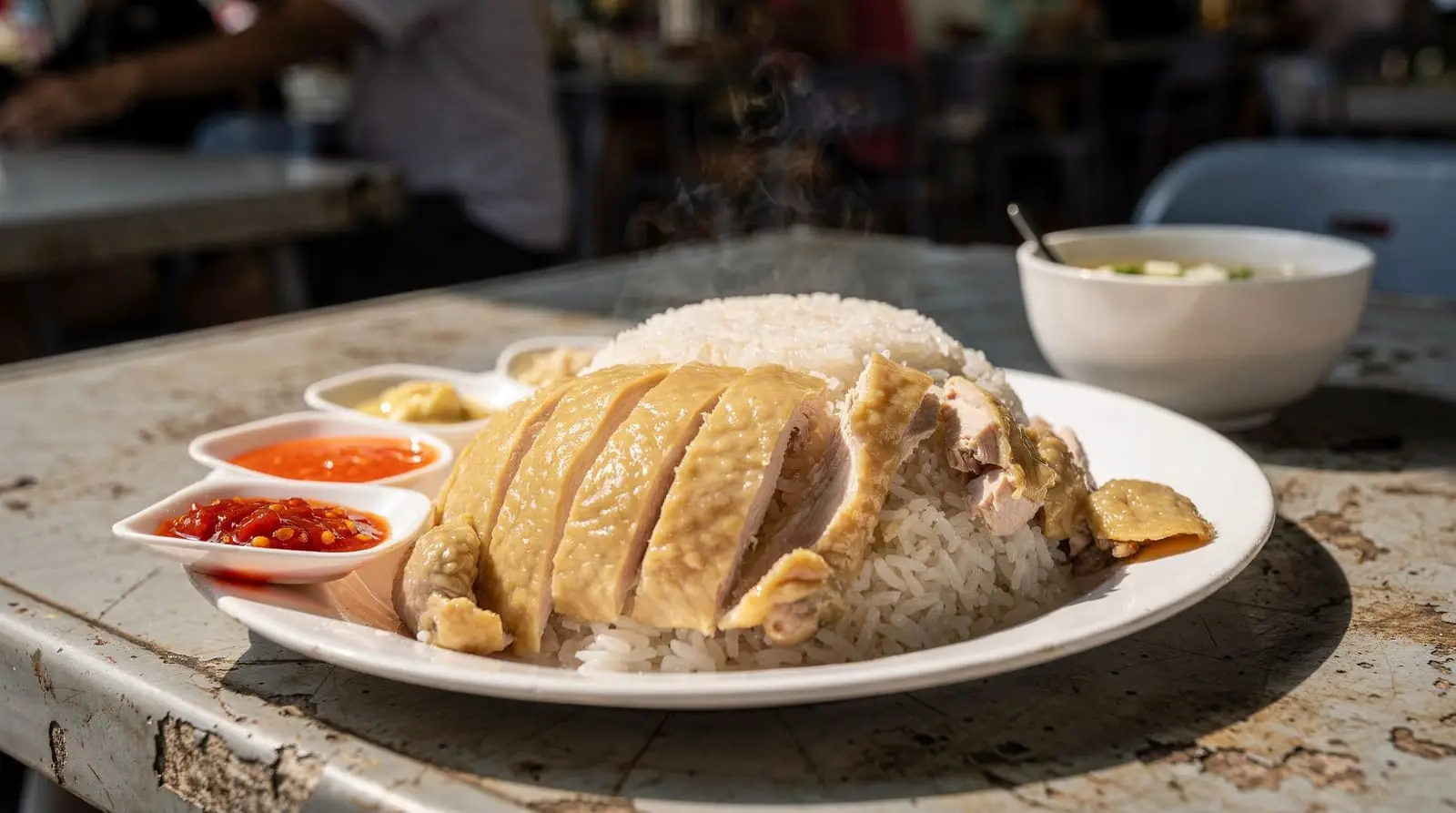
Hainanese chicken rice (海南雞飯) is technically one of the simplest dishes in Singapore’s repertoire: boiled chicken, rice, three sauces, clear soup. Its elevation from simple migrant food to national icon is the story of how good technique, quality ingredients, and decades of refinement turn the straightforward into the sublime.
| Where | Maxwell Food Centre (Tanjong Pagar MRT) for the famous stalls; heartland estates for local favourites |
| Cost | Around SGD 5–8 hawker plate; SGD 15–25+ at sit-down restaurants |
| Best for | First-time visitors, budget-conscious eaters, anyone curious about Michelin-starred hawker food |
| Getting there | East-West Line to Tanjong Pagar, then a short walk to Maxwell Food Centre |
| Best time | Before 11:30 on weekdays to avoid the worst of the queue |
Origins
The dish traces to Hainanese immigrants from Wenchang, Hainan Province, who came to Singapore and Malaya in the late 19th and early 20th centuries. In Wenchang, the local chicken — a distinct free-range breed — is the source of a celebrated preparation: poached whole, served with rice cooked in the poaching liquid, with dipping sauces.
In Singapore, Hainanese cooks adapted the dish to locally available chickens and refined it over generations. The significant technical additions — pandan leaves and garlic in the rice cooking, the precise temperature management of the poaching to keep the skin silky while cooking the meat through — represent Singapore-specific development rather than a direct transplant of the Chinese original.
By the 1960s and 1970s, chicken rice was widespread at hawker centres and coffee shops across Singapore. By the 1990s, it was internationally recognised as one of the quintessential Singaporean dishes. The Michelin recognition in 2016 merely confirmed what Singaporeans already knew.
Malaysia makes a similar claim on the dish, and versions in Ipoh and Malacca are genuinely excellent in their own right — the “Singapore vs Malaysia chicken rice” debate is a real and long-running one among Southeast Asian food enthusiasts, roughly parallel to the Singapore vs Bangkok comparisons visitors make about entire cities. Locally, most Singaporeans consider their version distinct enough — silkier chicken, more fragrant rice — that the comparison misses the point; both traditions descend from the same Hainanese root but diverged over a century of separate development.
What makes great chicken rice
The dish is simple enough that the differences between a very good and a transcendent version are technical and ingredient-based, not conceptual.
The chicken: Should be sourced fresh, not frozen, and poached at a temperature that keeps the meat just-cooked with slightly translucent flesh near the bone (this is the desired standard, not a food safety concern — the temperature is adequate). The skin should be taut, slightly gelatinous, and separate cleanly from the meat. The drumstick is considered the most flavourful part.
The rice: Cooked in chicken stock (from the poaching liquid), rendered chicken fat, ginger, pandan, and garlic. The individual grains should be separated and lightly coated rather than clumped. The fragrance when a fresh batch arrives is distinctive. At great stalls, you can smell the pandan and chicken fat from several stalls away.
The ginger-scallion sauce: Fresh grated ginger (not paste) mixed with chopped scallion and hot oil — simple but very distinct. The heat of the oil partially cooks the ginger and scallion, releasing fragrance. This sauce is what most directly recalls the Wenchang original.
The chilli sauce: Each stall makes its own version — fresh red chillies, garlic, ginger, lime, sometimes toasted dried chillies. The character varies: some are bright and citrusy, some are deeper and more aromatic. The chilli sauce is a meaningful point of differentiation between stalls.
The dark soy sauce: Lighter in body than standard dark soy — sometimes described as “chicken rice soy sauce.” A thin, sweet-savoury drizzle that adds colour and seasoning to the chicken without overwhelming.
The soup: The poaching liquid becomes the accompanying soup — a clear chicken broth with spring onions, fried shallots, and often a piece of winter melon or light tofu. It is mild and restorative. Never ignore the soup.
Dietary notes: Standard chicken rice is not vegetarian or halal by default — check the stall specifically, as most hawker centres have a mix of halal-certified and non-halal stalls side by side. For a halal option, see the halal food Singapore guide, which lists certified chicken rice stalls. The dish is naturally dairy-free and can be made largely gluten-free if you skip the dark soy sauce, though cross-contamination in a shared hawker kitchen is never guaranteed.
Where to eat: top stalls and restaurants
Tian Tian Hainanese Chicken Rice — Maxwell Food Centre
The benchmark. Stall 10/11, Maxwell Food Centre, 1 Kadayanallur Street (Tanjong Pagar MRT, 5 minutes’ walk). Michelin-starred when the Singapore Guide launched in 2016.
What to expect: Orderly queue; experienced stall operators; consistent rice and chicken. Order by pointing at whether you want a half or quarter chicken, breast or thigh/drumstick preference, and rice quantity. The dark soy on this version is especially good.
Price: Plate (rice + chicken + soup) SGD 6–8. Large portion SGD 10–12.
Queue: 20–40 minutes at peak (12:00–13:30). Arrive before 11:30 to minimise the wait.
Hours: Approximately 10:00–20:00 (closes earlier if sold out). Closed Mondays.
Ah Tai Hainanese Chicken Rice — Maxwell Food Centre
Operated by a former Tian Tian cook who opened his own stall at stall 7 in the same food centre. Local opinion is genuinely split on whether Ah Tai or Tian Tian is better — both have ardent supporters. Ah Tai’s queue is shorter. This is a legitimate alternative, not a consolation prize.
Boon Tong Kee
A sit-down restaurant chain with branches at Balestier Road, Chinatown, and Orchard. Higher prices than hawker stalls (SGD 25–35 for chicken, SGD 3–4 for rice per person) but a comfortable setting with more elaborate side dishes and whole-chicken serving options. Popular with families who want to eat the dish in a restaurant context. Booking recommended for dinner.
Wee Nam Kee — Novena
Long-established restaurant near Novena MRT (United Square mall). Particularly known for its roasted and soy sauce chicken variations in addition to the classic white poached. Less crowded than Tian Tian and more comfortable for a sit-down lunch.
Five Star Hainanese Chicken Rice — Katong
A branch at 191 East Coast Road, well-regarded in the Katong/Joo Chiat neighbourhood. Different from central Singapore geographically but worth visiting if you are exploring the Peranakan quarter — see Katong and Joo Chiat for the full area guide.
Comparing the main options
| Stall/restaurant | Style | Price (per person) | Best for |
|---|---|---|---|
| Tian Tian (Maxwell) | Hawker, white poached | Around SGD 6–8 | The benchmark, first-timers |
| Ah Tai (Maxwell) | Hawker, white poached | Around SGD 6–8 | Same quality, shorter queue |
| Boon Tong Kee | Restaurant, sit-down | Around SGD 25–35 | Families, comfortable dinner |
| Wee Nam Kee (Novena) | Restaurant, roasted/soy sauce | Around SGD 18–28 | Less crowded, variety of styles |
| Five Star (Katong) | Hawker/casual | Around SGD 6–9 | Pairing with a Peranakan-quarter visit |
If Maxwell’s queue looks unmanageable, the best hawker centres guide and Maxwell Food Centre guide cover other centres with their own chicken rice stalls and shorter waits.
The chicken rice debate
The arguments Singaporeans have about chicken rice tend to cluster around a few recurring points:
White vs roasted vs soy sauce: Purists favour white poached as the most technically honest version. Roasted has more caramelised flavour appeal. Soy sauce chicken has the most intense colour and sweetness. There is no correct answer.
Kampung vs normal chicken: Some high-end stalls use kampung chicken (free-range, leaner, more flavourful but tougher). Standard chicken rice uses commercially reared chickens. Kampung costs more and divides opinion on whether the firmer texture is a feature or a drawback.
The rice debate: Whether more or less chicken fat is desirable in the rice; pandan or no pandan; garlic quantity. These are the fine-grained debates that happen between people who have eaten chicken rice hundreds of times.
Hawker vs restaurant: Whether spending more for a restaurant setting is justified. The honest answer is that many hawker stalls match or exceed restaurant quality — the setting is entirely the difference, not the dish.
How to order
- Approach the stall when it is your turn
- Specify chicken type: white (poached), roasted, soy sauce, or combination
- Specify portion: quarter chicken (one person), half (one to two), whole (three to four)
- Specify part preference: breast (drier but leaner) or thigh/drumstick (more flavourful, more fat)
- Request extra sauce: ask for extra ginger sauce if you like it — most stalls add it at no charge
- Order a separate cup of rice if you want more (SGD 1 typically)
- Do not forget the soup — it comes with the plate but is sometimes overlooked
At busy stalls like Tian Tian, the exchange is rapid. Have your order ready before you reach the front.
Guided food tours for context
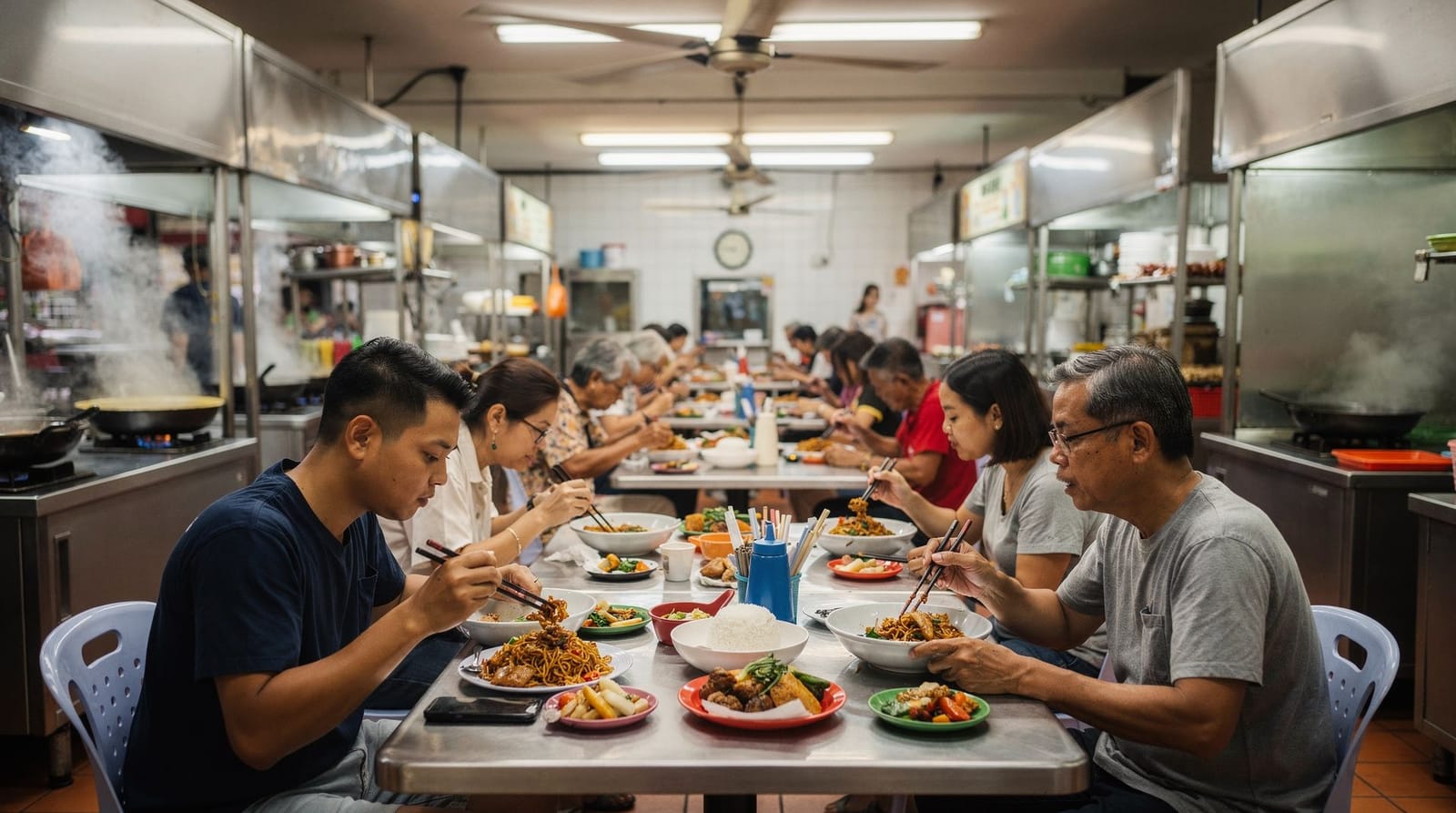
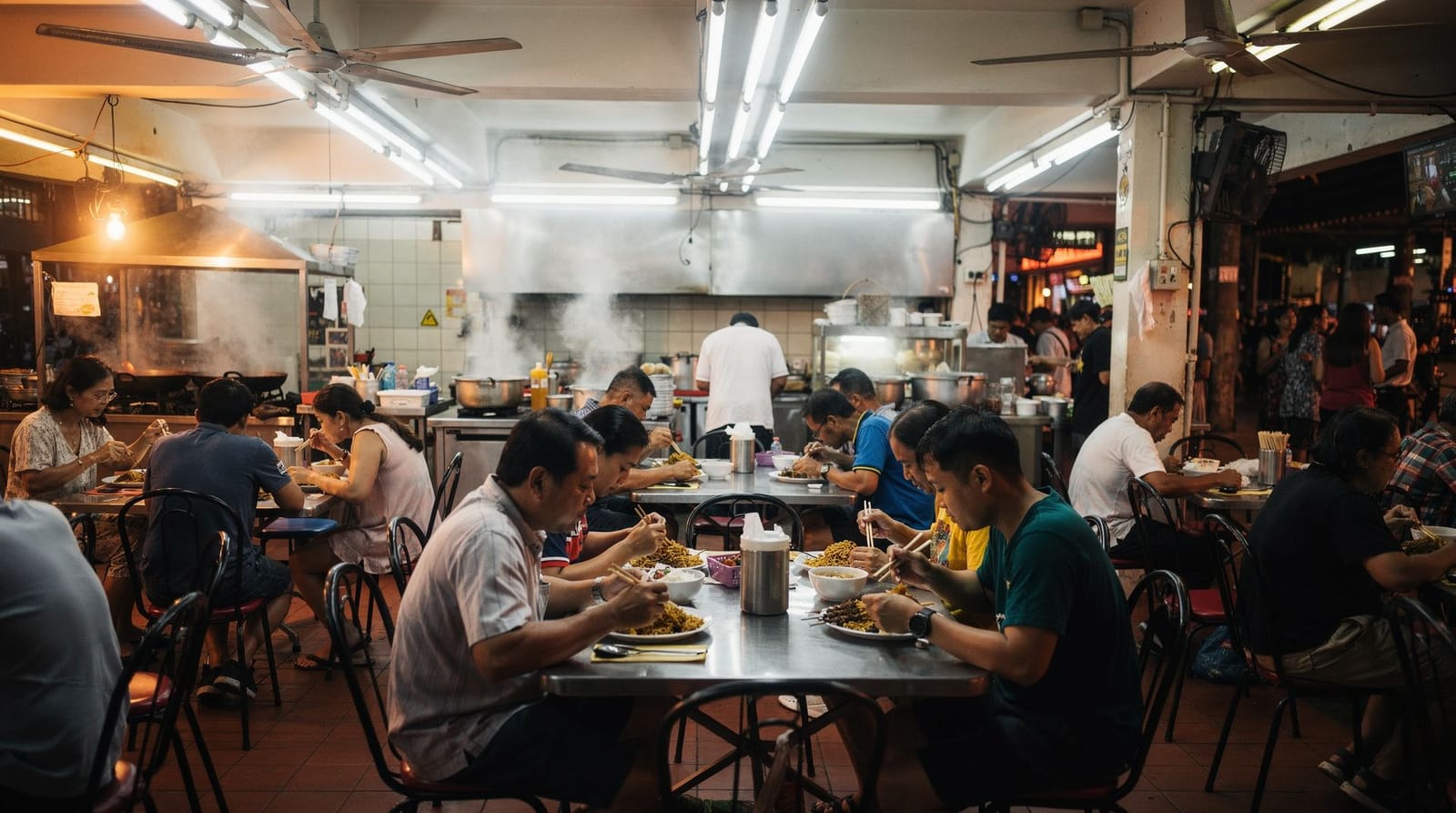
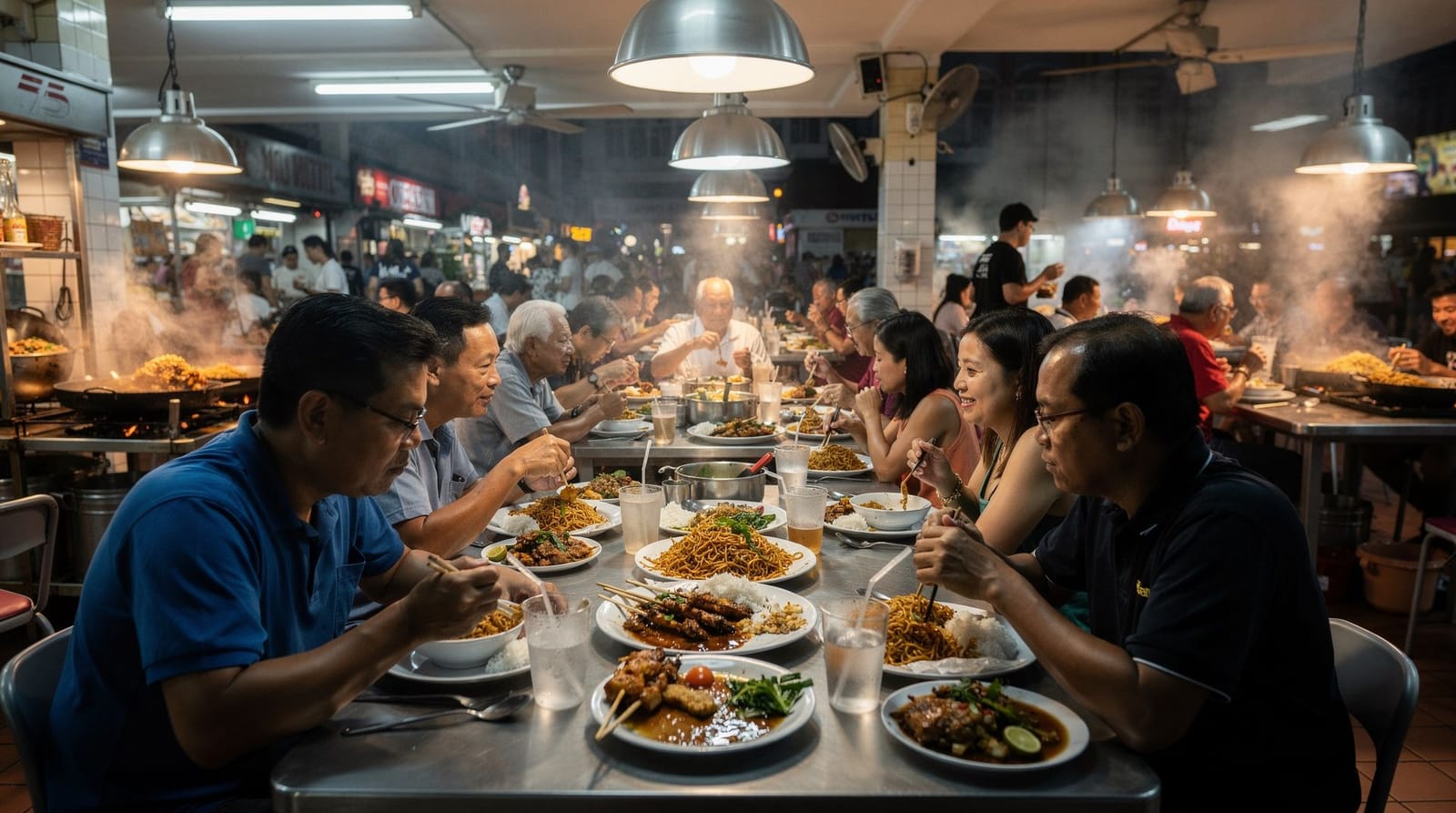
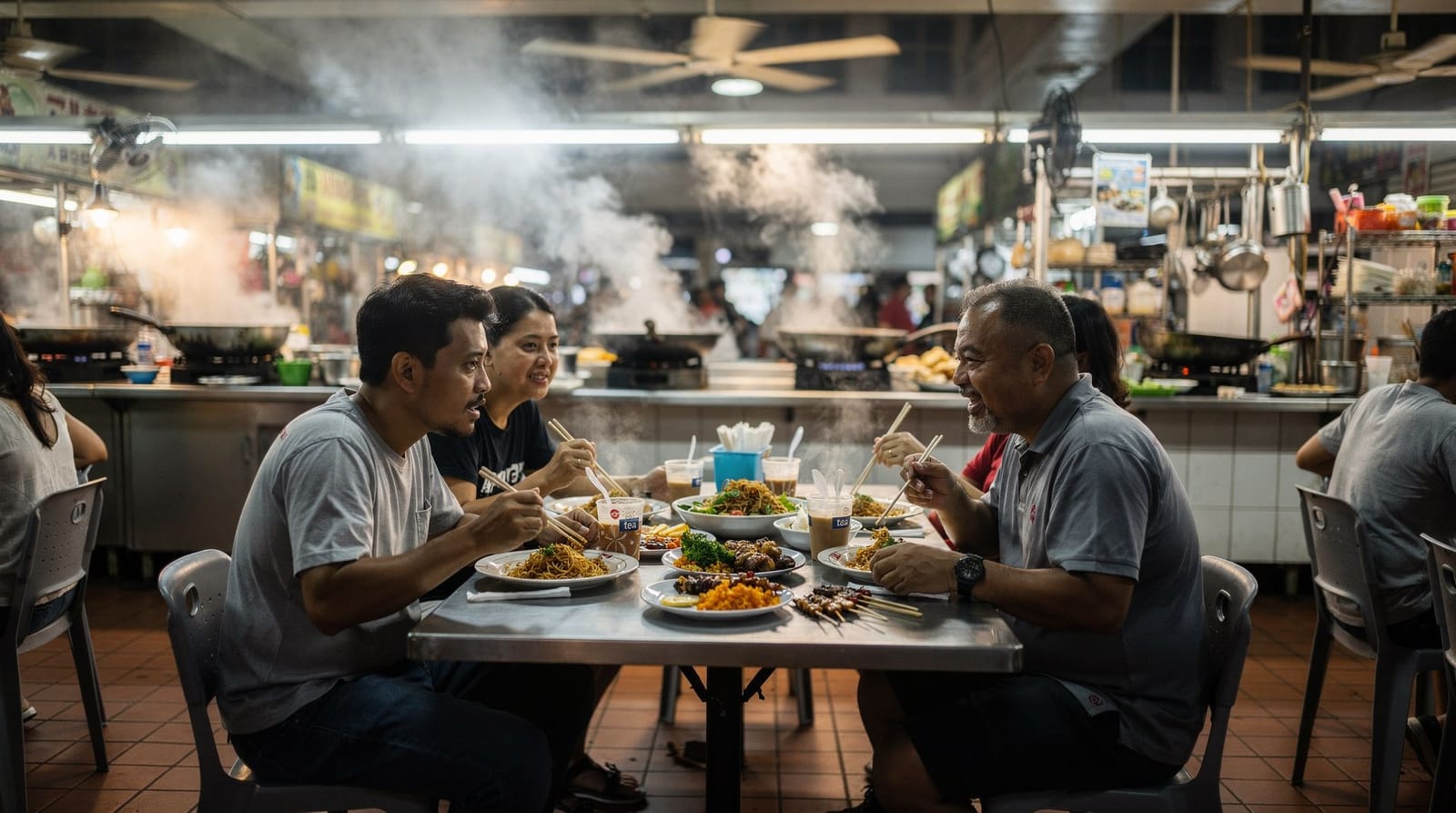
Food tours that include chicken rice typically visit Maxwell Food Centre and provide the cultural backstory alongside the eating. This is a good option for first-time visitors who want to understand what they are tasting.
Singapore: Chinatown hawkers food tour with 7 tastings Singapore: local hawker food tour with tastingsFor the UNESCO hawker culture context specifically — useful if you want to understand the designation and the history:
Singapore: UNESCO hawker culture Chinatown food tasting tourChicken rice as a budget staple
At SGD 5–8, chicken rice represents some of the best value per calorie and per quality in any city on earth. A complete meal — rice, chicken, soup, three sauces — for under SGD 10 at a Michelin-recognised stall is not something replicable in Tokyo, Paris, London, or New York.
For a full picture of how to eat well on a budget in Singapore, see best cheap eats Singapore and the Singapore travel costs overview.
Chicken rice beyond Maxwell: a broader Singapore tour
Limiting chicken rice to Maxwell Food Centre misses several stalls that loyal followings would argue are equally good or better.
Seng Kee Black Chicken Herbal Soup at Geylang Lor 5 serves a distinct variation — herbal black chicken rice, the broth made from silkie chicken and Chinese medicinal herbs (ginseng, wolfberries, angelica root). The flavour profile is entirely different from standard chicken rice — deeper, earthier, medicinal in the best sense. Price: SGD 10–16 per portion. Worth a separate visit if you are already going to Geylang for durian.
Mandarin Chicken Rice (various stalls across Toa Payoh and Ang Mo Kio) represents the heartland residential-estate version of the dish — lower profile than Maxwell, competent to excellent, priced SGD 4–6. The Toa Payoh area (accessible from Toa Payoh MRT) has a particularly dense cluster of quality chicken rice stalls that see almost no tourist traffic.
Ah Kow Mushroom Minced Pork Mee at Hong Lim — a brief note on a non-chicken rice dish that occupies adjacent quality territory. For visitors interested in exploring the broader Singaporean hawker landscape after chicken rice, the mixed-dish economy rice at Hong Lim Food Centre (near Chinatown Complex) provides a useful contrast.
The whole chicken option
At restaurant versions (Boon Tong Kee, Wee Nam Kee), ordering a half or whole chicken is the standard approach — it comes pre-carved at the table. At hawker stalls, you are typically ordering individual portions or a half-chicken. For groups of three to four people, ordering a half-chicken and additional rice portions is more economical than individual plates.
When ordering a half-chicken, specify:
- White, roasted, or soy sauce
- Whether you want breast meat (cleaner, leaner, popular with those counting calories) or thigh/drumstick (more fat marbling, more flavour — the traditional preference)
- Ask whether you can have the chicken partially carved into pieces — most stalls will do this if you ask
Chicken rice near the main tourist areas
You don’t have to detour all the way to Maxwell Food Centre to eat well. If you’re staying or sightseeing around Orchard Road, several coffee shops and food courts along Orchard Road and in Somerset serve competent chicken rice without the Maxwell queue — useful context is in the Orchard Road guide.
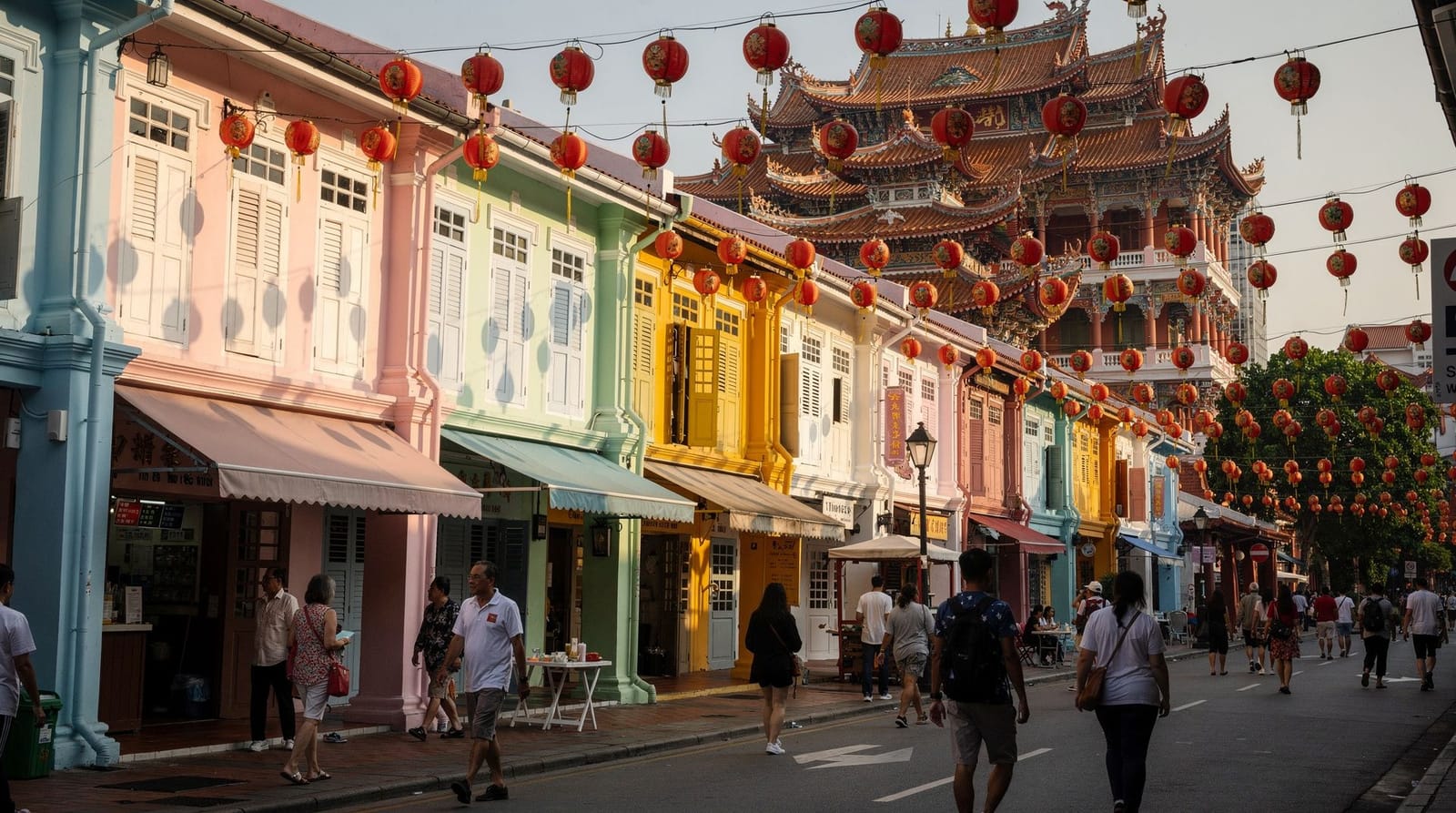
Around Marina Bay, food courts inside the malls near Marina Bay Sands carry chicken rice stalls, though quality is more variable than at a dedicated hawker centre; if you’re exploring that area for the skyline rather than the food, see Marina Bay after dark for what else to plan around. Travellers based in Chinatown are in the best position of all — Maxwell, the Chinatown Complex food stalls, and Ah Tai are all within a ten-minute walk, so read the Chinatown guide to build a half-day around chicken rice plus temple and heritage sights.
A note on portion sizing for groups
Chicken rice scales awkwardly for groups larger than two, and getting it wrong means either overpaying or running out of chicken. As a rule of thumb: a quarter chicken plus one rice portion is one adult serving; a half chicken comfortably feeds two to three when paired with an extra rice portion or two; a whole chicken (restaurant order) suits four to six with side dishes. At hawker stalls, it’s usually cheaper and faster to order individual quarter-chicken plates rather than one large shared portion, since stalls are optimised for single servings and the queue moves faster that way. At restaurants, a whole chicken ordered in advance (phone or walk-in reservation) avoids the wait that can build up during dinner service.
Chicken rice’s place in Singapore’s food map
Understanding where chicken rice fits in the broader Singapore food narrative is useful context. The dish is not Malay, not Indian, and not strictly Hainanese — it is Singaporean. The combination of Chinese technique, local ingredients (pandan, local chicken breeds until industrialisation), and decades of refinement in a multicultural city produced a dish that is entirely specific to this geography.
It sits alongside chilli crab, laksa, and char kway teow as the small group of dishes that are Singapore-specific rather than regional variations of dishes found elsewhere. When Singaporeans overseas crave home, chicken rice is consistently among the top reported food cravings — more than any other single dish.
For the full context of Singapore’s food identity, see must-try dishes Singapore and what to eat in Singapore. For planning meals around chicken rice alongside other hawker priorities, the Singapore foodie itinerary provides a day-by-day framework.
Frequently asked questions about hainanese chicken rice
Is hainanese chicken rice gluten-free?
Not reliably. The dark soy sauce (drizzled over chicken) contains wheat. The chilli sauce and ginger-scallion sauce are typically gluten-free, but cross-contamination in a hawker environment cannot be guaranteed. If you have coeliac disease, ask explicitly at the stall whether the rice is cooked without soy-containing additives.
What is the best time to eat at Tian Tian without a long queue?
Before 11:30 on weekdays is the optimal window — queues are 5–15 minutes rather than 30–45. Arriving at opening (approximately 10:00) on a weekday is the lowest-wait option. Weekend afternoons after 14:00 are also reasonable, though stock may be limited late in the day.
Can I get chicken rice at breakfast?
Not at the major hawker stalls, which open at 10:00 at the earliest. For morning chicken rice, look at coffee shops (kopitiams) in residential estates — some serve it from 08:00 onwards. It is available throughout the day at most stalls rather than being specifically a lunch dish.
Is hainanese chicken rice actually from Hainan?
The dish is inspired by Wenchang chicken from Hainan but is a Singaporean creation — the version served in Singapore does not exist in Hainan in the same form. The pandan-scented rice, the specific sauce combination, and the precision poaching technique are Singapore-specific developments. This is common with many “homeland” dishes that evolved significantly in diaspora contexts.
Can I take chicken rice as takeaway (dabao)?
Yes — chicken rice is one of the most common takeaway items at Singapore hawker centres. Tell the stall “dabao” and they will pack the rice, chicken, and sauce into a takeaway container or paper bag. The quality holds for 20–30 minutes; the rice starts to clump if left too long. Soup is usually packed separately.
Where can I see Maxwell Food Centre on a map?
Maxwell Food Centre is at 1 Kadayanallur Street, near the Tanjong Pagar MRT station (East-West Line, approximately 3 minutes’ walk). It is close to the Chinatown area — see the chinatown guide for what else is worth doing in the vicinity.
Chicken rice beyond Maxwell: a broader Singapore tour
Limiting chicken rice to Maxwell Food Centre misses several stalls that loyal followings would argue are equally good or better.
Seng Kee Black Chicken Herbal Soup at Geylang Lor 5 serves a distinct variation — herbal black chicken rice, the broth made from silkie chicken and Chinese medicinal herbs (ginseng, wolfberries, angelica root). The flavour profile is entirely different from standard chicken rice — deeper, earthier, medicinal in the best sense. Price: SGD 10–16 per portion. Worth a separate visit if you are already going to Geylang for durian.
Mandarin Chicken Rice (various stalls across Toa Payoh and Ang Mo Kio) represents the heartland residential-estate version of the dish — lower profile than Maxwell, competent to excellent, priced SGD 4–6. The Toa Payoh area (accessible from Toa Payoh MRT) has a particularly dense cluster of quality chicken rice stalls that see almost no tourist traffic.
Ah Kow Mushroom Minced Pork Mee at Hong Lim — a brief note on a non-chicken rice dish that occupies adjacent quality territory. For visitors interested in exploring the broader Singaporean hawker landscape after chicken rice, the mixed-dish economy rice at Hong Lim Food Centre (near Chinatown Complex) provides a useful contrast.
The whole chicken option
At restaurant versions (Boon Tong Kee, Wee Nam Kee), ordering a half or whole chicken is the standard approach — it comes pre-carved at the table. At hawker stalls, you are typically ordering individual portions or a half-chicken. For groups of three to four people, ordering a half-chicken and additional rice portions is more economical than individual plates.
When ordering a half-chicken, specify:
- White, roasted, or soy sauce
- Whether you want breast meat (cleaner, leaner, popular with those counting calories) or thigh/drumstick (more fat marbling, more flavour — the traditional preference)
- Ask whether you can have the chicken partially carved into pieces — most stalls will do this if you ask
Chicken rice’s place in Singapore’s food map
Understanding where chicken rice fits in the broader Singapore food narrative is useful context. The dish is not Malay, not Indian, and not strictly Hainanese — it is Singaporean. The combination of Chinese technique, local ingredients (pandan, local chicken breeds until industrialisation), and decades of refinement in a multicultural city produced a dish that is entirely specific to this geography.
It sits alongside chilli crab, laksa, and char kway teow as the small group of dishes that are Singapore-specific rather than regional variations of dishes found elsewhere. When Singaporeans overseas crave home, chicken rice is consistently among the top reported food cravings — more than any other single dish.
For the full context of Singapore’s food identity, see must-try dishes Singapore and what to eat in Singapore. For planning meals around chicken rice alongside other hawker priorities, the Singapore foodie itinerary provides a day-by-day framework.
Top experiences
Bookable activities with verified prices and instant confirmation on GetYourGuide.