Halal food in Singapore: what to know, where to eat, and how to find certified stalls
Singapore: Chinatown, Little India & Kampong Glam walk
Is it easy to find halal food in Singapore?
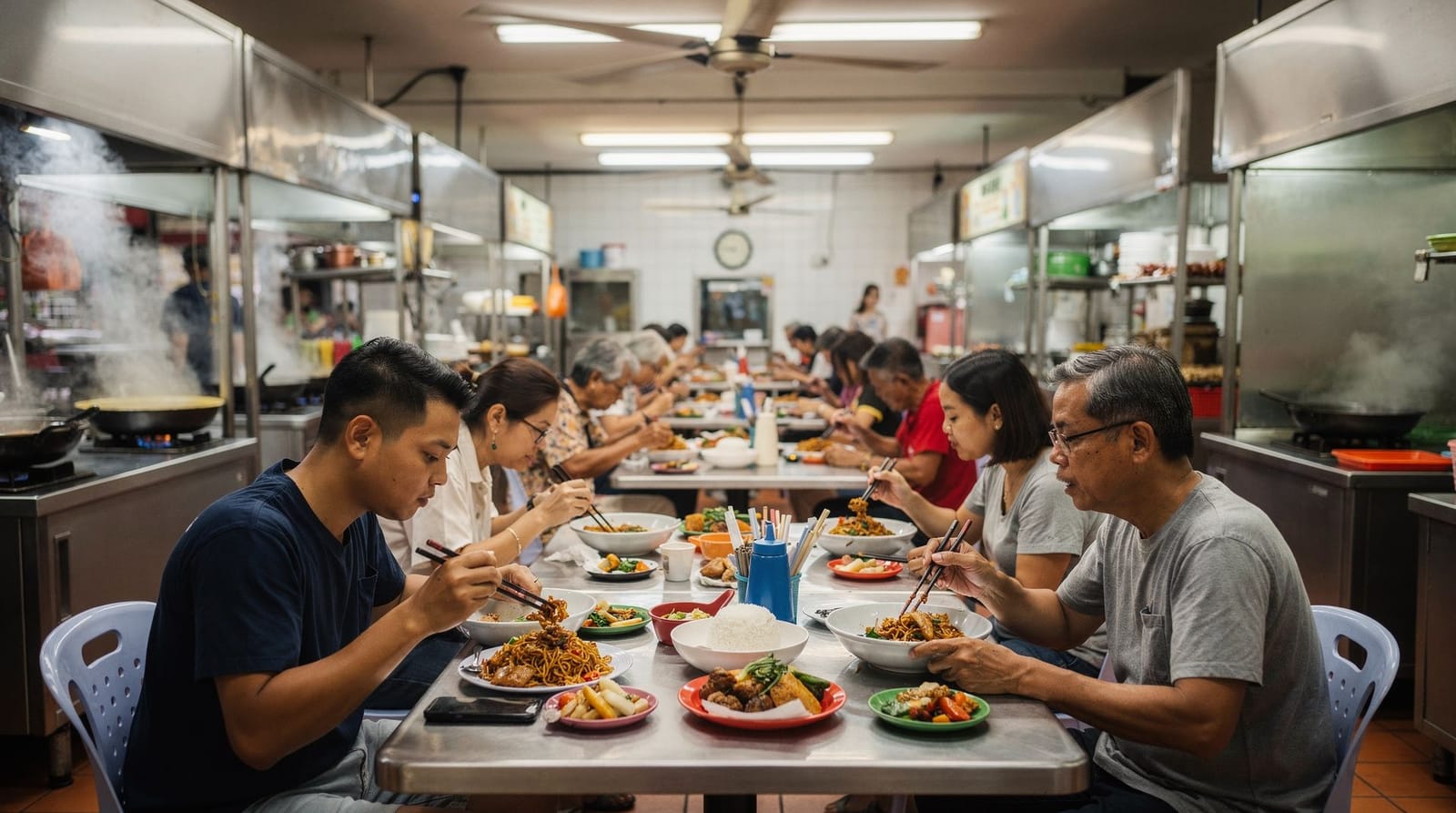
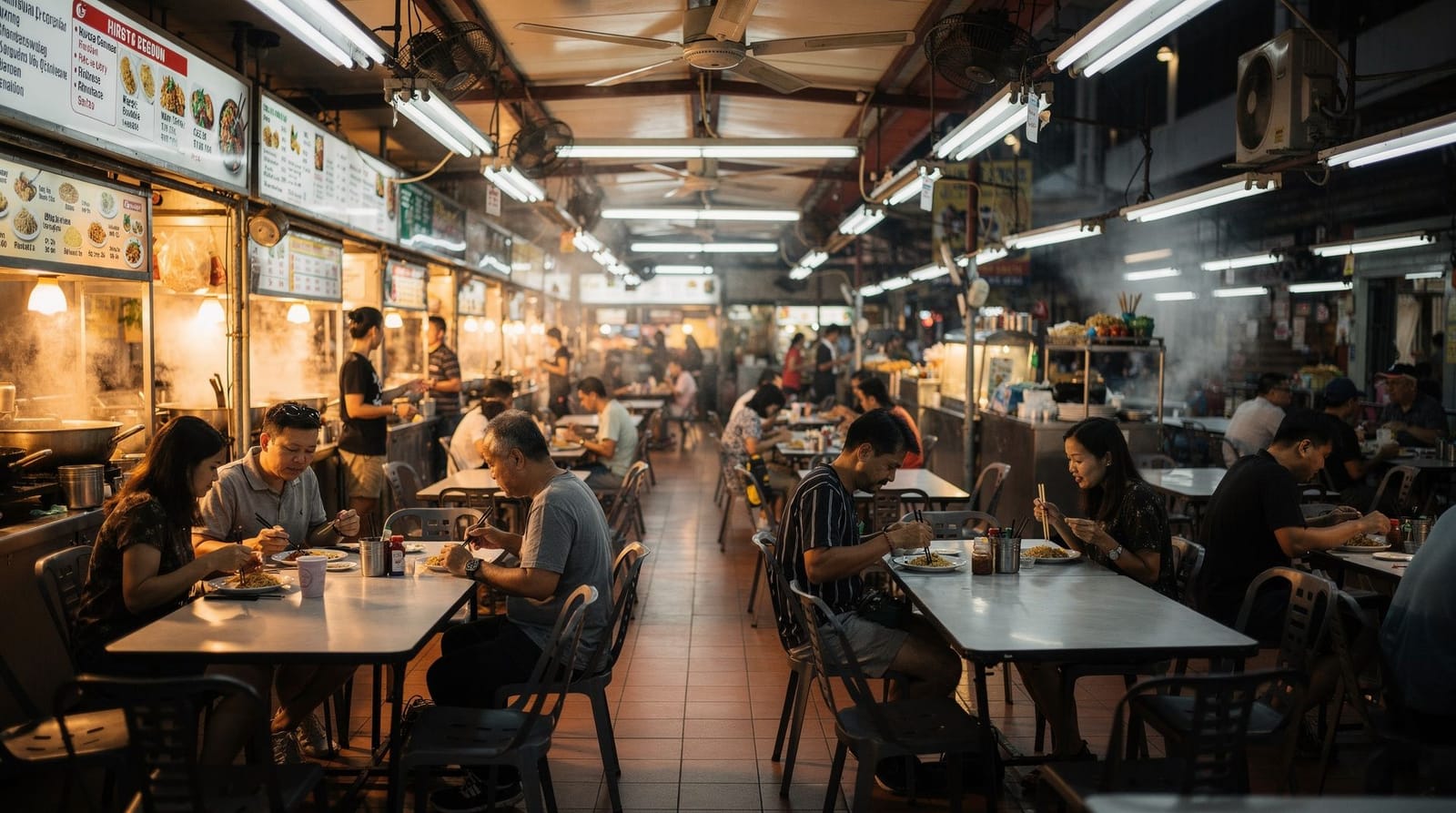
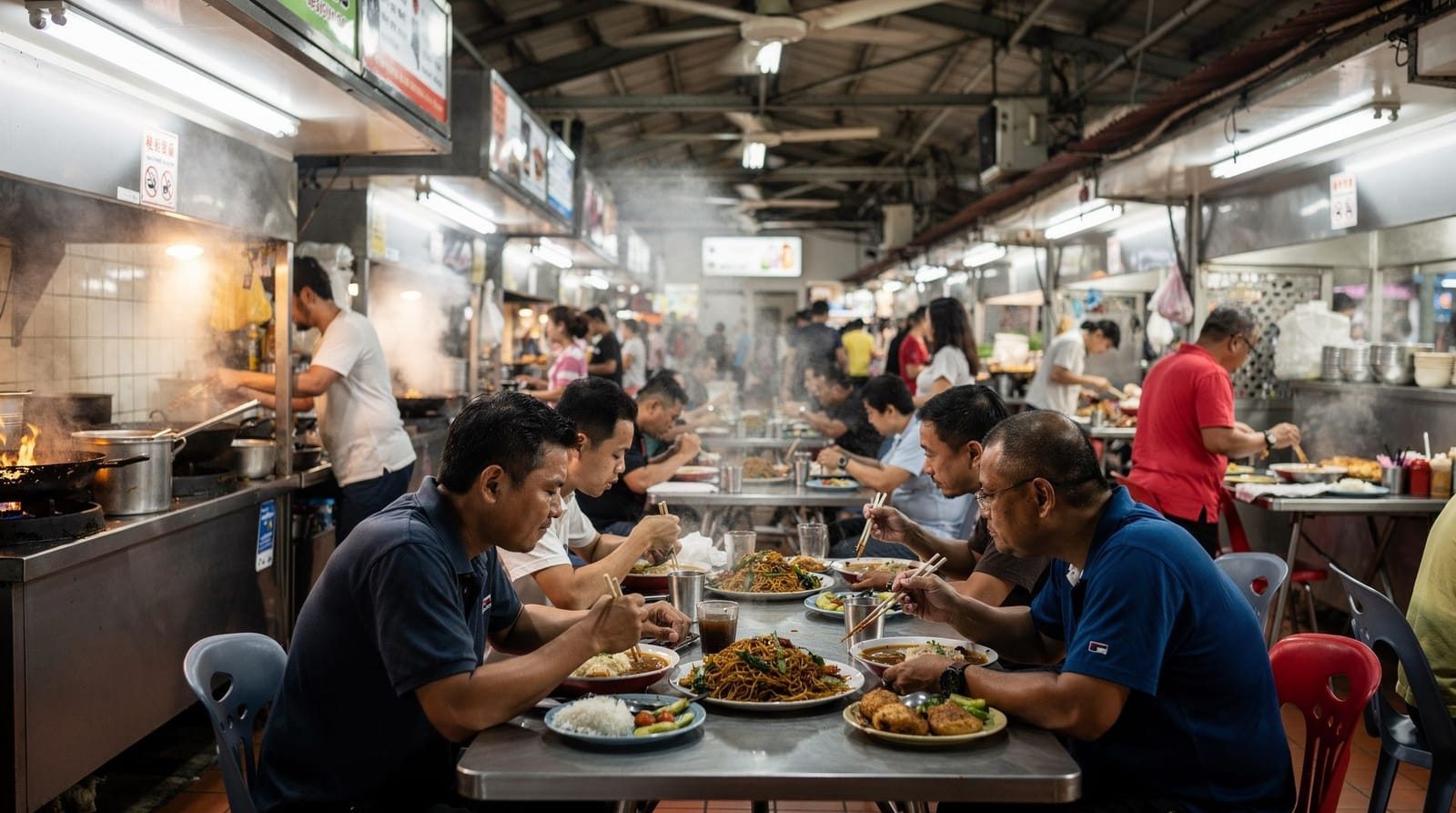
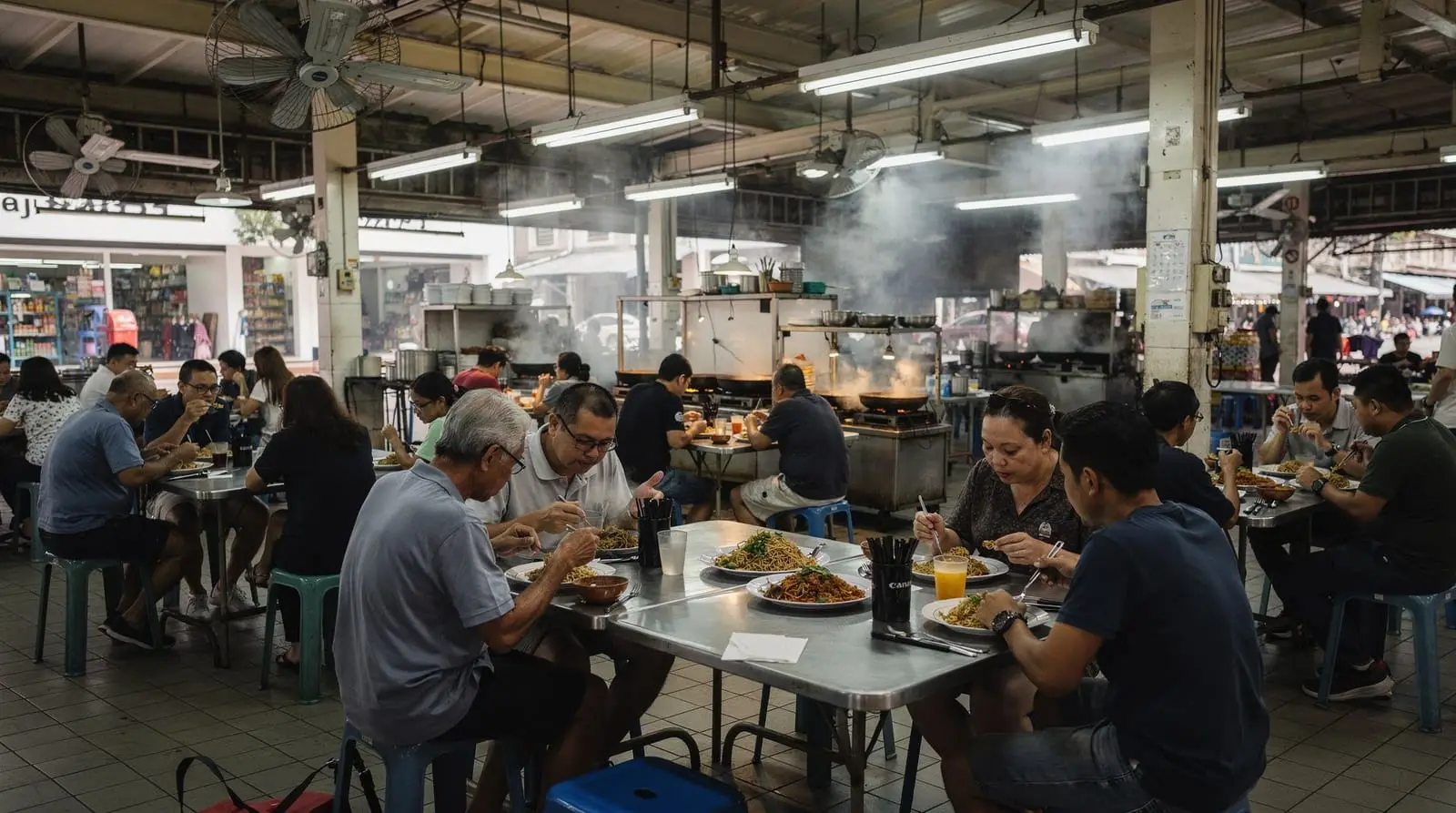
Yes — Singapore has one of the most extensive halal food infrastructures in Southeast Asia. Around 25% of Singapore's population is Muslim (Malay community plus a significant South Asian Muslim community), and MUIS (the Singapore Islamic authority) certifies thousands of stalls, restaurants, and hawker outlets. Most hawker centres have multiple halal-certified stalls. Muslim-majority areas like Kampong Glam, Geylang Serai, and Little India (for Indian Muslim food) have high concentrations.
Singapore’s halal food ecosystem
Singapore is arguably the easiest city in Southeast Asia for Muslim visitors to eat well. The Malay-Muslim community constitutes approximately 14% of the citizen population, and the Indian Muslim community adds further to the Muslim market — combined, they make halal food a mainstream commercial consideration rather than a niche accommodation.
MUIS (Majlis Ugama Islam Singapura — the Islamic Religious Council of Singapore) operates a rigorous halal certification scheme covering restaurants, hawker stalls, catering companies, and food manufacturers. The certification involves supply chain verification, inspection of kitchen practices, and separation of halal and non-halal preparation. The green MUIS logo is internationally recognised and trusted.
This guide covers the practical and culinary dimensions of halal eating in Singapore.
| Where | Kampong Glam, Geylang Serai, Little India for the highest concentrations |
| Cost | Around SGD 5–10 per hawker meal — no real halal premium |
| Certification check | Look for the green MUIS logo, or search the HalalSG app |
| Getting there | Bugis MRT (Kampong Glam), Aljunied/Paya Lebar MRT (Geylang Serai), Little India MRT |
| Best time | Any day; Ramadan evenings for the Geylang Serai bazaar |
Understanding MUIS certification
The MUIS halal logo appears as a green circular seal with Arabic text and a crescent. It is displayed visibly at certified stalls — usually on the front of the stall or on the menu board. The certification is renewed annually and includes an expiry date.
What certification means:
- Meat and poultry from approved halal-certified suppliers
- No pork or pork derivatives
- No alcohol or alcohol derivatives in cooking
- Separate utensils and preparation areas (at full certification level)
- Staff training in halal requirements
What to note:
- Some Muslim-operated stalls are genuinely halal in practice but lack formal MUIS certification — this is more common among older, smaller operators
- Some stalls claim to be halal without formal certification — always look for the MUIS logo if strict adherence is important
- The HalalSG app and website (halalsg.com) provides a searchable, current database of all certified establishments
Key halal cuisines in Singapore
Malay cuisine
The foundational halal food tradition in Singapore. Malay cuisine uses coconut milk, lemongrass, galangal, belacan (shrimp paste — from shrimp, not pork), and a range of spices. Common dishes:
Nasi lemak: Coconut rice cooked with pandan, served with sambal (chilli paste), fried anchovies, roasted peanuts, cucumber, and a choice of protein (fried chicken, beef rendang, fried egg). Singapore’s national breakfast. Price: SGD 3–8 depending on accompaniments.
Nasi Padang: A Minangkabau (West Sumatran) tradition — dishes displayed in a steam-buffet style. Choose your rice and select from 10–20 cooked dishes (rendang, sayur lodeh, sambal fish, tempeh, kangkong). Price: SGD 5–10. Best found at Geylang Serai, Adam Road, or dedicated Padang restaurants.
Mee rebus: Yellow noodles in a thick, sweet-spiced gravy with potato, egg, and fried tofu. SGD 4–7.
Satay: Skewers of marinated meat (chicken, mutton, beef) grilled over charcoal, served with peanut sauce, compressed rice (ketupat), and cucumber. At Lau Pa Sat, satay street runs from approximately 19:00 — an outdoor row of satay stalls on Boon Tat Street. Price: SGD 0.80–1.20 per stick.
Beef/mutton soup (sop kambing / sup tulang): A rich, deeply spiced broth with marrow bones (tulang merah — red bone marrow cooked in red chilli sauce). Sup tulang is a Malay-Muslim specialty found at Geylang Serai and Arab Street area stalls. Price: SGD 8–12.
Indian Muslim cuisine
The Indian Muslim community in Singapore (predominantly Tamil Muslim, with roots in South India and Sri Lanka) produces a distinct food tradition that is separate from both Hindu Tamil food and Malay food.
Roti prata: Flaky, pan-fried flatbread served with curry dipping sauce (fish or dal). Available plain, with egg, cheese, or banana. One of Singapore’s most universally eaten foods. Price: SGD 1–3 per piece. Best from dedicated Indian Muslim stalls at any hawker centre.
Murtabak: Thick stuffed flatbread — a savoury version filled with minced mutton or chicken and egg. A more substantial meal than roti prata. Price: SGD 6–12 depending on size and filling.
Biryani: Fragrant basmati rice cooked with spices and meat (chicken, mutton, fish). Tekka Centre in Little India has multiple biryani stalls. Allaudin’s Briyani at Tekka is a particularly renowned option. Price: SGD 8–15.
Banana leaf rice: Not uniquely Indian Muslim (also served at Hindu Tamil restaurants) but available at halal-certified Indian stalls — white rice served on a banana leaf with multiple curries, rasam (thin sour soup), pickle, and papadum. Price: SGD 10–15.
Teh tarik: “Pulled tea” — strong black tea with condensed milk, poured back and forth between containers at height to create a frothy surface. The quintessential Indian Muslim drink. SGD 1.50–2.
Arab and Middle Eastern halal food
Kampong Glam (the Arab-Malay neighbourhood around Sultan Mosque and Haji Lane) has a concentration of Arab and Middle Eastern halal restaurants alongside Malay and Indian Muslim stalls.
- Zam Zam Restaurant: One of Singapore’s oldest Indian Muslim restaurants, operating since 1908 at the corner of Arab Street and North Bridge Road. Famous for murtabak.
- Hajjah Maimunah: Nasi Padang institution at Jalan Pisang (near Sultan Mosque), recipient of Michelin Bib Gourmand recognition. Multiple dishes, generous portions. One of the most acclaimed Malay restaurants in Singapore.
If you’d rather have the context explained as you go, a guided food walk through this neighbourhood covers the halal food history alongside the eating:
Chinatown, Little India & Kampong Glam heritage and food tourHalal hawker centres and best stalls
Golden Mile Food Centre — Beach Road
High proportion of halal stalls including Malay, Indian Muslim, and some Chinese halal. Near Lavender MRT. Less touristy than Maxwell or Lau Pa Sat — genuine local crowd.
Geylang Serai Market and Food Centre
The cultural heartland of Singapore’s Malay community, located in Geylang (accessible from Aljunied or Paya Lebar MRT). Geylang Serai has a covered market and a food centre with dozens of Malay stalls. During Ramadan, the area hosts the Geylang Serai Ramadan bazaar — one of the best night food markets in Singapore, with late-night stalls running until 02:00.
Haig Road Market and Food Centre
Near Paya Lebar MRT. A less tourist-facing hawker centre with strong representation of halal Malay and Indian Muslim stalls.
Adam Road Food Centre
Near Botanic Gardens (Buona Vista MRT). Known for nasi lemak (Adam Road’s nasi lemak has a loyal following) and Malay dishes. Good option if visiting the Botanic Gardens.
Tekka Centre — Little India
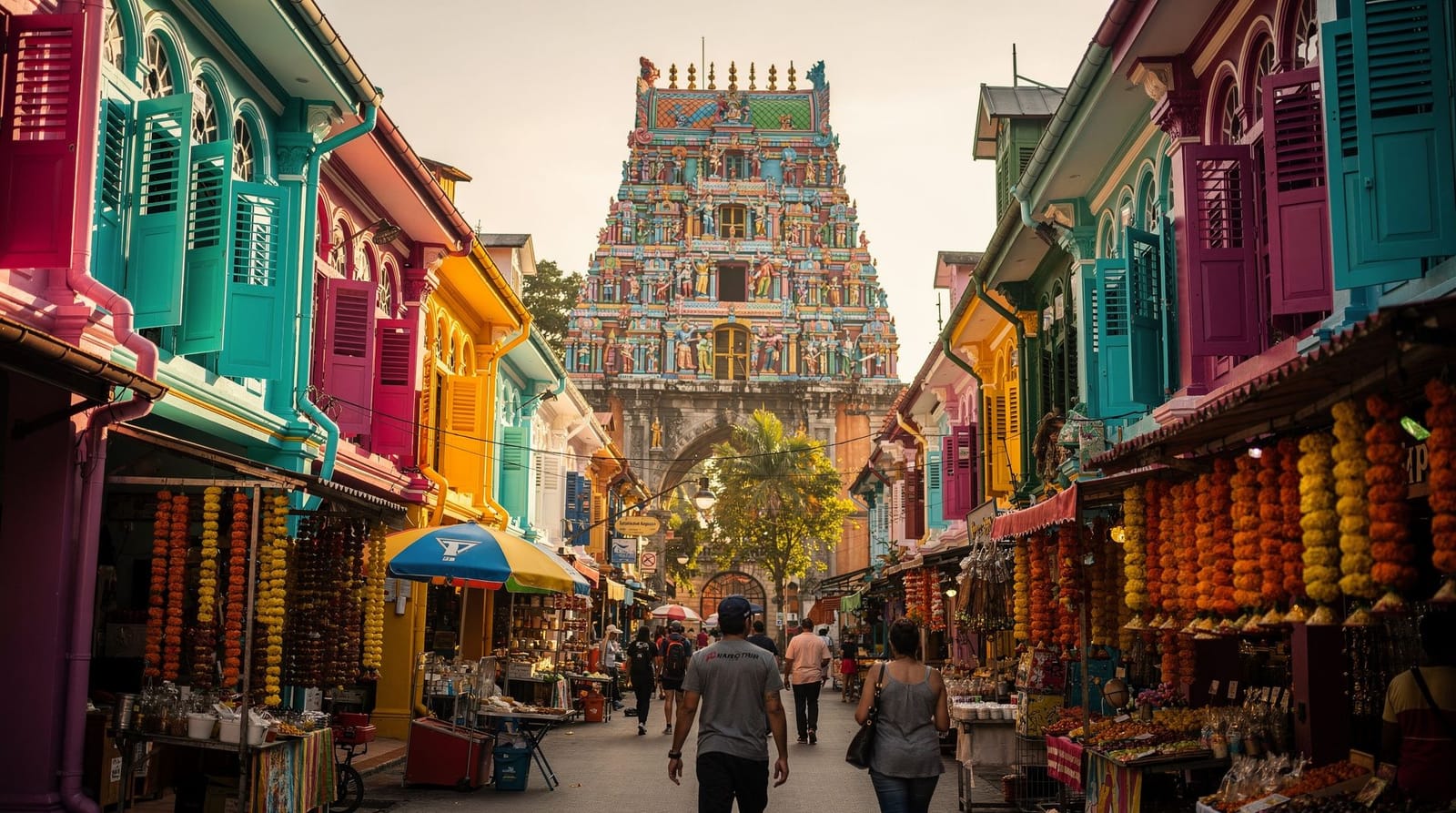
The main food centre in Little India has predominantly Indian (including both Hindu vegetarian and Muslim) stalls. Very good for Indian Muslim biryani, roti prata, and teh tarik. MUIS-certified stalls are present alongside Hindu-operated vegetarian stalls.
If you want a guide to point out the specific halal-certified stalls at Tekka rather than hunting for the MUIS logo yourself, a small-group food walk through Little India and Kampong Glam covers exactly this ground:
Little India and Kampong Glam food trailMixed hawker centres: navigating halal and non-halal stalls
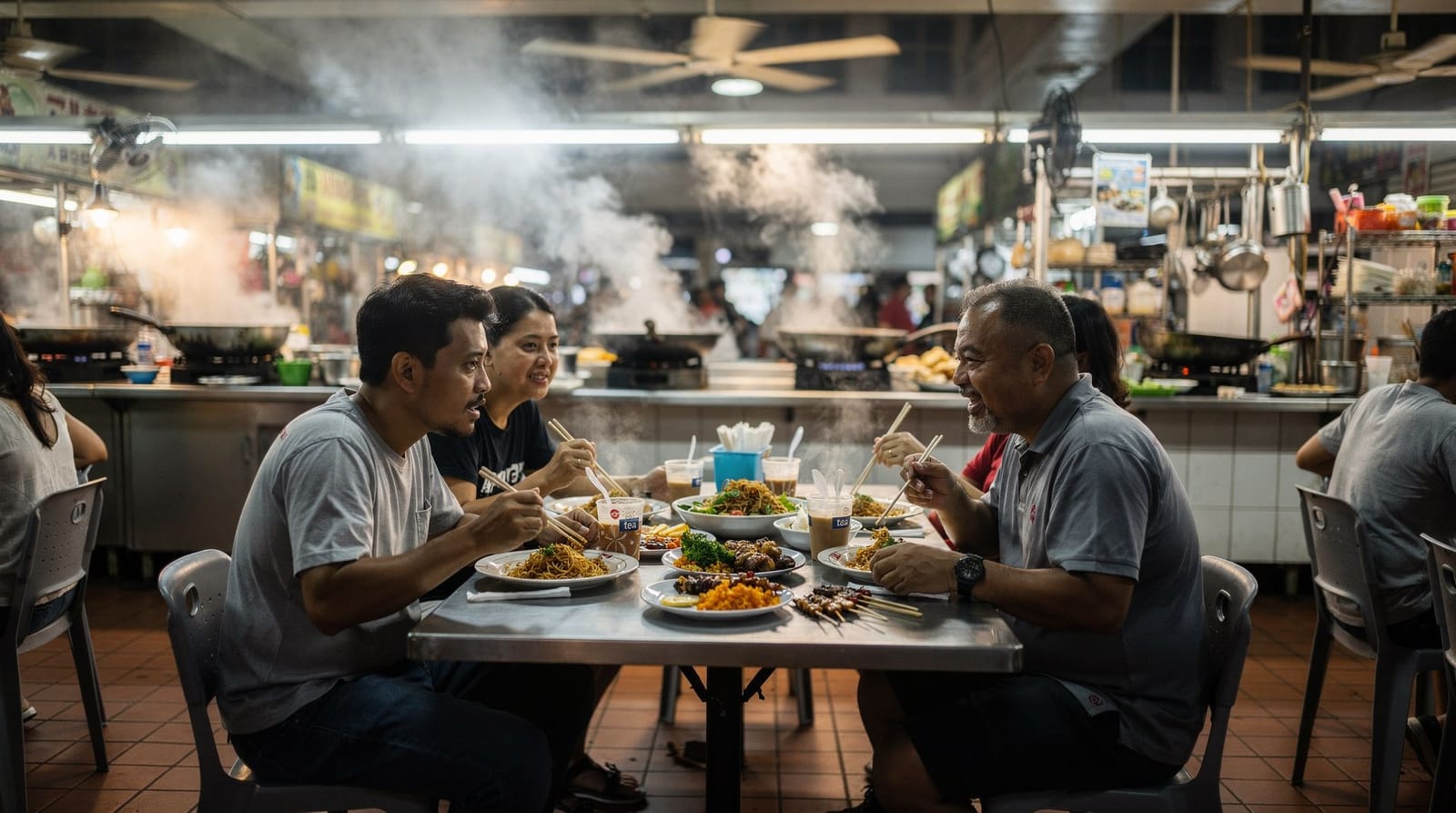
At general hawker centres (Maxwell, Old Airport Road, Lau Pa Sat, Chinatown Complex), halal and non-halal stalls co-exist. The MUIS logo on individual stalls is the identifier.
Practical tips for mixed-centre eating:
- At shared tables, cross-contamination is not a practical concern for non-contact items (cutlery you are given fresh, bowls that have been washed)
- At hawker centres specifically, each stall prepares food in its own stall — your halal stall’s food is prepared in its own space, not shared with the adjacent pork noodle stall
- Shared seating is considered acceptable by most Muslim scholars in the Singapore context — the food from your own halal stall is halal
- If you order drinks from a shared drinks stall, check whether they offer alcohol — most hawker centre drinks stalls do not serve alcohol, but some do
Ramadan eating in Singapore
During Ramadan, Singapore’s Muslim community observes fasting from sunrise to sunset. The practical impact for non-Muslim visitors:
- Many Malay hawker stalls at major centres close or reduce hours during fasting hours
- The Geylang Serai Ramadan Bazaar (evenings, from sunset — typically 19:00–02:00) is one of the best food experiences in Singapore: hundreds of temporary stalls selling traditional Malay food, pastries, and drinks in a festive atmosphere
- Hari Raya Puasa (end of Ramadan) is a public holiday in Singapore; the period before it (last two weeks of Ramadan) sees the Geylang Serai bazaar at its most crowded and atmospheric
Halal food on a budget
Singapore’s halal food is largely priced at the same level as other hawker food — budget SGD 5–10 per meal at hawker stalls. The premium is minimal:
| Meal | Typical halal stall price |
|---|---|
| Nasi lemak with chicken | SGD 5–8 |
| Roti prata (plain, 2 pieces + curry) | SGD 4–5 |
| Biryani (chicken) | SGD 8–12 |
| Murtabak (mutton) | SGD 10–14 |
| Satay (10 sticks + peanut sauce) | SGD 10–14 |
| Teh tarik | SGD 1.50–2 |
For a full budget breakdown, see Singapore travel costs. As a rough comparison point, halal food in Singapore sits at roughly the same price band as the city’s non-halal hawker food — there is no meaningful “halal tax” once you’re eating at hawker level rather than in a standalone restaurant, which is unusual compared with some other regional destinations where certified options carry a premium.
Planning a halal food day in Singapore
A practical itinerary built around halal food for a visitor with one to three days:
Morning (07:30–10:00): Roti prata at an Indian Muslim stall at Tekka Centre or any hawker centre. Two plain prata plus dhal curry and a teh tarik — SGD 5–7. Or nasi lemak from a Malay stall at the same centre — SGD 5–8.
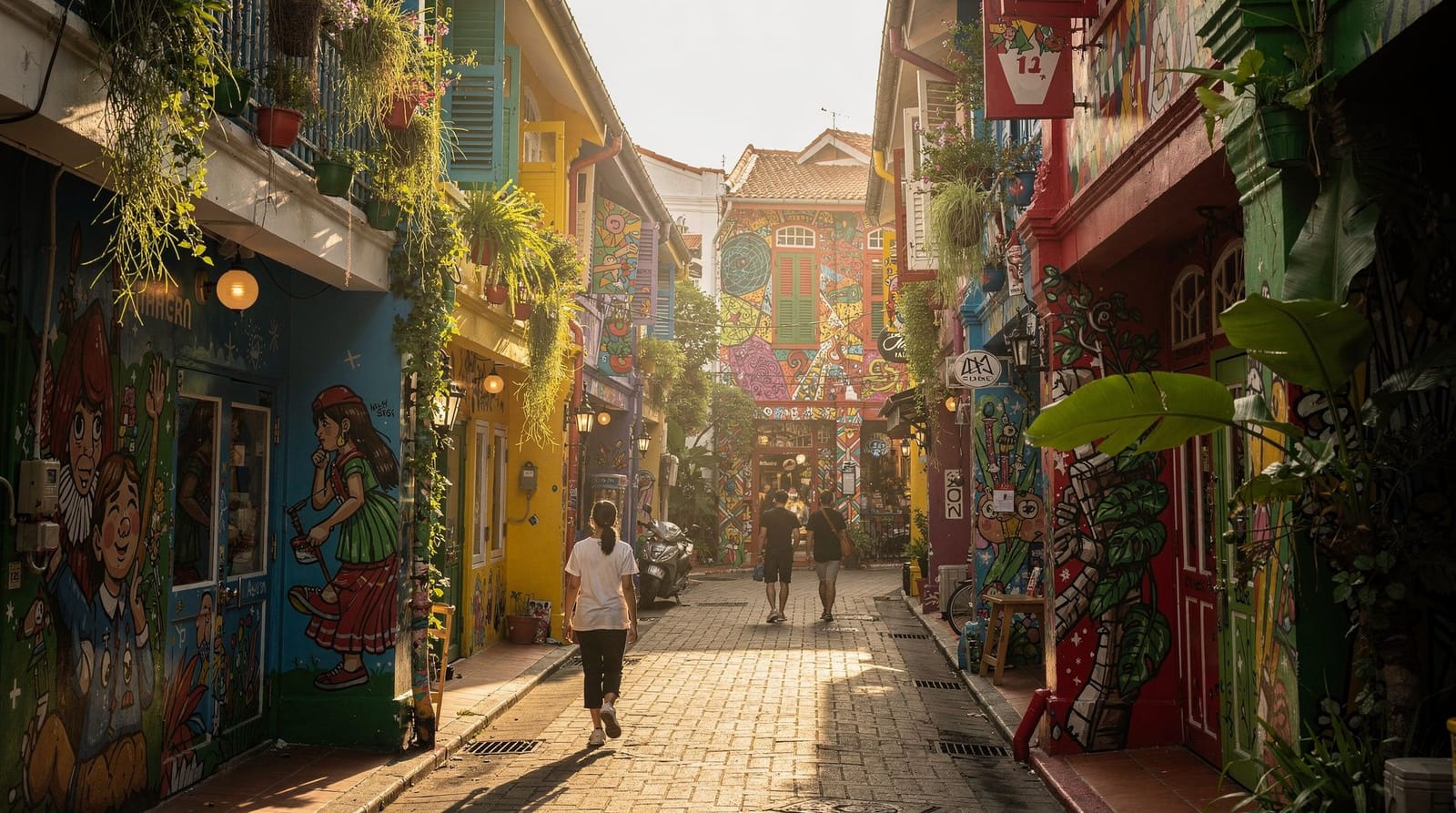
Late morning walk: Kampong Glam — Sultan Mosque, Haji Lane, Arab Street. The neighbourhood is the centre of Singapore’s Muslim cultural life. See Kampong Glam and Haji Lane for the detailed area guide.
Lunch (12:00–14:00): Zam Zam Restaurant (just next to Sultan Mosque) for murtabak — a classic, fills the tank. Or Hajjah Maimunah (Jalan Pisang, 10 minutes’ walk) for Nasi Padang with 10+ dishes on display.
Afternoon: Little India visit, Tekka Centre exploration. Buy Indian spices, textiles, jasmine garlands.
Dinner (18:30–21:00): Back to Geylang for Malay cooking — sup tulang (bone marrow soup) or satay at a roadside stall. If visiting during Ramadan, the bazaar runs from sunset.
Halal food and the Singapore tourism economy
Singapore’s government and Singapore Tourism Board actively market the city as a halal-friendly destination — particularly to the large Muslim tourist markets in Indonesia, Malaysia, the Gulf states, and South Asian countries. The MUIS certification system is partly a tourism infrastructure decision as well as a religious one: a credible, internationally recognised certification creates trust for incoming Muslim travellers.
The practical benefit for visitors is that the system is reliable and enforceable — unlike some countries where “halal” is self-declared without verification, Singapore’s MUIS certification is legally backed and regularly audited. For a Muslim traveller, this is one less category of uncertainty in an otherwise unfamiliar city.
For budget and cost context, see Singapore travel costs and Singapore on a budget.
Halal options at Singapore’s major attractions
Singapore Zoo and Night Safari (Mandai): Multiple MUIS-certified food stalls and restaurants within the zoo grounds. The Inuka café and Ulu Ulu Safari Restaurant have halal options — confirm current availability on the Mandai Wildlife Group website before visiting.
Universal Studios Singapore: Multiple halal-certified food outlets within the park. Check the USS website for the current halal food map — this changes periodically as outlet operators change.
Gardens by the Bay: The SkyTrees Café and other dining outlets within the garden have halal-certified options. The food court near the main entrance has MUIS-certified stalls clearly marked.
Jewel Changi Airport: Multiple halal stalls and restaurants throughout Jewel — particularly good for families who have just landed and need an immediate halal meal. See changi layover guide for Jewel food options.
Prayer facilities near halal food areas
Muslim visitors planning meals around prayer times will find Singapore well set up. Sultan Mosque in Kampong Glam is the most visited and welcomes visitors outside prayer times (modest dress required, robes provided at the entrance). Smaller musollahs (prayer rooms) are common in shopping malls, MRT stations, and near major hawker centres — Golden Mile Complex, Tekka Centre, and the malls around Geylang Serai all have prayer facilities within a short walk. Jewel Changi Airport and both terminal buildings at Changi have dedicated prayer rooms, useful for layover travellers timing a halal meal around salah. The HalalSG app referenced earlier also flags nearby musollahs alongside certified food outlets, which makes planning a meal-and-prayer stop in one place straightforward.
Halal food for solo travellers and short layovers
If you only have a few hours — a layover, a single evening, or a stop between other plans — the highest-density, lowest-effort option is Tekka Centre in Little India: one building, dozens of certified stalls, five minutes from Little India MRT. For a slightly longer window, Kampong Glam gives you halal eating plus a genuinely worthwhile photography and heritage stop around Haji Lane and Sultan Mosque in the same walk — see the Haji Lane photography guide guide if you want to combine the two. Solo travellers should not hesitate to eat at hawker centres alone; it is completely normal in Singapore and stalls are set up for fast, single-portion service. For more on travelling Singapore solo, see solo travel Singapore.
What non-Muslim visitors should know
Non-Muslim visitors sometimes worry unnecessarily about etiquette around halal food — in practice there is very little to navigate. Anyone can eat at a halal-certified stall; certification is not a restriction on customers, only a guarantee about how the food was prepared. It is polite not to bring your own non-halal food or alcohol into a strictly halal establishment (some restaurants explicitly prohibit this), but hawker centres with mixed stalls do not enforce this at the shared seating level. If you are travelling with Muslim friends or colleagues, choosing a hawker centre with a strong halal presence (Golden Mile, Geylang Serai, Tekka) rather than a Chinese-dominated one removes any awkwardness about where to sit or what to order.
Frequently asked questions about halal food in Singapore
Is Singapore overall easy for Muslim travellers?
Yes — among the easiest cities in Asia. The combination of a large Muslim community, strict MUIS certification infrastructure, and the sheer variety of halal options across all price ranges makes Singapore genuinely accommodating. The main challenge is at mixed hawker centres where you need to identify the correct stalls, but the MUIS logo system makes this reliable.
Are there halal options at Marina Bay Sands or other tourist landmarks?
Yes. Major tourist venues (Marina Bay Sands, Resorts World Sentosa, Gardens by the Bay food outlets) all have MUIS-certified options. Check the venue websites or use HalalSG for current certified options at specific addresses.
What about alcohol in restaurants — can Muslims dine at non-halal restaurants?
This is a personal religious judgement. Singapore’s food landscape includes many restaurants that serve both halal food and alcohol (different menus for different customers). Whether eating at such establishments is acceptable is a matter of personal or scholarly guidance, not a legal issue in Singapore.
Is there halal Chinese food?
Some Chinese hawker stalls and restaurants in Singapore have obtained halal certification — typically those serving seafood, chicken, or vegetarian dishes without pork or lard. These are less common but do exist. Check HalalSG for certified Chinese restaurants. The main Chinese hawker dishes (char kway teow, bak chor mee, chicken rice at most stalls) are typically not halal due to pork or lard content.
Where is the best place to eat Malay food in Singapore?
Kampong Glam and Geylang Serai are the cultural heartlands — see Kampong Glam and Haji Lane for the neighbourhood guide. Hajjah Maimunah and Zam Zam are among the most recommended individual names. The Ramadan bazaar at Geylang Serai is the single best occasion if your visit coincides with Ramadan.
Can I find halal fast food chains in Singapore?
Yes. McDonald’s, KFC, and Burger King in Singapore all operate halal-certified outlets. Confirm the specific outlet’s status via their apps or HalalSG, as not every branch of every chain is MUIS-certified.
Planning a halal food day in Singapore
A practical itinerary built around halal food for a visitor with one to three days:
Morning (07:30–10:00): Roti prata at an Indian Muslim stall at Tekka Centre or any hawker centre. Two plain prata plus dhal curry and a teh tarik — SGD 5–7. Or nasi lemak from a Malay stall at the same centre — SGD 5–8.
Late morning walk: Kampong Glam — Sultan Mosque, Haji Lane, Arab Street. The neighbourhood is the centre of Singapore’s Muslim cultural life. See Kampong Glam and Haji Lane for the detailed area guide.
Lunch (12:00–14:00): Zam Zam Restaurant (just next to Sultan Mosque) for murtabak — a classic, fills the tank. Or Hajjah Maimunah (Jalan Pisang, 10 minutes’ walk) for Nasi Padang with 10+ dishes on display.
Afternoon: Little India visit, Tekka Centre exploration. Buy Indian spices, textiles, jasmine garlands.
Dinner (18:30–21:00): Back to Geylang for Malay cooking — sup tulang (bone marrow soup) or satay at a roadside stall. If visiting during Ramadan, the bazaar runs from sunset.
Halal food and the Singapore tourism economy
Singapore’s government and Singapore Tourism Board actively market the city as a halal-friendly destination — particularly to the large Muslim tourist markets in Indonesia, Malaysia, the Gulf states, and South Asian countries. The MUIS certification system is partly a tourism infrastructure decision as well as a religious one: a credible, internationally recognised certification creates trust for incoming Muslim travellers.
The practical benefit for visitors is that the system is reliable and enforceable — unlike some countries where “halal” is self-declared without verification, Singapore’s MUIS certification is legally backed and regularly audited. For a Muslim traveller, this is one less category of uncertainty in an otherwise unfamiliar city.
For budget and cost context, see Singapore travel costs and Singapore on a budget.
Halal options at Singapore’s major attractions
Singapore Zoo and Night Safari (Mandai): Multiple MUIS-certified food stalls and restaurants within the zoo grounds. The Inuka café and Ulu Ulu Safari Restaurant have halal options — confirm current availability on the Mandai Wildlife Group website before visiting.
Universal Studios Singapore: Multiple halal-certified food outlets within the park. Check the USS website for the current halal food map — this changes periodically as outlet operators change.
Gardens by the Bay: The SkyTrees Café and other dining outlets within the garden have halal-certified options. The food court near the main entrance has MUIS-certified stalls clearly marked.
Jewel Changi Airport: Multiple halal stalls and restaurants throughout Jewel — particularly good for families who have just landed and need an immediate halal meal. See changi layover guide for Jewel food options.
Top experiences
Bookable activities with verified prices and instant confirmation on GetYourGuide.

Singapore: Chinatown hawkers food tour with 7 tastings

Singapore: UNESCO hawker culture Chinatown food tasting tour

Singapore: Little India, Tekka Centre and food tastings tour

Singapore: Katong local food and city highlights tour

Singapore: Lau Pa Sat night street food with Marina Bay walk