Haji Lane photography guide: the best shots and when to go
Photography: moments at Haji Lane
When is the best time to photograph Haji Lane?
Early morning on a weekday — arrive before 9 am. The lane faces east, so morning light hits the colourful facades beautifully and you will have the street to yourself. By 11 am on weekends it is crowded and harsh midday light washes out colours. Overcast days actually work well for the murals — flat light keeps saturation even.
Quick answer: Go early on a weekday. Morning light before 10 am is best for colour and empty frames. Haji Lane photographs beautifully and is genuinely one of Singapore’s most distinctive streets — just know it is 200 metres long, so combine with Sultan Mosque and the broader Kampong Glam area for a full morning out.
| Where | Haji Lane, Kampong Glam (Bugis MRT, 5-min walk) |
| Cost | Free to shoot; guided sessions around SGD 40–90/person |
| Time needed | 1 hour for the lane alone; 3 hours combined with Kampong Glam |
| Getting there | Bugis MRT (East-West/Downtown Lines), then walk along North Bridge Road |
| Best time | Weekday mornings before 9:30 am, or any overcast day |
What makes Haji Lane photogenic
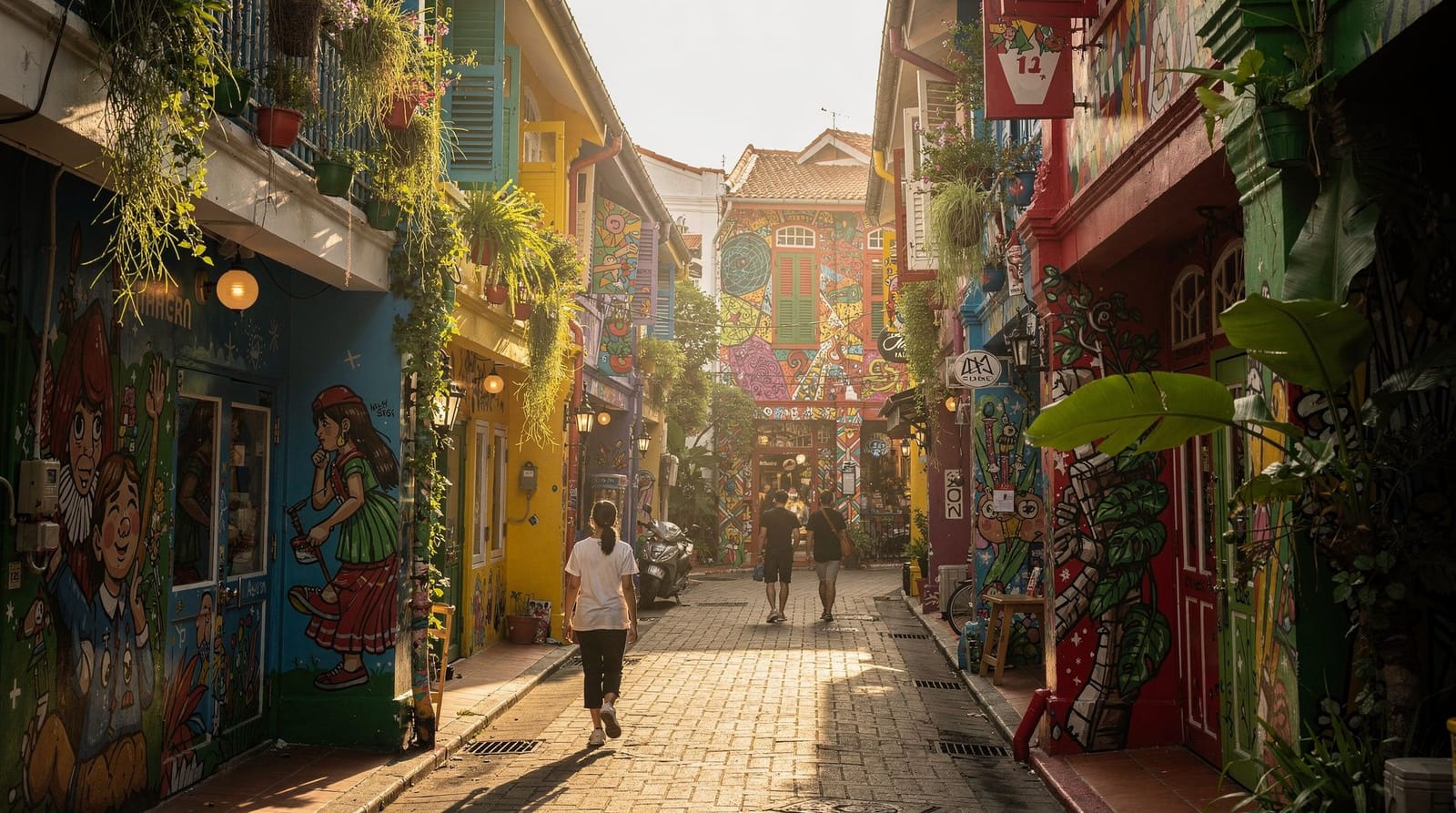
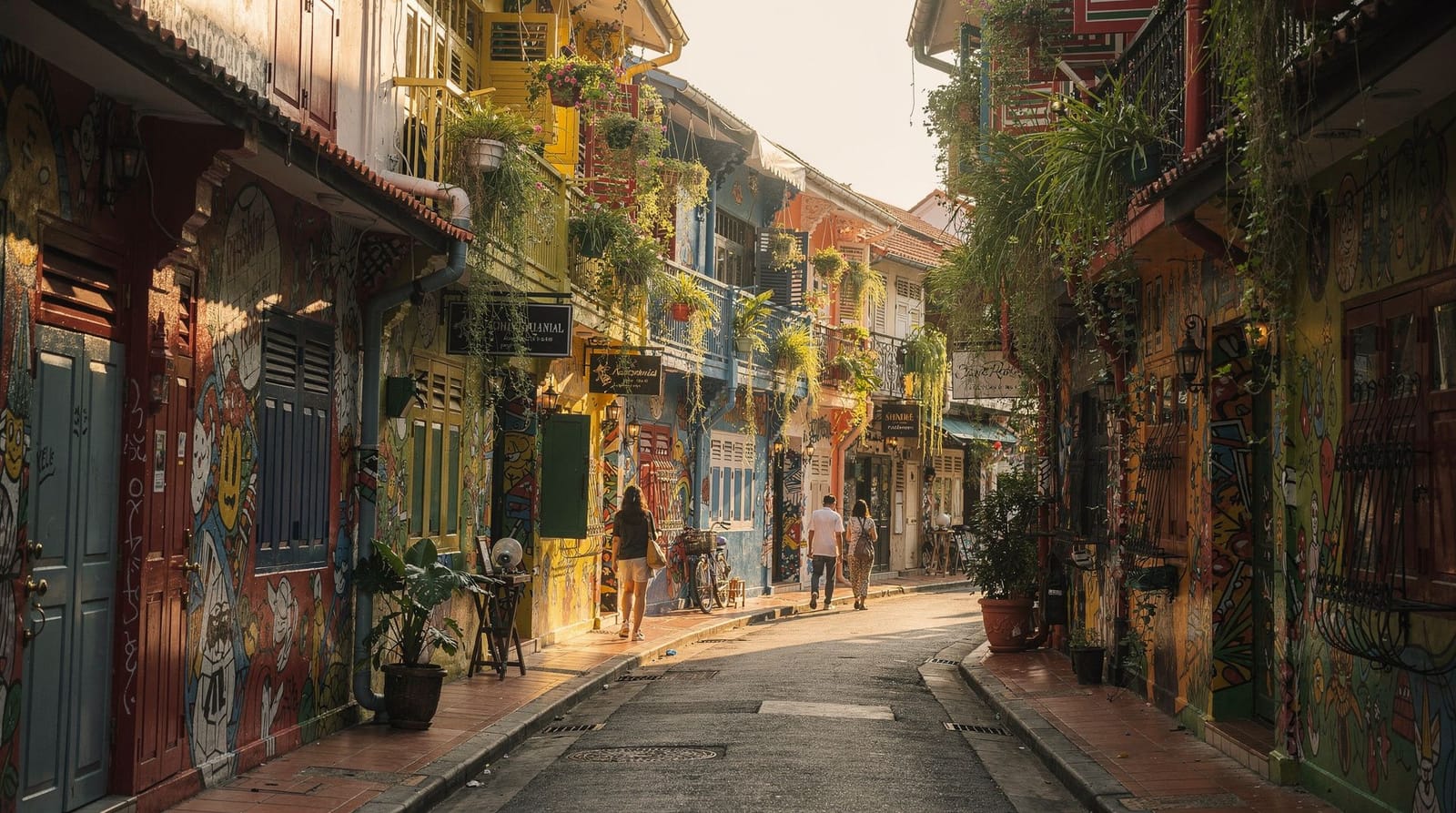
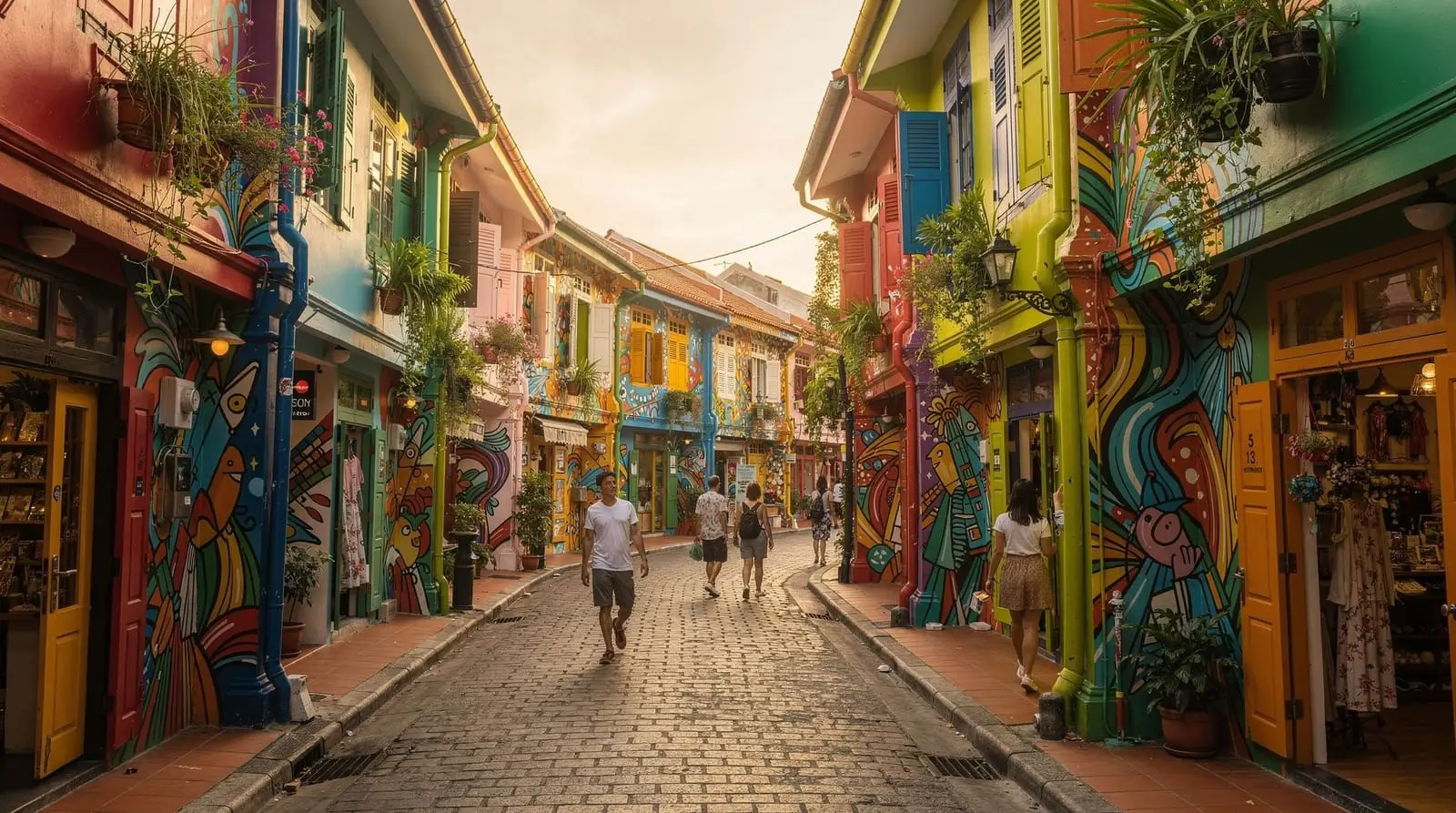
Haji Lane is a narrow 200-metre shophouse laneway in Singapore’s Kampong Glam district, running parallel to the wider Arab Street. It became Singapore’s most photographed street because of an unusually concentrated combination of visual elements: heritage shophouses with brightly painted facades, rotating street murals by local and international artists, trailing pot plants, neon signs, and independent boutiques with distinctive window displays.
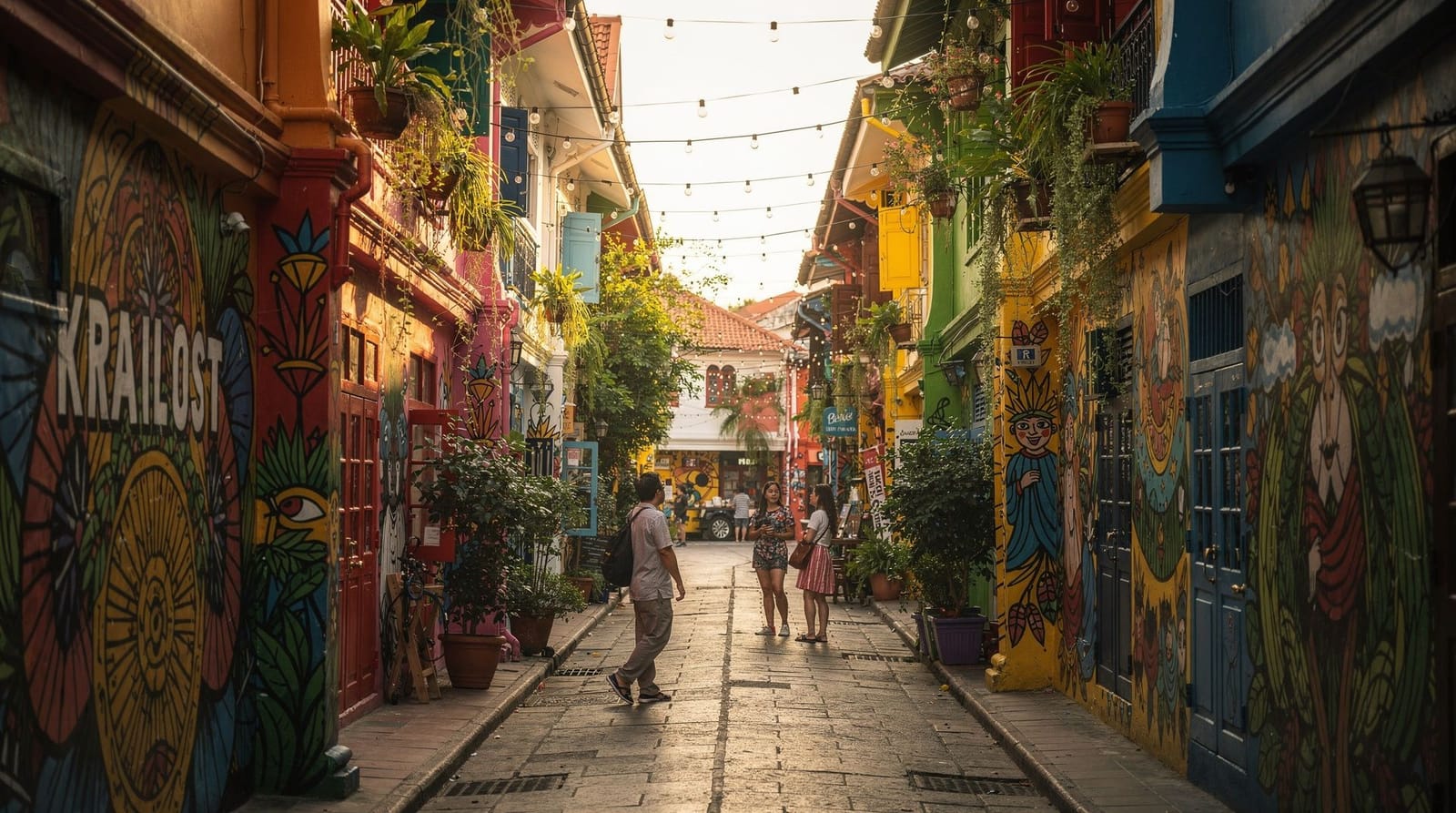
What separates Haji Lane from generic “colourful street” photography destinations is the quality of the murals. Many were commissioned from serious local artists rather than generic Instagram-bait wall art. Themes draw on Malay heritage, neighbourhood history, and contemporary design — you will find abstracted calligraphy, figurative paintings, botanical motifs, and geometric pattern work side by side.
The facades face roughly east–west, which has significant implications for when you shoot.
Understanding the light
The main lane runs northwest to southeast. The shophouse facades catch the best light early morning (from the east-ish direction) and late afternoon (when the western sun touches the upper storeys). Midday light overhead creates heavy shadows under the awnings and washes out the painted surfaces.
Best light windows:
- 7:00–9:30 am: Soft directional morning light, shadows angled pleasingly, no harsh contrast
- Overcast any time: Flat, even, vibrant colour saturation with no blown highlights
- 4:30–6:30 pm: Warm late-afternoon light catches the upper facades; ground level in shade
Avoid: 10 am–3 pm on sunny days. The overhead tropical sun is brutal, colour looks bleached in images, and crowds are thickest.
The main lane: frame-by-frame
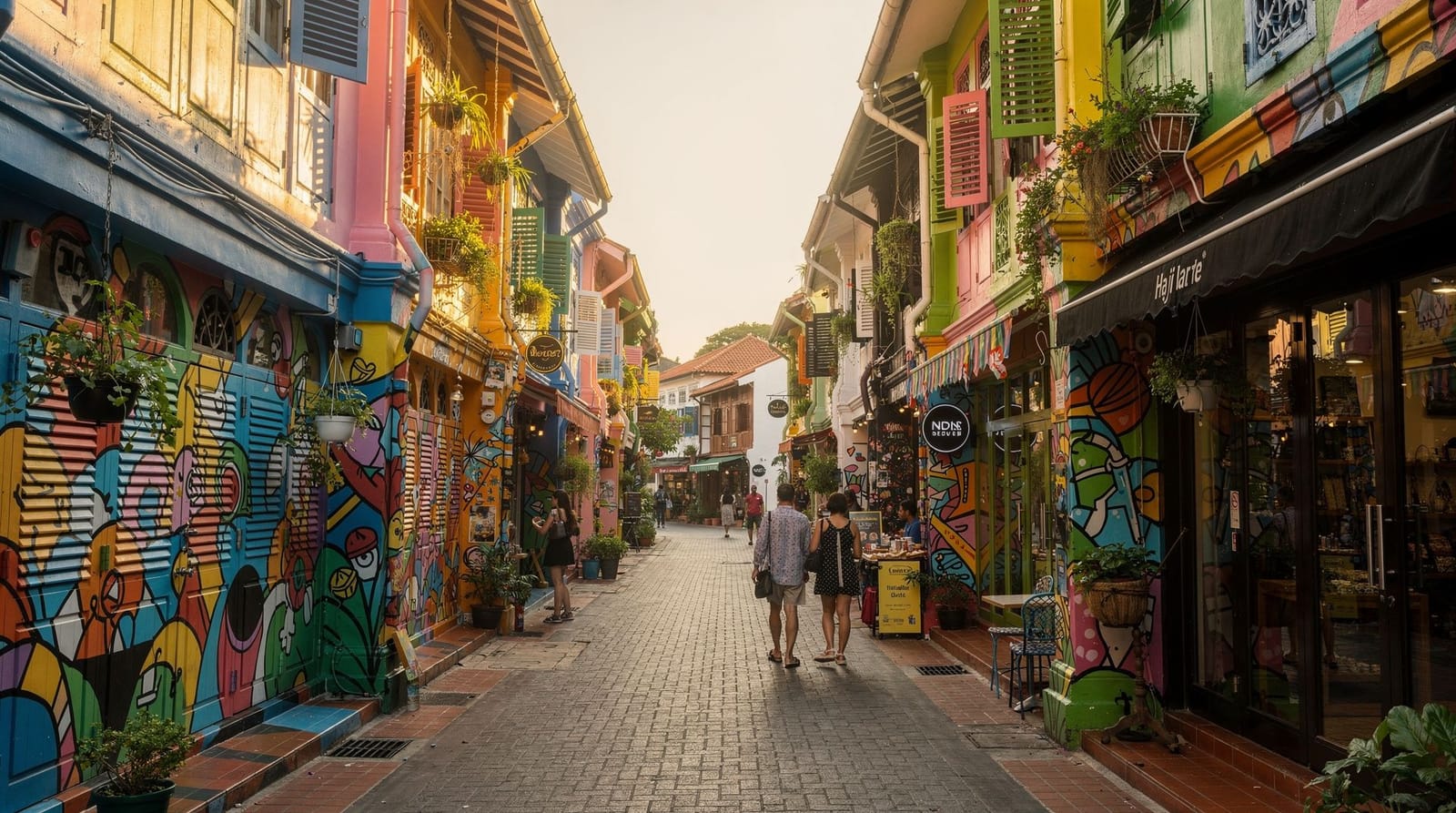
East end (near Baghdad Street): The lane narrows here and the perspective compression effect looking west is excellent for showing the density of the painted facades. A 35–50 mm focal length from this position captures the characteristic “corridor of colour” shot.
The central section: Most of the landmark murals cluster in the central third of the lane. Look for:
- The large floral botanical mural (regularly updated, currently dominating the middle stretch)
- Shuttered blue and turquoise shopfronts — best shot in morning when shadows fall away from the frontage
- The hanging planters above a pale yellow shophouse (shoot from low angle looking up for a different perspective)
West end (near Bali Lane junction): The small junction with Bali Lane creates a secondary alley that is almost always quieter than the main lane. Some of the better murals are hidden here and most photographers shoot past them entirely.
Looking straight down the lane: The classic Haji Lane shot looks down the alley from one end, compressing the coloured facades into a corridor. Shoot from low (crouched or even ground level) to exaggerate the narrowing perspective. Overcast mornings give the cleanest version of this shot.
Murals worth finding
Haji Lane’s murals are not all on the main lane. Several of the better paintings are on:
- The back wall of the lane’s shophouses — walk around to Bali Lane and look back at the rear walls
- The connecting alley between Haji Lane and Arab Street — easily missed, contains at least two significant murals
- Individual shopfront shutters — many shops commission painted shutters that are only visible when they are closed (i.e., before opening, so arrive early)
The murals change approximately every 6–12 months as artists update them. What you see in research photos may not be current — but something equally good or better will typically have replaced it.
Extending the photography walk
Haji Lane alone runs out after about an hour. The surrounding Kampong Glam area adds significant photographic material:
Sultan Mosque (100 m north on Arab Street): Singapore’s most photographed mosque — golden domed, imposing, and beautifully framed by the surrounding shophouse street. Best photographed from Arab Street looking north, or from the small plaza in front of the main entrance. Visitors must be appropriately dressed (robes available to borrow at entrance) to enter and photograph inside.
Arab Street itself: The rattan and fabric shops spill goods onto the five-foot ways in rows of texture and pattern that photograph very well. The arched shophouse facades are elegant. Shoot the whole streetscape from across the road.
Bussorah Street (south of Sultan Mosque): A formal pedestrian street flanked by shophouses and date-palm trees, with the Sultan Mosque dome at the north end of the frame. This is the most architectural shot of the neighbourhood — symmetrical, clean, excellent in any light.
Bugis Street area: A short walk south brings you into Bugis Singapore, with its own market texture and street energy.
See the Kampong Glam and Haji Lane neighbourhood guide for the full area walkthrough.
Going with a guided photography session
If you want to come away with genuinely strong images rather than tourist snapshots, a guided photography session with a local photographer makes a real difference. A good guide knows:
- Which murals are currently best and where the hidden ones are
- Specific angles that avoid tourist clutter in the frame
- How to use the lane’s architecture for compositional lines
- Where to stand for the most useful light at each time of day
GYG offers photography sessions at Haji Lane designed exactly for this — small groups or private sessions with a photographer who knows the lane intimately.
Photography: moments at Haji LaneThe Instagram spots in Singapore option extends coverage beyond Haji Lane to Singapore’s broader set of photogenic spots in a single guided session — useful if you want to maximise one day of shooting.
Singapore: highlight of Singapore Instagram walking tourPractical logistics
Getting there: Bugis MRT (East-West and Downtown Lines) is the closest station — Haji Lane is a 5-minute walk east. From Bugis Junction, walk along North Bridge Road and turn left onto Haji Lane. Google Maps navigation is accurate.
Opening times: The lane is a public street — always accessible. The boutiques and cafes typically open between 11 am and 12 pm and close at 9–10 pm. For photography, the lane is at its best before most shops open.
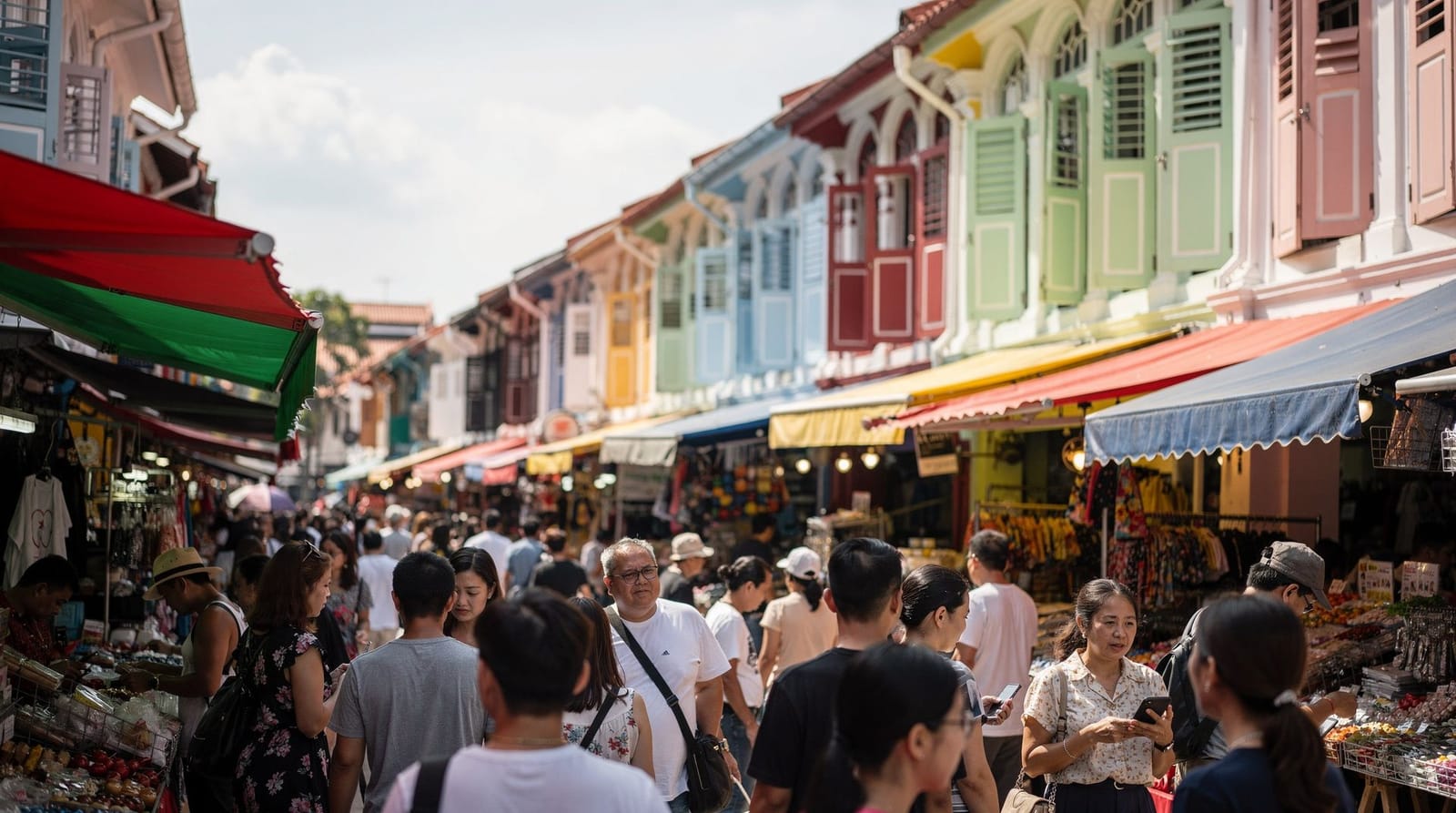
Weekday vs weekend: Weekday mornings are dramatically quieter. On Saturday and Sunday afternoons, the lane is genuinely crowded and clean frames are difficult.
What to wear: Neutral or muted clothing photographs better against the colourful murals — bright clothing competes with the walls. If you want someone to photograph you in front of the murals, avoid clashing colours.
Nearest facilities: Toilets in nearby Bugis Junction mall (2-minute walk). Breakfast at the independent cafes on the lane itself — several open from 9–10 am. The Best hawker centres in Singapore closest option is Tekka Centre in Little India (10-minute walk).
Equipment checklist for a Haji Lane session
You do not need a large kit for this location — in fact, less gear moves faster in a narrow lane. A practical loadout:
- Camera + one versatile zoom (24–70 mm equivalent) covers nearly every shot described above without a lens change
- A prime lens (35 mm or 50 mm) if you prefer working with a single focal length and want a lighter bag
- A polarising filter to cut glare on painted shopfronts and deepen sky colour if you’re including any overhead frame
- A phone with a wide lens is genuinely sufficient for most of the classic shots — Haji Lane is one of the few Singapore locations where phone photography competes seriously with a dedicated camera
- A small reflector or nothing at all — direct sunlight is rarely your friend here, so extra light modifiers add little
Battery and card management matter more than gear choice: you’ll likely shoot 150–300 frames in an hour if you’re working the murals thoroughly, so start with a formatted card and a charged battery rather than assuming you’ll top up mid-session.
Combining with a wider Kampong Glam shoot
Photographers with a full morning available get more value treating Haji Lane as the anchor of a wider Kampong Glam session rather than an isolated stop. A sensible order: start at Haji Lane itself before 8 am while it’s empty, move to Bussorah Street and the Sultan Mosque forecourt as light strengthens (the mosque’s gold dome photographs best once the sun is fully up), then finish on Arab Street’s textile shopfronts, which look good in almost any light because the interest is in texture and colour rather than direction of light.
This sequencing follows the light naturally instead of fighting it, and keeps you moving rather than backtracking. Coffee at one of the lane’s cafes around 9–10 am, once they open, makes a natural break between the two phases. The Kampong Glam and Haji Lane guide has the fuller neighbourhood walking route if you want to extend further.
Planning around weather and the rest of your trip
Singapore weather shapes a photo morning more than most visitors expect. Showers can arrive quickly, and a wet lane is not a lost lane: damp pavement deepens the colours and reflects the facades. Read Singapore in the rain for how to keep a camera dry and still enjoy the street, and check Singapore weather month by month before you pick the day. If you are visiting in a hazy period, the haze season guide explains what to expect for clarity and colour. A light rain jacket and a small cover for your gear are worth packing; the what to pack for Singapore list covers the basics.
Haji Lane sits in the heart of Kampong Glam, a short walk from Bugis. The easiest way to arrive is by train, and the MRT guide and getting around Singapore pages explain how to move between neighbourhoods without wasting your good light. After you finish shooting, the Bugis street markets are a natural next stop for texture, colour and people-watching.
Respect the neighbourhood while you shoot
Kampong Glam is a living Malay and Arab quarter, not a film set. Residents, shop staff and worshippers share the lanes with photographers, so keep walkways clear, avoid blocking doorways for long portrait sessions, and keep your voice down near the mosque. The Sultan Mosque guide covers visiting etiquette, and the ethnic quarters guide puts Kampong Glam in context beside Chinatown and Little India. If you are hungry after the shoot, the halal food guide is a useful starting point for the area’s many options.
Building a longer photography day
Once the morning light fades, you have plenty of choices. Walk to Little India for saturated colour and busy street scenes, or save Marina Bay after dark for the evening. For a story-driven account of a day in the area, the blog post on a day around Kampong Glam and Haji Lane shows how one traveller paced it, and best Instagram spots in Singapore offers more ideas. If you would rather have a guide handle the route, compare the options in best walking tours in Singapore. First-time visitors can slot this morning into the first-timer itinerary, and anyone hunting for quieter corners will enjoy hidden gems in Singapore.
Frequently asked questions about Haji Lane photography
What is the single best shot to take at Haji Lane?
Looking down the length of the lane from the east end, shot from a low angle in morning light with the painted facades compressing into the distance. Overcast conditions or golden-hour morning light both work well. This is the definitive Haji Lane image and it earns that status for good reason.
Is Haji Lane better than street art areas in other Asian cities?
It is different rather than definitively better. Unlike the vast Penang street art circuit or the enormous Medina murals in Marrakech, Haji Lane is compact and curated — every element in a small space. The density of visual interest per metre is very high by any comparison. It is the right scale for a few hours’ shooting, not an all-day expedition.
Can I use a tripod on Haji Lane?
A compact travel tripod works fine in early morning when the lane is empty. By 10 am on weekdays and most of the day on weekends, a tripod is awkward in the narrow space and will inconvenience other visitors. A small gorilla-pod or simply a fast lens for low-light handheld shooting is more practical for busy periods.
Are there any other photography spots near Haji Lane?
Within 15 minutes on foot: the Sultan Mosque dome, Bussorah Street’s symmetric arch framing the mosque, Arab Street’s rattan-shop facades, and the Istana Kampong Glam heritage building. Slightly further, the Peranakan shophouses of Katong and Joo Chiat are worth a dedicated trip for their painted terrace houses in pink, green, and yellow.
Is it rude to photograph the shopkeepers and cafe owners?
Generally no — they are used to it and often welcoming. Ask before photographing individuals directly (a smile and gesture usually works fine across languages). Photographing the shopfronts, products, and cafes from the street is universally accepted. Inside a cafe or boutique, a brief ask is polite and almost always granted.
What time do the shops open on Haji Lane?
Most independent boutiques open between 11 am and 1 pm. Cafes vary — some open at 9–10 am, others at 11 am. This means the morning 7–10 am window is the quietest and best lit for photography, but you will be shooting closed shopfronts. The painted shutters on closed shopfronts are often just as interesting as the open facades.
How does Haji Lane compare to the rest of Singapore’s photography spots?
See Best photo spots in Singapore for the full comparison. For street-level, walkable colour photography, Haji Lane is the best option in Singapore. For dramatic architectural and skyline photography, the Marina Bay photography guide locations are unmatched. The two areas serve different photographic purposes and are worth combining into a one- or two-day photography itinerary.
Top experiences
Bookable activities with verified prices and instant confirmation on GetYourGuide.