Kampong Glam and Haji Lane: the honest guide
Singapore: Little India and Kampong Glam hidden trails
Is Kampong Glam worth visiting in Singapore?
Yes — Sultan Mosque is one of the most beautiful buildings in Singapore, Arab Street has genuine fabric and textile shopping, and Haji Lane offers the city's best concentration of independent boutiques. It's a half-day at minimum, best combined with Little India for a full cultural-quarters day. Come on a weekday morning to avoid the weekend crowd on Haji Lane.
Kampong Glam is the Malay-Arab quarter of Singapore, centered on the golden dome of Sultan Mosque and the shophouse streets that radiate from it. It is a distinctly different atmosphere from Chinese Chinatown or Tamil Little India — unhurried, fragrant with oud and Arabic coffee, with the best independent retail in the city tucked into narrow lanes. It rewards exploration at a slow pace.
| Where | Bugis / Rochor, north of the Civic District |
| Cost | Free to walk; mosque free; meals around SGD 8–20 |
| Time needed | 2–3hrs core; half-day with meals and shopping |
| Getting there | MRT Bugis (DT14/EW12) or Nicoll Highway (CC5) |
| Best time | Weekday mornings for Haji Lane; golden hour for Bussorah Street |
Getting there and orientation
Bugis MRT (DT14/EW12) is the main entry point — Exit B brings you onto Victoria Street, then walk east along Arab Street. The walk to Sultan Mosque takes about 8 minutes. The neighbourhood is compact: Arab Street, Haji Lane, Bussorah Street, and North Bridge Road form the main grid, all within easy walking distance of each other.
Nicoll Highway MRT (CC5, Circle Line) is closer to the Arab Street end if you prefer to approach from the east.
The core of Kampong Glam is small enough to cover in 2–3 hours, or expand to a half-day with meals and proper browsing of Haji Lane boutiques.
If you are still working out how the MRT fits into your days, the MRT guide and the wider getting around Singapore page explain the practicalities, and the Kampong Glam destination page gives a quick overview of the area on its own.
Sultan Mosque
The Sultan Mosque (Masjid Sultan) at 3 Muscat Street is the most architecturally significant mosque in Singapore and one of the most beautiful buildings in the city. The current structure dates from 1928, designed by colonial architect Denis Santry in a Moorish-Renaissance style. The large golden dome is visible from several streets away.
The mosque is an active place of worship. Non-Muslim visitors are welcomed during non-prayer times (roughly 10:00–12:00 and 14:00–16:00 on weekdays; check the posted prayer schedule at the entrance). Dress modestly — shoulders and knees covered; robes are provided at the entrance free of charge. Remove shoes.
The interior is impressive — a large prayer hall with intricate ironwork and tilework. The courtyard is calm and photogenic. Allow 30–45 minutes and be genuinely respectful of the religious atmosphere.
There is no entrance fee.
If the mosque interests you as more than a photo stop, the dedicated Sultan Mosque guide goes further into the building and the etiquette of visiting, and the temples of Singapore guide shows how it sits alongside the city’s other places of worship.
Arab Street
Arab Street (Jalan Arab) runs from Victoria Street to Muscat Street and is the traditional commercial heart of Kampong Glam. The street has been associated with Muslim merchants and Malay-Arab trade since the 19th century.
Today the street is a mix of traditional textile shops, Persian carpet merchants, batik fabric sellers, and leather goods stores. The fabric shops in particular carry a range of quality that is genuinely better than tourist-area souvenir stalls — batik, silk, and traditional Malay weaving patterns are sold by the metre or as finished items. Prices are reasonable but you can negotiate on larger fabric purchases.
The street character is calmer and more authentic than Haji Lane — fewer tourists, more actual commerce.
Haji Lane
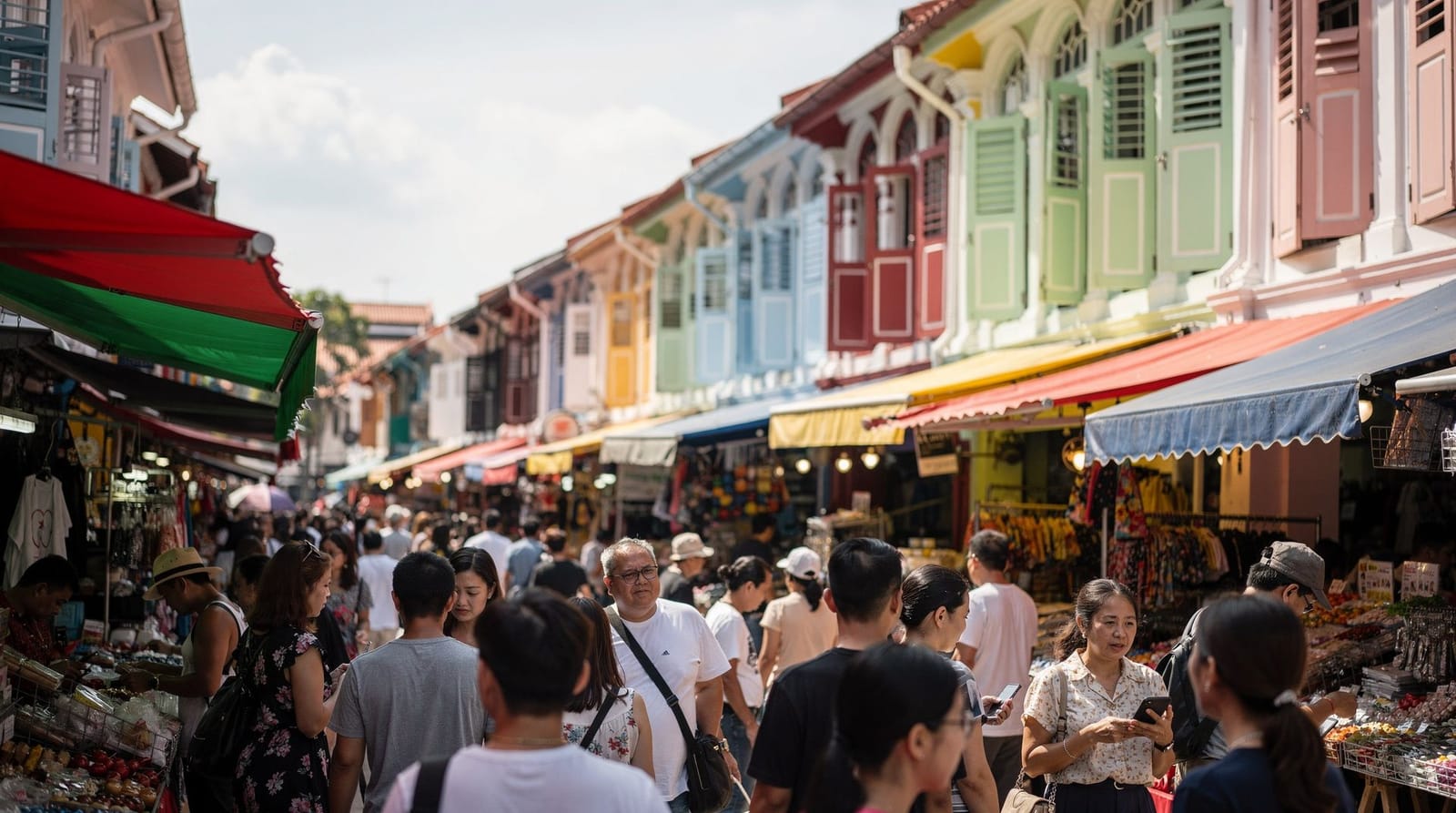
Haji Lane is the one-block street that runs parallel to Arab Street, linking Arab Street to Baghdad Street. It became a boutique shopping destination through the 2000s as local designers and vintage retailers moved into the narrow shophouses.
What you actually find today:
- Independent clothing boutiques — local Singaporean designers, Thai and Indonesian imports, vintage and second-hand clothing. Better quality than the chain retail of Orchard Road; prices are moderate (SGD 30–80 for clothing items).
- Streetwear and sneaker shops — several stores with Singapore-brand streetwear
- Bookshops and art shops — a few small independent shops with design books and prints
- Cafés — mixed quality; the best are the non-obvious ones on the cross streets
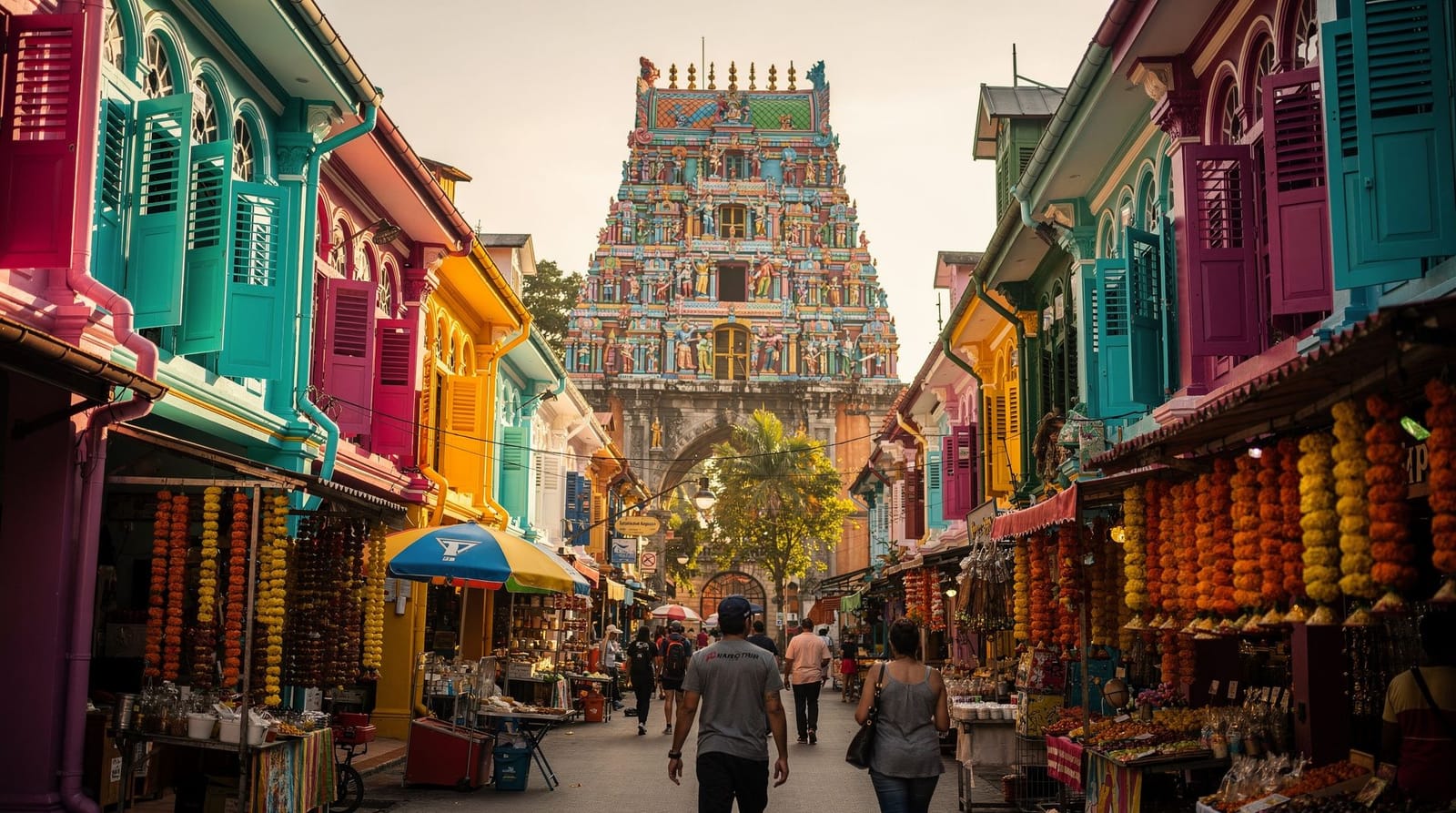
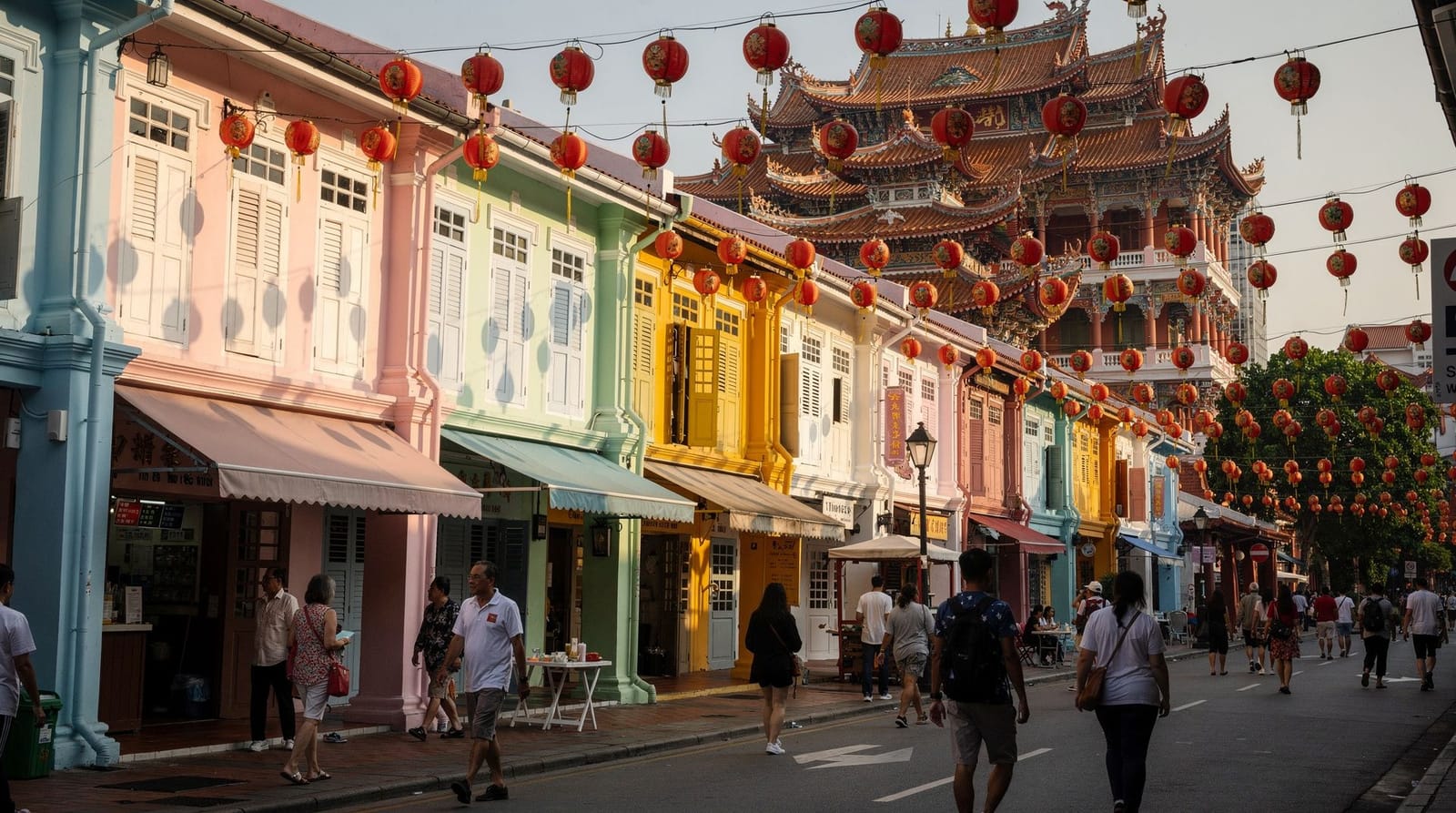
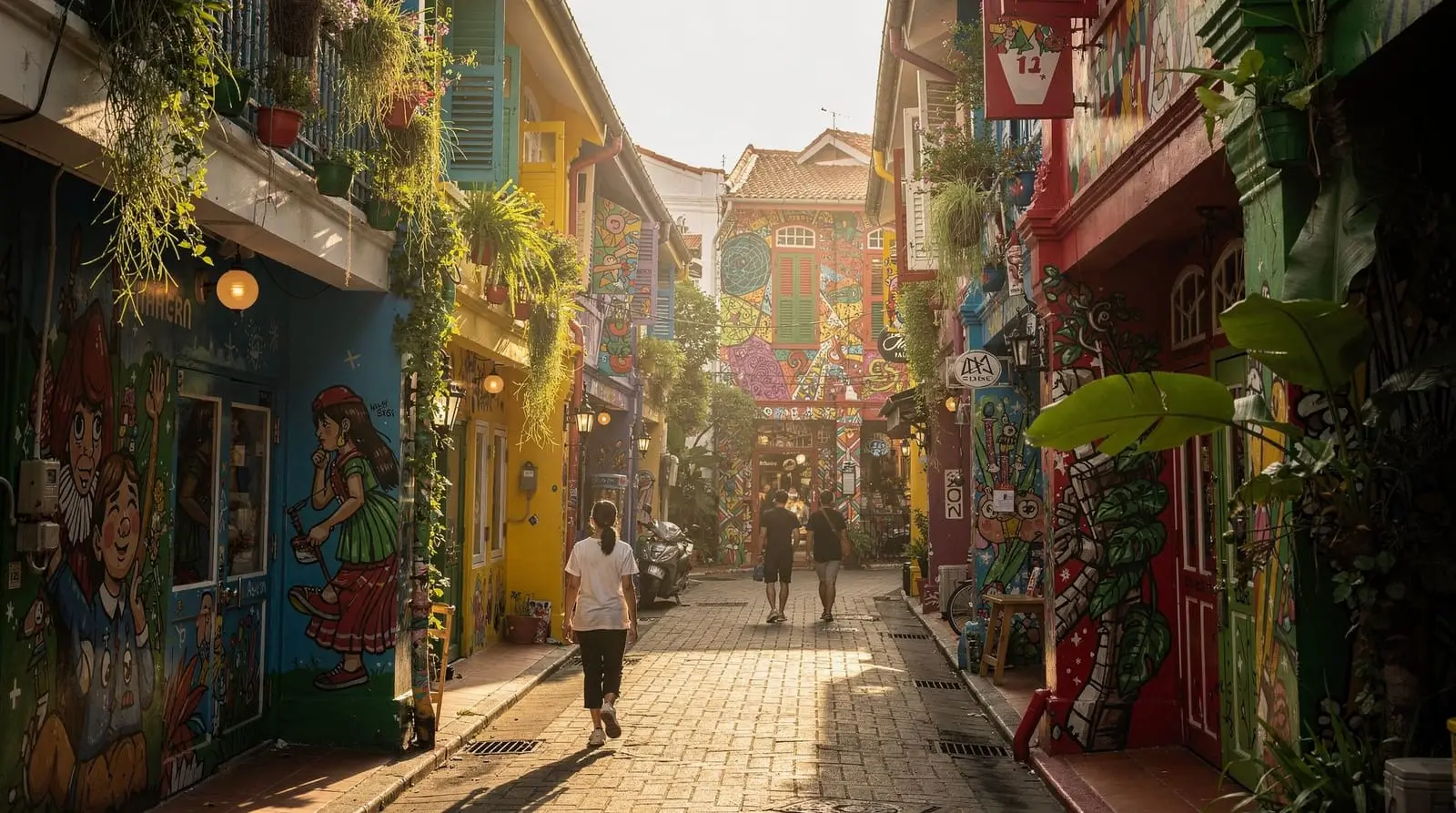
The painted shophouse facades on Haji Lane are the most photographed feature — bright murals and pastel-coloured walls. Worth photographing, but be aware that weekends turn the narrow lane into a significant crowd. A weekday morning is far more pleasant.
For a guided exploration of the neighbourhood’s less-obvious corners:
Singapore: Little India and Kampong Glam hidden trailsBussorah Street
Bussorah Street runs from North Bridge Road directly towards Sultan Mosque, forming a classic framed view of the golden dome from the far end. It is one of the most photographed street perspectives in Singapore.
The street itself has a cluster of Middle Eastern and Malay restaurants (good for dinner), café-bars (quality varies), and some souvenir shops that cater specifically to tourists. The view down the street towards the mosque is at its best in the golden hour before sunset.
The three streets compared
The core streets have distinct personalities — useful to know before you plan your route:
| Street | Character | Best for |
|---|---|---|
| Arab Street | Traditional commerce, fewer tourists | Textiles, batik, carpets |
| Haji Lane | Boutique shopping, murals | Photography, independent fashion |
| Bussorah Street | Mosque views, dining | Sunset photography, dinner |
Best photo spots and getting good shots
The framed view of Sultan Mosque’s dome from the far end of Bussorah Street is the classic shot, best in the 30–45 minutes before sunset when the golden light catches the dome directly. On Haji Lane, the painted shophouse murals photograph best in the flat light of a weekday morning before the lane fills with people — the same crowds that make the street lively also make clean shots difficult after about 11am on weekends. If you want a guided route through the neighbourhood’s best angles and a few hidden corners most visitors miss:
Kampong Glam and Haji Lane photography tourThe Haji Lane photography guide goes into more detail on angles and timing for the lane itself. For more citywide framing ideas beyond this district, Best photo spots in Singapore and Instagram spots in Singapore cover the rest of Singapore’s most photogenic corners.
Eating in Kampong Glam
Zam Zam Restaurant at 699 North Bridge Road has been serving murtabak since 1908 — the stuffed pancake filled with minced mutton, chicken, or sardines is the signature dish (SGD 6–12 depending on size and filling). One of Singapore’s most historic eating institutions; the food quality justifies the queue.
Hjh Maimunah Restaurant at 11–15 Jalan Pisang is a Malay institution serving nasi padang — rice with an array of cooked dishes including rendang, sambal vegetables, and fried fish, priced per dish. Busy at lunch; arrive by 11:30. Budget SGD 8–12.
Alaturka at 15 Bussorah Street is a Turkish restaurant with outdoor seating that is good for a relaxed lunch or dinner — mezze, grilled meats, and reasonable prices for the area (SGD 15–25 per person). The outdoor tables have a good view of the mosque.
Blu Jaz Café at 11 Bali Lane is the neighbourhood’s most established live music venue and late-evening option — good cocktail list, outdoor seating, and jazz/world music on most evenings.
For Malay and halal food more broadly: see halal food Singapore.
The Istana Kampong Glam and Malay Heritage Centre
The Malay Heritage Centre at 85 Sultan Gate occupies the former Istana (palace) of the Malay royalty who were settled in this district under colonial administration. The museum covers Malay culture, language, arts, and history in Singapore, with particular focus on the Kampong Glam district itself.
The building is beautifully restored — a yellow Malay-colonial structure surrounded by gardens, a welcome contrast to the busy streets outside. Admission: SGD 4 adult / SGD 3 concession. Open Tuesday–Sunday 10:00–18:00. Allow 45–60 minutes.
Combining Kampong Glam with other districts
Kampong Glam sits between Little India (to the northwest) and Bugis (to the southwest). Natural combinations:
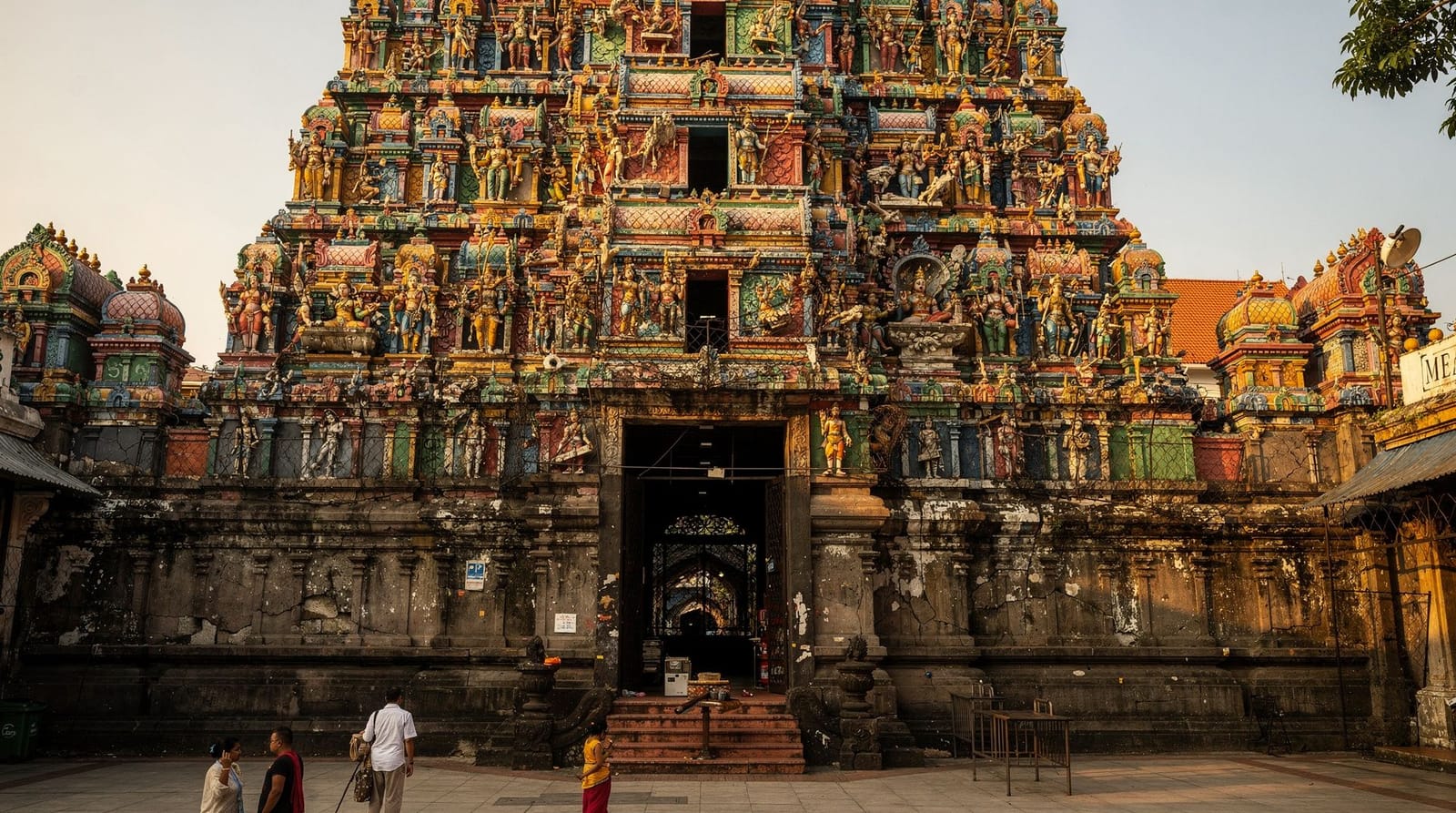
- Morning in Little India (Tekka Centre breakfast, Sri Veeramakaliamman Temple) + afternoon in Kampong Glam (Arab Street, Sultan Mosque, Haji Lane boutiques, Bussorah Street dinner). This is the classic ethnic-quarters day. See the Little India guide.
- Kampong Glam + Bugis — Haji Lane boutiques merge naturally into the Bugis Street markets and the National Library area. See the Bugis guide.
- Kampong Glam evening from Marina Bay — the neighbourhood is 15–20 minutes by taxi or 25 minutes walking from Marina Bay, making it viable as an evening destination after Marina Bay Sands.
If you want to cover the full trio of ethnic quarters in one day, this tour combination is efficient:
Singapore: Chinatown, Little India & Kampong Glam walkPractical information
MRT: Bugis (DT14/EW12), Exit B or C. Nicoll Highway (CC5) for the eastern approach. Opening hours: Streets accessible at all times; Sultan Mosque visitor hours 10:00–12:00 and 14:00–16:00 on weekdays. Haji Lane boutiques typically 11:00–20:00. Best time: Weekday mornings for Haji Lane (quieter); golden hour before sunset for mosque photography on Bussorah Street; evenings for Blu Jaz and the restaurant scene. Budget: Meals SGD 8–20 per person at the listed restaurants; Haji Lane boutique shopping SGD 30–80 per item; mosque and streets free; Malay Heritage Centre SGD 4.
For the broader context of Singapore’s historic districts: ethnic quarters guide.
If you would rather read a first-person account of a day here, a day in Kampong Glam and Haji Lane follows one route through the neighbourhood. And if you are building a longer plan around this district, the Singapore first-timer itinerary shows where a visit can slot in alongside the bigger sights.
Frequently asked questions about Kampong Glam and Haji Lane
What is the best time to visit Haji Lane?
Weekday mornings (10:00–13:00) are the most relaxed time — boutiques are open, the lane is not crowded, and you can browse without competing with weekend tour groups. Weekend afternoons are the busiest; if you visit then, arrive before 12:00. The best photographs are taken in the morning light before the lane fills up.
Is Kampong Glam entirely halal?
The area is predominantly halal — Zam Zam, Hjh Maimunah, and most of the Bussorah Street restaurants are certified halal. Some of the café-bars on Haji Lane serve alcohol. The area is appropriate for visitors seeking halal dining options and is one of the best areas in Singapore for this.
What should I buy in Kampong Glam?
For genuine value: fabric and batik from the Arab Street textile shops (good quality, reasonable prices); perfume oils from the traditional oud shops (not the pushy ones — compare prices); local designer clothing from Haji Lane boutiques. Avoid the tourist-trap souvenir stalls on Bussorah Street.
Can I take photos inside Sultan Mosque?
Photography in the courtyard and exterior is fine. Inside the prayer hall, photography is generally permitted in non-prayer times but be discreet and respectful — do not photograph people praying. Check with mosque staff if unsure. The best architectural shot is from Bussorah Street looking north at the dome.
Is Kampong Glam worth visiting without shopping interest?
Yes. Sultan Mosque alone is worth a visit for anyone interested in architecture or religious sites. The Malay Heritage Centre is good for cultural context. The food on Bussorah Street and at Zam Zam is excellent regardless of shopping inclination. The neighbourhood character is distinctive and different from the rest of Singapore’s major sights.
Top experiences
Bookable activities with verified prices and instant confirmation on GetYourGuide.