Durian in Singapore: how to eat it, where to buy it, and the honest tourist pricing guide
Singapore: food tours — Chinatown Complex hawker
Where should I buy durian in Singapore and how much does it cost?
Geylang is the classic durian district — numerous stalls, late-night, competitive pricing. Expect SGD 12–25 per kg for good Mao Shan Wang (Musang King) depending on season; ordinary grades from SGD 6/kg. Tourist-area vendors (Chinatown, Orchard) charge significantly more. Durian is seasonal (two main seasons: May–August, December–January) — off-season prices spike and quality drops. Set a budget before opening any durian.
The most divisive food in Asia
No food inspires stronger reactions than durian. Anthony Bourdain described it as “indescribable… like you’ve just French-kissed your dead grandmother.” Richard Sterling wrote that the smell is like “pig-shit, turpentine and onions, garnished with a gym sock.” Julia Child would have loved it.
The people who love durian — including most of Southeast Asia, China, and the approximately 8 million Singapore residents and visitors who seek it out annually — describe it as the richest, most complex fruit on earth. A custardy, intensely aromatic experience that transcends ordinary fruit the way aged cheese transcends plain milk.
The truth: durian is the most honest food experience Singapore offers. You will know immediately whether you are a durian person. This guide helps you approach that moment as an informed participant rather than a tourist who paid SGD 80 for a fruit they did not understand.
| Where | Geylang (best value), Chinatown/Orchard (convenient, pricier) |
| Cost | Around SGD 5–8/kg (ordinary) to SGD 20–30/kg (premium Mao Shan Wang) |
| Time needed | 30–45 minutes for a proper tasting session |
| Getting there | Geylang: Aljunied or Paya Lebar MRT (East-West Line) |
| Best time | Evenings, in season (May–August or December–January) |
Understanding durian varieties
Mao Shan Wang (Musang King / D197)
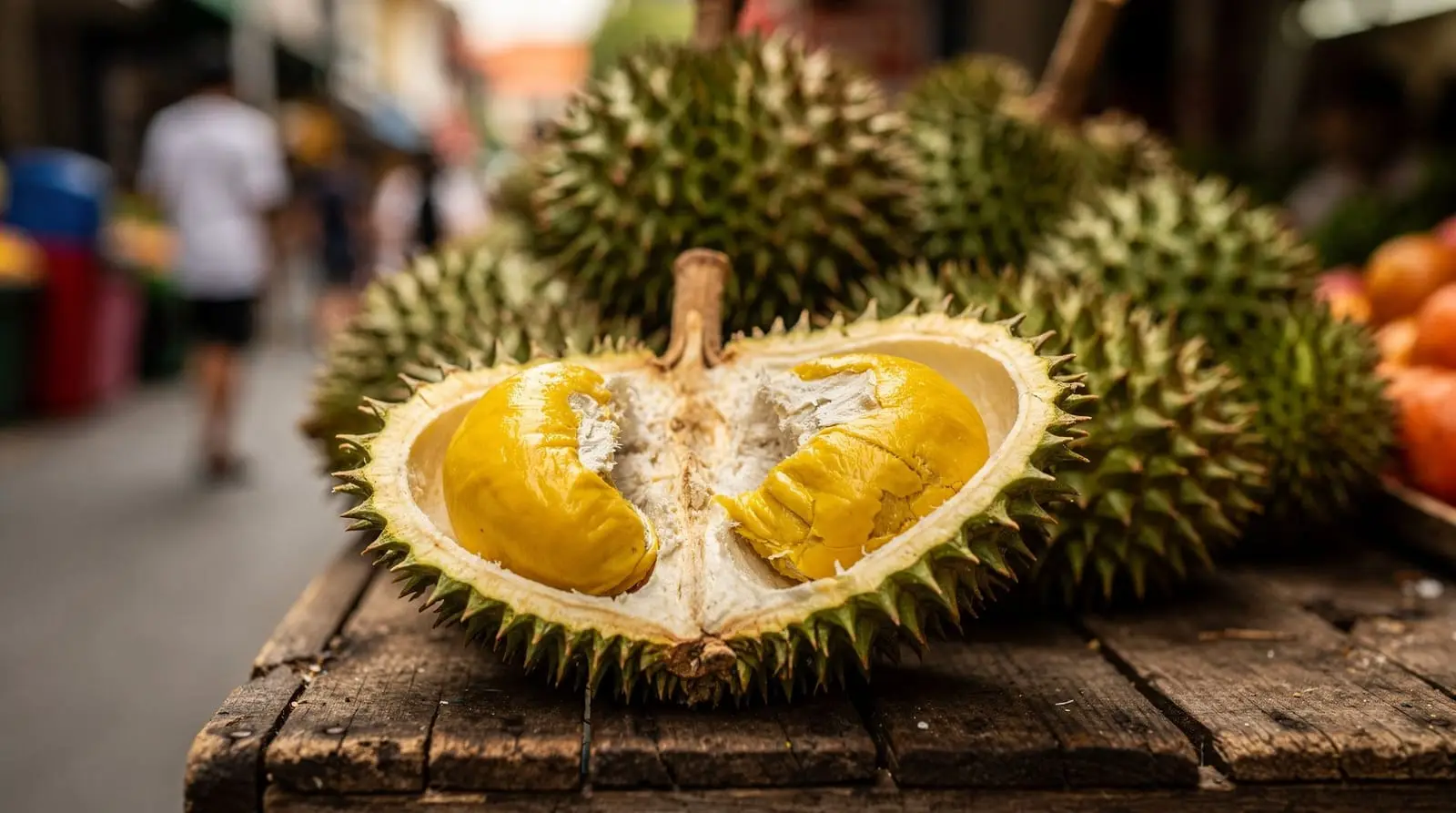
The prestige variety. Mao Shan Wang (literally “Cat Mountain King”) is the Michelin-starred equivalent of durian — intensely flavoured, with a bitter-sweet complexity and a rich, slightly sticky flesh that is dense with flavour. The colour is bright yellow to orange; the seeds are small.
Flavour profile: Strong, bitter-sweet, with a sulphurous depth that is the most polarising element of the experience. If you are going to become a durian convert, it will probably be Mao Shan Wang.
Price (Geylang, in season 2026): SGD 12–25 per kg. A single durian typically weighs 2–4 kg, yielding SGD 25–100 per fruit depending on weight and grade.
Out of season: SGD 25–40+ per kg.
D24 (Sultan)
The classic before Mao Shan Wang dominated. D24 is creamier, less bitter, and slightly sweeter — often recommended as a first durian because the flavour is less intense. Price: SGD 8–15 per kg in season.
XO Durian
Fermented longer than usual, producing a distinct bitter-alcoholic note. Not for beginners. More polarising even than Mao Shan Wang. Some vendors sell it specifically to durian regulars looking for a more intense, funkier variation rather than as a starting point for anyone new to the fruit.
Red Prawn (Ang Heh)
Flesh has an orange-red tinge, sweeter and creamier than MSW, less bitter. A good introduction for people who are nervous about the intensity of Mao Shan Wang.
Black Thorn (Ochee)
Newer premium variety with a following in Malaysia and Singapore. Pale flesh with a purple hue near the seed; rich, sweet flavour. Pricing similar to Mao Shan Wang.
Where to buy durian
Geylang — the premier durian destination
Geylang is Singapore’s most famous durian district — a dense concentration of stalls along Geylang Road and the numbered lorongs (side streets) between Aljunied and Paya Lebar MRT stations.
What to expect:
- Stalls operate from approximately 17:00 to past midnight (some 24 hours during peak season)
- Competitive pricing — stalls quote prices per kg, and you can compare
- Fresh fruit opened to order — you specify the variety and the vendor opens a durian and shows you the seeds before you commit (or should; see below)
- Tables and seating available at most stalls; eating at the stall is normal and expected
- Payment in cash or PayLah!/PayNow
Recommended approach:
- Walk along Geylang Road and look at the stalls (there are dozens)
- Ask the price per kg for Mao Shan Wang (or whichever variety you want) at several stalls
- Pick a stall with clear pricing and good stock
- Ask to see a durian opened to inspect the flesh before committing
- Agree the total price (weight × price per kg) before the vendor opens your fruit
- Eat at the stall’s tables — most stalls provide gloves
Key stalls with good reputations:
- Ah Seng Durian (17 Geylang Road and other outlets) — one of the most consistently praised Geylang stalls
- Sindy Durian — known for reliable Mao Shan Wang
- Durian 36 at Lor 36 Geylang — competitive pricing, good variety
Ah Dee (Kwong Chow) — Chinatown / Bukit Timah
A slightly more accessible option for those staying near the city centre. More expensive than Geylang but more convenient. The stall at Teck Whye Lane and the Bukit Timah area stalls have reputations for consistent MSW.
Pasar Geylang Serai (during durian season)
During the primary season, durian stalls also appear at Geylang Serai wet market and surrounding areas. Pricing here is competitive and the atmosphere (particularly around Ramadan/Hari Raya season) is very lively.
Other neighbourhood options
If you are already exploring the area for its food, the Geylang destination page and the Singapore halal food guide help you plan the rest of the evening around your durian stop.
Smaller pop-up durian stalls appear seasonally outside HDB estates and wet markets across the island, particularly in the eastern and central regions. These rarely have the selection or competitive pricing of Geylang, but can be convenient if you are staying in the area and want a smaller, less deliberate durian moment rather than a dedicated trip. Quality varies more than at established Geylang stalls, so ask to see the fruit opened before committing, and don’t expect the same range of premium varieties like Black Thorn or Red Prawn outside the main durian districts.
What to avoid
Orchard Road and Chinatown tourist-facing vendors: Heavily tourist-oriented durian vendors in prime tourist zones charge significant premiums — SGD 35–50 per kg for Mao Shan Wang is not unusual in these areas, versus SGD 12–20 in Geylang for equivalent quality. The fruit is not better. Do not buy durian from vendors who approach you directly in tourist areas. This pattern is common enough across Singapore that it is worth reading the Singapore tourist traps guide before you go shopping for durian or anything else near major attractions.
Pre-cut packaged durian at convenience stores: 7-Eleven, FairPrice, and similar stores sell packaged durian in plastic containers. The quality is acceptable and the pricing is transparent, but this is not the authentic experience. Useful in an emergency or for very casual tasting.
Stalls that open the durian before agreeing a price: This is a tourist trap. Some vendors open a durian and then quote the price — creating social pressure to accept. Always agree price per kg and total weight before opening.
The tourist pricing problem: honest breakdown
Let us be direct: durian is one of Singapore’s most tourist-manipulated food categories. The combination of exotic reputation, price opacity (charged by weight, variety, and quality), and social pressure to complete a purchase creates conditions where tourists regularly overpay.
Fair price benchmarks (Geylang, primary season 2026):
- Ordinary grade (not branded variety): SGD 5–8 per kg
- D24: SGD 8–15 per kg
- Mao Shan Wang (good grade): SGD 12–20 per kg
- Mao Shan Wang (premium grade): SGD 20–30 per kg
- Red Prawn: SGD 10–18 per kg
What constitutes overpaying: More than SGD 35 per kg for any variety in season at a non-tourist-area stall is unreasonably high. More than SGD 20 per kg for D24 in season. Any price given without showing you the fruit first.
Protective measures:
- Ask to see the price list posted at the stall (reputable stalls display pricing)
- Compare at two or three stalls before buying
- Do not buy from vendors who approach you without a fixed stall
- If the price feels high, say “quite expensive lah” — it is an accepted opening for price negotiation at some stalls (though established stalls with fixed prices may not negotiate)
The smell and the ban
Durian’s smell is the defining practical problem. The volatile compounds that create durian’s complex flavour — including various sulphur-containing molecules — are extremely persistent. A cut durian in an enclosed space permeates every surface and is difficult to remove.
Practical consequences:
- MRT ban: No durian on Singapore’s MRT. Signs are explicit. Enforcement is real. Do not attempt.
- Hotel bans: Most Singapore hotels prohibit durian in rooms. The rule is in the guest policy and the smell reason is self-evident — a previous guest bringing durian into a room can affect the room for the next day’s guests.
- Taxis: Some will accept durian in the boot with a bag; some will not. Grab drivers often decline durian passengers. Discuss before getting in.
- Eating at the stall: The correct solution to all of the above. Eat at the stall’s outdoor tables, wash hands thoroughly afterwards, and do not pack durian for transit through Singapore’s public systems.
Durian-based products: less commitment, still good
If you are uncertain about the full durian experience or want to experience the flavour without committing to a whole fruit:
Durian puffs: Choux pastry filled with durian cream. Available at many bakeries and pastry shops. The Golden Moments durian puff shops (multiple outlets) have a following.
Durian ice cream: Available at many hawker dessert stalls and ice cream parlours. Some Geylang durian stalls sell durian ice cream and durian mochi.
Durian pengat: Stewed durian flesh in coconut milk and gula melaka (palm sugar) — a Peranakan dessert.
Durian cake: Found at many Singapore bakeries. A gentler introduction to the flavour profile.
Durian butter: Used as a toast spread. Available packaged at FairPrice supermarkets.
Durian versus other Singapore hawker foods
| Food | Price range | Commitment level | Where |
|---|---|---|---|
| Durian (whole fruit) | SGD 25–100+ per fruit | High — a full sensory experience | Geylang, wet markets |
| Durian puff / cake | SGD 2–6 per piece | Low — safe introduction | Bakeries islandwide |
| Chilli crab | SGD 40–80 per crab | Medium | Seafood restaurants |
| Hawker noodle/rice dish | SGD 4–8 per plate | Low | Hawker centres |
If durian sounds like more commitment than you want on day one, easing in with a durian puff or durian cake from a bakery is a reasonable first step before spending SGD 30–60 on a whole fruit. For the wider Singapore food landscape beyond durian, the what to eat in Singapore guide and must-try dishes guide cover the rest of the hawker repertoire, and hawker etiquette and chope guide explains the unwritten rules of eating at hawker centres generally.
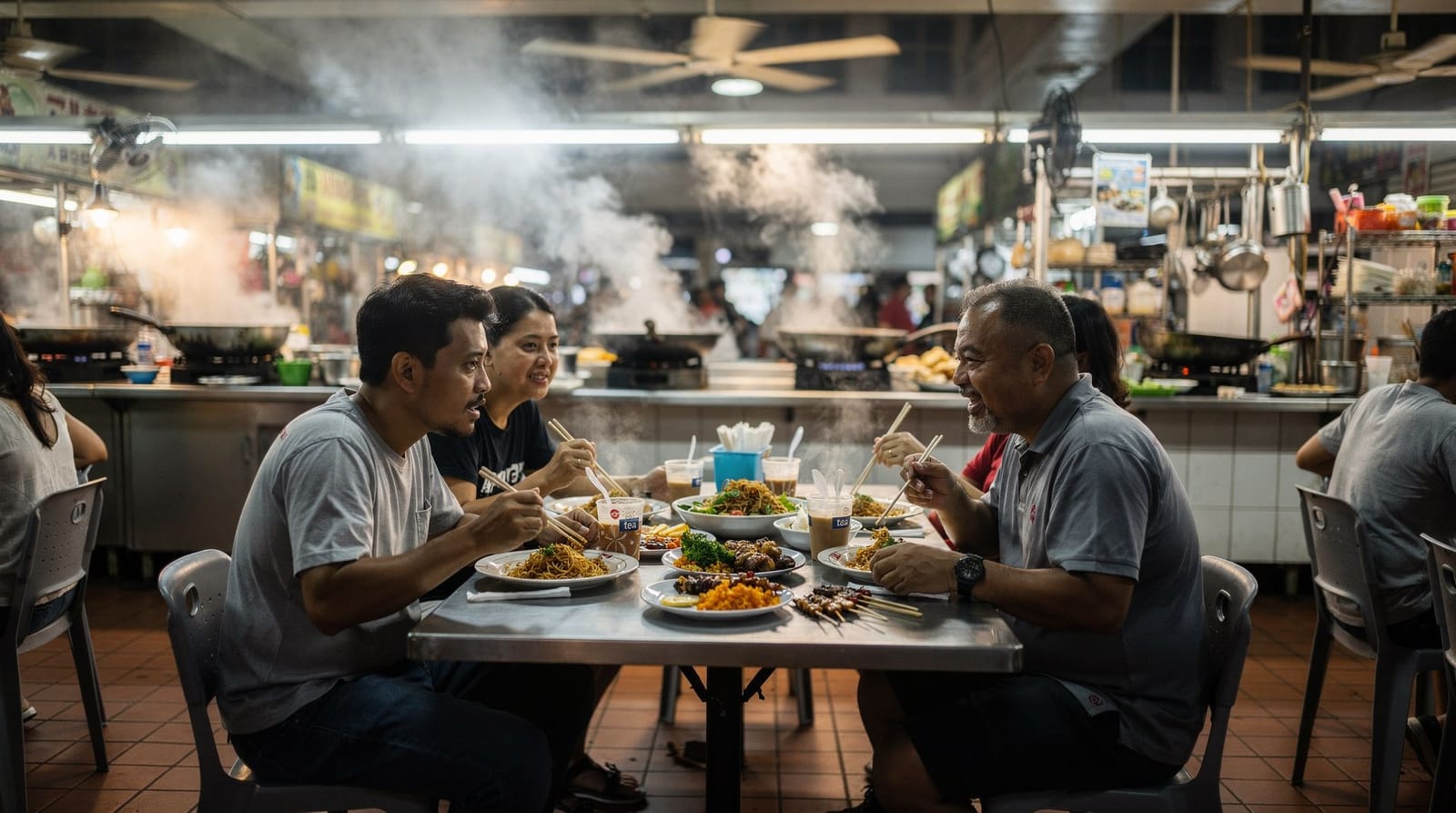
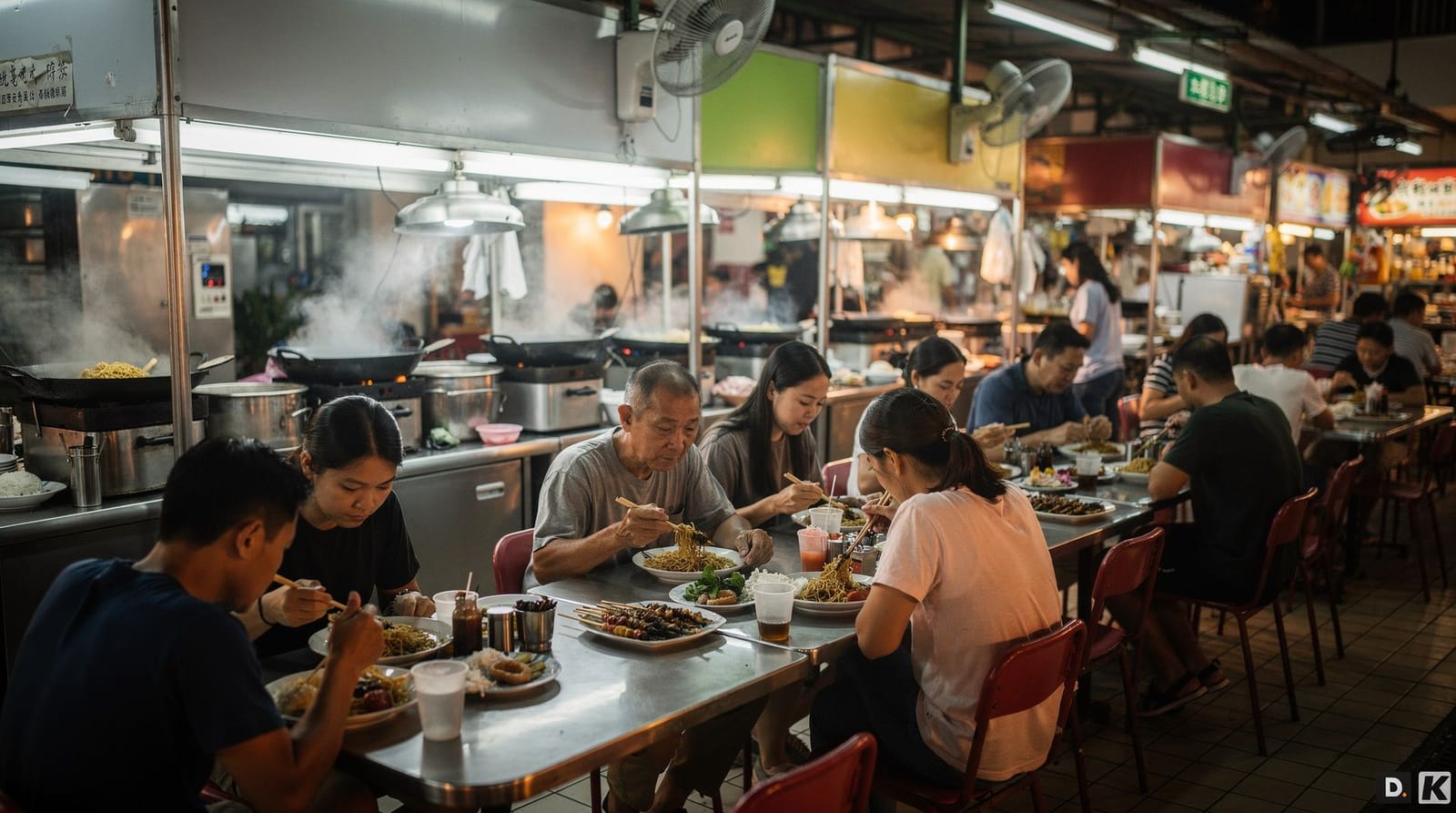
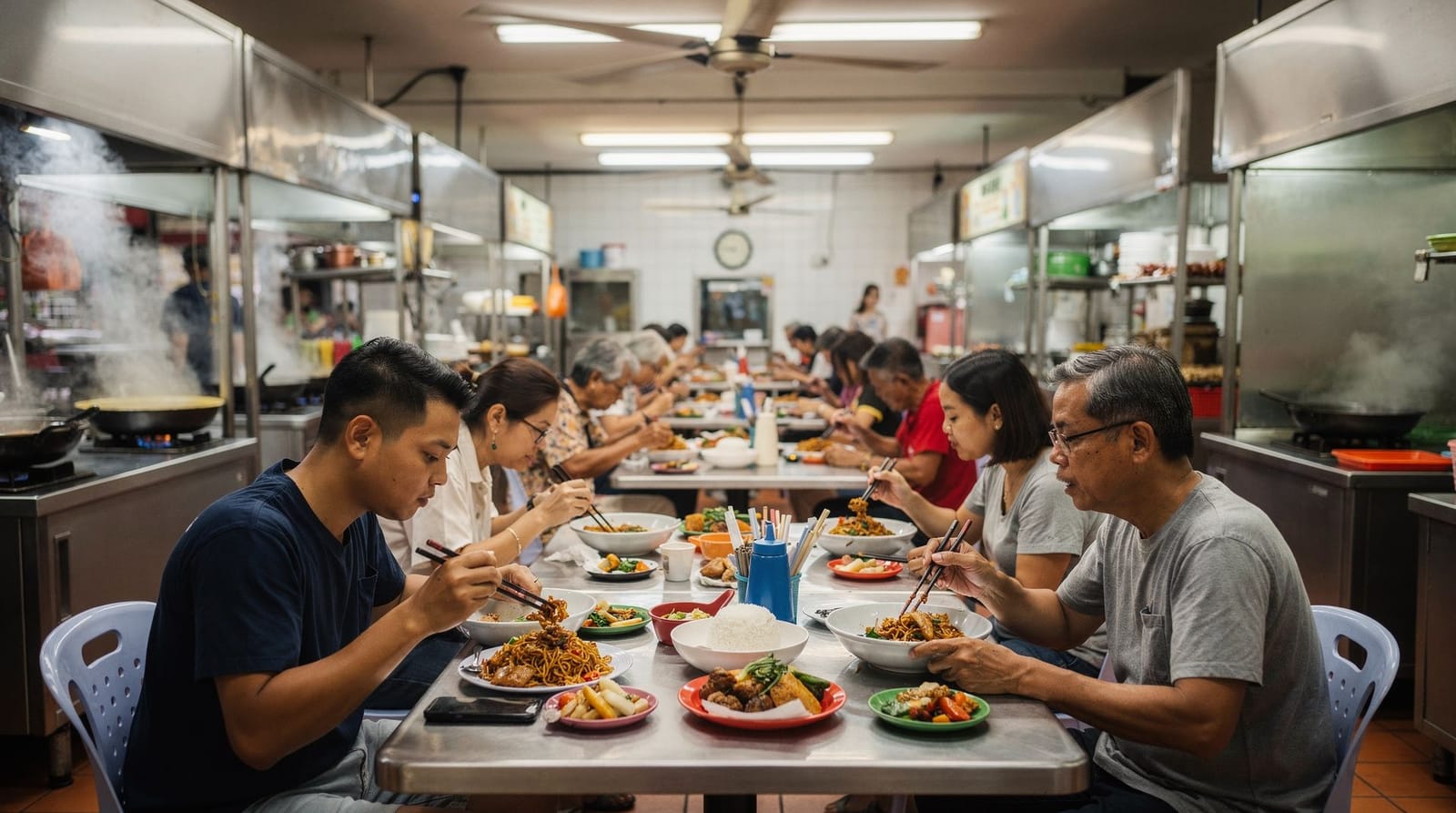
If you would rather have a guide steer you through Singapore’s food scene, including stops that go beyond durian, a guided hawker tour covers more ground in less time than exploring solo.
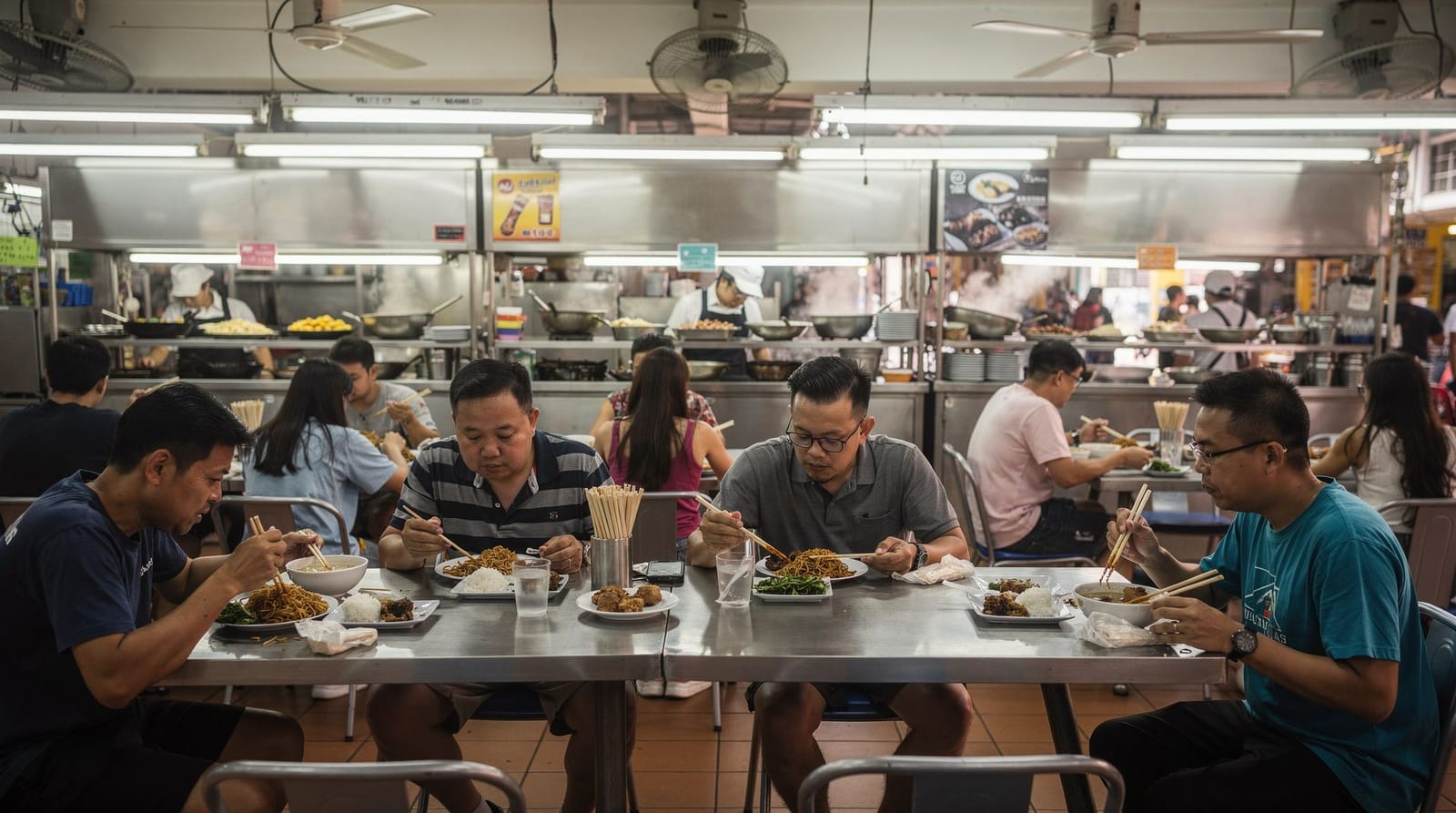
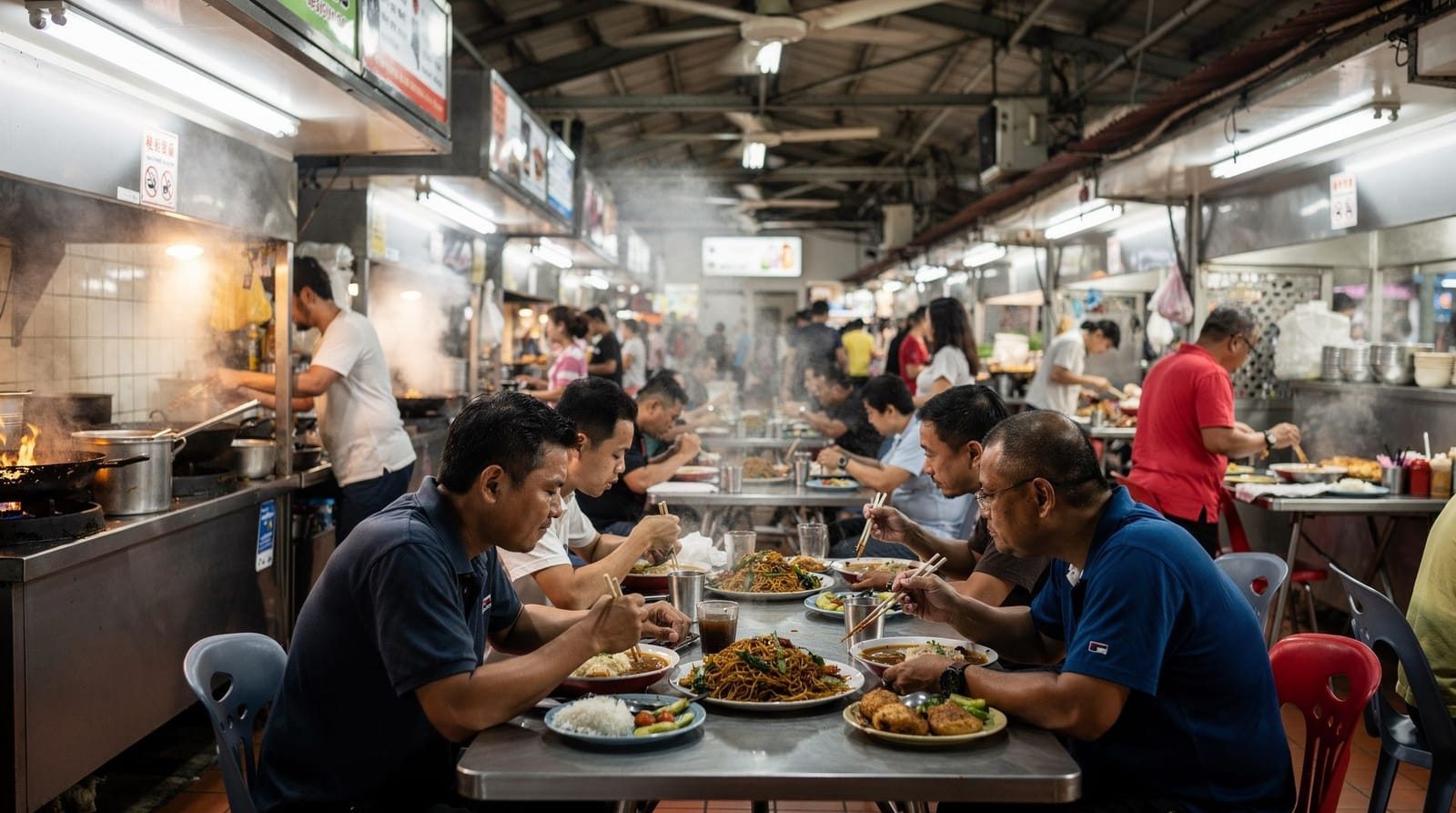
Chinatown Complex hawker food tour Singapore: Chinatown hawkers food tour with 7 tastingsFirst-time eating: what to expect
The physical experience of eating durian for the first time:
- The smell hits before you taste — at a Geylang stall surrounded by open durians, the ambient smell is strong and undeniable
- The vendor opens the fruit by cutting along the seam — the smell intensifies
- The flesh is in pods (each section of the fruit contains one seed surrounded by flesh). Scoop the flesh away from the seed
- The texture is immediately notable — thick, custardy, wet
- The first taste may be confusing — the complexity means your brain processes multiple competing signals simultaneously
- The aftertaste lingers (30–60 minutes), which can be pleasant or unpleasant depending on your reaction
Approach: Eat one seed’s worth of flesh before deciding whether to continue. Do not try to power through if your reaction is strongly negative — this is a documented, genuine aversion that is not overcome by persistence.
Going with a group: Durian is more fun shared. It also suits families who are curious about local food, and the kid-friendly hawker guide is a useful companion if children are coming along for the evening. Splitting one or two fruits among three or four people spreads both the cost and the commitment — if half the group turns out to dislike it, the fruit doesn’t go to waste, and the ones who do like it get to keep eating. Most Geylang stalls are set up for exactly this kind of shared, sociable eating, with communal tables and enough seating for groups to linger over multiple fruits and compare varieties side by side.
Durian pairs naturally with a wider food crawl if you build it into a day plan — see the Singapore foodie itinerary for how to sequence a durian stop with other must-try dishes, or combine it with a walk through Chinatown earlier in the day before heading to Geylang in the evening.
If you like the idea of following one food obsession across the city, the Singapore durian first-timer story gives a personal account of a first tasting, and the Michelin hawker stalls guide and best cheap eats in Singapore are good ways to fill the rest of your food days. Budget-minded readers will also want the Singapore travel costs guide to see how a durian night fits into a wider spending plan.
Frequently asked questions about durian in Singapore
Is durian in season all year?
No — Singapore and Malaysia have two peak durian seasons. Primary: approximately May to August (peak June–July). Secondary: approximately December to January. Outside these windows, durian is available (frozen or from other sources) but prices are higher and quality is more variable. The best value and quality is during the primary season.
How much should I budget for a durian tasting?
A single Mao Shan Wang durian at Geylang during peak season, eaten at the stall with two people, costs approximately SGD 30–60 total depending on the size of the fruit you choose. SGD 25–40 is a reasonable two-person budget for one fruit with some additional smaller items to compare varieties.
Why is durian banned from the MRT and hotels?
The smell compounds in durian (organic sulphides) adhere to surfaces, fabrics, and ventilation systems, and are extremely difficult to remove. In an enclosed space like an MRT carriage or hotel room, a durian left for even 30 minutes can make the space unpleasant for subsequent occupants. The bans are practical rather than symbolic.
Can I take durian home from Singapore?
Durian is restricted for import into many countries — fresh durian is prohibited in Australia and some other markets due to biosecurity concerns. Frozen durian and processed durian products (candy, chips, freeze-dried products) are more widely permitted. Check your home country’s customs regulations before purchasing. Singapore’s Changi Airport shops sell processed durian products specifically because they comply with most international import restrictions.
Is durian safe to eat?
Yes. The idea that durian plus alcohol is dangerous is a folk belief without clear scientific support (some studies suggest potential interaction, but the evidence is weak and the level of consumption required is unrealistic for a tourist). Unless you have a specific allergy or are on certain medications, durian is safe to eat. It is high in sugar, fat, and calories — not something to eat in large quantities at every meal.
What do locals eat with durian?
Durian on its own (scooped from the pod). Sometimes with mangosteens alongside — the mangosteen is traditionally said to “cool” the body after durian’s “warming” effect (this is a traditional medicine concept rather than a proven physiological interaction). Water or clear soup is the typical accompanying drink.
Top experiences
Bookable activities with verified prices and instant confirmation on GetYourGuide.

Singapore: Chinatown hawkers food tour with 7 tastings

Singapore: UNESCO hawker culture Chinatown food tasting tour

Singapore: Little India, Tekka Centre and food tastings tour

Singapore: Katong local food and city highlights tour

Singapore: Lau Pa Sat night street food with Marina Bay walk