National Gallery Singapore: the honest visitor guide
Singapore: National Gallery entry tickets
Is the National Gallery Singapore worth visiting?
Yes — the National Gallery is one of the best art museums in Southeast Asia, housed in two beautifully restored colonial buildings (City Hall and the former Supreme Court). The collection of Southeast Asian art is the largest publicly displayed in the world. Tickets cost SGD 20–30 for adults and are worth it for art lovers. Allow at least 2–3 hours.
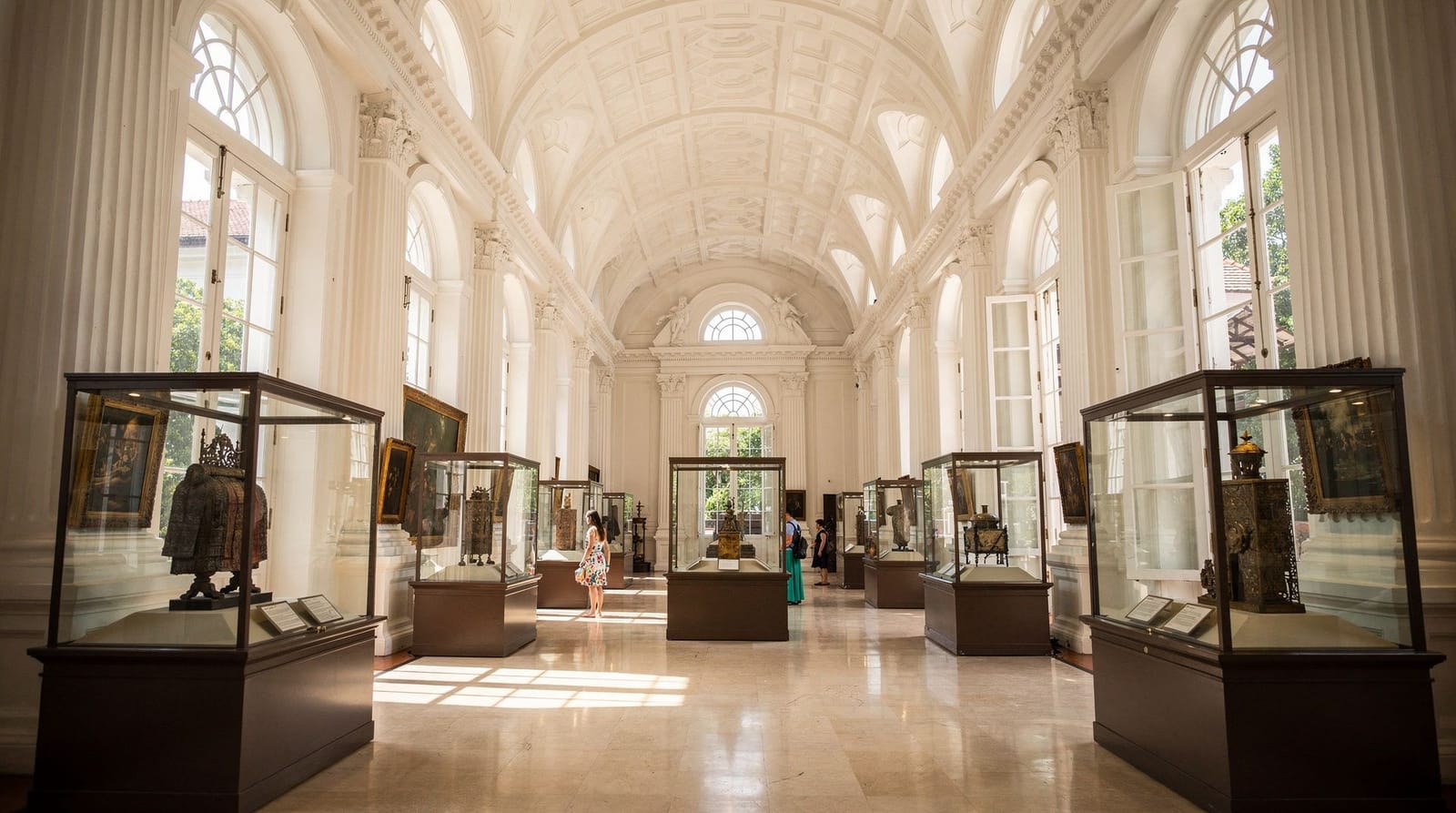
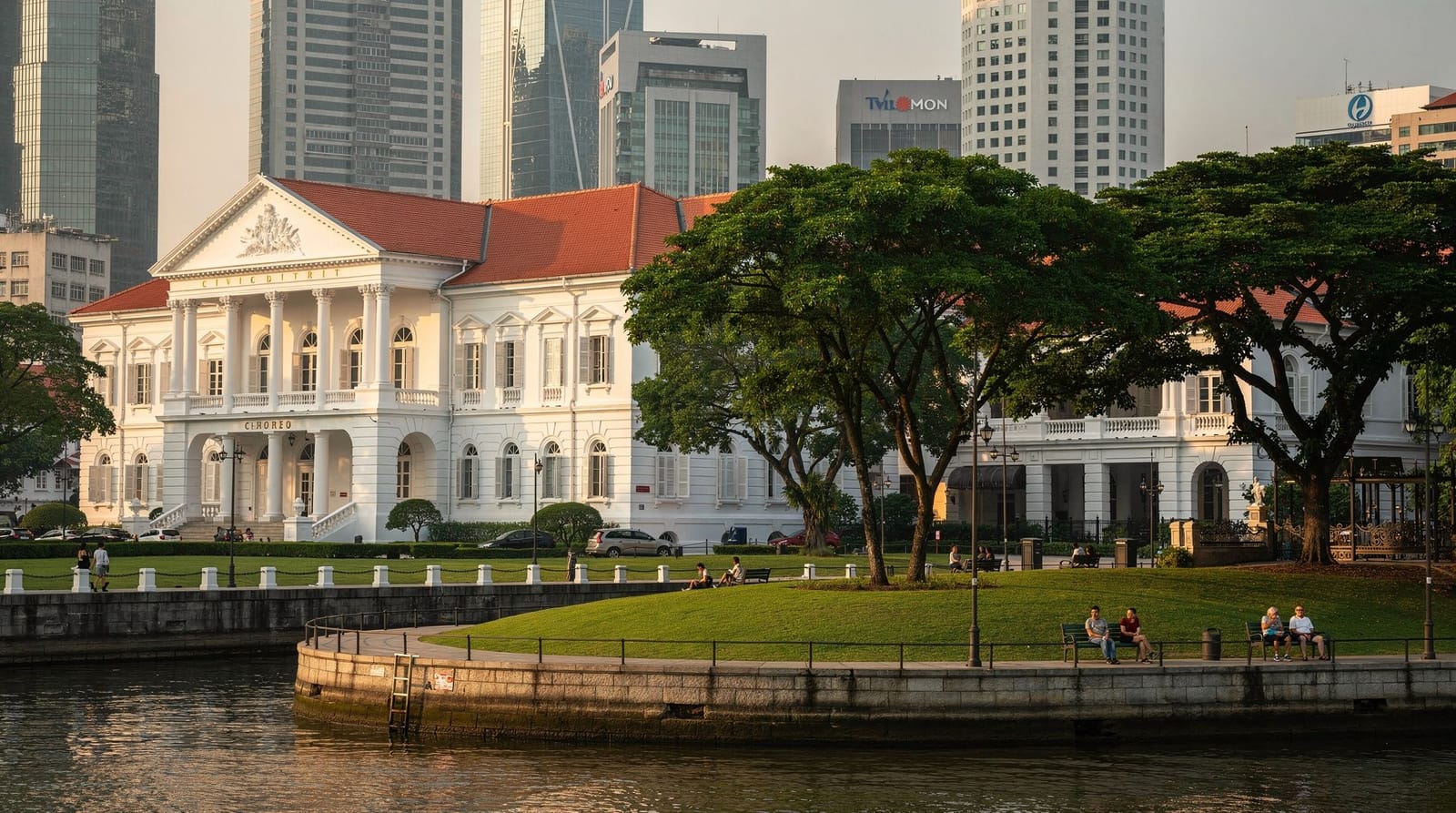
The National Gallery Singapore opened in 2015 in two of the colony’s most important civic buildings — the former City Hall where Lee Kuan Yew proclaimed Singapore’s independence in 1965, and the former Supreme Court where law was administered through Singapore’s colonial and post-independence history. The buildings themselves are the first reason to come. The collection is the second. The rooftop bar is a legitimate third.
| Where | 1 St Andrew’s Road, Civic District |
| Cost | Around SGD 20 adult (free DBS Gallery, Fri 6–9pm) |
| Time needed | 2–3 hours |
| Getting there | City Hall MRT, 3-min walk |
| Best time | Weekday mid-morning, Tue–Fri |
Getting there
City Hall MRT (NS25/EW13) is the direct access point. Exit B or A brings you to St Andrew’s Road; the gallery is opposite the Padang (the large playing field) and takes about 3–4 minutes to reach on foot. The gallery entrance faces the Padang and the old Colonial Core.
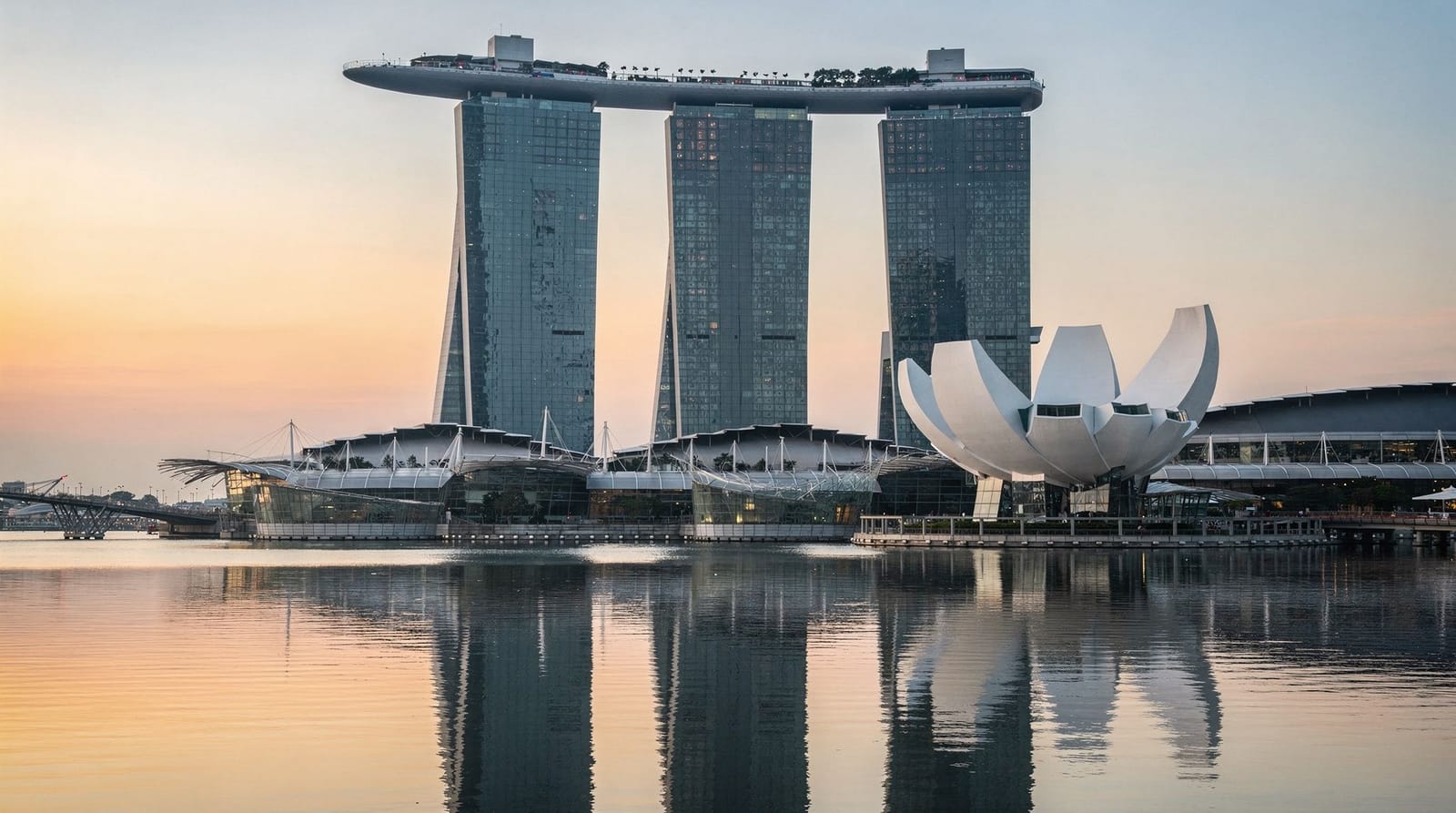
Walking from Marina Bay: the gallery is about 15–20 minutes on foot from the Marina Bay waterfront, through the Civic District. A pleasant walk past the Asian Civilisations Museum and across the Esplanade Bridge.
The buildings
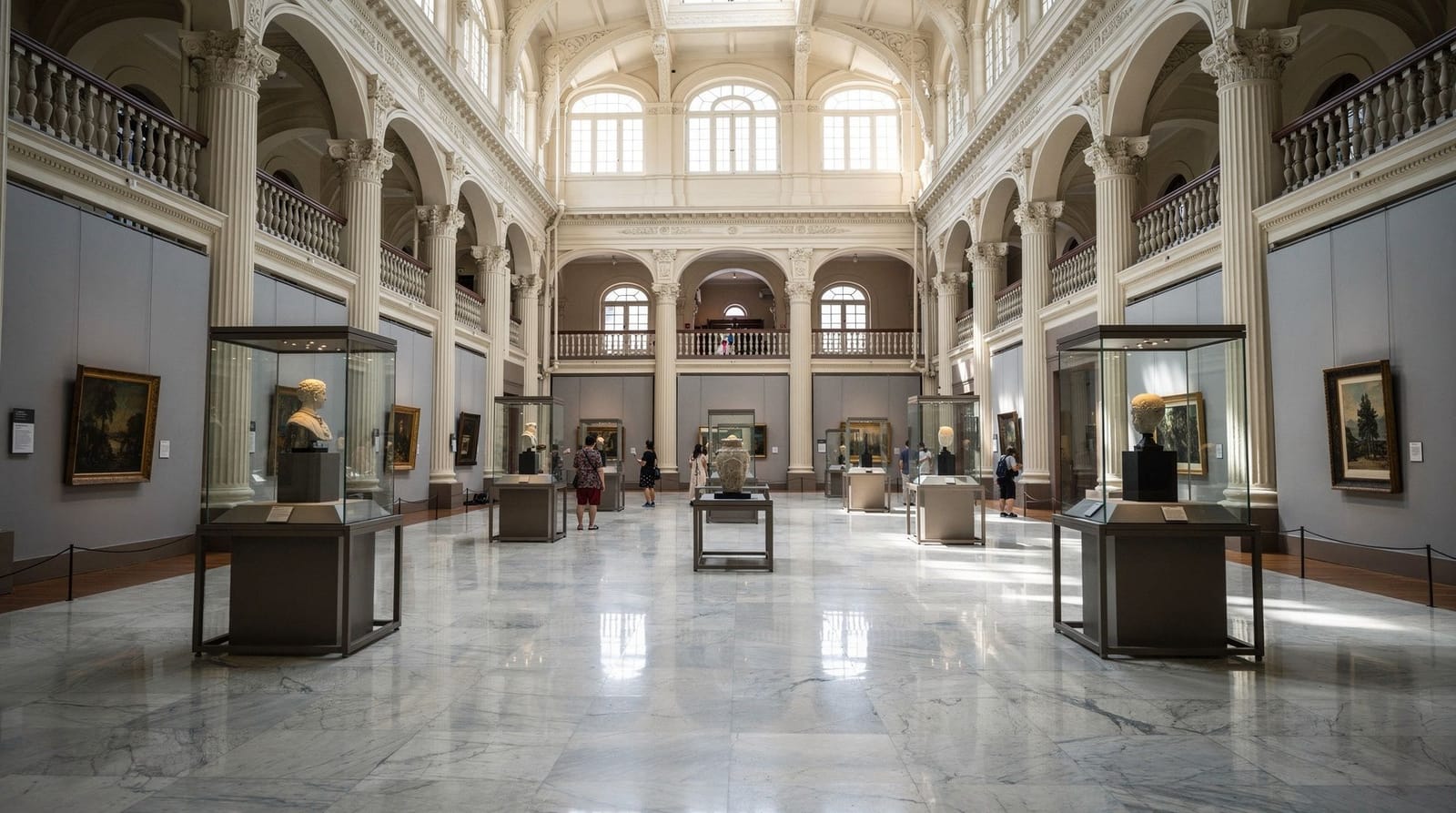
The former City Hall (built 1929) is a Neoclassical colonial building with Corinthian columns — the grand civic architecture that Singapore’s British administration used to project authority. This is where the Japanese surrendered to Lord Louis Mountbatten in 1945, and where Lee Kuan Yew made his speech on Singapore’s independence from Malaysia in 1965. Walking through these chambers with that history in mind changes the experience.
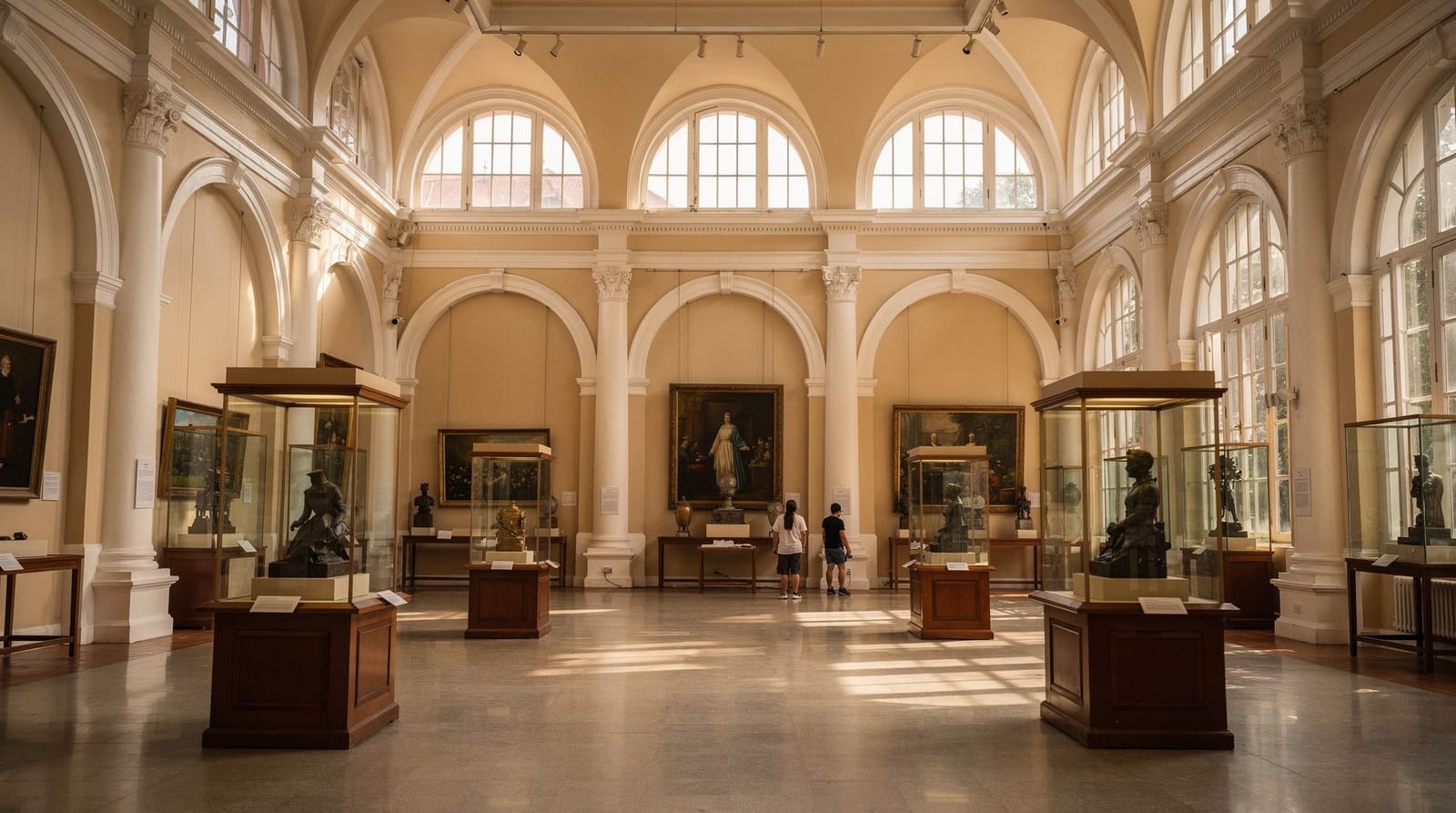
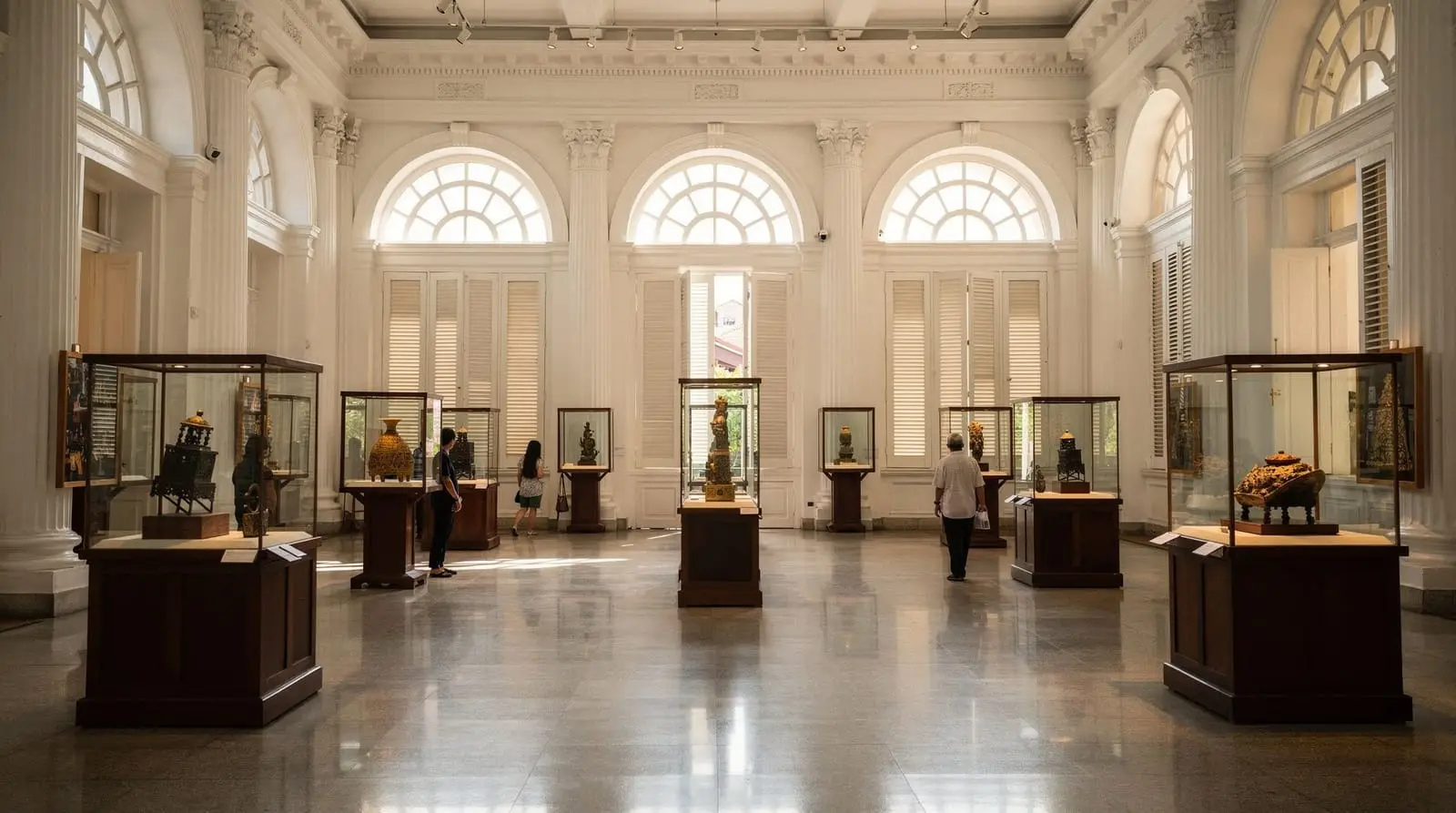
The former Supreme Court (built 1939) is slightly smaller, with a dome and Ionic columns. The interior features the original courtroom spaces now converted to gallery use — the woodwork, benches, and architectural details remain visible in the repurposed rooms.
The two buildings are connected by a dramatic glass-and-steel courtyard canopy (designed by Studio Milou, Paris) that creates a sheltered interior courtyard where outdoor art installations and events are regularly programmed. The canopy itself is architecturally significant and provides a covered outdoor social space in Singapore’s tropical climate.
The permanent collection
DBS Singapore Gallery (City Hall Wing, Levels 3–4) is the gallery’s strongest permanent offering. The collection covers Singapore art from the late 19th century to the present — beginning with the colonial-era paintings of Singapore’s landscape and society, through the formative Nanyang School of the 1950s–1960s, the 1970s–1980s Singapore art scene, and contemporary Singapore artists working today.
The Nanyang School painters are particularly worth knowing: Cheong Soo Pieng, Liu Kang, Chen Wen Hsi, and Georgette Chen developed a synthesis of Chinese ink painting traditions with modernist European influences, set against Southeast Asian subject matter. Their work is both historically significant and visually striking. The National Gallery holds a major collection.
The contemporary Singapore section includes installation art, video works, and political/social commentary art that gives an honest picture of how Singapore artists have engaged with their complex national identity.
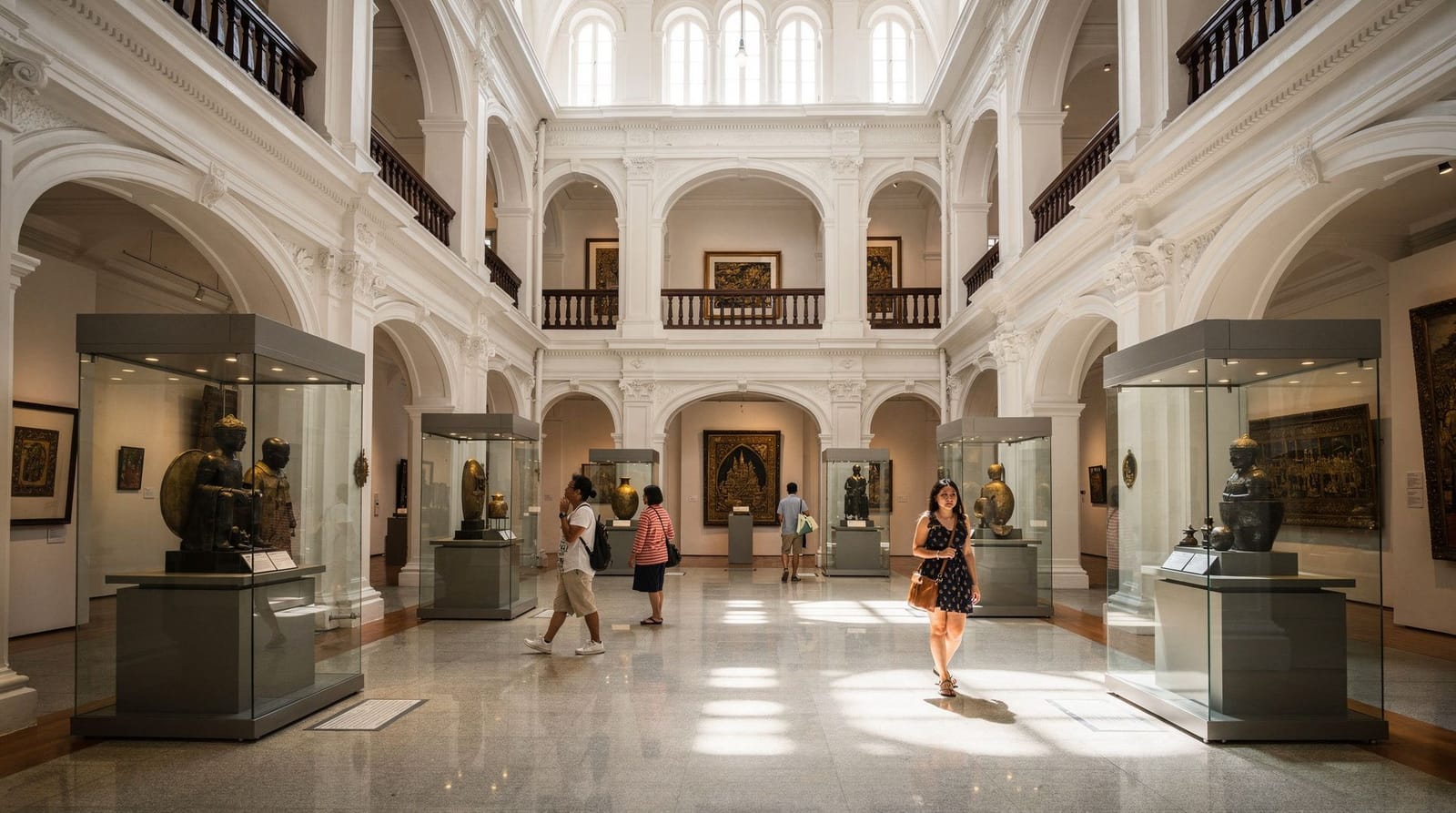
UOB Southeast Asia Gallery (Supreme Court Wing, Levels 3–4) is the gallery’s most internationally important contribution — the largest publicly displayed collection of Southeast Asian art in the world. Works from Indonesia, Thailand, Vietnam, the Philippines, Malaysia, and Myanmar trace the development of modern and contemporary art across the region from the 19th century onwards. If you have interest in Southeast Asian culture and art, this gallery alone is worth the admission price.
Special exhibitions
The National Gallery runs 3–4 major special exhibitions per year alongside the permanent collection. These typically focus on major regional or international artists, specific periods or movements, or thematic surveys. The special exhibitions are usually excellent and frequently bring works not otherwise seen in Southeast Asia.
Check the gallery website for current exhibitions before your visit — the supplement fee (typically SGD 10–15 on top of standard admission) is generally worth it for the major shows.
Booking tickets
Pre-booking online is recommended, especially for weekends and special exhibitions when the gallery can be busy. The online booking avoids the ticket counter queue.
Singapore: National Gallery entry ticketsFor all-access including special exhibitions:
Singapore: National Gallery all-access ticketsThe rooftop: Smoke and Mirrors
Smoke and Mirrors on Level 8 of the gallery is one of Singapore’s best rooftop bar experiences. The panoramic view takes in the Padang, Marina Bay, the Esplanade, and the financial district skyline. Cocktails are SGD 22–30; the menu has wine and a short food selection.
The bar is open to non-gallery visitors (you do not need to have visited the gallery to access the bar). Sunset time (around 18:45–19:15 year-round, given Singapore’s near-equatorial latitude) is the premium timing for the view. Book a table for sunset visits as it fills up.
Odette: dining at the gallery
Odette on Level 1 of the gallery is one of the world’s great restaurants — three Michelin stars since 2019, and consistently rated among the top restaurants in Asia. Chef Julien Royer serves contemporary French-influenced cuisine using regional Southeast Asian ingredients and produce.
This is a major dining experience: the tasting menu runs approximately SGD 280–400 per person (without wine). Booking is required, typically 4–8 weeks in advance. For the context of a Singapore trip where dining is a priority, Odette is one of the singular experiences the city offers.
For most visitors, the gallery café and brasserie on Level 1 is the practical option — good food at normal restaurant prices (SGD 20–35 per person for a proper meal).
Combining with other civic district sights
The National Gallery sits within the Civic District, Singapore’s colonial administrative core. Within 15 minutes walk:
- Asian Civilisations Museum (1 Empress Place) — focused on the material culture of Asia’s great civilisations; excellent collection, SGD 20 admission. See Asian Civilisations Museum.
- Esplanade - Theatres on the Bay — Singapore’s premier performing arts venue, the spiky durian-shaped building on the waterfront; some free outdoor performances
- Raffles Hotel — the legendary colonial hotel on Beach Road, restored and reopened 2019; worth a look and the Long Bar for a Singapore Sling (SGD 37–40, but historically mandated)
- Fort Canning Park — 10 minutes walk, a historic hill with colonial and Malay royal history; good views and free
For the full civic district picture: civic district.
Practical information
Address: 1 St Andrew’s Road, Singapore 178957 MRT: City Hall (NS25/EW13), Exit B or A Opening hours: Tuesday–Sunday 10:00–19:00; closed Monday. Some special exhibitions have extended Friday hours. Admission: SGD 20 adult / SGD 15 residents. Free for children under 6. DBS Singapore Gallery free on Fridays 18:00–21:00. Best time: Tuesday–Friday mid-morning (quietest). Avoid weekend afternoons when school groups and families increase crowding.
For Singapore’s broader museum scene: museums Singapore guide.
Planning a Civic District art day
The National Gallery pairs naturally with a longer Civic District art and history morning. Start with the Asian Civilisations Museum for maritime history and the Tang Shipwreck collection, then walk 10 minutes to the National Gallery for the afternoon — the two together cover roughly 4–5 hours and represent the strongest concentration of museums in Singapore. If you have a third stop in you, the Peranakan Museum is a short walk further and adds Singapore’s distinctive Straits Chinese culture to the mix. For the fuller comparison of how all of Singapore’s major museums stack up, see the Museums in Singapore overview, and for a free-only version of the same day, Free museums in Singapore.
Photography and quiet corners
The courtyard between the two buildings, under Studio Milou’s glass canopy, is the most photogenic spot in the gallery and the one place you don’t need a ticket to shoot — worth a stop even on a flying visit to the Civic District. Inside the galleries, the upper floors of the Supreme Court Wing tend to be quieter than the ground-level spaces near the entrance, and the connecting bridges between wings offer views back down into the courtyard that most visitors walk past. For more angles on shooting Singapore’s civic architecture, see the Marina Bay photography guide guide, which covers the wider Civic District and waterfront in the same golden-hour window.
Rainy-day and first-timer value
Because the entire visit is indoors and air-conditioned, the National Gallery is one of the better Singapore in the rain options, and it slots well into the museum block of a first-timer itinerary — a Civic District morning here followed by an afternoon at Marina Bay balances culture with the more photogenic side of the city. For visitors weighing whether a full-price ticket is worth it against the free Friday evening window, the honest answer depends on your schedule: the free hours (18:00–21:00 Friday) only cover the DBS Singapore Gallery, not the UOB Southeast Asia Gallery or special exhibitions, so serious art visitors should budget for a full ticket.
Frequently asked questions about the National Gallery Singapore
Is the National Gallery free?
Partially. The DBS Singapore Gallery (Singapore art) is free on Fridays from 18:00–21:00 for the last three hours of the day. On other days and times, standard admission (SGD 20 adult) applies to the permanent collection. Special exhibitions carry a supplement. The building and the courtyard are accessible without a ticket during opening hours.
How do I book National Gallery tickets?
Online through the gallery website or through GetYourGuide. Book in advance for weekend visits and during special exhibitions. The ticket counter is open during museum hours for same-day purchase. Tickets are timed-entry for special exhibitions; the permanent collection is open-entry once inside.
Is the National Gallery good for children?
It depends on the children and their age. The gallery has a children’s art garden and family programming, and some special exhibitions are specifically designed with younger visitors in mind. For children focused on hands-on experiences, ArtScience Museum’s teamLab Future World exhibition is more immediately engaging. For children with an interest in art and history, the National Gallery is excellent.
What is the difference between the National Gallery and the National Museum?
The National Gallery focuses on visual art — paintings, sculpture, and works on paper from Singapore and Southeast Asia. The National Museum of Singapore (93 Stamford Road) focuses on Singapore’s social, cultural, and political history through artefacts, documents, and interactive displays. Both are worth visiting. See National Museum of Singapore.
Can I visit the National Gallery without buying a ticket?
Yes — the courtyard, the ground-floor café and restaurant, the gift shop, and the Smoke and Mirrors rooftop bar are all accessible without gallery admission. The gallery entrances to the permanent collection galleries require a ticket.
Top experiences
Bookable activities with verified prices and instant confirmation on GetYourGuide.