Singapore in the rain: what to do when it pours
Singapore: Gardens by the Bay bundle entry ticket
What should you do in Singapore when it rains?
Singapore's rains are usually short tropical downpours lasting 30–90 minutes. Excellent rainy-day options include the Gardens by the Bay Cloud Forest and Flower Dome, any hawker centre, the ArtScience Museum, National Gallery Singapore, Asian Civilisations Museum, Jewel Changi, and the massive Orchard Road and Marina Bay Sands underground mall networks. Most attractions are fully indoors.
Quick answer: Singapore’s rains are mostly short tropical downpours. On a wet day: Gardens by the Bay Cloud Forest, ArtScience Museum, any hawker centre, Jewel Changi, and the underground mall networks are excellent. Most of Singapore’s best experiences work perfectly in rain.
| Typical shower length | 30–90 minutes, then clear |
| Wettest months | November–January (Northeast Monsoon) |
| Driest window | February, and June–September |
| Best indoor fallback | Cloud Forest, ArtScience Museum, any hawker centre |
| Gear | Umbrella (SGD 8–15), light rain layer, waterproof bag |
Understanding Singapore rain
Singapore sits 1.3 degrees north of the Equator. Rain here is different from European rain. Rather than grey drizzle lasting all day, Singapore typically delivers short, intense tropical thunderstorms — dramatic skies, extremely heavy rain for 30 to 90 minutes, then blue sky again.
The exceptions are during the Northeast Monsoon season (November to January), when multi-hour overcast and sustained rain are more common. But even in the wettest months, full-day rain is unusual. Singapore’s rainy days are usually partially rainy days.
The practical implication, and the single most useful mindset shift for visitors used to seasonal rain elsewhere: if it is raining when you wake up, wait an hour before going out. If it starts raining mid-activity, duck into the nearest hawker centre, café, or covered walkway and wait 45 minutes. The city is built for this — almost every block in the central area has a dry option within a two-minute walk.
How to stay dry between places
The underground MRT network
Central Singapore’s MRT stations connect underground to a significant number of hotels, malls, and attractions. Some useful connections:
- Bayfront MRT (CE1/DT16): Underground links to Marina Bay Sands, ArtScience Museum, The Shoppes at MBS, and Gardens by the Bay (partially)
- Raffles Place MRT (EW14/NS26): Underground Raffles Link connects to Fullerton, One Fullerton, and Clifford Square
- Dhoby Ghaut, Somerset, Orchard MRT: Linked via the underground ION Orchard, Orchard Central, 313@Somerset mall network
- City Hall MRT (EW13/NS25): Links underground to Funan, Raffles City, Esplanade, and Suntec City
Covered five-foot-ways
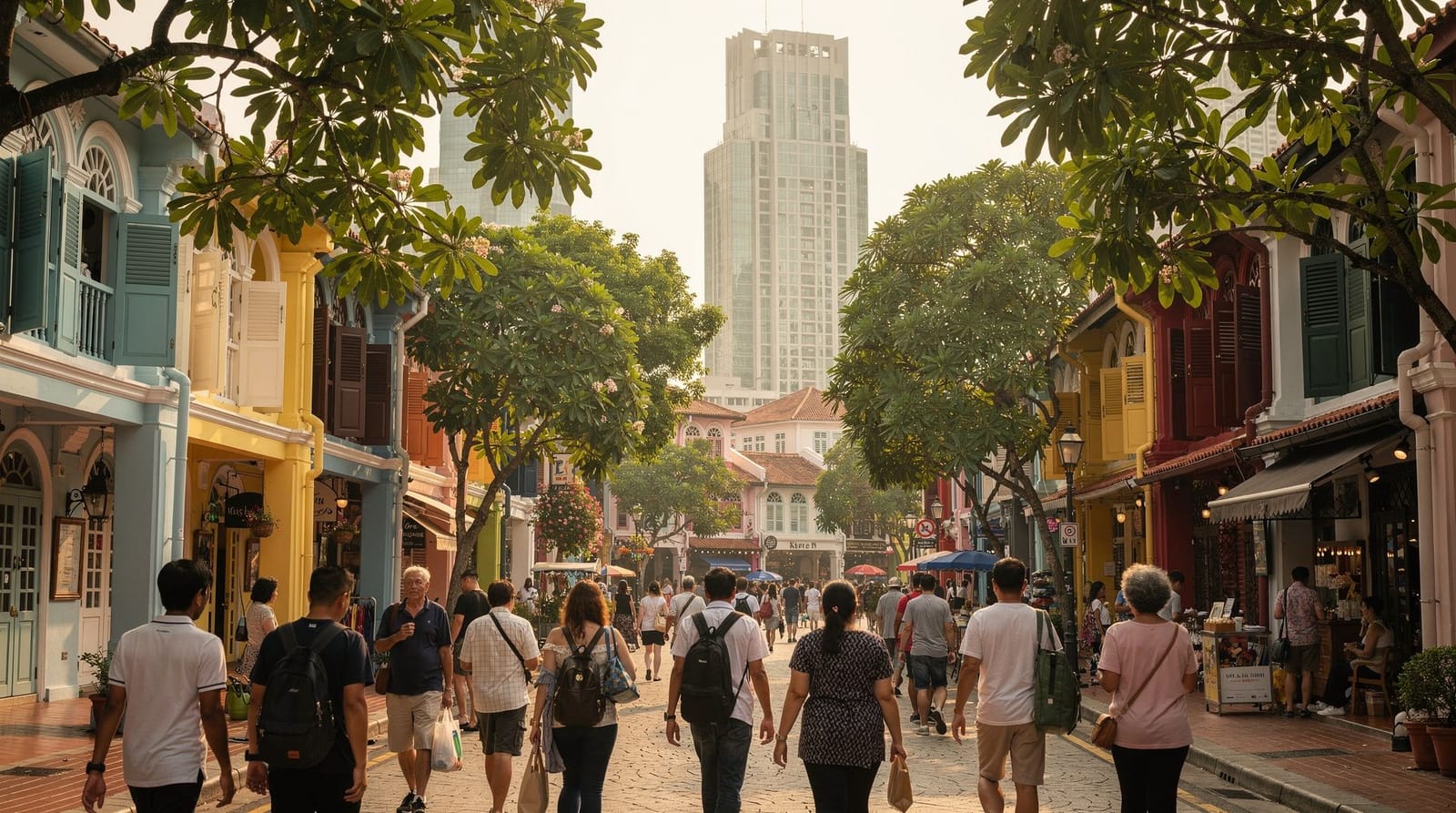
Singapore’s colonial-era shophouses have covered walkways (originally five-feet wide, hence “five-foot-ways”) running along the pavement. In Chinatown, Little India, Kampong Glam, and the Civic District, you can walk for long distances under cover. Not air-conditioned, but dry.
The Orchard Road underground
Orchard Road’s malls connect in a largely unbroken chain: ION Orchard → Wisma Atria → Ngee Ann City → Paragon → Wheelock Place. Underground or covered links between most. Walking from Orchard MRT to Tanglin without going outside in rain is possible.
The best indoor activities for a rainy day
Gardens by the Bay — Cloud Forest and Flower Dome
The paid conservatories are fully enclosed and air-conditioned. The Cloud Forest is particularly good in any weather — its misty interior feels appropriate on a rainy day, and the indoor waterfall is its own micro-climate. A rainy afternoon at Gardens is actually one of the better times to visit, as crowd levels often drop during downpours.
Cost: SGD 46 for both (Cloud Forest alone SGD 26, Flower Dome alone SGD 12). MRT: Bayfront (CE1/DT16). Full guide: Gardens by the Bay.
Singapore: Gardens by the Bay bundle entry ticketArtScience Museum — teamLab Future World
The permanent teamLab digital art installation is completely indoors and one of Singapore’s most memorable experiences. Interactive light installations in large rooms — the Crystal Universe, the Universe of Water Particles, and the Athletic Forest rooms are the standouts. Best with at least an hour. The lotus-shaped museum building is also interesting to explore.
Cost: SGD 23–38. MRT: Bayfront (CE1/DT16). Guide: ArtScience Museum & teamLab Future World.
Singapore: ArtScience Museum teamLab Future WorldHawker centres (excellent in any weather)
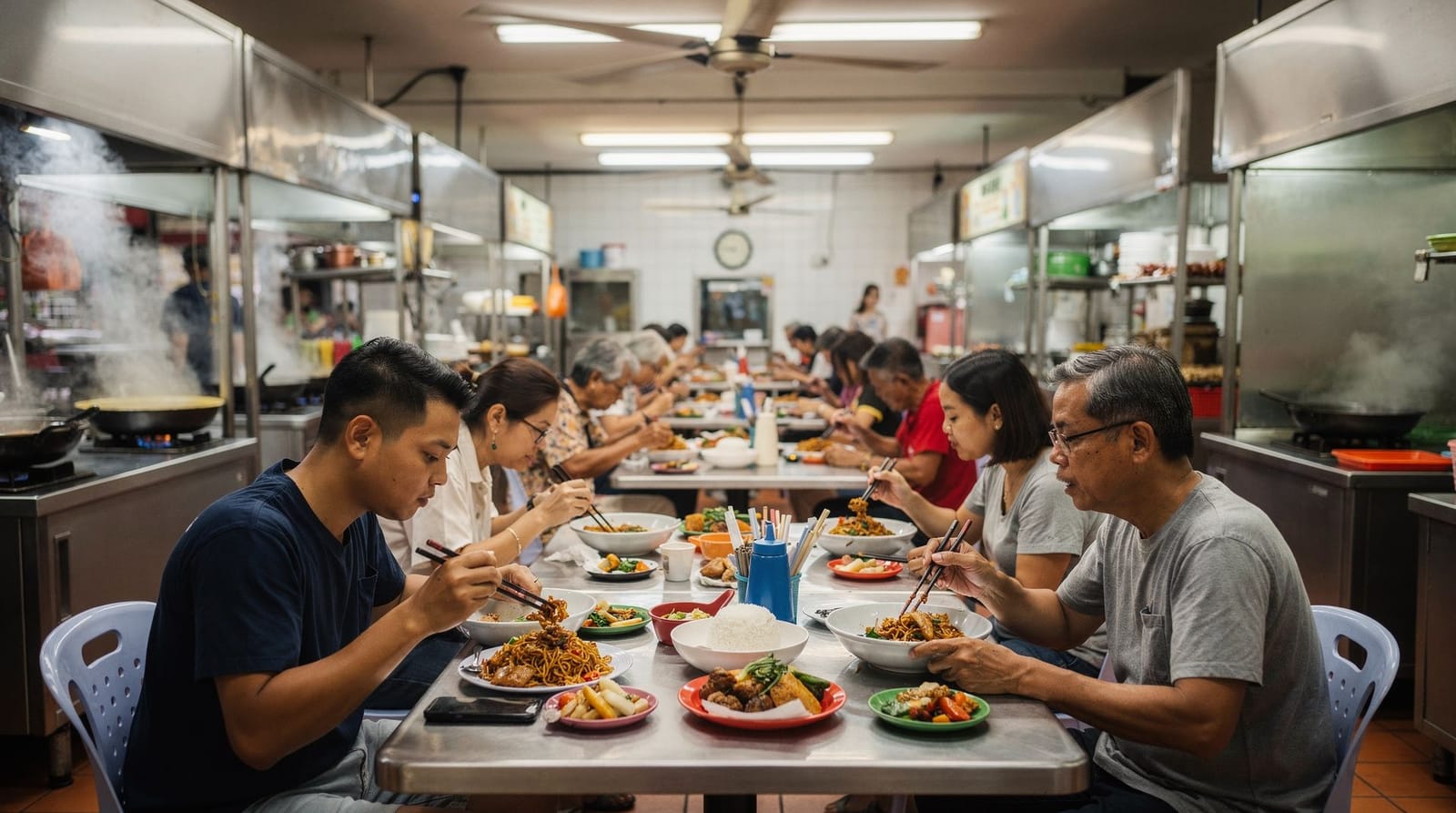
All major hawker centres are roofed but open-air — no walls, excellent through-ventilation, and you can hear the rain without getting wet. A rainy afternoon at Maxwell Food Centre or Chinatown Complex is one of the most authentic Singapore experiences there is. Order a bowl of laksa and wait out the downpour.
Top choices:
- Maxwell Food Centre (MRT: Chinatown): Tian Tian chicken rice, char kway teow
- Old Airport Road Food Centre (taxi from Paya Lebar MRT): The most local-feeling, the largest
- Lau Pa Sat (MRT: Raffles Place): Central location, excellent satay, good for evenings
- Tiong Bahru Market (MRT: Tiong Bahru): Best for a morning downpour
Full guide: Best hawker centres in Singapore.
National Gallery Singapore
Singapore’s flagship visual arts museum occupies the restored colonial Supreme Court and City Hall buildings at St Andrew’s Road. The permanent collection covers Southeast Asian art from the 19th century to present, with strong Singapore and regional holdings. The architecture itself is worth seeing — the space between the two buildings was covered with a roof and turned into an atrium.
Cost: SGD 20 adult (permanent galleries). MRT: City Hall (EW13/NS25). Guide: National Gallery Singapore.
Asian Civilisations Museum
The best all-round museum in Singapore for understanding the region’s history. Covering 35,000 years of Asian civilisations, the collection is strong on Tang dynasty ceramics, Hindu sculpture, and Islamic applied arts. Housed in a restored colonial building (Empress Place) on the Singapore River waterfront.
Cost: SGD 20 adult. MRT: Raffles Place (EW14/NS26). Guide: Asian Civilisations Museum Singapore.
National Museum of Singapore
Singapore’s oldest museum (1887), focused on the nation’s history and cultural heritage. The Singapore History Gallery covers 700 years from the island’s founding to independence. The permanent galleries are partially free.
Cost: Permanent galleries SGD 15 (some sections free). MRT: Dhoby Ghaut (CC1/NE6/NS24). Guide: National Museum of Singapore.
Jewel Changi Airport
Nominally an airport — practically a spectacular indoor attraction. The Rain Vortex (world’s tallest indoor waterfall, 40 metres) runs from 10 am with light shows at night. The five-level Shiseido Forest Valley tropical garden is free to explore. Canopy Park paid activities on the roof cost SGD 12–38. A 30-minute MRT ride from the city.
Particularly good for families on a rainy day. Guide: Jewel Changi Airport with kids.
Singapore’s malls
Singapore’s air-conditioned shopping malls are among the best in the world for rainy-day browsing. Not just retail — many have cinemas, food courts, escape rooms, and entertainment. Top options:
- VivoCity (MRT: HarbourFront): Singapore’s largest mall; rooftop playground and pool with Sentosa views
- ION Orchard (MRT: Orchard): Premium retail plus basement food court
- Bugis Junction / Bugis+ (MRT: Bugis): Good street-food-style options, less premium than Orchard
- 313@Somerset (MRT: Somerset): Good mid-range mix
Night Safari (rain usually fine)
Night Safari operates in the rain — tropical downpours are part of the experience. The tram has no roof so light rain during the ride is possible; bring a thin waterproof layer. The animal activity actually increases slightly before and after rainfall. Only serious sustained thunder/lightning causes issues.
Outdoor activities that work in light rain
Singapore River walk
The riverfront at Boat Quay and Clarke Quay has continuous covered awnings and restaurants. Walking from Clarke Quay to Merlion Park in light rain with a small umbrella is entirely doable — and the river looks dramatic with grey skies.
Chinatown and Little India covered walkways
The five-foot-way covered pavements mean you can walk several hundred metres through both neighbourhoods without significant rain exposure. Good for a browsing walk between heavy showers.
What to skip on a truly wet day
- Gardens by the Bay outdoor areas (Supertree Grove paths are exposed during heavy rain)
- Southern Ridges / Henderson Waves (forest path becomes slippery in heavy rain)
- East Coast Park (exposed seafront; no shelter)
- Sentosa beaches (obviously)
- Pulau Ubin day trip (the bumboat does not run in rough weather; island trails are muddy)
- MacRitchie forest trails (can be slippery and muddy after rain)
Rain versus haze: not the same problem
Visitors sometimes conflate Singapore’s tropical rain with its occasional haze episodes, but they are separate issues with different implications. Rain is a short-term inconvenience solved by ducking indoors for an hour. Haze — smoke drifting from agricultural burning in Sumatra and Kalimantan, most likely August–October in dry years — reduces air quality and visibility over days, not minutes, and is worth checking specifically via the NEA’s PSI (Pollutant Standards Index) at haze.gov.sg rather than a standard rain forecast.
On a hazy day, outdoor exertion should be limited even if it is not raining at all, and sensitive groups (young children, older travellers, anyone with respiratory issues) should stay mostly indoors. The two conditions can occur together in bad years, which is when Singapore feels least comfortable outdoors — fortunately this combination is uncommon in any given trip.
Rainy-day photography
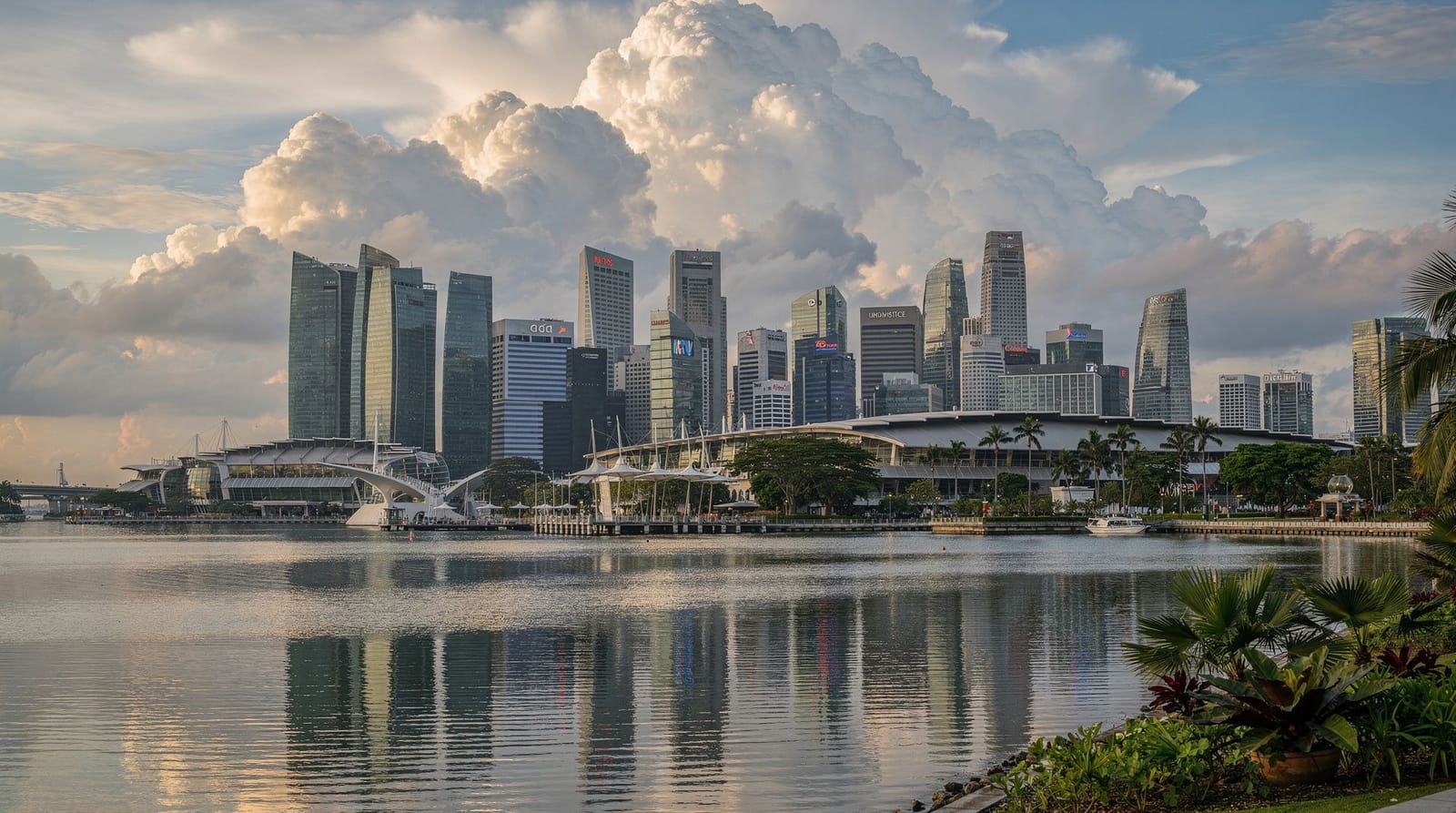
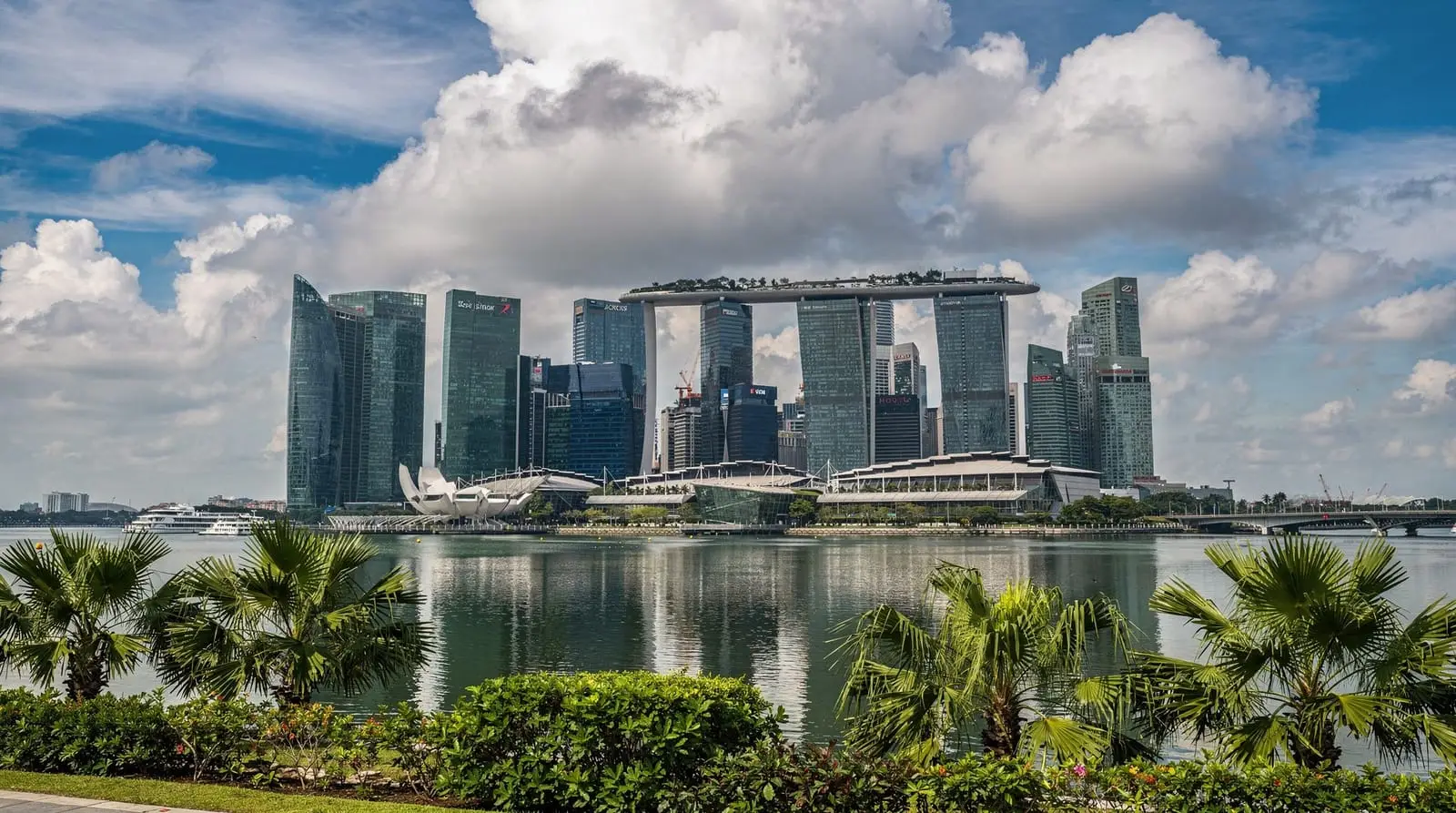
Counterintuitively, rain often produces Singapore’s most striking photographs. Wet pavements reflect neon signage and skyline lights in Chinatown and along the river; the Marina Bay skyline against a dramatic grey storm front photographs better than a flat blue-sky day; and the misty interior of Cloud Forest looks genuinely otherworldly with condensation on the glass. A simple plastic bag or a dedicated rain sleeve protects a camera or phone for the brief dash between shelter points, and shooting from just inside a covered walkway looking out at the rain is a reliable way to get an atmospheric shot without getting equipment wet.
Sample rainy-day itinerary
9:00 am: Hawker breakfast at Tiong Bahru Market (MRT: Tiong Bahru). Kaya toast, kopi, char kway teow. 10:30 am: MRT to Bayfront. Gardens by the Bay Cloud Forest and Flower Dome (2 hours). 1:00 pm: Lunch at Satay by the Bay (roofed outdoor hawker area at Gardens, SGD 8–15). 2:30 pm: ArtScience Museum teamLab Future World (1.5–2 hours, SGD 23–38). 5:00 pm: Underground walkway back to the city. Shopping or rest at hotel. 7:00 pm: Dinner at hawker centre — Lau Pa Sat (MRT: Raffles Place). 8:00 pm: If rain has cleared: Supertree Grove Garden Rhapsody (7:45 pm or 8:45 pm, free).
Total cost: SGD 50–80 per person.
Practical gear for Singapore rain
- Umbrella: Essential. Buy one at any convenience store (7-Eleven, FairPrice) for SGD 8–15. Hotels often lend umbrellas.
- Waterproof layer: A light rain poncho or packable jacket takes up no space. Singapore rain is warm — you will not be cold, just wet.
- Waterproof bag: For electronics. A heavy shower in a covered walkway gap is very wet for five seconds.
- Quick-dry clothes: Anything cotton-polyester blend. Pure cotton becomes heavy and miserable quickly. Singapore is humid even without rain.
Rainy season travel tips by month
| Month(s) | Rain pattern | Planning note |
|---|---|---|
| November | Wettest — rain most days, often multiple showers | Build flexibility into daily plans; treat indoor attractions as the base |
| December–January | Still wet | Christmas/CNY period brings more indoor entertainment; Gardens by the Bay often has themed light installations |
| February | Driest month of the wet season | A good window even within the broader monsoon period |
| June–September | Driest overall | Afternoon thunderstorms still occur; best months for outdoor-heavy itineraries |
| October | Transitional, can be wet | Haze season (Sumatran fires) peaks here; check NEA PSI at haze.gov.sg daily |
The rainy-day itinerary in detail: Singapore rainy day itinerary.
Reading Singapore’s weather forecast like a local
Locals rarely check a general forecast and more often glance at the NEA’s short-term rain radar (weather.gov.sg or the myENV app), which shows live rain movement across the island in 30-minute blocks — genuinely more useful than a daily forecast, since a “70% chance of rain” day might mean one 45-minute downpour at 3 pm and clear skies otherwise. If you are planning an outdoor-heavy afternoon (Gardens by the Bay outdoor areas, Southern Ridges, a river walk), checking the radar 30–60 minutes ahead lets you time your route around the rain cell rather than cancelling the whole plan. This single habit does more to rain-proof a Singapore day than any packing list.
When rain becomes genuinely difficult
Most Singapore rain lasts 30–90 minutes and then clears. The exceptions:
Sustained monsoon rain: During heavy Northeast Monsoon events, rain can last 4–8 hours. These days are uncommon but happen. Check the NEA weather forecast (weather.gov.sg) the night before outdoor-intensive days.
Haze plus rain: September–October in El Niño years can bring simultaneous haze (from Sumatra fires) and intermittent rain, creating a humid, grey, reduced-visibility experience. Check both PSI and rainfall probability.
Flash flooding: Singapore has excellent drainage, but very heavy rainfall (50+ mm in an hour) can cause brief flash flooding in low-lying areas, particularly around Orchard Road (which has flooded during extreme events despite flood mitigation works). This is rare and brief — most visitors never encounter it.
For day-to-day planning in any weather: Things to do in Singapore and Singapore weather month by month.
Frequently asked questions about Singapore in the rain
Is Singapore worth visiting during the monsoon season?
Yes. The Northeast Monsoon (November–January) brings more sustained rain but still allows for most of the city’s best experiences. Paid attractions are indoors; hawker centres are roofed; MRT and taxis handle transport. The main practical impact is limiting outdoor walks to morning and evening. Full year guide: Singapore weather month by month.
Does the Night Safari run in rain?
Yes, including light to moderate rain. The tram has no roof so guests may get wet during heavy downpours. Serious sustained lightning delays the tram but does not cancel the walking trails. Night Safari very rarely cancels entirely.
What is the best time of day to avoid rain in Singapore?
Early mornings (6–10 am) are generally the clearest window. Afternoon thunderstorms are most common between 2–6 pm. Evening (after 7 pm) is usually clear, which is part of why the Supertree Grove light show (7:45 pm) is consistently reliable.
Can you visit the Botanic Gardens in rain?
The tree canopy provides reasonable natural shelter in light rain. The Botanic Gardens are genuinely beautiful in misty or overcast conditions. Avoid the open Swan Lake area in heavy rain; the covered heritage buildings near the main gate provide shelter. Free, of course.
Are hawker centres comfortable in rain?
Very. All major hawker centres are roofed but open-air — no walls, good air circulation, and the ambient noise of rain on the roof is part of the experience. You can eat comfortably through any rain event. Hawker centres in Singapore are explicitly designed to function in tropical conditions. A downpour is when you order a second dish and wait it out.
Does rain affect the Singapore River cruise?
Light rain does not cancel the river cruise. Heavy rain with lightning may cause a temporary halt. The boats do not have roofs — if it is raining at departure time, captains typically wait 15–20 minutes to see if it clears. For evening cruises, this is common and the wait is usually short.
What is the best museum to visit on a very rainy day in Singapore?
National Gallery Singapore is the best choice for a sustained rainy-day museum visit — it is one of the largest museums in Southeast Asia, covering Southeast Asian art from the 19th century to contemporary. You can spend 3–4 hours inside without rushing. The building also has good café options.
Rainy season travel tips by month
November (wettest): Expect rain most days, often multiple showers. Build flexibility into your daily plans. Indoor attractions as your base; outdoor activities as bonus. December–January: Still wet; the Christmas and Chinese New Year periods mean more indoor entertainment options are running. Gardens by the Bay often has themed light installations. February: The driest month — a good window even in the broader wet season. June–September: Driest overall, though afternoon thunderstorms still occur. The best months for outdoor itineraries. October: Transitional; can be wet. The haze season (smoke from Sumatran fires) peaks here and can limit outdoor visibility. Check NEA PSI (haze.gov.sg) daily.
The rainy-day itinerary in detail: Singapore rainy day itinerary.
When rain becomes genuinely difficult
Most Singapore rain lasts 30–90 minutes and then clears. The exceptions:
Sustained monsoon rain: During heavy Northeast Monsoon events, rain can last 4–8 hours. These days are uncommon but happen. Check the NEA weather forecast (weather.gov.sg) the night before outdoor-intensive days.
Haze plus rain: September–October in El Niño years can bring simultaneous haze (from Sumatra fires) and intermittent rain, creating a humid, grey, reduced-visibility experience. Check both PSI and rainfall probability.
Flash flooding: Singapore has excellent drainage, but very heavy rainfall (50+ mm in an hour) can cause brief flash flooding in low-lying areas, particularly around Orchard Road (which has flooded during extreme events despite flood mitigation works). This is rare and brief — most visitors never encounter it.
For day-to-day planning in any weather: Things to do in Singapore and Singapore weather month by month.
Top experiences
Bookable activities with verified prices and instant confirmation on GetYourGuide.