Asian Civilisations Museum Singapore: honest review 2026
Singapore: National Gallery entry tickets
Is the Asian Civilisations Museum worth visiting?
Yes, and it is probably Singapore's most underrated museum. The permanent collection covering trade, religion, and material culture across Asia is genuinely impressive. Admission is SGD 20 (free for residents on Fridays 7–9 pm). Allow 2–3 hours. Better than most visitors expect, especially for anyone interested in Asian history and the maritime Silk Road.
Quick answer: The Asian Civilisations Museum is Singapore’s most underrated major museum. If Asian history and art interest you at all, it is worth the SGD 20. The Tang Shipwreck alone justifies the visit. Plan 2–3 hours.
| Where | 1 Empress Place, Civic District, north bank of the Singapore River |
| Cost | SGD 20 adult, SGD 15 child (6–12), free under 6 |
| Time needed | 2–3 hours |
| Getting there | Raffles Place MRT, Exit H, 5-minute walk |
| Best time | Friday evening (open till 9pm, quieter) |
What is the Asian Civilisations Museum
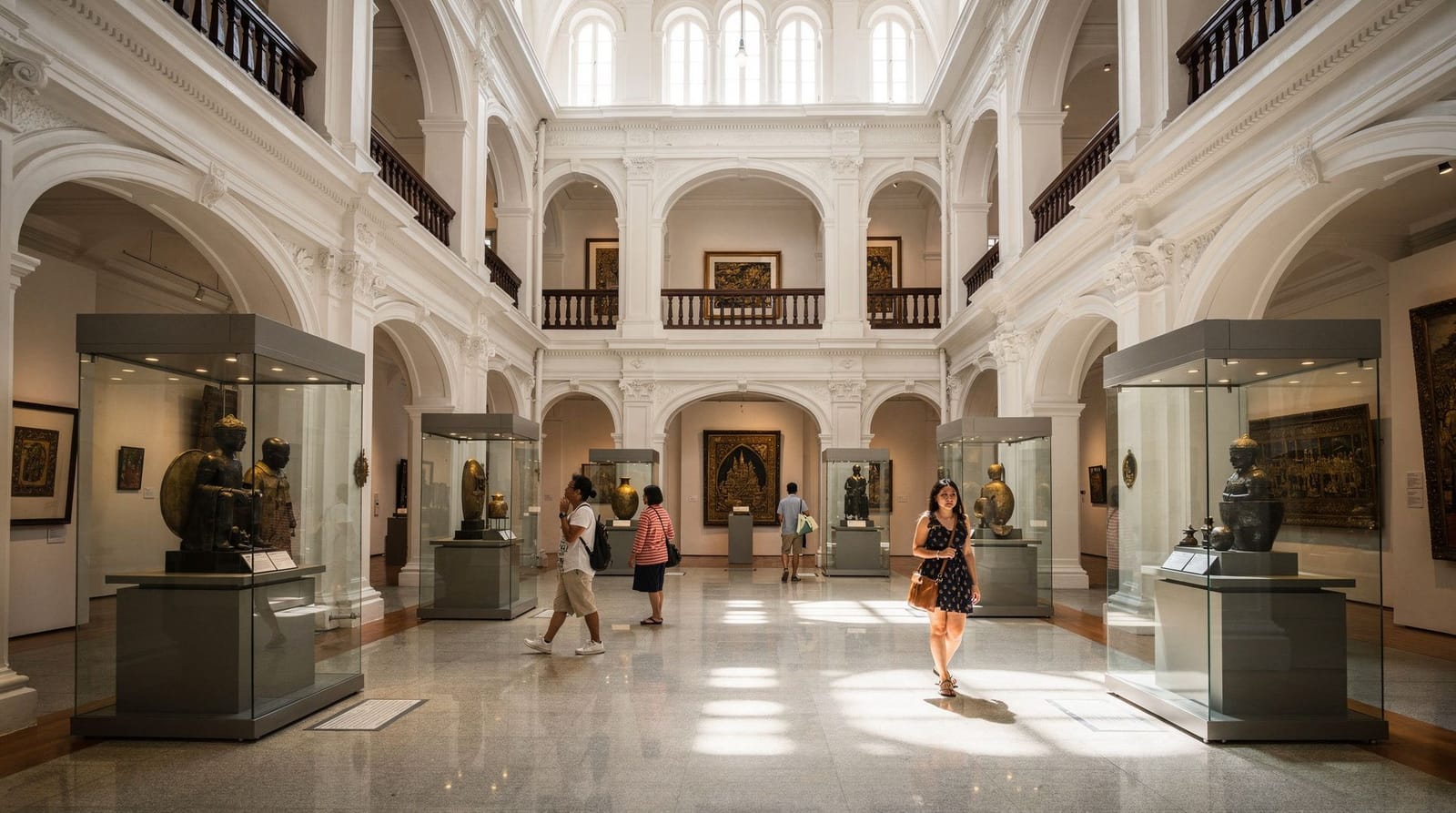
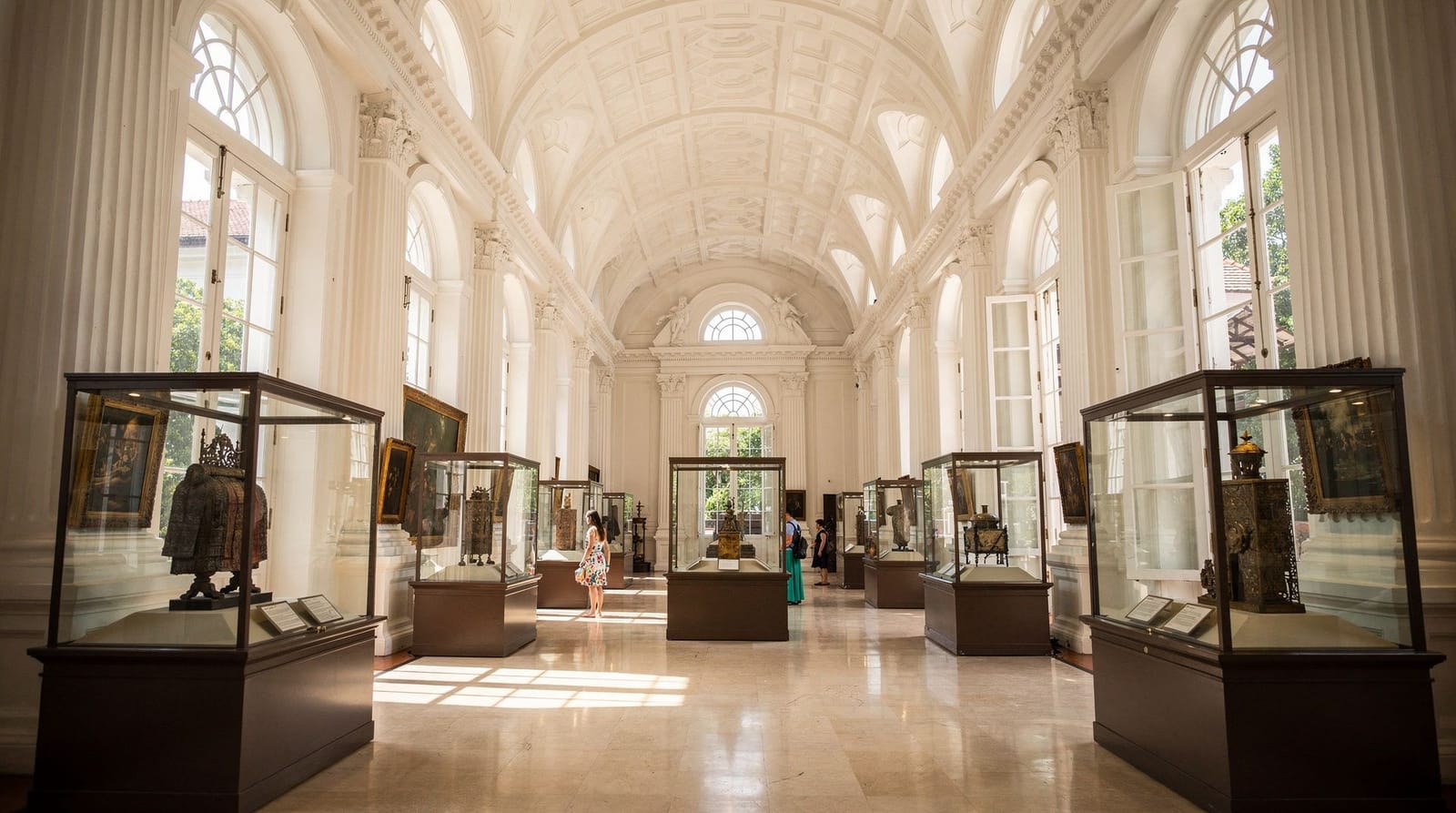
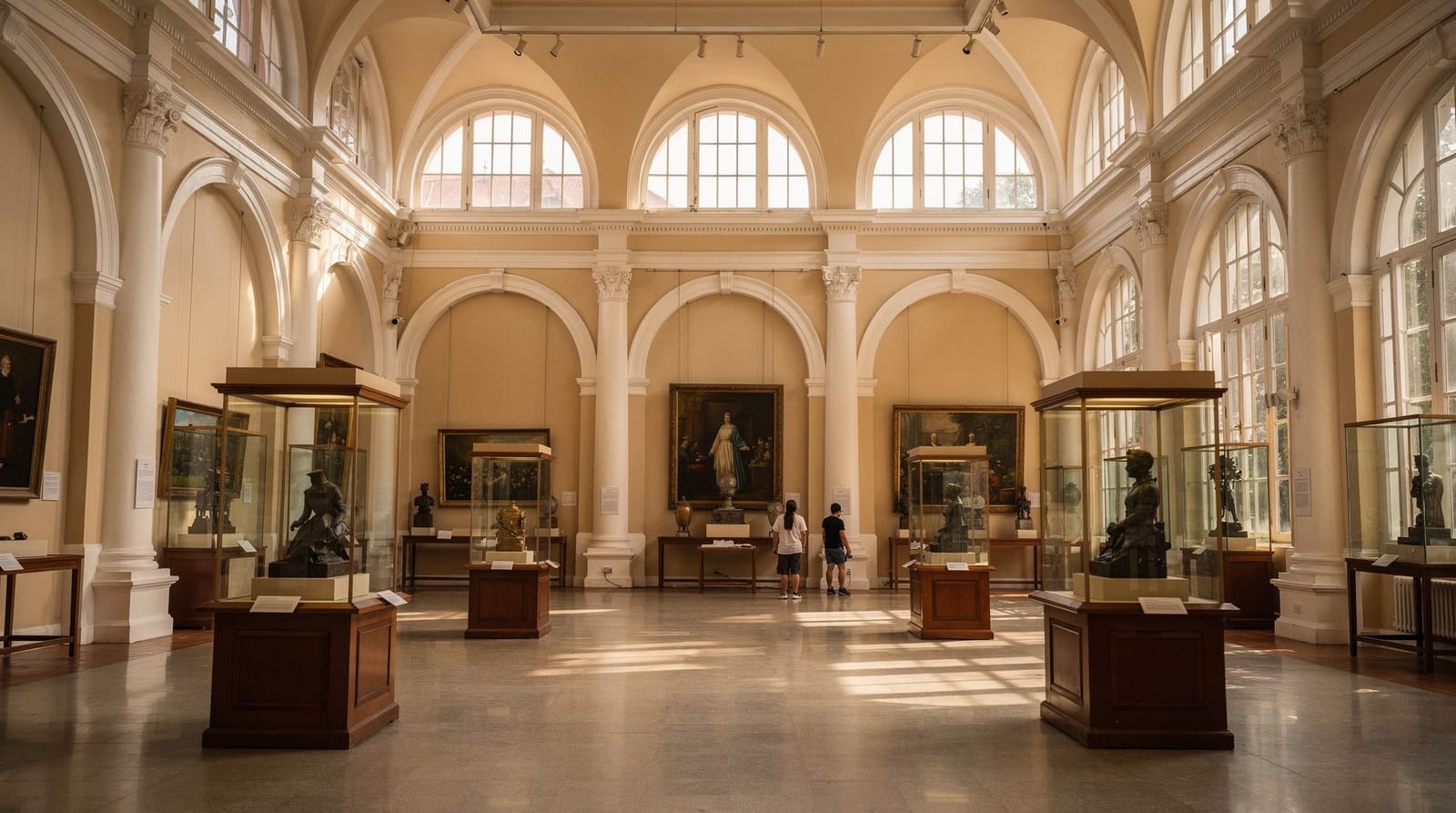
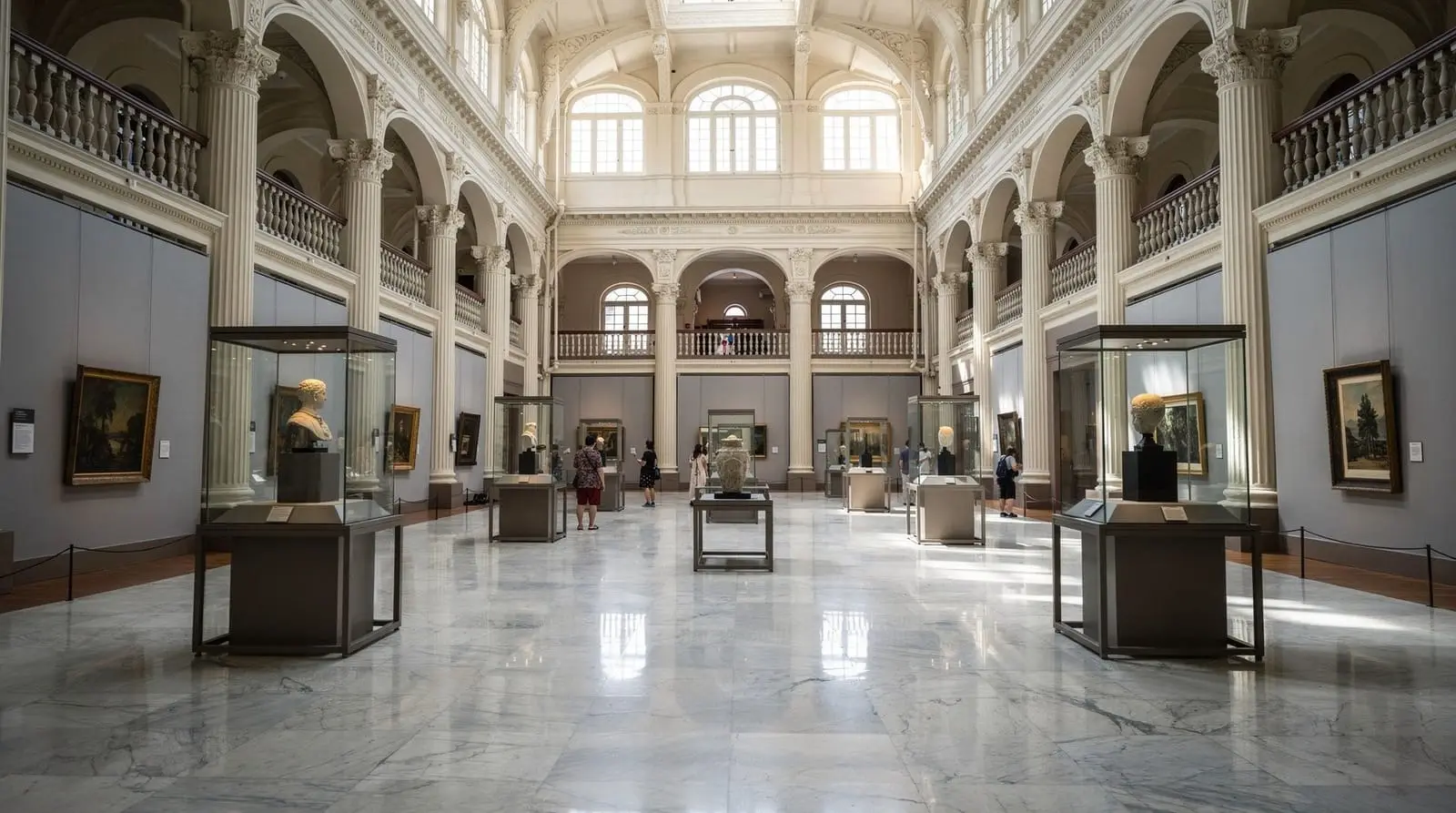
The Asian Civilisations Museum (ACM) opened in 1997 and moved to its current home in the Empress Place Building in 2003. The building itself is a colonial-era neoclassical structure on the north bank of the Singapore River — one of the best-preserved Victorian-era government buildings in Southeast Asia, and an atmospheric setting for what is inside.
ACM’s mission is to explore the material cultures, trade networks, and religious histories of Asia — specifically the Asian civilisations that shaped Singapore and the broader region. It is Singapore’s only dedicated museum covering pan-Asian heritage and it does so with more rigour and depth than visitors typically expect.
The Tang Shipwreck: the unmissable collection
The Tang Shipwreck is the centrepiece of ACM and one of the most remarkable archaeological collections in Southeast Asia. In 1998, a 9th-century Arab dhow was discovered on Belitung Island in the Java Sea by Indonesian fishermen. The vessel was sailing from Tang Dynasty China (possibly the port of Guangzhou) westward — carrying a commercial cargo of approximately 60,000 pieces of Chinese ceramics, gold and silver vessels, and other trade goods.
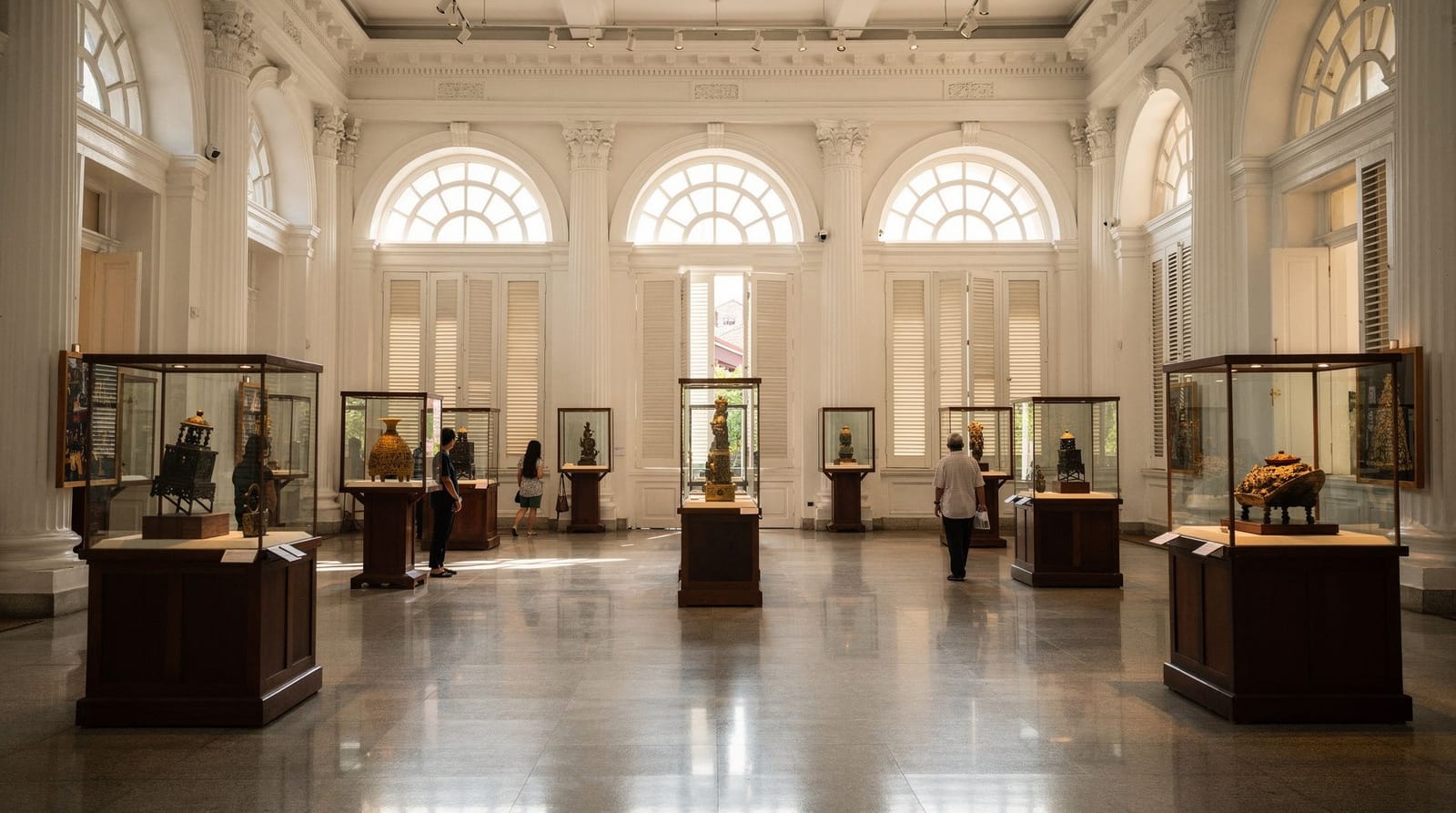
The collection at ACM includes the finest pieces from that cargo: Changsha bowls with distinctive green-splashed decoration, Tang white porcelain, a remarkable group of gold and silver vessels including a near-complete tea service, and a set of items suggesting the dhow was carrying goods for the elite markets of Abbasid Baghdad and beyond.
What makes this collection extraordinary is what it demonstrates: a fully functioning commercial trade network connecting Tang China with the Islamic world in the 9th century — six hundred years before Europeans arrived in Southeast Asian waters. The ACM gallery contextualises this well, with interpretive panels that explain the dhow construction (sewn timbers, no nails), the trade routes, and the archaeological significance without being dry.
Honest assessment: This gallery is genuinely world-class. The Tang Shipwreck is a collection that would attract major attention at the British Museum or the Smithsonian. In Singapore, it is often overlooked by visitors who do not realise it exists. Set aside 45–60 minutes here.
The permanent collection galleries
Beyond the Tang Shipwreck, ACM’s permanent collection is arranged across several galleries exploring Asia’s religious heritage, trade, and material culture:
Ancient religions of Asia: Buddhist, Hindu, and Taoist art spanning India, Southeast Asia, China, and Japan. The Buddhist sculpture collection is particularly strong, with pieces from India, Cambodia, Java, and Thailand showing the spread of Buddhism via trade routes.
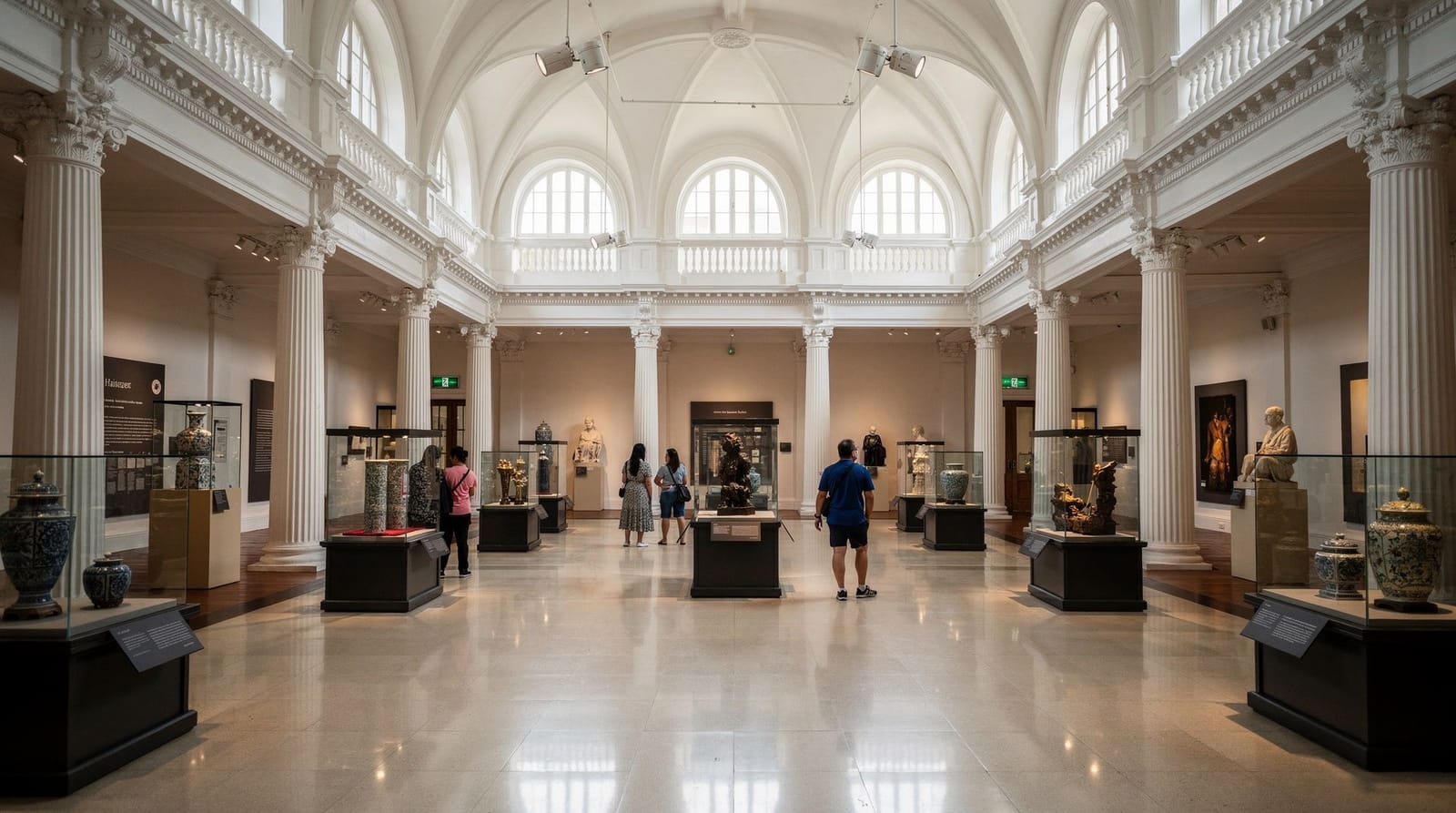
China in Southeast Asia: Explores the Chinese diaspora and its cultural impact on Singapore and the surrounding region — ceramics, furniture, textiles, and domestic objects from the Peranakan culture that developed from Chinese-Malay intermarriage. (For dedicated Peranakan content, see Peranakan Museum Singapore.)
West Asia and the Islamic world: An exploration of the Islamic heritage of Southeast Asia — particularly significant given Singapore’s Malay-Muslim community and the historical role of the Arab merchants who traded across the Indian Ocean.
Southeast Asian courts: Royal regalia, textiles, and decorative arts from the courts of the Malay Peninsula, Java, Bali, and the Philippines. Some of the more visually striking objects in the museum are here — gilded ceremonial objects, elaborate kris daggers, and royal textiles.
The colonial-era building itself: The Empress Place Building dates from 1865 and was used by the British colonial government and later the Singapore government. The architecture is worth attention as you move through galleries — high ceilings, ventilation corridors, and period ironwork.
The riverfront location
ACM sits at the junction of the Singapore River and Empress Place, a few hundred metres from the original Raffles Landing Site (where Stamford Raffles reputedly first set foot in Singapore in 1819). The waterfront promenade runs from ACM down to Cavenagh Bridge and on to the Asian Civilisations Museum Waterfront — a pleasant walk that connects to the Clarke Quay area.
The museum’s river-facing café has an excellent outdoor seating area. After a museum visit, the walk along the river to Clarke Quay takes 10–15 minutes and passes Boat Quay, one of Singapore’s historic trading wharves (see Clarke Quay nightlife for the nightlife options). The Singapore River cruise covers the bumboat tours that depart from nearby Boat Quay if you want a different perspective on this stretch of waterway.
ACM compared to other Singapore museums
Singapore has several major free national museums and ACM is one of the few that charges admission. Here is honest context:
vs National Museum of Singapore: Both are strong. The National Museum focuses specifically on Singapore’s history (strongly recommended for understanding the city). ACM is broader in geographic scope and has better individual objects. Both are worth visiting if you have 3+ days in Singapore.
vs National Gallery Singapore: The National Gallery (National Gallery Singapore) focuses on visual art — Southeast Asian and Singaporean paintings and works on paper. ACM focuses on material culture and historical objects. Different experiences for different interests.
Singapore: National Gallery entry ticketsvs Peranakan Museum: The Peranakan Museum (Peranakan Museum Singapore) is more specialised — entirely focused on Singapore’s Peranakan (Straits Chinese) culture. ACM’s collection is broader but has significant Peranakan elements. Both are worth visiting if the culture interests you.
vs ArtScience Museum: Completely different experiences. ArtScience Museum (ArtScience Museum & teamLab Future World) is contemporary digital art. ACM is history and archaeology. ACM is the stronger choice for anyone primarily interested in Asian history.
Singapore: ArtScience Museum at Marina Bay Sands ticketAt a glance: ACM vs Singapore’s other major museums
| Focus | Price | Best for | |
|---|---|---|---|
| Asian Civilisations Museum | Pan-Asian trade, religion, material culture | SGD 20 | History and archaeology enthusiasts |
| National Museum of Singapore | Singapore’s own history | Often free/low-cost | Understanding the city itself |
| National Gallery Singapore | Southeast Asian and Singaporean visual art | Varies | Art lovers |
| Peranakan Museum | Straits Chinese (Peranakan) culture | Ticketed | Specialised cultural interest |
| ArtScience Museum | Contemporary digital art and science | SGD 22–35 | Families, digital art fans |
Getting there
MRT: Raffles Place station (East-West and North-South Lines) is closest — take Exit H and walk toward the river (approximately 5 minutes). Clarke Quay station (North-East Line) is a 10-minute walk along the river.
By river taxi: Water taxis run along the Singapore River and stop near ACM. A pleasant way to arrive if you are already in the Clarke Quay or Marina Bay area.
Walking: From the Merlion Park, it is a 10-minute walk along the north bank of the river. From Clarke Quay, 10–15 minutes along the southern riverbank via Boat Quay.
Friday evening visits
Friday evenings (7–9 pm) are free for Singapore residents and a popular time for locals. For visitors, this is worth knowing for two reasons: the museum is open late (until 9 pm), and the reduced-crowd evening atmosphere works well for the exhibition spaces. The riverfront adjacent to ACM also has a pleasant evening energy — café tables outside and the river traffic creating an atmospheric setting.
If you are not a Singapore resident, the normal SGD 20 admission applies on Friday evenings, but the longer opening hours may be useful for fitting a museum visit into an evening.
Why the Tang Shipwreck matters beyond the objects themselves
It is worth spending a moment on why archaeologists and historians treat the Tang Shipwreck as more significant than its individual objects suggest. Before its discovery, direct physical evidence of large-scale maritime trade between Tang China and the Abbasid Islamic world was largely inferential — reconstructed from textual records and scattered finds rather than a single, dated, intact cargo. The wreck changed that: a securely dated snapshot of what was actually being shipped, in what quantities, and for what markets, all at once. This is part of why the collection is treated as a benchmark reference point in maritime archaeology rather than simply a beautiful set of ceramics, and it is worth keeping in mind as you move through the gallery — you are looking at primary evidence for a trade network that predates European involvement in Asia by centuries.
Practical tips
Allow time for the Tang Shipwreck gallery: Many visitors underestimate how much time this collection warrants. Do not treat it as a quick walk-through. The interpretive panels are among the best written in Singapore’s museum system.
Guided tours: ACM offers guided tours (check the website for current schedule and pricing) that cover the Tang Shipwreck and major galleries. For visitors interested in the history, a guided tour adds significant context.
The café and shop: The museum café overlooks the river and is a pleasant stop before or after. The museum shop is worth a browse for well-curated books on Asian art and history.
Combine with civic district: The Civic District area includes several other colonial-era landmarks — the nearby National Gallery Singapore in the old Supreme Court and City Hall buildings, Fort Canning (a 10-minute walk inland), and the Padang. A full civic district day combining ACM, the National Gallery, and a Fort Canning walk makes a strong history-focused day in Singapore.
Accessibility and practical comfort
The Empress Place Building was extensively renovated when ACM moved in, and the museum is fully accessible — lifts between all floors, accessible toilets, and step-free entry from the riverfront side. The galleries are air-conditioned throughout, which is a welcome break from Singapore’s heat mid-visit. Strollers are permitted in all galleries. For visitors planning an accessibility-focused Singapore trip more broadly, see accessible Singapore.
Solo visitors and quiet exploration
ACM works particularly well for solo travellers — the pace is entirely self-directed, the galleries are rarely crowded outside weekend afternoons, and the riverside café is a pleasant spot to sit alone with a coffee between galleries. If a slower, more contemplative museum morning appeals, ACM is a stronger solo choice than the busier ArtScience Museum. See solo travel Singapore for more on planning independent days in the city.
Fitting ACM into a wider Singapore plan
ACM rarely works as a stand-alone stop; it earns its place as one anchor in a day that mixes history, food and a little waterfront wandering. A few ways to use it, depending on how long you are in the city.
If you are building a first trip. The museum slots neatly into a first-timer route alongside the big-name sights. The Singapore for first-timers guide and the must-see list for first visits show where a museum morning fits against the headline attractions, and how many days in Singapore helps you decide whether you can afford the 2–3 hours at all. If you prefer a ready-made route, the Singapore first-timer itinerary and the 3-day itinerary both leave room for a museum stop in the Civic District.
If the weather turns. Singapore’s downpours can arrive with little warning, and a museum is one of the most comfortable places to wait one out. Keep ACM in mind as a fallback and read Singapore in the rain or the rainy-day itinerary for other indoor options that sit well beside it.
If you want more history around the visit. The building and its riverside setting make more sense once you know how the colonial town grew. Singapore history 101 gives the short version, and colonial Singapore walks through the landmarks that survive today, many of them a short stroll from the museum entrance.
If you want a longer cultural thread. Pair ACM with the museums in Singapore guide to compare what each institution does best, then let the free museums in Singapore page help you balance a paid ticket here against cheaper days elsewhere. For more heritage on foot, the ethnic quarters guide and the Chinatown guide extend the same themes of trade, migration and belief out into living neighbourhoods.
If you want a different view of the river. After the galleries, a ride on the water gives the Empress Place frontage a fresh angle; the bumboat rides guide explains the options, and Marina Bay sits just along the waterfront for an easy continuation into the evening.
Frequently asked questions about Asian Civilisations Museum
Is ACM worth visiting on a short Singapore trip?
If you have 3 or more days, yes — ACM is genuinely one of Singapore’s strongest museums and the Tang Shipwreck is a world-class collection. On a shorter trip (1–2 days), the Top attractions in Singapore guide can help you prioritise; ACM would not be the top priority for a 1-day visit but is excellent for culturally-oriented travellers with 2+ days.
What is the Tang Shipwreck and why is it significant?
The Tang Shipwreck (also known as the Belitung Shipwreck) is a 9th-century Arab dhow that sank in the Java Sea carrying approximately 60,000 pieces of Tang Dynasty Chinese trade goods. Discovered in 1998, it is one of the most significant maritime archaeological finds from the era of the original Silk Road. The collection demonstrates the scale and sophistication of trade between Tang China and the Islamic world — 600 years before European maritime empires.
Is there a Singapore museum pass covering ACM?
Check the official ACM website and SingapoRediscovers voucher schemes for any current bundled options. There is no permanent all-in-one museum pass covering Singapore’s major museums, but combination tickets and discount cards sometimes become available.
Can I take photographs inside ACM?
Photography is generally permitted throughout the museum for personal use. Flash photography is restricted near some objects. Check specific gallery notices.
How does ACM compare to international-standard history museums?
The Tang Shipwreck collection and the Ancient Religions of Asia galleries would be prominent in any European or American museum of comparable scope. The overall standard of curation, interpretive text, and object quality is genuinely high. ACM is not as large as the British Museum or the National Museum of Asian Art in Washington, but in terms of quality per gallery, it is very competitive.
What is the nearest hawker centre to ACM?
Lau Pa Sat (Telok Ayer Market) is approximately a 15-minute walk south through the CBD. Boat Quay immediately adjacent to ACM has restaurants at all price points. For genuine hawker food nearby, Lau Pa Sat guide covers the best options within walking distance.
Top experiences
Bookable activities with verified prices and instant confirmation on GetYourGuide.