Accessible Singapore: practical guide for visitors with disabilities
Singapore: Gardens by the Bay accessible guided tour
Is Singapore accessible for visitors with disabilities?
Singapore is one of the most accessible cities in Asia and competes with European capitals in disability infrastructure. The MRT has lifts at almost every station. Most major attractions (Gardens by the Bay, Marina Bay Sands, Zoo, USS) are fully wheelchair accessible. Grab is widely available for accessible transport needs. The main limitations are heritage shophouse areas (uneven ground, steps) and some older hawker centres with non-ideal layout.
Quick answer: Singapore is among Asia’s most accessible cities — MRT lifts at almost every station, major attractions wheelchair accessible, and Grab’s GrabAssist for accessible vehicles. The main gaps are older hawker centres and heritage shophouse areas with uneven ground. Overall accessibility infrastructure competes with Western European capitals.
| MRT | Lifts at ~95%+ of stations; check LTA Traveller app before travel |
| Best accessible area | Marina Bay waterfront — flat, paved, continuous path Merlion Park to Gardens by the Bay |
| Hardest area | Older hawker centres and heritage shophouses (Chinatown, Little India, Kampong Glam) |
| Accessible transport | Grab (GrabAssist), MRT, licensed taxis with pre-booking |
| Getting around overview | See getting around Singapore for full transport logistics |
Why Singapore is one of Asia’s most accessible cities
Singapore’s accessibility infrastructure reflects 30+ years of deliberate policy. The Enabling Masterplan (periodically updated, most recently 2030 vision) mandates progressive accessibility upgrades across public transport, public buildings, and recreational spaces. The result is a city where visitors with mobility, visual, or hearing impairments can navigate with considerably less difficulty than in most Asian and many European cities.
This does not mean Singapore is perfect — older areas, heritage conservation zones, and some hawker centres present genuine challenges. But the baseline is unusually good, and the improvement trajectory is consistent.
How Singapore compares to nearby countries
For visitors weighing Singapore against other Southeast Asian stops on a longer trip, it is worth knowing that the accessibility gap between Singapore and its neighbours is substantial. Bangkok, Kuala Lumpur, and Jakarta all have pockets of good accessibility (newer malls, some MRT/LRT lines) but nothing approaching Singapore’s consistency across an entire city. If accessibility is a significant factor in trip planning and your itinerary includes multiple Southeast Asian cities, treating Singapore as the most reliably accessible base and building day trips or shorter stops elsewhere around it is a sound strategy.
MRT accessibility: detailed guide
Lifts and level access
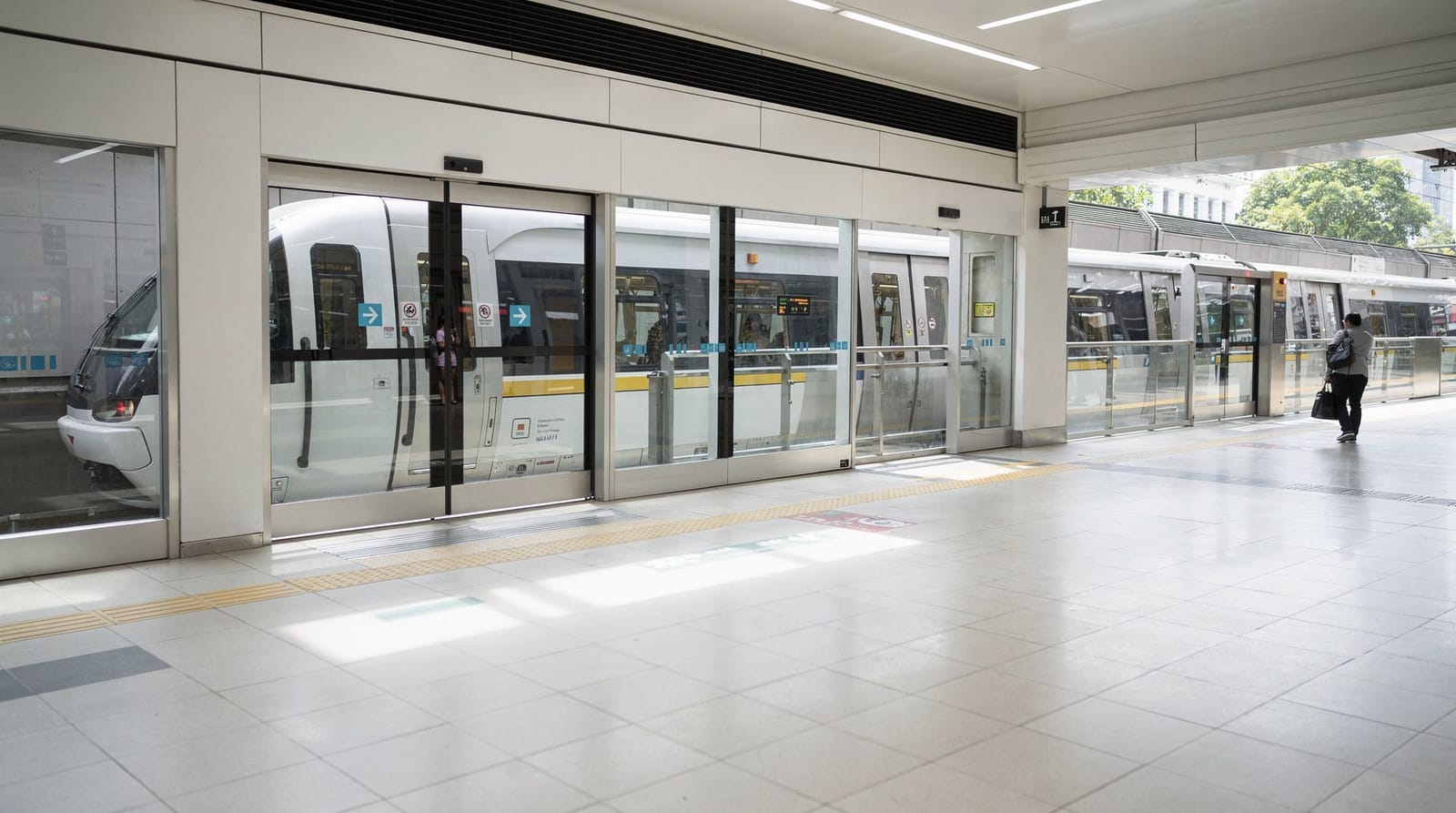
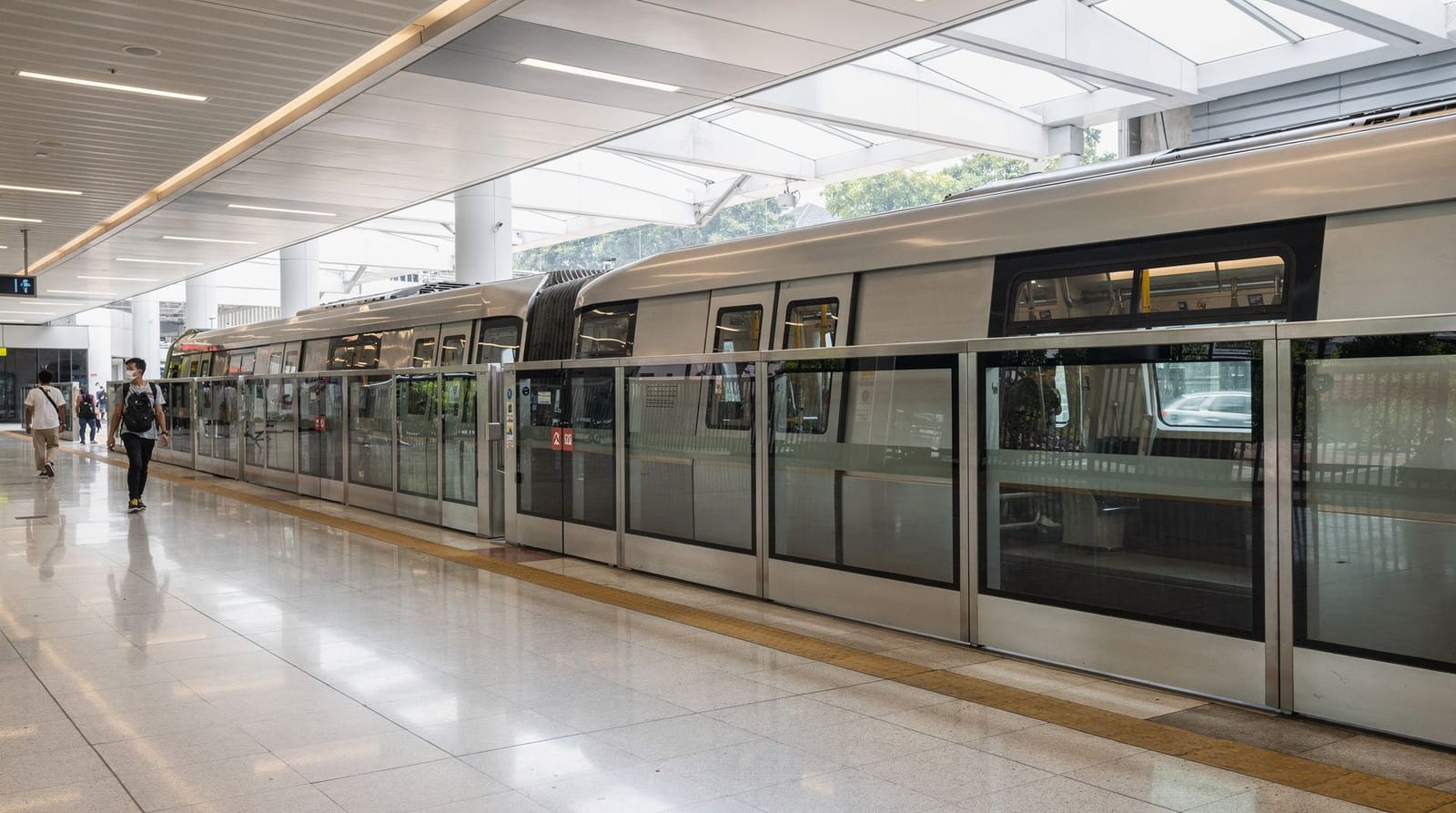
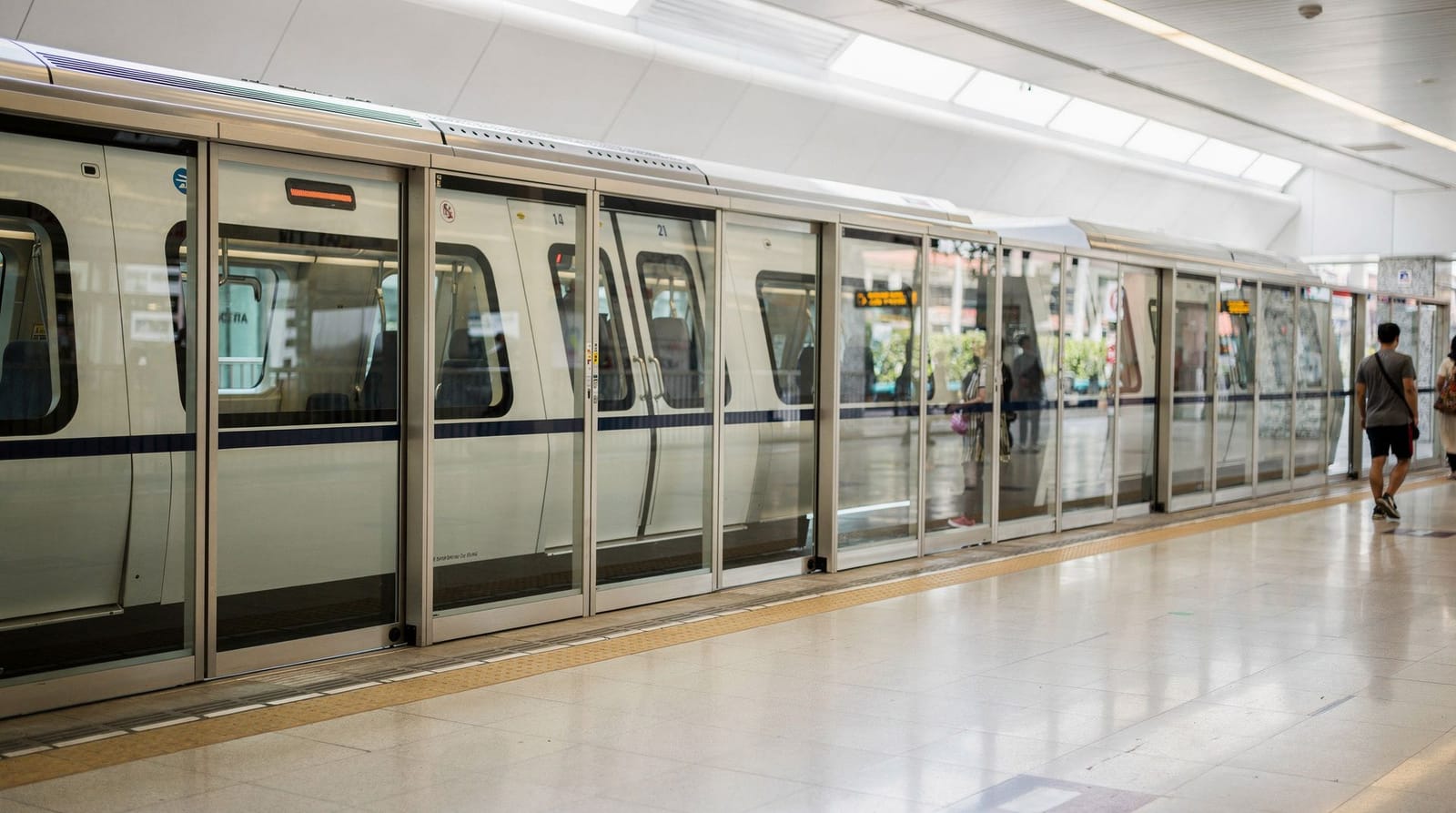
Almost every MRT station in Singapore has at least one lift connecting street level, concourse level, and platform level. The Land Transport Authority (LTA) maintains an ongoing lift upgrade programme — as of 2026, approximately 95%+ of stations have lift access.
To check lift status before travel:
- LTA Traveller app (iOS/Android) shows real-time lift availability
- SG Buses website has a station accessibility filter
- Google Maps labels MRT stations as accessible/not accessible based on lift presence
Platform gaps: MRT platform gaps between the train door and the platform edge are generally small (under 75mm) and manageable for most manual wheelchairs. Wider gaps occur occasionally on curved sections of line — platform staff can assist with a ramp if needed. Press the staff call button (present at all stations) for assistance.
Priority seating: Clearly marked reserved seats adjacent to doors in all carriages. These are for elderly passengers, passengers with disabilities, pregnant women, and passengers with young children. Enforcement is cultural (social expectation) rather than formal — Singaporeans generally respect priority seating.
Accessible MRT journeys for key tourist routes
| Journey | Accessible? | Notes |
|---|---|---|
| Changi Airport → City Hall | Yes | Lifts at Changi Airport station and City Hall |
| City Hall → Chinatown | Yes | Lifts at both stations |
| City Hall → Little India | Yes | Circle Line to Dhoby Ghaut, North-East to Little India — all stations have lifts |
| HarbourFront → (for Sentosa) | Yes | HarbourFront has full lift access; Sentosa Boardwalk is accessible |
| City Hall → Botanic Gardens | Yes | Circle Line stations all accessible |
| Any station → Mandai (Zoo) | Partial | Mandai MRT station under construction (check LTA updates) — bus from Choa Chu Kang MRT, accessible buses available |
Buses
Singapore’s bus fleet is progressively transitioning to fully low-floor accessible buses. Most SBS Transit and Tower Transit buses are now low-floor with kneeling capability and ramps. The SG Buses app shows which services currently use accessible buses. Audio announcements at bus stops are being rolled out under the SmartBus programme.
Grab accessibility: GrabAssist
Grab offers GrabAssist — a service matching passengers with drivers who have completed disability awareness training and whose vehicles can accommodate manual wheelchairs, scooters, or specific mobility needs.
How to book:
- Open Grab app and select “Transport”
- Choose “GrabAssist” from the service options
- Note: GrabAssist availability varies by time and area — it is a smaller fleet than regular GrabCar
- For important trips (airport transfers, medical appointments), book at least 30–60 minutes in advance
Alternative: GrabCar standard vehicles can often accommodate folding manual wheelchairs in the boot. When booking, use the “Notes for Driver” field to mention your wheelchair so the driver is prepared.
Pre-booked private transfers from Changi Airport with specific accessible vehicle requirements can be arranged through various licensed transfer companies — these are the most reliable option for airport arrivals if accessibility is critical.
Attraction accessibility: detailed overview
Gardens by the Bay
Full accessibility. The Supertree Grove outdoor area is flat, paved, and fully accessible. Cloud Forest and Flower Dome Conservatories both have accessible entrances, lifts between levels, and accessible toilet facilities. The Skyway bridge connecting Supertrees (SGD 14) is accessible via lift. Wheelchair hire is available at the ticketing counters.
Singapore: Gardens by the Bay accessible guided tourRecommended: Gardens by the Bay is one of the best major accessible tourist experiences in Singapore — genuinely world-class nature exhibits with no significant accessibility barriers.
Singapore Zoo and Mandai Wildlife Reserve
Singapore Zoo is designed as a walk-through open-concept zoo with wide pathways. The terrain includes gentle slopes in some areas. Most habitats are accessible by paved path, though some viewing areas require steps (accessible alternative views exist for most exhibits). Wheelchair rental is available at the Zoo entrance. Electric tram tours of the zoo grounds are accessible. The Night Safari tram ride is accessible.
Specific note: Some of the newer immersive exhibits have accessible viewing areas but not full interior access — check the Zoo website’s accessibility PDF for specific exhibit notes.
Universal Studios Singapore (USS)
USS Sentosa has a Rider’s Guide listing all ride accessibility information — height requirements, transfer requirements (some rides require transferring from wheelchair), and which rides allow wheelchair-aboard access.
Generally accessible (no transfer needed for most): Pantages Hollywood Theater (shows), Sesame Street Spaghetti Space Chase (small cars, easy transfer), Minion Café areas.
Transfer required: Battlestar Galactica, Transformers: The Ride, Jurassic World Adventure (most thrill rides require leaving wheelchair at a designated area and walking a few steps).
Guest Accessibility Service: USS provides a Guest Accessibility Service card allowing alternative boarding arrangements and queue accommodations for guests with disabilities. Obtain this at the entrance from USS Guest Services. This is free and available to anyone with a mobility, visual, hearing, or cognitive disability.
Singapore: Universal Studios Singapore entry ticketMarina Bay Sands
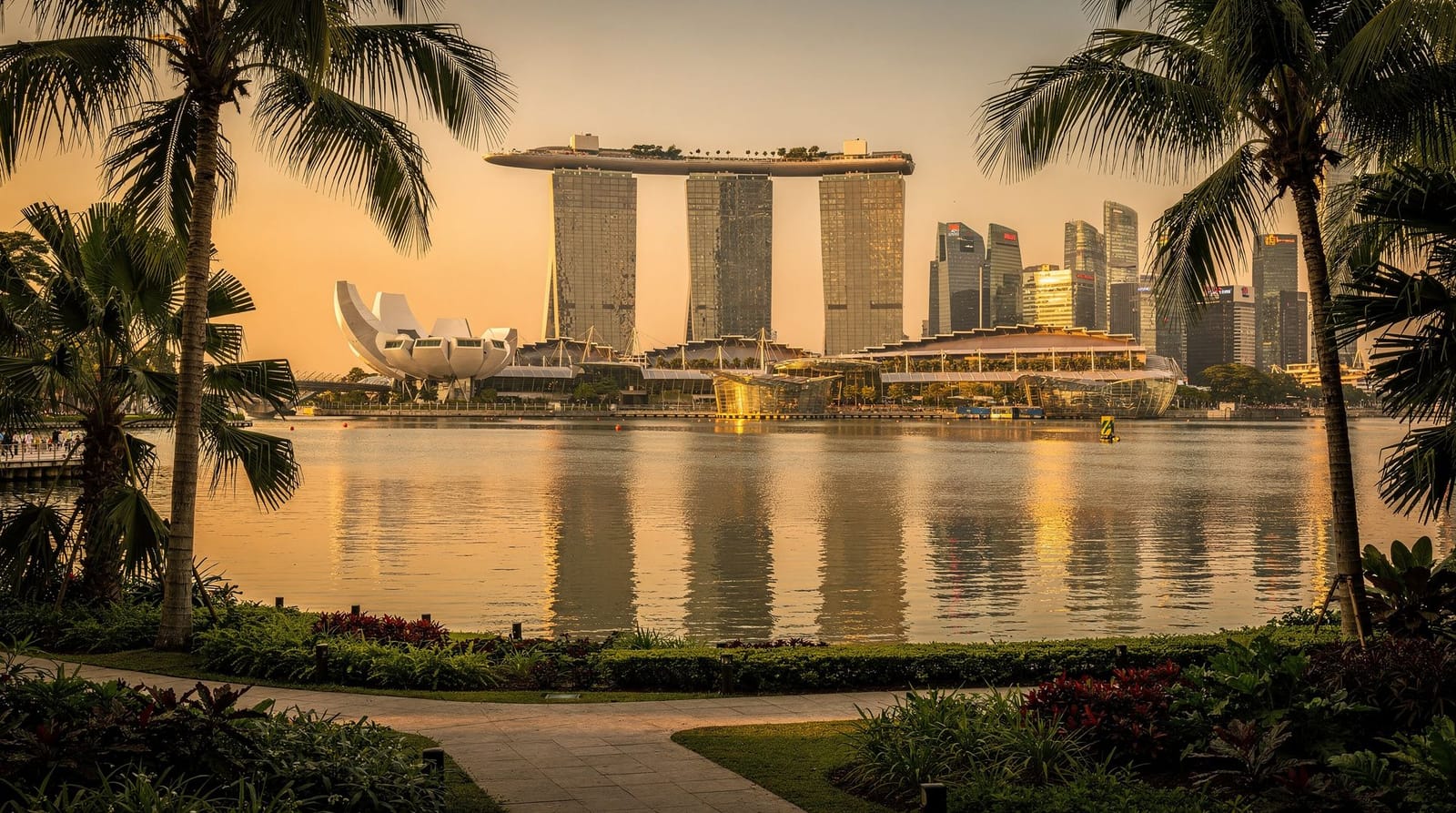
The Marina Bay Sands integrated resort is fully accessible throughout — casino, hotel lobbies, mall, and the SkyPark Observation Deck all have lift access. The SkyPark lift is available for guests who cannot use the stairs. The outdoor infinity pool (guests only) requires hotel room key access; accessible rooms are available with advance booking.
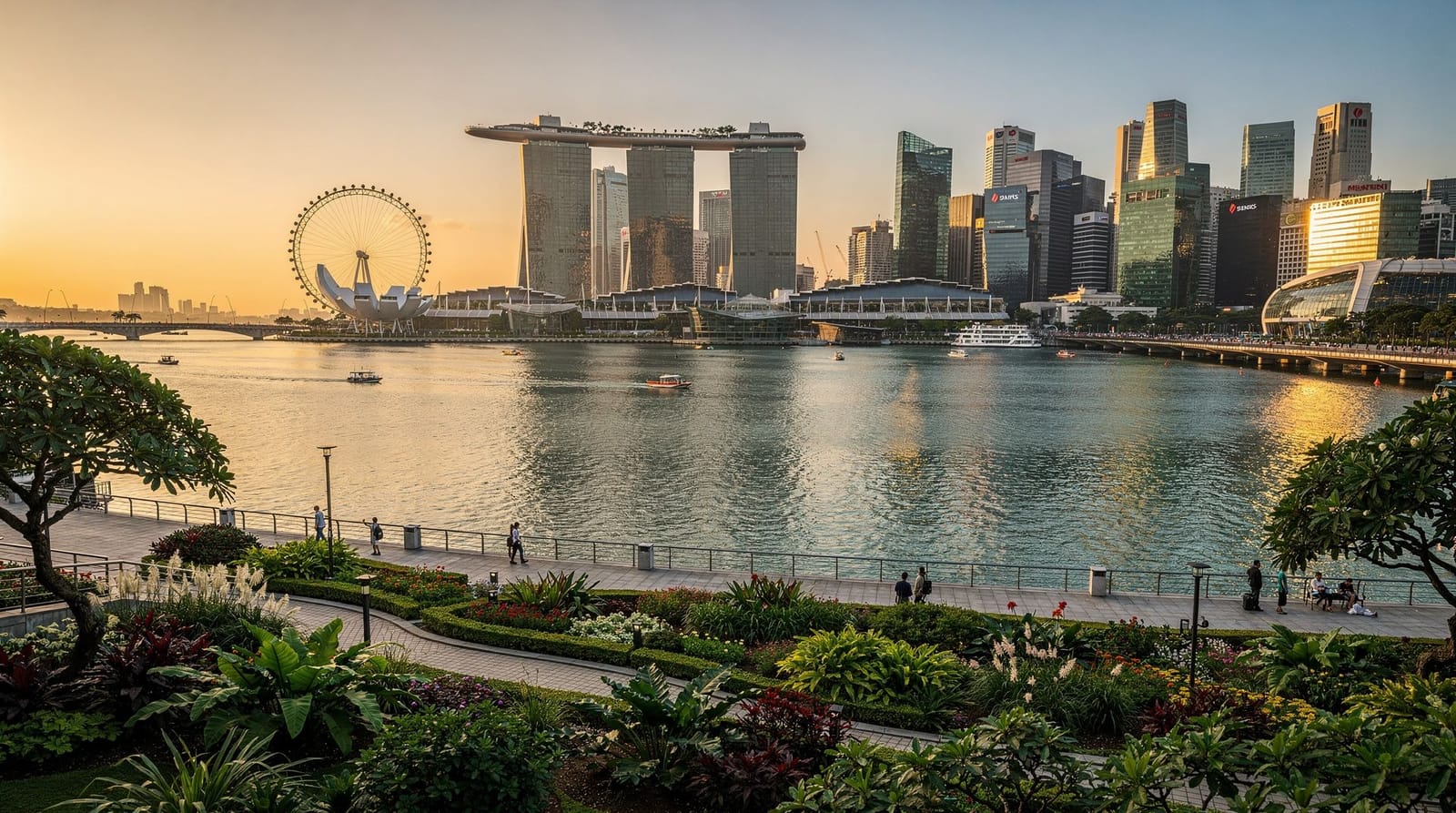
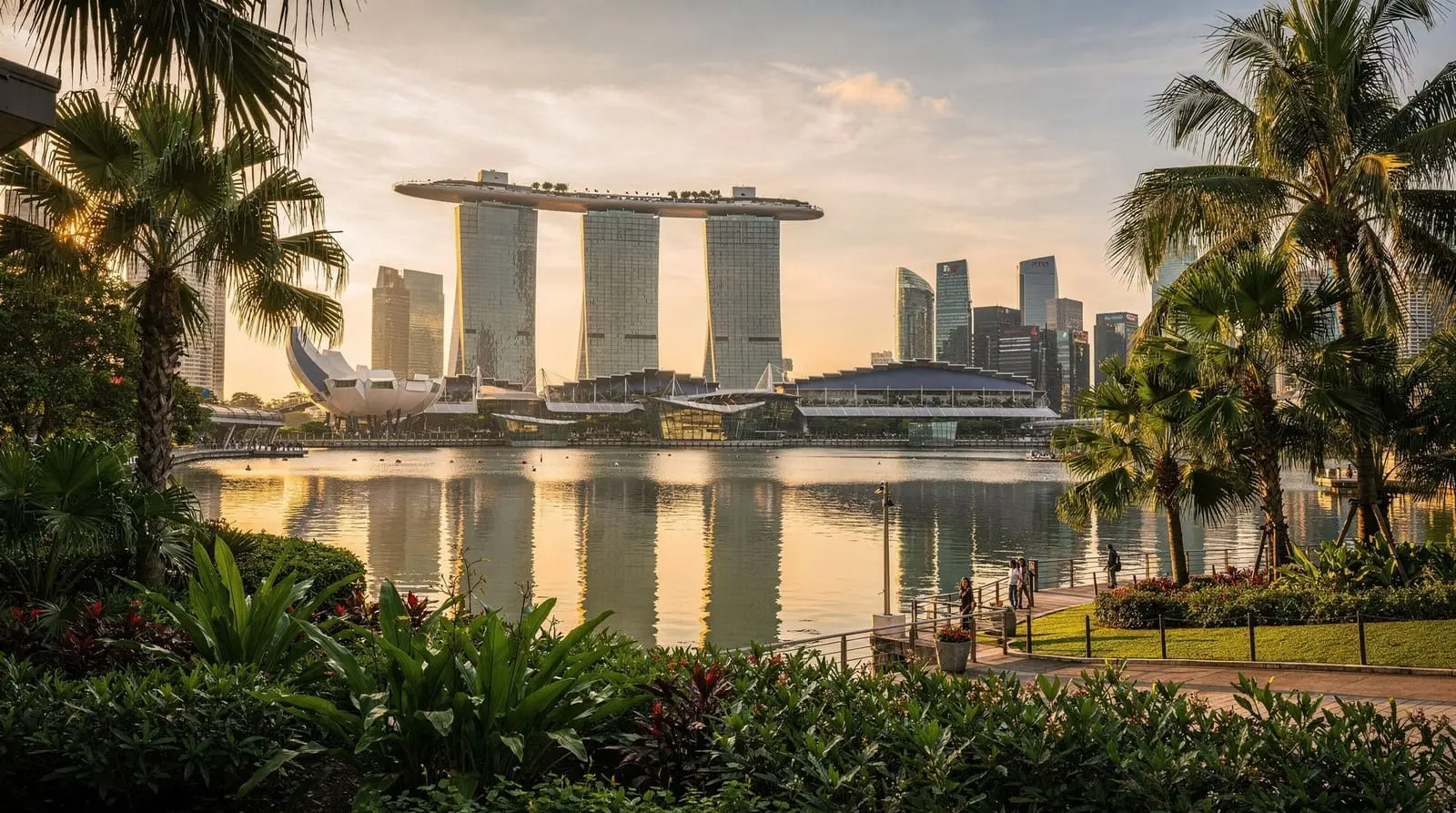
Marina Bay waterfront: The promenade along the Marina Bay waterfront is flat and paved, making it one of the best accessible scenic walks in Singapore — wheelchair users can complete the full circuit from Merlion Park to Gardens by the Bay along a continuous accessible path.
Sentosa Island
Sentosa Boardwalk: Fully accessible — ramps, no steps, covered for most of its length.
Sentosa Express: Accessible — level boarding from VivoCity Level 3. Lifts available to access the VivoCity departure platform.
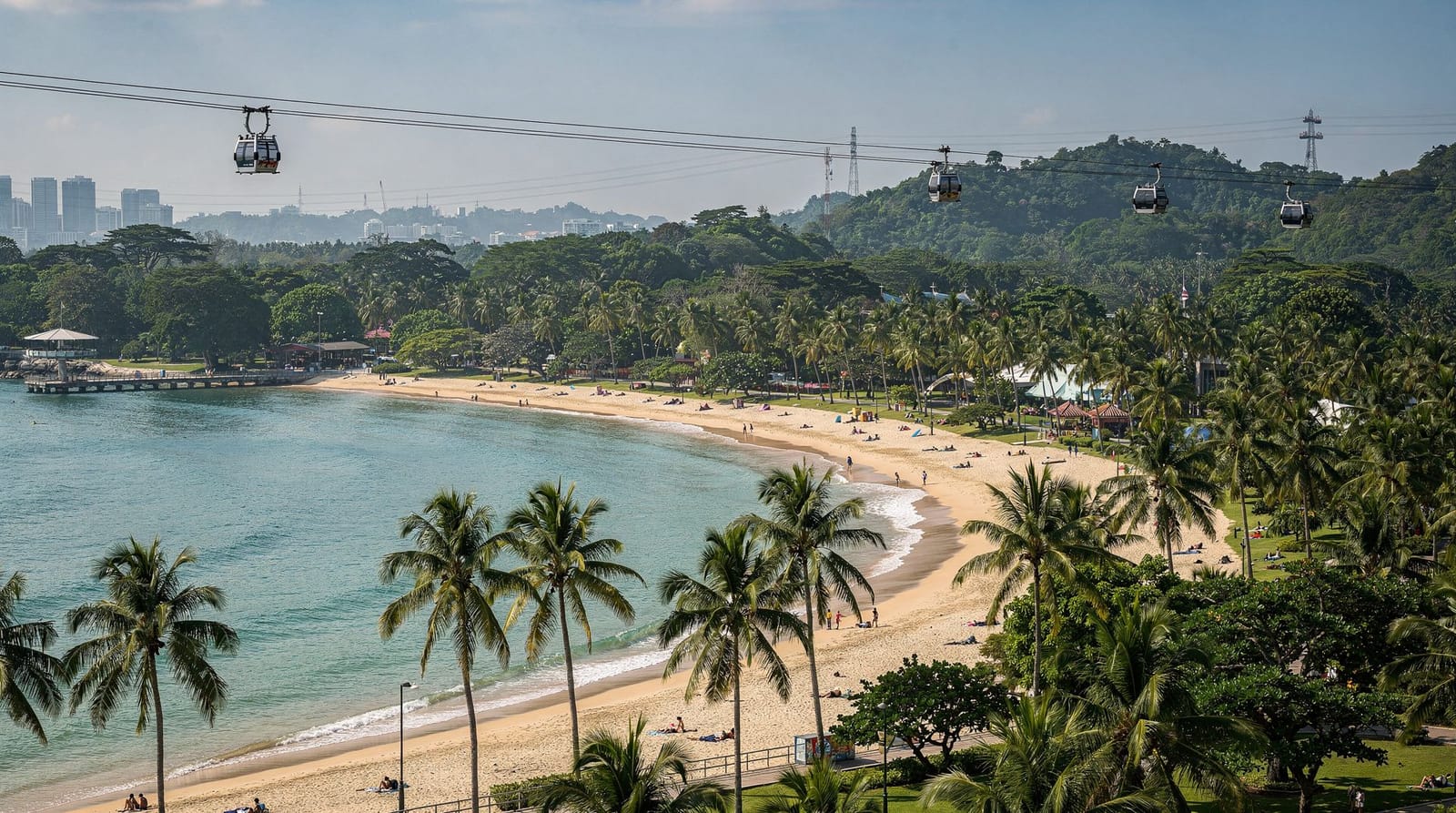
Cable car: The cable car gondola loading requires stepping up approximately 15–20 cm. Most manual wheelchair users can be assisted to board, but very limited mobility users may find this challenging. Staff at the HarbourFront Tower 2 cable car station can provide assistance — call ahead to arrange.
Beach access: Natural beach sand is not accessible for standard wheelchairs. Beach wheelchairs (wider wheels for sand) are available for loan at Beach Station and Siloso Beach — free, but advance request recommended (+65 1800 736 8672, Sentosa Development Corporation). The beach promenades (concrete pathways adjacent to the sand) are accessible.
S.E.A. Aquarium: Fully accessible — all viewing areas reachable via accessible routes.
National Museum of Singapore and National Gallery
Both museums are fully accessible with lifts between all floors, accessible toilet facilities, and accessible café areas. The National Gallery has an accessible lift entrance on the north side of the building. Audio guides (for visual impairment support) are available at both museums. Both have free or discounted entry programmes for persons with disabilities on presentation of documentation.
Hawker centres: the honest accessibility picture
Singapore’s hawker centres are genuinely mixed in accessibility — and this matters because they are the most important food experience in the city.
Best-accessible hawker centres:
- Lau Pa Sat (Raffles Place area): Ground-floor open octagonal structure, largely flat, wide aisles. The best-accessible central hawker centre.
- Maxwell Food Centre (Tanjong Pagar): Single floor, ground level. Accessible though spacing between tables is tight during peak hours.
- Tiong Bahru Market (Tiong Bahru): Two-storey — ground floor hawker centre fully accessible. Upper level (wet market) requires a lift (present, check LTA app for status).
More challenging hawker centres:
- Chinatown Complex: Multi-storey with an older layout. Lifts present but the hawker centre floor itself has tight spacing during peak hours.
- Old Airport Road Food Centre: Ground floor accessible, but the approach from the bus stop involves some uneven pavement.
- Tekka Market (Little India): Ground floor, accessible, but the wet market section has busy, congested aisles.
Practical advice: For wheelchair users, visit hawker centres during off-peak hours (10:30–11:30 am or 2:30–4 pm) when tables are less packed and movement is easier. Many stall holders are willing to bring food directly to seated guests on request.
Accessible accommodation in Singapore
Most Singapore hotels above 3-star have accessible rooms (wider doorways, roll-in showers or shower seats, lower bed heights, accessible bathroom). When booking:
- Use the “accessible room” filter on booking.com or Hotels.com
- Call the hotel directly to confirm specific features (roll-in shower vs grab bars only, bed height, proximity to lifts)
- Specify manual wheelchair or power chair as these have different space requirements
Budget accommodation: Most Singapore hostels are in shophouses — older heritage buildings with steps at entrances and narrow corridors. Full wheelchair accessibility is rare in the hostel sector. Some newer boutique hostels in purpose-built buildings have accessible rooms — search specifically for “accessible hostel Singapore” or contact individual properties.
Recommended approach: Mid-range hotels with accessible rooms (Ibis Styles, Holiday Inn) are more reliably accessible than boutique or heritage-building accommodation at a similar price point.
Heritage and shophouse areas: the main challenge
Singapore’s most atmospheric neighbourhoods — Chinatown, Little India, Kampong Glam — are built on a heritage shophouse model. These buildings (two or three-storey narrow colonial-era commercial buildings) were not designed for modern accessibility. The streets are generally flat and paved, but entering individual shops, restaurants, and some temples often requires negotiating steps.
Street-level navigation: The streets themselves (Pagoda Street, Serangoon Road, Arab Street) are flat and navigable by wheelchair. The atmosphere, visual character, and street-level experience is fully accessible.
Building access: Many individual shophouses have 1–3 steps at the entrance. Permanent ramps are increasingly installed (required by law for commercial premises with new permits) but many older premises have exemptions. When in doubt, the view from street level is still worthwhile, and most key cultural sites (temples, mosques) have accessible entrances.
Temples: Most major temples have accessible entrances — Sultan Mosque, Buddha Tooth Relic Temple, and Sri Veeramakaliamman Temple all have level access at main entrances (removing footwear is still required). Check with specific temples for lift access to upper floors.
Accessibility by neighbourhood: honest comparison
Not every part of Singapore offers the same experience for a visitor with mobility needs. Here is how the main tourist areas compare, so you can plan a realistic route rather than discovering the gaps mid-visit.
| Area | Street-level access | Building/venue access | Verdict |
|---|---|---|---|
| Marina Bay | Flat, paved, continuous promenade | Fully accessible (MBS, ArtScience, Gardens by the Bay) | Best area overall — plan a full accessible day here |
| Civic District | Flat, paved | Museums fully accessible with lifts | Excellent — pairs well with Marina Bay |
| Chinatown / Little India / Kampong Glam | Flat streets, but uneven at some crossings | Individual shophouses often have 1–3 steps | Enjoy at street level; check specific restaurants/shops ahead |
| Sentosa | Boardwalk and Express fully accessible | Cable car needs a small step-up; attractions vary by ride | Good with planning — see Sentosa guide |
| Orchard Road | Flat, wide pavements | Malls fully accessible with lifts | Very accessible — best shopping option for mobility needs |
Planning an accessible Marina Bay day
Because Marina Bay is Singapore’s most consistently accessible district, it is worth building at least one full day around it rather than spreading effort thin across the city. A realistic accessible day: start at Gardens by the Bay in the cooler morning hours (the Supertree Grove and Conservatories are fully accessible), have lunch at Satay by the Bay or a mall food court with wide aisles, spend the afternoon at Marina Bay Sands and the SkyPark, and finish with the free evening light shows along the accessible waterfront promenade. This keeps transfers to a minimum and avoids the uneven ground of the older heritage districts entirely.
For a full first Singapore itinerary that this accessible version can be adapted from, see Singapore for first-timers and how many days in Singapore for pacing guidance.
Booking accessible transport ahead of arrival
Planning accessible transport before you land in Singapore removes one of the biggest sources of day-one stress. If your accessibility needs are significant, arrange a pre-booked accessible airport transfer rather than relying on walk-up GrabAssist availability at Changi — several licensed transfer companies specialise in accessible vehicles and can guarantee a suitable car at your arrival time. For the rest of the trip, a mix of MRT for planned daytime movement and pre-booked Grab or taxi for evening or time-sensitive trips covers most needs without requiring you to gamble on GrabAssist’s smaller fleet at short notice.
Accessible dining beyond hawker centres
Given the hawker centre gaps described above, mall food courts are a genuinely good accessible alternative — they are air-conditioned, have wide aisles, level flooring, and accessible toilets as standard. ION Orchard, VivoCity, and Marina Bay Sands Shoppes all have large basement or ground-floor food courts with Singapore-hawker-style pricing and much better physical access than a traditional hawker centre. This is a practical workaround rather than a downgrade — the food quality at Singapore’s best mall food courts is genuinely good, even if it lacks the heritage atmosphere of an open-air hawker hall.
Building a step-free route around the city
Once you know which areas suit your needs, the easiest way to cut friction is to pair accessible districts rather than crossing the island several times a day. Marina Bay and Orchard Road are the natural anchors, and the MRT guide explains how the network fits together so you can plan lift-served stations on both ends of every journey.
If you want a flat, shaded alternative to the waterfront, the Botanic Gardens are a calmer option, and the Botanic Gardens guide covers how the grounds are laid out. For museum days, the National Museum and the National Gallery are good rainy-day choices because everything is indoors and air-conditioned.
Families travelling with a wheelchair user and children will find more ideas in Singapore with kids, and the Sentosa guide helps you decide which parts of the island are worth the extra planning. Travellers going solo can read solo travel in Singapore for general tips on pacing and safety, which pair well with the transport advice above.
Disability travel resources for Singapore
SG Enable: Singapore’s government disability agency. Website (www.sgenable.sg) includes an accessibility resource guide for visitors.
Disabled People’s Association Singapore (DPA): (www.dpa.org.sg) — community organisation with practical guides and community travel advice.
Changi Airport accessibility: Changi has one of the most comprehensive airport accessibility services globally. Wheelchair assistance must be pre-requested at time of booking your flight (the airline arranges this). Walk-in wheelchair assistance is also available from the Changi Airport accessibility counters in all arrivals halls.
AccessAble Singapore: A growing database of accessibility-reviewed venues with specific measurements (door widths, step heights, toilet accessibility) — most useful for very specific wheelchair size requirements.
Frequently asked questions about accessibility in Singapore
Is Singapore fully wheelchair accessible?
Singapore is approximately 80–85% of the way toward full wheelchair accessibility in the areas most relevant to visitors. The MRT network, major attractions, and main hotels are excellent. The gaps are older hawker centres, heritage shophouse areas (street-level accessible, individual building entry variable), and some older public toilets. For a major Asian city, this is outstanding — Singapore is significantly more accessible than Tokyo, Bangkok, Hong Kong, or Kuala Lumpur for wheelchair users.
Are accessible toilets available throughout Singapore?
Yes — accessible (disabled) toilet facilities are required in all new public buildings and are progressively being added to older ones. MRT stations all have accessible toilet facilities. Major attractions, malls, and hotels all have accessible toilets. Hawker centres have variable accessibility in toilet areas. The Restroom Association of Singapore website has a database of public accessible toilet locations.
Can I visit Singapore with a hearing impairment?
Singapore’s transport system uses strong visual communication — LED displays in MRT stations and carriages announce all stops visually. Museums use text-heavy exhibition design. Most tour and attraction information is available in text or visual format. Some attractions offer sign language tours on request — Singapore uses Singapore Sign Language (SgSL, based on Signing Exact English) rather than ASL or BSL. The deaf and hard-of-hearing community in Singapore is active — the Singapore Association for the Deaf (www.sadeaf.org.sg) can provide community guidance.
Is Singapore accessible for visitors with autism or sensory processing differences?
Singapore presents a mixed sensory environment. Hawker centres are loud and visually stimulating. Chinatown and Little India are sensory-intense. The National Museum, Gardens by the Bay, and Botanic Gardens offer much calmer alternatives. The Marina Bay waterfront at non-peak hours (early morning or late evening) is spacious and less stimulating. Some USS experiences can be intense — USS Singapore does not yet have a formal sensory guide equivalent to some UK theme parks, but staff can provide quiet area suggestions. Singapore’s air conditioning (ubiquitous, sometimes very cold) is worth noting for temperature-sensitive visitors.
Top experiences
Bookable activities with verified prices and instant confirmation on GetYourGuide.