Raffles Place and the CBD
Raffles Place is Singapore's financial district — Lau Pa Sat hawker market, Boat Quay, and Raffles Hotel.
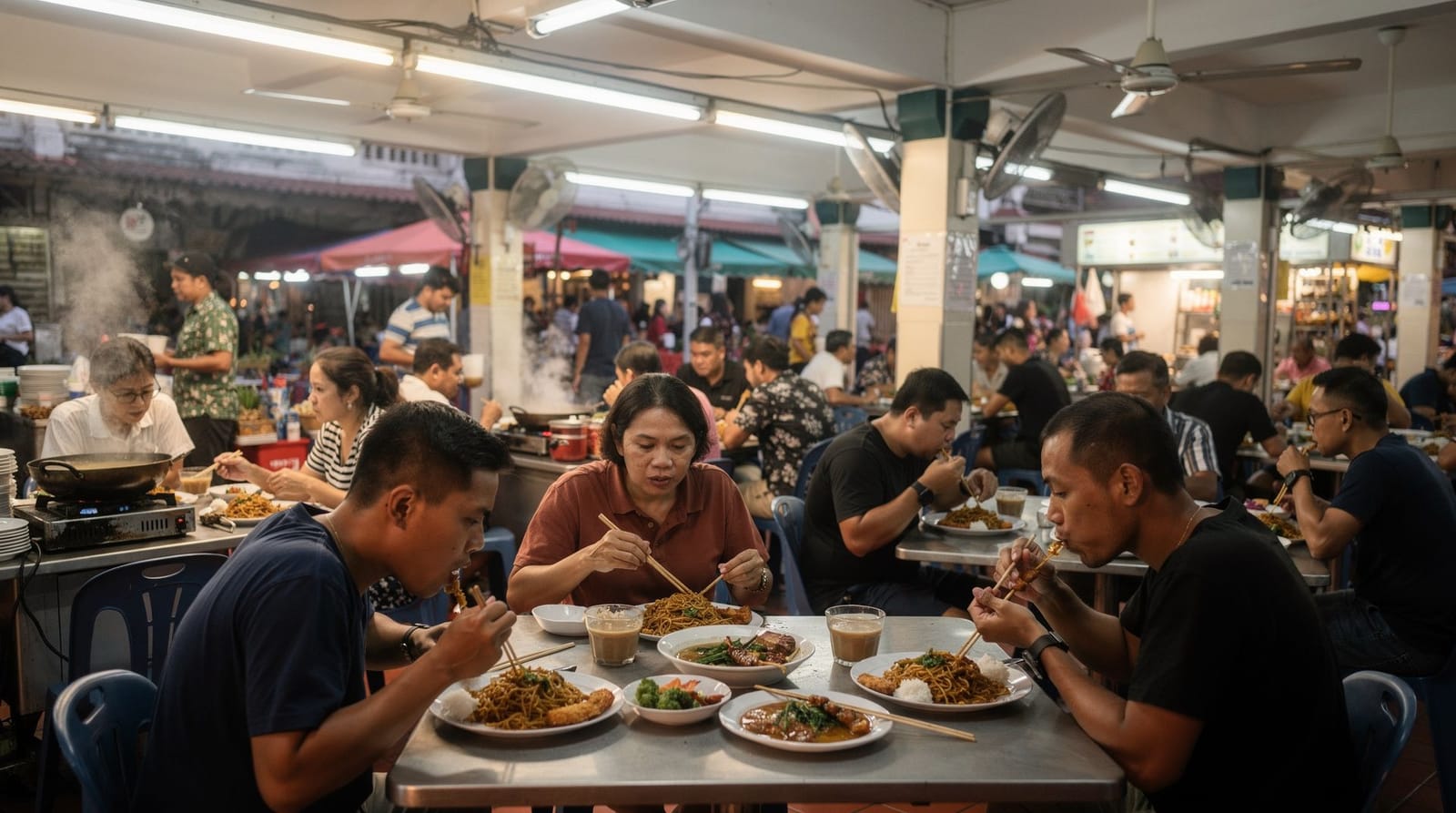
Singapore: Lau Pa Sat night street food with Marina Bay walk
Quick facts
- MRT access
- Raffles Place (East-West/North-South lines) — interchange station in the CBD
- Character
- Financial district by day, hawker and bar scene by night
- Lau Pa Sat
- Heritage hawker centre, 5 min walk from Raffles Place MRT; satay stalls from 7 pm
- Raffles Hotel
- National monument; Long Bar (Singapore Sling, SGD 37–43); free to walk through lobby
- Boat Quay
- South bank of Singapore River, 5 min walk north; riverside bars and restaurants
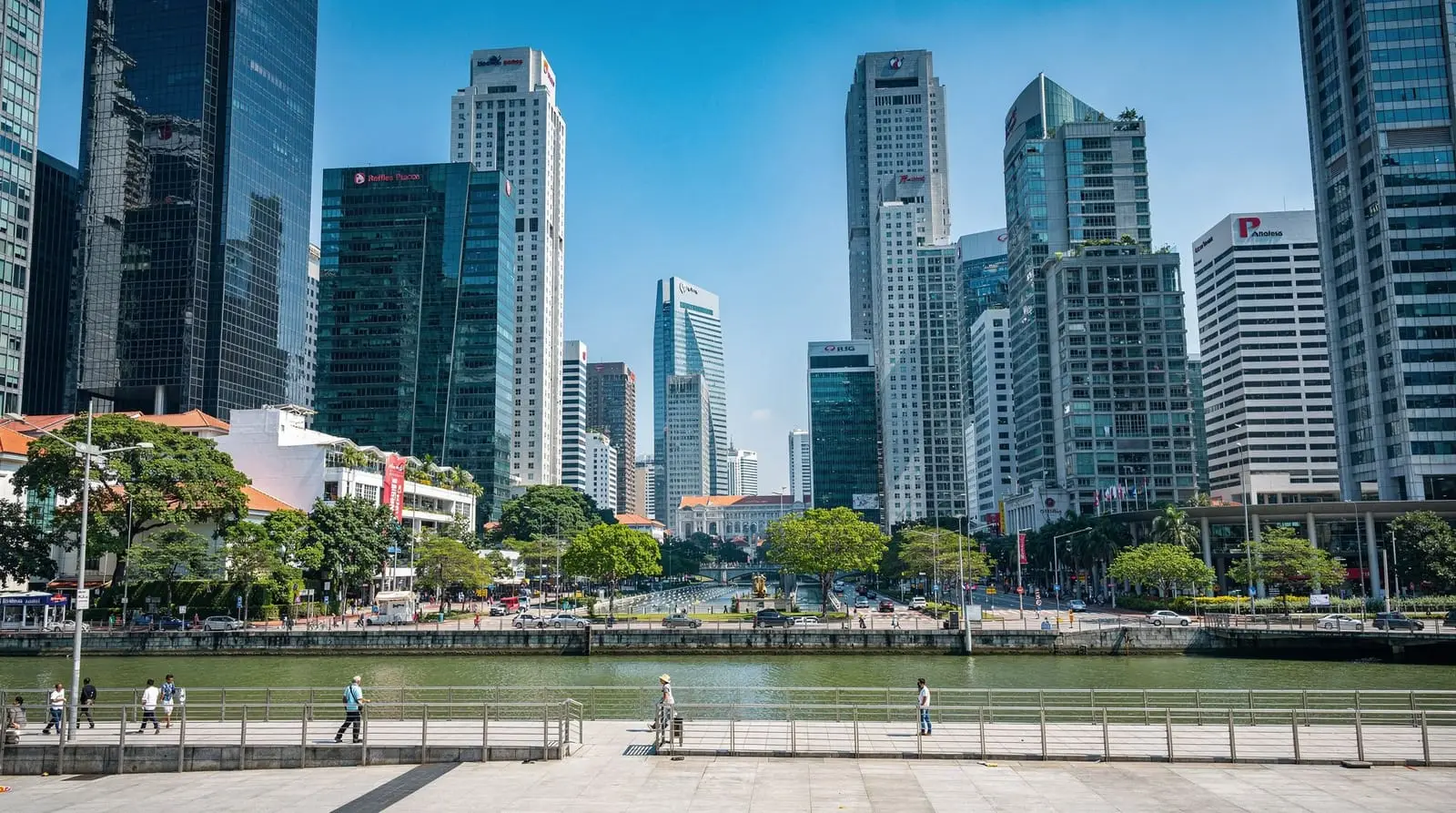
Raffles Place is where Singapore’s money lives. The financial district towers cluster around the MRT interchange, flanked by Boat Quay along the river and the Victorian cast-iron pavilion of Lau Pa Sat a short walk south. During business hours it is a rush of suits and coffee cups; after 6 pm the crowd shifts, the satay stalls roll out on Boon Tat Street, and it becomes one of the better evening areas in the central city.
| Where | Raffles Place MRT (East-West/North-South interchange), central CBD |
| Cost | Free to walk; Lau Pa Sat mains around SGD 8–14, satay SGD 0.80–1.00/stick, Singapore Sling SGD 37–43 |
| Time needed | 2–3 hours in the evening; pair with Chinatown or Clarke Quay |
| Getting there | MRT to Raffles Place, or 1 stop from Chinatown / 2 stops from City Hall |
| Best time | From 6 pm; Boon Tat Street satay from 7 pm |
Lau Pa Sat — the iron market
Lau Pa Sat Festival Market is a Victorian octagonal cast-iron structure on Boon Tat Street, a 5-minute walk from Raffles Place MRT. The structure was prefabricated in Glasgow in 1894 and assembled here. It functions as a hawker centre — chicken rice, laksa, mee goreng, fish soup — with stalls open from roughly 7 am. Prices are slightly higher than suburban hawker centres but still reasonable: expect SGD 8–14 per dish.
The reason most visitors come after dark is Boon Tat Street satay, which runs nightly from approximately 7 pm. The road in front of Lau Pa Sat is closed to traffic and satay stalls set up for about 80 metres — a dense, smoky, atmospheric strip of grilled chicken, beef, mutton, and prawn satay (SGD 0.80–1.00 per stick with peanut sauce and ketupat rice cake). Order 10–15 sticks for two people with a beer (Tiger or Heineken, SGD 8–10). This is one of the better value evening eating experiences in the central city.
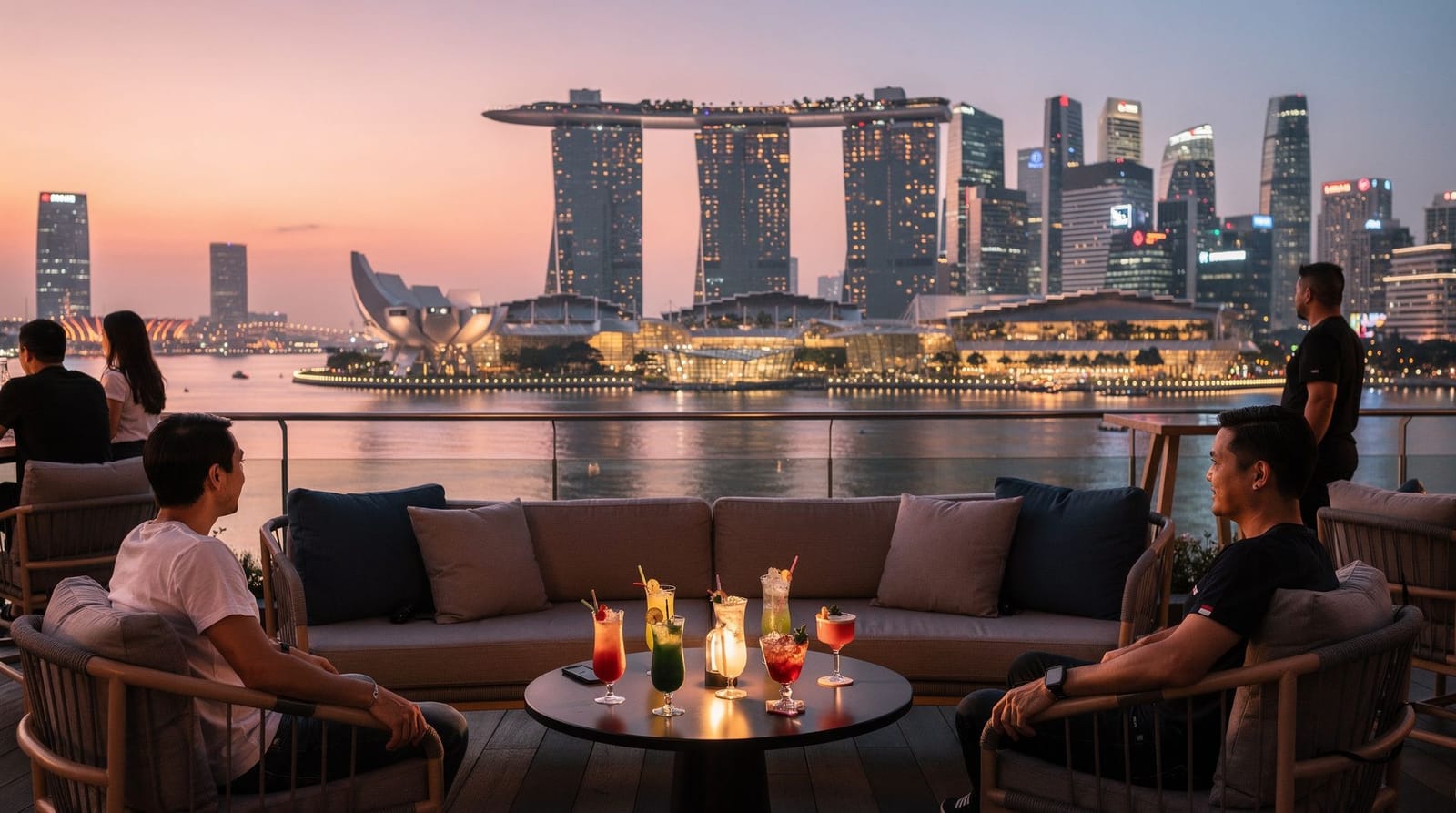
The Lau Pa Sat night street food with Marina Bay walk tour combines the satay dinner with a guided walk to Marina Bay for the Spectra show — a sensible pairing that covers two of the city’s best free evening experiences in one outing. For the full hawker overview, see the Lau Pa Sat guide.
Raffles Hotel
The Raffles Hotel is a few minutes walk north from Raffles Place MRT toward City Hall. It opened in 1887 and is one of the remaining grand colonial hotels of Asia (alongside The Eastern & Oriental in Penang and The Oriental in Bangkok). The main building is a national monument.
The Long Bar is where the Singapore Sling was invented in 1915 by bartender Ngiam Tong Boon — a gin-based cocktail with pineapple juice, cherry liqueur, and several other ingredients. A Singapore Sling in the Long Bar costs SGD 37–43, which is expensive for a cocktail and reasonable for a one-off experience in the place where it was created. Peanuts are available on the tables and you are expected to throw the shells on the floor, which is part of the Long Bar’s particular theatre.
The Raffles Hotel lobby and arcade (gallery of upscale shops) are free to walk through. The interior is well-preserved; the architecture and atmosphere repay a 20-minute self-guided look even if you are not drinking.
The Singapore by night tour with Singapore Sling covers the city’s main evening highlights and includes a Singapore Sling at Raffles — a reasonable package if you want both the context and the cocktail covered. For the full cocktail history and honest verdict, see the Singapore Sling at Raffles guide.
The CBD skyscraper walk
The area around Raffles Place MRT has one of the densest concentrations of tall buildings in Asia. The view from Raffles Place park (the small green square above the MRT station) looking south toward the Tanjong Pagar towers and then north toward Marina Bay is a good orientation point for understanding the city’s modern geography.
Notable buildings nearby: OUB Centre (280m, 1986); UOB Plaza (280m, 1992) with the Botero sculpture of a cat outside; OCBC Centre designed by I.M. Pei (1976); and One Raffles Place. None are open to the public beyond their lobbies, but the architectural variety across 40 years of development is interesting to anyone with an interest in late-20th-century urban architecture.
The Duck Tour — amphibious city circuit
The DUKW amphibious vehicle tour departs from Suntec City (20 min walk or short MRT from Raffles Place) and drives through the CBD and colonial district before splashing into the Marina Bay water — a genuinely novel way to see the city. The circuit takes about an hour.
Singapore Duck Tour — guided city tour by amphibious Duck boat, SGD 31.90The Duck Tour is worth it primarily as a novelty activity for families or first-time visitors who want a single overview of the central area. For a pure sightseeing perspective, the river cruise and the hop-on hop-off bus cover more ground independently.
Boat Quay
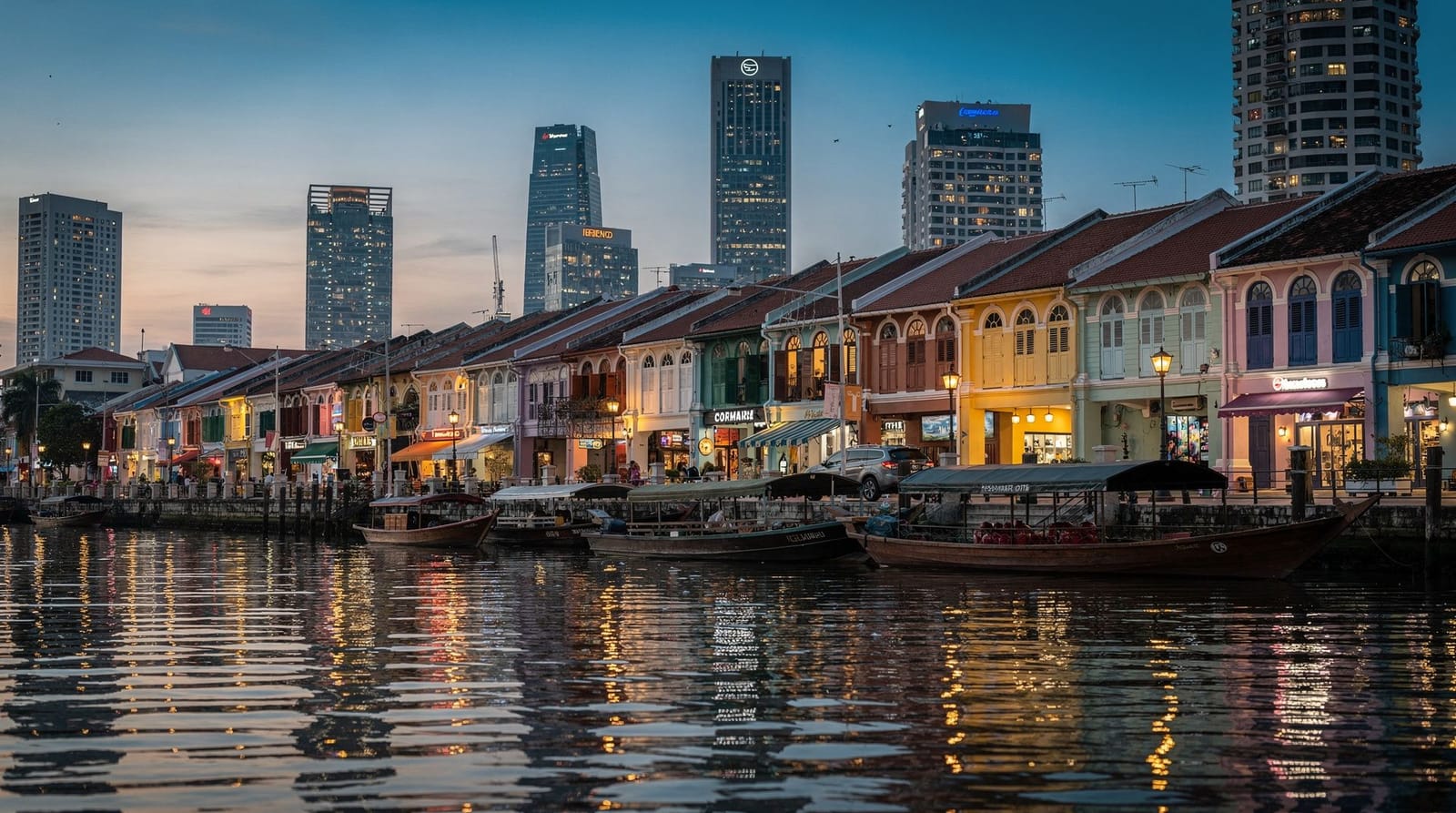
The south bank of the Singapore River between Raffles Place and the Civic District is the Boat Quay area — a row of colonial shophouses converted to restaurants and bars facing the water. Historically this was the main commercial wharf; the bumboats that unloaded cargo here have been replaced by pleasure craft and river cruise boats.
Boat Quay is less of a full nightlife district than Clarke Quay (north bank, upriver) but has a more historic character. Several Indian, Chinese, and international restaurants with outdoor seating face the river at reasonable prices (SGD 20–35 for a main course at the mid-range options). Good for a pre-Clarke Quay dinner or a quieter alternative to the bar district further upstream.
Getting around the CBD
Raffles Place MRT is an interchange between the East-West Line and the North-South Line, making it one of the most useful transit nodes in the city. It is 2 stops from Chinatown (East-West Line), 2 stops from City Hall (North-South Line), and a direct line to Changi Airport (East-West Line, about 30 min).
Walking distances: Lau Pa Sat 5 min; Boat Quay 8 min; Raffles Hotel 12 min (via Raffles MRT or short walk); Clarke Quay 15 min along the river.
Taxis and Grab: plenty of designated pickup points in the CBD. Surge pricing applies on Friday and Saturday evenings, especially after 10 pm.
Chinatown from the CBD — a natural pairing
Raffles Place MRT is one stop on the East-West Line from Chinatown MRT, which means the CBD and Chinatown are the most natural evening combination in the central city. The logic runs: arrive in Chinatown by 5 pm for Maxwell Food Centre and a walk through the heritage streets, then head north on foot or MRT at 7 pm to the CBD for Lau Pa Sat satay and Boon Tat Street, then walk along the river for the 9 pm Spectra show. The whole evening covers five distinct experiences without any expensive transport.
For the full Chinatown guide, see the Chinatown destination page.
Singapore’s financial architecture — what you are actually looking at
The Raffles Place financial district contains some of the most significant late-20th-century architecture in Southeast Asia, developed during the period of Singapore’s rapid economic transformation from 1970 to 1990.
OCBC Centre (65 Chulia Street, visible from the Raffles Place park) was designed by I.M. Pei and completed in 1976 — it was the tallest building in Singapore at the time. The design is distinctively modernist with exposed concrete columns; its cultural significance is disproportionate to its current height in a skyline now dominated by taller buildings.
UOB Plaza (80 Raffles Place) has a large Fernando Botero bronze sculpture — a round, stylised cat — at the main entrance. Botero, the Colombian sculptor, donated several pieces to Singapore institutions in the 1980s. Worth a quick look if you are passing; the bronze cat weighs four tonnes.
Fullerton Hotel (just northeast of Raffles Place, at the river mouth) is a converted 1928 GPO (General Post Office) building — now a 5-star hotel but the architecture is the more interesting fact. The neoclassical facade facing the river, designed by Keys and Dowdeswell, is one of the finest early 20th-century buildings in Singapore. The lobby is open to non-guests for a look.
What to eat beyond Lau Pa Sat
Maxwell Food Centre is 10 min walk south in Chinatown — one of the best hawker centres in the city, with Tian Tian Hainanese Chicken Rice (stall 10 and 11, queue expected at lunch) among many strong options. See the Maxwell Food Centre guide.
Amoy Street Food Centre is 5 min walk from Tanjong Pagar MRT (one stop from Raffles Place on the East-West Line) — a hawker centre popular with office workers, known for good quality and competitive prices. Lunch is the peak time.
Club Street and Ann Siang Hill (10 min walk south of Raffles Place) is a cluster of old shophouses turned into trendy bars and restaurants, aimed at the after-work crowd. More expensive than hawker food but a pleasant spot for a drink.
The Singapore night tour option
For visitors who want to see Raffles Hotel, Lau Pa Sat, and Marina Bay in one organised evening without navigating independently, a guided Singapore by night tour covers the main CBD and Marina Bay highlights with a guided evening walk, finishing with a Singapore Sling at the Long Bar. This is a reasonable option for first-time visitors who want an orientation of the central city at night before exploring independently during the day.
Tanjong Pagar — the extension south
10 minutes on foot south of Raffles Place, Tanjong Pagar is a conservation area of shophouses with a more residential and local-commercial character. It borders the Chinatown area and has a strong concentration of Korean restaurants and Japanese bars (the area has a significant expat Asian community). The Amoy Street Food Centre is here, used mostly by office workers for lunch. The Tanjong Pagar MRT station area has a cluster of good-quality coffee shops and bakeries.
The Pinnacle@Duxton — a public housing estate of seven 50-storey residential towers connected by an elevated skybridge — is 10 minutes walk from Raffles Place. The 50th-floor skybridge is open to the public (SGD 6 entry; bring an EZ-Link card or NETS). The view over the CBD, Chinatown, and the southern islands is one of the best in Singapore and considerably less crowded than the SkyPark. The contrast of standing on a public housing roof looking at the financial district below is also one of the more instructive Singapore experiences available.
Choosing your evening spot: Lau Pa Sat vs Boat Quay vs Clarke Quay
The central river corridor offers three distinct evening styles within a 15-minute walk of each other. Picking the right one depends on what you want from the night.
| Spot | Character | Best for |
|---|---|---|
| Lau Pa Sat / Boon Tat Street | Hawker food, smoky satay street, casual | Cheap, atmospheric dinner |
| Boat Quay | Historic shophouses, riverside restaurants | A quieter sit-down meal with river views |
| Clarke Quay | Bars, clubs, later and louder | Nightlife and drinks after dinner |
A workable evening runs all three in sequence: satay at Lau Pa Sat, a stroll along Boat Quay for the river views, then onward to Clarke Quay if you want the night to continue. See the Clarke Quay nightlife guide for the bar-by-bar detail.
The Civic District — a short walk north
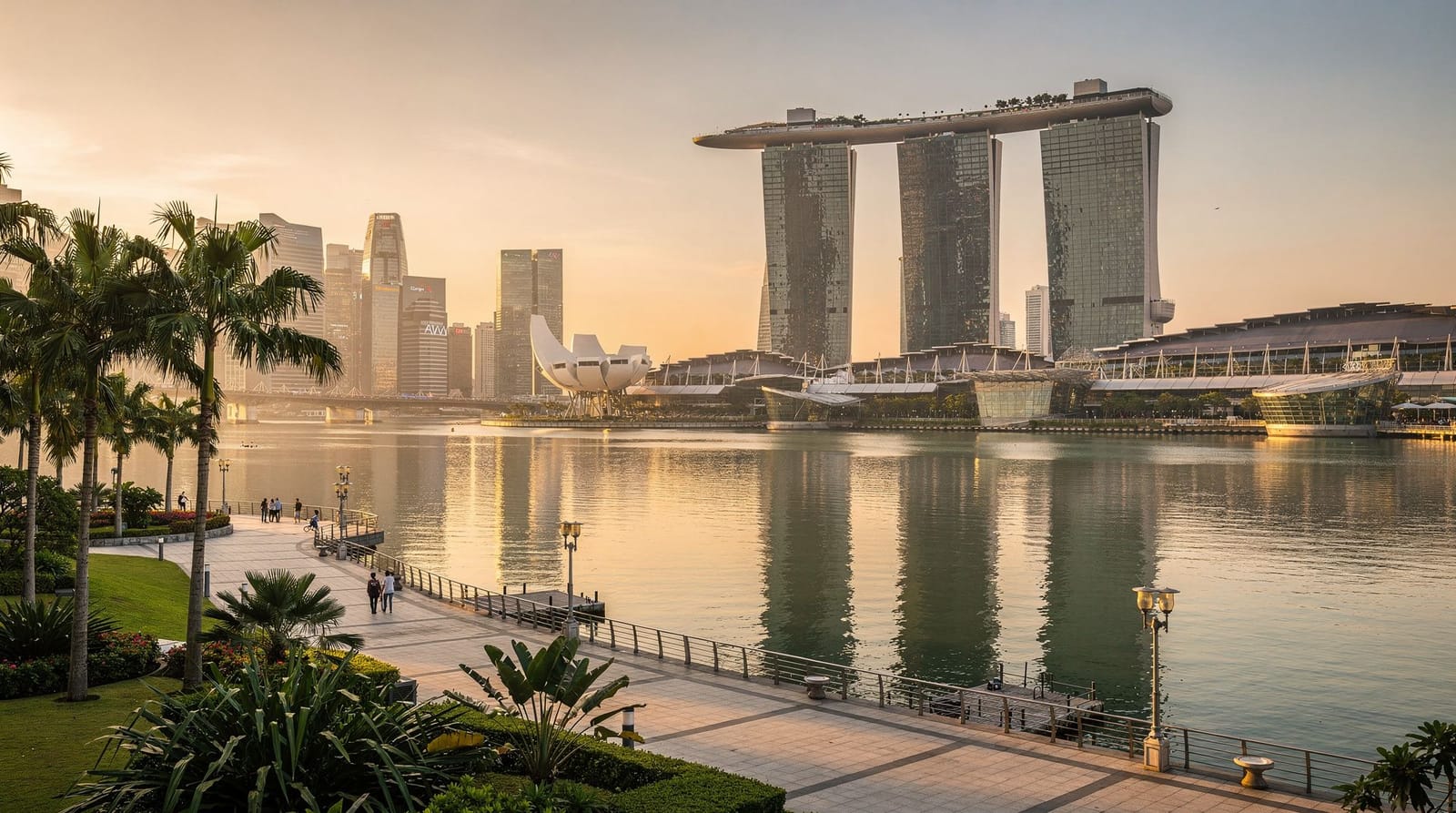
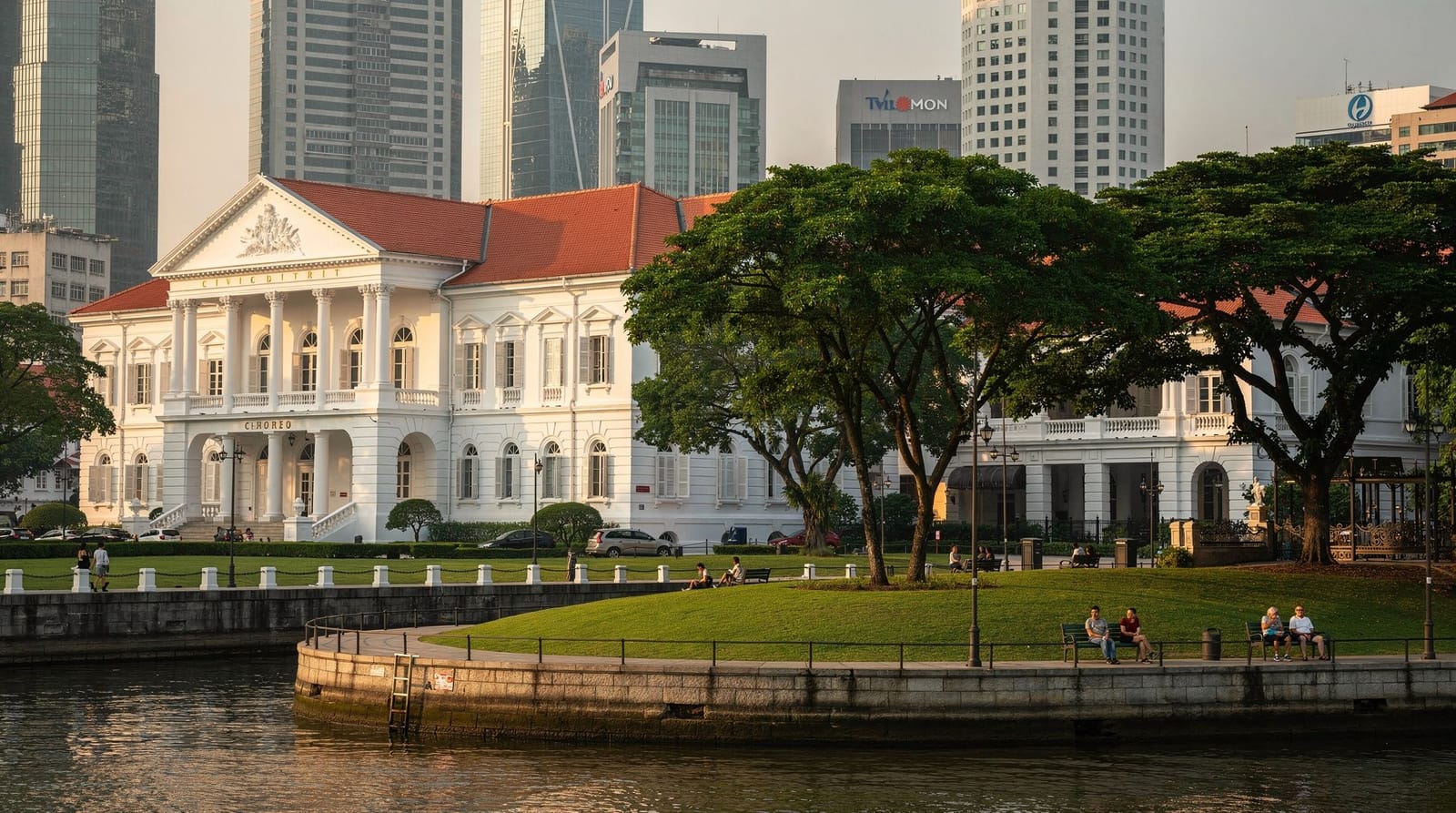
The Civic District sits a short walk north of Raffles Place along the river — City Hall, the Padang, the Asian Civilisations Museum, and the colonial government buildings cluster here. It pairs well with a Raffles Place evening: walk the Civic District’s landmarks in the late afternoon light, then head south for dinner at Lau Pa Sat as the satay stalls open. From the Civic District it is also a short walk east to Marina Bay for the Spectra light show, making a three-stop evening (Civic District → Raffles Place → Marina Bay) achievable on foot.
Practical information
ATMs: throughout the CBD; inside and outside all major MRT stations.
Pocket Wi-Fi / SIM: available from convenience stores and the Changi Airport terminal shops.
Working hours: the CBD is a weekday business area. Many of the smaller restaurants and cafes around Robinson Road and Cecil Street are closed on weekends.
Frequently asked questions about Raffles Place and the CBD
Is Lau Pa Sat open for lunch?
Yes, most hawker stalls open from around 7 am. The satay street on Boon Tat Street is specifically an evening operation (from 7 pm). The hawker centre itself is good for breakfast (kaya toast, half-boiled eggs, kopi) and lunch. Evening is the most atmospheric time.
How much does a Singapore Sling cost at Raffles Hotel?
SGD 37–43 in the Long Bar as of 2026. It is a pre-mixed, large, sweet cocktail. The experience of drinking it in the original bar is worth the price once; repeat visits are optional depending on how much you enjoyed it. Free peanuts are served; throw the shells on the floor (this is encouraged).
Is the Duck Tour good?
It is a fun novelty — particularly for children and for first-time visitors wanting an overview of the central city. The commentary is informative. The splashdown into the bay is the highlight. It is not the most efficient way to see the city (the hop-on hop-off covers more ground), but it is distinctly memorable.
Can I walk from Raffles Place to Marina Bay?
Yes, in about 15–20 minutes along the river north to the Merlion and then east along the waterfront. A pleasant evening walk if you are doing dinner at Lau Pa Sat and then heading to the Spectra show.
What is the Singapore Sling and is it worth ordering?
The Singapore Sling is a cocktail invented at Raffles Hotel in 1915. The original recipe includes gin, cherry heering liqueur, Cointreau, Benedictine, grenadine, pineapple juice, lime juice, and Angostura bitters. It is sweet and fruity. Worth ordering once for the story; the value proposition purely as a cocktail is questionable at SGD 40. For a full honest review, see the Singapore Sling guide.
Is Raffles Place worth visiting during the day?
Mostly for the architecture rather than the atmosphere. Weekday lunchtime brings the CBD to life with office workers, and the buildings themselves — OCBC Centre, UOB Plaza, the Fullerton Hotel — reward a slow look. But the food and drink experiences that make Raffles Place worth a special trip (Lau Pa Sat’s satay street, the Long Bar) are specifically evening activities. If you are choosing one time slot, evening is the stronger option.
Top experiences
Bookable activities with verified prices and instant confirmation on GetYourGuide.