Tiong Bahru
Tiong Bahru is Singapore's most interesting local neighbourhood — art deco housing blocks, an independent bookshop, a heritage wet market.
Tiong Bahru: stories & snacks in Singapore’s oldest estate
Duration: 2h
Quick facts
- Character
- Art deco housing estate, independent cafés, heritage wet market
- MRT access
- Tiong Bahru (East-West Line) — 5 min walk to the estate
- Key streets
- Yong Siak Street, Eng Hoon Street, Tiong Bahru Road
- Built
- 1936–1954 (Singapore Improvement Trust housing estate)
- Market
- Tiong Bahru Market (wet market + hawker centre), open from 06h
Tiong Bahru is frequently described as Singapore’s “hippest neighbourhood,” which is both accurate and slightly misleading. The hip part is real — independent bookshops, specialty coffee, a density of small creative businesses that is unusual in a city where retail tends toward malls. But the characterisation flattens what makes the neighbourhood genuinely interesting: it is Singapore’s oldest surviving public housing estate, built between 1936 and 1954 by the Singapore Improvement Trust, and its art deco architecture is among the best preserved of that era in Asia.
Most visitors who come do so for breakfast or a late morning coffee, then leave. This is actually the right approach — Tiong Bahru rewards a 3-4 hour visit more than a full day. But the visit is worth structuring around the estate’s history, not just its café options.
| Where | Tiong Bahru MRT (East-West Line), 5 min walk to the estate |
| Cost | Free to walk; market food SGD 3–8, café coffee and pastry SGD 12–18 |
| Time needed | 2–3 hours, half a day if lingering |
| Getting there | MRT to Tiong Bahru, or 10 min walk from Chinatown |
| Best time | Saturday morning for the liveliest market; 07h–11h for comfortable heat |
The art deco estate
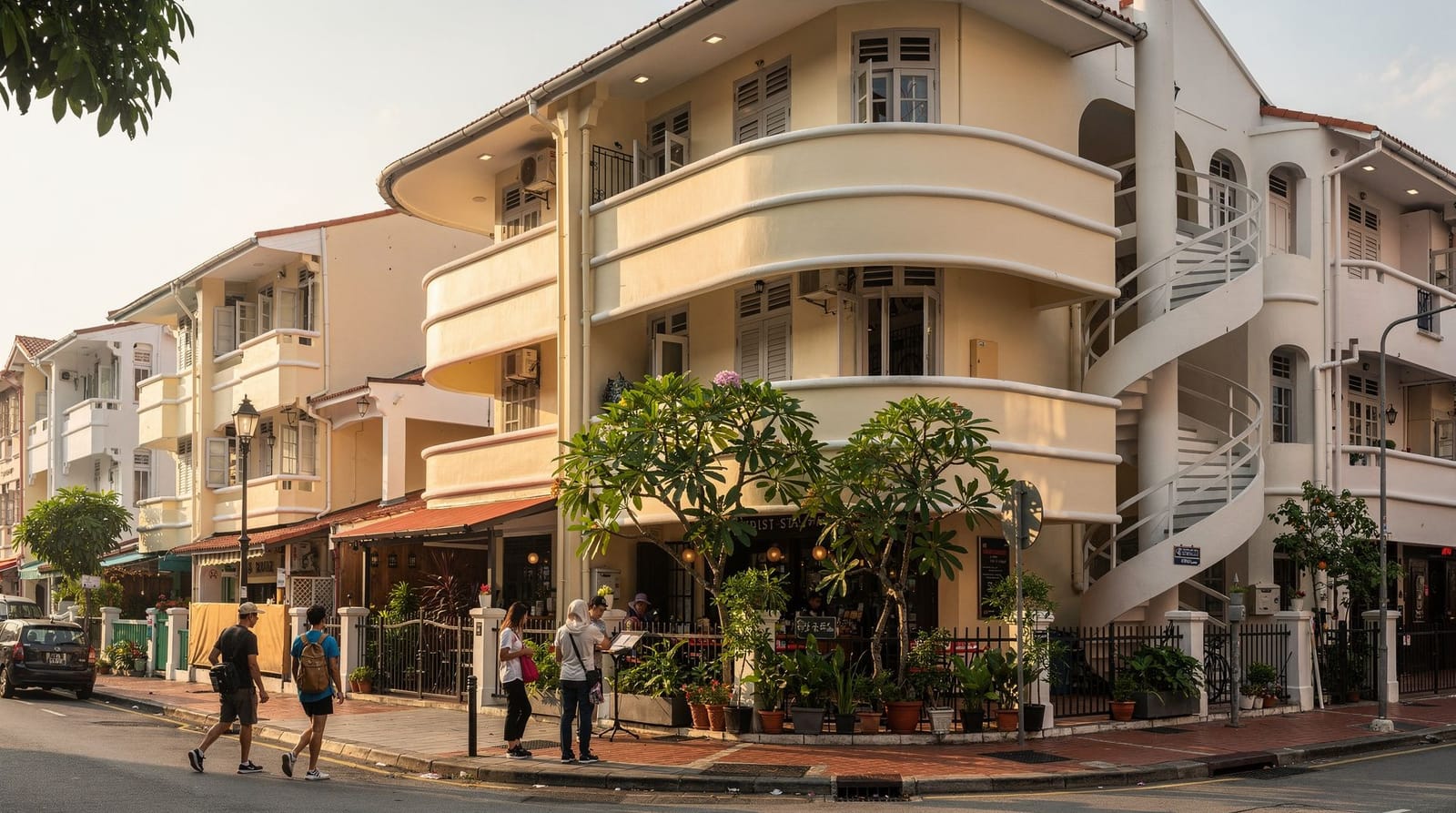
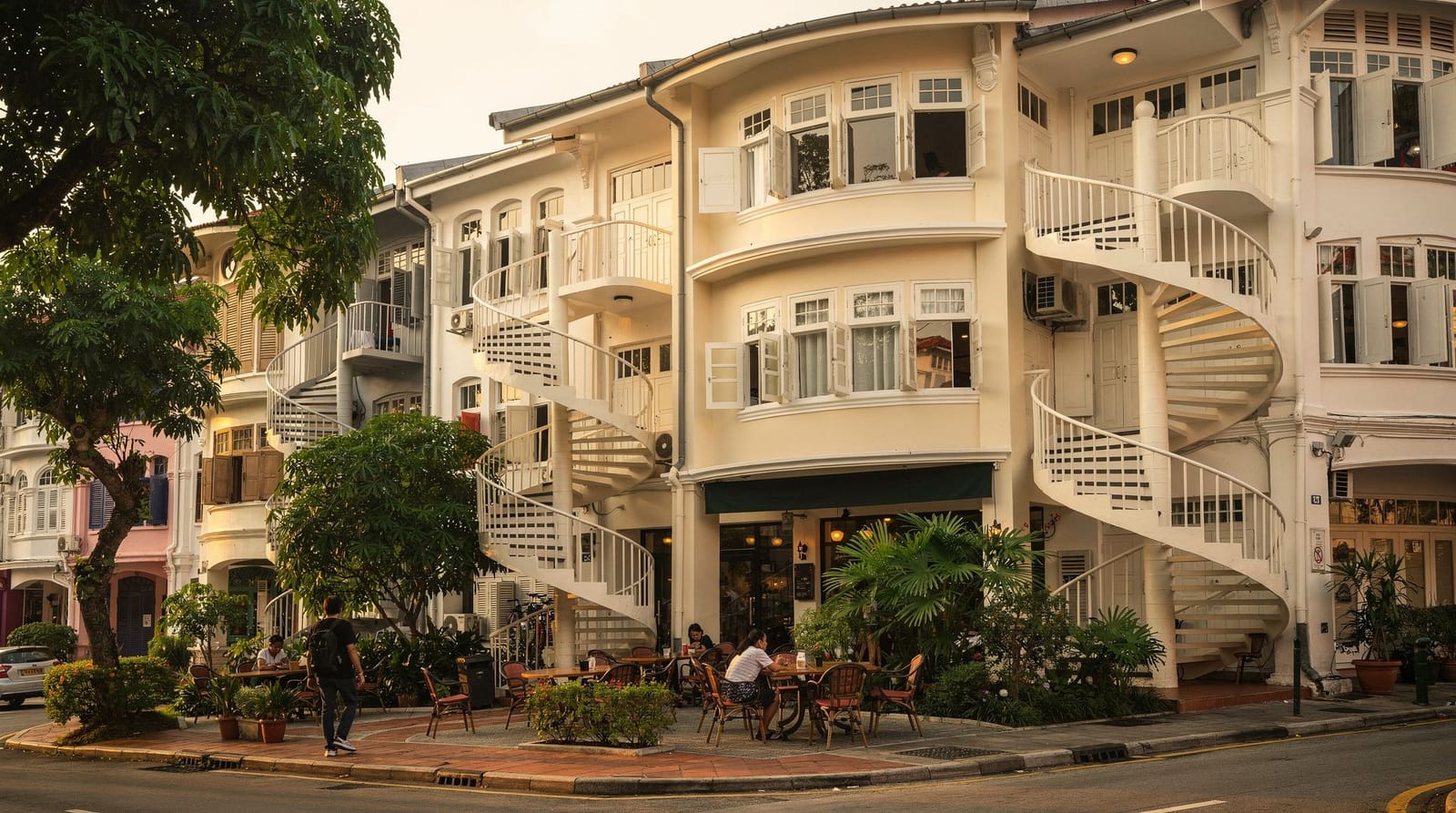
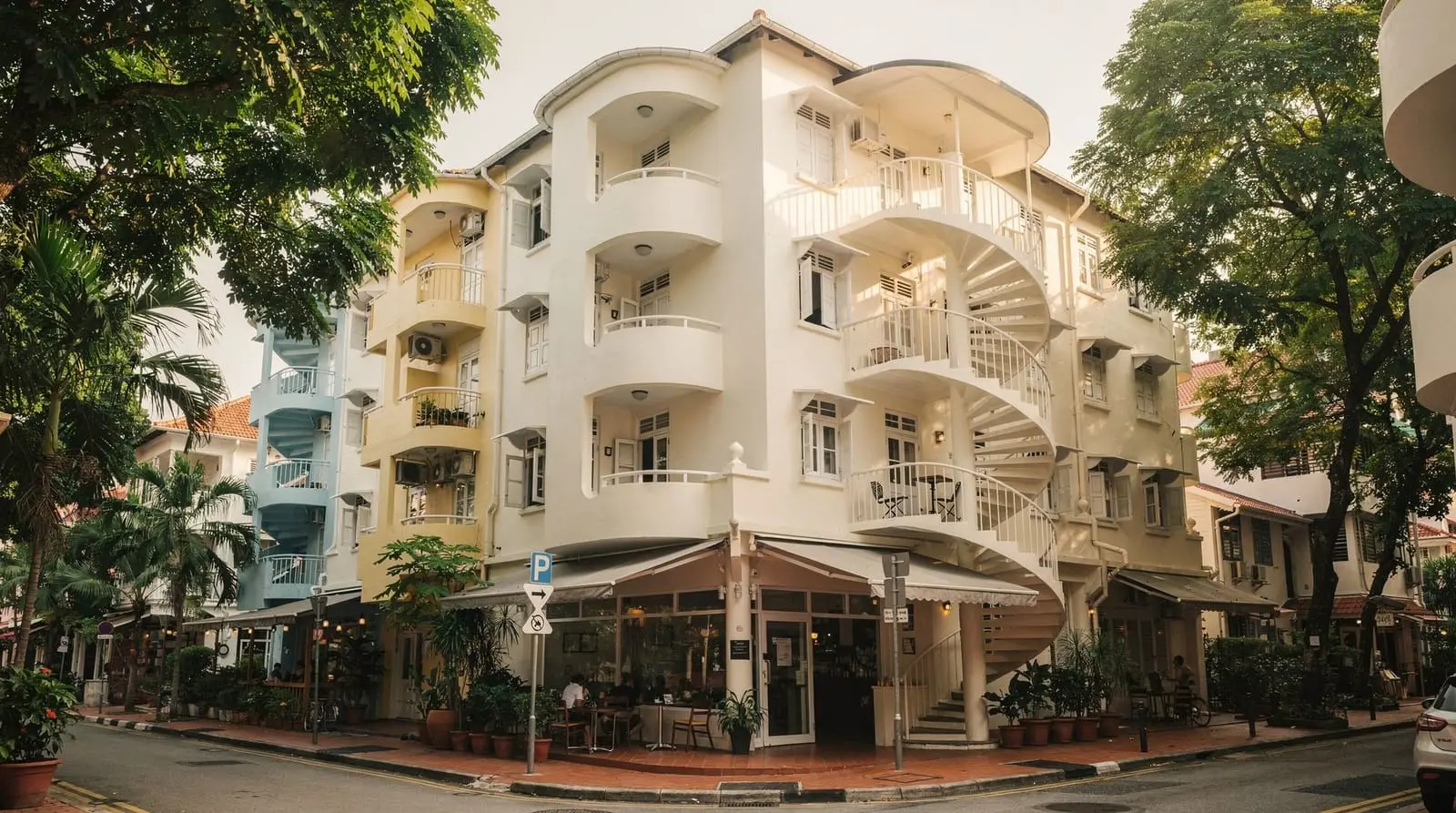
The Singapore Improvement Trust (SIT) housing estate was one of the first mass public housing projects in Singapore, built to rehouse slum dwellers from the city centre. The buildings are streamline moderne / art deco — curved facades, porthole windows, open-air corridors, and roof terraces designed to maximise ventilation before air conditioning existed. They look nothing like standard public housing.
The best streets for the architecture are Yong Siak Street, Eng Hoon Street, and the curved blocks on Guan Chuan Street. The rounded corners, horizontal banding, and exterior walkways are distinctive. Several of the ground-floor units have been converted into shops and cafés while the upper floors remain residential — the people who live here are a mix of elderly original tenants (some still in units their families have occupied for 60+ years) and younger professionals who moved in as rents rose in the 2010s.
Tiong Bahru: stories and snacks walking tour through Singapore’s oldest estateTiong Bahru Market
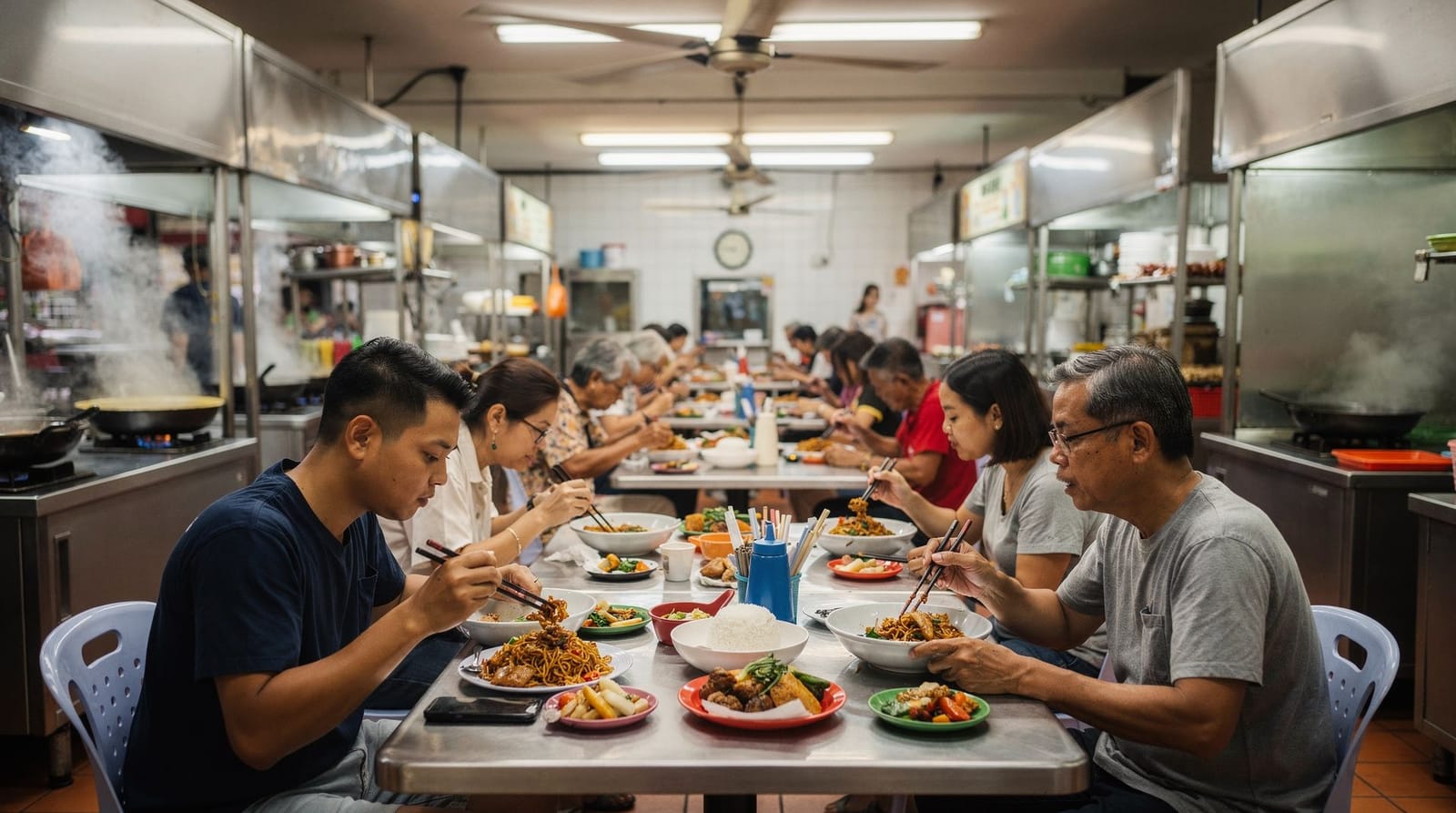
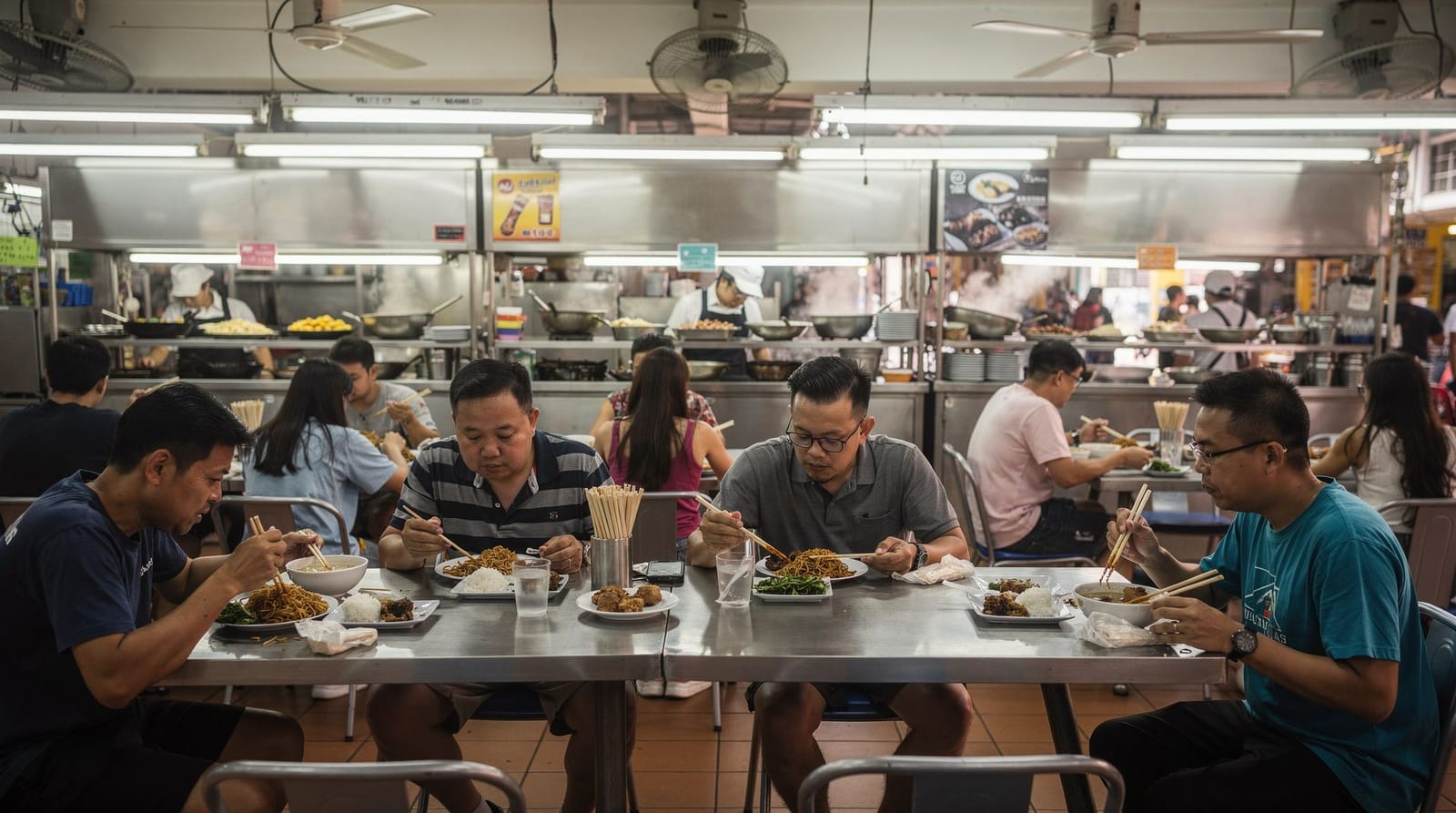
The wet market and hawker centre at Tiong Bahru Market (open from 06h daily) is the neighbourhood anchor. The wet market occupies the ground floor: fish, meat, vegetables, herbs, and tropical fruits. The hawker centre above has stalls that have been in the same families for decades.
What to eat: Tiong Bahru Hainanese Boneless Chicken Rice (Stall #02-82) is the most famous single stall — a Michelin Bib Gourmand holder, regularly cited among the best chicken rice in Singapore. Queue forms by 07h30 and the stall often sells out before noon. Lian He Ben Ji Claypot Rice at #02-85 for clay pot rice (dinner only, queues after 18h). Chai Chee Pork Porridge if you want a lighter breakfast.
The market atmosphere is at its most local on Saturday and Sunday mornings — genuinely used by residents rather than curated for visitors. See the Tiong Bahru market guide and best hawker centres for stall-by-stall detail.
Books Actually and the independent shops
Books Actually on Yong Siak Street is one of the few independent bookshops left in Singapore, and one of the best in the region. It focuses on Singaporean and Southeast Asian literature, with a strong section of local authors, small press titles, and out-of-print books. The shop also operates Math Paper Press, which publishes Singapore’s most interesting independent literary titles. Worth visiting even if you don’t plan to buy — it is one of the few spaces in the city that feels genuinely literary rather than commercial.
Around Books Actually, Yong Siak Street has a concentration of small independent businesses: Nana & Bird (women’s fashion, independently owned), Plain Vanilla Bakery (the breakfast option if the market hawker centre queue is too long), 40 Hands Coffee (one of Singapore’s first specialty coffee shops, opened 2010 when that was unusual).
The Tiong Bahru estate murals
A series of murals by Yip Yew Chong covers several walls throughout the estate, depicting historical scenes of Tiong Bahru life — the wet market as it was, children playing in the estate courtyards, older trades and hawkers. They are not the Instagram-optimised street art of Haji Lane; they are detailed historical paintings in a narrative style. The full mural trail is about 1.5 km; a guided tour covers the history behind each image.
Tiong Bahru: explore Singapore’s oldest estate — guided walking tourGetting there and around
Tiong Bahru MRT (East-West Line) is the main access — 5 minutes’ walk from the MRT exit to the market and the main shopping streets of Yong Siak and Eng Hoon. The neighbourhood is small enough to walk entirely in 2 hours.
By bus: several buses connect Tiong Bahru to Chinatown (10 min), the CBD, and the Botanic Gardens. The Botanic Gardens and Tiong Bahru walking tour connects these two green-adjacent destinations with breakfast included.
From Chinatown MRT it is also walkable — about 20 minutes north-west — though the route is not particularly interesting.
For a morning that starts at the Botanic Gardens and ends at Tiong Bahru market, book early — the guided breakfast tour combines both in 3.5 hours.
Botanic Gardens and Tiong Bahru walking tour with breakfastA suggested order for your visit
The easiest way to enjoy the neighbourhood is to let the market set the pace. Arrive early, eat first while the stalls are fresh and the queues are manageable, then walk the estate once the heat starts to build. Coffee comes last, when you want a place to sit and the shaded ground-floor cafés on Yong Siak Street are most welcome.
Start at the market for breakfast, then take the quieter residential lanes behind it rather than the main road. The blocks look different from the inside: laundry poles, potted plants on the open walkways, and the occasional neighbour chatting on a staircase landing. Keep your voice low and your camera respectful, because this is still a living community and not a heritage exhibit. After the architecture, head to Books Actually for a slow browse, and finish with a pastry or a coffee before you move on.
If you enjoy this kind of unhurried, local-feeling morning, the hidden gems Singapore guide and the Singapore for first-timers guide show how it fits around the better-known sights. The Singapore itinerary for a day and the three-day itinerary both leave room for a morning like this one.
Eating well without overspending
The market upstairs is the answer for anyone watching their budget, and it is also where the neighbourhood feels most itself. Order what the stall is known for rather than sampling widely, and bring small change. If you are new to the etiquette of shared tables and reserving seats with a packet of tissues, read the hawker etiquette and chope guide before you go. For a broader picture of what to order across the island, the what to eat in Singapore guide and the chicken rice guide give useful context for the stall everyone queues for here.
Cafés on Yong Siak Street suit a slower second breakfast. Treat them as a small treat rather than a daily habit, and let the market handle the main meal.
Who will enjoy Tiong Bahru most
Visitors on a second or third trip tend to appreciate it most, because they have already seen the skyline and the big gardens. Solo travellers, couples, and anyone interested in architecture or books will find plenty to fill a morning. Families can enjoy the market and the open walkways, though the café strip is better suited to adults. If your trip is built around Singapore with kids, keep this as a short, relaxed stop rather than a main plan. Rainy mornings work well here too, since the market and shops offer cover; see the Singapore in the rain guide for more ideas.
What Tiong Bahru is not
It is not a full-day destination unless you are deeply interested in urban heritage. The estate is about 20 blocks; the commercial strip on Yong Siak is short. After the market, the estate walk, and a coffee, most visitors have seen what there is to see.
It is also increasingly expensive for what it offers — the neighbourhood’s desirability has pushed café prices up significantly since the early 2010s. A flat white at 40 Hands costs SGD 7–8; plain vanilla croissants around SGD 5–6. This is not hawker pricing. The best cheap eats Singapore guide has alternatives if budget is a priority; but for a morning out in a genuinely interesting neighbourhood, the occasional higher coffee price is acceptable.
Connecting from Tiong Bahru
A half-day in Tiong Bahru connects naturally with Chinatown to the east (20 min walk or one MRT stop), or with the Botanic Gardens to the north (MRT via Jurong line from Tiong Bahru to Botanic Gardens station, about 20 min).
For neighbourhood-hopping in the western belt, the Dempsey Hill and Holland Village options are in the same general direction and offer different character — worth considering if you have a full day on the west side.
Tiong Bahru vs Chinatown vs Dempsey Hill
Three very different neighbourhood experiences sit within a short MRT ride of each other, and travellers often ask which to prioritise if time is short.
| Tiong Bahru | Chinatown | Dempsey Hill | |
|---|---|---|---|
| Character | Art deco housing, indie cafés | Temples, heritage streets, hawker food | Colonial black-and-white bungalows, upscale dining |
| Best for | A local morning, coffee, market | History, cheap eats, souvenirs | An evening meal or brunch, less crowded |
| Price level | Moderate (café pricing) | Low (hawker pricing) | High (restaurant pricing) |
If time allows only one, Chinatown covers more ground for a first-time visitor; Tiong Bahru rewards those who have already done the headline sights and want the local version. See the Chinatown guide and the Dempsey Hill guide for the fuller picture of each.
Frequently asked questions about Tiong Bahru
Is Tiong Bahru worth visiting or is it overhyped?
It depends on your travel style. For travellers who like neighbourhood architecture, independent bookshops, and breakfast in a genuinely local market, it delivers well. For travellers focused on major attractions, it is a gentle digression rather than a core stop. The hidden gems Singapore guide frames it correctly: a genuine local neighbourhood that is worth knowing about but not worth travelling across the world for.
When does Tiong Bahru Market open?
The wet market opens around 06h; the hawker stalls from around 07h. The most famous chicken rice stall (#02-82) often sells out by midday. Saturday and Sunday mornings are the busiest but also the most atmospheric.
How long should I spend in Tiong Bahru?
Two to three hours covers the market, the estate architecture, and a coffee stop on Yong Siak Street comfortably. Add another hour if you spend time in Books Actually. A half-day allows you to linger without rushing.
Are there guided tours of Tiong Bahru?
Yes — both the tiong-bahru-stories-snacks tour and the separate heritage walking tour are available through GetYourGuide. The stories-and-snacks format includes food samples at the market; the other is more focused on architectural history. Both are 2–2.5 hours.
Can I combine Tiong Bahru with the Botanic Gardens?
Yes — this is a natural pairing. Start at the Botanic Gardens (open from 05h, free) in the early morning, then take the MRT to Tiong Bahru for a late breakfast at the market. The guided tour that combines both with breakfast is about 3.5 hours and leaves from the Botanic Gardens entrance.
What is the best café in Tiong Bahru?
40 Hands on Yong Siak Street is the original specialty coffee shop and still one of the best. Plain Vanilla Bakery is preferred for pastries and a quieter atmosphere. Neither is cheap by hawker standards — factor in SGD 7–10 per person for coffee and a pastry.
Is Tiong Bahru safe and easy for solo travellers?
Yes. It is a low-key residential neighbourhood with steady foot traffic during the day and no particular safety concerns beyond standard city awareness. Solo travellers often find it one of the more comfortable places in Singapore to sit alone with a coffee and a book, and the compact size makes it easy to explore without a plan.
Top experiences
Bookable activities with verified prices and instant confirmation on GetYourGuide.