Tiong Bahru: Singapore's most charming neighbourhood guide
Tiong Bahru: stories & snacks in Singapore’s oldest estate
Duration: 2h
Is Tiong Bahru worth visiting in Singapore?
Yes — Tiong Bahru is a genuine neighbourhood worth a half-morning, especially for the Tiong Bahru Market (one of the best hawker centres in Singapore for breakfast), the 1930s art deco housing estate, and BooksActually, the independent bookshop. It is the most "local" of Singapore's popular neighbourhoods — gentrified but not touristified.
Tiong Bahru is not on the standard Singapore itinerary and most visitors to Singapore never see it. That is a genuine shame — this is where the city shows you a side of itself that is neither theme park nor heritage museum, but a real neighbourhood that happens to be beautiful, eat extremely well, and contain one of the best independent bookshops in Southeast Asia.
| Where | Tiong Bahru, southwest of the CBD |
| Cost | Free to walk; market breakfast SGD 6–12 |
| Getting there | MRT Tiong Bahru (EW17), Exit A, ~10 min walk |
| Time needed | 2–3 hrs; half-day with a proper meal and café stop |
| Best time | Weekday mornings, 07:00–11:00 |
Getting there and orientation
Tiong Bahru MRT (EW17, East-West Line) is the entry point. Exit A leads to Tiong Bahru Road, and from there it is a 10-minute walk to the market and the estate streets. Alternatively, use the Grab app for a short ride from anywhere in central Singapore (SGD 8–15 from Marina Bay).
The core area is compact — the Tiong Bahru Market, the Yong Siak Street café strip, and the art deco estate streets are all within a 15-minute walk of each other. Allow 2–3 hours minimum; a half-day if you eat a proper meal at the market.
Tiong Bahru Market and Food Centre
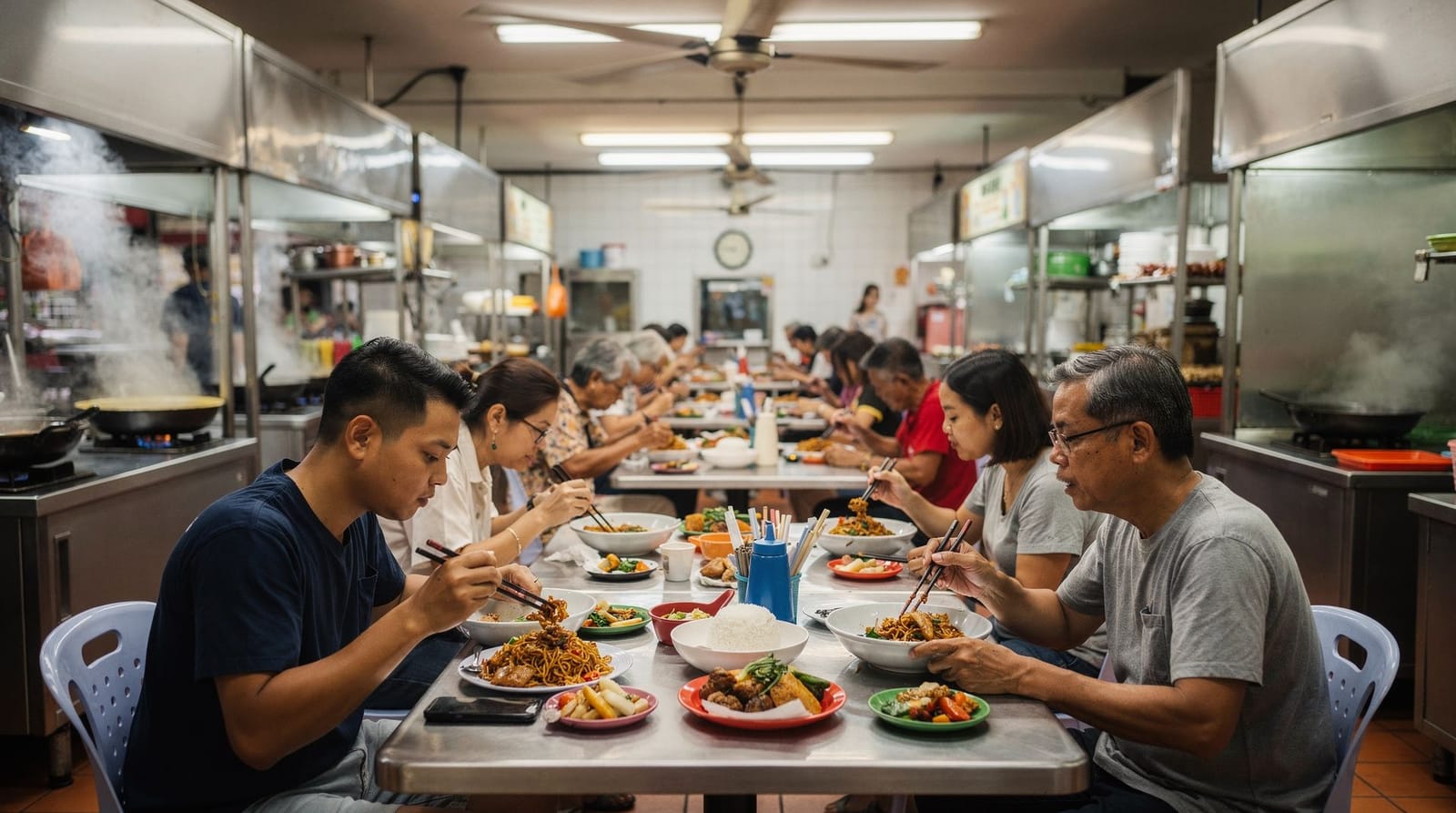
Tiong Bahru Market at 83 Seng Poh Road is the neighbourhood’s main reason to visit for food-focused travellers. The complex has a wet market on the ground floor (fish, vegetables, fresh produce) and a hawker food centre on the second floor.
The second-floor hawker centre is among Singapore’s best — it is used by locals, runs from early morning, and has stalls that have been operating for decades.
Key stalls to find:
- Jian Bo Tiong Bahru Chwee Kueh (stall 02–06) — steamed rice flour cakes (chwee kueh) topped with preserved radish and chilli. SGD 3–4 for a plate of six. A true Singapore breakfast classic; one of the best versions in the city.
- Tiong Bahru Boneless Braised Duck — braised duck and yam rice, a Teochew comfort food classic. SGD 5–6.
- Jian Xing Carrot Cake — fried chai tow kway (radish cake, confusingly called “carrot cake”) in black or white style. SGD 3–4.
- Tian Tian Lai — bak chor mee (minced pork and mushroom noodles in vinegar sauce). SGD 4–5.
The market is at its best between 07:00 and 11:00 for breakfast. Many stalls close by early afternoon. Weekend mornings are busiest. Arrive early.
For a guided tour of the estate and its food history:
Tiong Bahru: stories & snacks in Singapore’s oldest estateThe art deco housing estate
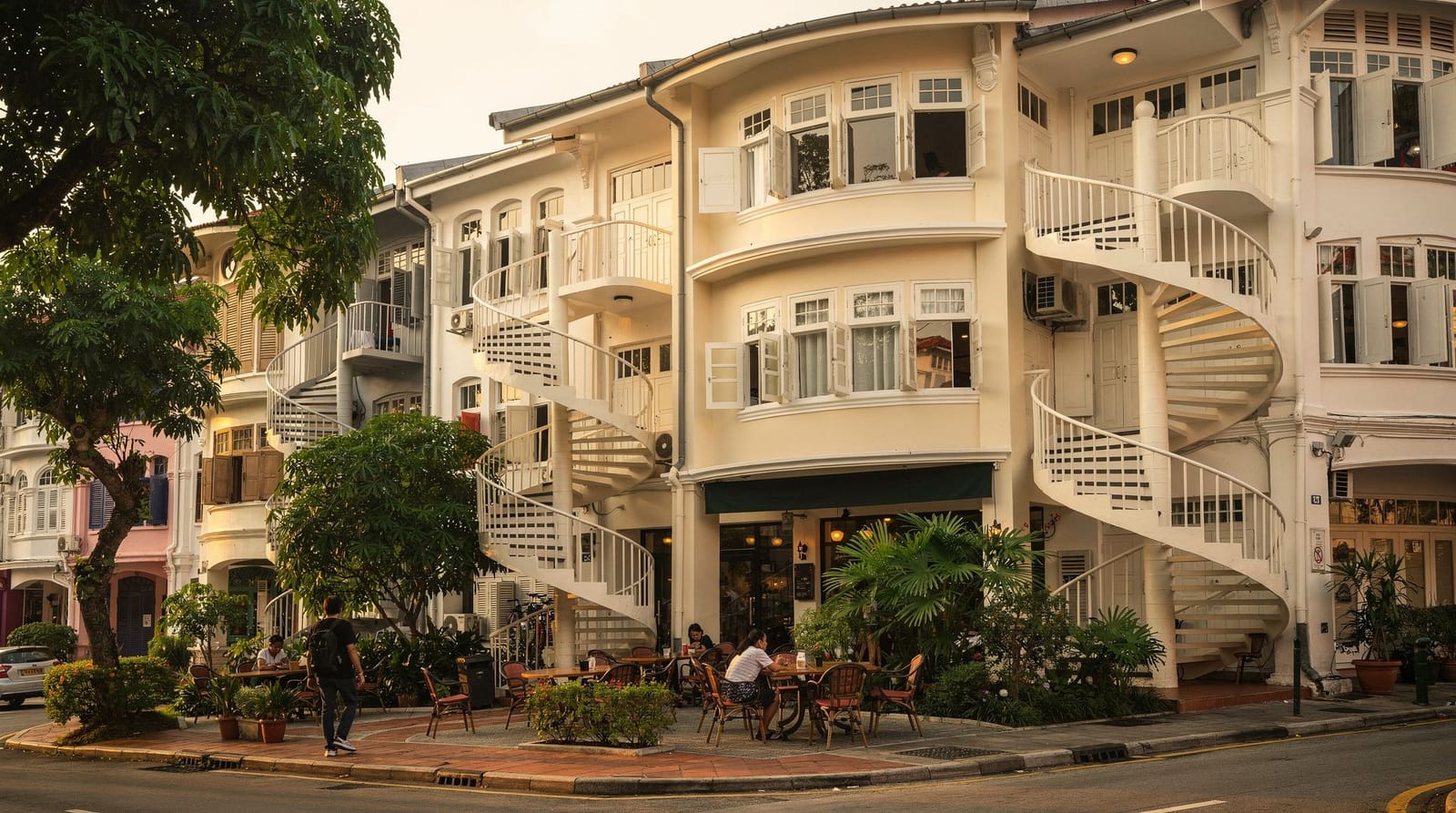
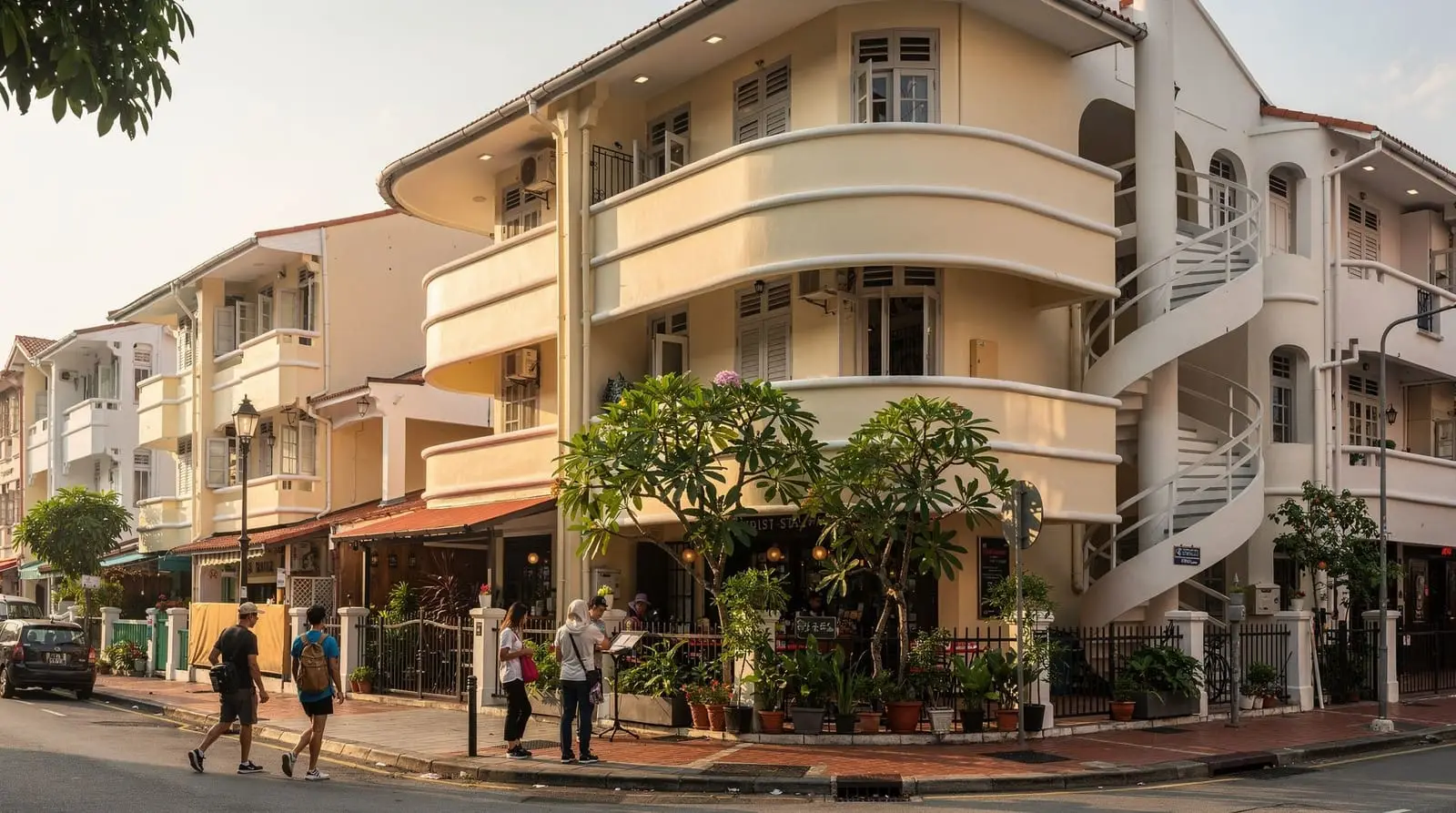
The Tiong Bahru estate is the main visual draw of the neighbourhood. Built between 1936 and the early 1950s by the Singapore Improvement Trust, the estate’s buildings are a rare example of British colonial-era modernism — Streamline Moderne style with curved corners, porthole windows (hublot windows), external walkways, and horizontal decorative banding.
Walk along these streets to see the best-preserved blocks:
- Guan Chuan Street — the most architecturally pure section
- Eng Hoon Street — a mix of original estate blocks and the café/bookshop street
- Lim Liak Street — more residential; see the original design of the curved balconies
- Yong Siak Street — the “gentrified” section with cafés and boutiques occupying the ground-floor shopspaces
The buildings are a conservation area and cannot be demolished or substantially altered externally. They are occupied as residences — the ground floors of some blocks have been converted to commercial use (cafés, hair salons, shops) while the upper floors remain apartments. The contrast of the 1930s exterior with a specialty coffee shop inside is very Tiong Bahru.
The mural on the Tiong Bahru Road external wall of the estate (a painted representation of the old estate life) is a popular photography spot and gives context for the neighbourhood’s history.
How to read the estate as you walk
Slow down and look up. The charm of the estate is in the repeated details rather than any single landmark: the rounded corners that make each block look like the bow of a ship, the narrow balconies stacked above one another, and the small round windows that give the “porthole” look. Once you notice them on one block, you start spotting them everywhere, and the walk turns from a stroll into a small architecture lesson. For the wider neighbourhood context, the Tiong Bahru destination page gives the bigger picture.
Remember that people live here. Keep your voice down on the stairwells and walkways, do not wander into private corridors, and ask before photographing residents. The best photographs are usually taken from the street, where the full curve of a block is visible.
If you like the idea of eating your way through the area with someone who knows its stories, the dedicated Tiong Bahru Market guide goes deeper into the stalls than this overview can.
Yong Siak Street: the café strip
Yong Siak Street runs through the estate and is now the concentration of Tiong Bahru’s independent café and retail scene.
Tiong Bahru Bakery (56 Eng Hoon Street, nearby) is the most visited — a French-owned bakery whose croissants are genuinely excellent, made from scratch each morning. The kouign-amann and pain au chocolat are also worth the small queue on weekend mornings. Prices are reasonable by Singapore standards (SGD 3.50–5.50 for pastries, SGD 5.50–7 for a coffee).
Forty Hands (78 Yong Siak Street) is the café that began Tiong Bahru’s coffee scene around 2011. Good espresso, all-day brunch menu, small tables and local atmosphere. SGD 5–7 for coffee; brunch dishes SGD 14–20.
BooksActually (9 Yong Siak Street) is independent Singapore’s most celebrated bookshop — a small, packed-shelf store with a serious focus on Singapore and Southeast Asian literature, small press fiction, and the kind of books you would not find in an airport. Open Tuesday–Sunday. Worth buying something here if you have room in your bag.
Nana + Bird (9 Yong Siak Street, beside BooksActually) is a women’s fashion boutique carrying local and regional independent designers.
Where Tiong Bahru sits in the city
Tiong Bahru is a short distance from both Chinatown and the Singapore Botanic Gardens, making natural combinations:
- Tiong Bahru market breakfast + Chinatown (Sri Mariamman Temple, Buddha Tooth Relic Temple, Chinatown Complex for lunch) — 15 minutes between the two by bus or short Grab ride. See Chinatown guide.
- Tiong Bahru market breakfast + Botanic Gardens (late morning) — about 20 minutes by bus, or take a guided combination tour. See Botanic Gardens guide.
The neighbourhood is also a quiet afternoon retreat after the heat and crowds of Marina Bay or Sentosa.
Eating at the market: a few practical habits
If it is your first hawker meal, the unwritten rules are simple: find a table first, then order, and never leave a seat unattended without a marker. Our hawker etiquette and chope guide explains how this works. Going with a friend helps, since one person can hold the table while the other queues.
Queues are a good sign rather than a warning. A long line at a stall usually means the food is fresh and turns over quickly, so join it and be patient. If you want a more traditional start to the day, pair your market visit with the local toast-and-coffee habit described in the kaya toast breakfast guide.
Getting around and choosing your day
Tiong Bahru slots easily into a day of travel on the MRT and buses; the getting around Singapore guide covers the practicalities. Because the area is compact and mostly outdoors, choose your day with the weather in mind. The best time to visit Singapore page helps with planning, and if a shower catches you out, Singapore in the rain has ideas for staying dry without abandoning the morning.
Tiong Bahru vs Katong: which to choose
Both are genuine, non-touristy neighbourhoods, but they suit different priorities:
| Tiong Bahru | Katong / Joo Chiat | |
|---|---|---|
| Strength | Art deco architecture, café scene | Peranakan food and shophouses |
| Distance from centre | ~10 min MRT | ~20 min from centre |
| Best time | Weekday morning (market) | Any time, food-focused |
| Pair with | Chinatown or Botanic Gardens | East Coast Park |
If you only have time for one and food is your priority, choose Katong and Joo Chiat; if architecture and café culture matter more, choose Tiong Bahru.
A half-day Tiong Bahru itinerary
07:00–08:30: Breakfast at Tiong Bahru Market — chwee kueh, braised duck rice, or carrot cake while the stalls are freshest.
08:30–09:30: Walk the art deco estate streets (Guan Chuan Street, Eng Hoon Street, Lim Liak Street), photographing the curved balconies and porthole windows while the morning light is soft. This is also a strong entry on the Instagram spots guide.
09:30–10:30: Coffee and a pastry on Yong Siak Street (Tiong Bahru Bakery or Forty Hands), then browse BooksActually.
10:30 onward: Either continue to Chinatown (15 minutes) or the Botanic Gardens (20 minutes) for the rest of the morning, or head back into the city.
This structure keeps you ahead of both the heat and the weekend crowds, and it is realistic on a budget — see Singapore on a budget for how a morning like this fits a low-spend itinerary. For more low-key, non-touristy corners of the city in the same spirit, see hidden gems in Singapore.
Is Tiong Bahru overrated?
There is some pushback from long-term Singapore residents that Tiong Bahru has been over-gentrified and that the original hawker and local character has been diluted. This is partially true: Yong Siak Street is expensive by Singapore standards, and some of the original ground-floor shops have been replaced by boutiques.
However: the market remains entirely local and genuinely excellent. The estate architecture is authentic and unchanged. The neighbourhood is far more genuine than the Heritage Centre theme-park version of Singapore’s past. It earns its reputation — just go primarily for the market and the architecture, and the café scene is a bonus rather than the main event.
Practical information
MRT: Tiong Bahru (EW17), Exit A. Walk 10–12 minutes to the market and estate streets. Opening hours: Market from ~06:00; cafés from 08:00–10:00; BooksActually from 11:00 Tuesday–Sunday. Best time: Weekday mornings (07:00–11:00) for the market; weekend mornings feasible but busy. Weekday afternoons for a quiet café visit and estate walk. Budget: Market breakfast SGD 6–12; pastries at Tiong Bahru Bakery SGD 3.50–5.50 + coffee; BooksActually books from SGD 15.
For Singapore’s best eating overall: best hawker centres and what to eat in Singapore.
Frequently asked questions about Tiong Bahru
What makes Tiong Bahru special?
The combination of three things: 1930s Streamline Moderne architecture, one of Singapore’s best hawker centres, and a small but excellent independent retail scene. No other Singapore neighbourhood has all three. It is also genuinely a living residential area, not a reconstructed heritage display.
Is Tiong Bahru good for a rainy day?
The market and café strip are largely covered, making them workable in rain. The art deco estate buildings have original five-foot covered walkways. It is not a great rainy-day destination compared to a museum, but a morning market visit is feasible in light rain.
How does Tiong Bahru compare to Katong?
Both are genuine neighbourhoods away from the main tourist circuit. Tiong Bahru is more architecturally homogeneous (art deco estate), more café-focused, and geographically closer to the city centre. Katong is more food-first, more overtly cultural (Peranakan heritage), and further east. If you only have time for one, choose based on priority — food and Peranakan culture points to Katong; architecture and independent café scene points to Tiong Bahru.
Can I do a self-guided walk of Tiong Bahru?
Yes, easily. The estate is well-signposted and the architecture is immediately visible — no guide needed to appreciate the buildings. The market stalls are labelled. For deeper food and social history context, the Stories and Snacks tour (linked above) is the best guided option and runs in about two hours.
What time does Tiong Bahru Market close?
Most hawker stalls at Tiong Bahru Market are at their best between 07:00 and 12:00. Some stalls close by 14:00 once their daily supply runs out. A few stalls (mainly drinks and noodles) operate into the evening. The wet market on the ground floor typically runs until around 13:00–14:00.
Top experiences
Bookable activities with verified prices and instant confirmation on GetYourGuide.