Singapore haze season: what it is, when it happens, and how to plan around it
Singapore: Gardens by the Bay bundle entry ticket
Should I worry about haze when visiting Singapore?
Haze is a real and recurring issue in Singapore from August to October, caused by transboundary smoke from land-clearing fires in Sumatra and Kalimantan (Indonesia). Most years haze is mild to moderate (PSI 51–100) and only affects the most sensitive individuals. Severe haze years (PSI 150+) are less common and concentrated in El Niño years. Check haze.gov.sg daily during your visit. Most indoor activities are unaffected.
What is Singapore haze?
Singapore’s haze is a recurring annual issue caused by transboundary smoke. Each year between August and October, agricultural land-clearing fires in Sumatra and Kalimantan (Indonesian Borneo) send smoke across the Straits of Malacca and Strait of Singapore into Singapore’s air.
This is not industrial pollution or traffic smog — it is wildfire smoke from intentional burning (oil palm plantation clearing) and uncontrolled peat fires. When wind and weather conditions align, Singapore can be blanketed in smoke within 24–48 hours. When conditions shift, it clears.
The haze has been a recurring regional issue since the 1990s. It is politically complex (the fires are in Indonesia; the smoke crosses into Singapore and Malaysia), and despite repeated regional agreements, the fires continue.
| When | Around August–October, peaking September–October |
| Cause | Transboundary smoke from land-clearing fires in Sumatra and Kalimantan |
| Check | haze.gov.sg or the myENV app, updated hourly |
| Typical severity | Mild to moderate most years (PSI 51–100); severe years cluster around El Niño |
| Best time to avoid it | February–April or June–July for the clearest air |
Haze risk by month
| Month | Typical risk | Notes |
|---|---|---|
| Jan–Feb | Low | Occasional light haze, rarely disruptive |
| Mar–Apr | Low | Generally clear; good for outdoor plans |
| May–Jun | Low–moderate | Early dry-season burning can occasionally drift in |
| Jul | Moderate | Risk begins to build ahead of peak season |
| Aug | Moderate–high | Haze season typically begins |
| Sep | High | Peak month in most years |
| Oct | High | Peak season continues, often the worst month in El Niño years |
| Nov–Dec | Low–moderate | Monsoon rains usually clear the air by late November |
The PSI scale: what the numbers mean
Singapore measures air quality using the Pollutant Standards Index (PSI), which aggregates readings for particulate matter (PM2.5 and PM10), ozone, sulphur dioxide, nitrogen dioxide, and carbon monoxide into a single number. PSI readings are published at haze.gov.sg and updated hourly.
PSI 0–50 (Good): No health concern. Outdoor activities as normal.
PSI 51–100 (Moderate): Generally acceptable for most people. Sensitive groups (respiratory conditions, elderly, children, pregnant women) should consider reducing prolonged outdoor exertion. Haze is not yet visually obvious.
PSI 101–200 (Unhealthy): Everyone should reduce prolonged outdoor exertion. Sensitive groups should avoid all outdoor activity. The haze is clearly visible. Schools may close or restrict outdoor activity.
PSI 201–300 (Very Unhealthy): Outdoor activity is not recommended for anyone. N95 masks recommended for necessary outdoor exposure. Major events are cancelled or moved indoors.
PSI 300+ (Hazardous): Avoid all outdoor activity. Schools close. Emergency health advisory. Singapore’s most severe haze events (2013, 2015) hit this range briefly.
The critical number: Singapore uses 24-hour PSI as the main health benchmark. The hourly readings can spike during short-term smoke plumes but the 24-hour average is what health advisories are based on. Check both — a high hourly reading matters for immediate outdoor activity even if 24-hour PSI is lower.
How to check haze levels
haze.gov.sg — the NEA’s dedicated haze portal. Real-time PSI by region (North, South, East, West, Central), updated hourly. Health guidance by PSI bracket is published alongside readings.
myENV app — the NEA’s official app (iOS and Android) includes PSI readings, health advisories, and rain/weather data. Set up notifications for PSI threshold alerts. Free.
PSI by region: Singapore is divided into five regions. You want to check the region where your planned outdoor activities are, not just the national average.
Important: PSI readings can change significantly within hours as smoke plumes shift with wind direction. A 7am reading does not reliably predict 3pm conditions during active haze periods.
What haze actually looks like in person
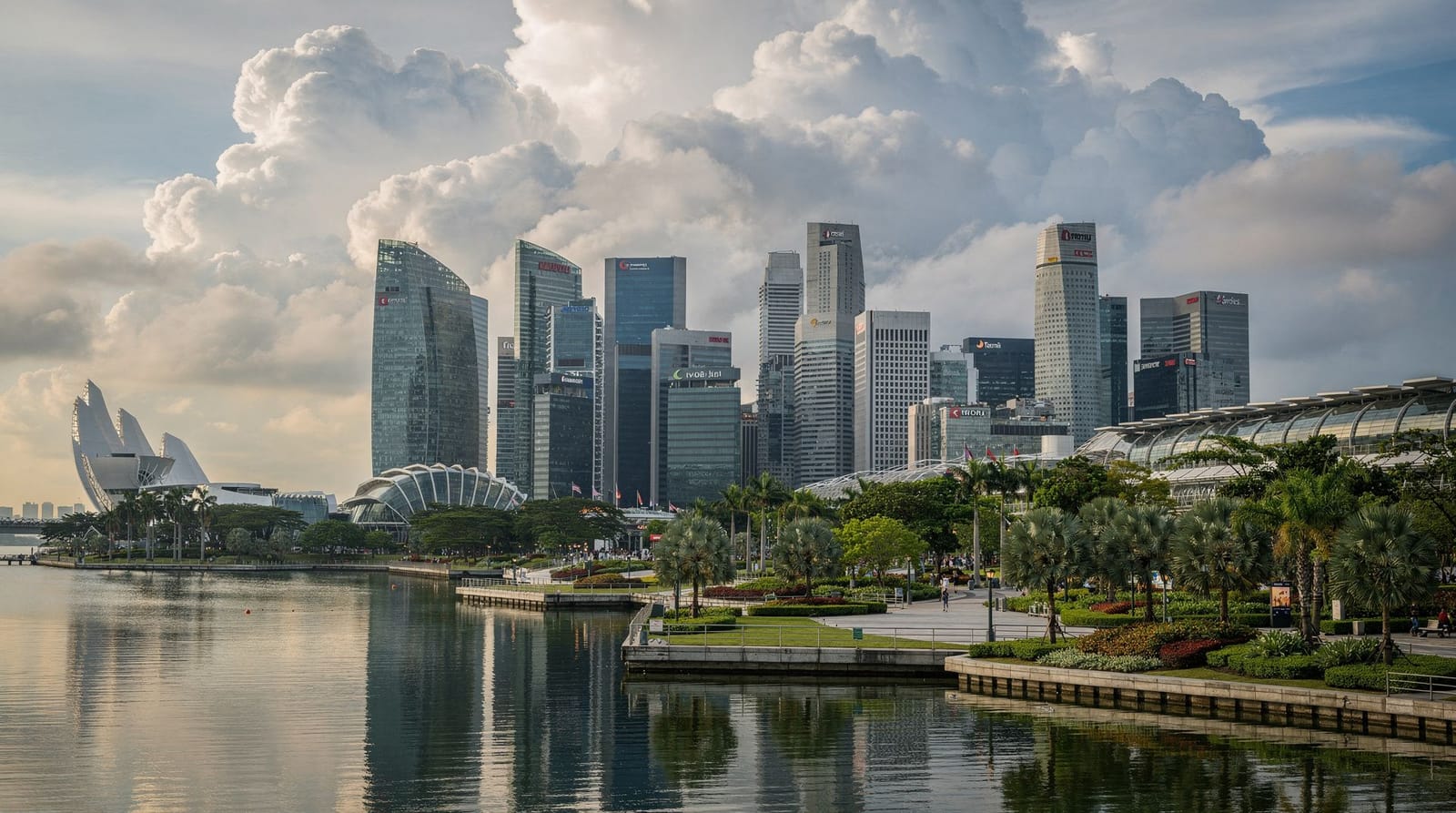
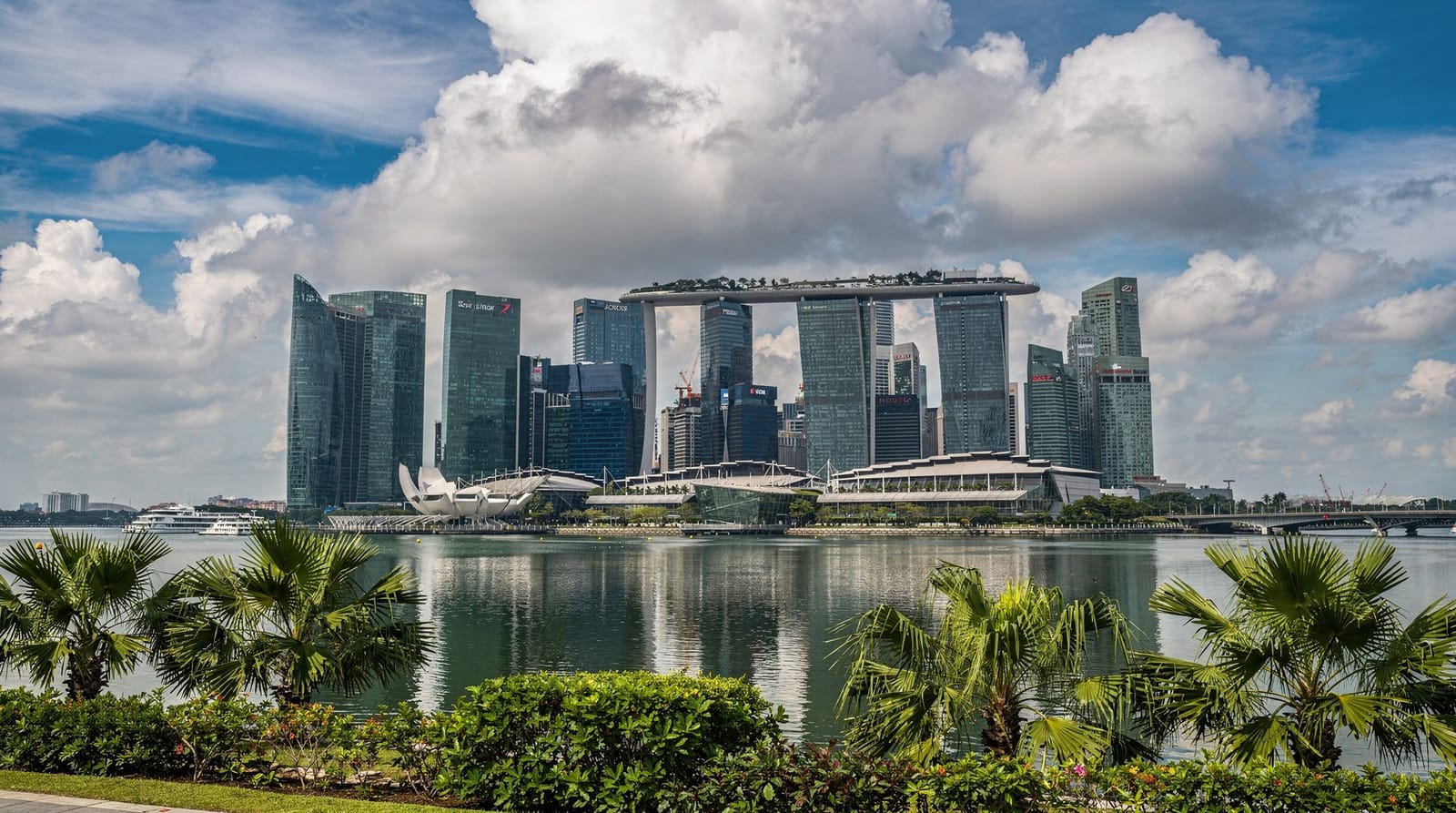
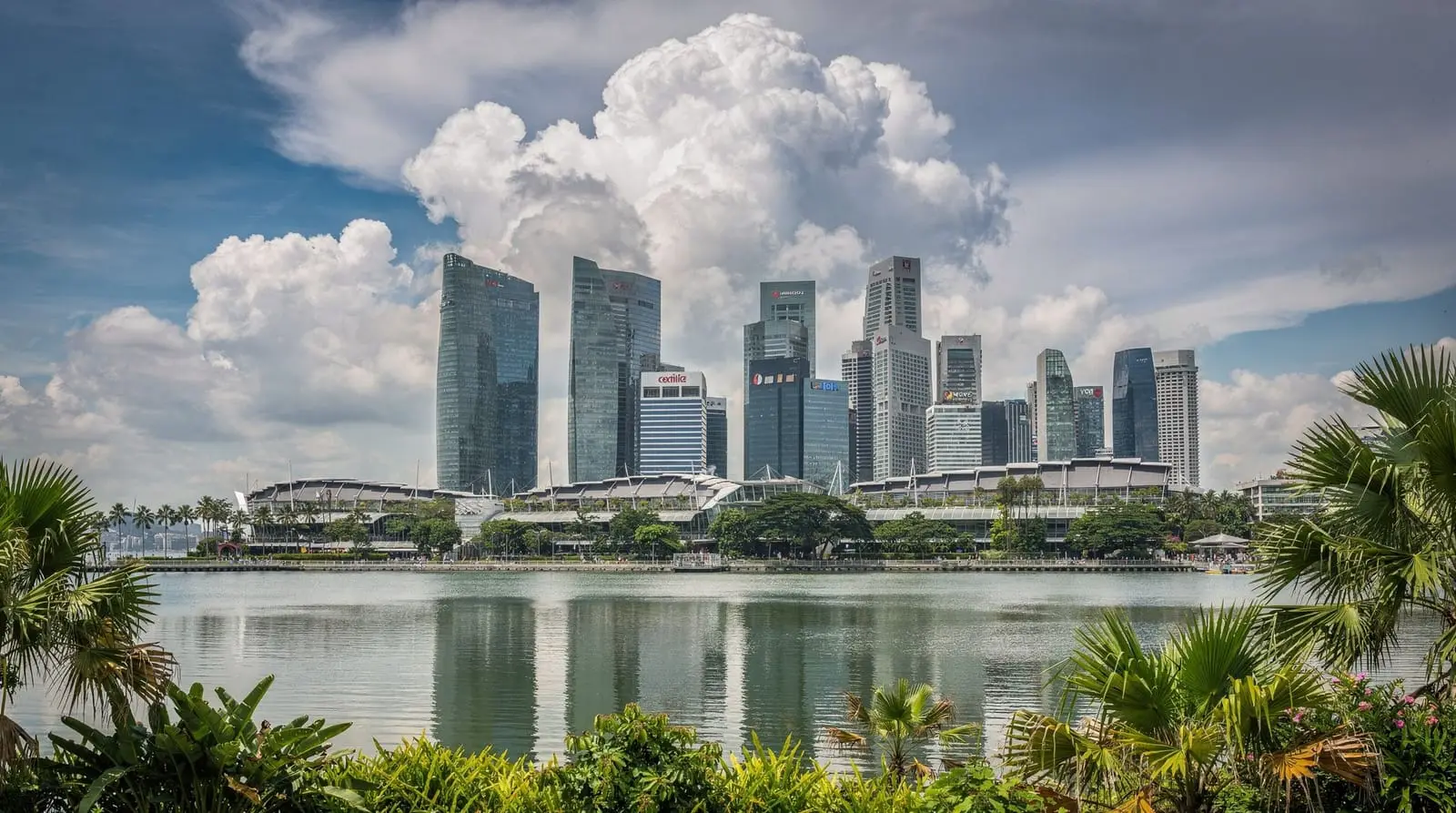
PSI 51–100 (Moderate): If you did not know what to look for, you might not notice. The sky looks slightly milky or washed out. Distant views (looking across Marina Bay to MBS, for example) may seem slightly less sharp than usual. No smell.
PSI 100–150: Clearly visible. The morning sky often has an orange-pink tint. The MBS skyline across the bay looks noticeably hazy. The sun appears red-orange even when high in the sky. A faint burning smell is detectable outdoors.
PSI 150–200: Obvious to anyone. The sky is brownish-grey, distant buildings are obscured, and the smell of smoke is clear. Many people feel eye and throat irritation after more than 30 minutes outdoors.
PSI 200+: Dramatic and unpleasant. Visibility can drop below 3 km. The air smells strongly of wood smoke. Eyes water, throats are scratchy. This is the level where masks are genuinely necessary outdoors.
How haze affects your Singapore visit
Unaffected attractions (indoor, air-conditioned):
- Universal Studios Singapore
- S.E.A. Aquarium and all Sentosa indoor attractions
- Gardens by the Bay Cloud Forest and Flower Dome (glass domes, filtered air)
- ArtScience Museum, National Gallery, all major museums
- Hawker centres and food courts
- Shopping malls
- Marina Bay Sands SkyPark (indoor observation deck views are still interesting through haze — the photographs are atmospheric, not spoiled)
Significantly affected attractions (primarily outdoors):
- Singapore Zoo and Night Safari (outdoor animal exhibits)
- Sentosa beaches and cable car
- Southern Ridges and nature trails
- Pulau Ubin cycling
- Rooftop bars — views are obscured and prolonged exposure is not recommended above PSI 100
Moderately affected:
- Gardens by the Bay outdoor Supertree Grove — the superforest walkway is worth reduced time but the dramatic views are softer in haze
- River cruises — the boat trip itself is pleasant but Marina Bay skyline views are reduced
N95 masks: do you need them?
At PSI below 100 — no. At PSI 100–150 — optional, sensible for sensitive individuals during prolonged outdoor exposure. At PSI 150+ — yes for extended outdoor exposure. At PSI 200+ — essential if you must be outdoors.
Which mask: Only N95 respirators (or equivalent FFP2/KN95) filter the fine particulate matter (PM2.5) in smoke haze. Standard surgical masks and cloth masks do not filter fine particles effectively. N95s are widely available at pharmacies throughout Singapore (Guardian, Watsons, Unity) at approximately SGD 2–5 per mask. Do not buy disposable N95s in bulk — they are typically marked up near attractions.
A note on tourist comfort: The vast majority of Singapore visitors during haze season experience PSI readings below 100 and spend most of their time in air-conditioned environments. N95 masks are often seen worn by locals as a precaution but are rarely medically necessary for most tourists at moderate PSI levels.
Should you change your travel plans for haze?
If you have not yet booked: Avoid booking outdoor-heavy Singapore itineraries for August–October and especially September. If your primary goal is outdoor experiences (nature trails, cycling, beach days, wildlife parks), February–April or June–July gives far better odds of clear air.
If you have already booked: Almost certainly do not cancel. Singapore’s indoor offering is world-class. You can have an excellent, full Singapore trip with PSI up to 150 by focusing on indoor attractions, hawker food, museums, and air-conditioned experiences. Even at moderate haze, evening outdoor time is often comfortable.
Day-of decisions: Check PSI before each day’s outdoor activities. A haze event that starts Monday may clear completely by Wednesday. Be flexible rather than writing off outdoor plans entirely.
What Singapore does during haze events
During significant haze events (PSI 100+), Singapore activates:
- Health advisories from the Ministry of Health
- School outdoor activity restrictions (PE lessons moved indoors at PSI 100+, school closures at PSI 200+)
- Advice to employers to allow outdoor workers to reduce time outdoors
- Public N95 mask distribution during severe events (PSI 200+)
- Monitoring and publication of PM2.5 hourly readings alongside PSI
The NEA and health authorities are experienced at managing haze communications and are reliable sources of guidance.
Haze and specific traveller groups
Travelling with young children: Children are more sensitive to particulate matter than healthy adults, so treat the Moderate PSI band (51–100) as the threshold for reducing outdoor time rather than waiting for Unhealthy readings. Indoor attractions like ArtScience Museum, Jewel Changi, and the Gardens by the Bay domes make it easy to fill a full day without prolonged outdoor exposure. See Singapore with kids for a broader family-planning guide that works well alongside haze-conscious scheduling.
Singapore: Gardens by the Bay bundle entry ticketTravellers with asthma or respiratory conditions: Pack any regular medication and consider bringing your own N95/KN95 masks rather than relying on finding stock locally during a severe episode, when pharmacy supplies can run low quickly. Check haze.gov.sg the morning of any planned outdoor activity rather than relying on a forecast from days earlier.
Business travellers with fixed outdoor commitments: If an itinerary includes an outdoor event (rooftop function, golf, an outdoor dinner) during August–October, build in a monitored fallback venue. Most hotels and event organisers in Singapore are experienced with haze contingency planning and can pivot quickly.
Comparing haze season to Singapore’s other seasonal considerations
Haze is one of three seasonal factors worth weighing against each other when picking dates: haze (August–October), the wetter monsoon stretch (November–January, heavier and more frequent rain), and the hot, generally drier window (February–April) that tends to have Singapore’s clearest skies. None of these make Singapore unpleasant — the city is designed around all of them with air-conditioning, covered walkways, and an enormous indoor attraction base — but if outdoor time matters most to your trip, February–April edges out the other windows. See best time to visit Singapore and Singapore weather month by month for the fuller year-round breakdown, and Singapore in the rain for how to handle the wetter months specifically.
Building a haze-proof itinerary
The easiest way to keep a trip enjoyable when the air is poor is to build each day around a few indoor anchors and treat outdoor time as a bonus. Singapore makes this simple, because so much of the city is connected by air-conditioned malls, stations and covered walkways.
Museums and culture. The museums guide covers the full range, and free museums in Singapore helps if you are watching costs. The National Museum, the Asian Civilisations Museum and the Peranakan Museum each fill a few hours comfortably.
Food as a plan. Eating is the most haze-proof activity in the city. Start with what to eat in Singapore and best hawker centres, then pick a covered centre such as Maxwell Food Centre or Lau Pa Sat. The Chinatown complex food guide suits a hazy morning, and Orchard Road shopping gives you a long, cool afternoon under a roof.
Family days. If children are with you, rainy day with kids and Jewel Changi with kids work just as well for haze as they do for rain. The Singapore rainy-day itinerary is a ready-made template that doubles as a haze plan.
Making the most of the evenings. When the air improves after dark, Singapore at night and Marina Bay after dark are good places to spend it. The Spectra light show guide explains how to watch from the waterfront. For a longer view of the whole trip, the Singapore 3-day itinerary is easy to rearrange so the outdoor stops land on the clearest day.
Singapore: Singapore River cruiseIf you are still choosing dates, the Singapore for first-timers guide and what to pack for Singapore will help you decide what to bring. The wider Singapore weather overview is also worth a read before you commit.
Frequently asked questions about Singapore haze
Is haze worse on Sentosa?
Haze is roughly uniform across Singapore’s small area, so Sentosa is not more or less affected than the mainland. Sentosa is particularly notable for haze because beach visits are outdoor activities — at PSI 100+, lying on Siloso Beach for 4 hours is not a good idea. The Sentosa cable car operates during moderate haze but visibility across the southern islands is reduced.
Does the Singapore Zoo close during haze?
The Singapore Zoo and Night Safari do not typically close for moderate haze (PSI 100–150). They have issued advisories recommending visitors minimise time in outdoor areas during higher PSI episodes and may restrict some outdoor activities. At PSI 200+, major outdoor operations would likely be curtailed — but this level is rare.
Can I see the Marina Bay skyline during haze?
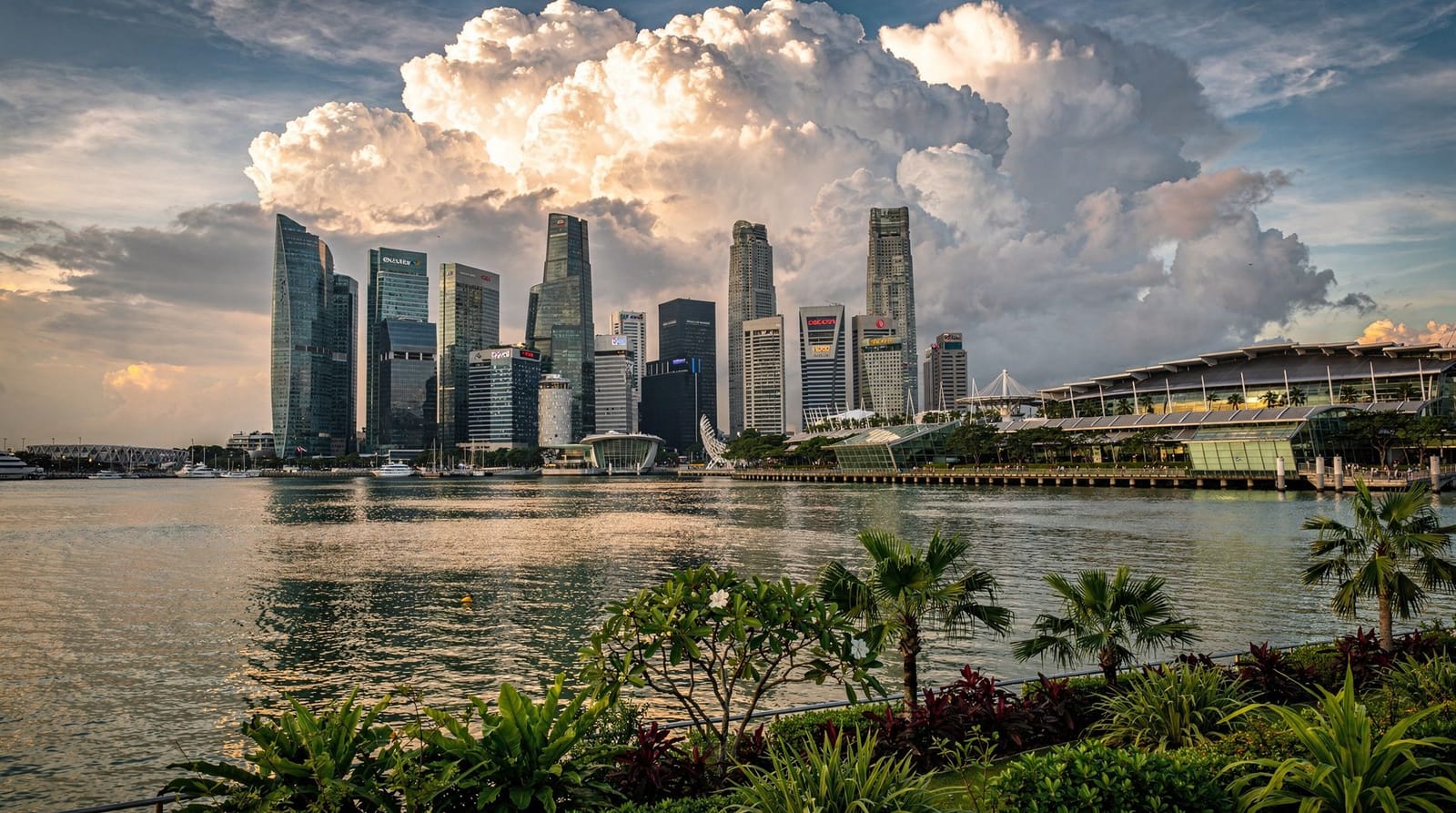
Yes, but with varying clarity. At PSI 50–80, the Marina Bay skyline looks normal. At 100–150, it looks atmospheric — the buildings have a hazy, soft focus look that some photographers actually prefer. At 200+, distant buildings are obscured and the characteristic Singapore skyline view is lost.
Is haze a problem for photography?
Moderate haze creates warm, diffused light that can be attractive for golden hour and blue hour photography — many professional Singapore photographers take advantage of hazy conditions for the soft, warm sky tones. Severe haze (PSI 150+) makes distant skylines and landscape shots much less sharp. For clear, crisp cityscape photography, aim for February to April or post-rain evenings during any month.
My visit overlaps with haze season — what is the best Singapore day plan?
Start outdoor activities early (7–9 am when PSI is often lower and temperatures are cooler). Target indoor attractions for the 11 am–4 pm period. Return outdoors in the late afternoon if PSI has not worsened. A sample day: morning at Chinatown or Little India walking, midday at ArtScience Museum & teamLab Future World or National Gallery Singapore, afternoon at Gardens by the Bay Cloud Forest and Flower Dome, evening hawker dinner followed by the Spectra light show.
Does the F1 night race happen during haze season?
Yes — the Singapore Grand Prix falls in late September or early October, exactly when haze peaks. In practice, the race has not been cancelled for haze, though drivers have commented on air quality during some race weekends. As an outdoor event in an open-air circuit, attending during a severe haze year would be uncomfortable. The F1 weekend organisers monitor conditions and issue guidance. See Singapore F1 night race: honest guide to tickets, logistics, and whether it’s worth it for the full Grand Prix guide.
Top experiences
Bookable activities with verified prices and instant confirmation on GetYourGuide.