Johor Bahru
Johor Bahru is Malaysia's border city 30 minutes from Singapore — Legoland, Desaru waterpark, Johor seafood, and affordable shopping across the Causeway.
Singapore: LEGOLAND Malaysia entry ticket & transfer
Quick facts
- Country
- Malaysia — passport required; visa-free for most Western nationalities for up to 30–90 days
- Access from Singapore
- Woodlands Causeway (bus, taxi, on foot) or Tuas Second Link (typically by car or taxi)
- Distance
- Woodlands MRT to JB Sentral — approx 30–45 min by public transport (SBS Transit Bus 170, CW1/CW2)
- Currency
- Malaysian Ringgit (MYR); approx 1 SGD = 3.3–3.5 MYR as of 2026
- Key attractions
- Legoland Malaysia, Desaru Coast Adventure Waterpark, JB city food, KSL City Mall, Johor Bahru City Square
| Where | Johor Bahru, Malaysia — across the Causeway from Woodlands, Singapore |
| Cost | Hawker meal around MYR 8–15; Legoland entry around MYR 175–220 |
| Time needed | A day for Legoland or Desaru; half a day for JB city food and shopping |
| Getting there | Bus 170 or CW1/CW2 from Woodlands, or ferry to Desaru from Tanah Merah |
| Best time | Weekday mornings; avoid Friday evening and Sunday evening Causeway rush |
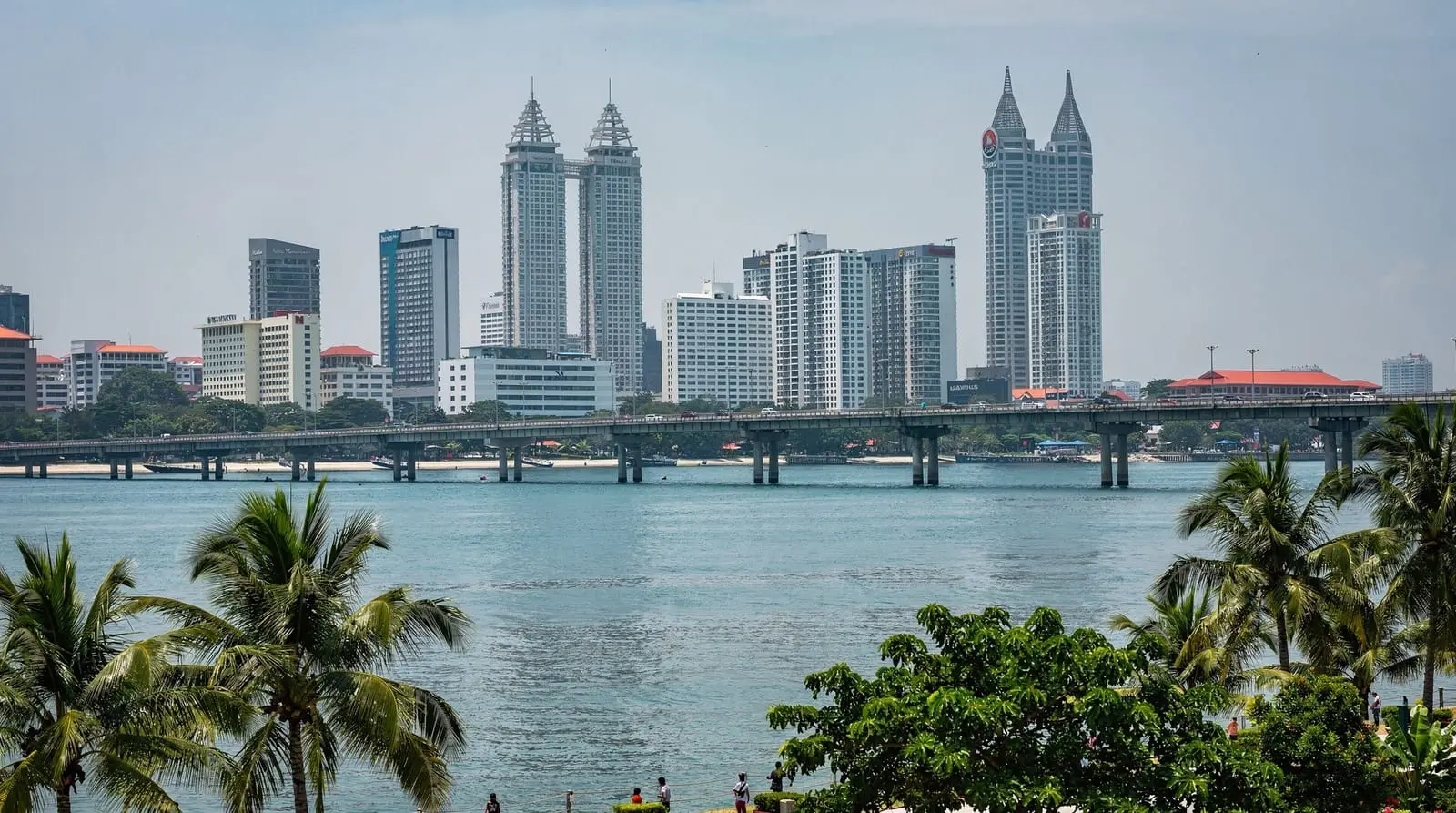
Johor Bahru is the Malaysian city immediately north of Singapore, separated from the island by the Strait of Johor and connected by two road crossings. It is Malaysia’s most visited city — not because of its own attractions, though they exist, but because of its position as the gateway between the two countries and the significantly lower cost of living that makes almost everything (food, shopping, fuel, healthcare) cheaper than in Singapore.
For Singapore-based visitors, JB functions as a practical extension of the Singapore day-trip radius: an hour or less of travel to a genuinely different country, currency, culture, and price level. For international visitors with more time, it is the access point for two of the region’s more distinctive attractions — Legoland Malaysia and Desaru Coast.
Passport is required. Malaysia is visa-free for most Western nationalities (UK, US, EU, Australia, Canada) for visits up to 90 days; other nationalities should check the Malaysian Immigration Department website before travelling. Singapore citizens and PRs have separate border formalities.
Crossing the Causeway — practical reality
The Woodlands Causeway (built 1924) carries extraordinary traffic volumes — it is one of the world’s busiest land border crossings, with over 300,000 daily crossings. The practical implication for visitors: crossing times vary dramatically depending on time of day and day of week.
Best crossing times: Weekday mornings (08h–10h, avoiding rush hour) or early afternoon. The Friday evening outbound rush (Singaporeans heading to JB for the weekend) and the Sunday evening inbound rush (return) are the worst periods — add 60–90 minutes to any crossing estimate.
By public bus: SBS Transit Bus 170 (from Queen Street Bus Terminal) crosses the Causeway to JB Sentral. Alternatively, the CW1 and CW2 Causeway Link bus services. You disembark at the Singapore Customs checkpoint (Woodlands CIQ), clear Singapore immigration, walk across or take a shuttle, clear Malaysian immigration at JB Sentral, and continue. The full crossing by bus during non-peak hours takes 30–50 minutes; during peak hours it can take 2 hours or more.
By train (RTS Link): The Johor Bahru–Singapore Rapid Transit System is under construction and expected to open by late 2026 or early 2027, connecting Bukit Chagar (JB) to Woodlands North MRT with a 4-minute crossing time. This will transform the border experience when operational. Check current status before planning your trip.
By taxi / Grab: Singaporean Grab rides can be taken to the Singapore checkpoint. At Woodlands, passengers typically walk across the Causeway or transfer to a Malaysian Grab for the JB-side leg (Malaysian Grab is a different registration). A taxi pre-booked on the Malaysian side from JB Sentral is the most convenient outbound option for groups with luggage or families with children.
By organised transfer: Tours that include Singapore-to-JB transport handle the border logistics for you, which significantly reduces the friction of first-time crossing. The transfer-included Legoland and Johor Bahru tour options are particularly useful for families who want predictable departure and return times.
Singapore: Legoland Malaysia entry ticket with return transfer — the simplest family optionLegoland Malaysia
Legoland Malaysia at Iskandar Puteri (approximately 25–30 minutes drive from JB Sentral) opened in 2012 as Southeast Asia’s first Legoland park. It contains the usual Legoland structure — Miniland (scale models of Southeast Asian cities in Lego), themed ride zones, the Legoland Water Park, and Discovery Centre. The scale is comparable to European Legoland parks; smaller than Florida or California but complete as a full-day attraction.
Entry (as of 2026): approximately MYR 175–220 (SGD 50–65) for adults, MYR 155–195 for children, depending on whether the Water Park is included. Online purchase is cheaper than gate pricing; the combined theme park and water park ticket is better value if you intend to use both.
The Water Park section has been a consistent family favourite — wave pool, lazy river, and Lego-themed slides. Children aged 2–12 are the core audience; the rides and attractions skew heavily toward this group. Adults accompanying children will find the park adequate rather than compelling on its own terms.
Getting there independently: From JB Sentral bus terminal, a taxi or Grab to Legoland costs approximately MYR 30–45 (SGD 9–13) one way. Buses also serve the route but are slower and less convenient with children.
From Changi Airport directly: The Changi-to-Legoland transfer option is designed for this scenario — particularly for families with a long layover or early JB flight.
Singapore Changi Airport to Legoland Malaysia day tour — direct pickup, no transfers neededFor a full breakdown including whether Legoland is worth the trip, see the Johor Bahru Legoland guide.
Desaru Coast Adventure Waterpark
Desaru Coast is a coastal resort development about 60–70 kilometres east of JB, accessible by a roughly 75-minute drive from JB Sentral or via a dedicated ferry-to-Desaru route from Tanah Merah Ferry Terminal (the most direct Singapore approach, bypassing JB entirely — about 45 minutes by ferry, then short transfer to the park).
The Adventure Waterpark is the major draw — a genuine international-standard waterpark with multiple high-intensity slides, a lazy river, a wave pool, and a dedicated children’s section. Entry approximately MYR 79–119 (SGD 23–35) depending on age and package.
Desaru Coast Adventure Waterpark entry ticket — Johor’s biggest waterpark on the east coastThe full Desaru Coast resort area (opened 2019) also includes a golf resort, hotel complex, outlet shopping at Desaru Fruit Farm, and Hard Rock Hotel Desaru — it is designed as a multi-day destination rather than purely a day trip. For day visitors from Singapore, the ferry-direct route (from Tanah Merah to Desaru) is the most time-efficient approach.
JB city — food and everyday Malaysia
For visitors who want a Malaysian city experience rather than a theme park, the JB city area around JB Sentral, Jalan Wong Ah Fook, and the old Chinese quarter provides it.
Johor Bahru’s food: The local specialties are distinct from Singapore’s even though the two cities share historical connections — Johor-style dishes include Mee Bandung Muar (spiced prawn soup noodles), otak-otak (spiced fish cake grilled in banana leaf — the Johor version differs from the Singapore Katong version), and Johor laksa (rice noodle, thick coconut milk, and tamarind broth — different from Singapore’s laksa). Hawker centres in JB offer these at MYR 6–12 (SGD 1.80–3.60) per dish.
Jalan Dhoby and the art area: The street around Jalan Dhoby has developed a cluster of independent cafés, murals, and small shops that have given JB a modest independent arts scene — worth a 30-minute wander if you are in the area.
Johor Bahru Old Chinese Temple: On Jalan Trus, the 1870s-era Chinese clan temple complex is one of the best-preserved pre-modern structures in Johor.
Johor Bahru city highlights tour to and from Changi Airport — food, history, and the border town experienceCurrency and cost reality
The SGD–MYR exchange rate as of 2026 (approximately 1 SGD = 3.3–3.5 MYR) means Malaysian prices, already lower by domestic standards, appear substantially discounted to Singapore-based visitors. A hawker meal in JB costs MYR 8–15 (SGD 2.30–4.60). A coffee is MYR 2–5 (SGD 0.60–1.50). Retail prices at KSL City Mall or AEON are genuinely lower than Singapore equivalents.
Currency exchange: Money changers at Woodlands or JB Sentral offer reasonable rates; bank ATMs on the Malaysian side accept international cards with standard withdrawal fees. Avoid exchanging at hotels.
Because everyday costs on the Malaysian side feel so low, it is easy to let a JB day trip become a spending spree. If you are weighing it against a day on the island, the Singapore travel costs guide and the Singapore on a budget guide show where Singapore’s own prices bite hardest, which helps you decide whether the border crossing is really worth the saving for you.
Fitting JB into a wider Singapore plan
A JB day usually works best as one chapter of a longer stay rather than the whole trip. Travellers who already have a few days in the city can slot it in alongside the things to do in Singapore guide and the how many days in Singapore guide, which help you judge how much time a cross-border day really costs you. If your schedule is tight, the Singapore 3-day itinerary is probably better spent entirely on the island, while the Singapore 1-week itinerary leaves comfortable room for a full day across the border.
Families can pair the trip with a quieter day nearby, such as the Singapore with kids itinerary, so that a long Causeway day is followed by something gentler. Anyone arriving or leaving through the airport may also like the Changi layover guide, which covers what is realistic on a short stopover before committing to a border crossing.
Comparing Legoland and Desaru for families
| Legoland Malaysia | Desaru Coast Adventure Waterpark | |
|---|---|---|
| Best age | 2–10, Lego-focused rides | 7+, high-intensity water slides |
| Distance from JB Sentral | approx 25–30 min drive | approx 75 min drive, or ferry from Tanah Merah |
| Entry cost | approx MYR 175–220 (SGD 50–65) | approx MYR 79–119 (SGD 23–35) |
| Time needed | Full day (6+ hours for both park and water park) | Full day |
For families deciding between the two, distance from the Causeway is often the deciding factor as much as the attractions themselves — Legoland’s shorter drive makes it the more forgiving choice for a first JB day trip, while Desaru rewards those coming via the direct Tanah Merah ferry route. The best family attractions guide and the Singapore with kids guide both cover how a JB day trip fits into a broader family itinerary, and the desaru day trip guide has the full ferry-route logistics.
Day-trip logistics for a smooth crossing
Because Causeway timing is the single biggest variable in a JB day trip, planning around it matters more than planning the attractions themselves. The day trips from Singapore guide places JB alongside Singapore’s other cross-border options (Bintan, Batam) for context on which suits your timeframe. A workable rule of thumb: cross outbound before 09h or after 14h on weekdays, and build in a buffer of at least an hour beyond the stated crossing time if you are travelling on a Friday or over a weekend.
Frequently asked questions about Johor Bahru
How long does it take to get from Singapore to JB?
Under ideal conditions (non-peak weekday), the full crossing from Woodlands MRT to JB Sentral takes 30–45 minutes by bus including immigration. During Friday evenings or Sunday evenings, add 60–120 minutes. By organised transfer with a tour operator, departure timing is managed to minimise border delays.
Do I need to bring MYR cash?
For small purchases, hawker food, and local taxis, yes. KSL City Mall and larger restaurants accept credit cards; small hawker stalls and local transport are cash-preferred. You can get MYR from ATMs on the Malaysian side (look for Maybank, CIMB, or Public Bank ATMs at JB Sentral).
Is Legoland or Desaru better for a family day trip?
Legoland is the better choice for children aged 2–10 who are specifically into Lego and theme park rides. Desaru is better for children aged 7+ who want high-intensity water slides and a more physically active day. Desaru’s waterpark is the more impressive facility by international standards. Legoland is closer to the Causeway (30 min drive versus 75 min). See the theme parks Singapore guide for a broader comparison.
Can I do Legoland as a day trip from Singapore?
Yes, and tens of thousands of families do it every school holiday. Allow the full day: crossing the border, Legoland itself (minimum 6 hours to cover both park and water park), and return crossing. First departures from Woodlands around 08h00; target the last entry at Legoland by 10h30; plan to leave the park by 17h00–18h00 to catch reasonable return crossing times.
Is JB city worth visiting for a day trip without a theme park?
For food, yes — especially if you are interested in Malaysian food culture. For shopping, yes if you are looking for Malaysian brands or groceries that are significantly cheaper than Singapore equivalents. For cultural sightseeing alone, JB city is not especially scenic and the historic fabric is incomplete. The food circuit (local hawker, Johor-style dishes) is the primary reason to come to the city rather than heading directly to Legoland or Desaru.
Is Johor Bahru safe for tourists?
Yes, particularly the areas visitors typically use — JB Sentral, KSL City Mall, Legoland, and Desaru Coast are all well-trafficked and geared toward visitors. As with any city, keep valuables secure and use registered taxis or Grab rather than unlicensed transport, especially after dark in less touristed areas.
How does a JB day trip compare to Bintan or Batam?
JB is by far the fastest and cheapest to reach — a land crossing rather than a ferry — and is oriented around theme parks, waterparks, food, and shopping rather than beaches or resorts. Bintan and Batam are Indonesian islands reached by ferry from the city, better suited to a beach-and-resort day than JB’s land-border, mainland-city character. The day trips from Singapore guide compares all three side by side.
Top experiences
Bookable activities with verified prices and instant confirmation on GetYourGuide.