Singapore's southern islands: St John's, Lazarus, and Sisters' Islands
Sentosa Island discovery guided tour with 4 attractions
Duration: 7h
Are Singapore's southern islands worth visiting?
Yes, for a quiet half-day escape from central Singapore with clear-ish water, basic beaches, and minimal crowds on weekdays. St John's Island and Lazarus Island are the standouts — connected by a causeway, free to visit once on the island, and genuinely pleasant. Ferry from Marina South Pier takes about 30 minutes and costs SGD 18 roundtrip. Bring your own food and water — facilities are minimal. Not a tropical paradise, but an honest urban beach day.
Quick answer: Singapore’s southern islands are a genuine escape without leaving the country. St John’s and Lazarus Island form the best combination — ferry from Marina South Pier (SGD 18 roundtrip), no passport required, clean beaches, and almost no crowds on weekdays. Bring everything you need — facilities are minimal.
| Where | St John’s, Lazarus, Kusu Islands — south of Sentosa |
| Cost | ~SGD 18 roundtrip ferry (adult) |
| Time needed | Half day (4–6 hours including ferry) |
| Getting there | Ferry from Marina South Pier |
| Best time | Weekday mornings, Feb–Apr or Jul–Aug |
| Facilities | Minimal — bring water, food, shade |
Overview: which southern islands can you visit?
Singapore’s southern islands cluster in the waters south of Sentosa, separated from the main island by the shipping lanes of the Singapore Strait. Most are small, undeveloped, and accessible only by private boat or charter. Four are open to the general public via the public ferry service:
St John’s Island — the largest and most accessible; ferry jetty, basic facilities, good swimming lagoon, old colonial-era quarantine buildings.
Lazarus Island — connected to St John’s by a causeway; no facilities but arguably the best beach of the group, with cleaner sand and a natural feel.
Kusu Island — Taoist temple and Malay shrine; swimming lagoon; significant pilgrimage site in October/November.
Sisters’ Islands — a marine protected area with snorkelling; accessible by charter or organised marine tour (the public ferry does not stop here). The marine park requires a permit for snorkelling.
Of these, St John’s + Lazarus is the classic combination for a day trip. Kusu is worth adding if you are interested in the temple or visiting during non-pilgrimage season. Sisters’ Islands requires separate arrangement.
Getting there: the ferry from Marina South Pier
The public island ferry departs from Marina South Pier, located near the southern tip of Marina Bay. The nearest MRT is Marina Bay station (Circle Line and Thomson-East Coast Line) — from the station, it is approximately 15 minutes on foot through the Marina Bay waterfront area, or a short taxi/Grab ride.
Alternatively: MRT to Marina Bay, then take Bus 402 or a 12-minute walk.
Operator: The scheduled public ferry service has historically been operated by various companies. As of 2026, check the Singapore Tourism Board or Marina South Pier listings for the current operator and schedule. The Islands Ferry (singaporeislands.com.sg) is the primary operator.
Schedule: Ferries do not run daily. They typically operate on weekends and public holidays, and some weekday services. Confirm the exact schedule before going — it changes by season and is subject to weather cancellation. A typical weekend schedule might have departures at 10:00 am, 12:00 pm, and 2:00 pm from Marina South Pier, with return sailings corresponding to arrival times. You may need to book in advance online.
Journey time: Approximately 25–30 minutes to Kusu Island (first stop), 30–40 minutes to St John’s Island (second stop).
Fares (approximate 2026):
- Adult roundtrip: SGD 18
- Child (3–12) roundtrip: SGD 12
- Senior (60+) roundtrip: SGD 12
Important: The ferry stops at Kusu Island first on the outward journey and last on the return. If you want more time at St John’s/Lazarus, board the first departure of the day.
St John’s Island
St John’s Island (Pulau Sakijang Bendera in Malay) has a layered history. From the 1870s, it served as a quarantine station for immigrants arriving in Singapore — thousands of indentured labourers and new arrivals were processed here. It later served as a political detention centre in the mid-20th century. Today, the island is managed by Sentosa Development Corporation and the Singapore Land Authority, with sections designated as conservation zones.
What to see and do
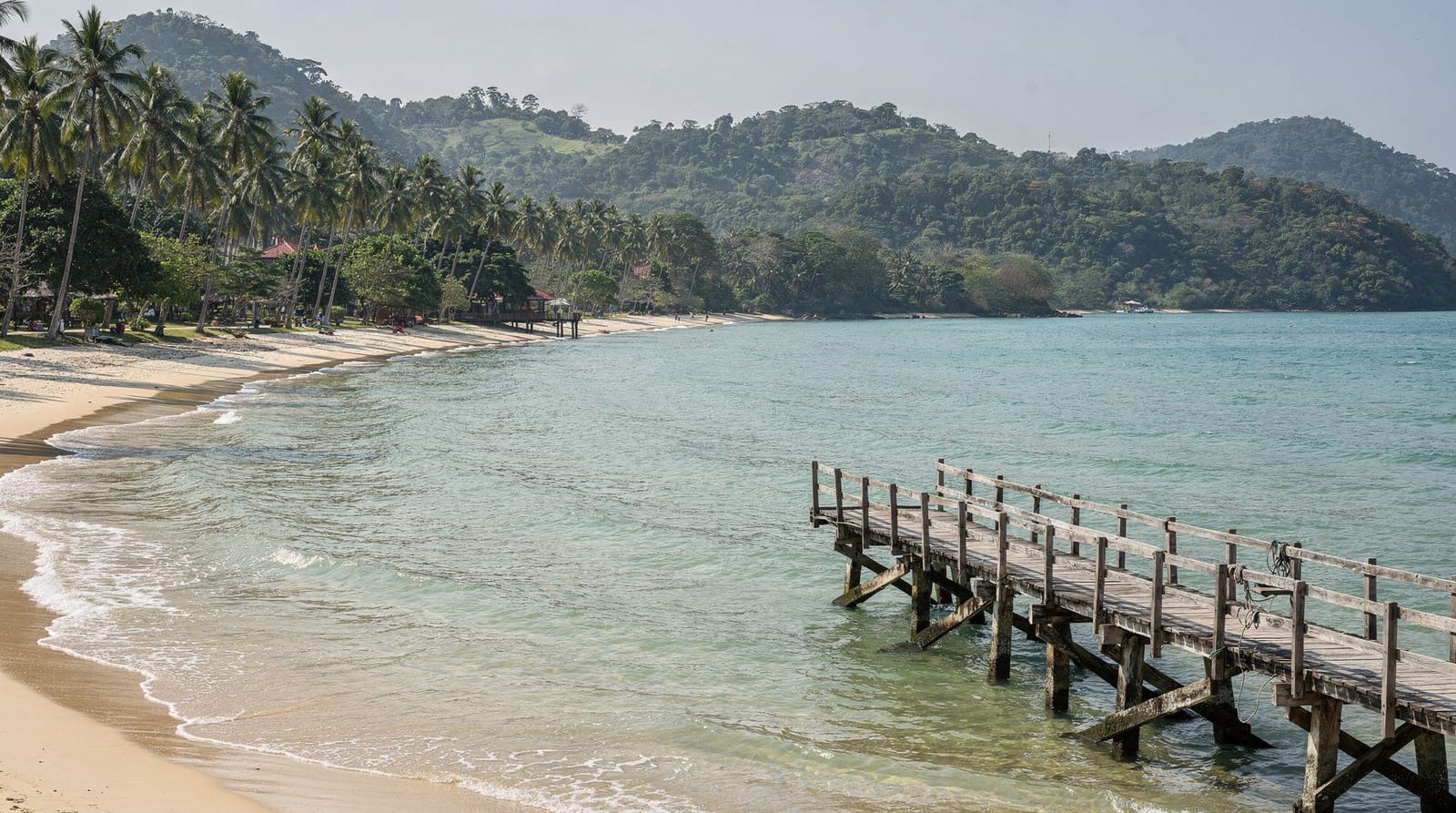
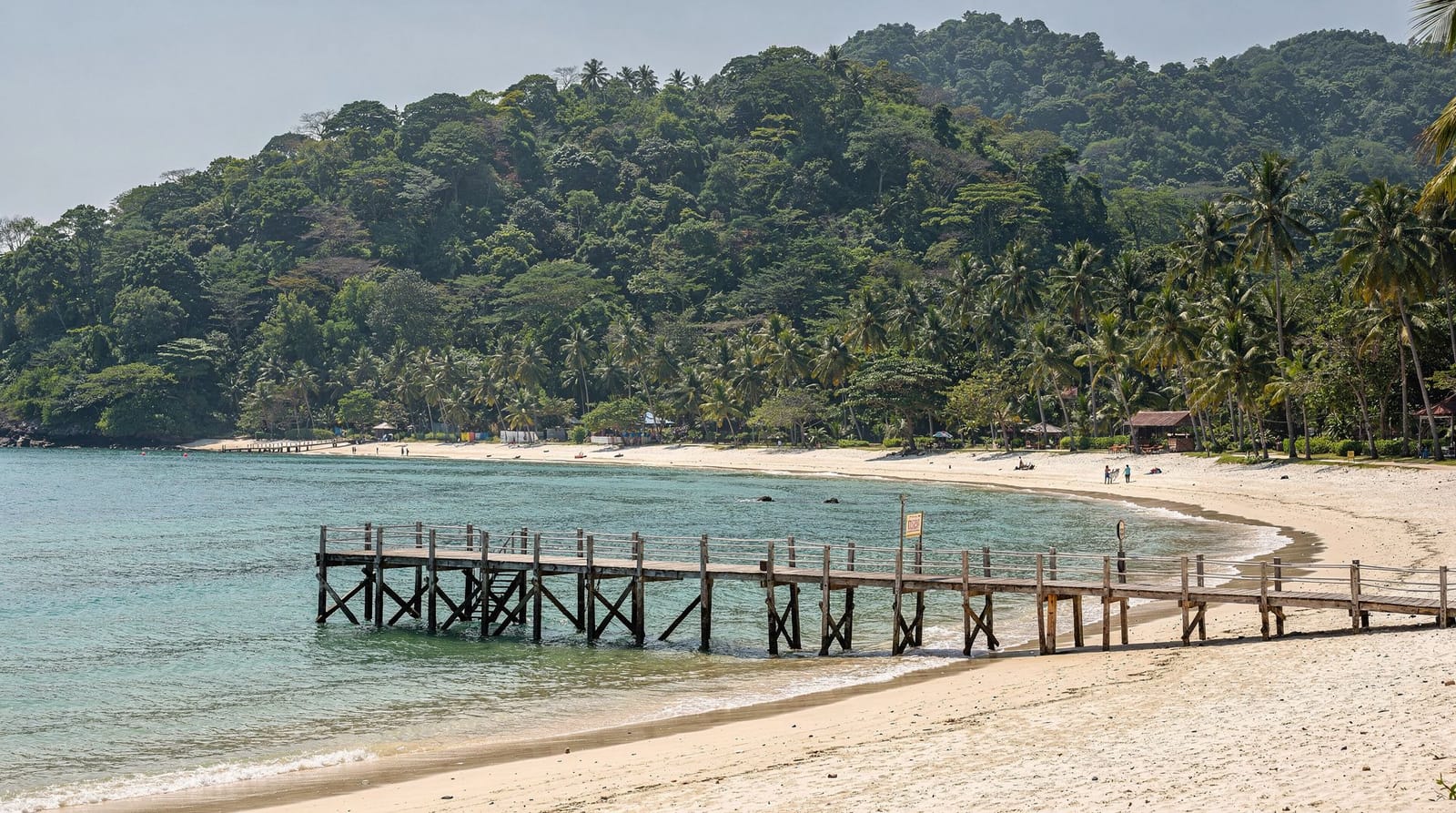
Lagoon Beach: The main swimming area on the island’s southern coast. A sheltered lagoon with a sandy beach, calm water, and basic facilities (changing rooms, showers, toilets). Designated swimming zone with buoys. Clean and pleasant — significantly less crowded than Sentosa’s beaches on weekdays.
Historic buildings: The old quarantine-era bungalows and administrative buildings are partially visible from the main paths. Some are used by research institutions; others are in various states of preservation. They add an atmospheric quality to the island that more developed attractions lack.
Nature trail: A shaded walking path circles much of the island through secondary forest. The trail takes about 45 minutes at a relaxed pace. Birdwatching is rewarding — white-bellied sea eagles and various kingfishers are commonly seen.
Hilltop viewpoints: Several paths lead to elevated points with views toward Singapore’s southern coastline, the cable car from Mount Faber, and the open sea.
Lazarus Island: the walk-across
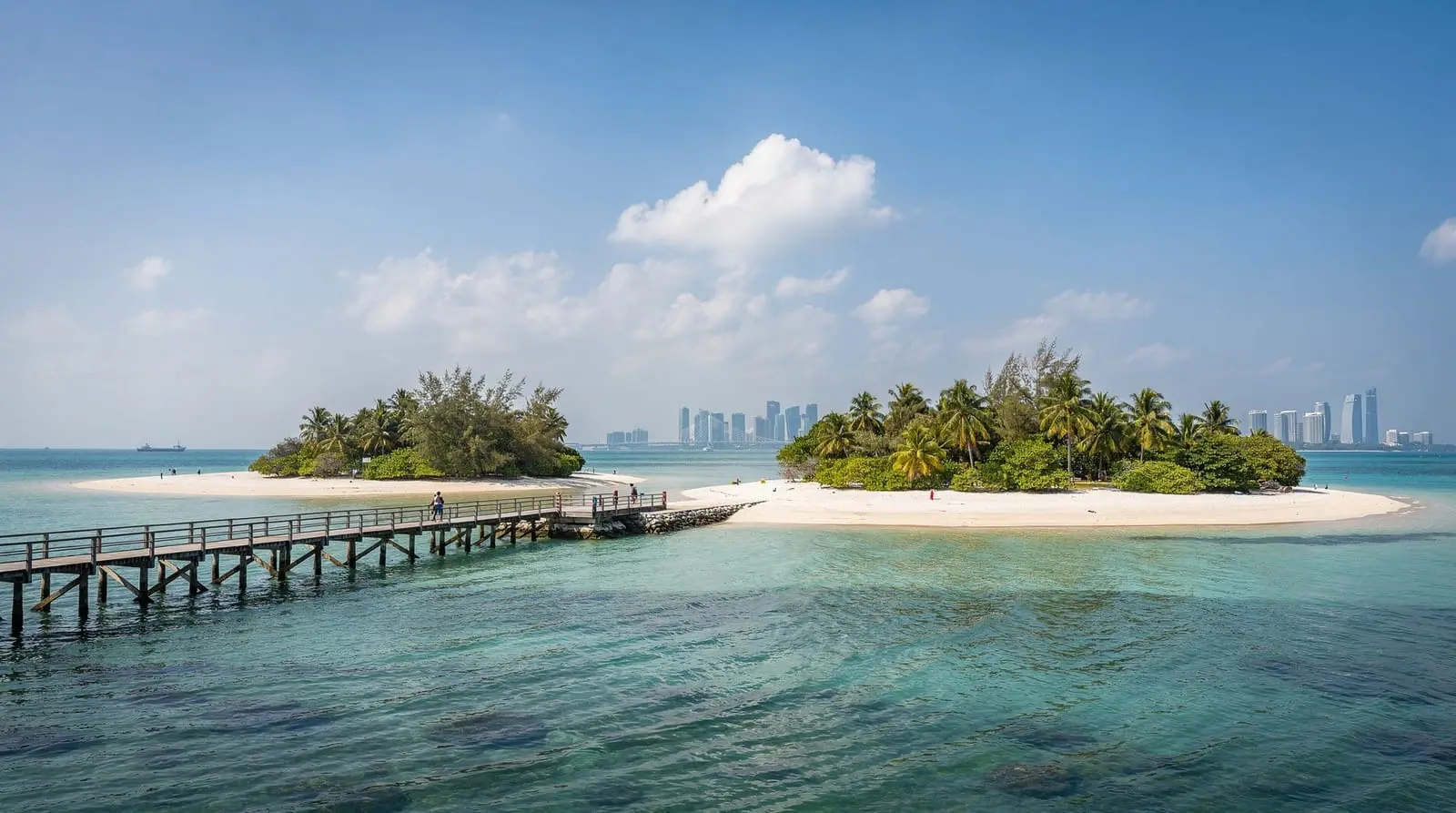
After disembarking at St John’s, walk 10 minutes south along the main path to the causeway connecting Lazarus Island. The causeway is paved and takes 5 minutes to cross.
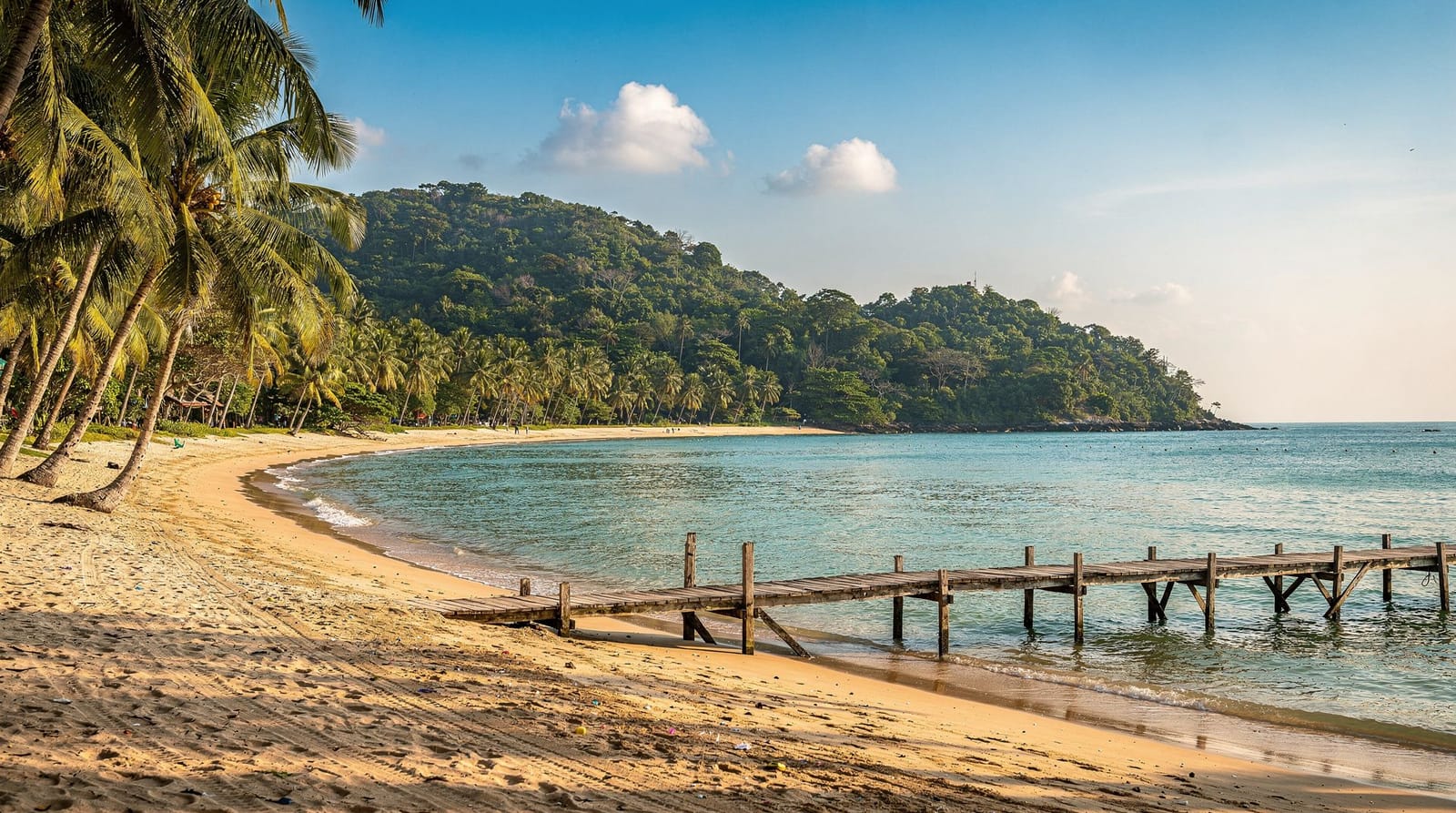
Lazarus Island (Pulau Sakijang Pelepah) is smaller, simpler, and better for beach relaxation. The main Lazarus Beach (on the island’s western side) is a long curve of coarse sand with calm turquoise water — the best beach of the southern island group. There are no facilities whatsoever. Swimming is good when the sea is calm. The beach is sometimes used by private boat arrivals, but on weekday mornings it is often entirely deserted.
What to bring to Lazarus: Everything. Drinking water (minimum 2 litres per person in Singapore heat), food, sunscreen, hat, towel, snorkelling gear if you want to explore. Shade is available under the coastal trees — bring a mat or towel. Do not count on finding shade at the beach itself in the middle of the day (11 am–2 pm); the sun is intense.
Kusu Island
Kusu Island (Pulau Tembakul, also called “Tortoise Island”) is 15 minutes from St John’s Island on the return ferry. The island is 8.5 hectares and shaped roughly like a tortoise. It has two distinct religious sites:
Tua Pek Kong Temple: A Taoist temple dedicated to the Malay deity Tua Pek Kong, who local legend credits with saving Chinese sailors in a miraculous tortoise transformation. The temple complex is colourful and well-maintained. Tortoise sanctuary pools are part of the complex.
Keramat (hilltop Malay shrine): A 152-step climb to the hilltop keramat — a Malay sacred burial site. The shrine is an active religious site; dress respectfully (shoulders and knees covered) and behave quietly.
Kusu Pilgrimage Season: The 9th month of the Chinese Lunar Calendar (typically October/November) sees tens of thousands of pilgrims visiting to pray for good fortune, fertility, and prosperity. During pilgrimage season, ferries run with much higher frequency but the island is extremely crowded. Visit outside pilgrimage season for a peaceful experience.
Swimming: Kusu has a small lagoon beach with calm water, suitable for swimming outside pilgrimage season.
Sisters’ Islands Marine Park
The Sisters’ Islands are two small islands (Pulau Subar Darat and Pulau Subar Laut) set aside as Singapore’s first marine park. The surrounding coral reef is one of the better-preserved in the southern Straits and supports snorkelling with significant coral cover and fish life by Singapore-adjacent standards.
Access: The public island ferry does not serve Sisters’ Islands. Access requires a private charter or an organised marine park tour. Snorkelling at the marine park requires a permit from the National Parks Board (NParks). Guided snorkelling tours that include the permit, transport, and equipment are offered by several Singapore dive operators — book in advance as capacity is limited to protect the reef.
What to expect: The coral is genuinely interesting for casual snorkellers — not Great Barrier Reef quality, but meaningfully better than the sandy seabed around Sentosa. Visibility varies with weather and currents; the best conditions are typically February–April and July–August on calm days.
Practical planning
What to pack
The essentials for the southern islands are different from a city day:
- Water (at least 2 litres per person — no reliable freshwater on Lazarus/Sisters’)
- Food (sandwiches, energy bars, fruit — nothing needs to be hot)
- Sunscreen (SPF 50+) and reapplication sunscreen
- Insect repellent (mosquitoes are present in forested areas)
- Hat and UV-protective clothing
- Towel and swimwear
- Waterproof bag for valuables and electronics
- Basic first aid (plasters for coral scrapes if snorkelling)
- Cash in SGD for ferry tickets (confirm if card is accepted at the pier)
Timing your visit
Best months: February–April and July–August offer drier and less humid conditions, with calmer seas for snorkelling and swimming. Monsoon season (November–January) can bring rough conditions that cancel or modify ferry services.
Best day: Weekday morning departures are the most peaceful. Weekend afternoons see Singaporean families in numbers. The first ferry of the day gives you maximum time before the midday heat peak.
Avoid: Public holidays (particularly Chinese New Year, National Day, and Kusu pilgrimage season) when ferries are crowded.
Weather and ferry cancellation
The ferry service is weather-dependent. Strong winds or rough seas lead to cancellations. Check the operator’s Facebook page or website on the morning of your trip. Singapore’s afternoon thunderstorms (particularly November–January and April–May) can affect return ferries — do not schedule a return ferry that cuts it close to an evening commitment.
Snorkelling and marine life
The southern islands area, particularly around the Sisters’ Islands Marine Park, has the best accessible coral snorkelling in Singapore waters. Outside the marine park, the reef around St John’s and Lazarus has some coral patches accessible from the beaches.
Equipment: bring your own mask and fins if you have them; rental on the islands is not available. Basic snorkel gear is available at sports retailers in Singapore (Decathlon at Kallang/Bedok) for SGD 20–50 for a starter set.
Marine life to expect: Parrotfish, damselfish, butterflyfish, occasional turtles, and various reef fish. The water is warmer than the open ocean (28–31°C) and visibility is best in the morning before afternoon boat traffic stirs up sediment.
Comparing the southern islands to other Singapore escapes
vs Sentosa beaches: The southern islands have better water quality and fewer crowds but take more planning (ferry schedule, bring your own supplies). Sentosa is far easier for a spontaneous afternoon. See Sentosa beaches guide for comparison.
Sentosa Island discovery guided tour with 4 attractionsvs Pulau Ubin: Both offer an escape from urban Singapore. Pulau Ubin (off the north coast, accessed from Changi Point Ferry Terminal) offers cycling and jungle trekking; the southern islands offer beaches and swimming. Different experiences. See Pulau Ubin guide.
vs Batam (Indonesia): Batam requires a passport and an hour of travel; the southern islands require neither. For a passport-free half-day beach escape, the southern islands win on logistics. For a longer, richer day and cheaper food/massage, Batam wins.
Batam day tour with Singapore ferry ticket, massage & lunchA realistic half-day schedule
For most visitors with one free morning or afternoon, this sequence works well:
- Check the ferry schedule the night before and book online if possible — services are limited and weather-dependent.
- Arrive at Marina South Pier 30 minutes before departure to allow for ticketing and boarding.
- Take the first sailing of the day if visiting St John’s/Lazarus is the priority — the ferry stops at Kusu Island first, so an early departure maximises time on St John’s and Lazarus.
- Walk the causeway to Lazarus Beach within the first hour to claim shade and space before any crowd builds.
- Return via the same ferry route, allowing a buffer before the last sailing — do not schedule anything time-sensitive immediately after.
This is a genuinely low-effort half-day that pairs well with a hawker lunch back in the city or a relaxed Marina Bay evening — see Singapore with a view for evening viewpoint options once you are back on the main island.
Photography on the southern islands
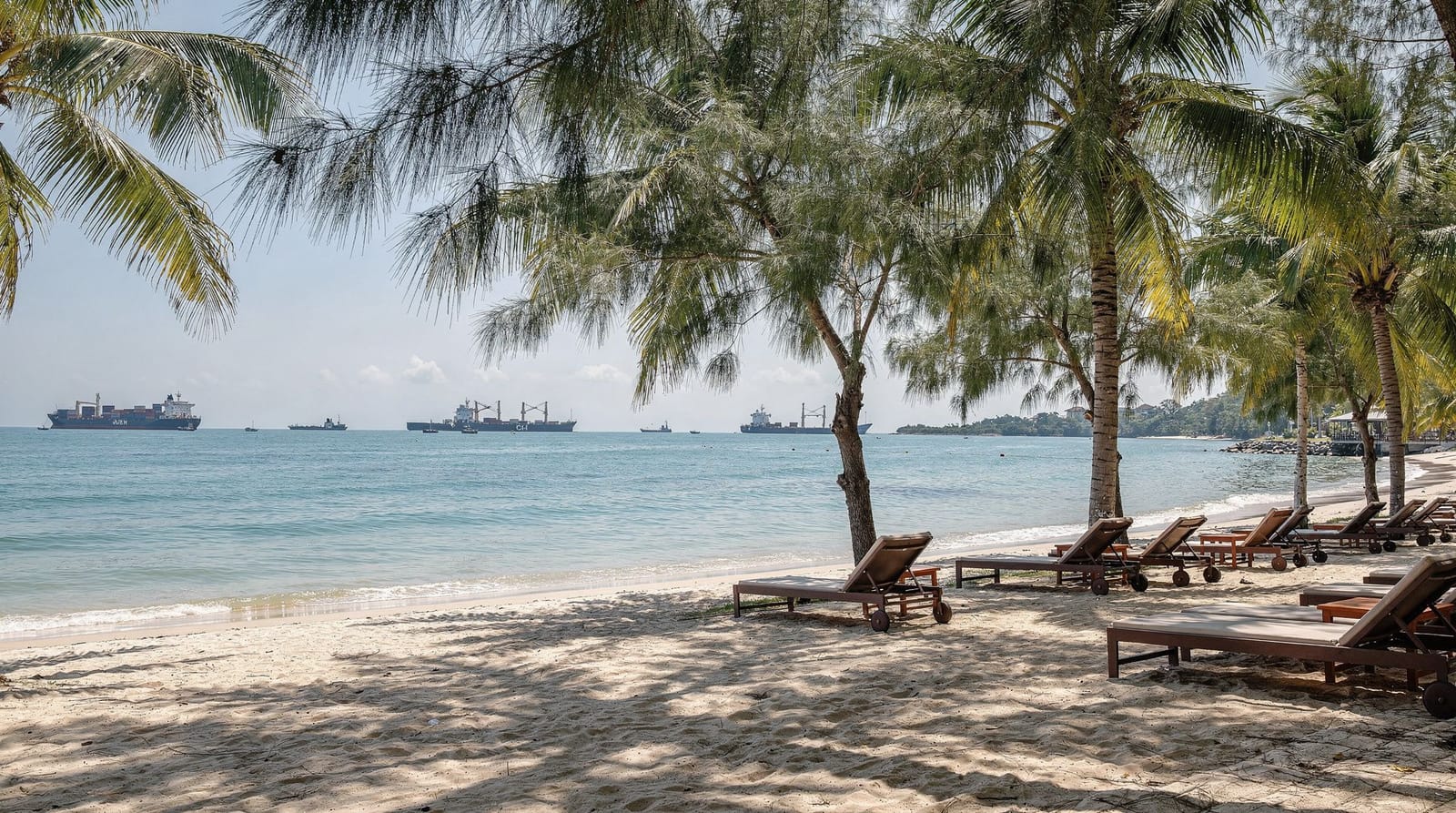
The southern islands photograph well precisely because they look unlike the rest of Singapore — coarse sand, turquoise shallows, and container ships on the horizon create a contrast most visitors do not expect from a city-state day trip. Lazarus Beach’s causeway approach gives a strong symmetrical shot at low tide. The old quarantine-era buildings on St John’s add texture for visitors interested in a more documentary angle than a straightforward beach shot. Morning light (before 10am) avoids the harshest overhead glare and keeps the turquoise water tones more saturated in photos. For a broader look at Singapore’s best photo locations, see Best photo spots in Singapore.
Combining a southern islands trip with the wider day-trip landscape
The southern islands sit alongside Pulau Ubin, Batam, and Bintan as Singapore’s main short-escape options — each with a different character. If you only have time for one escape and want beaches without a passport, the southern islands are the clear pick. If cycling and kampong (village) atmosphere interest you more, Pulau Ubin wins. If you want a longer day with spa/massage culture and are comfortable with the passport and ferry logistics, Batam or Bintan deliver more for the extra travel time. See Day trips from Singapore for the full comparison across all of Singapore’s escape options.
How the southern islands fit into a wider Singapore trip
The southern islands work best as a deliberate change of pace rather than a box to tick. After a few days of museums, malls and hawker centres, a quiet beach morning resets the trip. If you are still choosing what to see, Top attractions in Singapore and Must-see for first-timers cover the headline sights, and How many days in Singapore helps you decide whether a half-day on the water is affordable in your schedule.
For the days around your island trip, the 3-day Singapore itinerary and the 5-day Singapore itinerary both leave room to swap in a beach morning. Travellers on a stopover can check the layover itinerary, although the ferry’s fixed schedule makes the islands a poor fit for very short stops.
Pairing the islands with the rest of the south coast
The harbour front is the natural neighbour of this trip. The Marina Bay destination guide and Marina Bay after dark suit the evening after a day on the water, while Sentosa is the closest developed island if the weather turns and the ferry is cancelled. Our Southern Islands destination page gives the geographic overview, and Mount Faber and the Southern Ridges offer elevated views back toward the islands from the main island.
If the ferry is cancelled
Weather cancellations happen, so keep a fallback in your pocket. A rainy or rough-sea day suits indoor options such as museums in Singapore or the ideas in Singapore in the rain. If you simply want sand and swimming, Sentosa’s beaches are the easiest substitute, and East Coast Park gives a free, flexible seaside afternoon without any ferry at all. Tours that run in the same waters can also be an option: a guided outing on the water, such as those described in bumboat rides, is a different experience but keeps you near the harbour.
Budget and planning notes
The ferry fare is the main cost, and the islands themselves are free to enter, which makes this one of the cheaper days out. For the bigger picture, see Singapore on a budget and Free things to do in Singapore. Packing for heat, sun and sea is covered in What to pack for Singapore, and the seasonal advice above pairs with Singapore weather month by month.
Frequently asked questions about Singapore’s southern islands
Can I see the southern islands from Sentosa?
Yes — from Sentosa’s cable car and from the southern end of Palawan Beach, you can see the cluster of southern islands in the distance, including St John’s and Lazarus. The view from Singapore cable car guide: Mount Faber to Sentosa honestly reviewed offers the most elevated perspective on the island geography.
Are there sharks in the waters around the southern islands?
The waters around Singapore’s southern islands are home to small reef sharks — primarily blacktip reef sharks — which are common in Singapore’s southern reefs. They are not dangerous to swimmers and human encounters are rare. The main marine hazards are jellyfish (seasonal, more common during certain months) and stonefish on rocky patches. Wearing water shoes on rocky areas reduces stonefish risk.
Is there any accommodation on the southern islands?
Camping on St John’s and Lazarus Islands is permitted with an SLA permit (apply at sla.gov.sg). There are no hotels, hostels, or permanent accommodation on any of the southern islands open to the public. The nearest accommodation is in Singapore proper.
How does the southern island ferry compare to Sentosa for families with young children?
The southern islands require more preparation and logistics (fixed ferry schedule, no on-island facilities) compared to Sentosa which has stroller-friendly paths, food vendors, and a flexible one-way access via the boardwalk. For families with toddlers or children under 5, Sentosa is more practical. Older children (7+) who like beaches and nature trails will enjoy the southern islands. The ferry journey itself is an attraction — children typically enjoy the boat ride. See Singapore with kids for broader family planning.
What happens if I miss the last ferry back?
The last return ferry from St John’s Island typically departs in the late afternoon (around 4:30–5:00 pm on a typical weekend schedule — confirm exact times when booking). If you miss it, you can contact the operator to enquire about a late boat, or call for a private boat charter from the island. In practice, the ferry operator accounts for all passengers before departing, but do not rely on this — track your time carefully.
Is swimming safe at the southern islands?
The designated lagoon at St John’s Island is safe for swimming — it is a sheltered bay with modest currents. Lazarus Beach has calmer conditions on most days. Swimming in open water beyond the lagoon perimeters, in shipping channels, or in rough conditions should be avoided. Singapore’s Strait is an active shipping corridor; the ferry and boat traffic increases currents in exposed areas.
Top experiences
Bookable activities with verified prices and instant confirmation on GetYourGuide.