Singapore with a toddler: what works, what doesn't, what saved us
| Age tested | 2 years old, 8-day trip |
| Daily budget | Around SGD 300–350 for two adults and one toddler |
| Best rhythm | Outdoors before 11am and after 5:30pm, indoors midday |
| Top hit | Jewel Changi Rain Vortex, Gardens by the Bay at night |
| Skip until older | Universal Studios — most rides need age 3–4 minimum |
Travelling with a two-year-old is a particular kind of adventure: one where your plans are suggestions, your schedule is aspirational, and the question of where the nearest toilet is becomes load-bearing. Singapore turned out to be, somewhat unexpectedly, one of the best cities we’ve taken a small child to — and also one of the most exhausting, which are not mutually exclusive outcomes.
Here is an honest account of what worked, what didn’t, and what we would do differently.
The heat: manage it, don’t fight it
This is the first and most important thing to understand about Singapore with a toddler. The heat and humidity are real and they affect small children more than adults — overheating, discomfort, and the associated meltdowns are a genuine operational risk if you try to do outdoor attractions in the middle of the day.
Our solution: mornings outdoors (before 11am), afternoons in air-conditioned spaces or at the hotel pool, evenings outdoors again after 5:30pm. This pattern is actually very well-suited to Singapore because the city has so much covered indoor space — malls, hawker centres with ceiling fans, the MRT — that midday retreats are never difficult to engineer.
Bring a compact pram rather than a large one. The MRT is pram-accessible at most stations (lifts are marked on the system map and they work reliably), and the sheltered walkways connecting stations to malls mean you can push a pram across significant distances without sun exposure. What doesn’t work well with a pram: cobbled streets in parts of the Civic District, the temple interiors in Chinatown (you’ll carry the child), and any trail-based attraction.
If a rainy afternoon coincides with a planned indoor retreat anyway, the rainy day with kids guide has a longer list of air-conditioned options beyond the mall food court default.
The MRT: excellent for prams, complicated for overtired toddlers
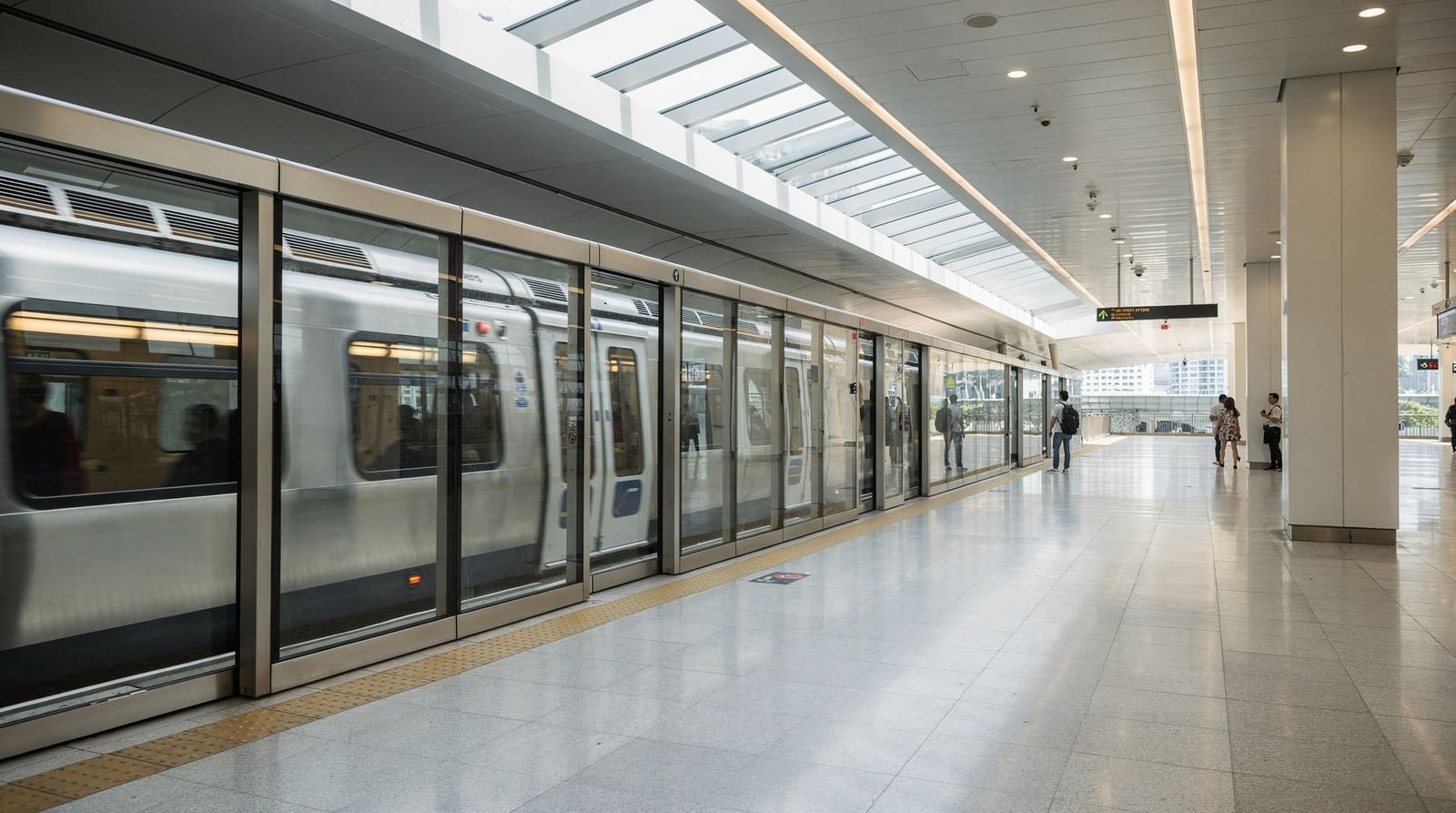
The MRT is genuinely one of the easiest metro systems in the world to navigate with a child. Air-conditioned, clean, frequent. EZ-Link cards work for everyone — children under 90cm travel free, which covers most toddlers. The carriages have priority seats near the doors that most people yield for a family with a pram.
The complication is that a toddler who has missed a nap and is now in an enclosed space with strangers and strip lighting is not a happy toddler. Build rest times into the itinerary. We found that a two-hour break at the hotel between 1pm and 3pm — not necessarily sleeping, just quiet and cool — made the difference between an afternoon that worked and one that didn’t.
Attractions that genuinely held her attention
Jewel Changi Airport. We spent two hours here on arrival day and would happily have spent longer. The Rain Vortex — the largest indoor waterfall in the world, falling 40 metres through the atrium — is mesmerising for small children in a way that is hard to overstate. Our daughter stood in front of it for 20 minutes barely blinking. The gardens around the waterfall (the Canopy Park on the top floors) have various children’s attractions including a hedge maze and walking nets; check the Jewel Changi with kids guide for the age appropriateness of each. The mall-level areas are free; the Canopy Park is ticketed.
Singapore Zoo. The zoo is genuinely one of the best in the world at the habitat design level — most animals are in open, naturalistic enclosures rather than cages, and the distance between visitor and animal is often startlingly small. Our daughter’s specific highlights: the pygmy hippos (at water level through a glass panel), the free-roaming squirrel monkeys in the rainforest area, and the Jungle Breakfast with Wildlife (ticketed separately, includes a buffet breakfast surrounded by animals in one of the open-air zones). It is a full-day visit if you have a child who is engaged by it. Budget 5–6 hours and take water.
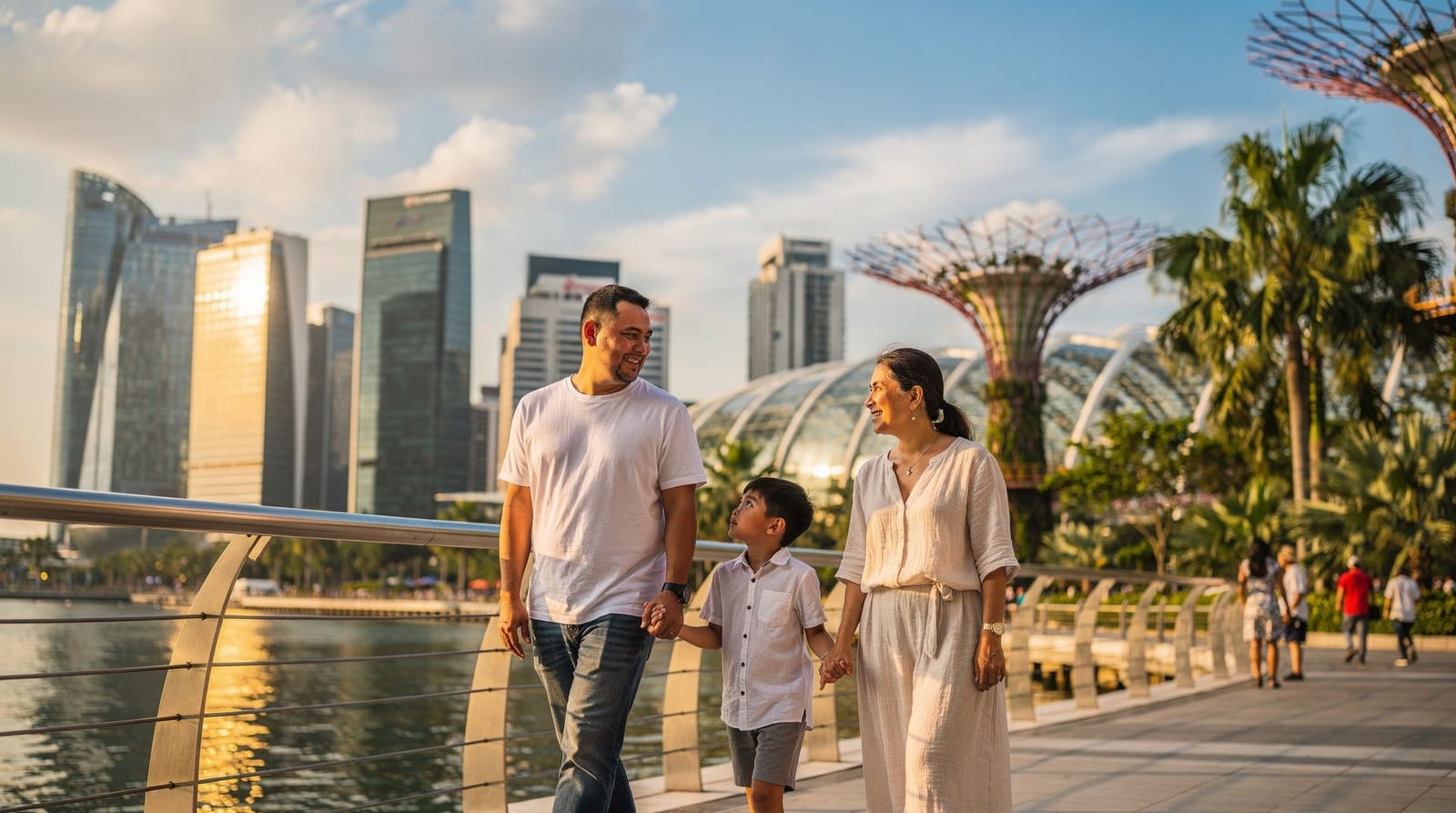
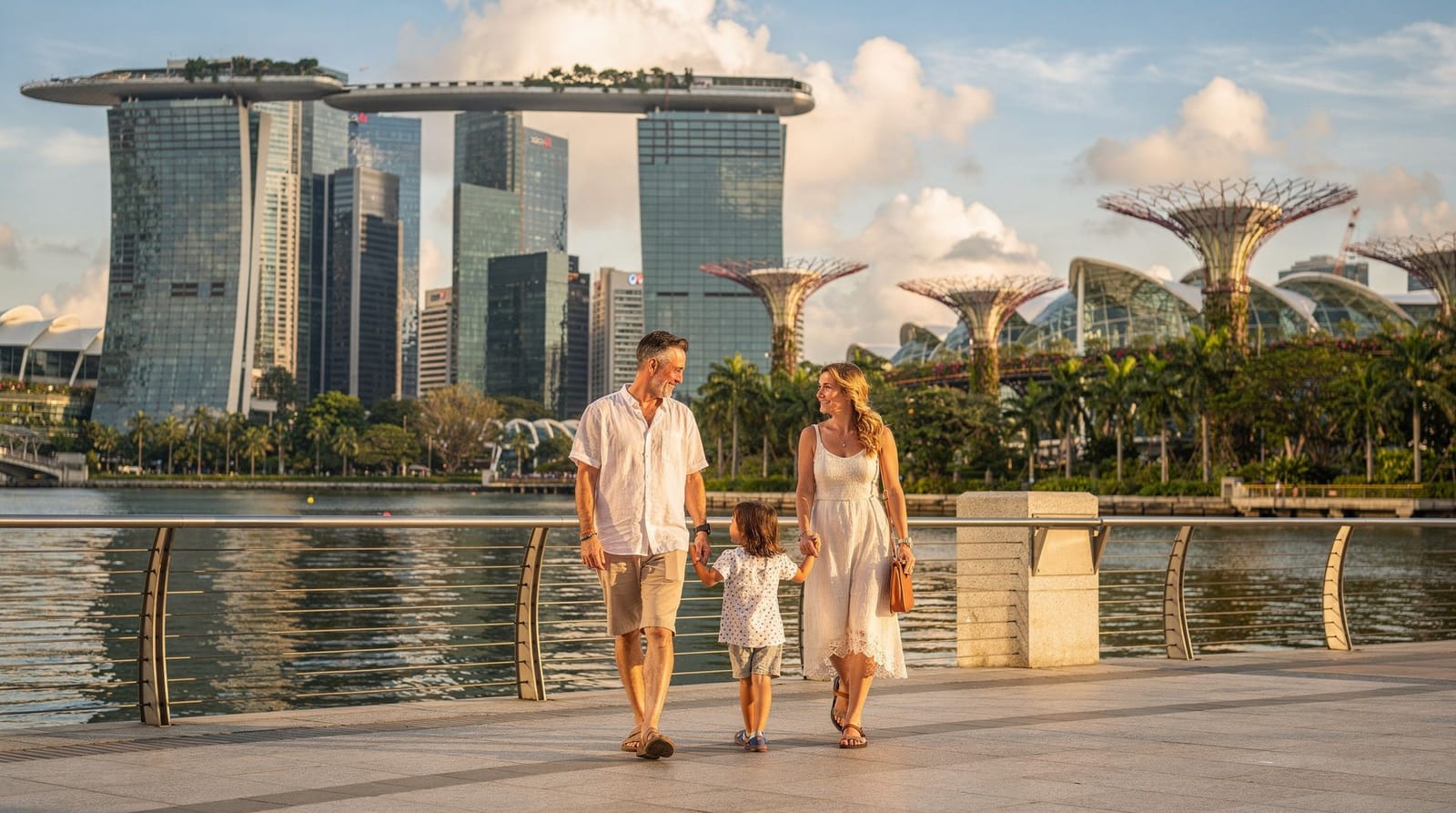
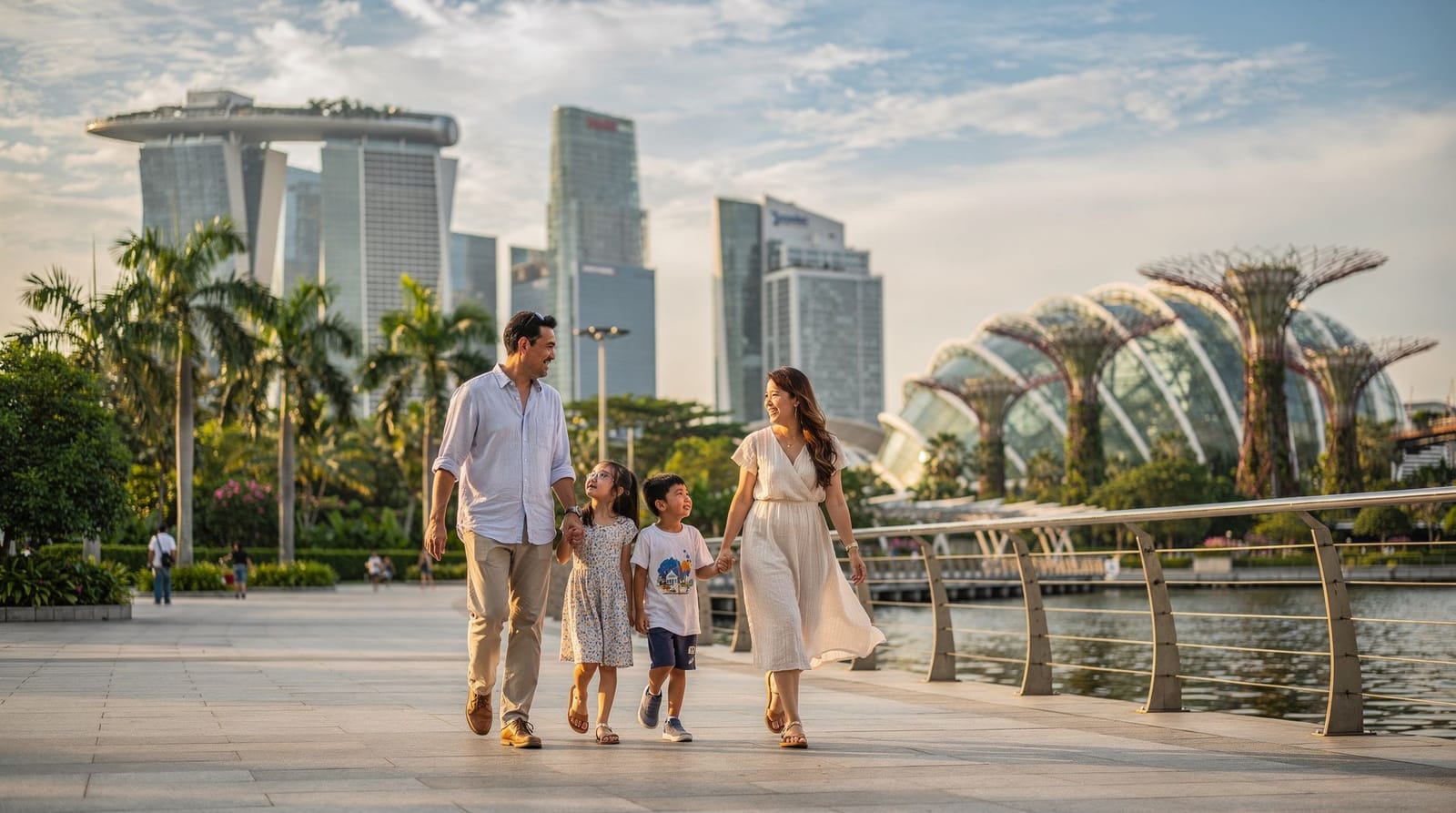
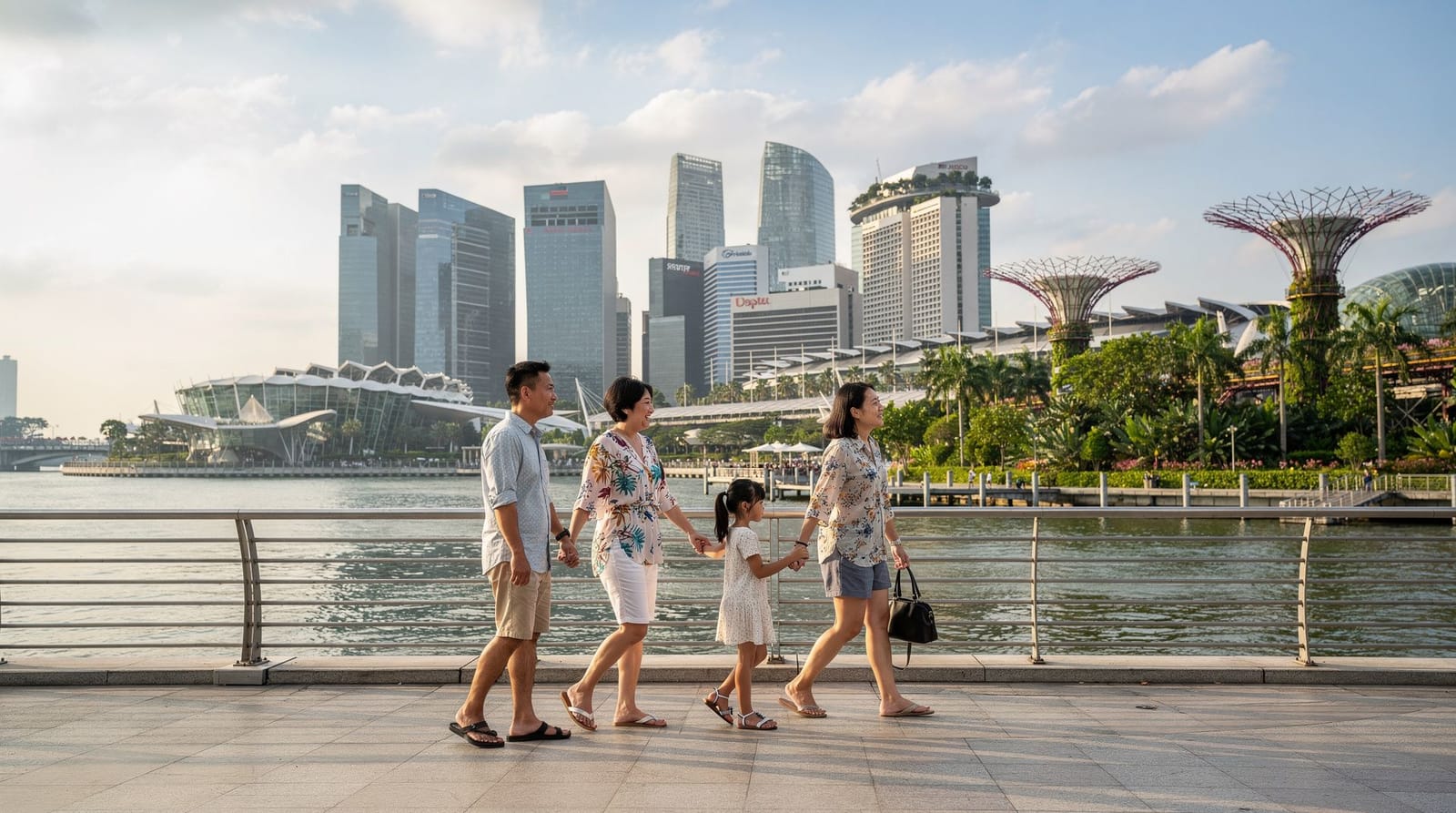
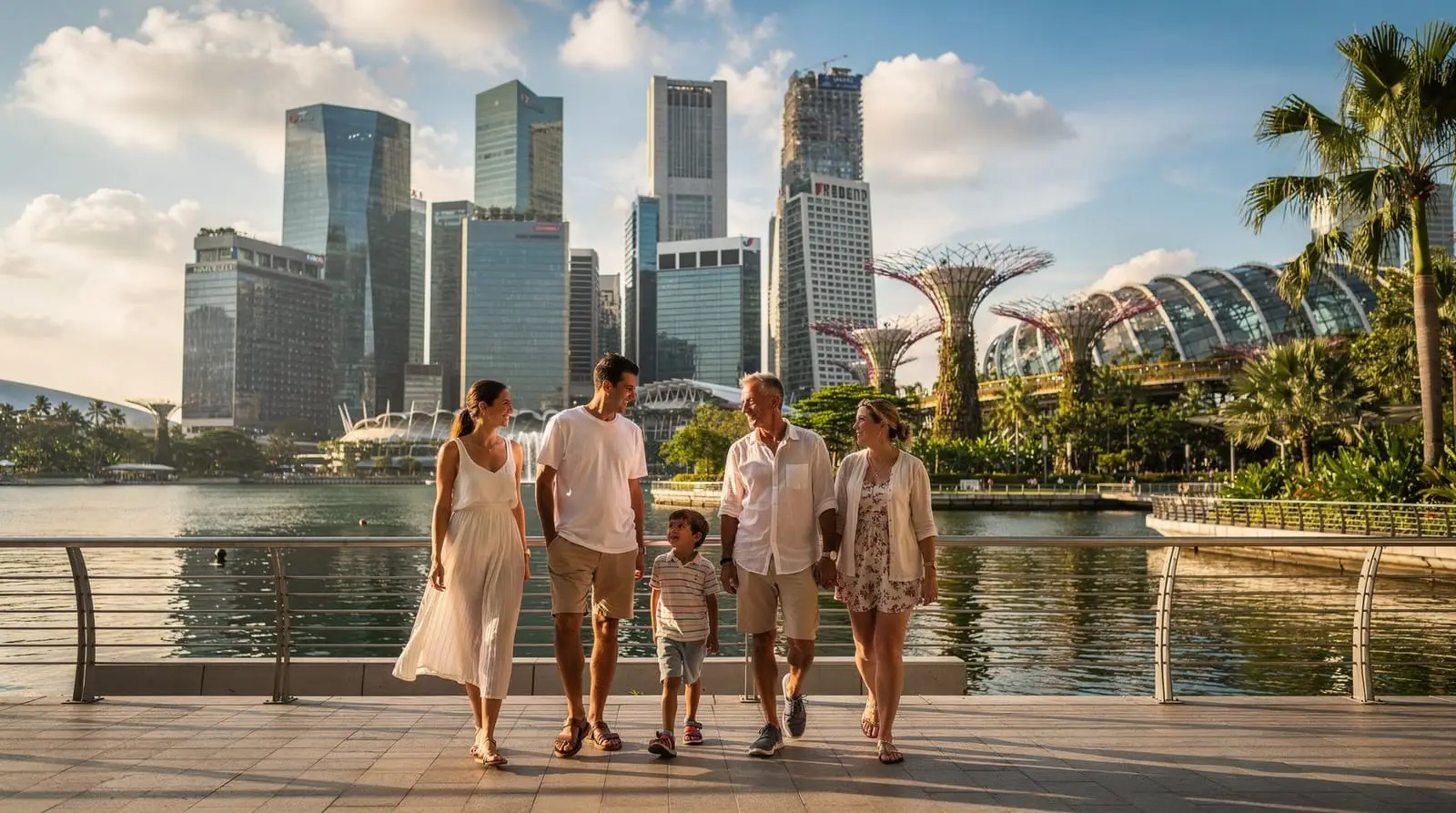
The Singapore Zoo jungle breakfast with wildlife is specifically worth it with small children — the combination of familiar buffet-format food and animals being present and active nearby works well for toddlers who need predictable eating situations.Gardens by the Bay Supertree Grove (evening). The outdoor areas of Gardens by the Bay are free and the Supertree Grove at night — when the trees are illuminated and the Garden Rhapsody light show runs at 7:45pm and 8:45pm — is visually spectacular enough to hold a small child’s attention for 30–45 minutes without them needing to do anything except stand and look. This was our most successful evening outing. Bring a mat to sit on. The grass areas around the Supertrees have good sight lines and enough space that a roaming toddler isn’t a problem.
Sentosa. We went to Sentosa for one day and found it effective but tiring. The beaches are genuinely sandy and the water is calm, which is ideal for a toddler who just wants to be in the sea. Palawan Beach is the most family-oriented. The cable car ride (from Mount Faber or HarbourFront) was a significant hit — the views, the novelty, the enclosed gondola that a toddler cannot fall out of. The Sentosa with kids guide covers the practical logistics including getting there, parking, and which specific attractions are age-appropriate.
Singapore: Mount Faber Cable Car round-trip ticketBird Paradise. We added this on our second trip and it worked well for the same reasons the zoo did — open walk-through aviaries, low barriers between visitor and animal, and enough shaded, covered walkway to manage the heat. It’s a good half-day alternative or addition if the zoo alone doesn’t fill the wildlife appetite.
What didn’t work for us
Universal Studios Singapore was the one attraction we attempted that was a partial failure. Some of the rides are too intense for a 2-year-old, many of the others have height restrictions that exclude toddlers, and the queues — even in what was supposed to be a quieter period — were 30–45 minutes for anything good. We spent more time managing disappointment about inaccessible rides than doing things she actually enjoyed. A child needs to be at least 3–4 and ideally 5+ to get the full value out of Universal Studios.
Very long walks in direct sun, regardless of how much enthusiasm we had at the start, reliably ended badly. Singapore’s heat extracts its toll on small children faster than adults expect.
Food for toddlers
Hawker centres are excellent for children — the kid-friendly hawker guide covers the specific dishes that work well for small eaters. Our daughter lived primarily on chicken rice (she ate the rice and the chicken with considerable enthusiasm), plain noodles with broth (available at most hawker centres for SGD 3–4), and fresh fruit from the juice stalls. The variety at a large hawker centre means that even a picky small person can usually find something acceptable.
The one food-related mistake we made was trying to time meals too rigidly to Singapore’s generally later lunch (1–2pm) and dinner (7–8pm) culture. A toddler wants lunch at noon and dinner at 6pm. We started carrying snacks — fruit pouches, rice crackers — to bridge the gaps, which made the schedule much more manageable.
Naps, sleep, and jet lag with a small child
Adjusting a toddler’s sleep schedule across time zones is its own project, separate from the day-to-day heat management above. We found it easier to let her nap in the pram or carrier during transit between attractions rather than insisting on a fixed nap-in-the-cot schedule — Singapore’s covered, air-conditioned MRT rides and mall walkways are genuinely nap-friendly in a way that outdoor strolling in the heat is not. A hotel with reliable blackout curtains mattered more to us than any other single amenity for managing the first two or three nights of jet lag.
The honest overall assessment
Singapore with a toddler takes more planning than Singapore without one, but the city infrastructure — the MRT, the indoor alternatives to outdoor heat, the hawker food — is genuinely supportive of families in a way that not every city is. The Singapore with kids itinerary and the best family attractions guide give you the structural framework; what this post adds is the texture of what a 2-year-old specifically responds to.
We spent about SGD 300–350 per day total for two adults and one toddler (who travelled free on MRT, was free at several attractions, and ate half portions). That’s mid-range for Singapore family travel.
The family budget Singapore guide breaks down costs in more detail. We came home with a child who had opinions about the Rain Vortex, the pygmy hippos, and the cable car — which seems like a reasonable outcome for an 8-day trip.
Top experiences
Bookable activities with verified prices and instant confirmation on GetYourGuide.

Singapore: Universal Studios Singapore entry ticket

Singapore: Gardens by the Bay bundle entry ticket

Singapore: Night Safari and tram ride ticket

Singapore: S.E.A. Aquarium entrance ticket

Singapore: Singapore River cruise

Singapore: Marina Bay Sands observation deck e-ticket

Singapore: Sentosa cable car Sky Pass roundtrip ticket