Travelling Singapore in monsoon season: practical tips for rain-resilient trips
Singapore sits less than 140 kilometres north of the Equator. This geographic fact shapes everything about visiting the city, and the most important thing it shapes is the rain.
There is no dry season in Singapore in the way that most tropical destinations understand it. The city receives roughly 2,340mm of rain per year, spread across every month — though the distribution matters. The northeast monsoon (November to March) produces the heaviest and most sustained rain; November is typically the wettest month with around 320mm and 20 rainy days. The southwest monsoon (June to September) is comparatively drier and is the period most weather guides describe as the “best” time to visit. But even in the driest months, expect several rainy days.
The practical reality: wherever you visit Singapore in the calendar year, you will encounter rain. The question is not whether it will rain but how to plan around it when it does.
| Wettest month | November, around 320mm and 20 rainy days |
| Driest window | Southwest monsoon, June–September |
| Typical pattern | Clear morning, downpour early afternoon, clears by evening |
| Essential gear | SGD 5–8 collapsible umbrella from any minimart |
| Rain-proof fallback | Hawker centres, malls, museums, conservatories |
How rain works in Singapore
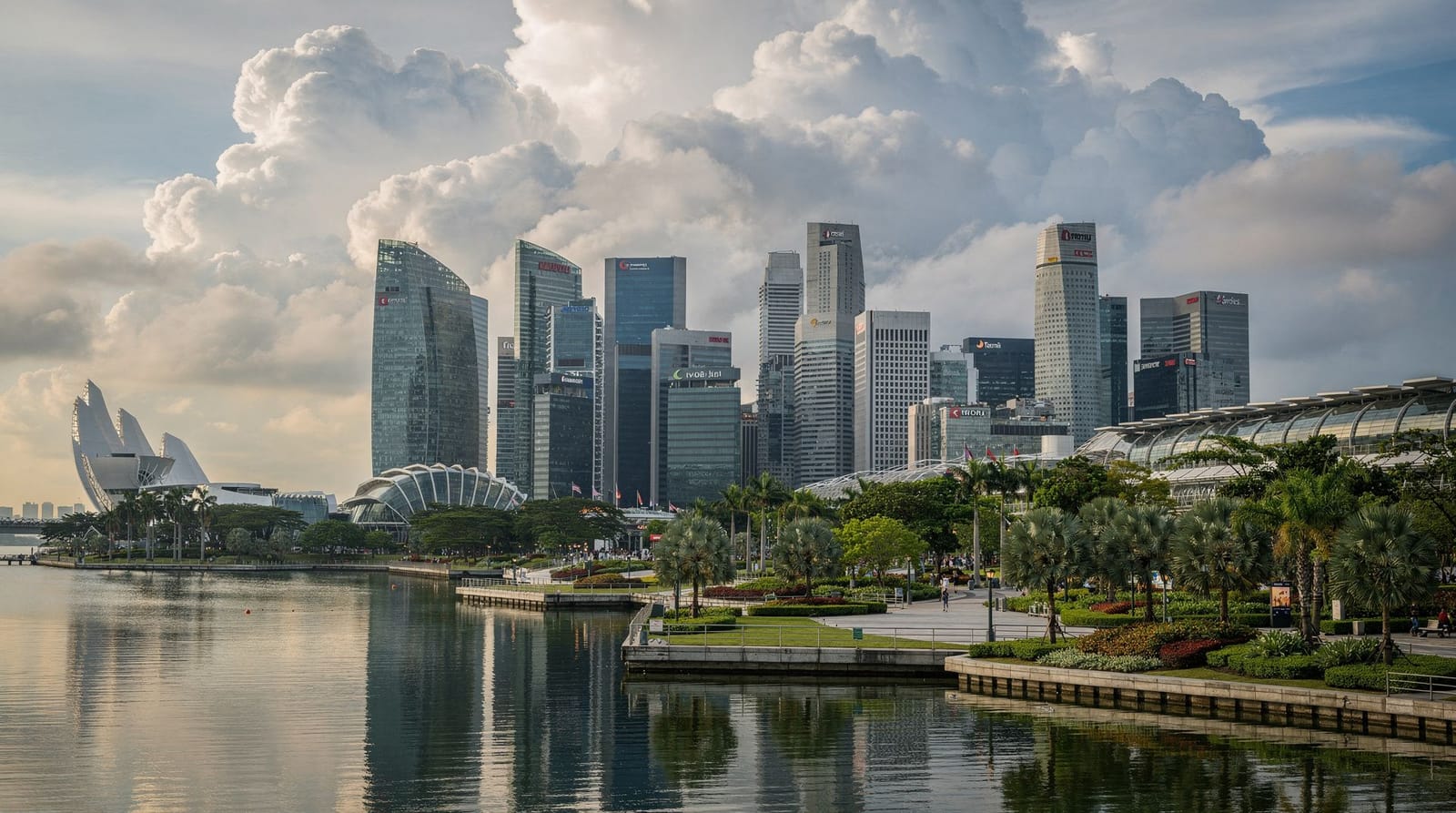
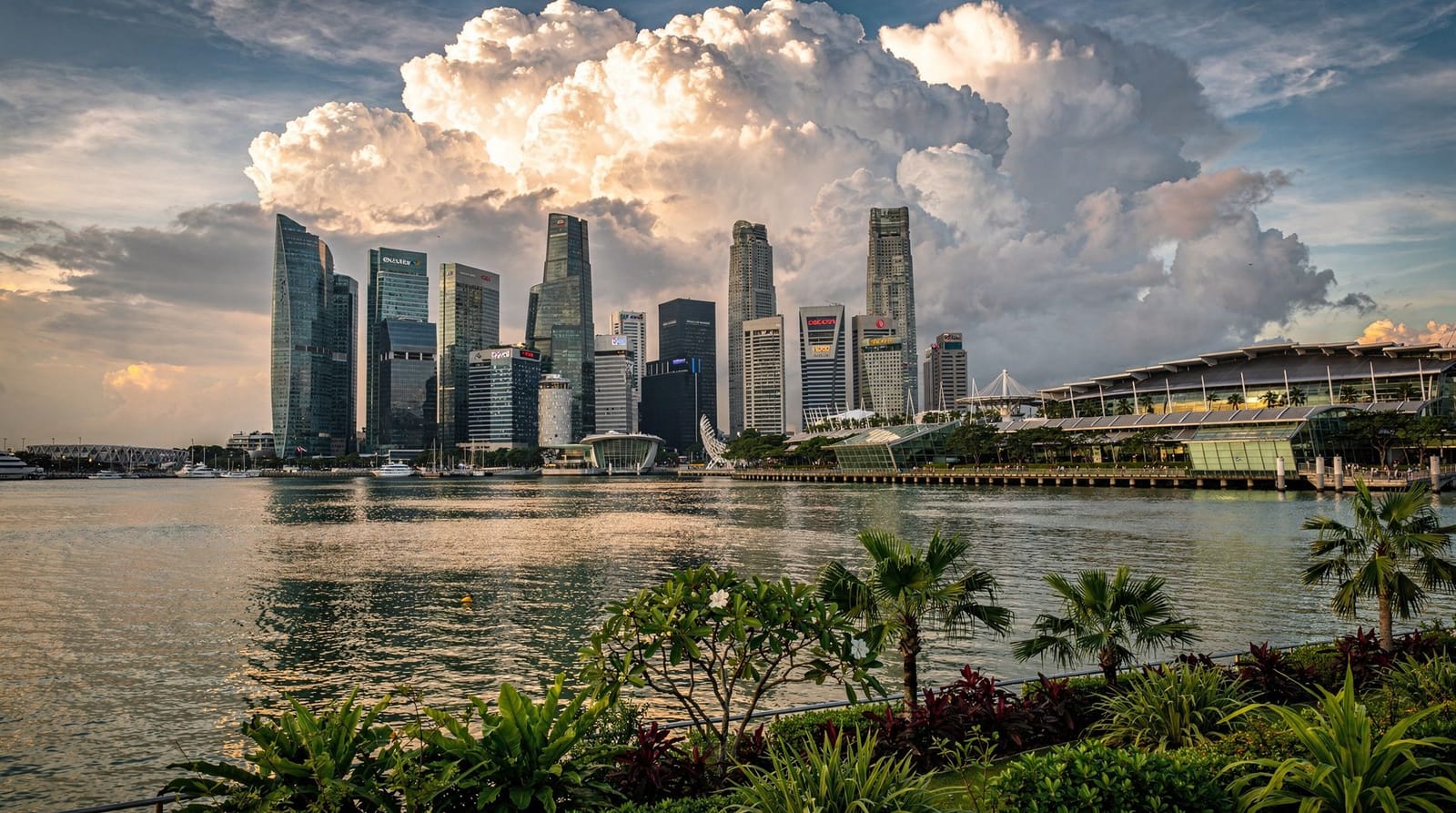
Singapore’s rain is almost exclusively afternoon and evening thunderstorm activity rather than the sustained grey drizzle of northern European climates. A typical pattern in the southwest monsoon period: clear morning, clouds building through late morning, heavy downpour for 45–90 minutes in the early afternoon, sunshine and steam thereafter. The sky goes from threatening to actively torrential to clearing in an hour.
This has a specific practical implication: plan outdoor activities for the morning. The weather month-by-month guide shows the rainfall timing patterns in more detail, but the general rule of morning outdoors, afternoon sheltered works across most of the year.
During the northeast monsoon (November–January specifically), this pattern can break down — rain at any hour, sustained over longer periods, occasionally arriving in the morning. This is when the city’s covered walkway infrastructure becomes truly important.
The covered walkway system: your primary defence
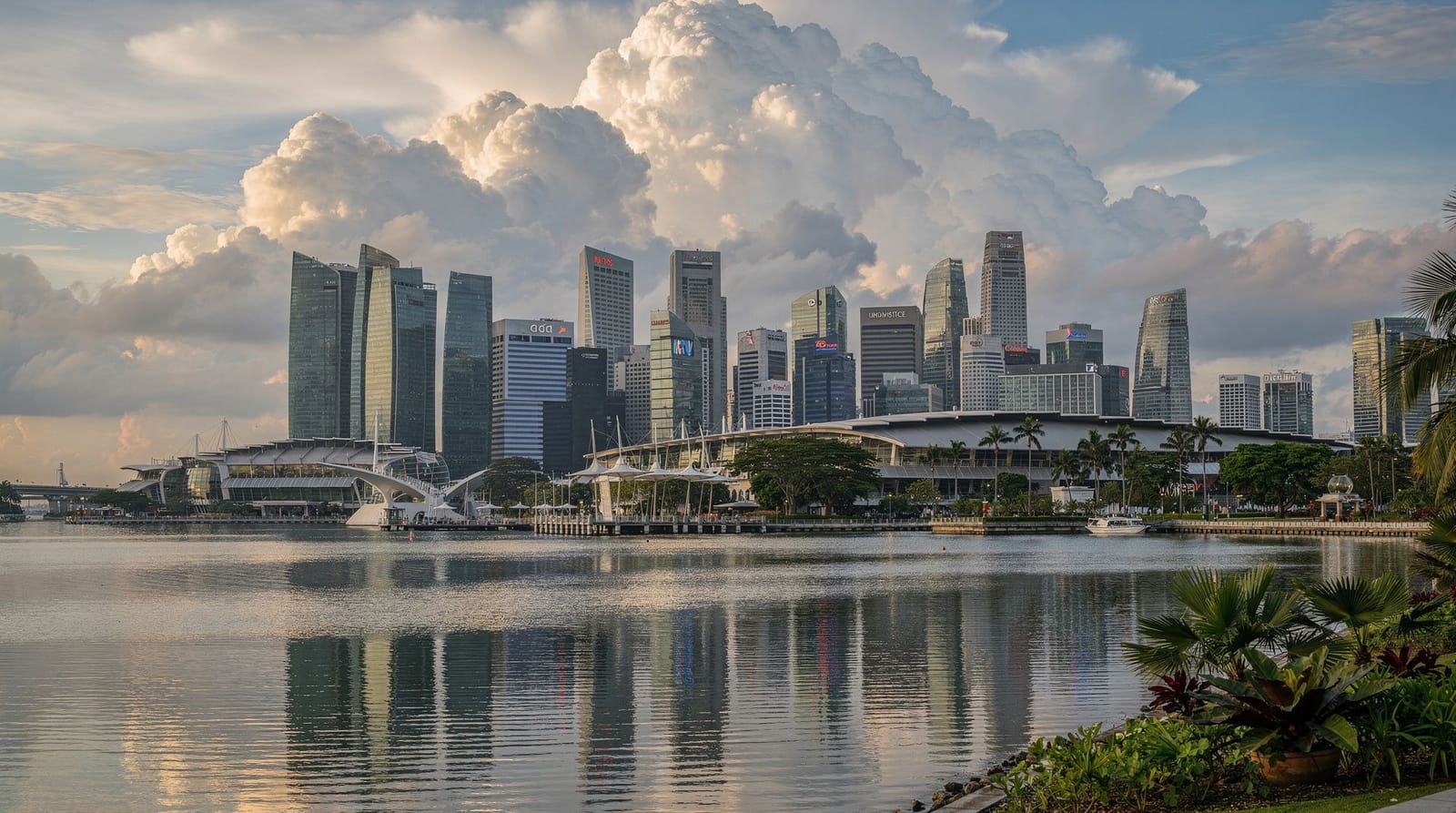
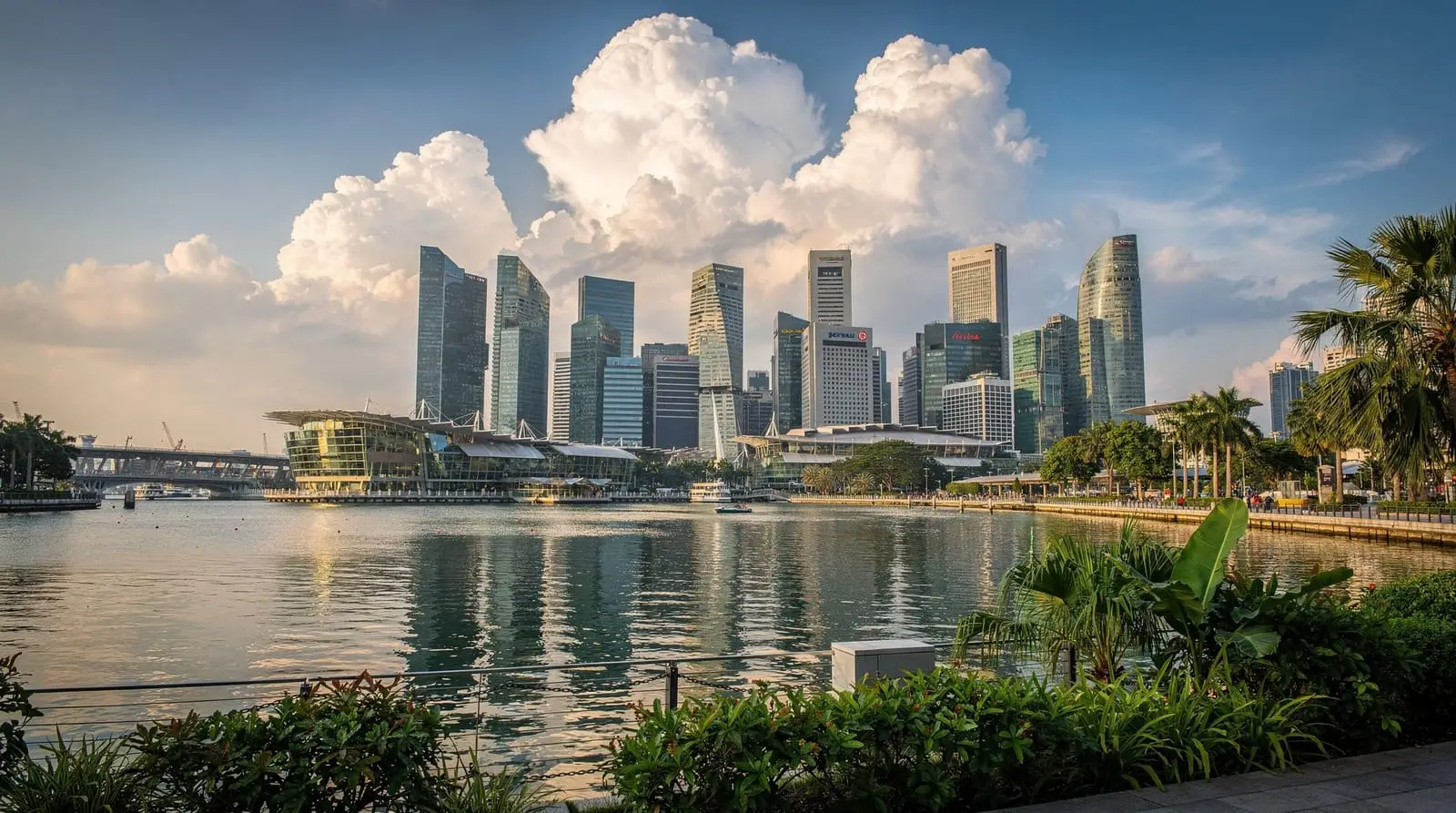
Singapore’s covered walkways — the sheltered passages connecting MRT stations, malls, office buildings, and hotels — are the most underappreciated piece of infrastructure in the city. In the Marina Bay and Orchard Road areas particularly, you can walk for 20–30 minutes between air-conditioned buildings without meaningful sun or rain exposure.
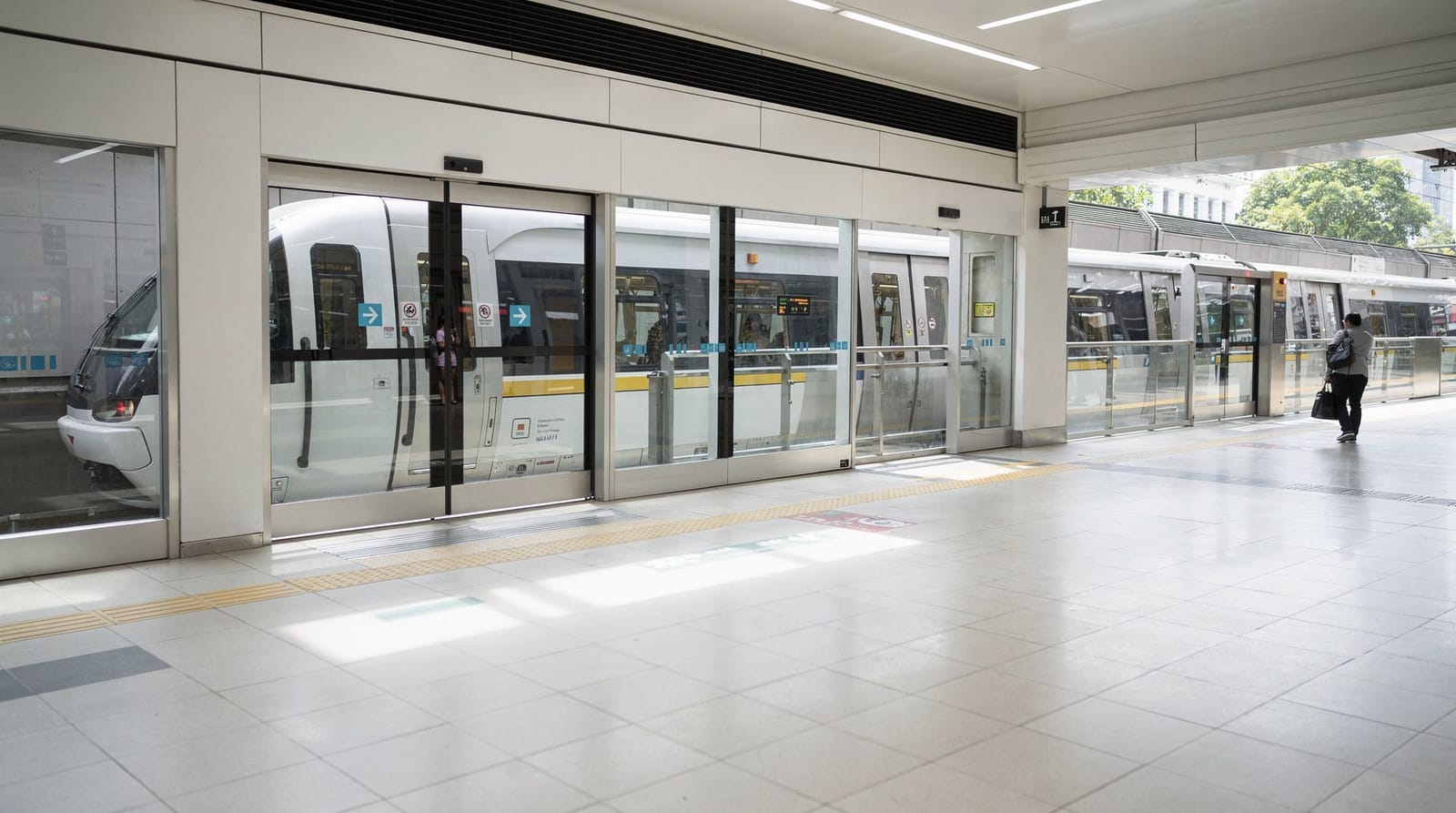
The getting around Singapore guide maps the most useful covered routes. The general logic: Changi Airport connects to the MRT, the MRT connects to major malls at each station, major malls connect to hotels, office towers, and other malls via underground or overhead walkways. If you understand this network, a rainy afternoon need not interrupt your movement significantly.
What the covered walkways don’t protect you from: the final block to a specific restaurant, the approach to most temples and markets, outdoor eating at hawker centres (though most have roofing and ceiling fans that limit exposure). Keep a small umbrella in your bag. The SGD 5–8 collapsible umbrellas available at minimart chain stores (7-Eleven, Cheers, Prime) are entirely adequate.
Rain-proof activities to plan around
Hawker centres are almost always covered. The large indoor centres — Chinatown Complex, Lau Pa Sat, Maxwell Food Centre — are fully roofed with good airflow from fans. Eating at a hawker centre in a heavy downpour is actually quite pleasant: the sound of rain on the roof, the steam from the woks, the general indifference of regular patrons to the weather outside.
Mall-based activities cover a significant proportion of Singapore’s free things: exhibitions in Orchard Road malls, the supermarkets of NTUC FairPrice for a very specific kind of local observation, the basement food halls of Ion Orchard. Singapore’s malls are unusually good — this isn’t a fallback option but a legitimate version of the city.
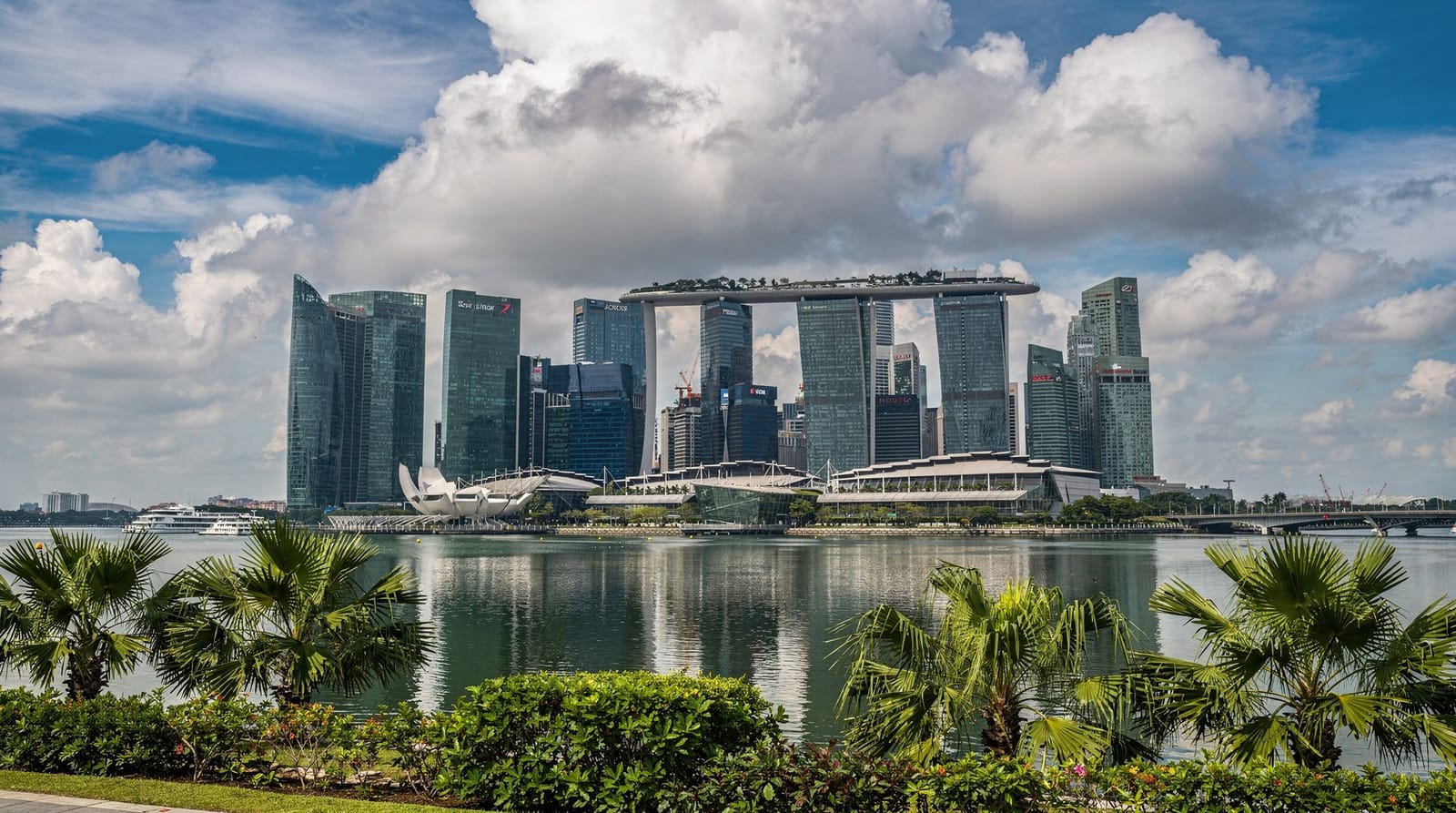
Museums are excellent and air-conditioned. The National Gallery Singapore (free permanent collection, charged for special exhibitions) is one of the better art museums in Southeast Asia. The Asian Civilisations Museum at the Empress Place building is free on Friday evenings. The ArtScience Museum near Marina Bay Sands has a strong permanent teamLab: Future World exhibition (ticketed, worth it, visually extraordinary for any age).
The Cloud Forest and Flower Dome at Gardens by the Bay are fully enclosed glass conservatories — precisely the right format for a rainy afternoon. Both are artificially climate-controlled, the Cloud Forest to rainforest temperatures (around 23–25°C), the Flower Dome to Mediterranean conditions (18–25°C). The Flower Dome + Cloud Forest combo ticket is SGD 46 for adults.
Singapore: Gardens by the Bay bundle entry ticketThe Night Safari — one of Singapore’s signature attractions — runs entirely after dark and the experience is barely affected by light rain. The tram circuit takes you through open-air habitats, yes, but the animals are typically more active in cooler, wetter conditions and the dramatic quality of the lighting through mist is genuinely atmospheric.
Singapore: Night Safari and tram ride ticketThe rainy day in Singapore itinerary
The full rainy-day itinerary covers a complete day’s worth of activities that are either rain-proof or rain-resilient. The short version of the logic:
Morning: Botanic Gardens before the rain arrives (the garden is beautiful in light rain and miserable in heavy rain, so arrive by 8am and leave by 11am)
Midday: Lunch at any covered hawker centre, followed by a coffee at a kopitiam
Early afternoon: A museum or the Gardens by the Bay conservatories
Late afternoon: Orchard Road or a mall with a cinema if the afternoon storms are severe
Evening: The weather typically clears for the evening. Outdoor activities — Marina Bay waterfront, Chinatown, Kampong Glam — work well post-storm.
Rainfall and rhythm by month
Singapore doesn’t have a true dry season, but the intensity and pattern of rain shift enough across the year to matter for planning:
| Months | Rain pattern | What it means for you |
|---|---|---|
| Jan–Feb | Tail of NE monsoon, drier than Nov–Dec | Good outdoor window, some breezy days |
| Mar–May | Inter-monsoon, afternoon storms build | Morning outdoors, afternoon indoors |
| Jun–Sep | SW monsoon, driest and most predictable | Best overall window for outdoor plans |
| Oct | Inter-monsoon transition, haze risk begins | Watch PSI, storms less predictable |
| Nov–Dec | NE monsoon, heaviest and most sustained rain | Build in indoor backup for most days |
None of these months rules out a good trip — the difference is how much you need to structure around the rain rather than whether you need to think about it at all.
A rain-resilient day, guided
If you’d rather not plan the indoor/outdoor logistics yourself, a guided city tour with flexible indoor stops (museums, the Gardens by the Bay conservatories, ArtScience Museum) removes the need to watch the sky:
Gardens by the Bay: OCBC Skyway, Flower Dome and Cloud Forest combo ticketThe haze complication (August–October)
The separate weather issue worth mentioning is haze, which is distinct from rain. Transboundary haze from agricultural burning in Sumatra and Kalimantan drifts into Singapore, typically peaking in August–October, worse in El Niño years. Haze is measured by PSI (Pollutant Standards Index) and NEA updates the index hourly at haze.gov.sg.
At PSI below 50: normal, no precautions needed. At PSI 51–100: sensitive groups (elderly, children, respiratory conditions) should reduce prolonged outdoor exposure. At PSI 101–200 (Unhealthy): avoid outdoor exertion, wear a N95 mask if outdoors. Above 200 is unusual but has occurred during severe fire seasons.
The haze season guide covers this properly. For most visitors in most years, haze is a minor inconvenience rather than a trip-cancelling condition. In a severe haze year, it can meaningfully affect outdoor activities for several days at a stretch.
The honest conclusion on timing
The best time to visit Singapore guide makes the case for February–April and June–September as the most comfortable periods. This is accurate. But Singapore is one of those destinations where there is no catastrophically wrong time to visit — only better and slightly less optimal configurations. The infrastructure, the indoor alternatives, and the genuine interest of the city when it rains mean that a week here in November or December, planned with the rain in mind, is entirely rewarding.
The one month to approach most cautiously is November — highest rainfall, highest humidity, hottest temperatures — combined with the pre-Christmas surge in visitor numbers. If your dates are flexible, avoid peak November.
For everyone else: bring the small umbrella, book morning outdoor activities, and accept that the afternoon will handle itself.
What packing for the monsoon actually looks like
Beyond the umbrella, a few small adjustments make monsoon-season travel noticeably easier. Quick-dry clothing matters more than in most tropical destinations, since a sudden downpour followed by high humidity means cotton stays damp for hours. A light rain jacket is generally less useful than an umbrella — Singapore’s rain is often too heavy and too brief for a jacket to be worth the extra heat retention. Waterproof phone protection (a simple zip pouch is enough) is worth having for the walk between covered sections. Sandals or quick-drying shoes handle sudden puddles better than trainers, which stay wet for the rest of the day once soaked.
Where to go when the sky closes in
A few ideas from the rest of the site, for the moment the first drops fall. If you are travelling with children, the rainy day with kids guide and the family attractions roundup collect options that keep everyone busy and dry. Food is the other obvious refuge: the best hawker centres guide and the Lau Pa Sat guide help you pick a roofed spot for a long, unhurried lunch while the storm passes.
For culture indoors, the museums guide and the ArtScience Museum and teamLab guide cover places where a downpour costs you nothing. Outdoor-minded travellers can still enjoy the Botanic Gardens early in the day, then retreat towards Orchard Road and its connected malls once the clouds build.
If you are still choosing how long to stay, the how many days in Singapore guide helps you leave a little slack for weather, and the what to pack guide goes further on clothing and gear. Reading about a real trip in the wet can also help, so have a look at the Singapore rainy week diary.
Frequently asked questions about Travelling Singapore in monsoon season
Is there ever a truly dry season in Singapore? No — Singapore receives rain in every month of the year, though June–September (the southwest monsoon) is meaningfully drier and more predictable than November–January. Plan around daily patterns rather than expecting a rain-free trip regardless of when you visit.
Will rain ruin outdoor attractions like Gardens by the Bay or the zoo? Rarely entirely. The Gardens by the Bay’s outdoor Supertree area and the Singapore Zoo both continue operating in light-to-moderate rain, and the Cloud Forest and Flower Dome conservatories are fully enclosed. Heavy downpours are usually short (45–90 minutes), so waiting it out at a hawker centre or cafe nearby is often more practical than cancelling plans.
Top experiences
Bookable activities with verified prices and instant confirmation on GetYourGuide.

Singapore: Universal Studios Singapore entry ticket

Singapore: Gardens by the Bay bundle entry ticket

Singapore: Night Safari and tram ride ticket

Singapore: S.E.A. Aquarium entrance ticket

Singapore: Singapore River cruise

Singapore: Marina Bay Sands observation deck e-ticket

Singapore: Sentosa cable car Sky Pass roundtrip ticket