Bukit Timah
Bukit Timah is Singapore's highest point — 163 m of primary lowland rainforest with genuine biodiversity, just 12 km from the city centre. Free to enter.
Singapore: Night Safari and tram ride ticket
Quick facts
- Summit elevation
- 163.63 m — Singapore's highest natural point
- Forest type
- Primary lowland dipterocarp — among the rarest in Southeast Asia
- MRT access
- Beauty World (Downtown Line) — 15 min walk to reserve entrance
- Entry cost
- Free; no registration required
- Wildlife
- Long-tailed macaques, flying lemur, Sunda pangolin (rarely seen), 500+ plant species
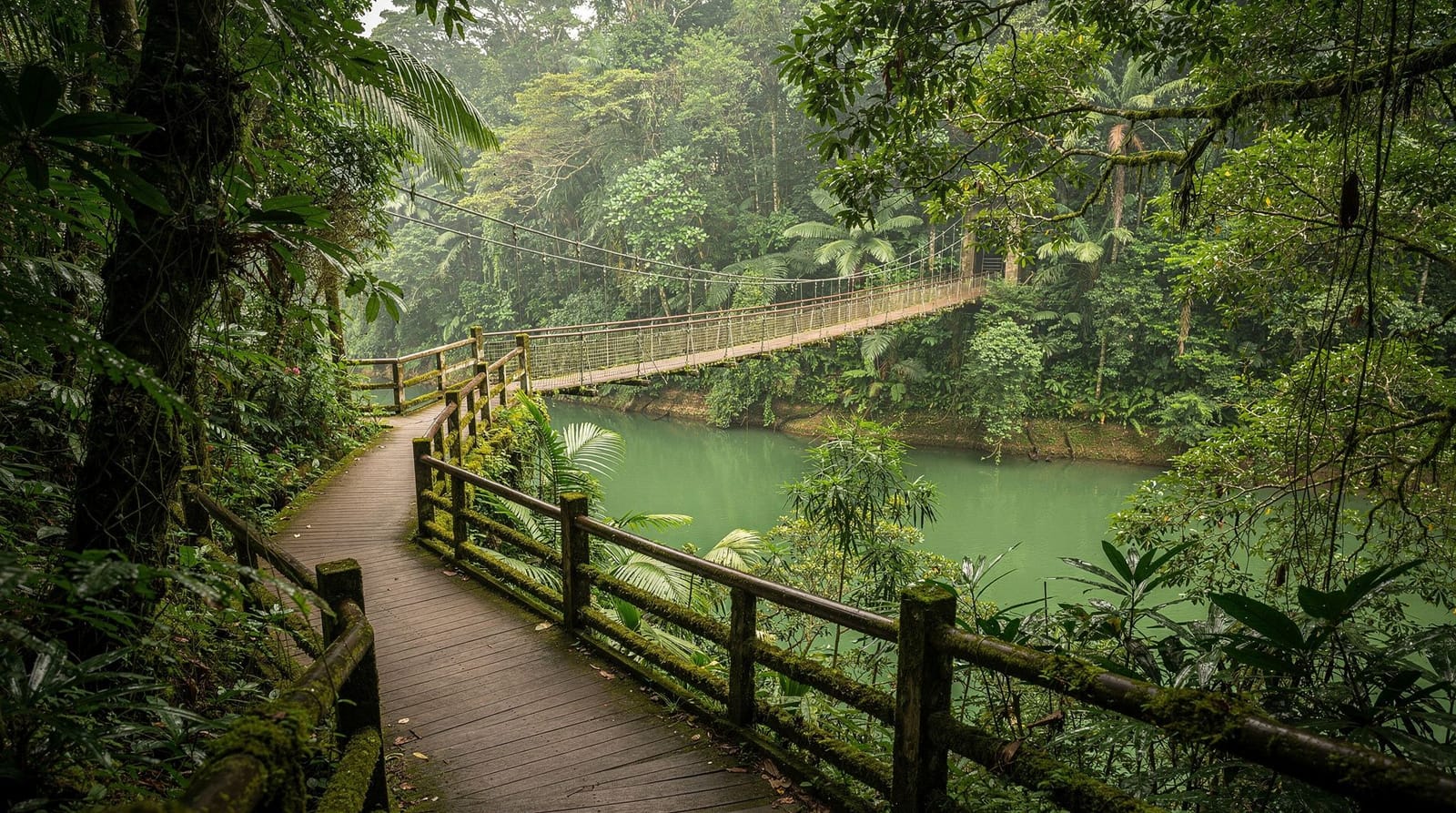
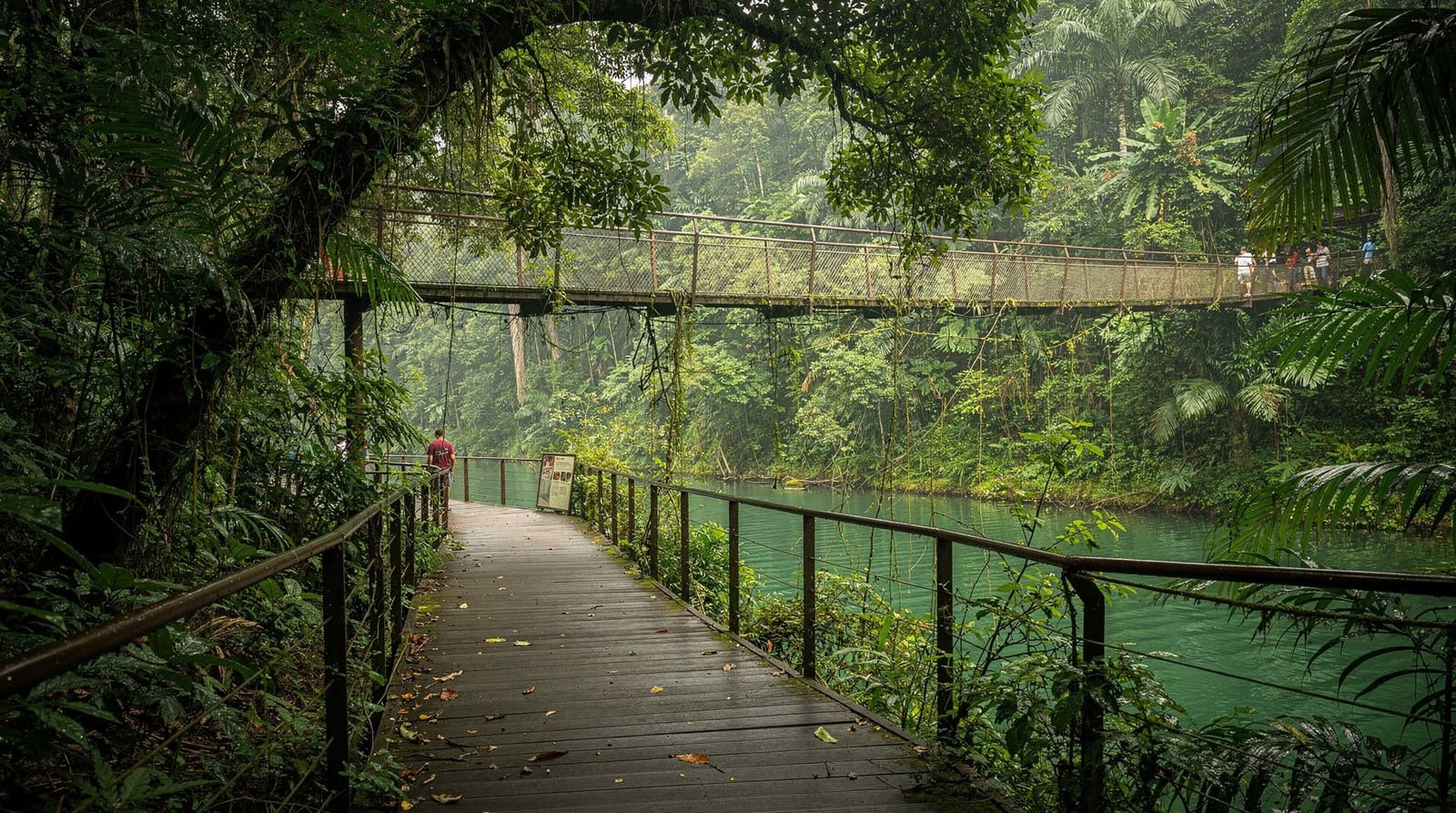
Bukit Timah is simultaneously one of Singapore’s most significant ecological sites and one of its least-visited by tourists. That gap is partly a marketing failure and partly intentional — the National Parks Board (NParks) manages visitor numbers carefully, and the reserve has none of the developed infrastructure that surrounds Gardens by the Bay or the zoo cluster. What it has instead is genuine primary rainforest: old-growth lowland dipterocarp forest that has existed continuously since before European settlement, sitting improbably close to one of the world’s densest cities.
At 163.63 metres, Bukit Timah Hill is the highest natural point in Singapore. That number sounds modest until you consider that the surrounding lowlands average 15 metres above sea level, and that the hill contains more plant species than the entire Malay Peninsula according to surveys conducted by botanists in the early 20th century — a claim still cited by ecologists today.
| Where | West-north Singapore; Beauty World MRT, 15 min walk to entrance |
| Cost | Free; no registration required |
| Time needed | 1.5–2.5 hours for the summit trail; half a day with connected trails |
| Getting there | Downtown Line to Beauty World, or Grab/taxi to Hindhede car park (SGD 15–25) |
| Best time | Before 09h, February–April or June–September for drier conditions |
What makes Bukit Timah ecologically significant
The reserve covers 163 hectares of primary forest — not secondary regrowth, but genuine old-growth lowland rainforest that was never felled for agriculture. This makes it genuinely unusual. Most lowland dipterocarp forest in Southeast Asia was cleared for rubber, oil palm, or timber by the early 20th century. Bukit Timah survived partly by accident (it was a British military reserve) and partly through deliberate colonial-era protection that began in 1883 under Nathaniel Cantley.
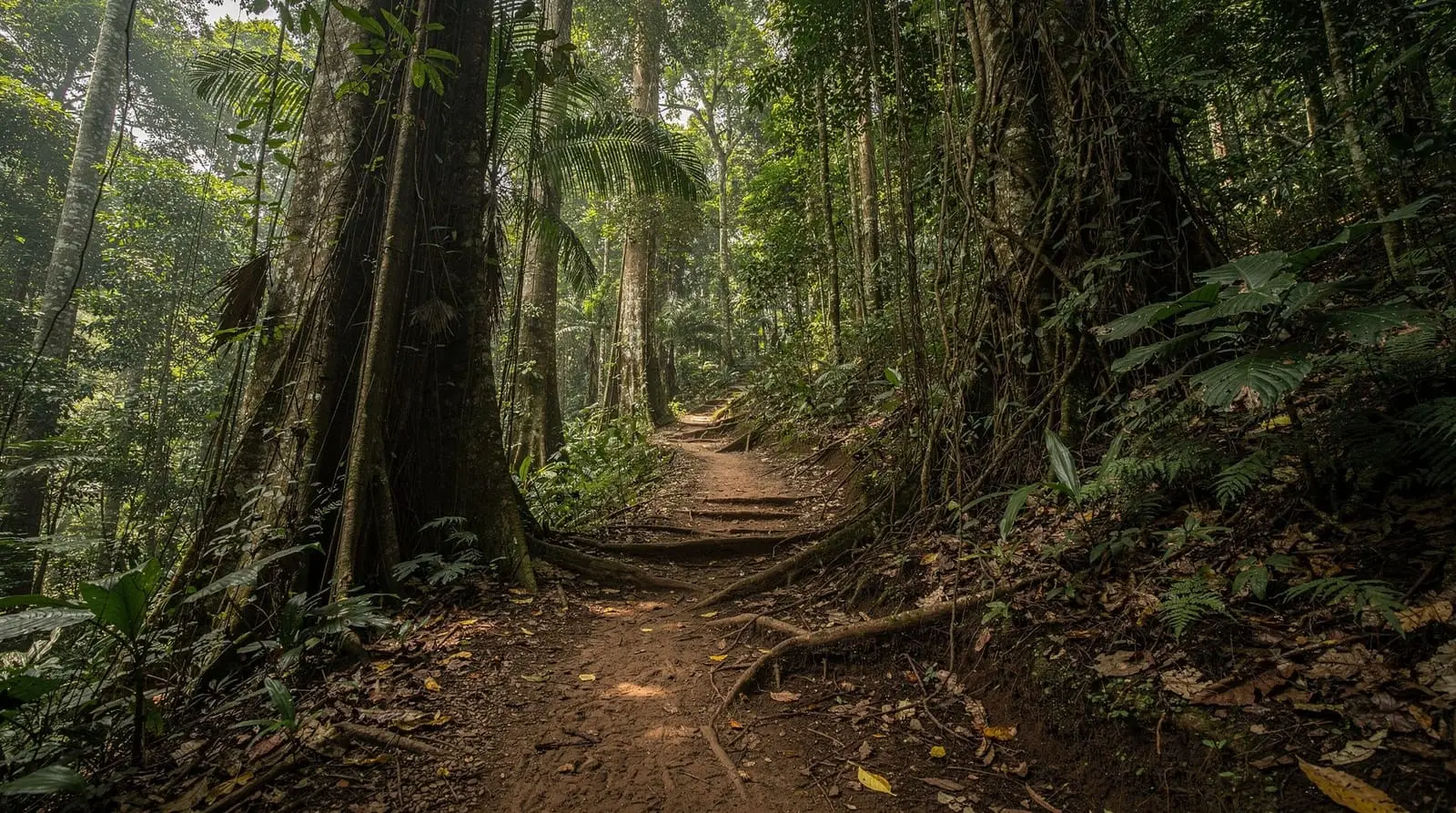
The tree species here — dipterocarps like the meranti, seraya, and keruing — grow to 40 metres or more, creating a closed canopy that keeps the forest floor significantly cooler than surrounding areas. The understorey is dense with ferns, climbing palms, and strangling figs. The ecological complexity visible in a single hour of walking is substantially higher than anything in a managed park.
Wildlife is real but not guaranteed. Long-tailed macaques are common throughout — NParks advises not feeding them (fines apply) and keeping bags closed. More interesting but less reliably seen: the Sunda colugo (flying lemur), one of Singapore’s most distinctive mammals, often resting in the canopy where its camouflage makes it nearly invisible. The Sunda pangolin is classified as critically endangered nationally; camera trap surveys confirm its presence in Bukit Timah but direct sightings are rare. Birdlife includes the oriental pied hornbill, various kingfishers, and migratory species during the October–March window. For guaranteed after-dark wildlife, the Night Safari is the easier option.
Singapore: Night Safari and tram ride ticketThe trail network
The reserve has four main trails, all originating from the visitor centre at the base of the hill:
Summit Road (main trail): 1.7 km one-way; paved surface for most of the route; gradients steepest in the upper third. The concrete path is a practical choice for a forested hilltop but reduces the sense of wilderness somewhat. Allow 45–75 minutes up, slightly less down.
Catchment Path / North View trail: Loops through the forested sections north of the summit; less trafficked, better for wildlife observation. The path can be muddy after rain. Allow 2–3 hours for the full loop.
Rifle Range Road trail: Links Bukit Timah to the adjacent Central Catchment Nature Reserve and eventually connects to MacRitchie Reservoir. This longer route (3–4 hours) is used by experienced hikers doing the cross-island trail. See the MacRitchie treetop walk guide for the far end.
Rail Corridor connection: The old KTM railway line that once ran from Tanjong Pagar to the Causeway was converted into a 24-km green corridor after the railway ceased in 2011. The Rail Corridor passes near Bukit Timah’s base and provides a flat, shaded walking and cycling route northward. The cycling Singapore guide covers this.
Getting to Bukit Timah
By MRT: Beauty World station on the Downtown Line is the closest, roughly 15 minutes walk from the visitor centre. The route takes you past a stretch of Upper Bukit Timah Road and through a residential neighbourhood — straightforward, slightly dull.
By bus: Several services run along Jalan Anak Bukit and Upper Bukit Timah Road. Bus 67 (from Jurong), 170 (from Woodlands), and 174 (from Clementi) all stop within walking distance. Check the SG bus app for current routing.
By taxi/Grab: Drop-off point is the Hindhede car park, directly at the visitor centre. From central Singapore, expect SGD 15–25 depending on origin and time of day.
Parking: Hindhede car park has limited spaces; weekends before 8h it can fill. Cars approaching after 9h on busy weekends sometimes park on Hindhede Drive and walk 5–10 minutes to the entrance.
Practical considerations
When to go: The reserve opens daily. The visitor centre opens at 07h00; the trails are accessible before this, though facilities are not. For coolest conditions and quietest trails, arrive at 07h00–08h30. Heat and humidity peak between 11h and 15h.
What to bring: Water (at least 750 ml per person; more if extending to connected trails), insect repellent (the forest has mosquitoes, though not densely), and proper footwear. The paved summit trail can be done in trainers; the nature trails require proper hiking shoes after any rain.
Weather: Rain can make the unpaved trails slippery. The summit trail’s concrete surface is manageable in light rain with appropriate footwear; the satellite trails become genuinely muddy. Check weather before heading out. Singapore’s National Environment Agency (weather.gov.sg) provides hourly forecasts.
Photography: The canopy and understorey are ideal for macro photography (ferns, insects, fungi) and patience-rewarding wildlife shots. The summit clearing provides a partial view over the forest canopy; it is not a panoramic view destination.
Combining with other west-side destinations
Bukit Timah pairs naturally with:
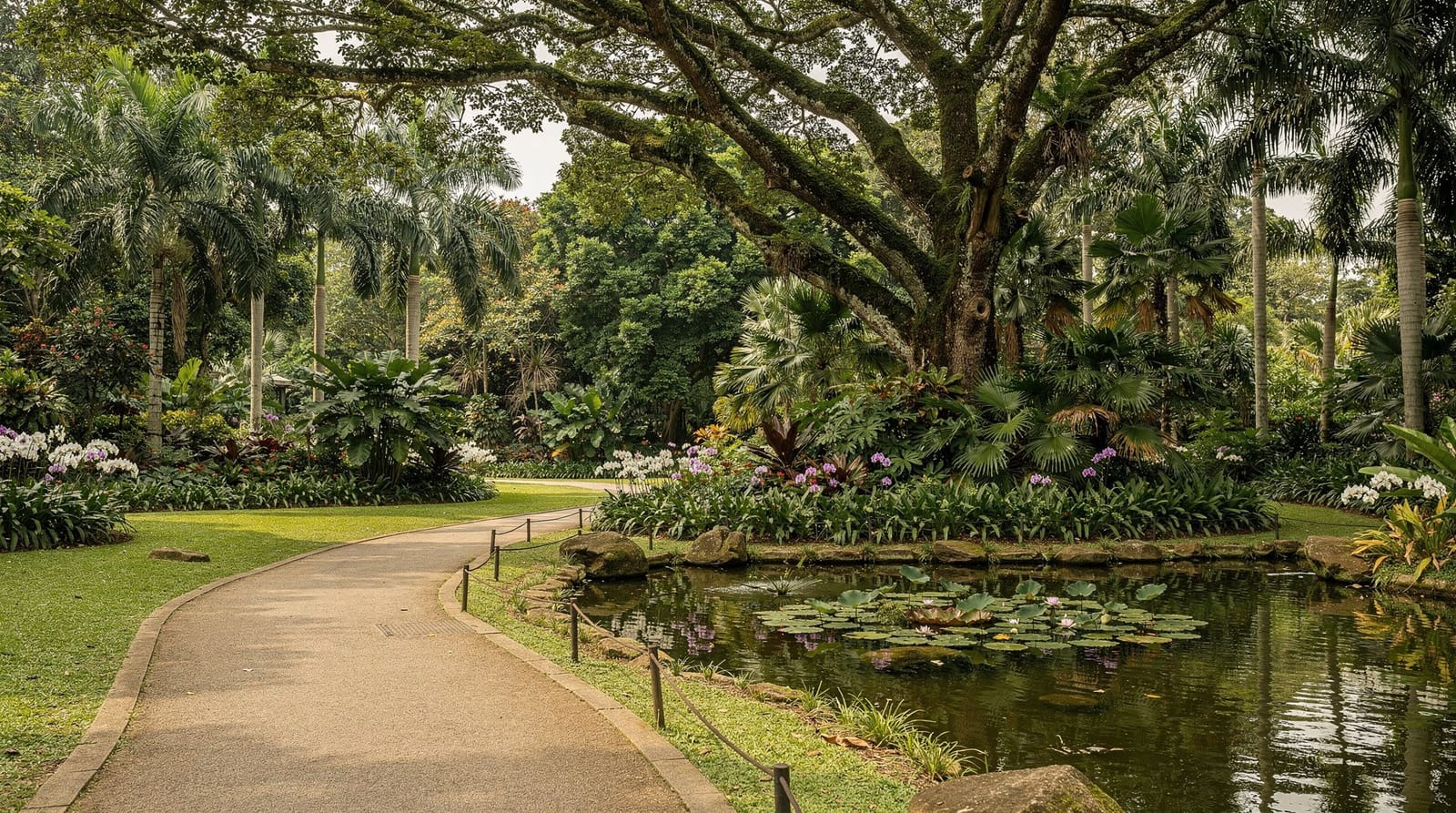
Botanic Gardens: 20 minutes by bus or taxi south. The contrast between the Botanic Gardens’ managed grandeur and Bukit Timah’s wilder character makes a good full-day pairing. The Botanic Gardens guide covers what to prioritise there. For a more landscaped green day in the city, Gardens by the Bay is the natural alternative.
Singapore: Gardens by the Bay bundle entry ticketHolland Village: 25 minutes south. A pleasant lunch or dinner option after a morning in the forest. See the Holland Village guide for eating and drinking options.
Rail Corridor and Southern Ridges: More ambitious, requiring 4–5 hours, but the corridor can connect Bukit Timah southward through the forest edge toward Southern Ridges. Most walkers choose one direction; the full route is for serious trekkers.
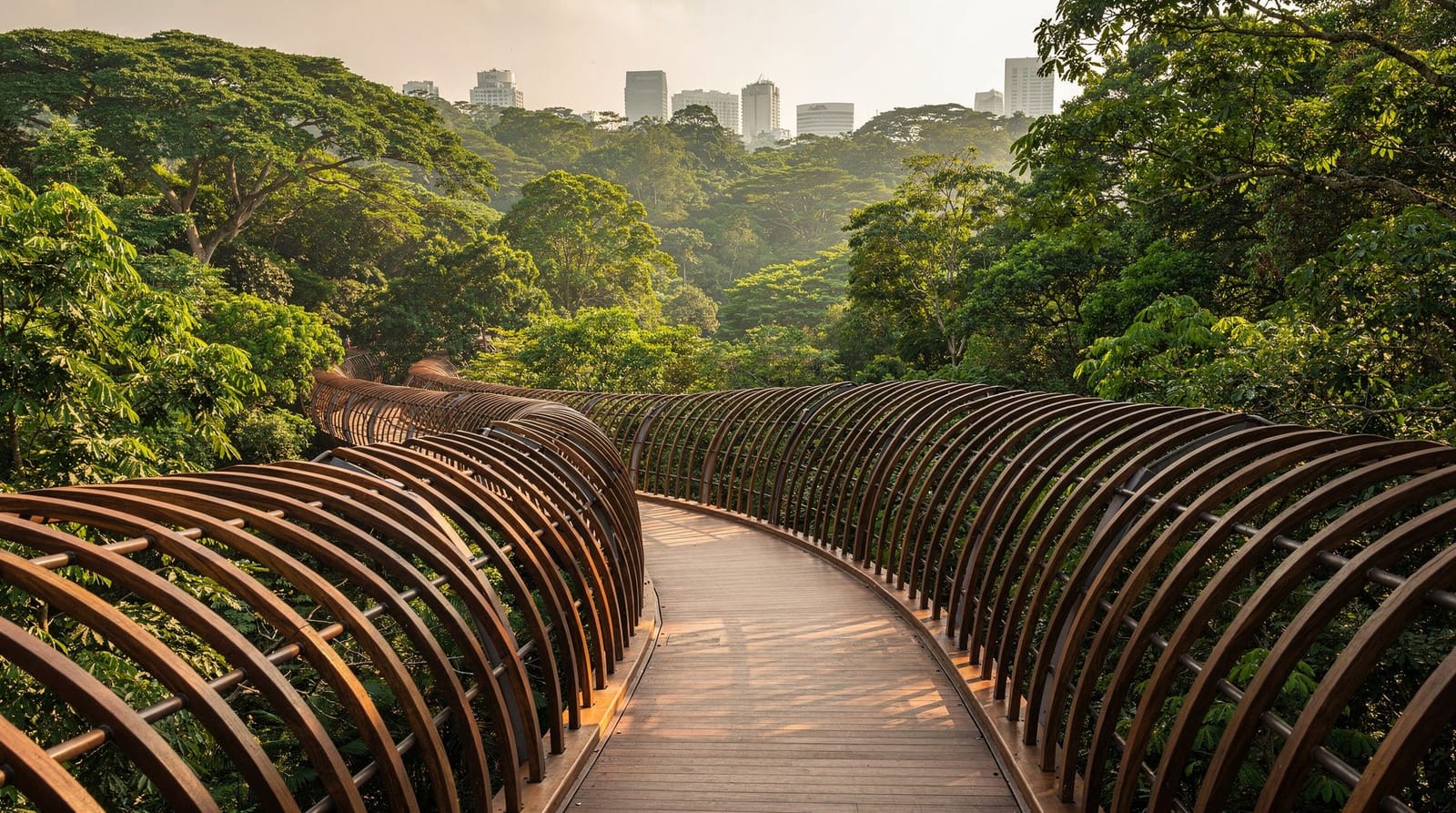
MacRitchie Treetop Walk: North-east via the Catchment Path connection. The canopy walkway at MacRitchie provides a vertigo-inducing perspective on the forest from above. Allow a full day if combining both.
Bukit Timah vs Botanic Gardens vs MacRitchie — which one first?
Visitors with limited time often ask which of Singapore’s three main green spaces to prioritise. They are genuinely different experiences, not interchangeable options: the Botanic Gardens is managed, mostly flat, and free, with the National Orchid Garden as its paid highlight — the easiest entry point for anyone not committed to a real hike. Bukit Timah is the wildest and steepest of the three, the only one with genuine old-growth primary rainforest, and the best choice for travellers who specifically want a forest hike rather than a garden stroll. MacRitchie, reached via the connecting Catchment Path, adds the canopy walkway and a longer, flatter reservoir loop. A single half-day should pick one; a nature-focused multi-day stay can reasonably do all three, ideally in that order of increasing effort.
Reading the forest as you walk
Most visitors treat the summit as the goal and walk past the best of the reserve on the way up. Slow down in the first stretch and look at the trunks: the buttress roots, the climbers wrapped around the larger trees and the layers of ferns tell you more about what makes this forest unusual than any signboard. Stopping every ten minutes to look up is a better way to spot a colugo or a hornbill than hurrying, and it keeps the effort manageable in the humidity.
The sounds matter as much as the sights. In the early morning the canopy is loud with birds and insects, and the noise of the city fades surprisingly fast once the trees close overhead. If you are interested in birdwatching, go quietly, keep to the path and let the animals come to you; the best photo spots guide is useful if you want to plan the more visual part of your day elsewhere in the city.
Pairing the forest with a city day
Bukit Timah works best as a morning that frees up the rest of the day. After a sweaty hike, most people want a cold drink, a shower and something local to eat, and Singapore is good at all three. A hawker meal is the obvious reward: the best hawker centres guide and the what to eat in Singapore guide help you choose where to go once you are back in town.
If you are building a longer stay around a mix of nature and city sights, the Singapore 3-day itinerary and the things to do in Singapore guide show where a half-day in the forest fits among the bigger attractions. Travellers who prefer a lighter nature option can look at the Southern Ridges guide, which offers elevated walkways rather than forest paths.
Respecting the reserve
This is a protected site, and a few habits make a visit better for everyone. Stay on the marked paths, carry your rubbish out, keep voices low and leave plants, insects and fungi where you find them. Sealed food, closed bags and a calm approach to the macaques protect both you and the animals. A visit that leaves no trace is the best way to keep a rare patch of primary forest in good condition for the next walker.
Frequently asked questions about Bukit Timah
Is Bukit Timah suitable for non-hikers?
The summit trail has a paved surface for most of its length, and the elevation gain (roughly 130–140 metres over 1.7 km) is moderate rather than demanding. Most reasonably fit adults can reach the top without difficulty. It is genuinely hilly, not flat, but not technical or exhausting. Families with children who can walk 3–4 km regularly will manage it comfortably.
Are there macaques at Bukit Timah?
Yes, long-tailed macaques are present throughout the reserve and are comfortable around humans. They will attempt to take food from bags if given the opportunity. NParks’ guidance: keep food sealed, do not make eye contact with dominant males, do not feed them (it is illegal and a fine of up to SGD 500 applies). The macaques are not dangerous if you do not provoke them.
How does Bukit Timah compare to MacRitchie for hiking?
Bukit Timah is shorter but steeper; MacRitchie is longer and flatter with the canopy walkway as a distinct highlight. If you have one half-day for a nature experience, Bukit Timah offers the more concentrated wilderness feeling. MacRitchie is better for a longer walk. The MacRitchie treetop walk guide covers that option in detail.
Can I see wildlife reliably at Bukit Timah?
Macaques, yes — almost certain. Colugos are commonly seen by those who look up and scan the canopy patiently near the mid-slope sections. Birdlife (hornbills, sunbirds, kingfishers) is consistent early morning. Pangolins are present but nocturnal and elusive; camera traps record them but direct sightings are exceptional. Manage expectations: this is not a zoo, and wildlife does not perform on schedule.
Is there food or water available at the reserve?
The visitor centre has water points and vending machines. There is no restaurant or hawker stall within the reserve. The nearest food options are in Beauty World Plaza (next to Beauty World MRT, a 15-minute walk from the reserve entrance) — a basic local food court with adequate hawker options at SGD 5–8 per dish.
Is registration needed to visit?
No. The reserve is open access with no registration, no booking system, and no entry fee. NParks does monitor visitor counts and may manage entry at peak times, but as of 2026 there is no pre-booking requirement for the main trails.
Can I combine Bukit Timah with the Botanic Gardens in one day?
Yes — they are about 20 minutes apart by bus or taxi. A common pattern is an early hike at Bukit Timah (07h–10h, before the heat), followed by a more relaxed walk through the Botanic Gardens and lunch in Holland Village or Dempsey Hill in the afternoon. Doing the reverse order works too, but the forest trails are considerably more pleasant before 10h than after.