Coney Island Singapore: the honest visitor guide
Singapore: Gardens by the Bay admission e-ticket
Is Coney Island Singapore worth visiting?
Yes — Coney Island is genuinely different from Singapore's managed parks. It is deliberately low-infrastructure, with unpaved trails, secondary forest, and real wildlife including Wild Boar, Monitor Lizards, and Sea Eagles. Entry is free. The western end beach is one of the few undeveloped shorelines on the main island. It rewards visitors who want nature rather than landscape design.
Coney Island — officially Pulau Serangoon — is a 133-hectare nature park off the northeastern coast of Singapore, connected to Punggol by two causeways and managed deliberately as a low-infrastructure reserve. It is the least manicured large park in Singapore proper: no paved paths, no playground equipment, no air-conditioned visitor centre, and no cafés. What it has is secondary forest, an undeveloped beach, Wild Boar, and a genuine sense of being away from the city.
This is not a criticism of Singapore’s other parks — Gardens by the Bay and the Botanic Gardens are excellent at what they do. Coney Island does something different. It is the closest thing to wild nature that most Singapore visitors will encounter within the island’s own territory.
Singapore: Gardens by the Bay admission e-ticket| Where | Punggol, northeastern Singapore |
| Cost | Free |
| Time needed | 2–3 hours for a thorough visit |
| Getting there | MRT to Punggol (NE17), then 15–20 min walk or cycle |
| Best time | Early morning or dusk, avoiding midday heat |
Getting there
The island is in Punggol, Singapore’s northernmost residential town. The access route runs from Punggol Waterway Park (reached via Punggol MRT, North-East Line, then a 15–20 minute walk along the waterway, or a short bus ride).
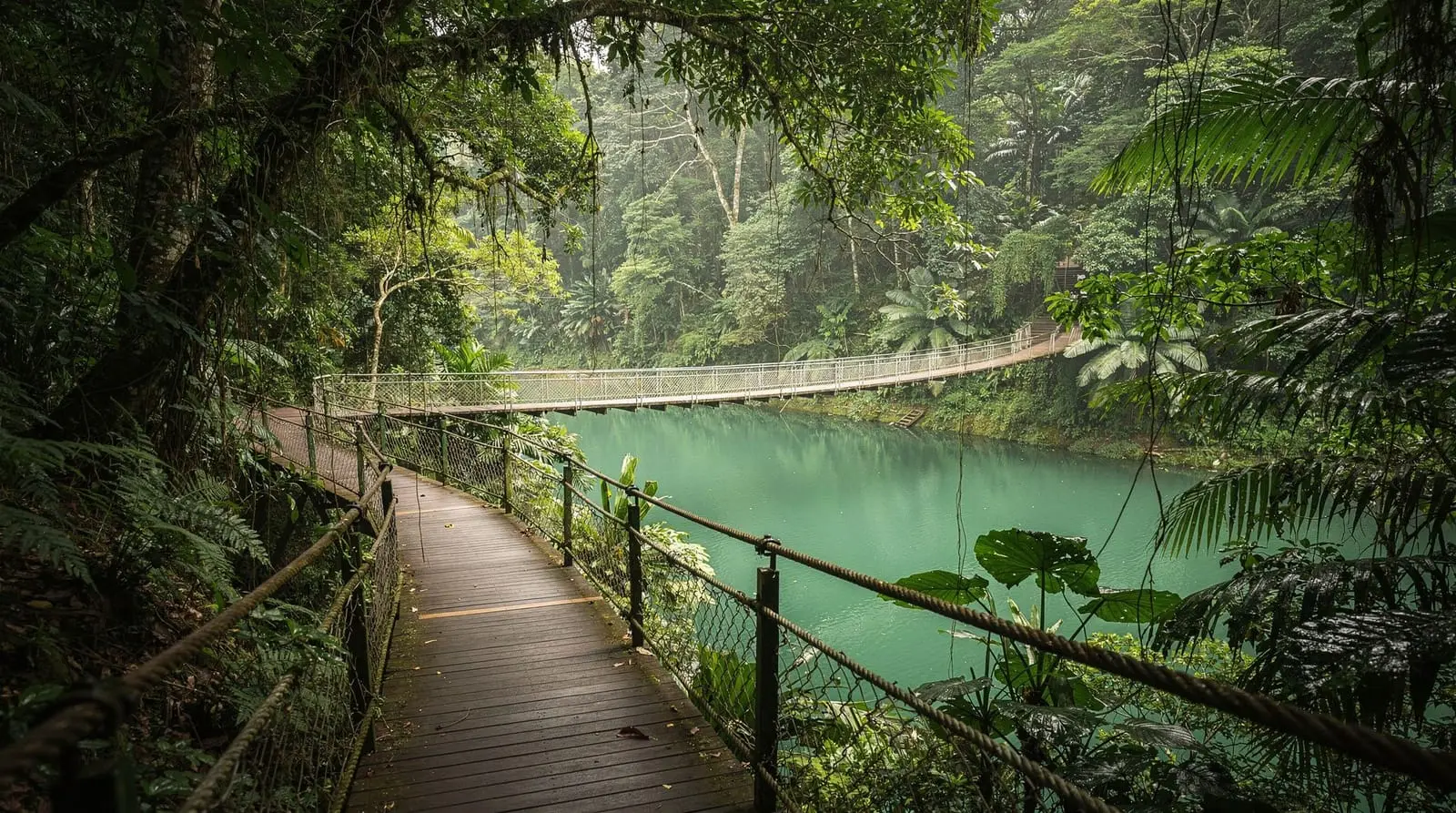
The western entrance to Coney Island is at the end of Punggol Settlement Road, where a wooden bridge crosses the narrow channel. The eastern entrance is on the opposite side, reachable by walking or cycling through the island.
By MRT and foot: Punggol MRT → walk along Punggol Waterway to the western bridge (~20 minutes). This route is pleasant, with waterway views and the Punggol Waterway Park infrastructure.
By cycling: Bicycles can be rented near Punggol MRT. The Punggol cycling network connects seamlessly to Coney Island’s trail system. This is the recommended option for anyone who cycles — crossing the island on a bike and returning via the eastern causeway gives a complete circuit without backtracking.
By bus: Bus 84 from Tampines or buses in the Punggol residential area can reduce the walking distance to the western entrance.
The cycling Singapore guide covers the Punggol network in more detail.
The trail system
Unlike most Singapore parks, Coney Island’s trails are unpaved. They alternate between sandy beach tracks, hard-packed earth through forest, and some loose gravel sections. This is deliberate — the management philosophy is minimal intervention.
Main Trail (western to eastern entrance): The primary east-west route through the centre of the island, approximately 2.4 km. Forest canopy overhead for most of its length, good shade. Wild Boar sightings are common here.
Coastal trails: Shorter side paths leading to the northern (Strait of Johor-facing) and southern (Serangoon Harbour-facing) shorelines. The northern beach is one of the least developed stretches of shoreline in Singapore — sand and casuarina trees, no development visible. The southern shoreline is calmer and often has birds on the exposed mudflats.
The Casuarina Forest area: A distinctive microhabitat near the northern beach where the casuarina trees create a light-filtering canopy that feels unlike the secondary forest interior. Recommended detour.
Allow 2–3 hours for a thorough exploration. More if you cycle the full circuit.
Wildlife: honest expectations
Wild Boar: The most commonly sighted large mammal. Coney Island has a resident population. They are typically seen on the main trail or on the forest edges, foraging in the undergrowth. Wild Boar are not inherently dangerous but can be unpredictable — do not approach, do not feed, and move quietly past them. Sows with young piglets are the most defensive animals. Keep dogs on leads if you bring them (dogs are permitted).
Monitor Lizards: Common throughout, particularly near the water edges. Size ranges from 0.5 to 1.5 metres. They are shy and will usually move away from human approach.
Birds: White-bellied Sea Eagle and Brahminy Kite are regularly sighted overhead. Oriental Pied Hornbill is present in the forest interior. The northern beach and southern mudflats attract herons, egrets, and migratory shorebirds in season. Large-tailed Nightjar are heard (and occasionally seen) at dusk on the main trail.
Common Palm Civet: Occasionally seen at dusk in trees overhanging the trail. More often heard (a distinctive sound in the forest canopy at last light).
What you will not see: Coney Island is secondary forest, not primary rainforest. Species diversity is lower than Bukit Timah Nature Reserve or MacRitchie. The forest is recovering from former coconut plantation use. Manage expectations accordingly — this is genuine but not exceptional nature.
The beach
The northern beach at Coney Island is the main draw for visitors who are not specifically wildlife-focused. It is a narrow strip of sand under casuarina trees, facing the Strait of Johor with peninsular Malaysia visible on the far bank. There is no swimming (the strait has currents and commercial traffic), and the beach is not managed as a swimming beach.
What it offers is rarity in Singapore: an undeveloped shoreline you can sit on for an hour without hearing construction machinery or seeing another tourist. The fishing boats in the strait, the casuarina shadows on the sand, and the absence of infrastructure are its attractions.
Go at dusk if you can manage the return timing — the light on the water and the bird activity in the trees at last light are the best version of this beach.
What to bring
Water: At least 1 litre per person — there is nowhere to refill on the island. 1.5 litres is more comfortable in the heat. Insect repellent: Mosquitoes are present in the forest, particularly in still air near the water. Not overwhelming, but bring repellent. Sun protection: Hat and sunscreen for the beach sections; the forest is mostly shaded. Shoes: Closed shoes or trail runners. Sandals are manageable on the forest sections in dry conditions but uncomfortable on loose sand and in wet season mud. Flip-flops are a poor choice. Snacks: No food available on the island. The Punggol settlement area before the western entrance has some F&B options (a heritage restaurant cluster and some stalls).
Comparing Coney Island to Pulau Ubin
The natural comparison is Pulau Ubin, the larger offshore island near Changi that is also car-free and low-infrastructure. Pulau Ubin is wilder, larger (1000+ hectares versus 133), and more varied — it has the Chek Jawa wetlands, longer cycling routes, and a kampong (village) atmosphere that Coney Island lacks.
For visitors with a full day and transport flexibility, Pulau Ubin is the more rewarding experience. Coney Island wins on accessibility — it is 20 minutes from Punggol MRT versus the 1–1.5 hour journey from Changi for Pulau Ubin — and is a better option for a half-day nature excursion from the city.
Both are free. Both have Wild Boar.
Singapore: Pulau Ubin glow LED night kayak tourPractical details
Opening hours: Daily 07h00–19h00 Entry: Free Facilities on island: None (no toilets, no food) Nearest facilities: Punggol Settlement (western entrance) — heritage F&B cluster Pets: Dogs on leads are permitted Access for strollers: Very poor — unpaved trails only
Weather and the best time to go
Coney Island is entirely outdoors with minimal shade on the beach sections, so timing matters more here than at Singapore’s air-conditioned attractions. Early morning (before 9am) is the coolest window and also the best time for wildlife activity — Wild Boar and birds are more active before the heat sets in. A dusk visit works well too, provided you time your return before the 7pm closing and don’t linger on unlit trails after dark. Rain turns the unpaved sections genuinely muddy, so check the forecast; Singapore’s brief but heavy showers can make the trail unpleasant for an hour or more afterward even once the rain itself has stopped.
Combining with Punggol Waterway
Coney Island is rarely a destination on its own for most visitors — it’s usually paired with time at Punggol Waterway Park, which sits between Punggol MRT and the island’s western entrance. The waterway itself is a good spot for kayaking, and doing a short paddle before or after the island walk makes for a fuller half-day out in Singapore’s least-visited corner. The waterway park also has proper cafés and toilets, which makes it a sensible place to refuel before or after Coney Island’s facility-free trails. See the kayaking Singapore guide for options across the island, not just Punggol.
Punggol Waterway kayaking tourOther quiet nature options nearby
If Coney Island’s Wild Boar and unpaved trails aren’t quite your pace, Singapore has several other low-key nature spots worth comparing. Sungei Buloh Wetland Reserve on the northwest coast offers boardwalk trails and strong birdwatching, with considerably more infrastructure than Coney Island — a better fit if you want wildlife viewing without unpaved terrain. Closer to the city, the Southern Ridges and Henderson Waves route gives an elevated forest walk without the Punggol commute, and works well as a half-day option if your accommodation is more central. For a full list of no-cost options across the island, the free things to do in Singapore guide rounds up Coney Island alongside the rest.
Fitting Coney Island into a wider trip
Coney Island works best as a slow, low-key day set against Singapore’s busier highlights. If you are still shaping your plans, the Singapore itinerary for first-timers and the one-day Singapore itinerary show how the headline sights fit together, and a morning at Coney Island makes a calm contrast to them. Visitors with more time can slot it into the three-day itinerary as the quiet, outdoorsy day between city-centre ones.
If you want more of the same coastal, car-free feeling, East Coast Park offers a gentler seafront with far more going on, while Pulau Ubin is the destination page to read if the idea of an offshore island appeals. For the wider picture of what lies beyond the city, the day trips from Singapore guide and the Southern Islands guide are good next reads.
Because the park is so low on facilities, it also helps to read up on getting around before you go. The getting around Singapore guide explains how the MRT and buses work together, which is useful for the Punggol leg of the journey. And if you are travelling on a tight budget, Singapore on a budget is a reminder that a free park like this one can anchor a satisfying, inexpensive day.
Frequently asked questions about Coney Island Singapore
Is Coney Island Singapore the same as the one in New York?
Completely different. Singapore’s Coney Island is an uninhabited nature park in Punggol. The name comes from the historical use of “coney” (rabbit) to describe the area. There is no amusement park, no beach resort, and no development.
Are the Wild Boar dangerous?
Not typically. Wild Boar on Coney Island are accustomed to human presence and will generally move away from people. The main risk scenario is approaching too closely — particularly sows with piglets, which can be aggressive. Stay on marked trails, keep a distance of at least 5 metres, and do not attempt to feed them. If a Wild Boar approaches, stand still and move away calmly; do not run.
Can I swim at the beach on Coney Island?
No. The northern beach faces the Strait of Johor, which has shipping traffic and strong tidal currents. Swimming is prohibited and genuinely inadvisable. The beach is for sitting, walking, and photography.
Is Coney Island suitable for young children?
With the right preparation, yes. Children respond well to the wildlife and the beach. The unpaved trails are fine for children who can walk comfortably for 1–2 hours. There is no play equipment, no fenced areas, and no facilities. This is an appropriate destination for curious children who can handle unstructured outdoor time; it is not suitable for toddlers who need playground infrastructure.
What time does Coney Island close?
The park closes at 19h00 daily. There is no enforcement infrastructure — no gates that lock — but visitors are expected to leave by closing. A dusk visit is logistically fine if you begin crossing back before 18h30.
Is Coney Island worth the trip from the city centre?
If nature is the priority, yes. The journey from Marina Bay or Orchard is approximately 45 minutes by MRT plus walk. That is a meaningful commitment for a half-day. The MacRitchie Treetop Walk guide is an easier-access alternative for visitors staying in the central area who want forest trails — it is closer and has better infrastructure. Coney Island is better for visitors who want genuine wildness and who can handle the Punggol journey.
Top experiences
Bookable activities with verified prices and instant confirmation on GetYourGuide.

Singapore: Gardens by the Bay admission e-ticket

Singapore: Gardens by the Bay Floral Fantasy

Singapore: Botanic Gardens & Tiong Bahru walking tour with breakfast

Singapore: guided walking tour of Chinatown & Botanic Garden

Singapore: Pulau Ubin glow LED night kayak tour