Singapore in the rain: what to do when the monsoon arrives and doesn't leave
| Wettest month | November (Northeast Monsoon peak) |
| Pattern | Intense, brief afternoon storms — mornings usually clear |
| Plan outdoors | Before 11am or after 6pm |
| Rainy-day anchor | National Museum, ArtScience Museum, Gardens by the Bay conservatories |
| Always operates | Hawker centres, MRT-connected malls, river cruise |
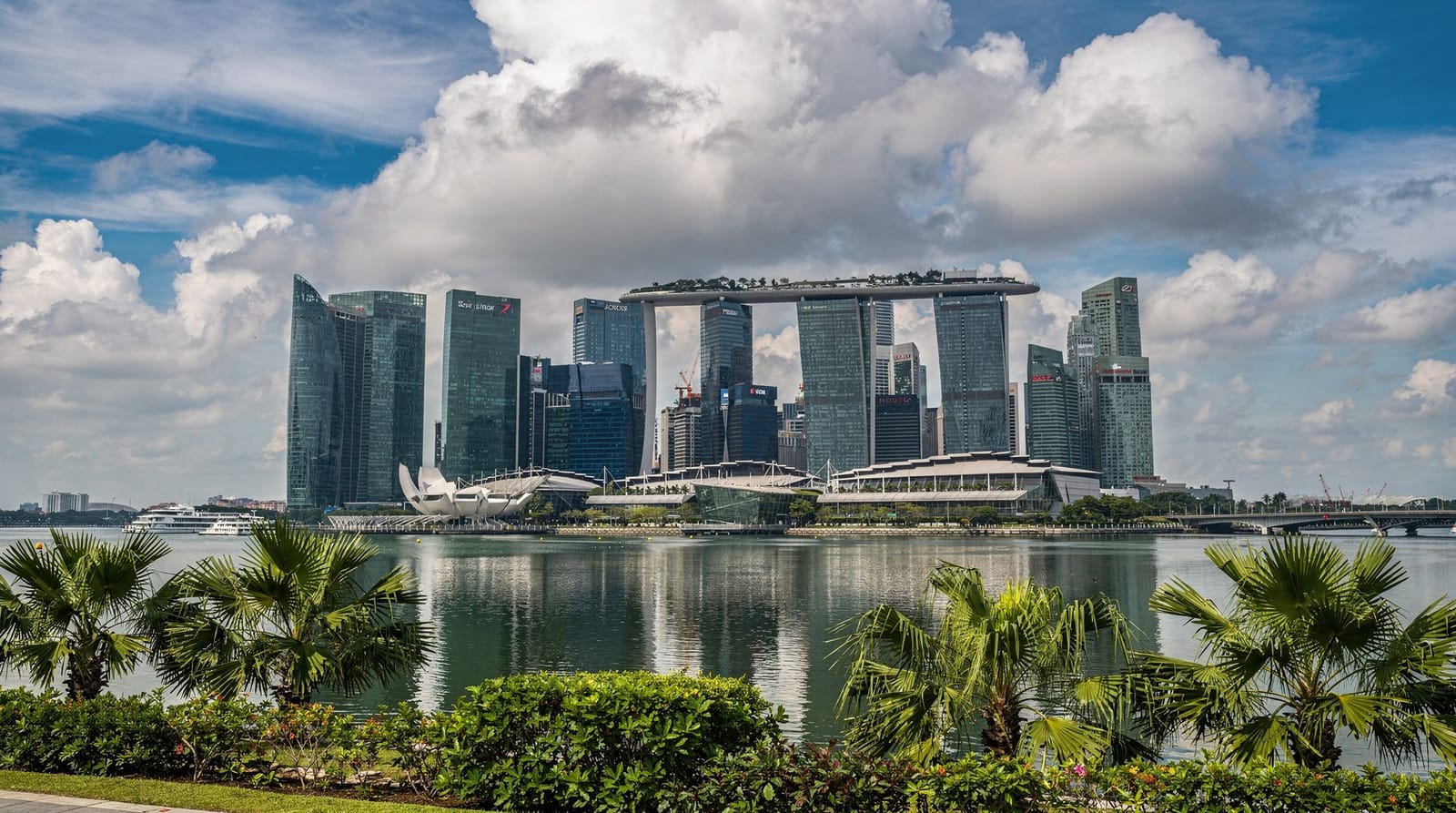
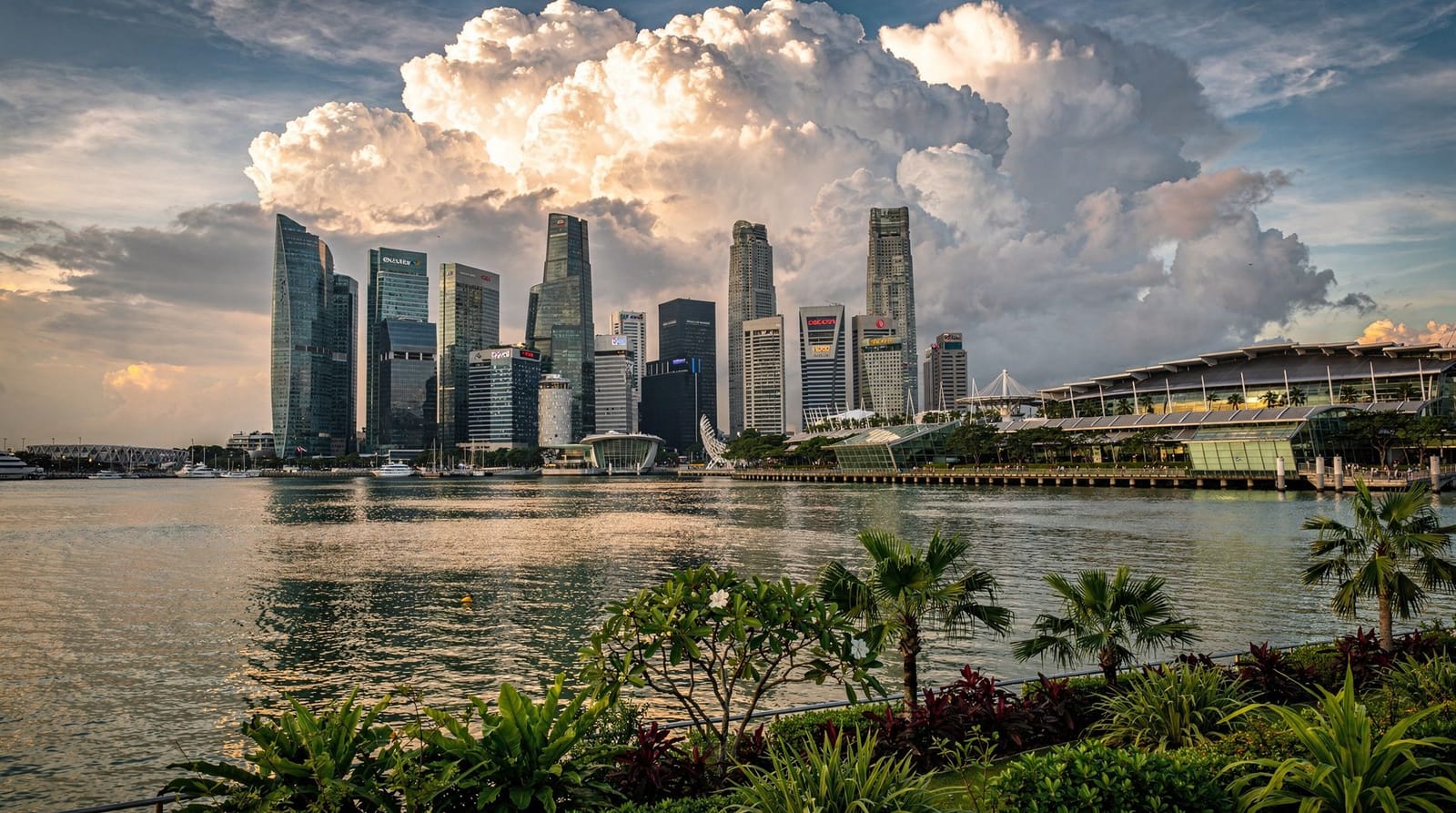
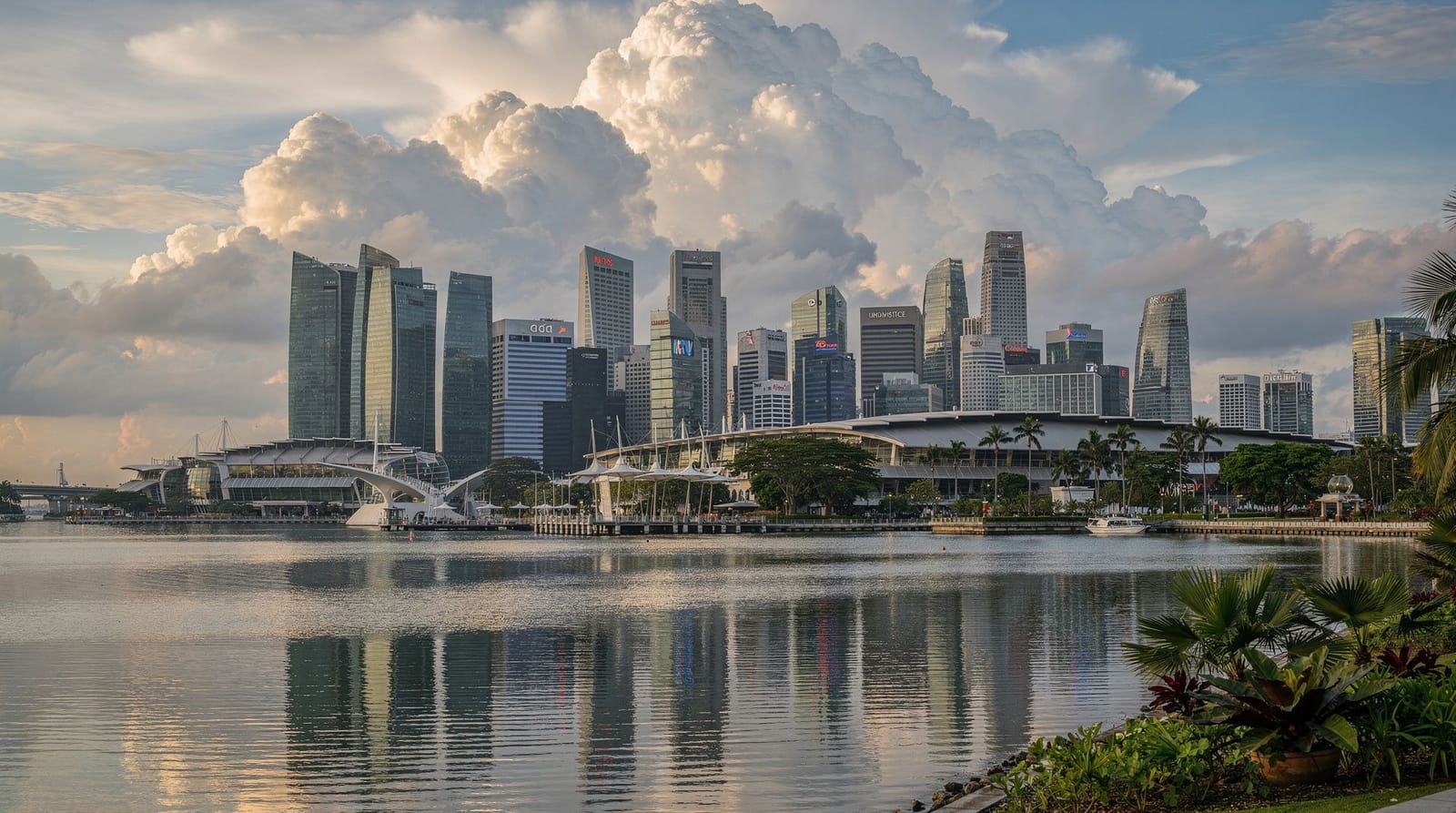
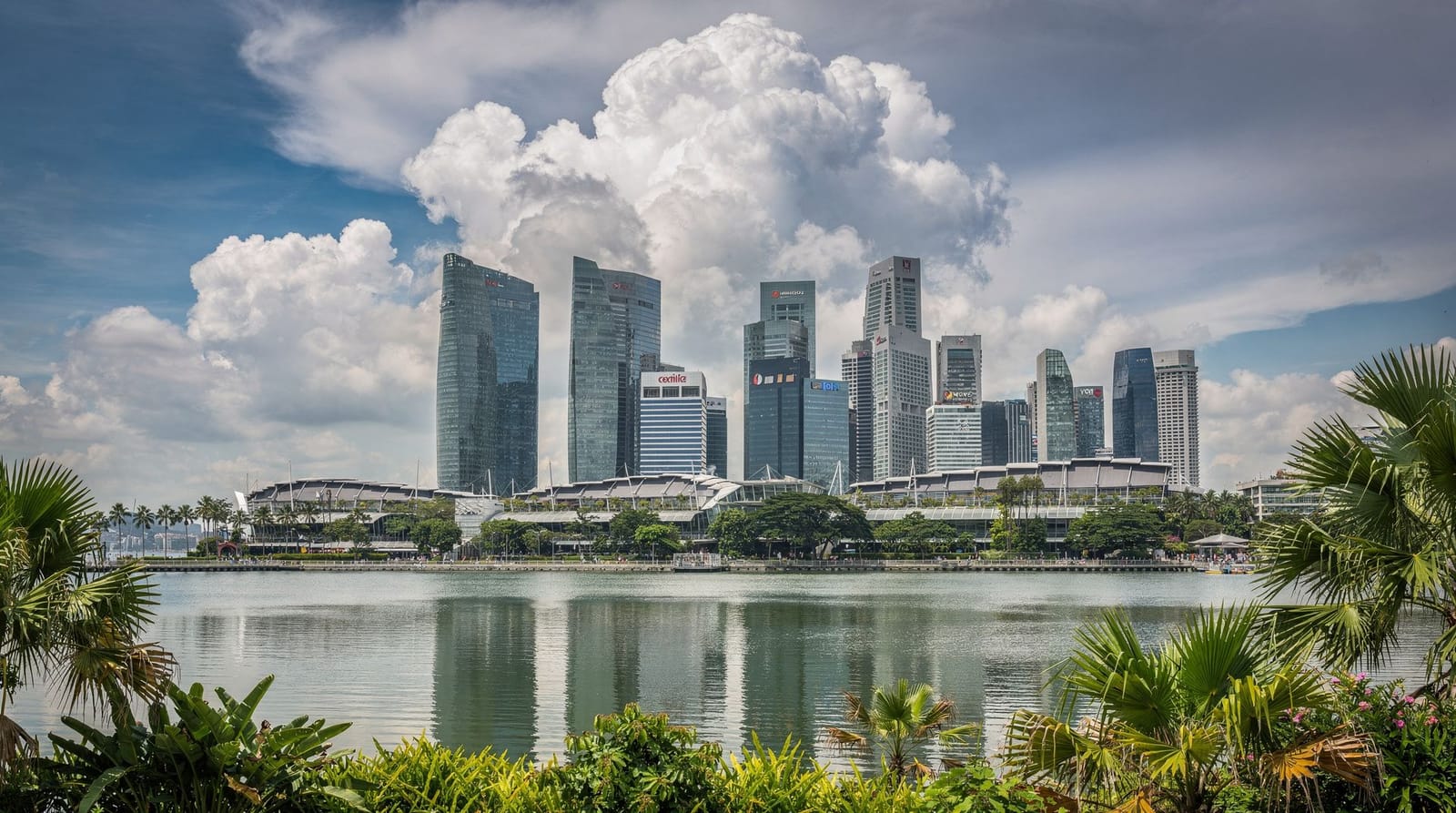
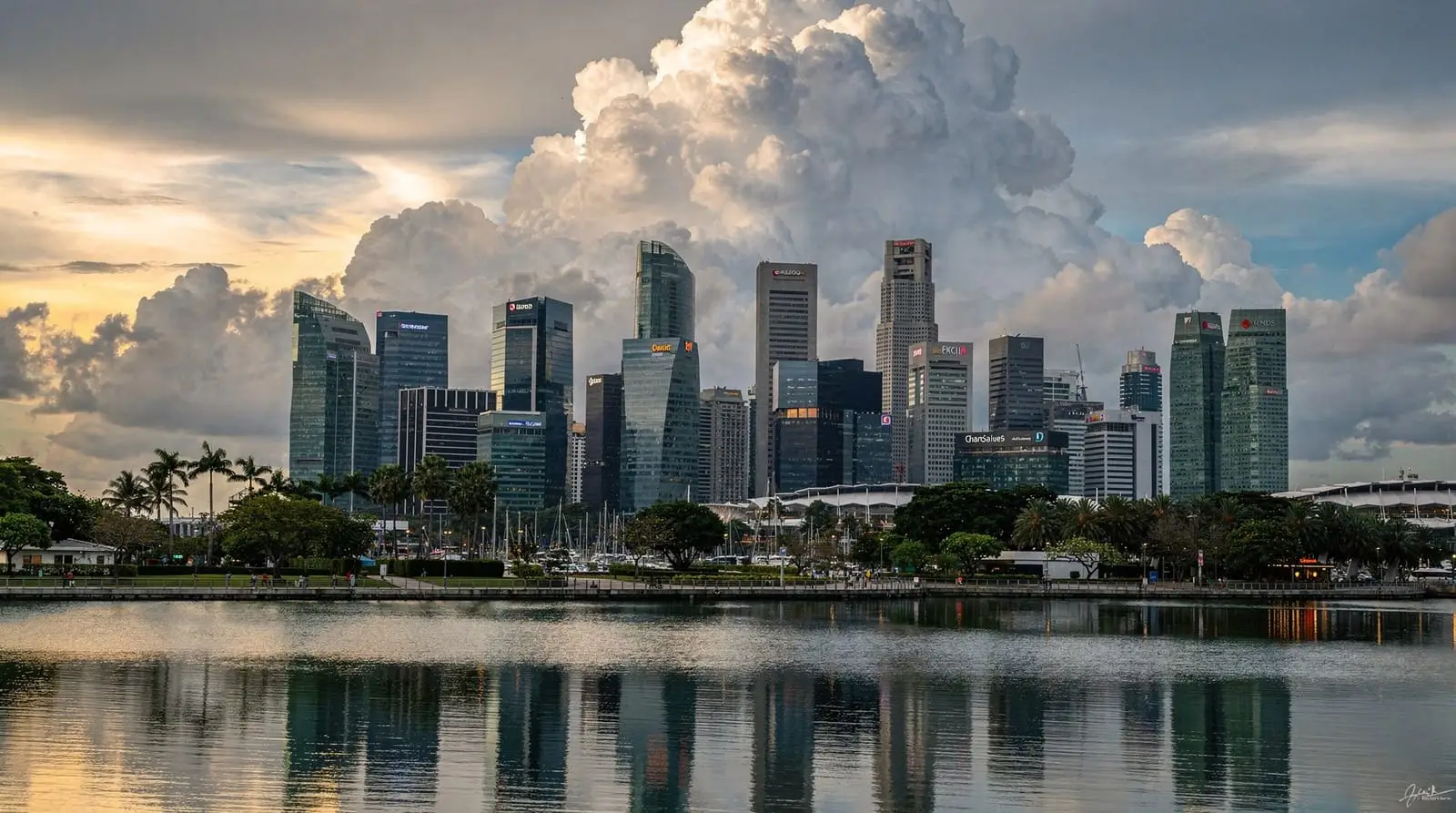
The rain comes quickly in Singapore. One moment the sky is the usual hot, slightly milky blue; the next there’s a ceiling of cloud the colour of old pewter moving in from the coast, and within fifteen minutes the streets are running with water and everyone on Orchard Road is standing under the nearest awning. Twenty minutes later it stops, the steam rises from the pavement, and the sky goes back to blue.
This is the standard tropical thunderstorm pattern, and it’s what Singapore’s rain mostly looks like: intense, localised, and brief. What the monsoon adds — particularly the Northeast Monsoon that runs from November to March, with November being the wettest single month — is volume and frequency, not duration. Even in November, Singapore’s rainiest month, the majority of precipitation falls between midday and 4pm, and most mornings are clear.
Understanding this pattern changes how a rainy week in Singapore feels. It’s not the same as a rainy week in Edinburgh or Amsterdam, where overcast skies persist for days. It’s a daily negotiation with a predictable afternoon schedule.
The morning rule
Singapore’s convective rain system — warm ground heating the air, causing afternoon thunderstorms as the heated air rises — means that morning weather is almost always better than afternoon weather, regardless of season. Even in November, the window between 7am and 11am is usually clear and manageable.
This suggests an obvious scheduling structure for a rainy-week visit: outdoor activities in the morning, indoor activities from midday onward. Walking the Southern Ridges, cycling Pulau Ubin, exploring Katong’s shophouse streets, visiting the Botanic Gardens — all of these work well as morning activities that finish before the afternoon rain arrives.
If you’re planning around a specific week rather than reacting day by day, the Singapore weather month-by-month guide and the best time to visit Singapore guide help set expectations before you land — useful for deciding whether to shift a flexible trip by a few weeks.
Rainy season by month
| Month | Rain pattern | Practical note |
|---|---|---|
| Nov–Dec | Wettest, Northeast Monsoon peak | Heaviest afternoon storms; mornings still usually clear |
| Jan–Feb | Monsoon tail, cooler and drier | Nocturnal rain common, cleanest air of the year |
| Jun–Aug | Southwest Monsoon, lighter and more scattered | Shorter, less predictable showers |
| Sep–Oct | Transition, haze risk in bad years | Check the NEA index before outdoor-heavy days |
If you’re caught in it anyway: Singapore’s sheltered walkway network is genuinely impressive. The underground MRT connections link major shopping malls (ION Orchard, Raffles City, Marina Square, Suntec City) through tunnels that can move you a kilometre without exposure to rain. Orchard Road has nearly continuous sheltered arcade coverage. The covered five-foot-ways of Chinatown and Little India mean you can walk most of those neighbourhoods in the rain without getting soaked.
Indoor Singapore worth your time
The National Museum of Singapore at Fort Canning is the obvious rainy-day anchor: a genuinely excellent museum with a permanent collection covering Singapore’s history from founding to independence and beyond. The building itself — a 19th-century colonial structure extended in 2006 — is worth moving through slowly. Free admission to the permanent galleries (note: this may change seasonally; check the website). The temporary exhibitions charge separately.
The ArtScience Museum at Marina Bay Sands is both a proper contemporary art and science museum and one of Singapore’s most atmospheric indoor spaces. The permanent Future World: Where Art Meets Science exhibition by teamLab is a multimedia installation of digital art in which you walk through projected environments. Adult SGD 19. Worth it for the Cloud Forest equivalent of indoor space — the kind of experience where you’re genuinely uncertain how long you’ve been inside.
The Peranakan Museum at Armenian Street (currently in the process of reopening in an updated form after renovation) covers the Straits Chinese Peranakan culture through material culture — the beaded shoes, the porcelain, the embroidered clothing, the kitchen implements. It’s a small museum that rewards slow looking.
The National Gallery Singapore in the former Supreme Court and City Hall complex is the largest visual art museum in Southeast Asia by space, and it’s overwhelming in scale. For a rainy half-day: choose one floor or one collection and look properly rather than attempting to circuit the whole building. The Southeast Asian art collection is the one worth prioritising — it’s globally significant and not easily seen elsewhere.
Cloud Forest and Flower Dome at Gardens by the Bay are, ironically, the best attractions for a rainy day — you’re protected inside cooled glass structures while the weather does whatever it wants outside. The Cloud Forest in particular (the one with the waterfall) is atmospheric regardless of what’s happening outside its walls. Around SGD 46 adult for both conservatories (Cloud Forest alone is SGD 26, Flower Dome SGD 12).
Gardens by the Bay: Cloud Forest, Flower Dome and OCBC Skyway combo ticket Singapore: Gardens by the Bay bundle entry ticketThe full museums in Singapore guide covers the rest of the city’s indoor collections if the four above don’t fill a whole rainy week, and the ArtScience Museum teamLab guide has more detail on the Future World exhibition specifically.
Hawker centres in the rain
A covered hawker centre in the middle of a Singapore rainstorm is one of the city’s more distinctive atmospheric experiences. The rain hammers on the metal roof, the steam from the wok stations rises through the heat, the condensation runs down the cold drink glasses, and the overhead fans have been turning since 1975 and show no sign of stopping.
Maxwell Food Centre (Tanjong Pagar), Lau Pa Sat (Raffles Place), Chinatown Complex, and Old Airport Road are all under roofs and remain fully operational during rain. This is the practical advantage of the hawker model — no weather dependency.
Budget for hawker eating during a rainy day: SGD 20–30 covers breakfast, lunch, and a substantial afternoon snack. The best hawker centres guide ranks the covered options if you’re building a rainy day entirely around food.
Singapore: Singapore River cruiseThe rain at night
Singapore’s nocturnal rain — which is common during the northeast monsoon, falling between midnight and 5am — produces the cleanest morning air of the year and a city that smells of rain-washed concrete and jasmine flowers from the temple gardens. This is not a disadvantage; it’s one of the things that makes January and February in Singapore feel distinct from the rest of the year.
The night rain also means that outdoor attractions like the Spectra light show and Garden Rhapsody operate in conditions that can be genuinely magical — watching the Supertrees light up with light rain in the air, the water catching the LED glow, is an experience that the dry-season version of the same show doesn’t produce.
Building a rainy week day by day
A week of unsettled weather is easier to live with if each day has one outdoor idea for the morning and one fallback for the afternoon. Start with the arrival: if you land in a downpour, the Changi Airport to city guide and the MRT guide show how to reach your hotel without standing at a taxi rank, and Grab and taxis are the fallback when the queue is long. For general orientation, getting around Singapore explains how the pieces fit together.
Pair the neighbourhoods with their weather-proof side. Chinatown and Little India have covered shopfronts and food courts, so a rain delay there simply becomes a longer lunch; the Chinatown guide and Little India guide suggest what to see in each. Bugis is another good bad-weather base, with its market streets and the Orchard Road shopping guide covering the air-conditioned side of the city.
If you’re travelling with children, the rainy day with kids guide and the Singapore with kids guide collect the indoor options that keep a family busy. Couples and solo travellers can lean on the things to do in Singapore overview to pick an afternoon that suits them, and the what to pack guide is worth a look before you fly, since a compact umbrella and quick-drying clothes make every one of these days more comfortable.
Evenings are often the best part of a wet day. When the afternoon storm has passed, the air is cooler, and the Clarke Quay and Marina Bay areas are pleasant for a slow walk and dinner. For a longer take on the same theme, the Singapore in the rain guide goes deeper, and the earlier trip report on monsoon travel tips offers a first-hand view of how the season plays out.
What genuinely doesn’t work in heavy rain
Gardens by the Bay’s outdoor areas — the Supertree Grove walkways, the outer gardens — close during electrical storms. The Night Safari runs in light rain (they provide ponchos) but cancels or modifies shows in heavy weather. Pulau Ubin cycling is uncomfortable in rain and the dirt tracks become muddy. Outdoor rooftop bars become indoor bars.
These are the genuine constraints. Everything else — most of the city’s hawker centres, all of its MRT-connected shopping districts, most of its museums, the cooled conservatories, the river cruise (they have covers) — operates regardless of weather.
The honest summary: a rainy week in Singapore is not a failed trip. It’s a different kind of Singapore trip that leans into the city’s indoor assets (which are considerable) and requires a morning-front-loading approach to outdoor plans. The city has been building for its climate for 60 years, and the infrastructure reflects it. If you’d rather build the whole week around this pattern from the start, the rainy day itinerary does that structuring for you.
Top experiences
Bookable activities with verified prices and instant confirmation on GetYourGuide.

Singapore: Universal Studios Singapore entry ticket

Singapore: Gardens by the Bay bundle entry ticket

Singapore: Night Safari and tram ride ticket

Singapore: S.E.A. Aquarium entrance ticket

Singapore: Singapore River cruise

Singapore: Marina Bay Sands observation deck e-ticket

Singapore: Sentosa cable car Sky Pass roundtrip ticket