Kampong Glam and Haji Lane: a full day in Singapore's most photogenic quarter
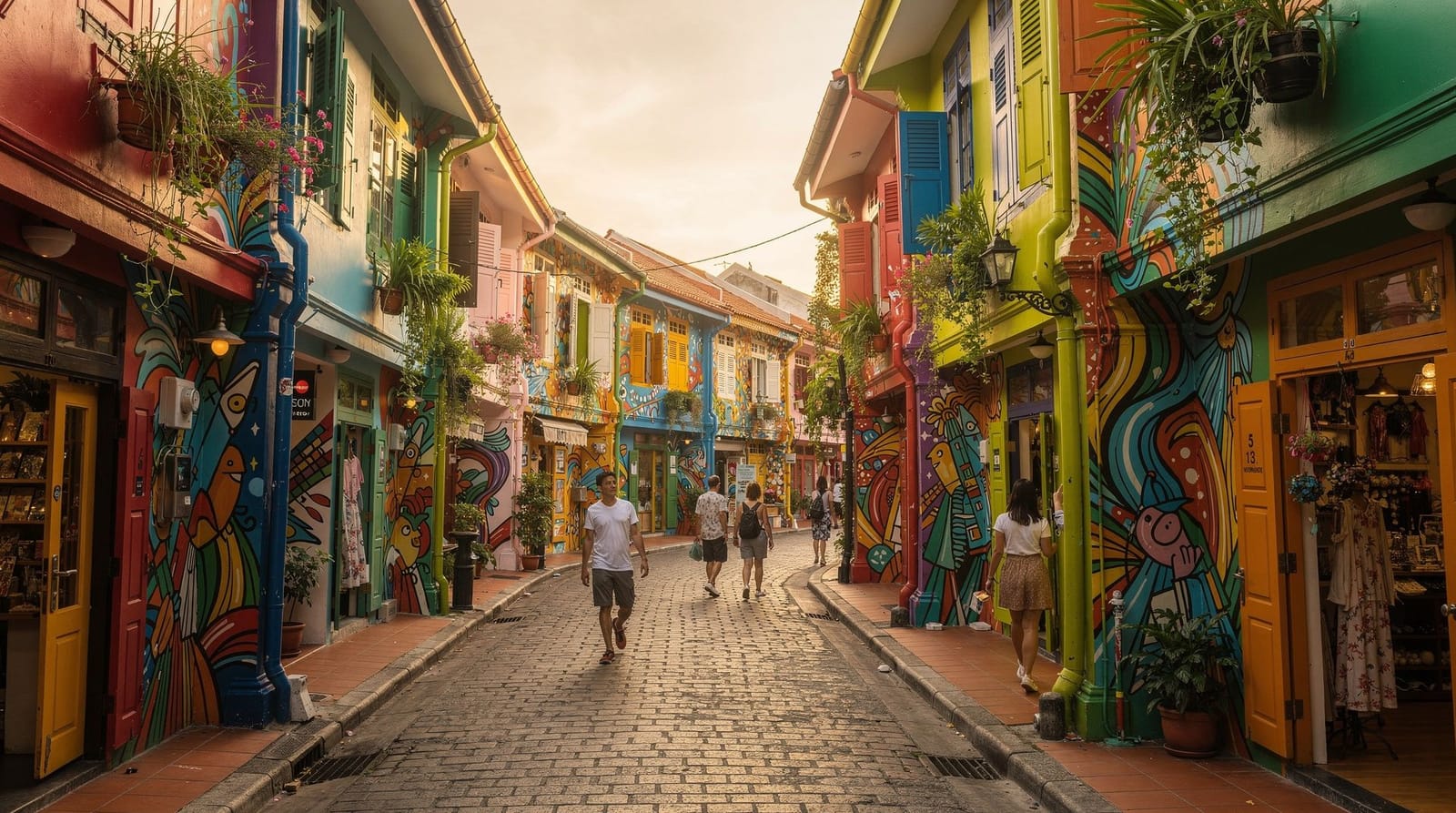
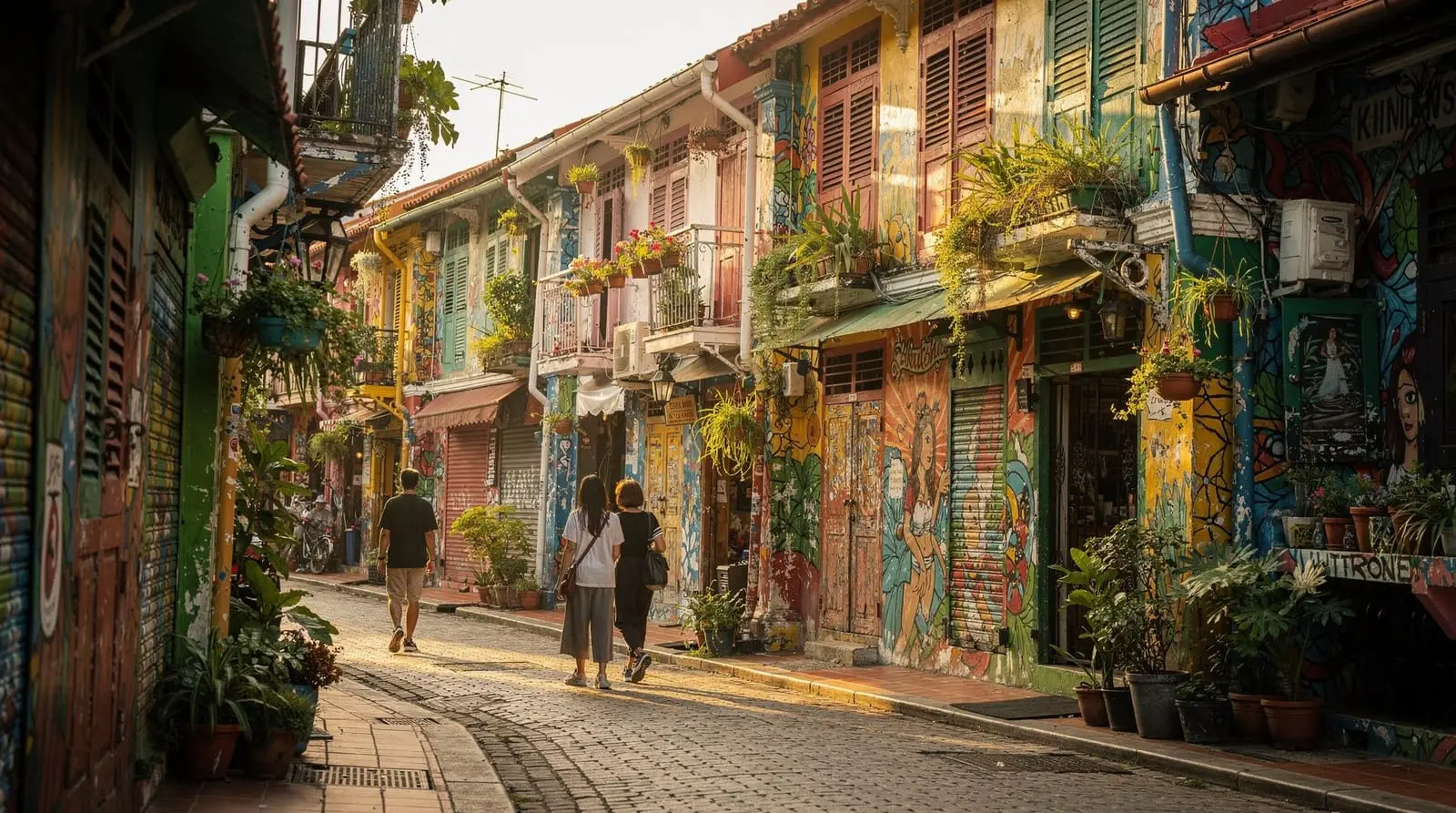
The photograph that most people have seen of Haji Lane — the one with the narrow pastel shophouse lane, the street-art murals covering every available wall surface, and the slightly improbable juxtaposition of independent boutiques and blue sky — does not prepare you for how small the lane actually is. It’s roughly four metres wide and about 200 metres long. The magic of it is concentrated into a space you can walk end to end in under three minutes.
But Haji Lane is a good introduction to Kampong Glam’s general principle: a lot of character compressed into a compact geography. This quarter of Singapore’s Bugis district is one of the most walkable, visually rich, and historically layered neighbourhoods in the city, and a full day here — structured around the light, the food, and what each street actually offers — produces one of the more memorable days Singapore has to give.
| Where | Kampong Glam / Bugis, north of the Civic District |
| Getting there | Bugis MRT (East West or Downtown Line), 10 min walk |
| Time needed | A full day, 9am–8pm at a relaxed pace |
| Cost | Mostly free walking; food SGD 8–15/dish; Malay Heritage Centre SGD 6 |
| Best time | Weekday morning before 11am for Haji Lane; 4–6pm for warm light |
Starting point: the morning at Sultan Mosque
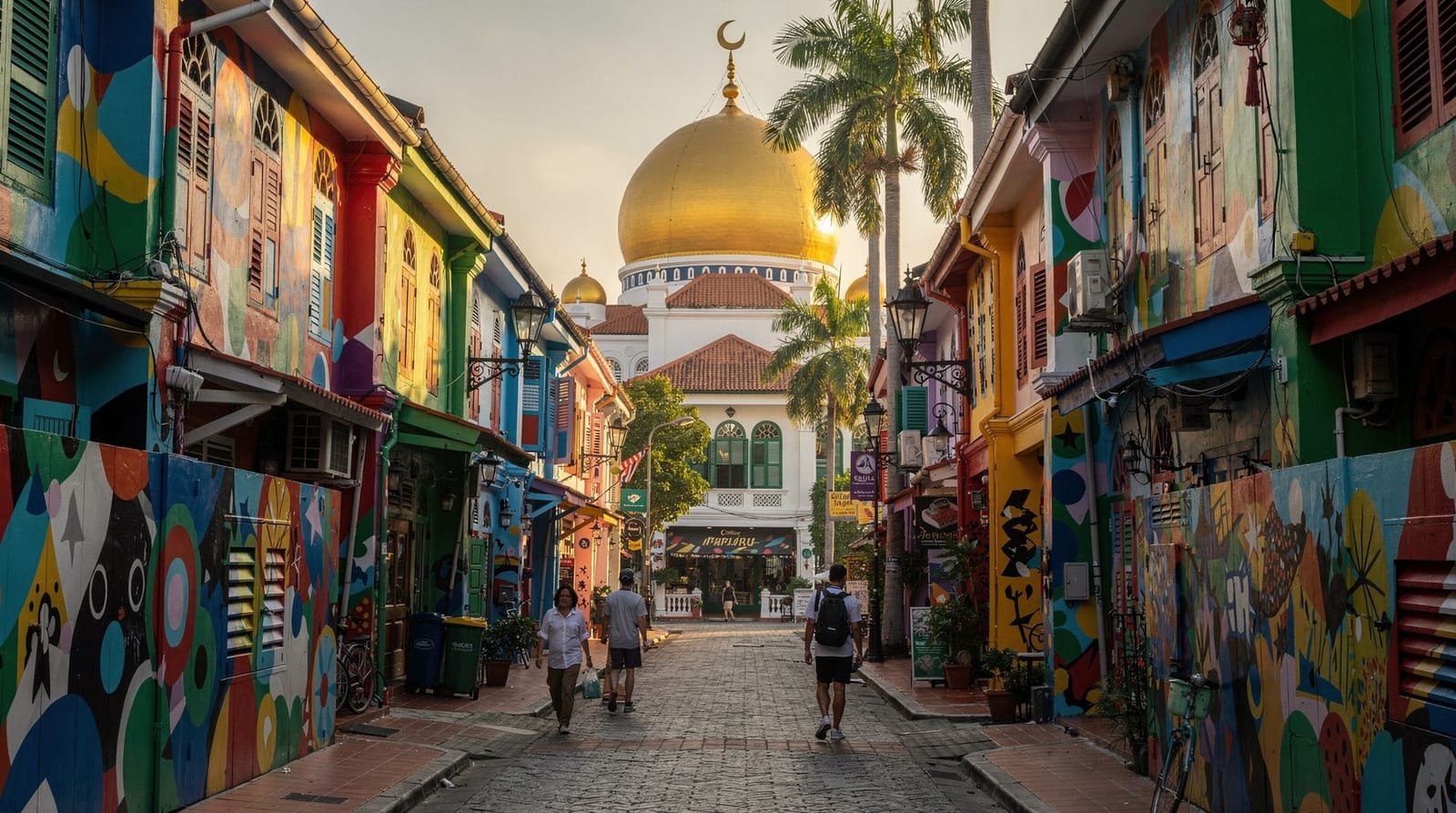
The Sultan Mosque on North Bridge Road is the obvious anchor point for a Kampong Glam day, and the morning visit — say, 9am to 10am — catches it in the best light before the day’s heat peaks.
Built in 1928 (with the original mosque on the site dating to 1824), the mosque is the most striking piece of architecture in the quarter: a golden dome visible from surrounding streets, minarets at the corners, and a main prayer hall that can hold 5,000 worshippers. Non-Muslim visitors are welcome at the main entrance during non-prayer times; dress modestly (loaner robes are available at the entrance for those who need them).
The interior during visiting hours is calm and cool — marble floors, detailed ceiling work, a sense of proportional grandeur that you don’t get from the exterior alone. Take your shoes off, be quiet, look up, and don’t point cameras at people praying in the side areas.
Directly across from the mosque, the old Istana Kampong Glam (now the Malay Heritage Centre, SGD 6 entry) tells the history of the Malay royal family who were granted this land by Raffles. The permanent gallery is modest but well-curated; the building itself — a 19th-century palace with pitched roofs and wide verandas — is worth the admission on architectural grounds alone.
Arab Street and the textile merchants
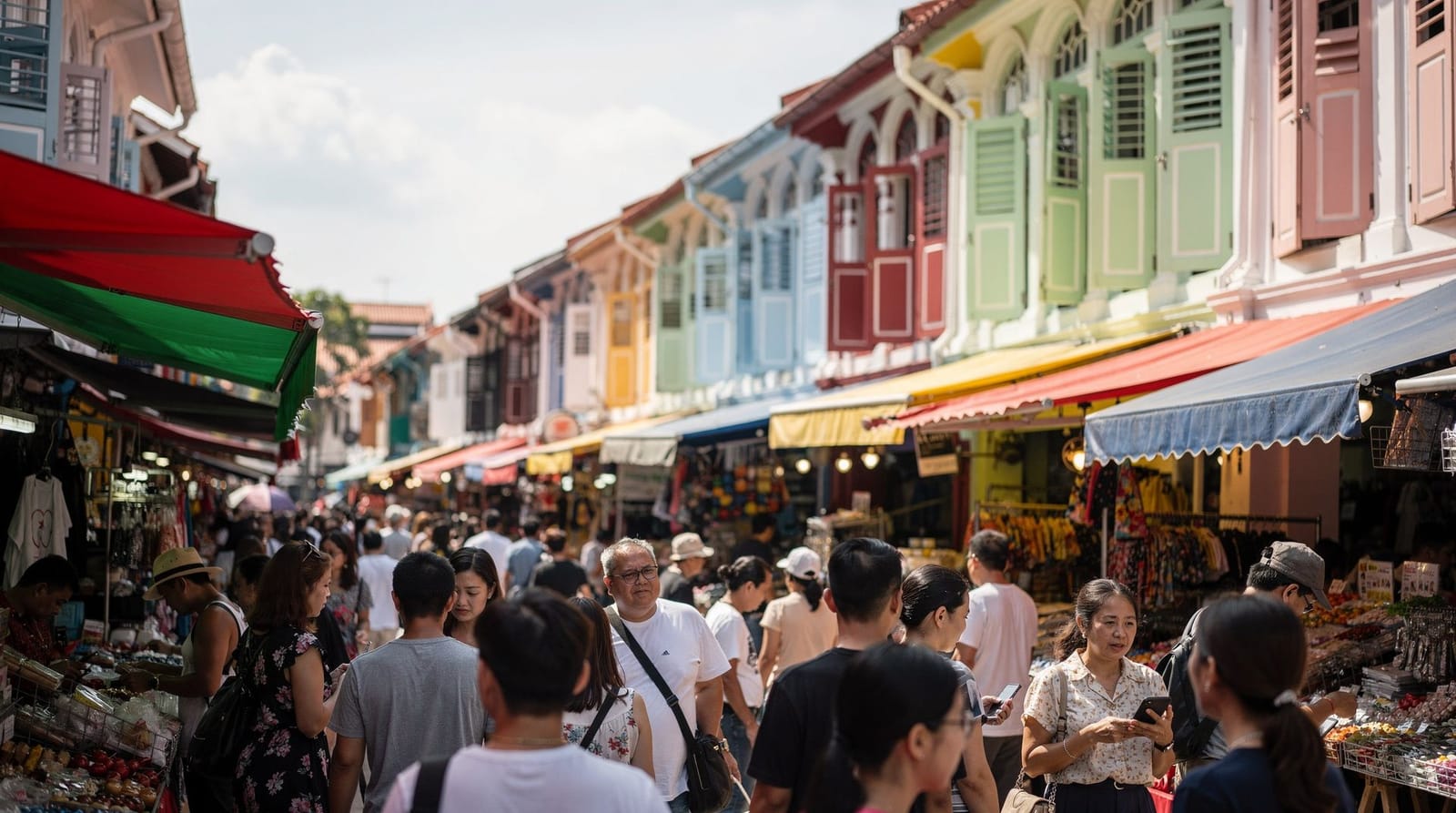
Arab Street, running parallel to North Bridge Road, is one of Singapore’s oldest shopping streets, and it still specialises in what it always has: textiles, wicker, and fabrics. The traditional shops — bolts of batik cloth, songket weave, silk, rattan baskets — sit next to shisha cafes and contemporary concept stores in a mix that shouldn’t quite work but does.
Several of the textile shops have been in the same families for three and four generations. Browsing is welcome; prices are generally fixed, and the quality is honest. A good sarong or length of batik fabric runs SGD 25–60 depending on the material and pattern.
The shisha cafes along Arab Street are busiest in the late afternoon and evening, but several are open from midday. Sitting with a mint tea or fresh lime soda at a streetside table with the mosque dome visible above the shophouse roofline is one of those Singapore experiences that resists summarisation.
Haji Lane: the mechanics of the lane and when to visit
Haji Lane runs perpendicular to Arab Street, one block from the Bugis MRT. It became the city’s street-art epicentre partly by accident — the narrow lane and tall shophouse walls created perfect mural surfaces, and the concentration of independent boutiques attracted an creative demographic that encouraged the murals.
The best time to visit is early — before 11am on a weekday — when the light hits the pastel shophouse fronts at an angle and the tourists with cameras haven’t yet filled the lane. By noon on a Saturday, Haji Lane is crowded enough that getting a clean photograph without strangers’ shoulders in it requires patience.
The street art changes regularly. The murals are commissioned by building owners and individual shop tenants, so what you saw in a friend’s Instagram from two years ago may not be what’s there now. That impermanence is part of what makes it worth visiting rather than just looking at photographs.
The independent shops along Haji Lane skew toward streetwear, vintage clothing, and independent jewellery designers. Few of the big retail chains are here. Whether you buy anything is beside the point — the browsing is the point.
Singapore: Kampong Glam and Civic District Vespa sidecar rideA little history before you walk
Kampong Glam takes its name from the gelam tree that once grew along this stretch of coast, and its status as the seat of Malay royalty dates to 1819, when Stamford Raffles granted the land to Sultan Hussein Shah as part of the treaty that founded modern Singapore. The Malay Heritage Centre sits on the site of the resulting palace, and the surrounding street grid — Sultan Gate, Kandahar Street, Baghdad Street — still carries the names given to a neighbourhood built for a royal household and the traders who served it.
Understanding this history changes how the quarter reads: it isn’t a themed “ethnic district” but the genuine seat of Singapore’s pre-colonial Malay elite, repurposed over two centuries into today’s mix of mosque, market street, and boutique lane. The ethnic quarters guide covers how Kampong Glam relates to Chinatown and Little India within Singapore’s broader settlement history.
Where to shop beyond Haji Lane
Arab Street’s textile shops are the obvious stop, but Kampong Glam has other pockets worth a slower look. Bussorah Street, the pedestrianised stretch running directly toward the Sultan Mosque, has a calmer, more considered set of shops than Haji Lane — home decor, Middle Eastern imports, and a couple of specialist perfume houses selling oud and attar decanted from large glass bottles, priced far below department-store equivalents. Kandahar Street, one block from Bussorah, has a smaller cluster of independent design studios and is worth a five-minute detour if you’re interested in Singapore’s contemporary craft scene rather than just the heritage textiles.
If you’d rather have the history narrated than piece it together yourself, a guided walk through the quarter covers the mosque, the shophouse architecture, and the food in a single structured afternoon:
Singapore highlights and hidden gems walking tourEating in Kampong Glam
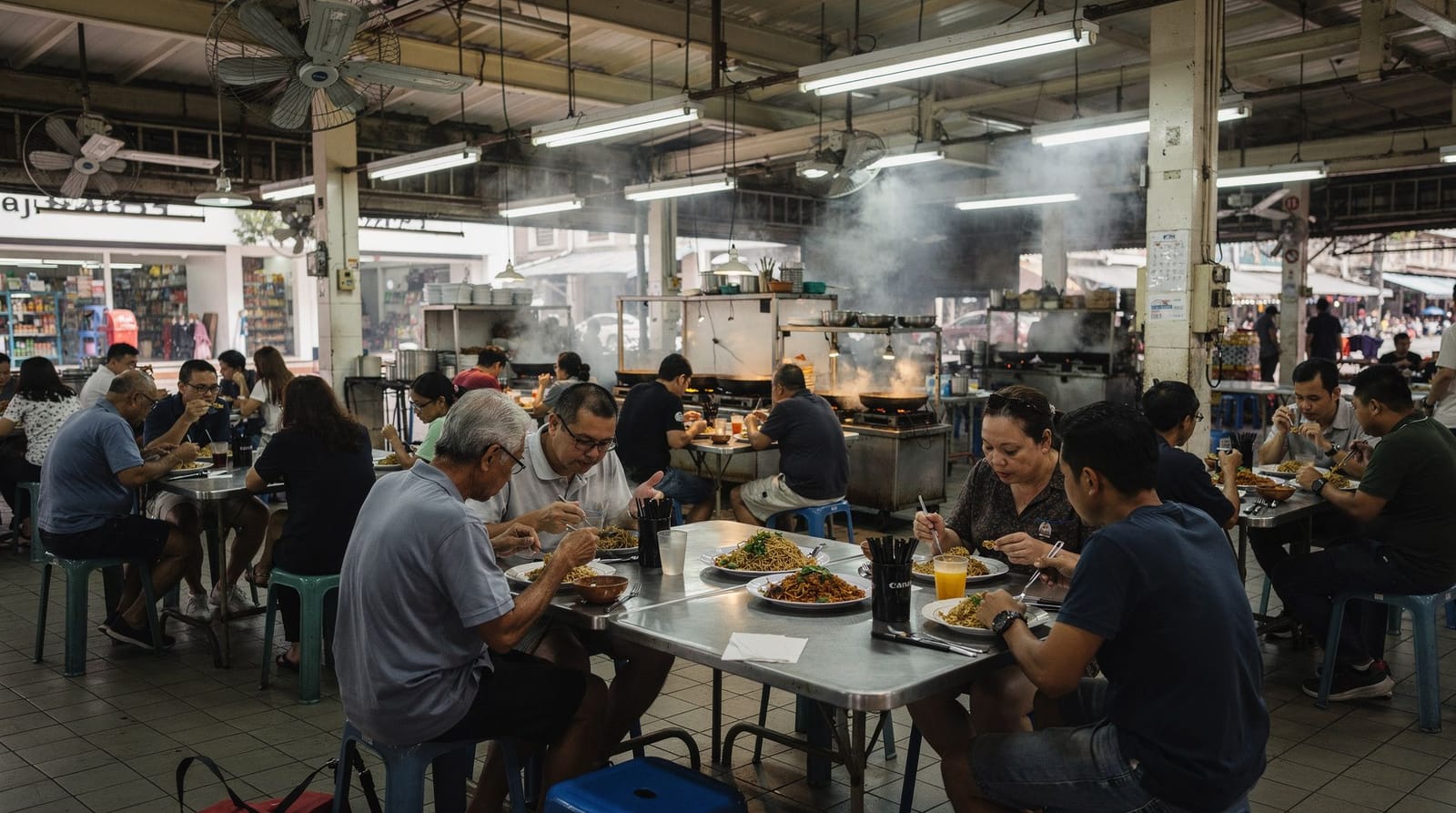
The food quarter around Kampong Glam and Arab Street is one of the best concentrations of halal cooking in Singapore, which means it’s also one of the best concentrations of Malay, Middle Eastern, and South Asian food in the city regardless of your dietary preferences. The halal food guide has a fuller list if you want to extend the eating beyond this one quarter.
Zam Zam on North Bridge Road is the institution: a 100-year-old murtabak shop that has been feeding the neighbourhood since the 1900s. Murtabak — a stuffed pan-fried bread filled with minced mutton, egg, and onion — costs around SGD 9–12 depending on size. The queue moves. Eat at the Formica tables inside or take it wrapped.
Warong Nasi Pariaman on North Bridge Road is harder to find (it’s a small counter in a shophouse a couple of doors from Zam Zam) but worth the look: nasi padang (Indonesian-style rice with a selection of dishes) at SGD 8–12 for a full plate, served by women who know exactly which combination of dishes you should have with the rice.
Blu Jaz Cafe on Bali Lane (one street from Haji Lane) does a middle-of-the-day transition from cafe to bar and is a Kampong Glam institution for live music in the evenings. Lunch here is reliable; the evenings, particularly on weeknights when it’s less packed, are the time to come for the atmosphere.
For dessert, Selfie Coffee and several newer cafes along Haji Lane do the photogenic latte and waffle format, which fits the aesthetic of the lane if nothing else.
The late afternoon and evening
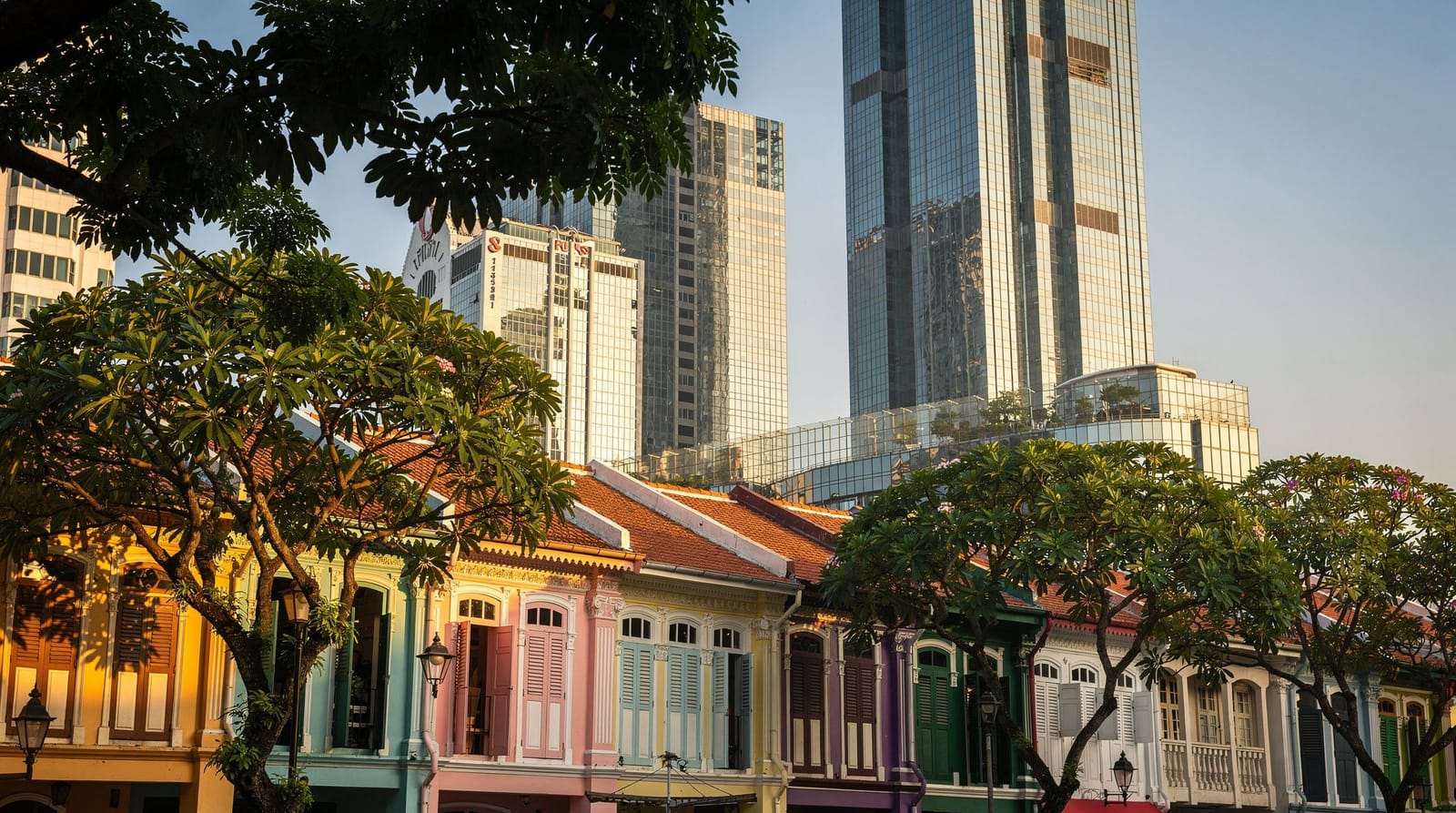
Kampong Glam changes character after about 5pm. The midday tourists thin out; the neighbourhood residents and the people who know the quarter well — architects, designers, the Malay community for whom this is their actual neighbourhood — begin to appear. The shisha cafes fill; the bars on Haji Lane begin their evening service; the light drops to a warm gold that makes the pastel shophouses look slightly unreal.
The Sultan Mosque’s evening call to prayer, when you’re in the streets around North Bridge Road, is one of those Singapore sounds that cuts through everything else. It happens at Maghrib (sunset prayer) and the timing shifts daily — check a prayer time app if you want to be in the area for it.
The walk from Kampong Glam along Beach Road to the Civic District at dusk — past the Raffles Hotel, the War Memorial, onto the Esplanade waterfront — is one of the best evening transitions in Singapore, not because of any single sight but because of the accumulated atmosphere of moving from the historic quarter toward the waterfront at the moment the city’s lights are coming on.
Pairing Kampong Glam with the rest of your trip
A day here sits comfortably beside the other heritage quarters. The Kampong Glam destination page gives the neighbourhood’s overview, while Little India and Chinatown make natural companions on separate days, each with its own food and temple culture; the Little India guide and Chinatown guide show how they differ in feel. If you enjoy the shopping side of Haji Lane, the Bugis street markets guide and the Bugis destination page cover the busier retail streets nearby.
For the practical side, the MRT guide explains how to reach Bugis without fuss, and the hawker etiquette guide is useful if you stray from the sit-down eateries into food centres. Travellers building a wider plan can slot this day into the first-timer itinerary or the two-day itinerary, and the Singapore tourist traps guide helps you judge which busy spots deserve your time. If you want more of the same mood after dark, Singapore at night is a good next read.
Practical notes
Getting there: Bugis MRT (East West Line or Downtown Line), ten minutes’ walk to Sultan Mosque.
Dress code: Modest dress for Sultan Mosque. Kampong Glam is a working Muslim community; there’s no formal dress requirement on the streets, but dressing considerately (not beachwear) is appropriate.
Photography of people: Ask before photographing anyone at prayer or in the mosque. Street photography in the lane itself is fine; photographing individuals selling or praying without asking first is not.
Best photo timing: 8–10am or 4–6pm for Haji Lane. The midday light is flat and harsh. The early morning on a weekday is genuinely the best option. The best photo spots guide covers other locations with similar timing logic across the city.
When to go by time of day
| Time | What it’s like | Best for |
|---|---|---|
| 8–10am | Quiet, soft light, few tourists | Photography, mosque visit |
| 11am–3pm | Crowded, harsh overhead light | Shopping, lunch, shade-seeking |
| 4–6pm | Warming light, crowds building | Photography, shisha cafes |
| After 5pm | Residents return, bars open | Atmosphere, evening food |
A full-day plan if you want structure
9am: Sultan Mosque and the Malay Heritage Centre. 10:30am: Arab Street textile browsing and a mint tea. 11:30am: Haji Lane before the crowds fully build. 12:30pm: Zam Zam or Warong Nasi Pariaman for lunch. 2–4pm: A break — a cafe on Bali Lane, or walk to Bugis for shopping if the heat is heavy. 4:30pm: Back to Haji Lane for golden-hour photos. 6pm onward: Dinner and the evening atmosphere as the quarter changes character. This isn’t the only way to sequence the day, but it front-loads the mosque and the lane for their best light and leaves food and atmosphere for whenever you’re hungry.
Frequently asked questions about Kampong Glam and Haji Lane
Do I need to book anything in advance for a Kampong Glam day? No — the mosque, Arab Street, and Haji Lane are all walk-in, no-booking neighbourhoods. The only exception is a guided walking tour, which is worth booking a day or two ahead if you want a fixed time slot.
Is Kampong Glam safe to visit at night? Yes, it’s one of Singapore’s safer and better-lit neighbourhoods, with a lively evening scene around Bali Lane and Haji Lane’s bars. The usual city-wide caution applies, but there’s nothing specific to Kampong Glam that requires extra care after dark.
Top experiences
Bookable activities with verified prices and instant confirmation on GetYourGuide.

Singapore: Universal Studios Singapore entry ticket

Singapore: Gardens by the Bay bundle entry ticket

Singapore: Night Safari and tram ride ticket

Singapore: S.E.A. Aquarium entrance ticket

Singapore: Singapore River cruise

Singapore: Marina Bay Sands observation deck e-ticket

Singapore: Sentosa cable car Sky Pass roundtrip ticket