Little India at Deepavali: what it actually looks like when 300,000 lights go up
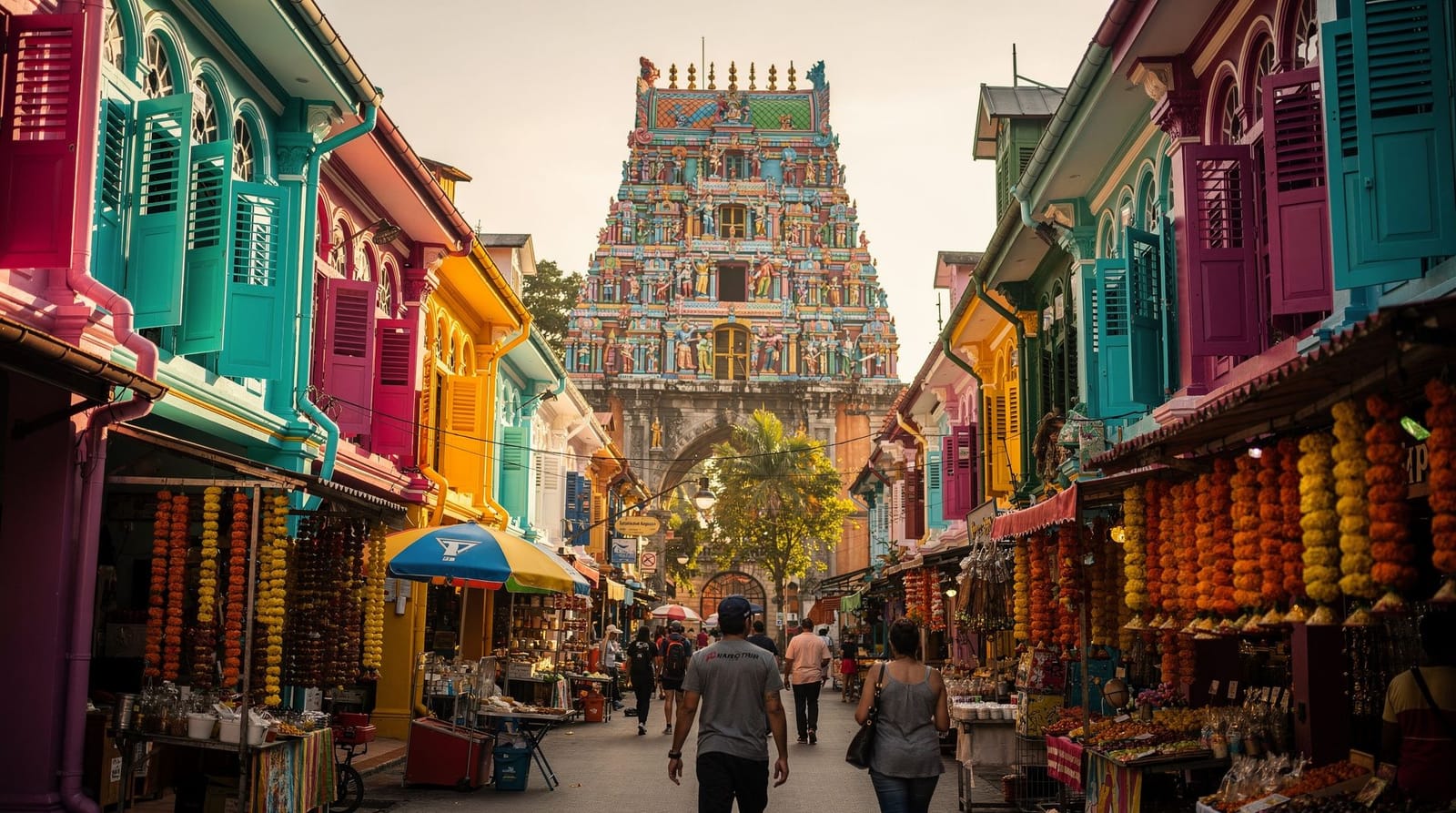
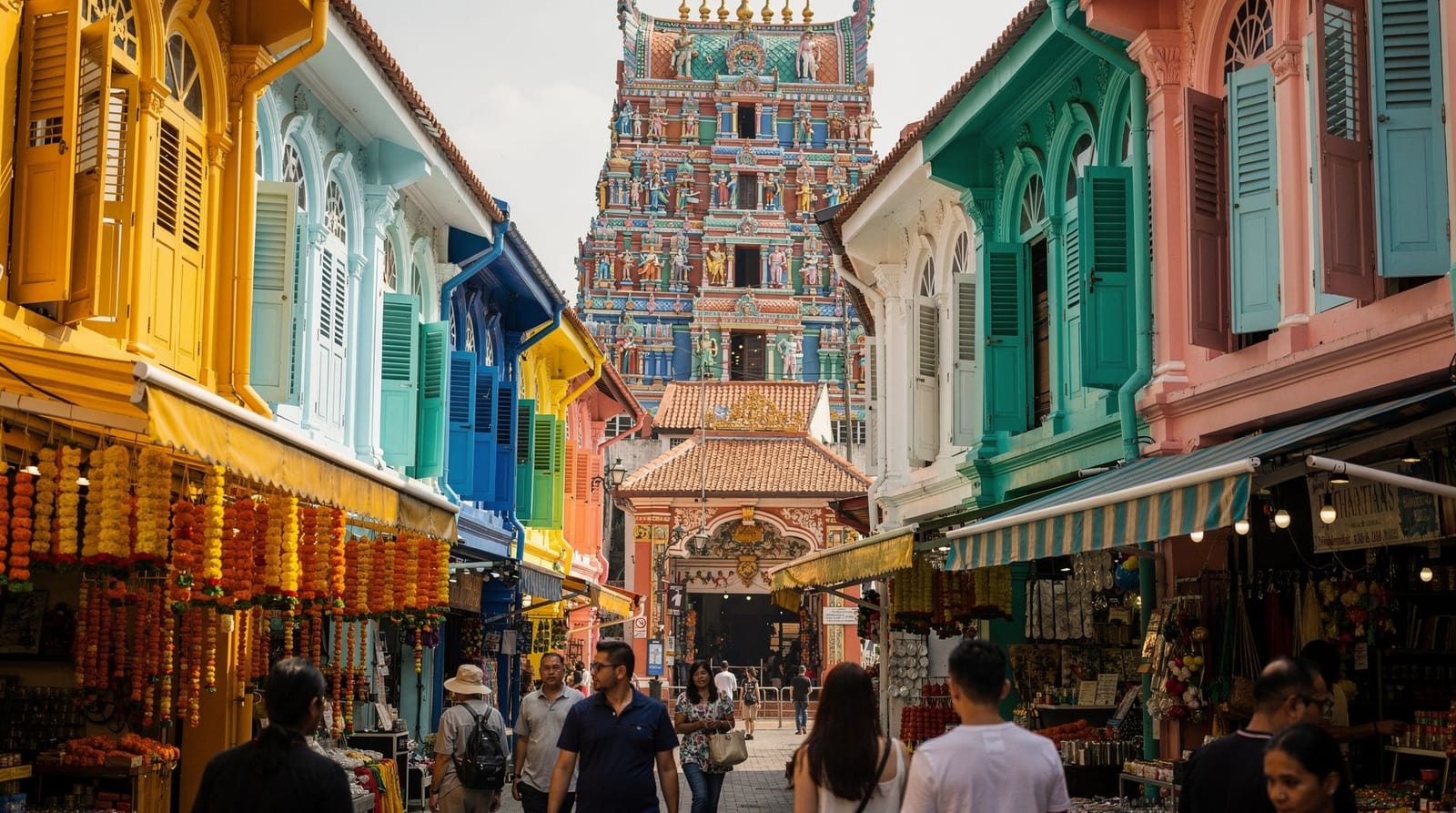
The taxi driver switched off the meter and pointed through the windshield. “Just walk from here,” he said. “I can’t get through.” It was a Monday night in October, nine in the evening, and Serangoon Road was a wall of people, colour, and light so dense that I genuinely couldn’t tell where the decorations ended and the shop signs began.
That was my introduction to Deepavali in Little India, and it recalibrated every assumption I’d had about what a festival district looks like when it actually means it.
| Where | Little India, centred on Serangoon Road |
| Getting there | Little India MRT (North East or Downtown Line) |
| When | Light-up runs ~6 weeks, late Sept through Deepavali (Oct/Nov) |
| Cost | Free to walk; food SGD 3–18; guided walk optional |
| Best time | Weeknight, 7–9pm, a few weeks before the peak date |
What Deepavali is, and why Little India owns it
Deepavali — the Festival of Lights, celebrated by Singapore’s Tamil Hindu community — falls on the 15th day of the month of Karthigai in the Tamil calendar, which usually puts it somewhere in October or November. In Singapore, the festival transforms Little India into a 24-hour theatre of colour for roughly six weeks from the light-up ceremony in late September through to Deepavali itself.
The Tamil community in Singapore traces its roots back to the colonial era, when South Indian workers arrived to build the city. Little India — the grid of streets centred on Serangoon Road and Buffalo Road — has been the heart of that community ever since. Deepavali is when everything the neighbourhood holds onto during the rest of the year comes to the surface at full volume.
The light-up: Singapore’s town councils do not go quietly with festival decorations. Little India’s Deepavali display runs the full length of Serangoon Road and several side streets, and the scale of it is genuinely difficult to describe to someone who hasn’t stood underneath it at night. The overhead arches, the shop-front garlands, the floor projections outside the temples — taken together, they turn a regular inner-city street into something that feels like walking through a jewellery box at full illumination.
Best evening for the light-up is a weeknight rather than the weekend — Saturday nights in October on Serangoon Road approach the boundary of what a crowd can be before it stops being enjoyable.
The streets and what you’ll find on them
Little India has a clear structure that’s easy to navigate once you know it. Serangoon Road is the main artery — the one with the big overhead decorations and most of the hawker-facing food stalls that appear during the festival. Running parallel are Buffalo Road and Dunlop Street, both worth walking. The Tekka Centre wet market and hawker centre sits at the southern end and is the neighbourhood’s year-round food anchor. The Little India guide maps the neighbourhood’s permanent layout, which is worth knowing before the festival decorations reshape how everything feels.
During the Deepavali season, the roads around the Sri Veeramakaliamman Temple — on Serangoon Road near the corner of Belilios Lane — become the densest point of activity. The temple itself is worth a careful visit: it’s one of Singapore’s most significant Hindu temples, dedicated to Goddess Kali, and during Deepavali the offerings and flower garlands arrive in quantities that fill the entrance steps.
The vendors along the street sell things that aren’t easy to find at other times of year: clay oil lamps (diyas) sold by the bag, fresh flower garlands for temple offerings, traditional Indian sweets wrapped in gold foil, and bottles of sesame oil for the ritual pre-dawn hair-washing that devout Tamil families observe on Deepavali morning. Even if you don’t know what half of it is, the sheer material culture of the festival is worth slow attention.
Food during Deepavali
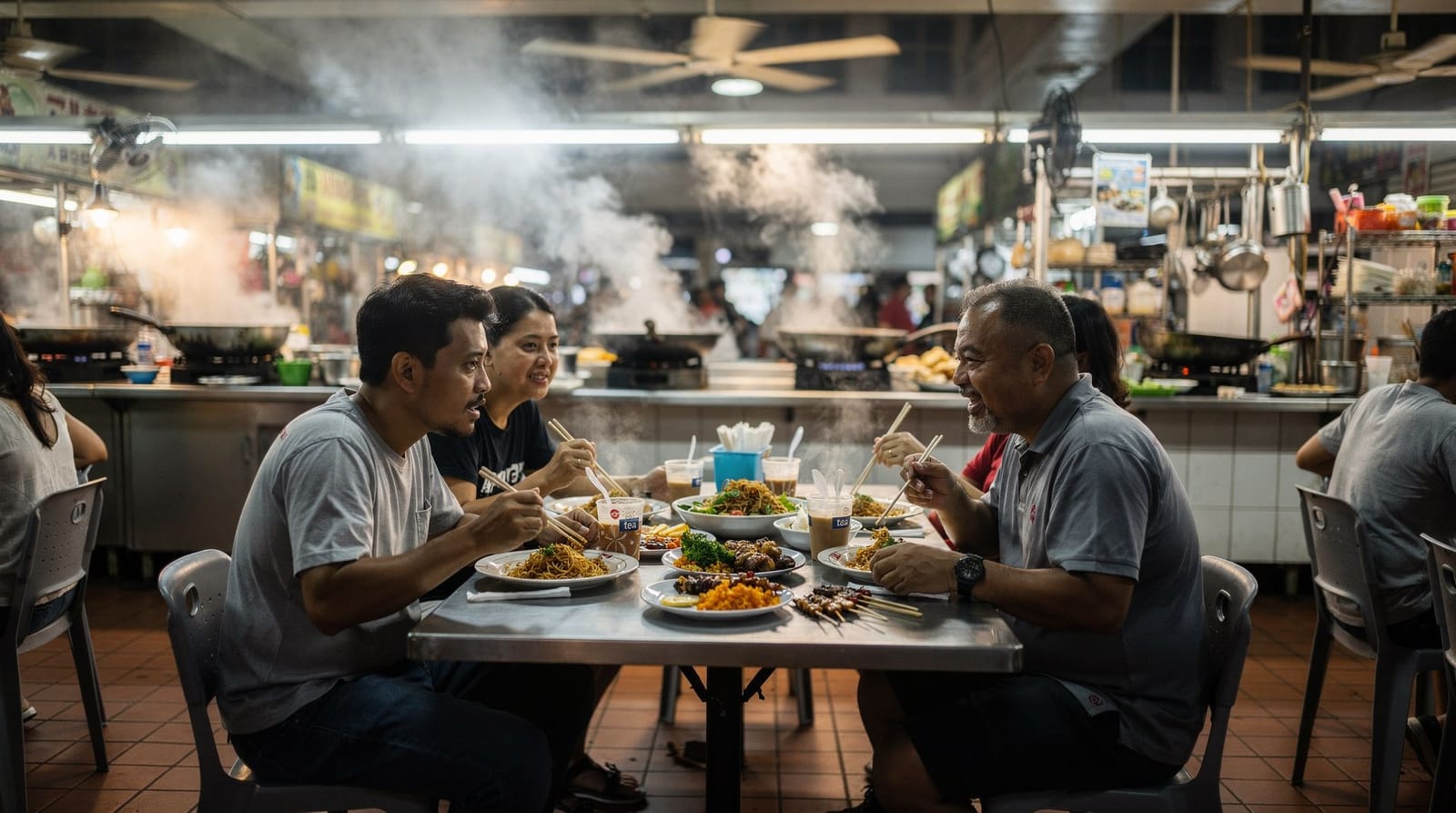
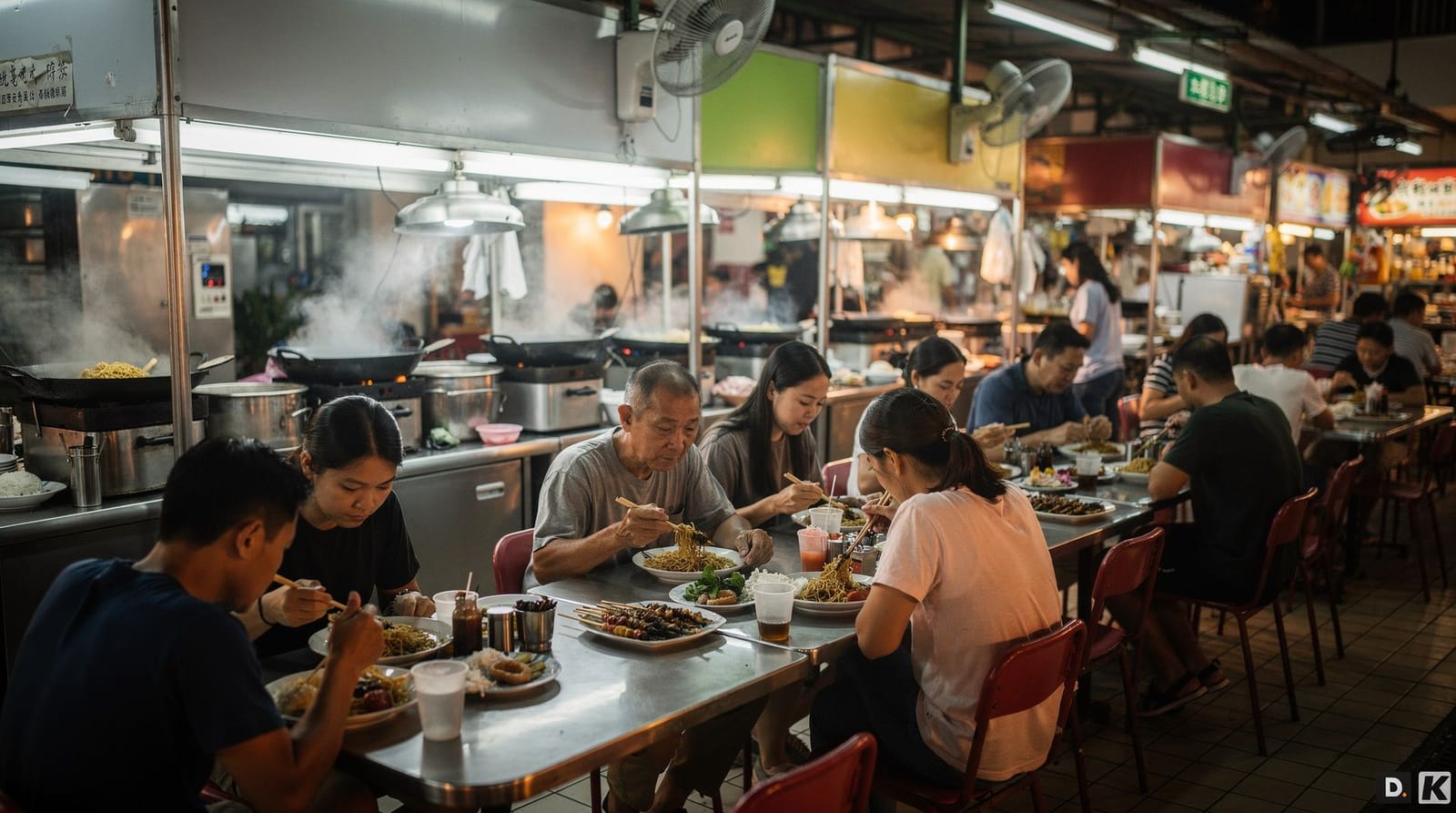
Little India’s food in October is operating at a level above its already excellent baseline. Tekka Centre is the most practical starting point — stalls serving biryani, roti prata, fish-head curry, and mutton soup with fresh bread all open by seven in the morning and most run until midnight during the festival weeks. A full meal at Tekka costs SGD 8–12 per person.
The street food stalls that appear along Serangoon Road during Deepavali skew toward South Indian sweets: murukku (a spiral-shaped lentil snack, crunchier and spicier than it looks), kesari (a saffron-coloured semolina sweet), and halwa in several varieties. Most stalls sell small bags for SGD 3–6 — it’s worth buying the small size first to see what you actually like before committing to a larger portion.
For a sit-down meal, the restaurants on Dunlop Street are less crowded than those immediately on Serangoon Road. Banana leaf curry at several spots along this strip — served literally on a banana leaf with rice, three or four curries, papadum, and a dessert — runs SGD 15–18 per person and is the format most worth choosing for a slow, proper meal.
Singapore: Little India, Tekka Centre and food tastings tour Singapore: Little India cultural and food walking tourA guided walk adds context that is hard to find independently, particularly around the temple protocols and the backstory of the neighbourhood’s layers of history. This format works especially well during Deepavali because the guide can navigate the crowds efficiently and explain what you’re looking at when you’re in the middle of it.
How Deepavali compares to Little India the rest of the year
Little India is a rewarding neighbourhood year-round — the ethnic quarters guide covers how it fits alongside Chinatown and Kampong Glam in Singapore’s cultural geography — but the festival period changes the calculus significantly:
| Regular week | Deepavali season (6 weeks) | |
|---|---|---|
| Street decorations | None beyond shopfronts | Full overhead light displays |
| Crowds | Moderate, mostly local | Heavy on weekend evenings |
| Food stalls | Tekka Centre + regular shops | Extra festival stalls along Serangoon Rd |
| Atmosphere | Everyday neighbourhood life | Concentrated cultural celebration |
| Best visit time | Any time | Weeknight, 7–9pm |
If you’re building a Singapore trip around the festival specifically, the best time to visit guide can help you weigh Deepavali season against Singapore’s weather patterns for that period, since October–November overlaps with the wetter part of the calendar.
Practical notes for the festival
Getting there: Little India MRT (North East Line or Downtown Line) drops you directly into the neighbourhood. Do not try to drive. Even Grab gets stuck several roads back from Serangoon Road on busy evenings.
Timing: The light-up usually happens around 7–7:30pm. If you want to see the decorations in the blue-hour light before full dark, arrive by 6:30pm. The streets are busiest between 8pm and 10pm on weekends; a weeknight visit between 7pm and 9pm is more manageable.
What to wear: Temples have dress codes — shoulders and knees covered. The streets are fine in whatever you’re comfortable in, but closed shoes are worth wearing when the pavements are this crowded.
Photography: The light-up is genuinely spectacular for photography, and a phone camera on portrait or night mode produces images that look much better than you’d expect. The hours between 7pm and 8pm, when the sky still holds some colour, give the best background for shots of the overhead decorations.
The morning of Deepavali itself
Deepavali day feels different from the weeks of run-up. The street market thins out as families observe the day at home or at temples. The Sri Veeramakaliamman Temple draws large queues from early morning — devotees in new clothes (the tradition is to wear new clothing for Deepavali) carrying offerings.
The streets around the temple in the early morning have a quality entirely unlike the festival-market energy of the preceding weeks. It’s quiet, ceremonial, and far more personal. If you want to understand what the festival is actually about — rather than what it looks like as a tourist spectacle — the early morning on Deepavali day is the visit worth making.
By late morning the restaurants begin filling up again, the sweet shops reopen, and the afternoon turns festive in a more accessible way. But the morning hour, before the city has quite woken up, is the version I’ve thought about most since.
Is it worth timing your trip for Deepavali?
Honest answer: it depends on your tolerance for crowds. Singapore in October is warm and occasionally wet — inter-monsoon season means afternoon thunderstorms that arrive with little warning. The neighbourhood is genuinely extraordinary during the light-up weeks, and there’s no other context in which you get this kind of concentrated cultural festival energy in such a walkable, food-rich setting.
If you’re already planning a Singapore visit in October or November, building your schedule around at least one evening in Little India during the Deepavali period is straightforwardly worth it. If you’d be travelling specifically for the festival, know that the crowds on peak weekend evenings are significant. A Monday or Tuesday night at 7pm, three weeks before Deepavali, gives you the full visual experience without the weekend density.
Either way, the light stays on for weeks. You have time to find the right evening.
Where to read more before you go
If the festival is new to you, the Deepavali in Singapore guide explains the customs and the calendar in more depth than a single evening walk can. The Little India destination page gives the neighbourhood at a glance, and the Sri Mariamman Temple guide is useful for anyone who wants to compare how Hindu temples in different parts of the city handle the festival season.
Food is the other half of the evening. The what to eat in Singapore guide and the list of must-try dishes help you place Little India’s biryani, prata and sweets within the wider food scene, while vegetarian Singapore is worth a look because so much of the neighbourhood’s cooking suits vegetarian travellers. If you’d rather eat somewhere calmer afterwards, the best hawker centres guide points to other options, and the hawker etiquette guide covers the habits that keep a busy centre running smoothly.
Planning the rest of the trip around the festival? A three-day itinerary leaves room for an evening in Little India, and the MRT guide explains how to get there without fuss. For another side of the city’s festival calendar, the Chinese New Year guide and our Chinese New Year blog story show how a different community lights up its own streets.
Pairing the visit with the rest of Kampong Glam
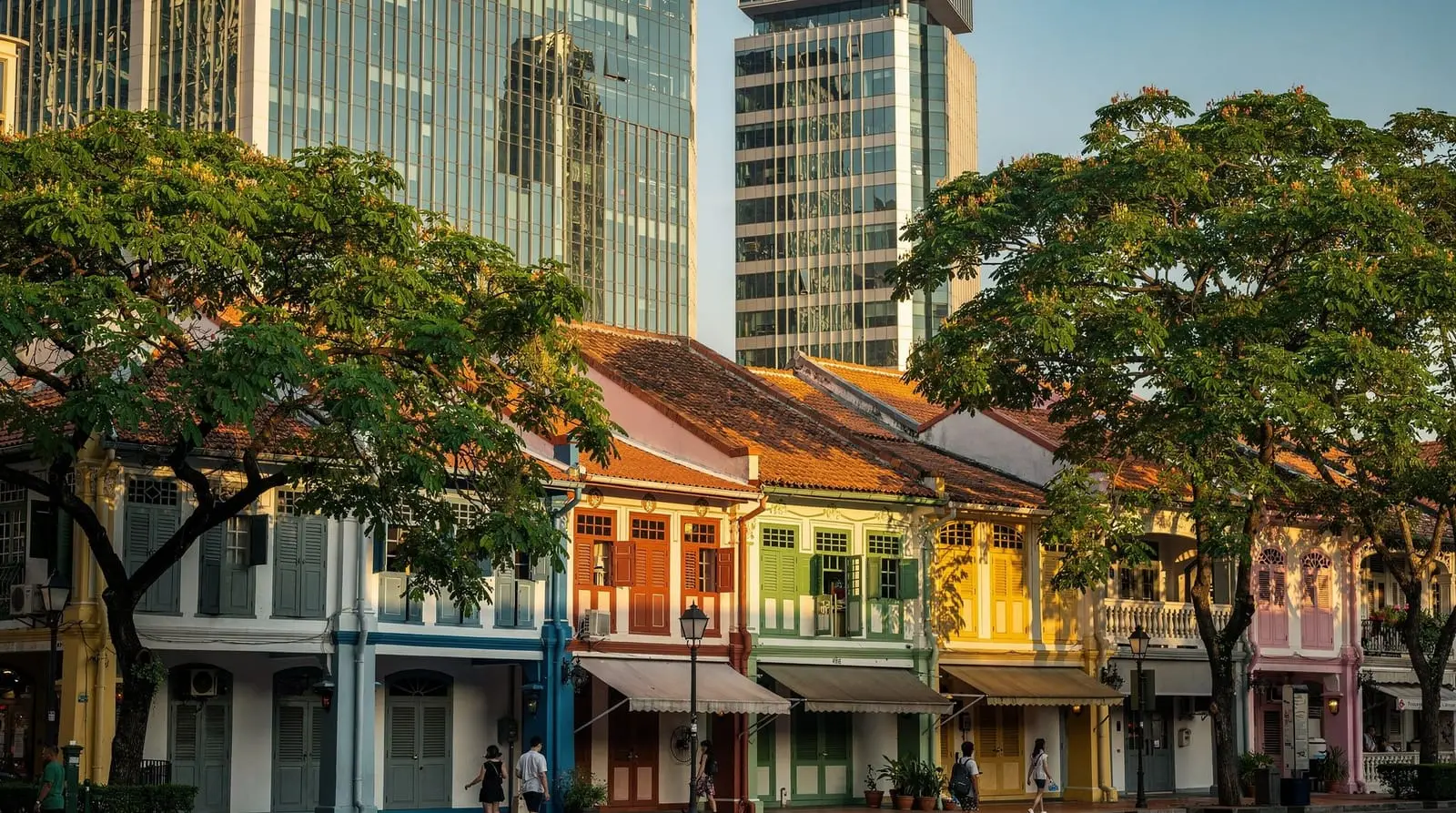
Little India sits close enough to Kampong Glam that an ambitious evening can cover both — a walk from Serangoon Road to North Bridge Road takes about 20 minutes and crosses through Bugis. This works particularly well during Deepavali season, since the contrast between Little India’s festival intensity and Kampong Glam’s quieter evening atmosphere makes for a genuinely varied night out. Don’t try to rush both in under two hours; give each neighbourhood at least 90 minutes to be worth the walk between them.
Frequently asked questions about Little India at Deepavali
Do I need to time my whole Singapore trip around Deepavali to see the lights? No — the light-up display runs for roughly six weeks, from the switch-on in late September through to Deepavali itself, so any evening within that window gives you the full visual experience. You don’t need to hit the exact festival date.
Is Little India during Deepavali suitable for children? Generally yes — the atmosphere is festive rather than rowdy, and the lights and food stalls appeal to most ages. The main consideration is crowd density on weekend evenings; a weeknight visit is more comfortable with young children, and a stroller will be difficult to manoeuvre through the busiest stretches of Serangoon Road.
Top experiences
Bookable activities with verified prices and instant confirmation on GetYourGuide.

Singapore: Universal Studios Singapore entry ticket

Singapore: Gardens by the Bay bundle entry ticket

Singapore: Night Safari and tram ride ticket

Singapore: S.E.A. Aquarium entrance ticket

Singapore: Singapore River cruise

Singapore: Marina Bay Sands observation deck e-ticket

Singapore: Sentosa cable car Sky Pass roundtrip ticket