Chinese New Year in Singapore: what to expect and how to make the most of it
Chinese New Year is Singapore’s biggest annual event by community participation — a 15-day celebration that transforms Chinatown with lighting installations, shuts most hawker stalls for two days, and fills the streets with family movement, incense, and oranges being exchanged in quantities that require explanation.
If you’re visiting Singapore during the CNY period (typically late January to mid-February, with the exact dates shifting year to year with the lunar calendar), what you’ll experience depends significantly on which day of the celebrations you’re in.
| When | Typically late January–mid-February (lunar calendar, shifts yearly) |
| Where | Chinatown light-up streets and River Hongbao at Marina Bay |
| Cost | Free to walk; food and yu sheng SGD 20–80 |
| Watch out for | Hawker stall closures on CNY Eve and the first 1–3 days |
| Book ahead | Accommodation, especially in or near Chinatown |
Timing your visit around the 15 days
Not all CNY days deliver the same experience, so it’s worth knowing the shape of the period before booking flights. The two to three weeks before CNY Eve are when the Chinatown light-up is at its most photogenic and the streets are busy but not overwhelmed. CNY Eve itself and the first two days are the most atmospheric for River Hongbao and family energy, but also the most inconvenient for hawker food, as covered below. By the third or fourth day, hawker centres are largely back to normal while the lanterns and decorations are still up — this window is arguably the best balance of atmosphere and practicality for a first-time visitor. The Lantern Festival on day 15 is a smaller, quieter closing note if you’re staying the full period.
The Chinatown light-up: worth planning around
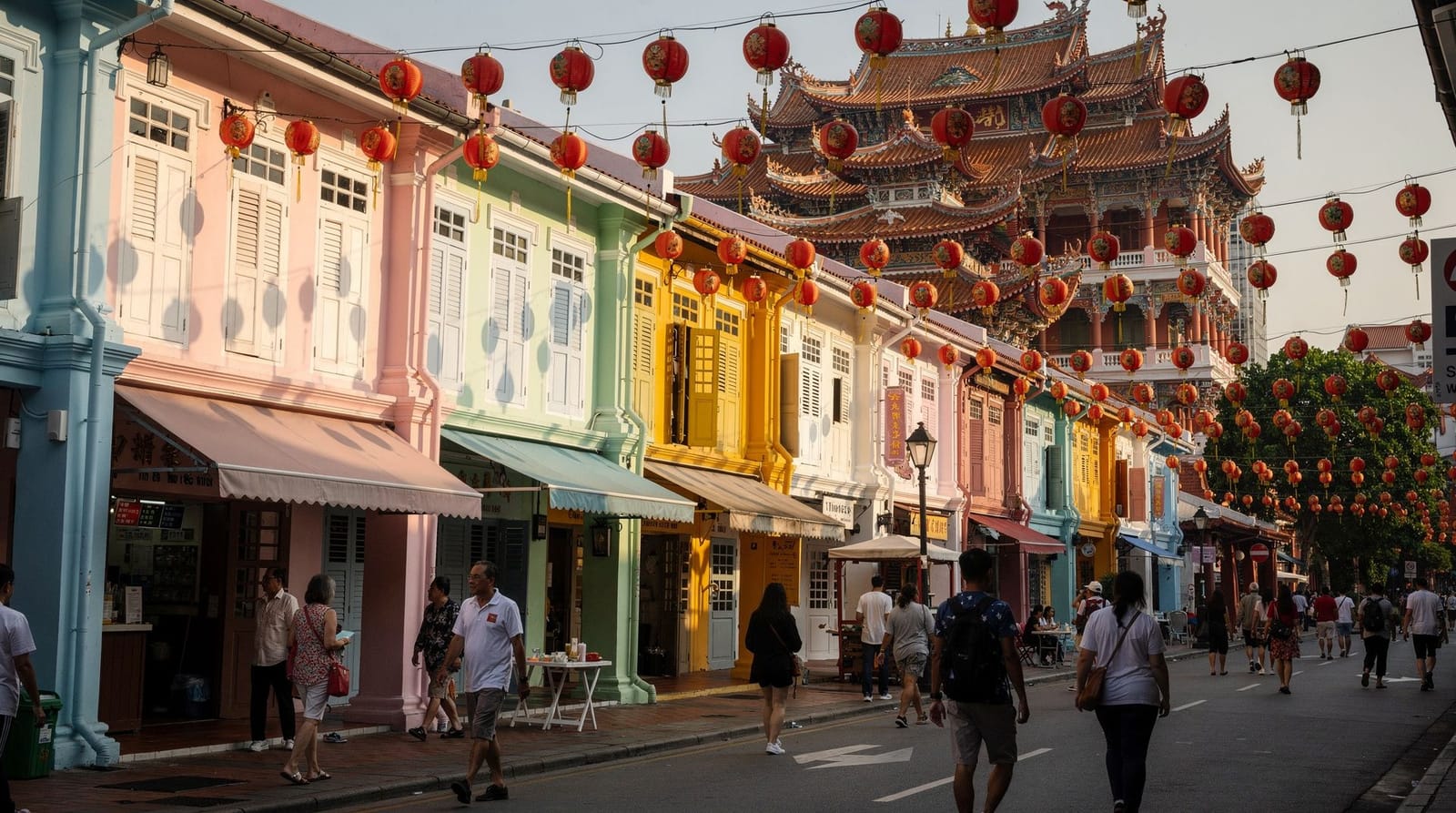
The Chinatown CNY light-up begins several weeks before the actual New Year and runs through to the Lantern Festival on the 15th day of the new year. The main decorated streets — New Bridge Road, South Bridge Road, and the lanes around Pagoda Street — are hung with red and gold lanterns, illuminated decorations thematically tied to the year’s zodiac animal, and the kind of density of colour that photographs reasonably well but looks better in person.
The Chinatown guide covers the neighbourhood year-round, but during CNY the specific pull is the night atmosphere along these streets. Come after 7pm when the lights are fully visible. Expect crowds — this is genuinely one of the busiest pedestrian periods in the city. The area around People’s Park Complex and the Chinatown MRT exit gets particularly dense on weekends in the two weeks before the New Year.
The stalls along Pagoda Street during the CNY period sell seasonal goods: pineapple tarts (buttery pastry shells around a pineapple jam filling, mildly addictive at SGD 20–30 per tin), bak kwa (thin slices of grilled pork jerky, sweet and smoky, SGD 50–80/kg and worth every cent), and an enormous variety of preserved foods, cookies, and decorative items. Buying some of these to eat while walking is one of the better CNY visitor experiences.
River Hongbao: the festival for visitors
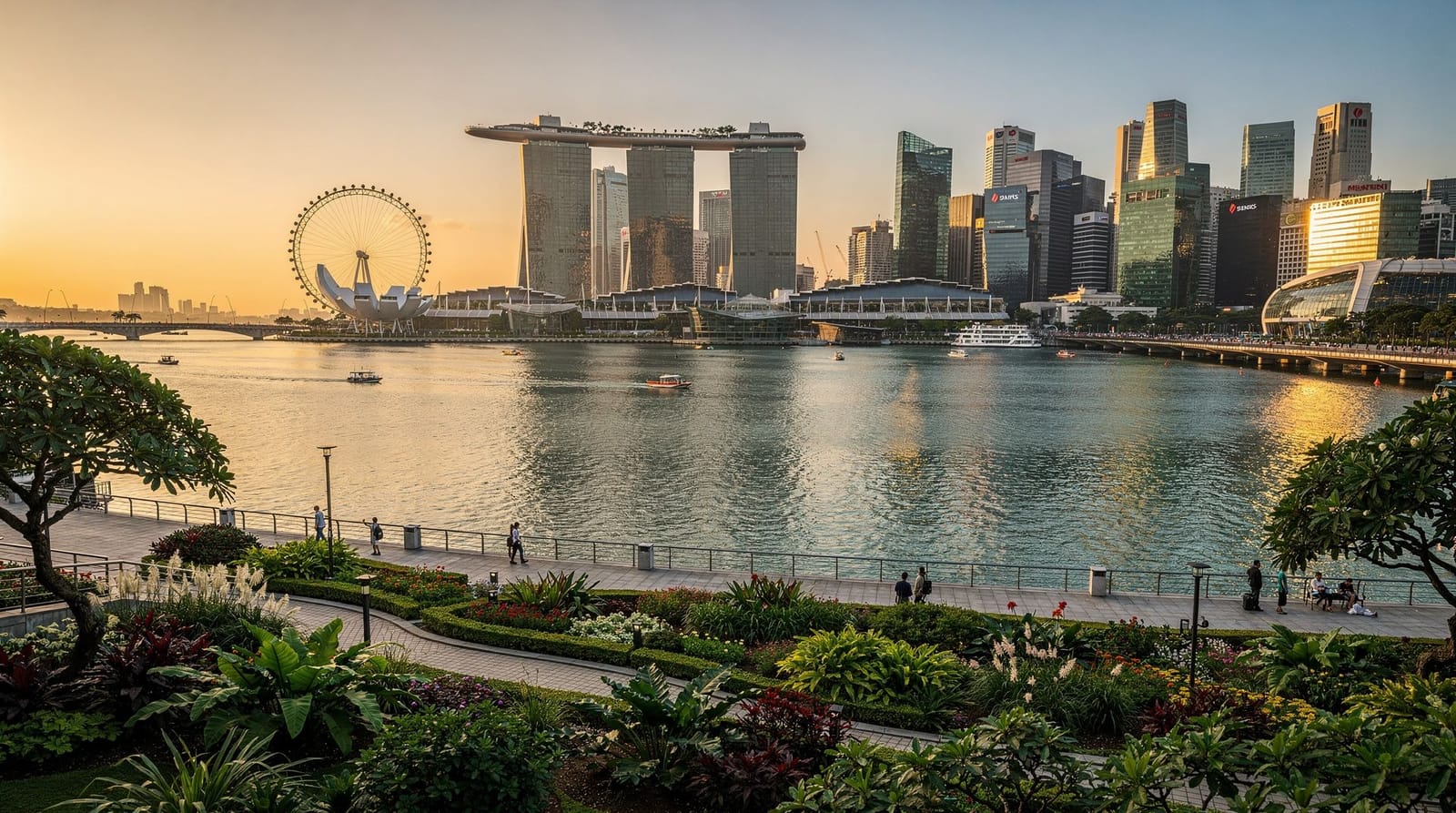
The River Hongbao is a public CNY festival that runs for about 10 days around the New Year at Marina Bay, typically at the open space near the Float@Marina Bay or the Bayfront area. It’s explicitly oriented toward a mixed audience — families, tourists, and general public — and has a more accessible entry point than the community-oriented celebrations in Chinatown.
The festival includes traditional cultural performances, light installations, food stalls selling CNY-specific dishes, and typically a fireworks display on CNY Eve. Entry is free. The atmosphere on the evenings around CNY Eve — when families gather to watch the midnight countdown — is genuinely moving: the scale of the crowd, the fireworks over the bay, the sense of a city doing something it knows how to do very well.
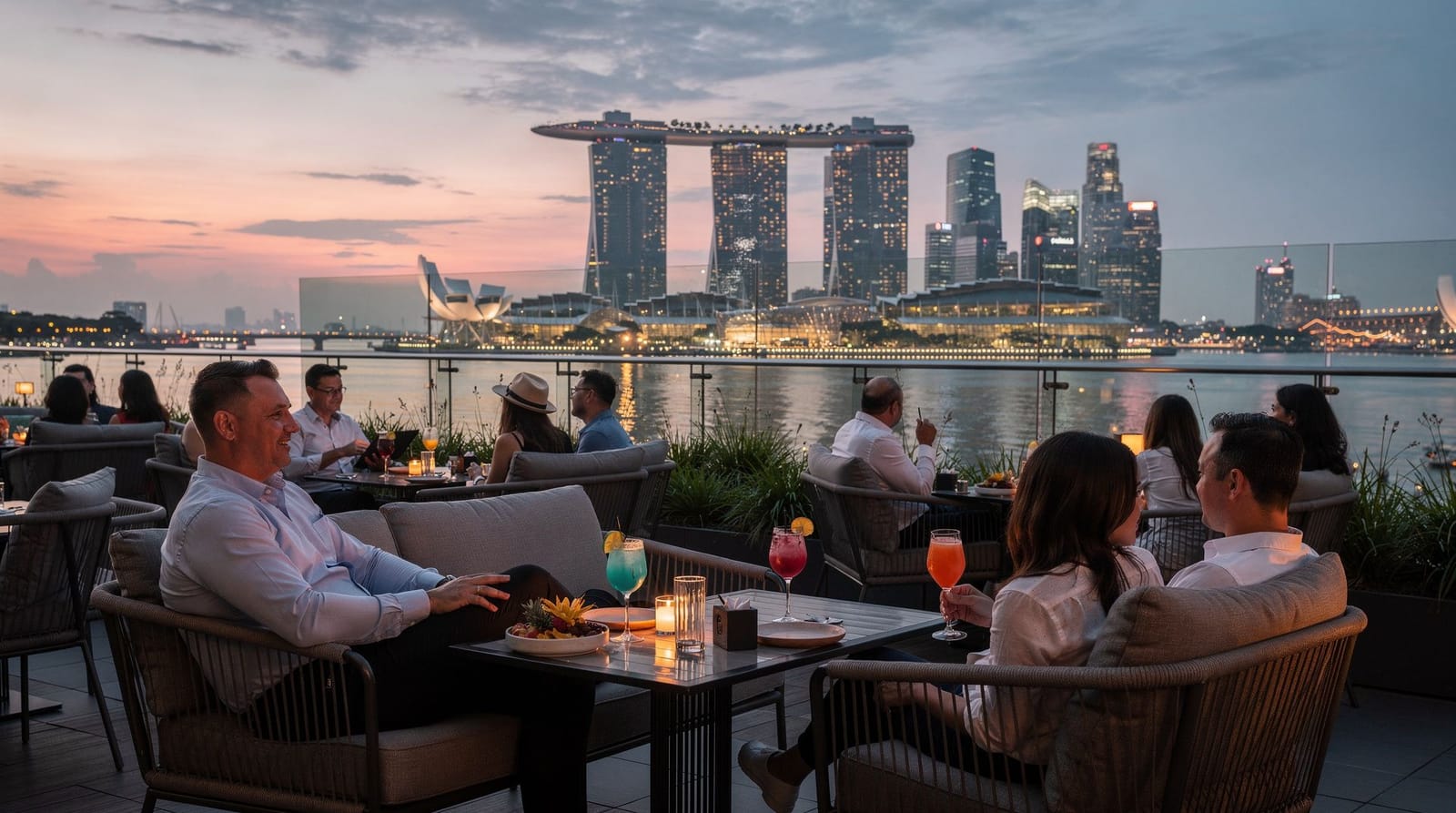
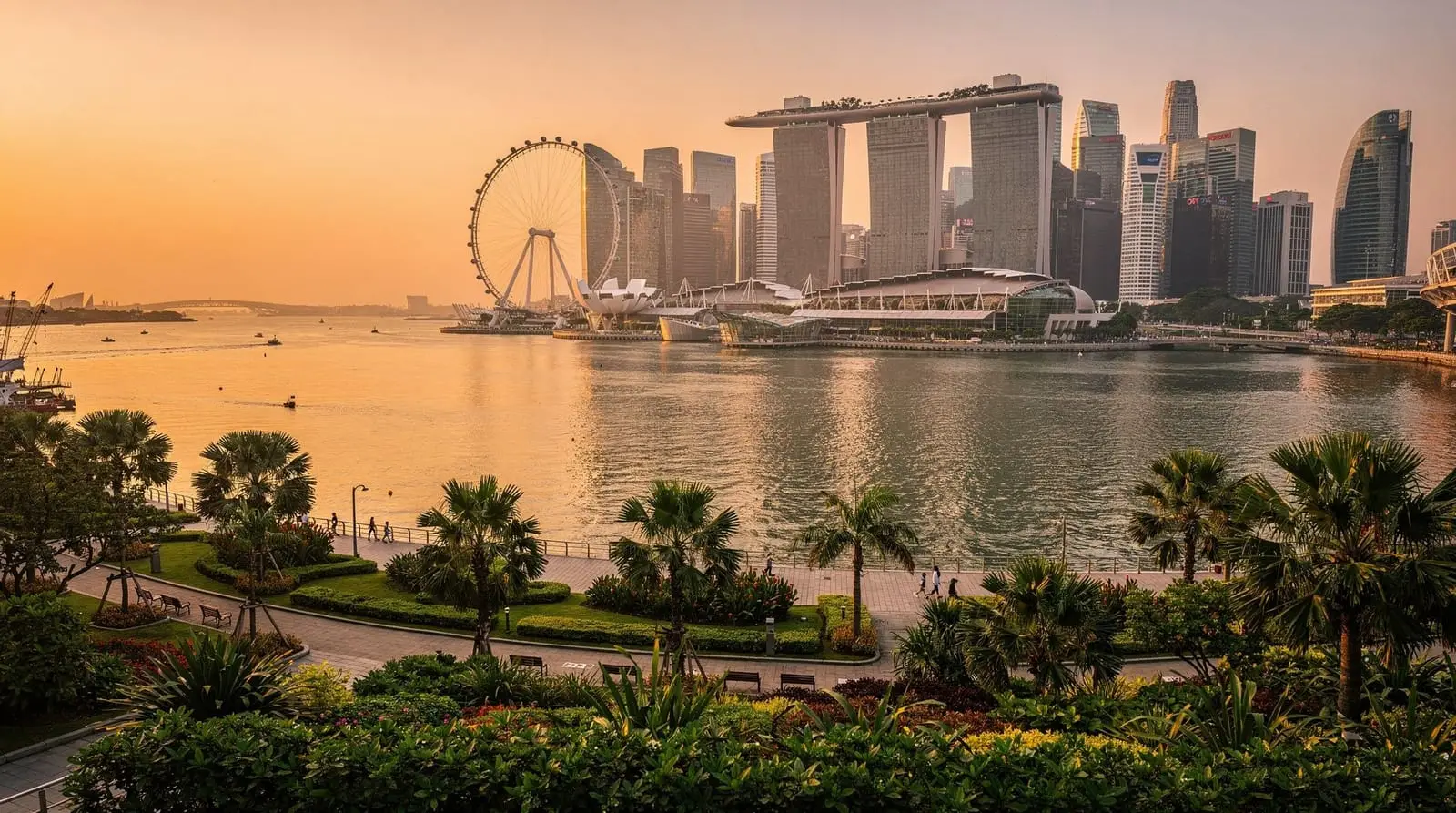
The Singapore at night guide covers Marina Bay’s standard nighttime appeal; during River Hongbao that appeal is significantly amplified.
Singapore: Singapore River cruiseCNY Eve and the first two days: honest management
This is the most important practical note for visitors: CNY Eve (the night before the New Year) and the first two days of the New Year are when Singapore becomes, in specific ways, inconvenient for tourists.
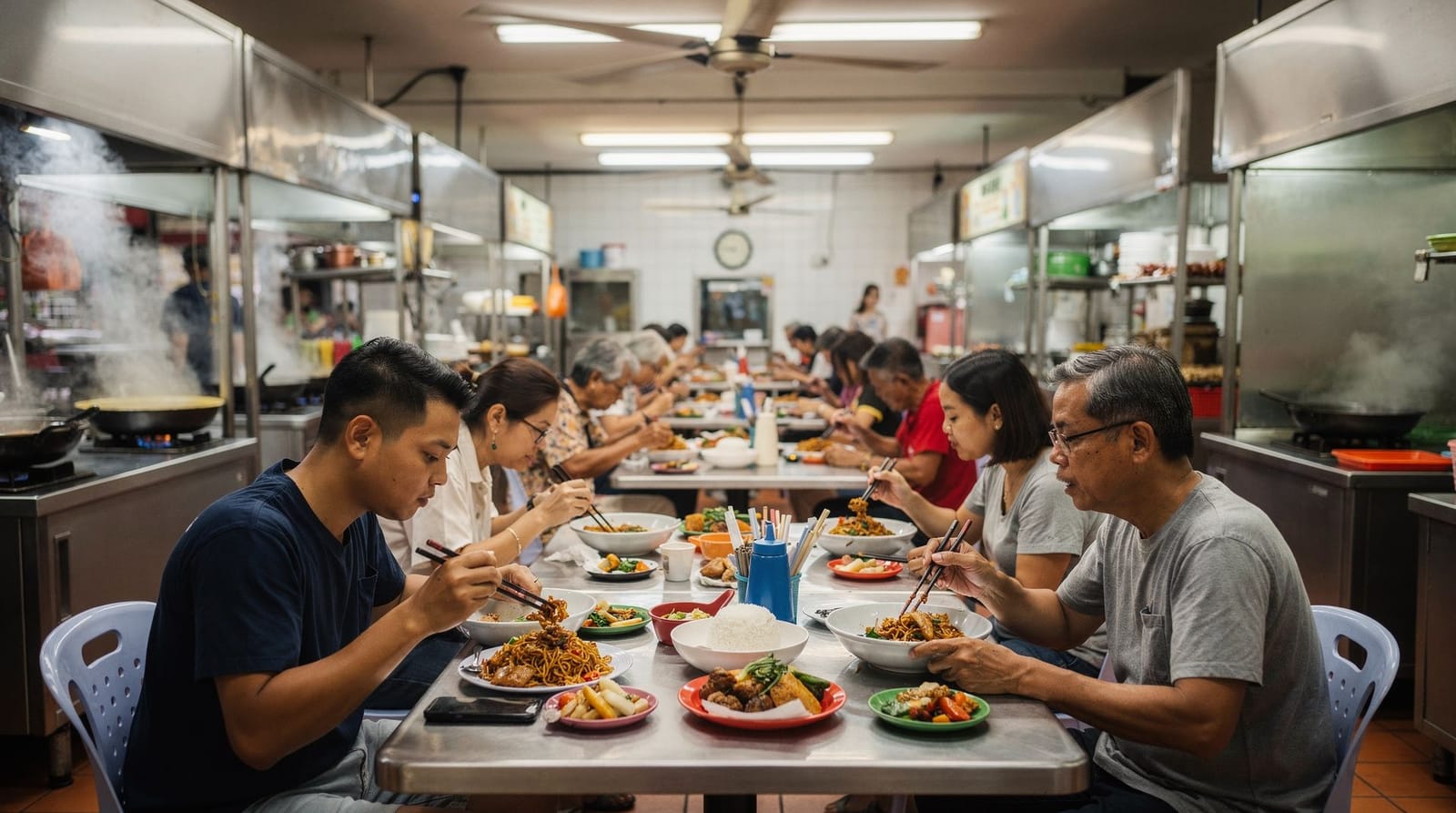
Many hawker stalls close for CNY Eve family reunion dinners and stay closed for one to three days depending on the vendor. This is not the Singapore government being unhelpful — it’s families doing what families do on New Year, which is eating together at home. The practical effect: several of the hawker centres you might have planned meals around will have dark or shuttered stalls, and the ones that do open will have longer queues.
Restaurants in hotels and tourist-facing areas stay open and charge CNY premium pricing. Hawker stalls in tourist-heavy areas (around Chinatown MRT, Clarke Quay) often have shorter closure periods because the commercial incentive of the tourist crowd overrides the holiday pattern. Plan backup options.
The first morning of CNY is often the quietest the city gets all year. The heat is the same, the MRT runs, but the streets have a suspended quality — the commercial noise turned down, families inside. This is actually a very good time to walk the Civic District or the Botanic Gardens if you don’t mind the particular eerie calm of a major city on its most significant family holiday.
What to eat during CNY
Beyond the pineapple tarts and bak kwa already mentioned, CNY brings a few dishes specific to the season:
Yu sheng (raw fish salad) is a dish specific to Singapore and Malaysia’s Cantonese-Teochew communities and eaten almost exclusively during CNY. The ritual involves tossing the ingredients together with chopsticks — everyone participates, and the height of the toss is supposed to correlate with the abundance of luck in the coming year. Most Chinese restaurants in Singapore offer it throughout the CNY period. Budget SGD 35–80 per serving depending on the restaurant and the grade of the ingredients (salmon vs. abalone).
Nian gao (glutinous rice cake) is available at most supermarkets and some hawker stalls — dense, sweet, and deeply associated with the season.
Peanut soup with rice balls is a simpler hawker option that appears in this season — the hawker centres guide notes which centres have reliable hot drink and dessert stalls that maintain CNY-specific menus.
Filling the quiet days around the holiday
Because so much closes or slows down on the first days, it helps to have a short list of things that work whatever the calendar says. Temples are a natural fit for the season: the Sri Mariamman Temple and the Buddha Tooth Relic Temple sit right in Chinatown, and the temples of Singapore guide helps you pick others if you want to see how families mark the new year with incense and offerings. Go with a respectful, unhurried attitude, as worshippers have priority over visitors.
For food, the Chinatown complex food guide and the Maxwell Food Centre guide are useful for checking which areas tend to stay lively, while the hawker etiquette guide explains how to share tables when queues are long. If a stall you wanted is shuttered, the best cheap eats guide gives you alternatives, and the Chinatown hawker crawl works as a template for a self-guided evening once stalls reopen.
If you would rather escape the crowds for a few hours, the Gardens by the Bay and Marina Bay areas offer open space close to the River Hongbao site, and the Singapore weather month by month guide is worth a glance, since the season can bring rain that reshapes an evening walk. Families can also look at the Singapore with kids guide for ideas that do not depend on a stall being open.
Singapore: Gardens by the Bay bundle entry ticketThe full-scale CNY plan
If you’re planning a trip around Chinese New Year, the best time to visit Singapore guide covers the trade-offs between the festive atmosphere and the operational inconveniences. The short version: arrive two to three days before CNY for the pre-New Year Chinatown atmosphere at its most charged, stay through the third or fourth day when hawker centres are back to normal operations, and treat CNY Eve itself as a special occasion rather than a regular Singapore evening.
The things to do in Singapore guide and the week-long itinerary both have notes on adjusting standard plans for the CNY period. The city is genuinely worth visiting at this time — the atmosphere in Chinatown alone justifies it — but the logistics require more advance planning than a standard visit.
Book accommodation as far in advance as possible. Hotels fill early for CNY, rates rise, and the budget options in Chinatown itself sell out first because location matters considerably more during CNY than at other times of year.
Frequently asked questions about Chinese New Year in Singapore
Will restaurants and hawker centres be closed during CNY? Many traditional hawker stalls close for one to three days around CNY Eve for family reunion dinners, but hotel restaurants, tourist-area eateries near Clarke Quay and Chinatown MRT, and shopping mall food courts generally stay open, often at slightly higher prices. Plan backup meal options for CNY Eve and the first two days specifically.
Is Chinese New Year a good time to visit Singapore as a tourist? Yes, with realistic expectations — the Chinatown light-up and River Hongbao are genuinely special and free to experience, but you should expect crowds, some closed businesses on the actual holiday days, and higher hotel rates. Arriving a few days before CNY Eve and staying through day three or four gives the best balance of atmosphere and normal operations.
Top experiences
Bookable activities with verified prices and instant confirmation on GetYourGuide.

Singapore: Universal Studios Singapore entry ticket

Singapore: Gardens by the Bay bundle entry ticket

Singapore: Night Safari and tram ride ticket

Singapore: S.E.A. Aquarium entrance ticket

Singapore: Singapore River cruise

Singapore: Marina Bay Sands observation deck e-ticket

Singapore: Sentosa cable car Sky Pass roundtrip ticket