Solo female travel in Singapore: what actually makes it different
| Safety level | High — low crime rate, well-lit MRT, safe at night |
| Best base | Chinatown or Bugis hostel with female-only dorms |
| Night transport | Grab, around SGD 28–40 from Changi post-midnight |
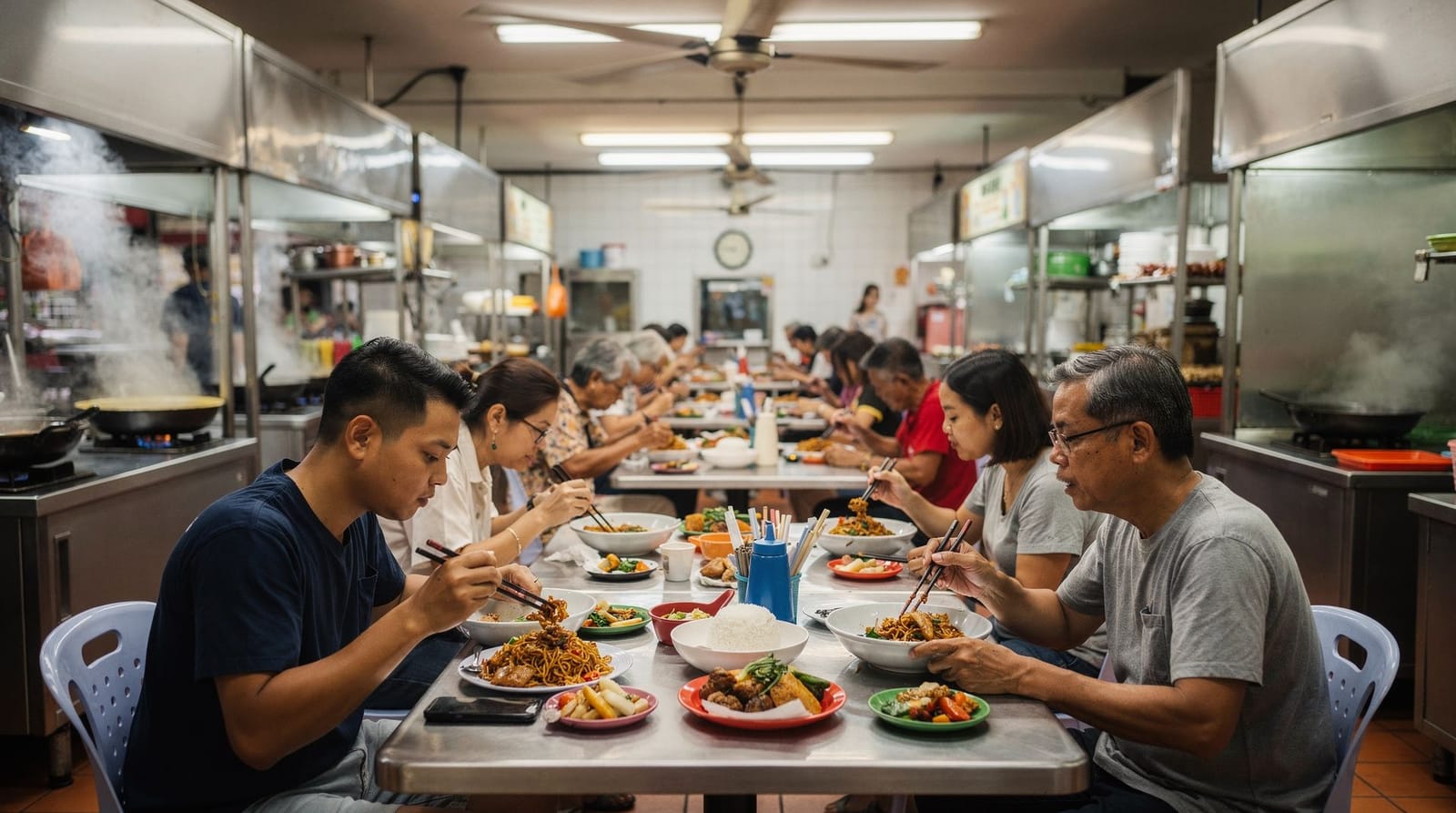
| Eating alone | Hawker centres — communal tables, zero awkwardness |
| Dress note | Shoulders/knees covered at temples and mosques |
The most common piece of advice given to women travelling solo to Singapore is that you don’t need to worry much about safety, and this is broadly true. Singapore has one of the lowest crime rates of any major global city; violent crime against tourists is genuinely rare, the public transport system is safe at all hours, and the general infrastructure of the city — the surveillance, the social norms around public behaviour, the efficient emergency services — creates an environment where the baseline anxiety of solo female travel in many cities simply doesn’t apply in the same way.
This is worth saying clearly, because the erasure of safety concerns is not a marketing position. It’s a reflection of actual conditions on the ground. I’ve travelled to Singapore several times as a solo traveller, including arriving alone at 1am after long-haul flights, taking the MRT alone well after midnight, and walking through Geylang — Singapore’s red-light district — at 10pm for the durian. None of these required unusual precautions or produced incidents.
However: “safe” does not mean “effortless” or “without things to think about,” and a more useful account of solo female travel in Singapore includes the specifics of what to think about and why, rather than just a reassurance that everything is fine.
If you are still deciding whether the trip is worth it, the things to do in Singapore guide and the top attractions overview give a sense of how much of the city works well for one person on their own schedule.
The MRT: night hours and the reality
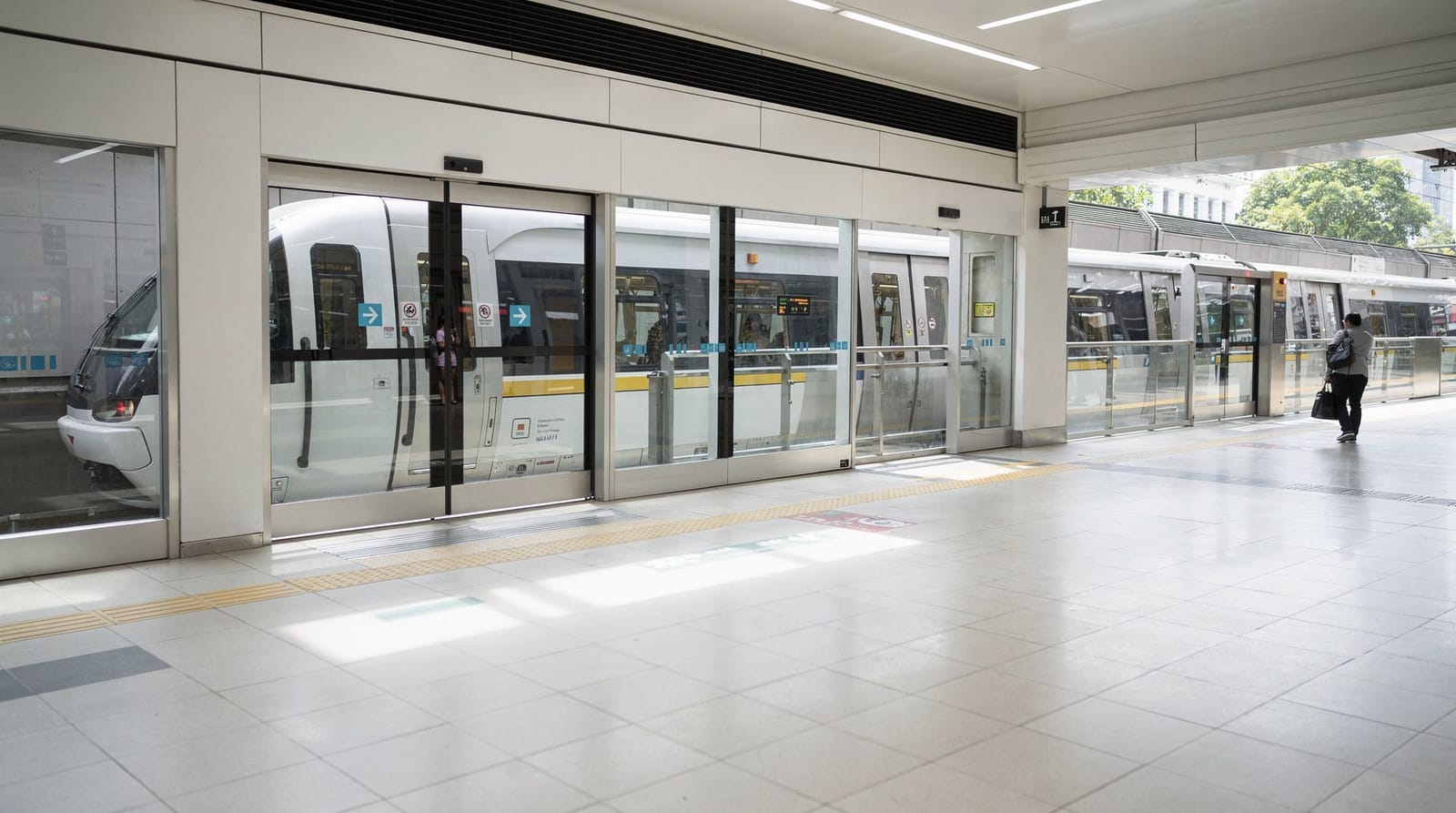
The MRT is safe at all hours it operates (it runs until around 12–1am depending on the line). The stations are well-lit, staffed, and monitored. The trains have priority seating near the doors — in my experience this is mostly a social convention rather than an enforced policy, but most passengers respect it.
Night travel on the MRT feels different from, say, the London Underground at the same hour — quieter, more orderly, without the ambient menace that late-night metro travel carries in some cities. I’ve never felt followed or watched or approached inappropriately on the Singapore MRT, at any hour.
Grab (the regional equivalent of Uber) is the recommended night transport when the MRT isn’t running. The app tracks rides and shares them in real time; the drivers are licensed and the regulatory environment is tight. The post-midnight fare from Changi to the city centre (where you’d typically be after an international arrival) runs SGD 28–40 depending on demand. The getting around Singapore guide has the full transport picture, including which apps to install before you land.
A practical habit worth building: keep your phone charged, have your Grab app set up before you leave the airport, and know roughly which line takes you home. The Grab and taxis guide explains how the two options compare, and the EZ-Link vs SimplyGo guide saves you fumbling at the fare gates on your first evening.
Arriving alone: the first few hours
The first few hours after landing are usually the moment solo anxiety peaks, regardless of destination, so it’s worth addressing directly. Changi Airport is one of the least stressful arrival points anywhere — well-lit, staffed at all hours, with clear signage and an MRT station that runs into the evening. If your flight lands after the MRT stops for the night, the airport taxi queue is staffed, metered, and entirely standard; there is no need to pre-arrange transport for safety reasons, though doing so removes one decision from an already tiring day.
The where to stay in Singapore guide covers the city’s neighbourhoods from a general traveller perspective. From a solo female traveller perspective, a few additional notes:
Hostels in Chinatown and Bugis are generally well-run, with female-only dorm options at most of the better-reviewed properties. The price point (SGD 25–50 for a dorm bed, SGD 80–120 for a private room) makes Singapore hostels accessible. The social infrastructure — common rooms, organised tours, the kind of solo traveller community that gravitates to the same neighbourhood hostels — is useful if you’re travelling solo and want occasional company without committing to group travel.
Guesthouses in Little India are frequently the cheapest option in the city. The neighbourhood is safe and vibrant; the standard concern about being a woman in Little India after dark is, in my experience, significantly exaggerated. The streets are busy until 10–11pm, the food is excellent, and the atmosphere is lively rather than threatening.
Avoid the very lowest-end accommodations in Geylang. Not because the area is dangerous — it’s not — but because the cheapest rooms in that neighbourhood are sometimes configured around short-stay clients in ways that can be uncomfortable for someone who just wants to sleep.
Tiong Bahru is worth a specific mention for solo travellers who want a quieter, more residential base — fewer hostels, more boutique guesthouses and short-let apartments, and a genuinely local neighbourhood feel without any of the Geylang caveats. It’s a short MRT ride from the centre rather than in the middle of it, which suits some solo travellers better than a hostel-dense district.
If you land at Changi and want to understand the route into town before you travel, the Changi Airport to city guide walks through the options, and the Chinatown and Bugis neighbourhood pages show what the surroundings of those hostel districts are like.
Eating alone: the hawker centre advantage
Hawker centres are almost ideal for solo female travellers. The communal table format, the casual atmosphere, the transactional efficiency of ordering and receiving food quickly — all of this removes the specific discomfort of eating alone in a restaurant where the dynamics of lone-woman-at-a-table can be fraught.
At a hawker centre you order, you take your tray to a table that may already have several strangers at it, you eat, you leave. No one comments, no one asks if you’re waiting for someone, no server looks at you with the particular expression that communicates concern about a wasted table. The hawker centre guide covers what to order and where; the format is entirely solo-traveller-friendly.
Coffee shops (kopitiams) and the seated areas at many hawker centres also make it easy to linger over a meal and not feel self-conscious about it. Bring a book or a phone and the question of “eating alone” simply doesn’t arise as a social experience.
A few habits make the whole experience smoother. Learn the chope custom (tissue packets on tables mean a seat is taken) from the hawker etiquette guide, and if you are unsure what to order, the what to eat in Singapore guide and the hainanese chicken rice guide are easy places to start. Vegetarian and halal travellers will find the vegetarian Singapore and halal food guides useful for ordering with confidence.
Nightlife: realistic rather than cautionary
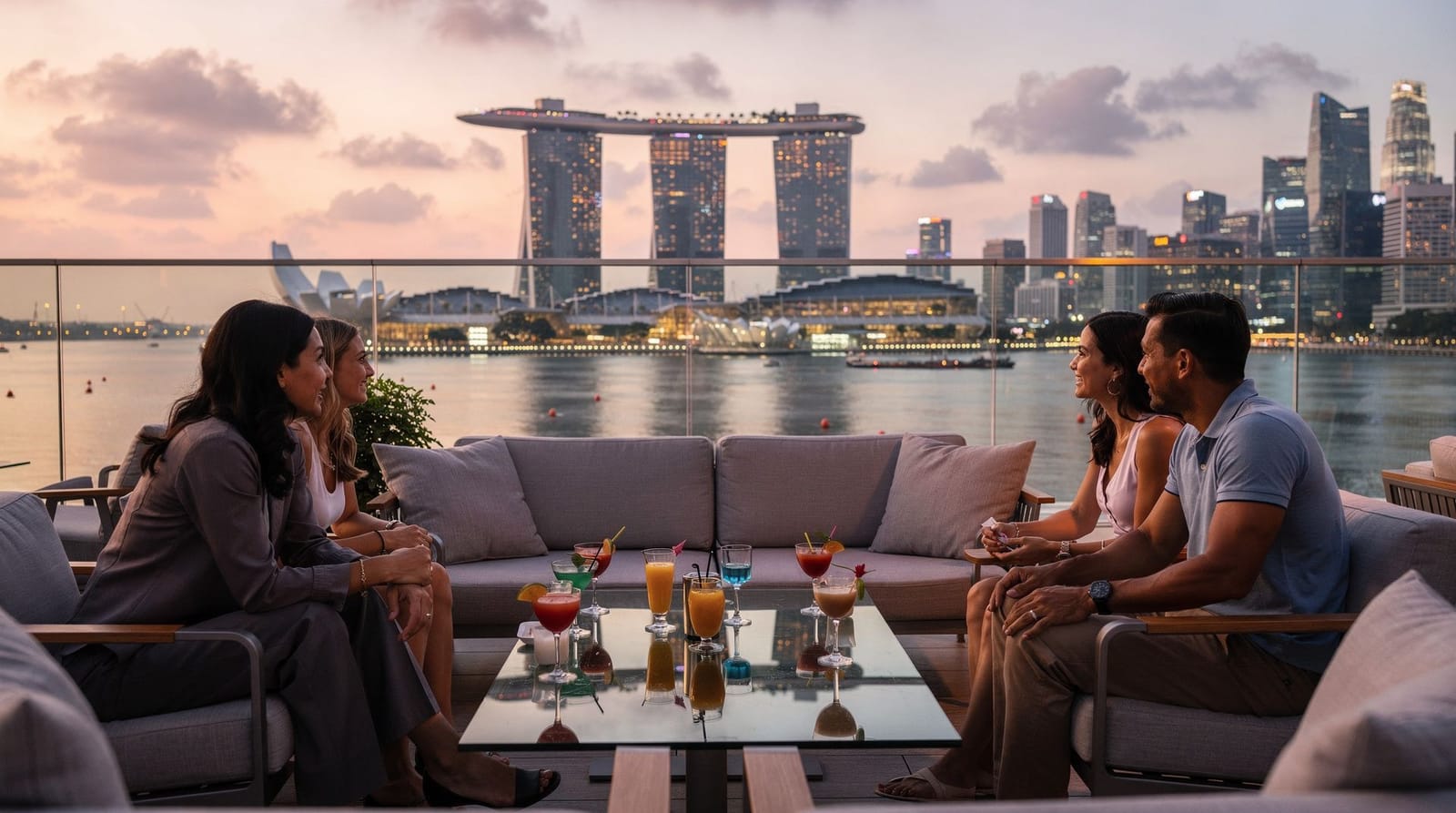
Singapore’s nightlife is concentrated in Clarke Quay, the CBD, and Boat Quay, with a secondary cluster in the Holland Village/Dempsey Hill area. The bars and clubs here are busy on Friday and Saturday nights and more relaxed midweek.
Going out alone in Singapore as a solo female traveller is not a special category of decision. The bars are safe; the staff at most places are attentive to unusual situations; the Grab ride home at 2am is a standard and reliable option. The social norms around alcohol and women in Singapore are broadly moderate — it is not a culture where drinking women are seen as an invitation for approach in the way that can be a concern in some other cities.
Singapore: Singapore River cruiseThe specific advice I’d give: the rooftop bars (1-Altitude, Ce La Vi, Smoke & Mirrors) have a slight dress code expectation — not formal, but smart casual — and can feel exclusionary if you arrive in hiking gear. The Clarke Quay bar strip is loud and high-energy; if you prefer a quieter drink, the bars on Ann Siang Hill or in the Buona Vista/Holland Village area are less overwhelming.
If rooftops are your idea of a good evening, the rooftop bars guide and the best bars in Singapore list help you pick a setting that matches your mood, and the Singapore at night guide covers quieter ways to spend an evening without a drink in hand.
Things that require thought but not anxiety
The heat. Alone or not, the Singapore heat is a consideration. Managing it — building in midday rest, staying hydrated, using covered walkways — is part of the operational framework of being in Singapore.
Navigation. Singapore is easy to navigate by Google Maps, but the MRT system has some counterintuitive interchange points. The MRT guide is worth reading before arrival.
Language. English is official and universally used. The local Singlish creole can be confusing at first — if someone says “can lah” or “lor” and you look puzzled, repetition or clarification is entirely socially acceptable and offered without irritation.
Cultural sites. At temples and mosques, dress requirements apply to everyone — shoulders and knees covered. The Buddha Tooth Relic Temple in Chinatown and the Sultan Mosque in Kampong Glam both have shawls and sarongs available to borrow at the entrance.
Accessibility. If mobility is also a factor alongside travelling solo, the accessible Singapore guide covers step-free routes and lift access across the MRT network in more detail than fits here.
What to do alone that’s actually enjoyable, not just safe
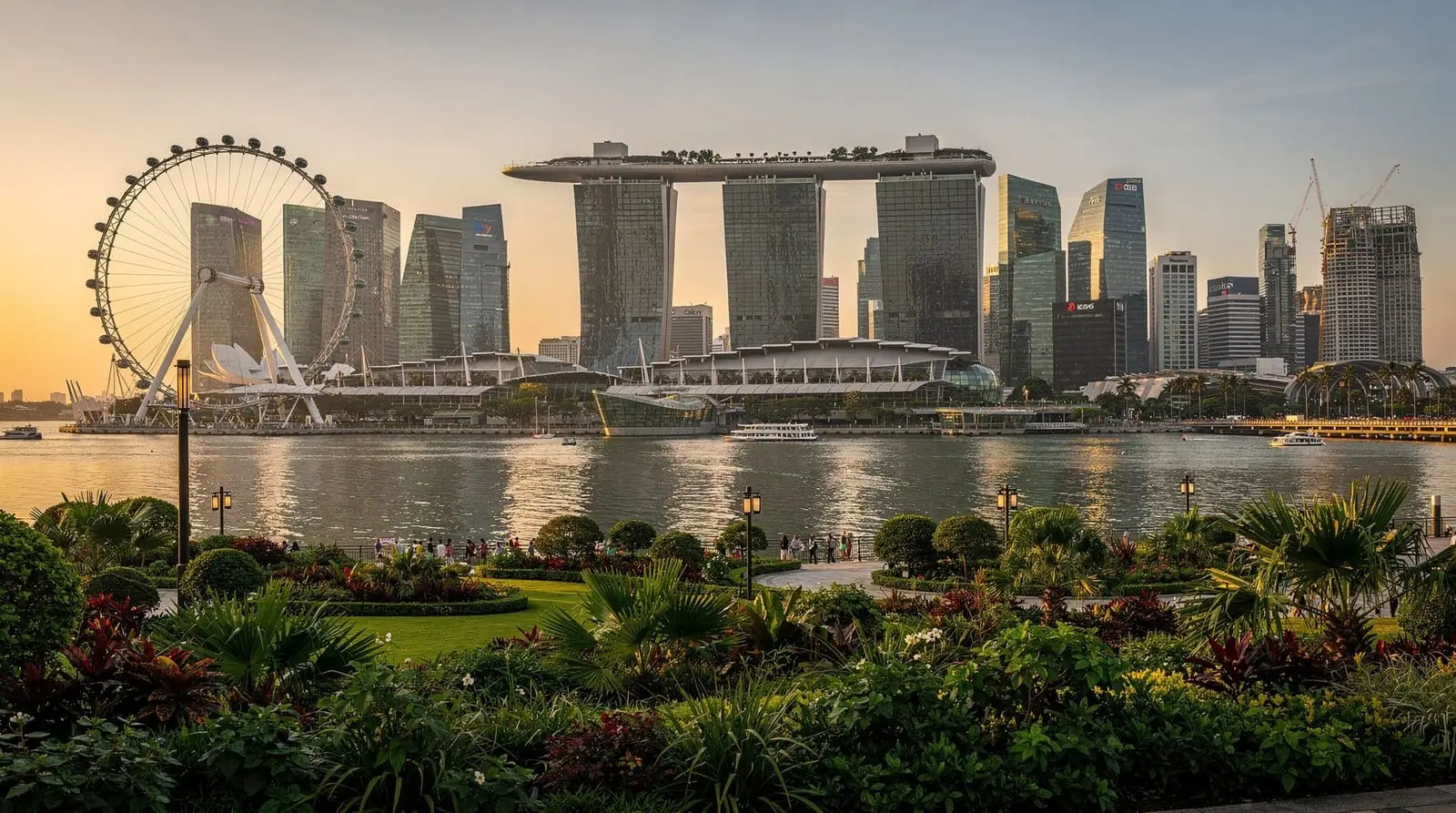
Solo travel guides sometimes tip too far into risk-management and not enough into what’s genuinely good to do alone. Singapore is unusually well suited to solo itineraries because so much of its best content — hawker eating, neighbourhood walking, the free light shows at Marina Bay and Gardens by the Bay — doesn’t require a companion to enjoy fully. A solo evening spent walking Chinatown’s lit-up streets, eating a hawker dinner, and catching the free Spectra light show costs almost nothing and needs no coordination with anyone else’s schedule. That’s a genuine advantage of solo travel here, not just an absence of risk.
Other solo-friendly ideas follow the same logic: you set the pace, linger where you like, and leave when you are done. The Gardens by the Bay grounds and the Botanic Gardens suit slow, unhurried wandering, while the free things to do list is a good source of low-commitment plans. The best walking tours are an option if you would like a guide and a few fellow travellers for an afternoon without committing to a whole trip with a group. For a ready-made structure, the Singapore 3-day itinerary and the Singapore 2-day itinerary can be followed at your own speed.
Singapore: Gardens by the Bay bundle entry ticketScams are rare, but it helps to know the usual patterns; the common scams guide is short and worth a read before you go.
The honest conclusion
Singapore is one of the easiest cities in the world for solo female travel. The baseline safety conditions that require constant low-level management in many other cities — awareness of surroundings after dark, transport choices, neighbourhood selection — are not irrelevant here but they operate at a much lower intensity. This frees up cognitive and emotional space to actually experience the city rather than monitor it.
The solo travel Singapore guide and the planning guide cover the logistics in more detail. The Singapore for first-timers guide is the right starting point if this will be your first visit.
Come hungry, come curious, and don’t let the heat catch you by surprise.
Top experiences
Bookable activities with verified prices and instant confirmation on GetYourGuide.

Singapore: Universal Studios Singapore entry ticket

Singapore: Gardens by the Bay bundle entry ticket

Singapore: Night Safari and tram ride ticket

Singapore: S.E.A. Aquarium entrance ticket

Singapore: Singapore River cruise

Singapore: Marina Bay Sands observation deck e-ticket

Singapore: Sentosa cable car Sky Pass roundtrip ticket