Common scams in Singapore: what tourists actually encounter
Singapore: Gardens by the Bay bundle entry ticket
Is Singapore safe from scams?
Singapore is one of the world's least scammy cities. Violent crime is extremely low and most tourist scams are mild overcharging rather than anything dangerous. That said, a few patterns repeat — gem scams in Chinatown, aggressive taxi-less metered cab drivers, and phishing-style online tour sellers. Knowing the patterns takes 5 minutes and removes 95% of risk.
Quick answer: Singapore is genuinely one of the safest tourist cities on earth. Most “scams” are mild overcharging or social pressure rather than anything dangerous. Know the five or six patterns below and you will have no trouble.
| Risk level | Very low — mostly overcharging and social pressure, not danger |
| Highest-risk areas | Chinatown, Orchard Road, near Marina Bay Sands |
| Cost if scammed | Typically SGD 20–200 (gem shops, taxis); rarely more |
| Reporting | Tourist Police 1800-765-4321; emergency 999 |
| Best defence | Use Grab, hawker centres, and licensed platforms by default |
How worried should you actually be
Not very. Singapore has strict laws, a highly regulated tourism industry, and a culture that strongly disfavours public dishonesty. Chewing gum is famously banned; scamming tourists is also taken seriously. The Tourist Police exist, police response is fast, and prosecutions happen.
That said, Singapore is not entirely scam-free — a city with 17–18 million annual visitors will always attract some opportunists. The good news: the scams that do exist are almost entirely predictable, mild, and easily avoided once you know what to look for.
This guide covers every pattern we have verified through traveller reports and local knowledge, with honest assessments of how common each one actually is.
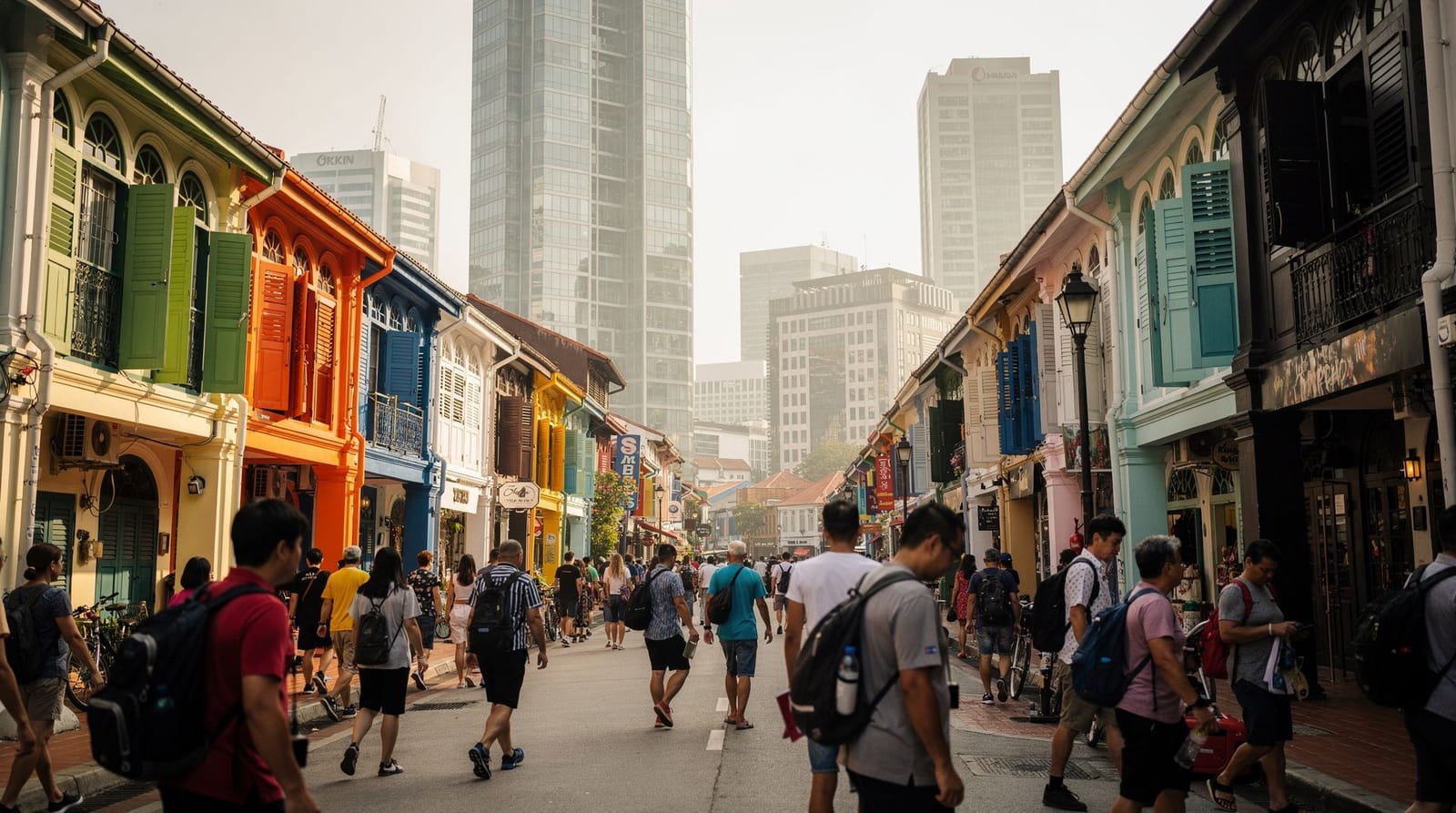
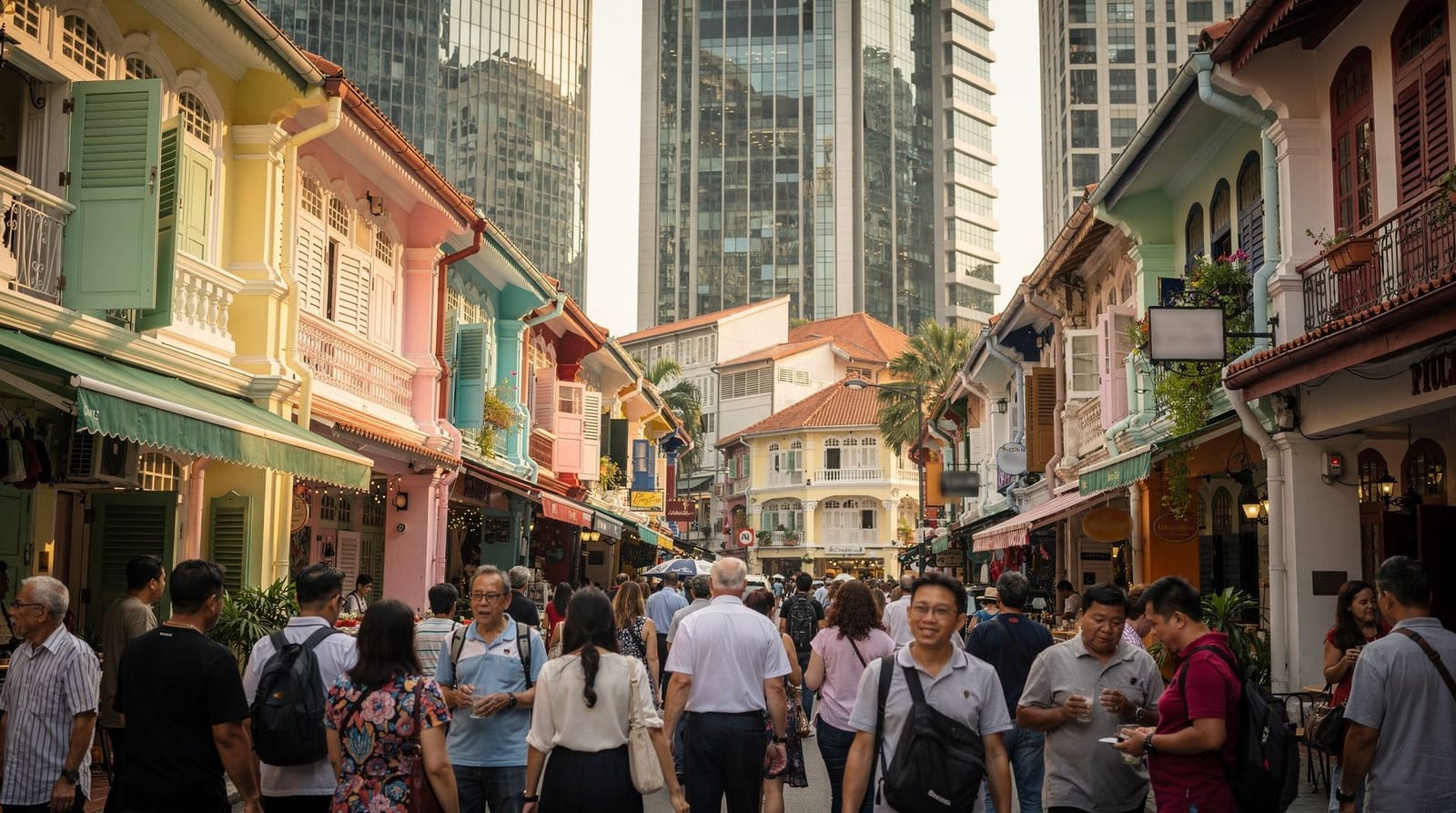
The gem shop / “friendly stranger” scam
How common: Moderately common in Chinatown, Orchard Road, and around Marina Bay. Less common than five years ago but still reported.
How it works: A well-dressed, friendly local (often claiming to be a university student or local businessperson) approaches you and strikes up a seemingly genuine conversation. They express interest in where you are from, offer helpful local tips, and eventually invite you to visit a “family jewellery business” or gem shop — often framed as helping them “practice English” or as a genuine local experience. Inside the shop, high-pressure sales tactics, artificial urgency (“this price is only for today”), and social obligation are used to push overpriced gemstones, jade, or jewellery.
The tell: Genuine locals do not randomly invite tourists to gem shops. If any stranger mentions gems, jewellery, a “family business,” or a “special price for foreign friends,” the conversation is not what it appears to be.
What to do: Politely decline and walk away. No harm will come from saying no — the scam relies entirely on social compliance, not intimidation.
Have you been scammed? If you have paid for something under pressure, report it to the Singapore Police Force (dial 999 or go to a Neighbourhood Police Centre). The Tourist Police (1800-POLICE-1 / 1800-765-4321) specifically handles tourist complaints.
Taxi and transport overcharging
How common: Low for regulated metered taxis, moderate for unlicensed operators.
How it works:
- Unlicensed “taxis”: Near Changi Airport, at the Sentosa entrance, and sometimes outside large hotels, individuals approach visitors offering rides at flat rates — often higher than a metered taxi or Grab would charge.
- Metered taxi refusal: Legitimate metered taxis sometimes refuse shorter trips (especially during rain or peak hours) and suggest a “negotiated flat rate” — usually 20–40% higher than what the meter would show.
- Currency confusion: Drivers occasionally misquote prices in USD when the journey should be in SGD, or “make change” incorrectly for large notes.
The solution: Use Grab for almost everything. The app shows your price before you confirm, it is always cheaper than unlicensed operators, and the driver is rated and accountable. For airport arrival, the official taxi queue at Changi is also fully metered and safe — ignore anyone approaching you in the arrivals hall offering rides.
See Getting around Singapore and Grab and taxis in Singapore for full transport guidance.
Fake free show tickets
How common: Moderately common near Marina Bay Sands and Gardens by the Bay.
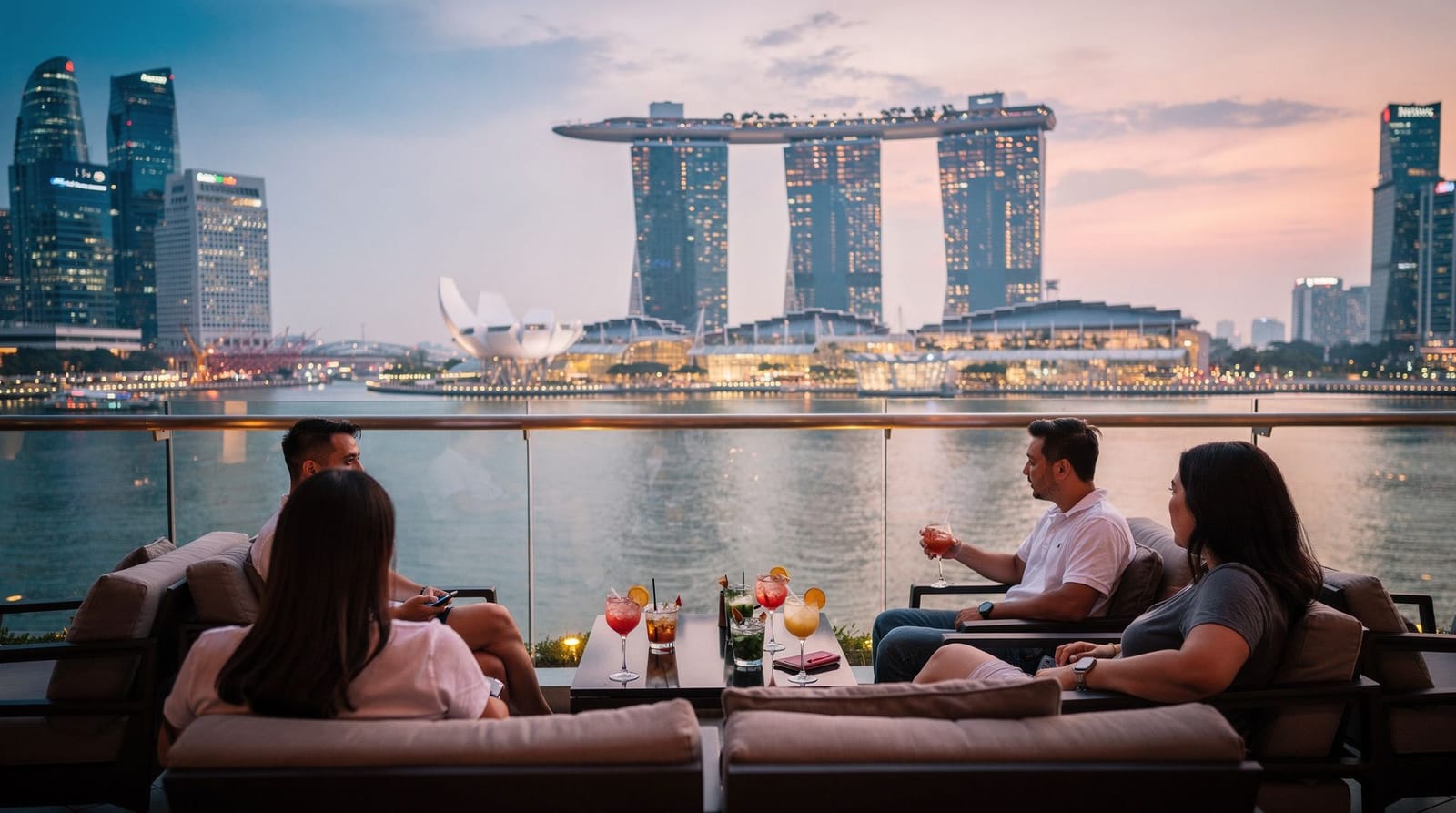
How it works: Touts approach tourists near MBS or Gardens by the Bay, offering “tickets” to Spectra (the Marina Bay Sands light show) or Garden Rhapsody (the Supertree Grove sound and light show) at a fee — sometimes SGD 5–20 per person.
The reality: Both Spectra and Garden Rhapsody are completely free to attend. No ticket is required or exists. Anyone selling tickets to these shows is selling you nothing.
- Spectra runs nightly at the Event Plaza, Marina Bay Sands waterfront. No booking needed, just show up. See Spectra light show at Marina Bay Sands for show times.
- Garden Rhapsody runs nightly at Supertree Grove, Gardens by the Bay. Also completely free. See Garden Rhapsody at Gardens by the Bay: free show guide 2026 for times.
What to do: Decline and walk away. Report to security or police if the person is aggressive.
Singapore: Gardens by the Bay bundle entry ticket Singapore: Marina Bay Sands observation deck e-ticketOverpriced “tourist” restaurants
How common: Common in very high-traffic tourist zones (Clarke Quay, Chinatown tourist strip, near Raffles).
How it works: Restaurants near major tourist attractions sometimes have no prices displayed, use menu “market rates” that are revealed at payment, or apply undisclosed service charges that significantly inflate the bill. Dishes that cost SGD 8–12 in a hawker centre are sometimes sold for SGD 35–60 in these restaurants with no corresponding quality increase.
The protection: Always check for prices before ordering. Ask if service charge and GST are included. The best protection against restaurant overcharging is simply eating at hawker centres — authentic, cheap, and impossible to overcharge you because food is pre-priced at the stall. See Best hawker centres in Singapore and How to avoid tourist restaurants in Singapore (and where to eat instead) for full guidance.
Counterfeit goods and “replica” shops
How common: Moderate, mainly in Bugis Street market and some parts of Chinatown.
How it works: Market stalls sell counterfeit branded goods (bags, watches, electronics) openly or from under-the-counter displays. The risk is not being sold poor quality items — you know what you are buying — but Singapore customs law. Importing counterfeit goods is illegal in Singapore; being caught with replica luxury goods can result in fines.
The nuance: This is less of a “scam” and more of a legal risk you opt into. The goods are cheap for a reason. The honest assessment: avoid them.
Timeshare and holiday club pitches
How common: Occasional, mainly targeting visitors in malls or near tourist sites.
How it works: Promoters offer free gifts, restaurant vouchers, or “lucky draw prizes” in exchange for attending a “short presentation.” The presentation is a timeshare or holiday club pitch lasting 2–4 hours, with increasing pressure to sign contracts.
The tell: The gift offer is unexpectedly generous (free dinner for two, free attraction tickets). Nothing in Singapore is that free from a stranger.
What to do: Decline any unsolicited offer involving a “short presentation.” If already in the room, you have the right to leave at any time — the contract is not binding in Singapore if you did not sign under duress.
Online tour scams
How common: Low but increasing, especially via Instagram and WhatsApp.
How it works: Fake or low-quality tour operators advertise via social media, collect payment via bank transfer or PayNow, and either fail to deliver the tour or provide something dramatically inferior to what was shown.
Protection: Book only through licensed platforms — GetYourGuide, Klook, or direct with Singapore Tourism Board-registered operators. The STB licensing requirement provides legal protection. Always pay by credit card when possible (chargeback protection).
Money changing: where to avoid and where to go
Not a scam but worth knowing: Singapore has excellent licensed money changers who offer good rates — the best are at Mustafa Centre (Little India, open 24 hours), People’s Park Complex (Chinatown), and Raffles Place. Airport money changers and hotel exchange desks consistently offer worse rates (sometimes 8–12% below street rates).
Zero-commission booths that advertise competitive rates sometimes compensate via a large spread — always compare the rate on the board, not the headline “no commission” claim.
How Singapore protects tourists
Singapore’s Tourist Police Unit operates 24/7. The STB (Singapore Tourism Board) actively monitors visitor complaints. A few mechanisms worth knowing:
- STB Licensed Operators List: Check stb.gov.sg to verify tour operators
- CASE (Consumers Association of Singapore): Handles complaints about overcharging and unfair practices — case.org.sg
- Police emergency: 999 (Singapore Police Force operates fastest-response times in the region)
If you feel you have been defrauded, reporting quickly matters — Singapore’s small geographic size means police response is fast.
What Singapore is genuinely safe from
To provide accurate perspective: Singapore has essentially no street crime targeting tourists. Muggings, bag snatching, and violent crime against visitors are extremely rare — substantially lower than any major Western city. Walking at night in any neighbourhood including Clarke Quay after midnight is safe. The MRT is safe at all hours. Leaving valuables on a table while you join a hawker queue is normal behaviour for locals (the “choping” system — reserving seats with a tissue packet). That level of ambient safety is real.
The honest framing: Singapore’s main tourist risks are social manipulation (gem scams, timeshare pitches) and price overcharging — not physical danger. That is a very good problem set to have.
Planning links
Before visiting attractions, check our honest assessments: Singapore tourist traps, What to skip in Singapore, and Overpriced attractions in Singapore.
For transport specifically, Grab and taxis in Singapore and Singapore MRT guide: how to use it, pay for it, and love it cover how to move around without overpaying.
For budget planning, see Singapore travel costs and Singapore on a budget.
Newer patterns worth knowing about
Scam patterns evolve, and a couple of more recent variants are worth flagging beyond the classics above. QR code payment scams occasionally appear on parking meters or informal stalls — a sticker with a fraudulent QR code placed over the legitimate one. Before scanning, check that the code looks embedded rather than stuck on, and that the merchant name matches what you expect on the payment confirmation screen.
Fake booking confirmation emails for attractions or transfers, mimicking real operators’ branding, have also been reported — always book directly through the operator’s official site or a recognised platform like GetYourGuide rather than clicking links in unsolicited emails. Neither pattern is common, but both are quick to check and cost nothing to be alert to — the general rule with any newer scam variant is the same as with the older ones: if a payment method or offer feels slightly off from what you’d expect, pause and verify through an official channel before proceeding, rather than assuming Singapore’s overall safety extends automatically to every digital interaction.
A quick pre-trip checklist
Five minutes before you land removes most of the risk described above:
- Save the Tourist Police number (1800-765-4321) and emergency 999 in your phone.
- Install Grab and link a card before you need a ride urgently.
- Decide in advance that any “free” ticket, gift, or invitation from a stranger gets a polite no — deciding in the moment, mid-conversation, is where the gem and timeshare scams actually work, since the whole design of those pitches relies on you not having already made the decision.
- Know that Spectra and Garden Rhapsody are free — see Spectra light show at Marina Bay Sands and Garden Rhapsody at Gardens by the Bay: free show guide 2026 so you recognise a ticket tout instantly.
- Default to hawker centres for food — see Best hawker centres in Singapore — where pre-posted prices make overcharging structurally impossible.
If something does go wrong
Report promptly — Singapore’s small size and efficient police response mean quick reporting genuinely helps. For a card payment, contact your issuer immediately for a possible chargeback. For a cash loss, file a report at the nearest Neighbourhood Police Centre or call 999, and separately lodge a complaint with CASE (Consumers Association of Singapore) if a business was involved. None of this requires fluent local knowledge — Tourist Police staff handle visitor reports daily and the process is straightforward, and most travellers who do report something find the response faster than they expected from a foreign police system. For broader trip-planning context on budgeting around the rare bad experience, see Plan a trip to Singapore and Singapore for first-timers.
Frequently asked questions about scams in Singapore
Can I get my money back if I was scammed in Singapore?
If you paid by credit card, contact your card issuer immediately for a chargeback — success rates are good if you act quickly. For cash transactions, report to the Singapore Police Force (999 or nearest Neighbourhood Police Centre) and to CASE (Consumers Association of Singapore). Singapore’s legal system takes consumer fraud seriously and some victims do get refunds, though cash recovery is slower and not guaranteed.
Are there fake MRT machines at Changi Airport?
No. MRT ticket machines at Changi and throughout Singapore are all official and tamper-protected. The risk at Changi is not fake machines but currency exchange at poor rates and unlicensed transfer operators in the arrivals hall — not the MRT itself.
Is Chinatown safe or full of scams?
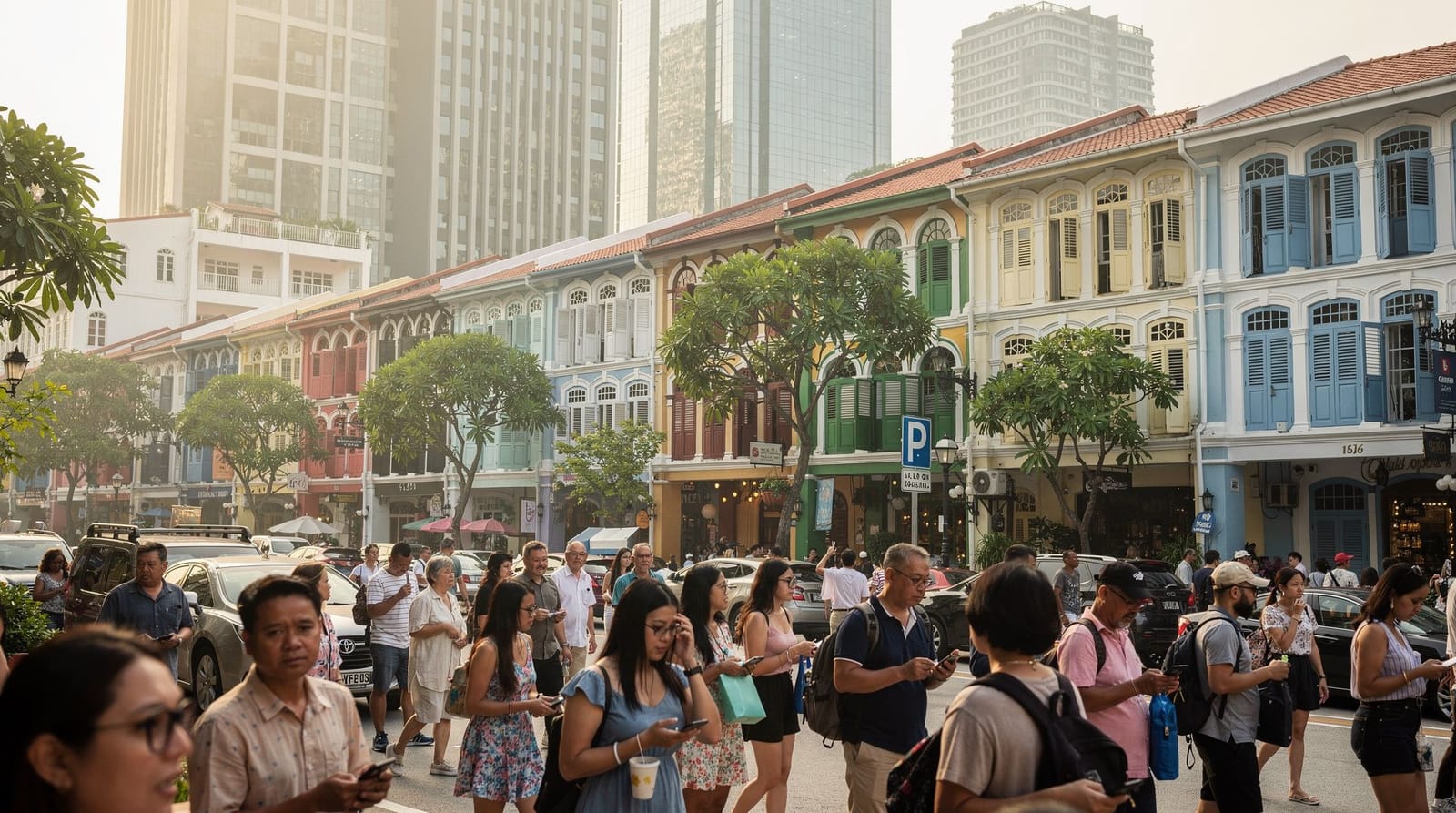
Chinatown is safe and mostly genuinely good value for food, temple visits, and shopping. The scam risk is concentrated in the gem shop / “friendly stranger” category described above, and in a few restaurants on the main tourist strip (Pagoda Street, Temple Street) that have higher prices than the surrounding area. Eat at the Chinatown Complex Food Centre (hawker), visit the temples, explore freely — the area is excellent.
Are there scams targeting solo women travellers in Singapore?
Singapore is genuinely one of the safest cities for solo female travellers globally. Harassment is rare, the MRT and streets are safe at night, and Grab eliminates most transport risk. The gem scam and timeshare scams target both genders equally. Our Solo travel Singapore guide covers specifics.
What is “chope” and is it a scam?
“Chope” (to chope a seat) is the local practice of reserving hawker centre seats by leaving a packet of tissues on the table before getting food. It is a cultural practice, not a scam — the tissues are yours to take (Singaporeans deliberately use cheap tissue packs for this purpose). Do not mistake a choped table for an available one.
Are attraction passes like Go City or Sentosa passes legitimate?
Yes — these are legitimate products sold through regulated platforms. The question is whether they represent value for your specific itinerary. See Singapore attraction passes compared for an honest break-even analysis before buying any pass.
Is Grab safe to use in Singapore?
Grab is Singapore’s dominant rideshare platform, well-regulated, and safe. All drivers are licensed and rated. Payment is usually through the app (card or GrabPay), eliminating cash disputes. It is the best transport option for most tourists after the MRT. See Grab and taxis in Singapore.
Top experiences
Bookable activities with verified prices and instant confirmation on GetYourGuide.