Katong & Joo Chiat
Katong and Joo Chiat are Singapore's Peranakan heartland — pastel shophouses, laksa from the source, and a living culture richer than any museum exhibit.
Singapore: Katong local food and city highlights tour
Duration: 3h
Quick facts
- Character
- Peranakan heritage quarter, pastel shophouses, seafood and laksa
- MRT access
- Dakota (Circle Line) or Paya Lebar (East-West/Circle) — 10–15 min walk or short bus
- Key streets
- East Coast Road, Joo Chiat Road, Koon Seng Road
- Signature dish
- Katong laksa — short thick noodles, coconut-rich broth, cockles
- Heritage
- Peranakan (Straits Chinese/Baba-Nyonya) community, c. 1900–1940s
Katong and Joo Chiat are the same neighbourhood referred to by two overlapping names — Katong being the area around East Coast Road and the original Peranakan residential district, Joo Chiat being the commercial and shophouse corridor that runs north from there. Together they form what most Singaporeans consider the heart of Peranakan culture in the city — more lived-in and genuine than the Peranakan Museum in the civic district, which is excellent but necessarily frozen.
The Peranakan community — also called Baba-Nyonya or Straits Chinese — developed from intermarriage between early Chinese migrants and Malay women, largely between the 17th and early 20th centuries. The resulting culture is a synthesis: Malay language and dress conventions mixed with Chinese ancestor worship and food traditions, producing cuisine, architecture, and domestic material culture that belongs fully to neither source. Katong is where this culture is most visibly alive.
| Where | East Coast Road / Joo Chiat Road, eastern Singapore |
| Cost | Free to walk; laksa and hawker meals SGD 6–12 |
| Time needed | Half a day; a full day with a food or culture tour |
| Getting there | Dakota or Paya Lebar MRT, 10–15 min walk |
| Best time | Morning for food; covered walkways make midday manageable |
The shophouses of Koon Seng Road
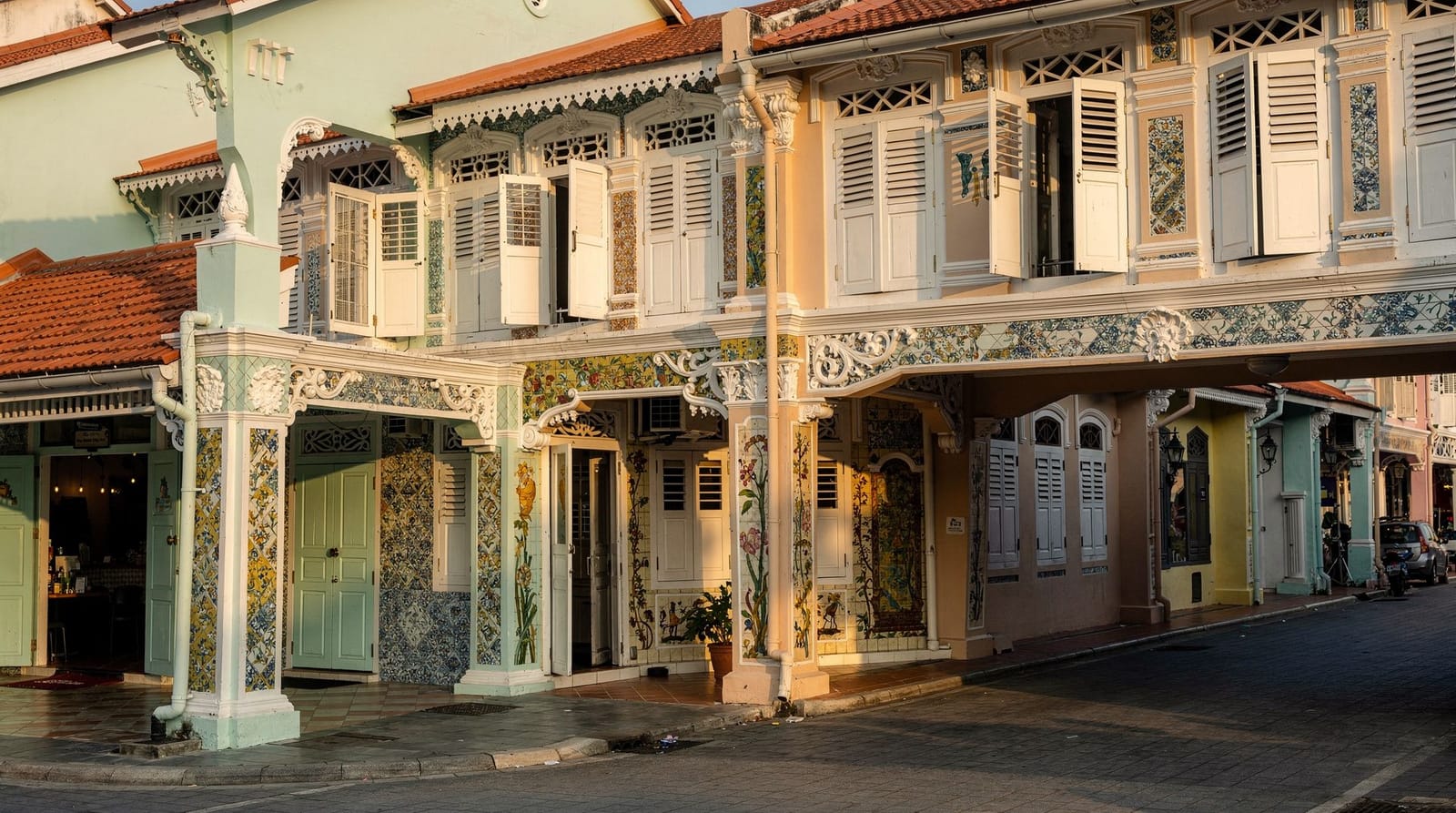
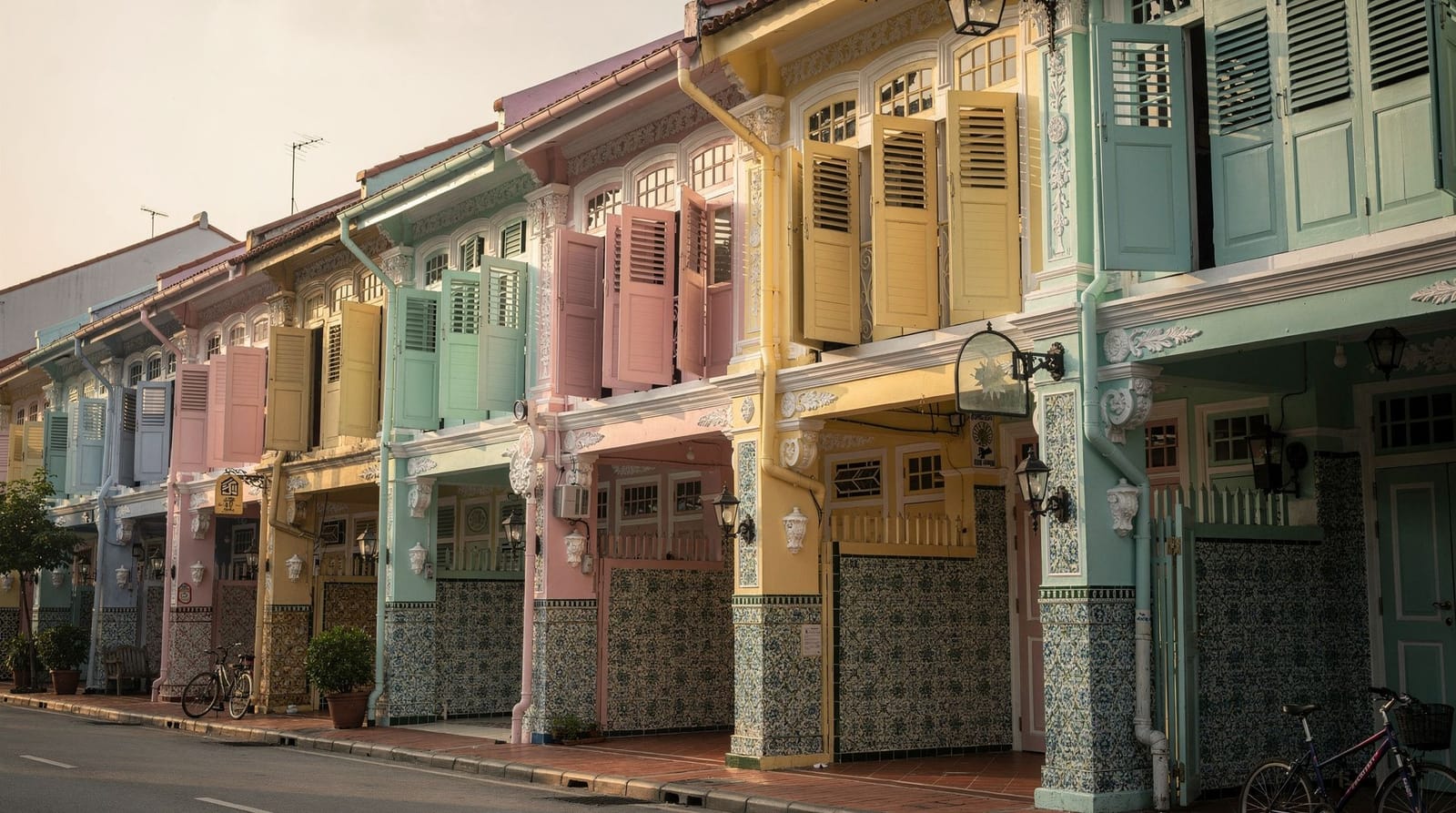
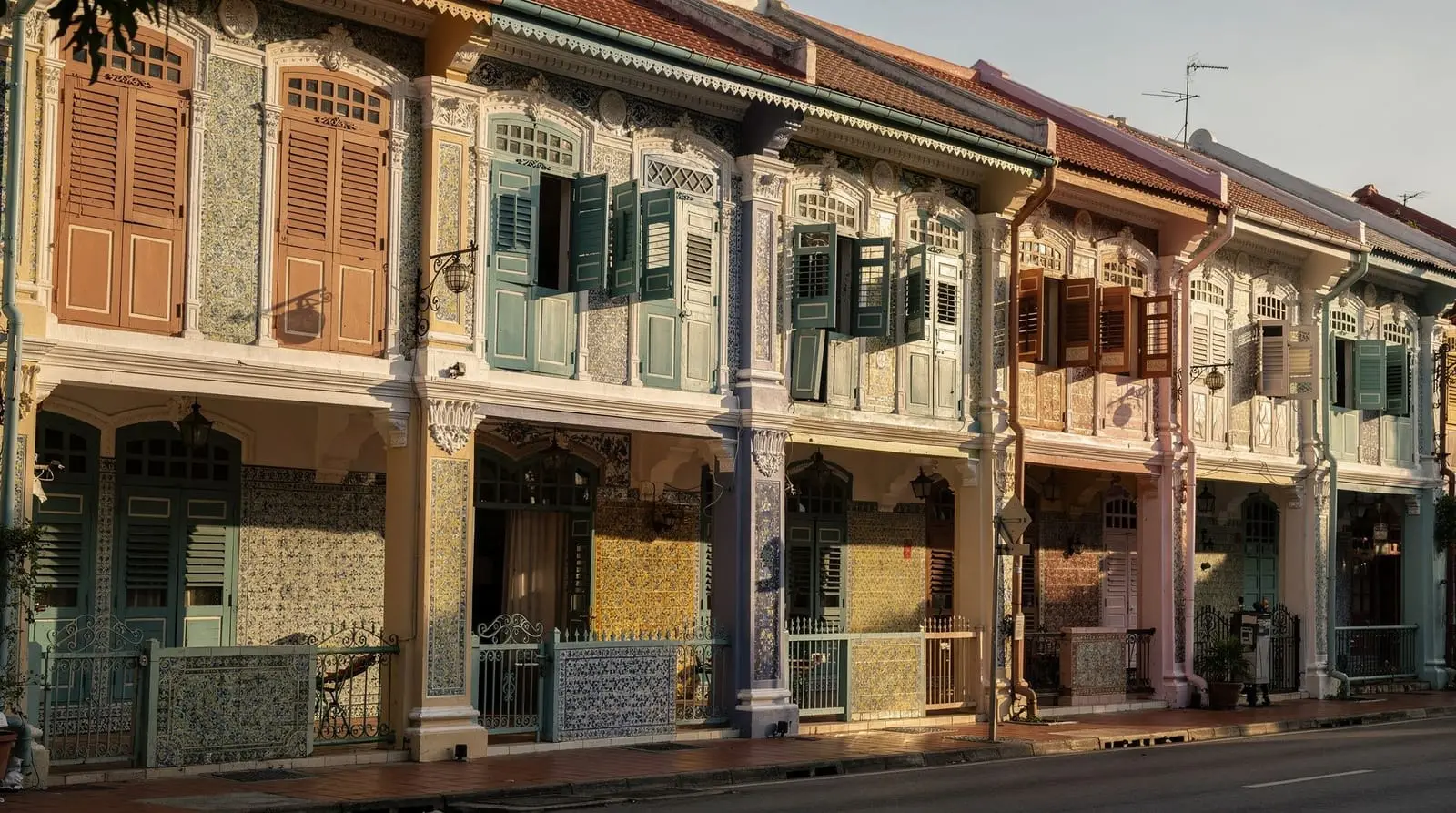
The most photographed street in the neighbourhood is Koon Seng Road, a short residential block lined with Peranakan shophouses in carefully maintained pastel colours — mint green, yellow ochre, coral, powder blue. The facades feature ornate plasterwork: floral motifs, Chinese mythological figures, and geometric borders layered above each other in a style that is wholly distinct from anything you find in China or in standard Malay kampong architecture.
These are private residences; some have been meticulously restored, others show the pragmatic compromises of a building that has to function as a family home. The best light for photographs is in the morning between 09h and 11h when the sun is low and directly illuminates the north-facing facades. See the Haji Lane photography guide for more context on Singapore’s photogenic streets — Koon Seng Road is a comparable but less-crowded alternative.
The Peranakan culture guide has historical background on the Baba-Nyonya community and what the shophouse architecture represents in terms of the synthesis of Chinese and Malay building traditions.
Katong laksa — where to eat it
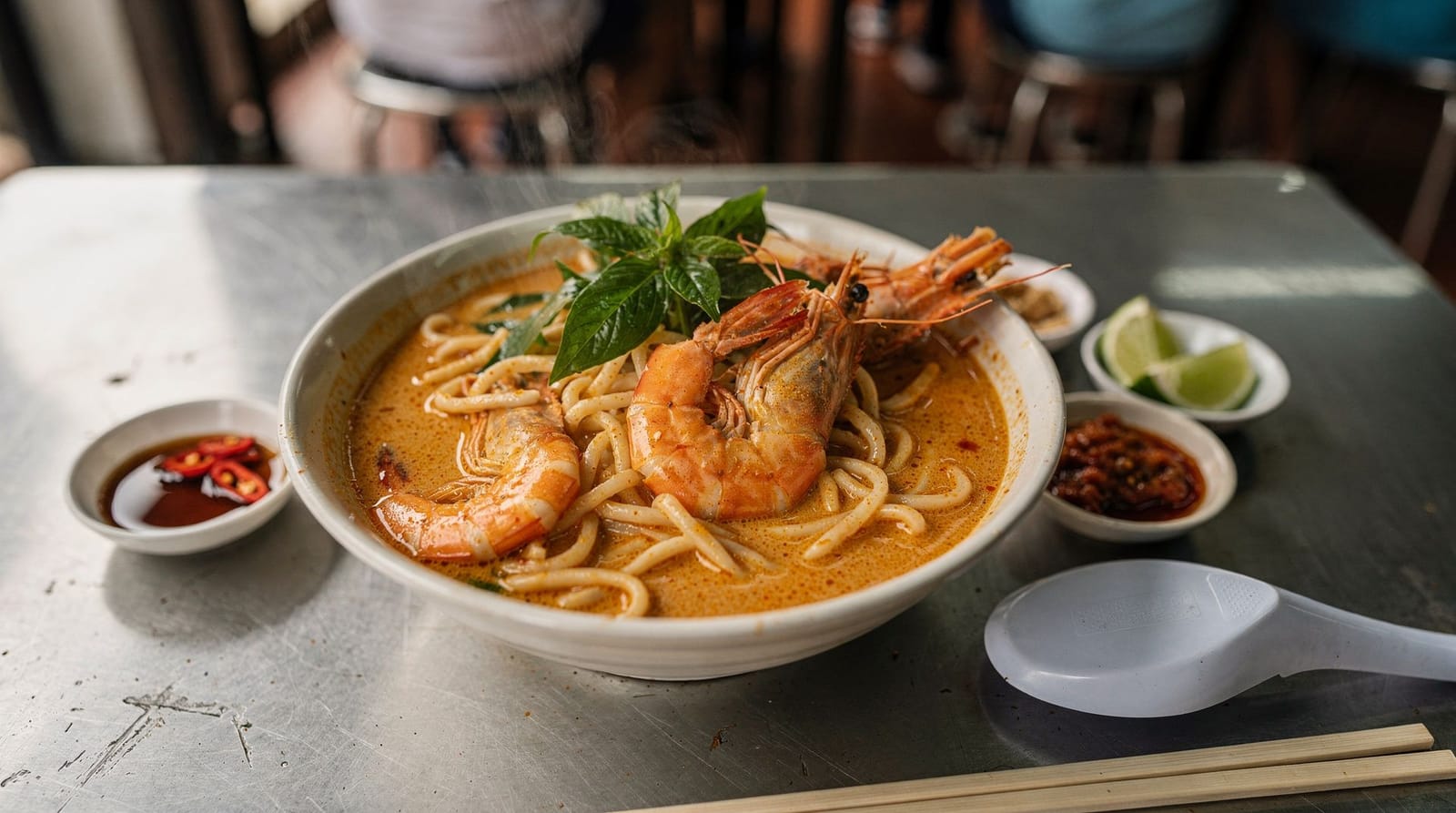
Katong laksa is a version of Singapore’s national dish with shorter, thicker noodles (cut so they can be eaten with a spoon rather than chopsticks) in a richer coconut-and-prawn-paste broth, finished with cockles. The dish originated here; eating it in Katong is substantially better than eating it in a food court near the MRT.
The ongoing debate about which stall is the original is genuinely contested — 328 Katong Laksa (East Coast Road), Janggut Laksa (Queensway Shopping Centre, the original outlet), and Marine Parade Laksa all claim lineage. 328 Katong Laksa is the most accessible for visitors: the stall on East Coast Road near Ceylon Road, open from around 09h. A bowl costs SGD 6–8. The standard is consistently high; the queue is manageable on weekdays.
The laksa guide covers the varieties available across Singapore and is worth reading before you decide which stall to commit to.
Katong local food and city highlights tour — 3-hour guided food walkEast Coast Road and the food strip
East Coast Road is the main artery, and its appeal is almost entirely food-related. Beyond Katong laksa, the strip has:
Kim Choo Kueh Chang — Peranakan rice dumplings (bak chang) and kueh (traditional cakes). A family business since 1945; the shop on East Coast Road is part deli, part mini-museum of Peranakan domestic objects. The kueh on sale (pandan kueh, ondeh-ondeh, kueh lapis) are worth buying even if you don’t know what you’re looking at.
Charlie’s Corner / Guan Hoe Soon — Guan Hoe Soon (Joo Chiat Place) is one of Singapore’s oldest Peranakan restaurants (opened 1953), run by the same family. Ayam buah keluak (chicken with black Indonesian nut), babi pongteh (braised pork), and otak-otak are the dishes to order. Dinner around SGD 25–35 per person. Lunch is cheaper and less chaotic.
The Cendol and Ice Kachang stalls on East Coast Road near the intersection with Ceylon Road — refreshment stops in the heat.
Joo Chiat Road
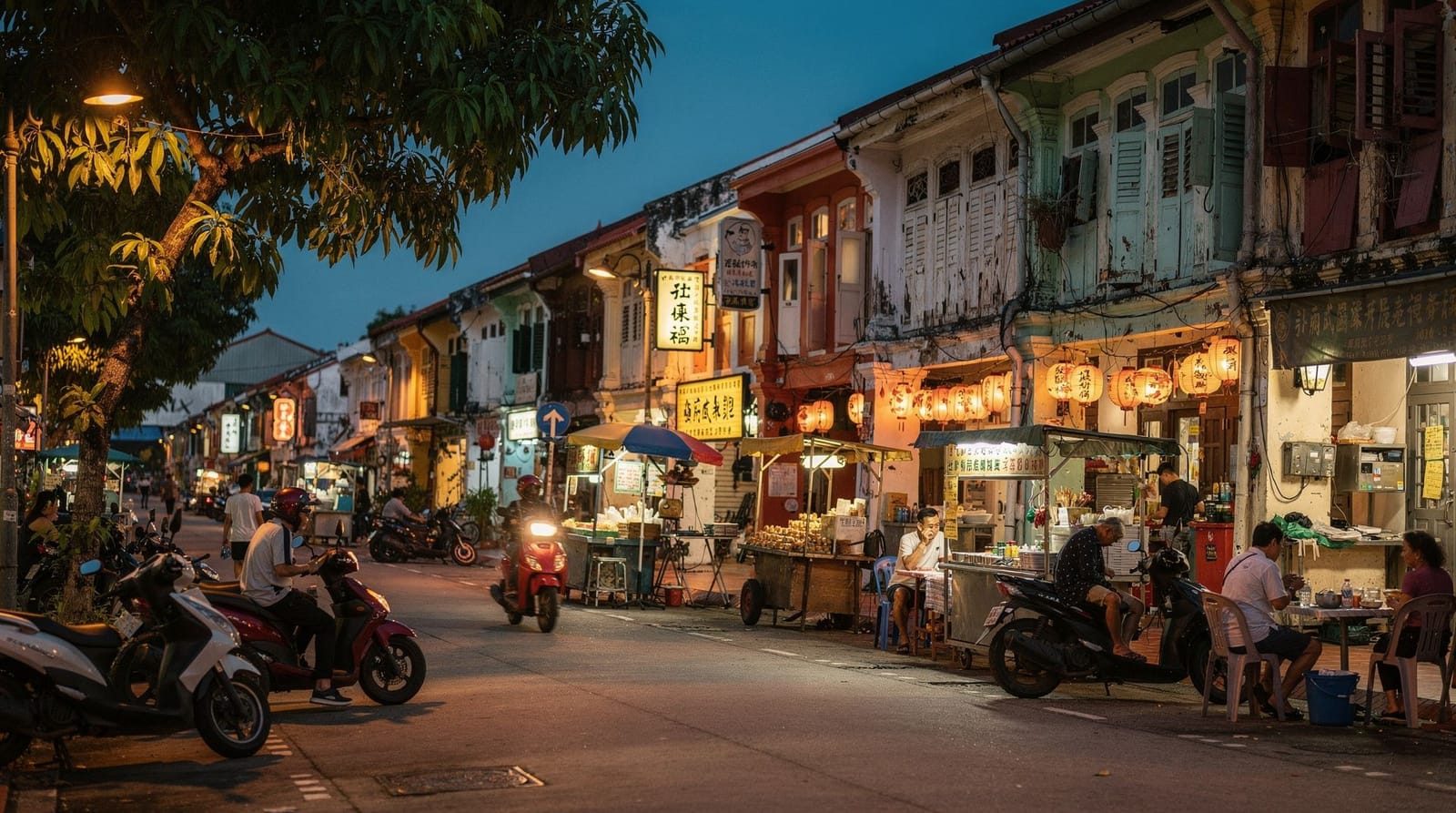
Running north from East Coast Road, Joo Chiat Road is a longer, less polished version of the same shophouse culture. It is slightly edgier, less photographed, and has a wider range of businesses — Vietnamese and Indonesian restaurants, a few bars, older provision shops still selling dried goods from large sacks. The conservation shophouses here are in varying states of repair; some beautifully restored, others showing honest age.
Worth walking as a contrast to the more curated East Coast Road strip. The neighbourhood feels more like a working local street and less like a heritage set.
Peranakan culture tours
The most efficient way to cover both the food and the cultural context is a guided tour. The food-focused options give you 4–6 tasting stops across the neighbourhood’s best stalls; the culture-focused versions include visits to a Peranakan-furnished private home and explanations of the material culture (porcelain, embroidery, beadwork).
Peranakan culture tour — guided cultural experience in KatongThe combined culture and cuisine tour goes deeper into both:
Peranakan culture, cuisine, and hidden treasures tourFor a more active option, the food and bike tour covers Katong’s streets at a pace that allows more ground and more stalls in the same time:
Food and bike tour through the Katong districtGetting to Katong and Joo Chiat
The MRT situation is imperfect — this is not a neighbourhood designed around a single MRT exit. Options:
Dakota MRT (Circle Line) — the closest for the Joo Chiat Road end; 10–15 min walk to East Coast Road.
Paya Lebar MRT (East-West/Circle Line interchange) — convenient for the northern end of Joo Chiat Road; 15 min walk to the main Katong food strip.
Bus: Buses 33 and 16 on East Coast Road are the most useful. Grab drops you directly on East Coast Road.
The getting around Singapore guide covers MRT and bus options in more detail.
Connecting from Katong
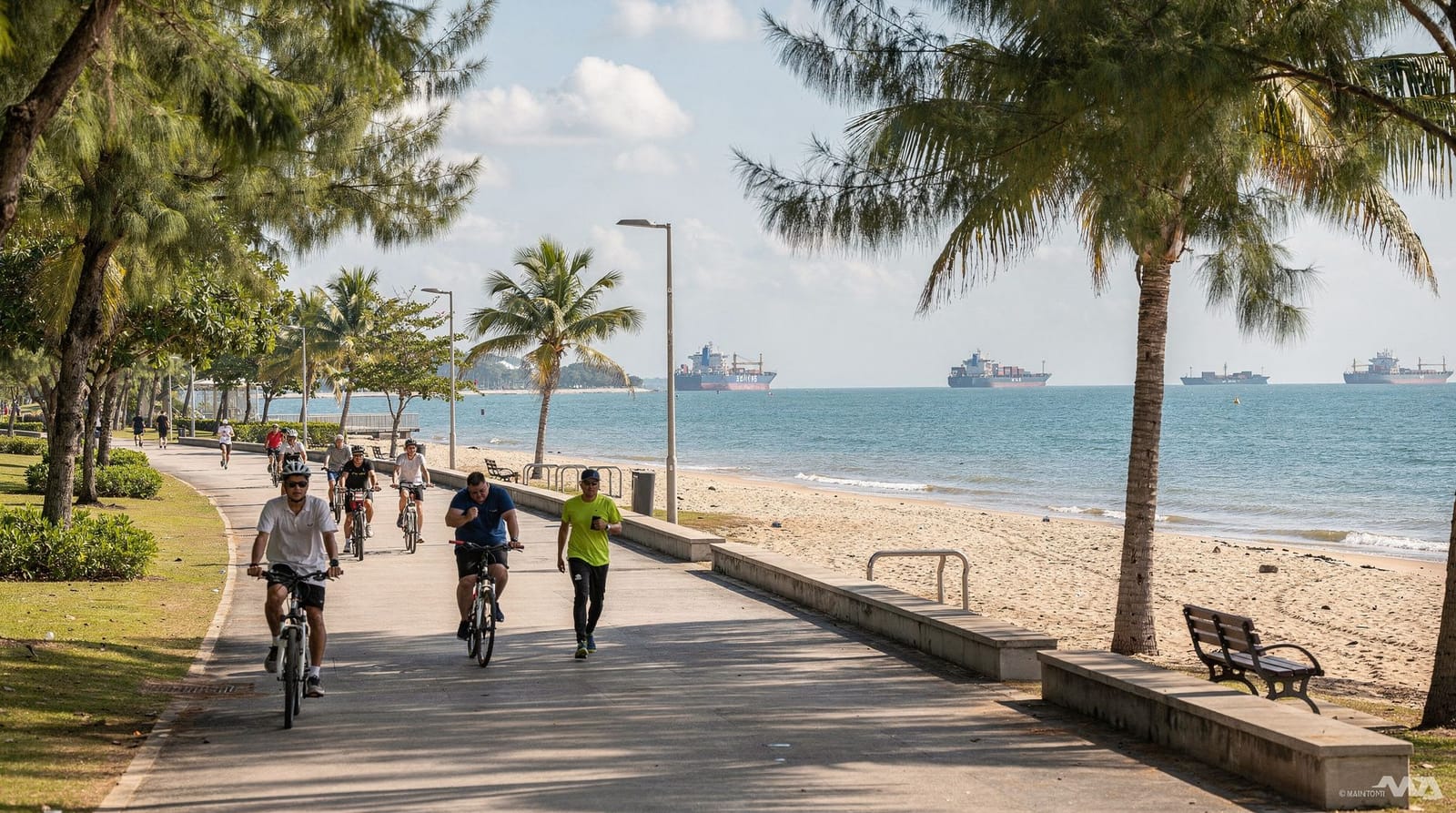
From Katong, East Coast Park is a 10-minute taxi or bike ride south — a natural afternoon extension after a Katong food morning. In the opposite direction, Geylang is 2–3 km north and has its own distinct food culture.
For a broader east Singapore itinerary, the Katong Peranakan walk blog is a recent first-person account with recommended sequencing.
Choosing between a self-guided walk and a tour
Katong rewards both approaches differently. Walking it yourself with this guide costs nothing beyond food and gives you full control over pace — useful if you already know you want to eat at 328 Katong Laksa and Guan Hoe Soon and photograph Koon Seng Road at your own speed. A guided tour adds context that is hard to get independently: which stalls are genuinely the best on a given day, historical explanation of the shophouse architecture, and in the case of the culture-focused tours, access to a Peranakan-furnished private home that you cannot simply walk into.
| Approach | Best for | Typical cost | Time |
|---|---|---|---|
| Self-guided walk | Independent travellers, food-focused visits | Free (+ food SGD 15–30) | Half a day |
| Food tour | First-time visitors wanting curated tastings | Tour price + included food | 3 hours |
| Culture + cuisine tour | Deeper Peranakan history interest | Tour price, higher | 3–4 hours |
| Bike tour | Covering more ground actively | Tour price | 2–3 hours |
Frequently asked questions about Katong and Joo Chiat
Is Katong worth visiting if I’m only in Singapore for 3 days?
It is a strong half-day option if you are interested in food and in seeing a neighbourhood that functions as a genuine community rather than a tourist attraction. The laksa and the shophouses alone justify the journey. For a short trip, it competes with Chinatown and Little India for the “cultural neighbourhood” slot — it is less dramatic but more authentically local.
What is the difference between Katong and Joo Chiat?
They overlap. Katong typically refers to the East Coast Road and the beachfront residential area (the actual coastline has been absorbed by land reclamation, but the name persists). Joo Chiat refers to the commercial shophouse corridor running north from East Coast Road. The Peranakan heritage is present in both; the food is better on East Coast Road.
Is Katong laksa really the best in Singapore?
The Katong laksa style is a distinct version — richer, spoon-served, with more coconut than other variants. Whether it is “the best” is a personal preference question, but 328 Katong Laksa is consistently among the top-rated in any Singapore food ranking. The laksa guide covers the style differences.
When do the Peranakan restaurants open?
Most open for lunch from 11h30 or noon; Guan Hoe Soon opens at 11h. Kueh shops like Kim Choo open from around 09h. For the hawker laksa stalls, arrive by 10h to avoid queues.
Is the neighbourhood safe and easy to navigate?
Yes — very safe, very walkable. The streets are flat, most shophouse corridors are covered, and the neighbourhood is small enough that you cannot get genuinely lost. Grab works reliably for entry and exit.
What is otak-otak?
A Peranakan spiced fish paste grilled in banana or coconut leaf — essentially a fish cake with coconut milk, chilli, lemongrass, and turmeric inside a charred leaf parcel. Eaten as a snack or side dish. You can buy it from several stalls on East Coast Road for SGD 1–2 per piece. The must-try dishes Singapore guide covers this and the other essential dishes.
Should I take a food tour or eat independently?
Both work well. Independent eating is cheaper and lets you set your own pace, and this guide covers the key stalls by name. A food tour is worth it if you have limited time and want a curated 4–6 stop route without research, or if you specifically want the cultural context that comes with a guided visit to a Peranakan home.
How do I get from Katong to Changi Airport?
Katong sits roughly midway between the city centre and Changi, making it a convenient stop on the way to or from a flight. By taxi or Grab, the airport is about 15–20 minutes; by MRT, walk or bus to Paya Lebar and take the East-West Line, roughly 30–35 minutes total including the connection.
Top experiences
Bookable activities with verified prices and instant confirmation on GetYourGuide.