Katong and Joo Chiat: the Peranakan walk that takes the whole morning
The Katong that most Singapore visitors don’t find — the one that’s not a list of cafes or a fast walk past colourful shophouses for photographs — takes a morning to discover, and the discovery happens slowly, the way neighbourhoods always reveal themselves when you’re moving at pace rather than walking.
Katong and its adjacent district Joo Chiat sit about 4 kilometres east of the city centre, reachable by MRT (Dakota or Mountbatten on the Circle Line) or a SGD 12–15 Grab from Marina Bay. The neighbourhood is the heart of Peranakan Singapore — the culture that emerged from the intermarriage of Chinese immigrants with Malay women in the 15th through 19th centuries, producing a hybrid civilisation with its own language (Baba Malay), cuisine (Nonya food), and material culture (the lacquered furniture, the beaded shoes, the layered ceramic plates) that is unlike anything else in Southeast Asia.
| Where | Katong / Joo Chiat, 4km east of the city centre |
| Getting there | Dakota or Mountbatten MRT (Circle Line); SGD 12–15 Grab from Marina Bay |
| Time needed | A full morning, 8am–1pm at an unhurried pace |
| Cost | Mostly free walking; laksa SGD 6–8, kueh SGD 1.20–2.50 |
| Best time | Before 9am for the light and to beat the laksa queue |
Where to start and what to eat first
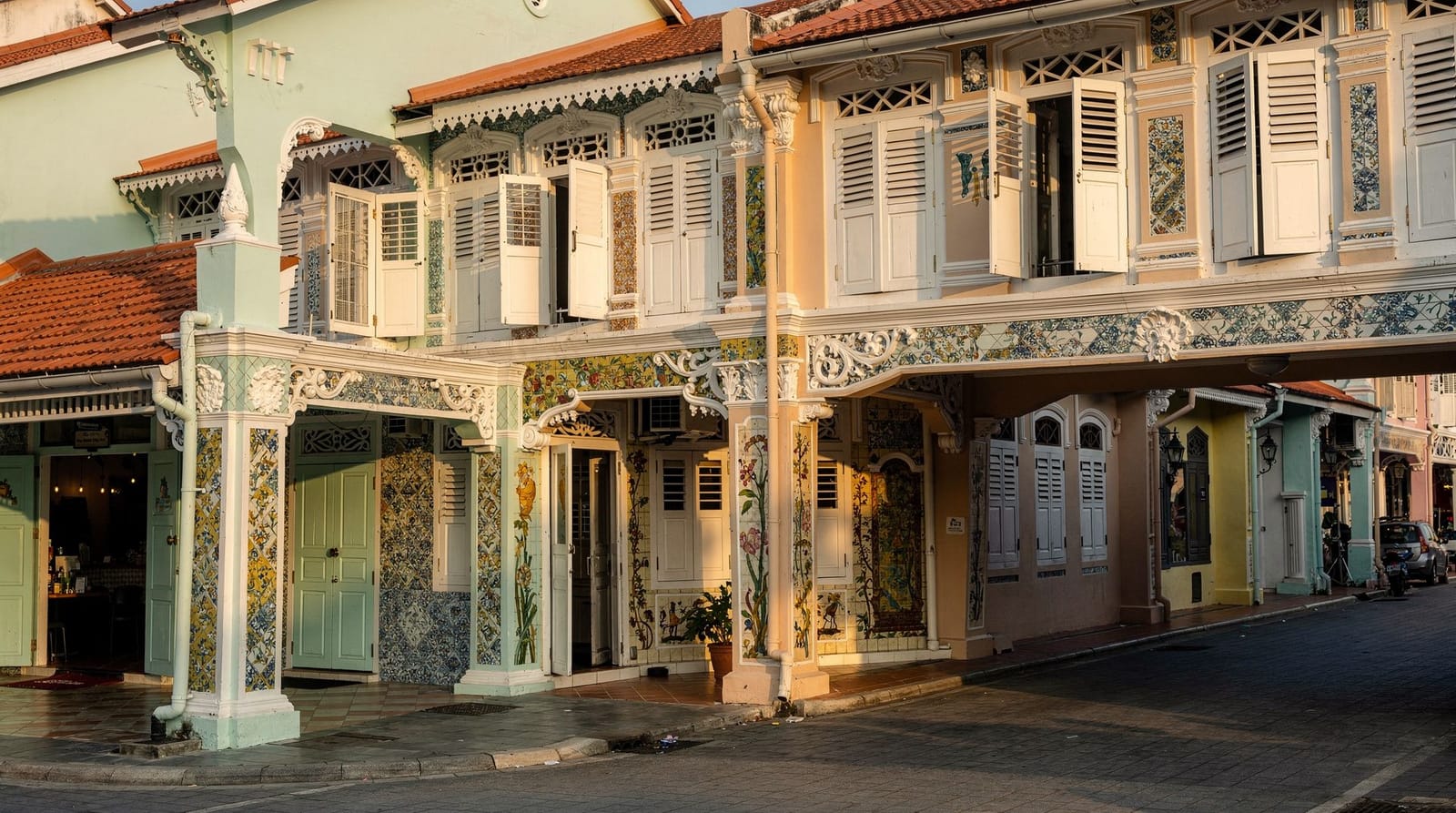
Start at East Coast Road between Joo Chiat Road and Ceylon Road, and start early — before 9am if possible. The morning light in Katong hits the north-facing shophouses at an angle that makes the terracotta and jade-coloured tiles look almost luminous, and the neighbourhood before 10am has a pace that the midday tourist version doesn’t.
Breakfast is non-negotiable here, and the choice narrows to one thing: laksa.
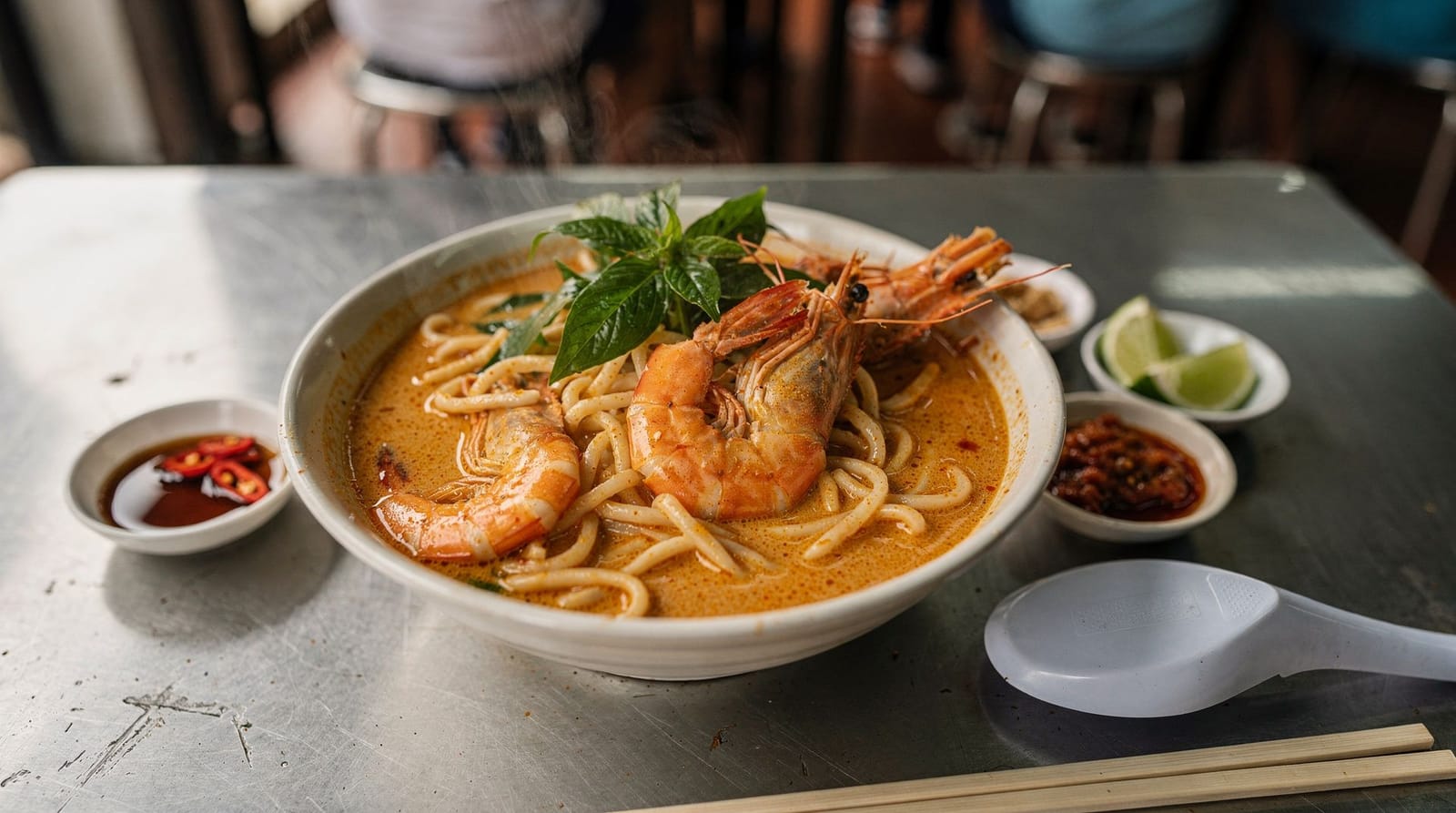
328 Katong Laksa on East Coast Road is the neighbourhood’s most famous stall — a Michelin Bib Gourmand institution that has been in the same family and on the same street for decades. Katong-style laksa differs from Hawker Centre laksa in one specific detail: the noodles are cut short, making the dish edible with just a spoon rather than requiring chopsticks. The broth — coconut milk-based, turmeric-yellow, with cockles, shrimp, and fish cake — is richer and rounder than the version you get elsewhere. SGD 6–8 for a bowl. Queue approximately 10–20 minutes on weekday mornings. The laksa guide compares Katong-style against the other regional versions if you want the fuller picture before committing your one laksa meal of the day.
There’s a second classic option nearby: Janggut Laksa (also called Original Katong Laksa) at Roxy Square, which has a loyal following that argues its broth is the more complex version. This is one of those genuine local debates with no correct answer — they are different and both excellent.
After laksa: kueh. The Peranakan cake tradition produces a category of sweets — ondeh-ondeh (pandan dough filled with palm sugar, rolled in coconut), kueh lapis (steamed layered rice cake, each layer a different colour), ang ku kueh (sticky rice cake with bean paste filling) — that are distinct from any other Southeast Asian dessert culture. The bakeries along East Coast Road sell them from early morning. SGD 1.20–2.50 each.
Singapore: food and bike tour — Katong districtThe shophouses and what you’re looking at
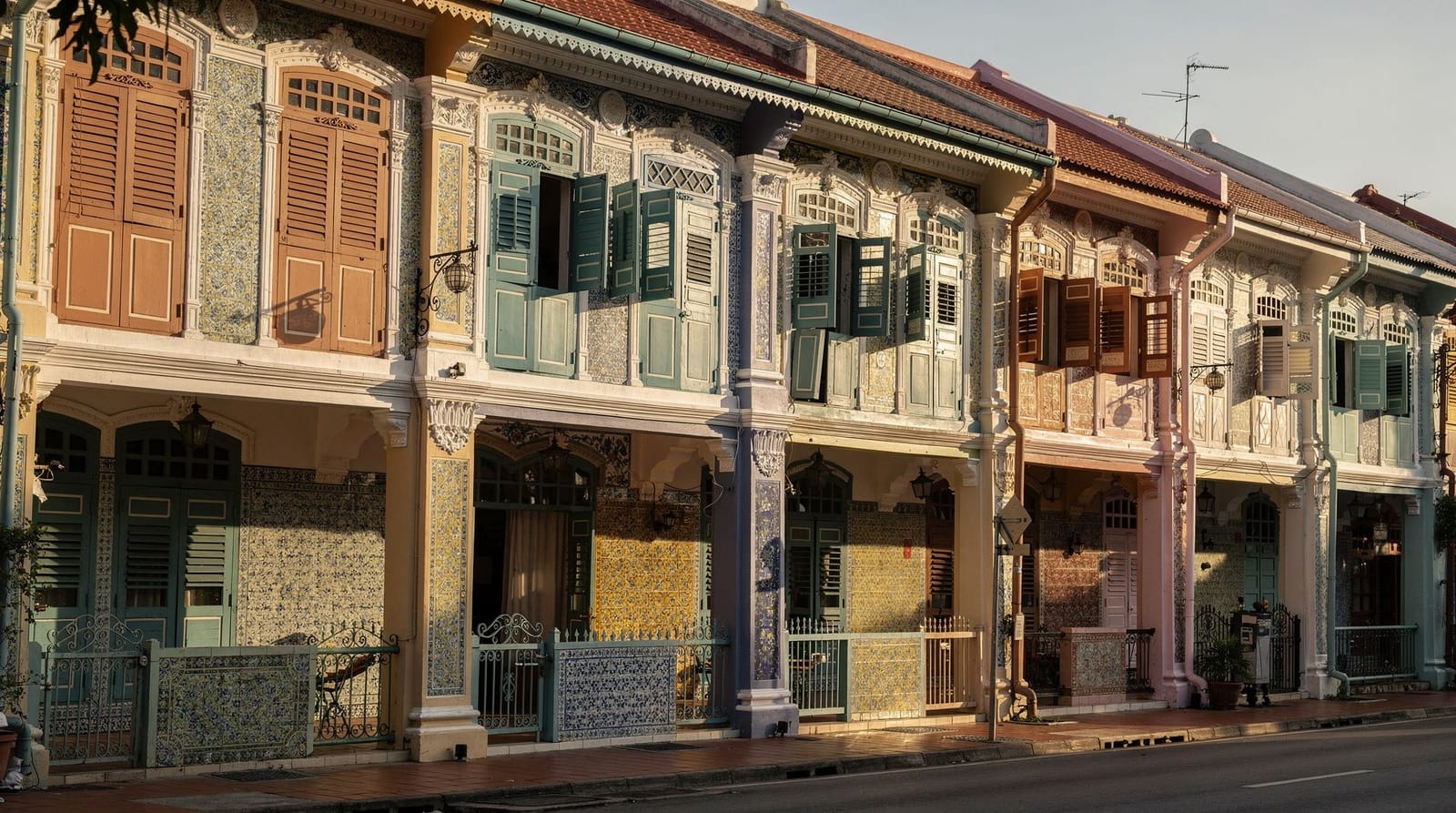
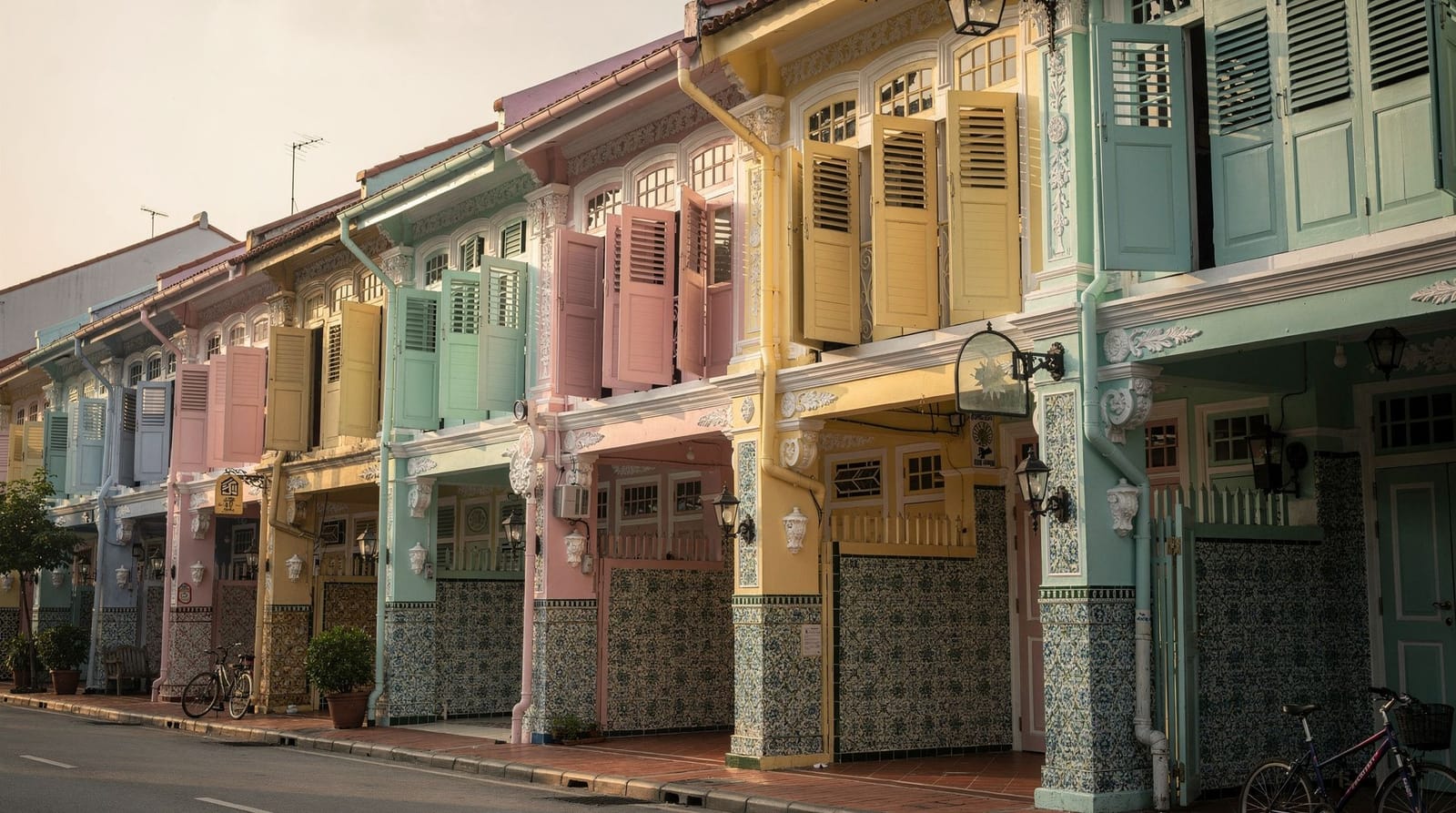
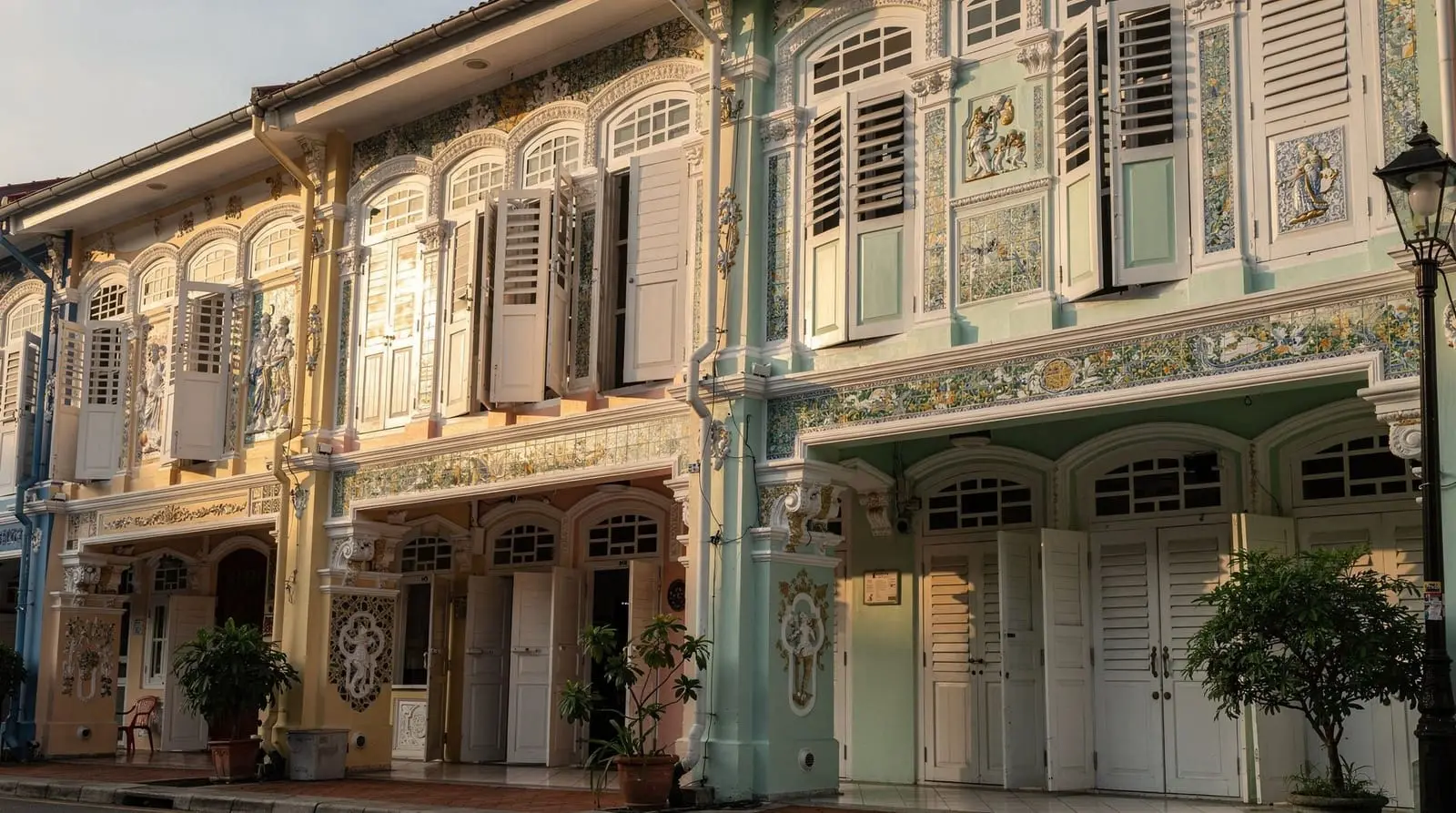
Katong’s shophouses differ from Chinatown’s in a specific way: the Peranakan versions were built by and for the Straits Chinese merchant class that had accumulated enough wealth by the late 19th century to commission elaborate, customised architecture. The result is buildings with facades that combine Baroque European mouldings, Chinese ceramic tiles, Malay carved timber screens, and hand-painted plaster in colours chosen to communicate wealth and cultural sophistication.
The most concentrated stretch is Koon Seng Road — a cul-de-sac off Joo Chiat Road with a double row of shophouses on both sides facing each other. These are among the best-preserved Peranakan townhouses in Singapore: every facade is slightly different, the colour combinations are bold (cobalt and coral, celadon and mustard, terracotta and ice blue), and the detail level in the plasterwork — flowers, birds, geometric borders — is extraordinary when you stand close enough to look.
The Koon Seng Road houses are private residences. The correct protocol is to admire from the street, not to approach or photograph anyone who happens to be visible in a window or doorway.
Joo Chiat Road running north from East Coast Road is the neighbourhood’s main commercial street, and it has a different character: shophouses at ground level occupied by Thai supermarkets, fabric stores, Malay bakeries, a 1970s-era electrical supplies shop that has been there since before Joo Chiat was fashionable, and several newer independent restaurants and cafes that have arrived in the last decade.
The Peranakan heritage trail and museum
The Joo Chiat/Katong Heritage Trail (downloadable from the National Heritage Board’s website, free) maps 26 heritage sites in the neighbourhood and takes 2–3 hours to complete. It covers the conservation shophouses, the two surviving Peranakan family association buildings, the Sri Senpaga Vinayagar Temple (a Tamil Hindu temple with Peranakan-patronised history), and the Eurasian community club.
The trail is the format that turns a pleasant neighbourhood walk into a history, and it’s worth downloading before you arrive — the QR codes at each heritage site take you to audio content that explains the buildings.
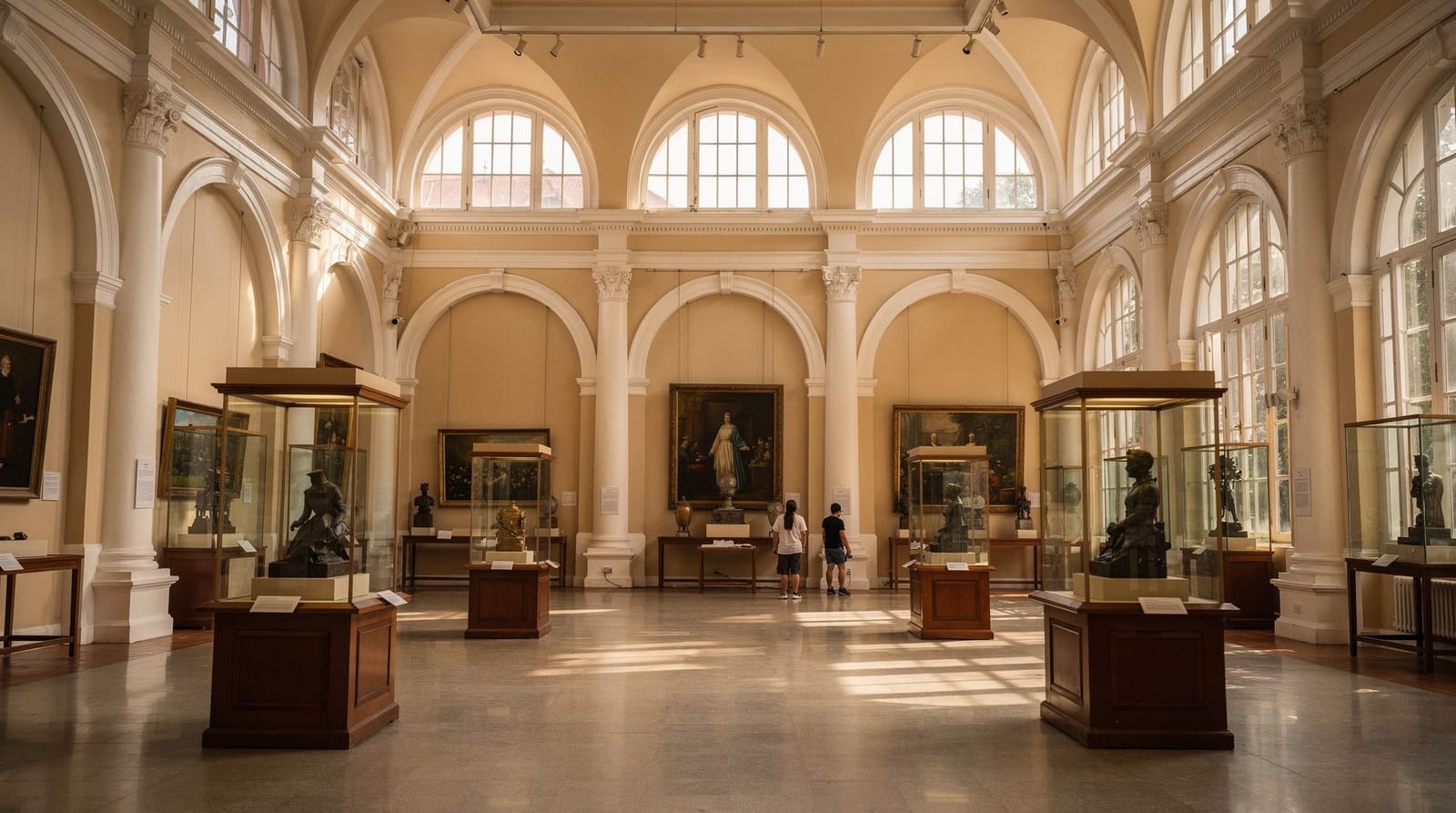
Singapore: Peranakan culture tourFor the material culture, the Peranakan Museum at Armenian Street in the city centre (not in Katong, but directly connected to the neighbourhood’s history) is the best museum in Singapore for understanding what all these architectural and culinary details mean within a broader cultural context. The Peranakan culture guide is worth reading before you arrive — it makes the shophouse detail and the food both more legible.
Singapore: Katong local food and city highlights tourTwo laksa bowls, compared
If you only have time for one bowl, here’s how the two main options actually differ:
| 328 Katong Laksa | Janggut Laksa (Roxy Square) | |
|---|---|---|
| Broth style | Rich, slightly sweeter, deep orange | More complex, less sweet, loyal following |
| Noodles | Short-cut, spoon-only | Short-cut, spoon-only |
| Price | SGD 6–8 | SGD 6–8 |
| Queue | 10–20 min weekday mornings | Usually shorter |
| Reputation | Michelin Bib Gourmand, most famous | Local debate favourite, less touristed |
Neither is objectively better — this is a genuine local argument with two good answers. If the queue at 328 looks long, Janggut is the better move rather than waiting it out.
The quieter eastern end: Siglap and East Coast Park
Walking south from East Coast Road brings you to the East Coast Park waterfront — a 15-kilometre stretch of park and beach along the Strait of Singapore. The beach is not tropical-paradise quality (the water is hazy and the horizon is full of container ships) but the park itself — coconut palms, cycling paths, the weekend family barbecue culture — is very Singaporean and entirely pleasant.
The walk from Katong to East Coast Park along Amber Road takes about 20 minutes and passes through the Siglap residential neighbourhood, which has an appealing mix of landed houses, community gardens, and the kind of neighbourhood coffee shop that caters entirely to the people who live within walking distance.
After the walk: what to buy
If you’re looking for Peranakan craft objects — the beaded slippers (kasut manik), the embroidered wedding textiles, the porcelain ware — the shops along East Coast Road include several that sell both antiques and contemporary reproductions. Quality and price vary significantly; the better pieces are expensive (antique beaded slippers from the early 20th century start at several hundred SGD) and the reproductions are clearly marked.
Nonya kueh to take away: most of the bakeries on East Coast Road sell pre-packed kueh sets for SGD 12–18 that travel well for a day in a cooler bag. They do not survive multiple days of Singapore humidity well.
The walk ends where you want it to end. Katong is the kind of neighbourhood where the itinerary becomes less useful the longer you’re there — the interesting things reveal themselves sideways, in a shop you weren’t planning to enter or a lane you weren’t planning to turn down. Allow the morning to be longer than you planned.
What makes Katong different from other Peranakan spots
Chinatown and Tiong Bahru both have Peranakan-adjacent food and history, but Katong is the one place in Singapore where the community’s descendants still live in meaningful numbers around the original shophouses, rather than the culture being preserved mainly through museums and restaurants elsewhere in the city. That distinction matters if you’re trying to understand Peranakan culture as a living thing rather than a heritage display — the hidden gems guide explains where Katong sits relative to Singapore’s other under-visited neighbourhoods, and why locals rate it more highly than most first-time visitors expect.
Where to go next
Once the morning is done, the rest of the neighbourhood has more to offer than one walk can cover. The Katong and Joo Chiat destination page lays out the area as a whole, and the Katong and Joo Chiat Peranakan guide goes deeper on the houses, the food and the history behind them.
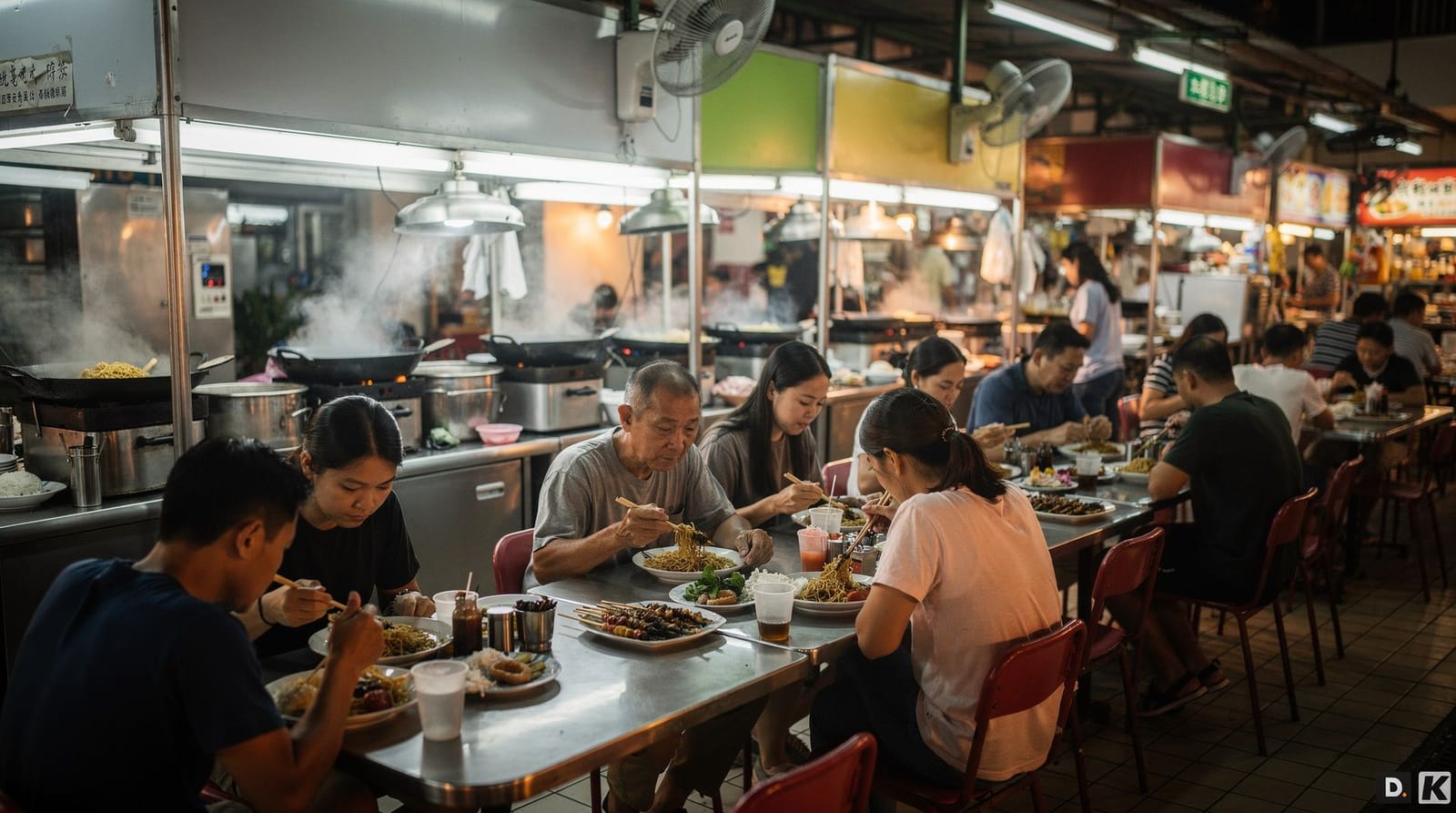
If the laksa left you wanting more of the same kind of eating, the best hawker centres guide and the foodie itinerary show how to build a longer food-led stay around stops like this one. For another Peranakan-flavoured angle, the Peranakan food journey follows the cuisine rather than the streets, and the Kampong Glam and Haji Lane day is a good contrast for a different heritage quarter on another morning.
Getting the timing right
Most of what makes Katong worth a dedicated morning depends on arriving early. After 10am, the laksa queue lengthens, the light flattens against the shophouses, and the neighbourhood shifts into a more ordinary midday retail rhythm. If you can only do one thing right, make it the early start — everything else in this guide works better as a consequence of that first decision.
Frequently asked questions about Katong and Joo Chiat
Is Katong worth visiting if I’ve already been to the Peranakan Museum? Yes — the museum gives you the objects and the context, but Katong gives you the living neighbourhood: working shophouses, generational food businesses, and residents for whom this is still their home. The two experiences complement each other rather than duplicating.
Can I combine Katong with other Singapore neighbourhoods in one day? It’s possible but not ideal. Katong rewards an unhurried morning, and combining it with a full afternoon elsewhere (Chinatown or Marina Bay) works better than trying to add another neighbourhood before lunch. The must-try dishes guide can help you decide whether to prioritise a second food-heavy neighbourhood on the same day.
Top experiences
Bookable activities with verified prices and instant confirmation on GetYourGuide.

Singapore: Universal Studios Singapore entry ticket

Singapore: Gardens by the Bay bundle entry ticket

Singapore: Night Safari and tram ride ticket

Singapore: S.E.A. Aquarium entrance ticket

Singapore: Singapore River cruise

Singapore: Marina Bay Sands observation deck e-ticket

Singapore: Sentosa cable car Sky Pass roundtrip ticket